


Reviewed by Doc Snafu on July 15, 2025.
Document Sources: The following document, ‘Operations of the 30th Infantry Division During the Battle of the Bulge’, was written in early 1946 by Capt Norman Bruce Sigband, US Army. As an officer assigned to the 117th Infantry Regiment, a core unit within the 30th Infantry Division, Capt Sigband played a vital role in documenting the Division’s actions during one of the most critical phases of the European Theater of Operations in World War II. Compiled shortly after the cessation of hostilities in Europe, this report reflects both operational immediacy and firsthand insight. It was prepared as part of the Army’s Historical Program, which sought to preserve unit-level perspectives on major combat operations, specifically those that occurred during the German Ardennes Counteroffensive of December 1944 – January 1945.
The 30th Infantry Division—known as ‘Old Hickory’—was heavily engaged during the initial thrust of the German attack and played a decisive role in halting and repelling enemy advances near Malmedy, Stavelot, and La Gleize, particularly during the relief of St Vith. Capt Sigband’s narrative, written with clarity and precision, offers valuable insights into the unit’s tactical maneuvers, command decisions, logistical challenges, and combat experiences during this harsh winter campaign. This document is not only a combat record but also a piece of analytical military historiography written by a participant-observer. Its value lies in its authenticity, its fidelity to battlefield conditions, and its contribution to the enduring study of the Battle of the Bulge from the perspective of an American infantry division directly in the line of fire.


 This account of the 30th Infantry Division participation in the Battle of the Bulge in Belgium, as the German counter offensive became knom, was divided into two distinct phases. The first, and more colorful and spectacular phase, was the defensive activities of the Division, the period ranging from December 17, 1944, to December 26, 1944. The second was the offensive drive that was from January 13, 1945, to January 23, 1945. The latter was a hard, costly, drab, slugging match. It was the St Vith (Belgium) offensive wherein the Old Hickory Division forced the enemy back, almost yard by yard, for 12 slow-moving miles. It was in that latter 10 day action that the Division lost almost 2000 men, an extremely high price that is indicative of the tenacity of the enemy and his reluctance to surrender
  Malmedy – St Vith road net. The background leading to the 10-day offensive action, took place between January 3, 1945, and D-Day, January 13, 1945. It is therefore imperative that the early days of January be recounted to set the stage for the primary drive.

 At the opening of 1945, the 30th Infantry Division front line extended from a point slightly coast of Malmedy to a short distance west of Stavelot where it joined the 82nd Airborne Division on the Salm Hiver line. In that area, and the entire distance south to St Vith, the terrain was much alike. Extremely hilly, steep valleys and ridges lines were numerous. It was on such terrain features that the enemy built his main lines of resistance.
 Such points of vantage were valuable to the Germans, but he also received immeasurable aid from the weather conditions. Extremely deep snows, roads covered by ice and flanked by 6-foot snow drifts, made attacks by our forces extremely difficult. From elevated points of vantage, the Germans were in positions to observe the advance of the 30th Infantry Division troops as they plowed across country for designated objectives.
It will be noted in the following narrative that almost every city taken in the Division zone in the advance to St Vith, was dominated by a high point or ridge line adjacent to the environs of the community. In addition to the advantages gained by the enemy by the rugged terrain features pointed out, he was also favored by the heavily wooded areas. From such sections, he frequently attempted to infiltrate small units into our lines, or he hid self-propelled assault guns among the firs to embush our vehicles as they moved by, and also emplaced anti-tank weapons in fire breaks. Those fire breaks ran through the densely wooded Ardennes Forest and extended from eight to twelve yards in width. Besides using the fire breaks for points of vantage for anti-tank weapons emplacements, the enemy utilized those lanes to bring armor and troops forward when their travel was prohibited because US artillery or a 30th Infantry Division unit controlled a particular road. It was those fire breaks that the enemy used as roads to get through an otherwise impenetrable forest.


 From the division front lines and running south, there were adequate roads to launch a coordinated attack. However, those roads, in addition to being snow and ice-covered, became even worse of a hazard due to the fact that they were all severely canalized by the hill masses and wooded areas. Possession of a high point in the neighborhood of a road or a road junction, perforce, equalled control of the road. Such terrain
 features were excellent for the employment of a delaying defensive action. For that reason, particularly special attention was to be directed at Houyire (K809006) area, the Hauts Sarts (P825996) area, inside and around the Wolfsbusch Forest (Belgium) (P833968), at the Dillburg (Belgium) (P810954) area, and at Hunnert (Belgium) (P797957). Those were all points of excellent observation and good fields of
  fire. They contained fine opportunities for cover and concealment, possessed steep approaches, and held command of the roads that passed between them. The enemy defensive organization in this sector during January 1945 was primarily pillbox and breastwork defenses, improvised out of logs and dirt. Trench lines were abundant and easily made to conform satisfactorily with the many rising ground areas. These trench lines and strong points, when making up and MLR (Main Line of Resistance), were on the forward slopes of steep ridges. Mine fields were almost all hasty, but because all traces of a buried mine were frequently obvious, they proved exceedingly effective. Where roads rounded frequent turns in the Ardennes, the portion lost to view in an approach was frequently ineffectively by felled trees straddling the road.
Laying the Ground Work for the Division Offensive

 On January 3, 1945, the VII Corps attacked in the ares between the Ourthe River (Belgium) and the Lienne River (Belgium) with Houffalize (Belgium) (P6172) as its final objective. At the same time, the XVIII Corps (Airborne) began, as a portion of the Corps Mission, to conduct patrolling on D-Day (January 3, 1945) properly supported by
 artillery, and in such strength as will lead the enemy to believe a general attack is being launched. In the same letter, Gen Mathew B. Ridgway, XVIII Corps commander, suggested to Gen Leland Hobbs, an outline plan for operation that included to capture several areas that later became 30th Infantry Division objectives. That was primarily the city and road net leading to St Vith, that lay in the 30th Infantry Division sector.
The first phase, suggested above, patrolling and small movements, were designed to confuse the enemy as to where in the First US Army and the US THird Army sectors of the Bulge, the main 
 American drive would be launched. Deception was what was expected to be gained from patrol forces sent out by the 30th Infantry Division.
Those diversionary activities did not deceive the enemy to any great degree, and the letter continued a careful withdrawal movement within the bulge. First, the armor was pulled out and replaced in the line primarily by Volksgrenadier units. In the 30th Infantry Division sector, as the offensive slowly began, depleted, but there were no  elements of the 1.SS-Panzer-Division (LSSAH) to be found. The opposing units was the 18.Volksgrenadier-Division was badly depleted, but capable of a defensive rearward fight.
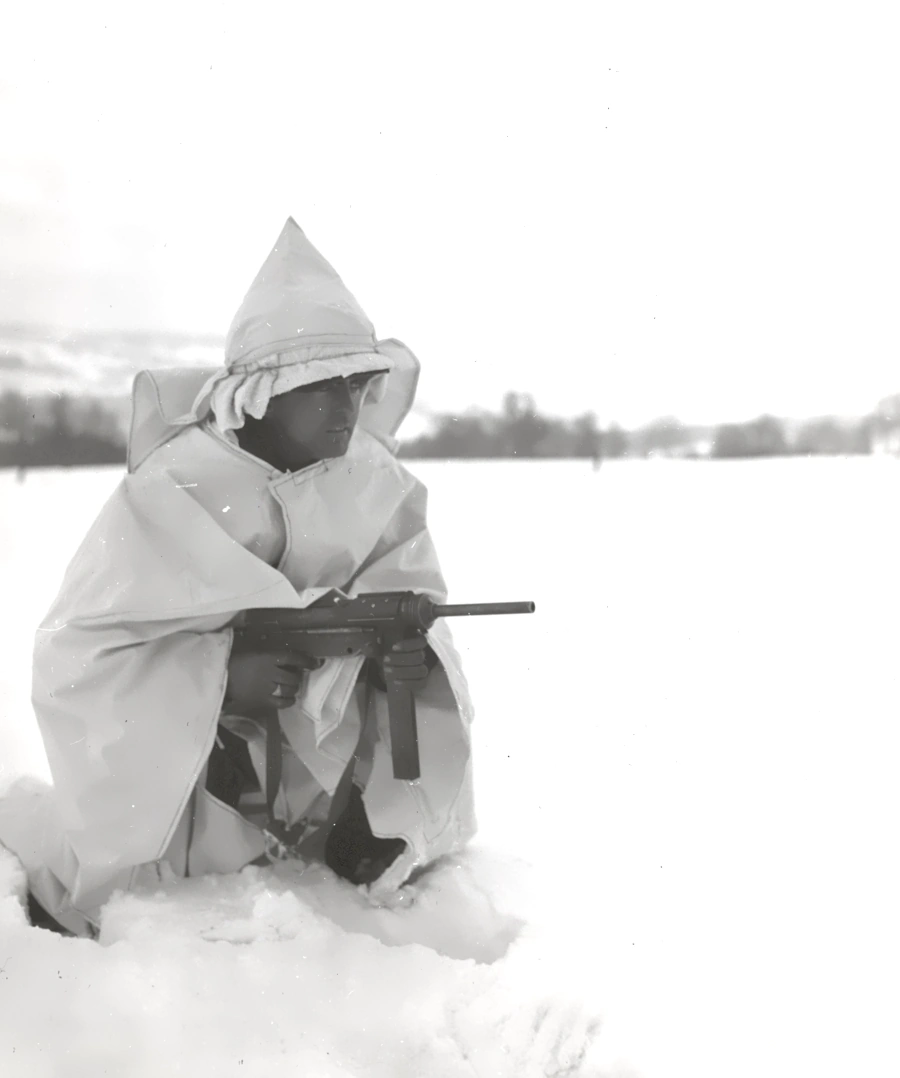
A Diversionary Activity is Attempted
 As 1945 began, the enemy though definitely stopped from any further large scale drives to the west, was still to be reckoned with, insofar on the possibility of his launching an attack was concerned. In the 30th Infantry Division sector, the 105th Engineer Combat Battalion had seven bridges mined for possible demolition. Those spanned the Amblève River and its subsidiaries. Roads were carefully guarded with anti-tank defenses, in
 the Malmedy (7804) – Stavelot (7107) sector, and in that role the 110th Anti Aircraft Battalion (90-MM), 823rd Tank Destroyer Battalion and the 825th Tank Destroyer Battalion, both 76.2-MM) and the normal division 57-MM AT guns were utilized. Along with those precautionary elements of the division constantly sent out reconnaissance and combat patrols. They had two primary purposes;
  maintaining contact with the enemy so that some idea of his activities would always be known and secondly, a constant drive to bring in prisoners so that identifications and possibly plans could be gained from interrogation of the captured troops.
 On January 3, the main effort in the XVIII Corps was made by the 82nd Airborne Division which hold a line on the immediate right of the 30th Infantry Division. To aid in diverting some of the enemy forces to the 30-ID front, the 120th Infantry Regiment of the division attacked at 0830, January 3. At the same time, the 82nd Airborne Division moved off as the main effort in the XVIII Corps sector and met heavy resistance all along the line.
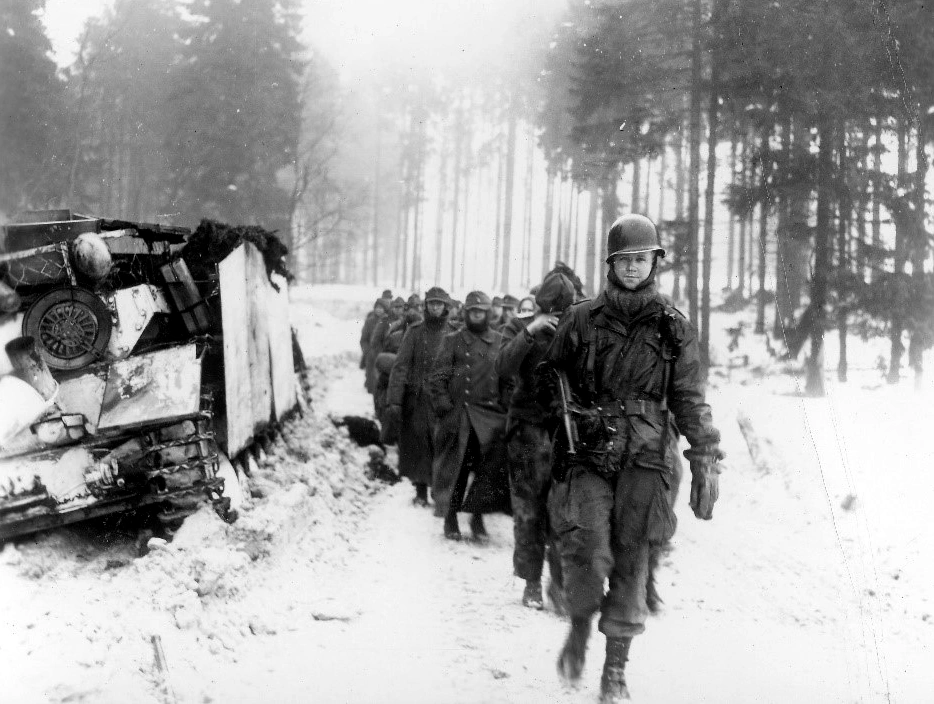
In the 120-IR zone, the diversionary activity was executed by three groups. Item Company (1/Lt John A. Doyle) seized their objective, an area of high ground, approximately 1500 yards southeast of Malmedy. Baker Company of the 526th Armored Infantry attached to the 30-ID, moved off at the same time  for the objective of Houyire, but met heavy enemy fire north of Hédomont, 2000 yards from Houyire. They held that point of their furthest advance until 1800 January 3, and then withdrew to their former line, slightly south of Malmedy.
30th Infantry Division Crosses the Amblève River
 Following the small action on January 3, the division began preparations for its consolidated offensive, which began on January 13. One of the primary needs before a concerted drive toward St Vith could be considered in the 30-ID zone was the necessity for gaining a firm line on the south bank of the
 Amblève River. As the line stood on January 4, the 30-ID line between Trois Ponts and Malmedy, was on the north bank of the river. The plan was to first cross the Amblève between Trois Ponts and Stavelot. After that right flank was secured, it was then contemplated that the drive south between the north-south grid lines of 76 degrees and 84 degrees would begin in force and not halt until St Vith was seized.
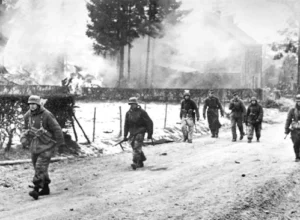
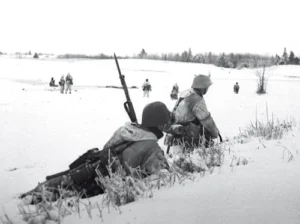
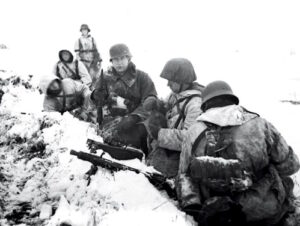
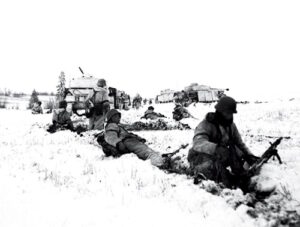
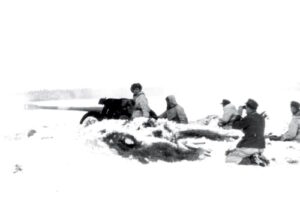
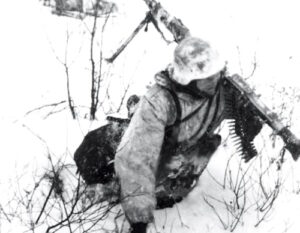
On January 4, the XVIII A/B Corps commander, Gen Ridgway, directed that plans be prepared for a crossing of the Amblève River between Trois Ponts and Stavelot and that a bridgehead be established in the angle which ley on the south bank of the river and the east bank of the Salm River.
 On the following day, Jan 5, the 30-ID was instructed to accomplish that mission during the morning of the following day. For this operation, the 112th Infantry Regimental Combat Team, of the 28th Infantry Division, was attached to the 30-ID at 1000, January 5.
The objective of the attack was to gain and maintain the area on the south bank of the Amblève River that was bounded by Spineux (Belgium) (K700958), Wanne (Belgium) (709967) and 
 Wanneranval (Belgium) (710975). On the right flank of the 30th Infantry Division, the 82nd Airborne Division had attacked south, and the 517th Parachute Regiment of the latter division had possession of a line several thousand yards south of the Amblève and west of the Salm River. It was therefore necessary for the 112-RCT (28-ID) to attack for the objectives outlined above to protect the left flank of the 82nd Airborne Division, plus giving the 30th Infantry Division a foothold on the south bank of the Amblève River for future operations.
 The 112-RCT was given the burden of that operation and assigned in addition to their normal regimental attachments, George Company, 103rd Engineer Combat Battalion, Charlie Company, 630th Tank Destroyer Battalion, 3 platoons from Dog and Charlie Companies of the 743rd Tank Battalion, and in support of the entire operation, wereseven field artillery battalions. The tasks assigned and accomplished by the regiments of the 30-ID were the bridgehead established by the 117th Infantry Regiment to aid the 112-RCT in their attack, the 119th Infantry Regiment (30-ID) and the 120th Infantry Regiment (30-ID) maintaining their offensive positions in the division sector.
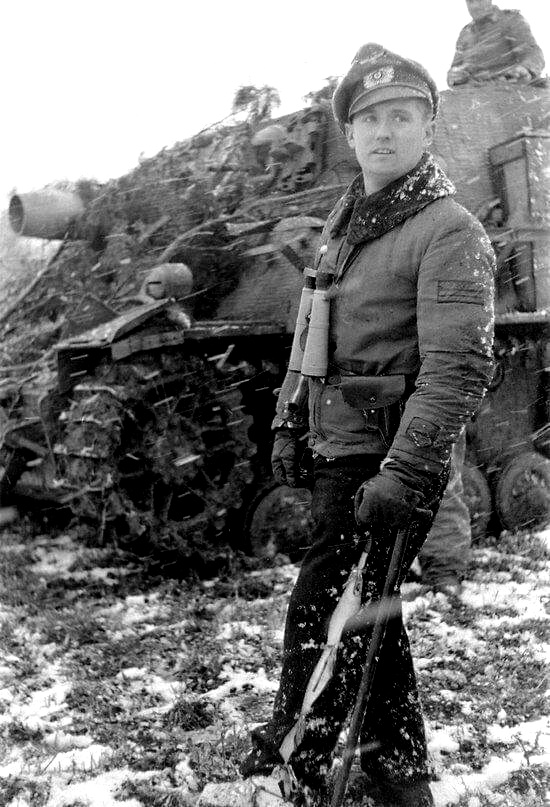 The original plan stated that the 117-IR (30-ID) would establish two small bridgeheads at 0650 hours, January 6, and the 112-RCT (28-ID) would pass thru them an hour later and seize the high grounds ahead, continue to push forward, and capture then occupy Wanneranval, Wanne and Spineux.
The enemy forces opposing the 30-ID maintained their main line of resistance on the south bank of the Amblève. In the zones of scheduled action, west and south of Stavelot, the 1.Battalion and 2.Battalion 293.Volksgrenadier-Regiment opposed the US troops, while south of Malmedy, the 1.Battalion and the 2.Battalion of the 294.Volksgrenadier-Regiment was disposed of, with the 295.Volksgrenadier-Regiment in reserve. Those three units were all elements of the 18.Volksgrenadier-Division.
Their defenses were along the ridge line and high points in the area. The roads were covered by assault guns, large stone blocks, felled trees, and dugouts at the sides of the roads that contained one or two men armed with an automatic weapon. The Amblève, the narrow, was an extremely fast-flowing river and was overlooked by a hill line in the possession of the enemy.
Under the cover of darkness, January 6, Charlie Co, 103-ECB constructed foot bridges over the Amblève River (684993-677991). Shortly thereafter, at 0630, George Co, 117-IR (1/Lt Charles W. Monerieff), crossed at the two bridge sites established. They met no opposition and by 0700, the entire regiment was over the river and had taken up positions in the corner enclosed by the Amblève River on the north, and by the Salm River on the east. At 0730, the 1st and 3rd Battalions of the 112-RCT, supported by 3 tank platoons of the 743-TB, attacked to the south. Villages of Wanne and Wannerenval were objectives of the 3rd Battalion, Spineux and Le Tombeux goals of the 1st Battalion.
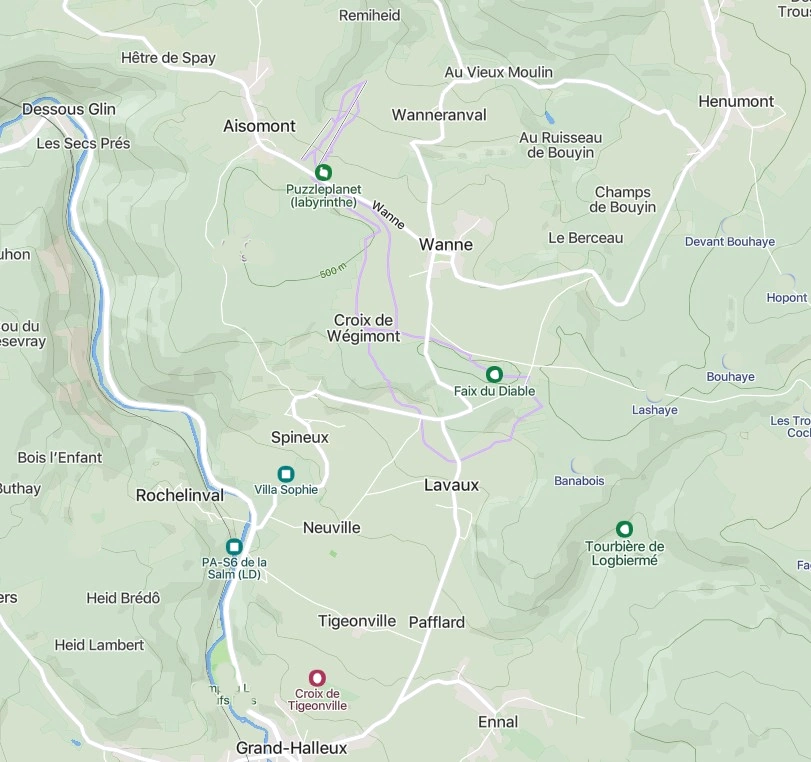

 The 3rd Battalion advanced 400 yards to Grand Faye, were it was halted by heavy automatic weapon and small arms fire. Cutting to the left, the battalion hit the enemy on the flank, and captured a small number and bypassed the main body of resistance. They then drove south through enemy opposition at Remiheid and immediately to the east of Aisomont, where they formed an 800 yard line to the east for the night. The 1st Battalion on the right of the 3rd Battalion moved off at the same time keeping well along the Salm River. At Derrière Spai, they encountered an enemy strong point that overlooked the route of advance. Utilizing automatic weapons they eliminated the strong point and were in possession of the area by noon. The advance to the south continued for approximately 1500 yards, where at darkness they established a front line extending from (690960) to (699968). Contact was made with the 3rd Battalion on the left and the 517-PIR of the 82-A/B on the right.