



As dusk was gathering, the phone rang. The Battalion Commander ordered me to send a three-man patrol with an SCR-300 radio into the village of Sitapur, which was on the northern edge of Myitkyina. They were to move out after dark, pass through the enemy lines, enter the village, and report every 20 minutes directly to the battalion. This was an incredible order amounting to almost a death sentence for whoever was chosen. An analysis of this mission reveals its suicidal character. These men, besides carrying the essential weapons and equipment of war, were to take a 38-pound radio and proceed one mile behind Japanese lines into an enemy-held village and, furthermore, on a night mission where silence is paramount. They were then to open a 300 radio with its resulting noise every 20 minutes all during the night, then make their way back again through enemy lines and find their way into a 200-yard perimeter. Aside from the extreme danger, their chances of obtaining any useful military information were practically nil. Needless to say, the patrol did not get very far. The enemy, always disagreeable about such things, soon convinced the patrol leader that the paths to Sitapur led but to the grave. After two futile attempts, he withdrew back into the perimeter, commenting audibly and quite profanely on the ancestry of certain leaders.

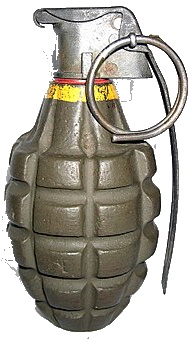
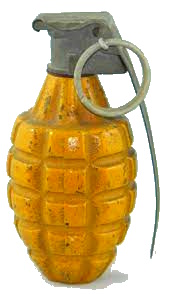
A favorite trick of the Japanese was to arouse our men into firing, especially their automatic weapons, in an attempt to locate them, then to crawl forward an inch at a time and grenade them. Each night we stocked each foxhole with all available grenades and warned the men not to fire during the night except to stop an attack; instead, to throw grenades at suspected enemy. This proved quite productive. Several mornings, dead Japs were found close to the perimeter. It was the consensus of all officers in contact with the Japs that patrolling under existing conditions was stupid, wasteful of manpower, and morale-wearing with no compensating results. We knew where the enemy was, his approximate strength, and weapons. Patrols could not obtain any information that we did not already know. The enemy was trapped in the Myitkyina area without hope of reinforcements. The only sensible course to follow was to stockpile ammunition and attack until he was destroyed.br>
 The next morning, the Battalion Commander again ordered patrols out. I determined to make them strong and to support them with mortars if necessary. I ordered each rifle platoon to send out a seven-man patrol, gave each a definite sector, and provided them with radios. I contacted the Heavy Weapons Company Commander and requested mortar support in case they got into trouble. The patrols moved out; shortly thereafter, they reported contact with the enemy. The patrol from the first platoon was evidently in trouble, so I went over to the Heavy Weapons Company area. Capt Brubeck was talking over the radio. His 81-MM mortars were firing. The patrol was being fired on by two machine guns, and the patrol leader was attempting to direct the mortar fire on these guns. They were not getting anywhere, claiming they could not see the burst in the brush. I asked him where they were. He replied, to the right of the trail and about 100 yards from the perimeter.
 I walked down the trail. I heard firing, but could not see anything. I continued on about 100 yards. Off to the right of the trail was a huge bomb crater. In it was the patrol deployed around the run. The leader was talking over the radio. The firing was from a position further on. I walked to the edge of the crater. One of the men looked up at me and said, ‘You better get down, Captain, there’s a machine gun behind you’. I jumped into the crater and instantly two guns opened fire, one from a position across the trail directly behind where I had been standing and the other from off to our left front. I attempted to locate these guns and could now understand the difficulty the patrol leader had encountered directing mortar fire from this position. The machine gun fire was skimming the top of the crater. It was very dangerous to chance more than a glimpse over the top. The surrounding area was covered with a thick undergrowth. The mortar bursts could not be seen. The firing to our front was from the patrol from the 2d Platoon, which was in a firefight with a group of enemy about 25 yards south of the crater. I crawled toward them and directed the patrol leader to withdraw to the perimeter, and I would cover him with the patrol in the crater. I crawled back to the crater, and after they had passed us, all crawling, I ordered the men with me to crawl back towards our lines. When the last man had moved out safely, I followed, by now pretty well fed up with the stupid patrolling.
Shortly after noon, I noticed a curious activity on the other side of the paddy. About 50 yards out from the bank were four men who appeared to be walking double sentry duty. They were walking back and forth as if on guard. I asked my Executive Officer what they could possibly be doing other than trying to commit suicide. He studied them a while and said, ‘Beat’s me’. I told him to call the battalion and find out. By this time, I was prepared for almost anything emanating from the Battalion CP, but this was a classic. The Battalion Commander himself was going to cross the paddy to join his battalion that had been fighting alone for a day and a half; that is, he would cross under certain conditions. The day before, when the snipers were so active, was not the time, even though the passage was made many times by privates carrying ammunition over and wounded back. This morning had been quiet as far as sniping was concerned, probably because of the patrolling. Still, anything so indispensable could not take chances. To make sure, he ordered these men to move out into the paddy to act as a decoy. They went back and forth to see if they would draw fire. The unpredictable Japs did not fire. Reassured, he loaded two mules with his personal equipment. These formed part of the next train to cross. The mortars fired the usual smoke concentration, and the train started out. They reached the middle of the paddy when they were brought under fire from the same area as the day before. On this trip, two mules were lost, but they were carrying ammunition. The first shot changed the Colonel’s march table. He made a quick estimate of the situation and decided he was more valuable with the home guard.
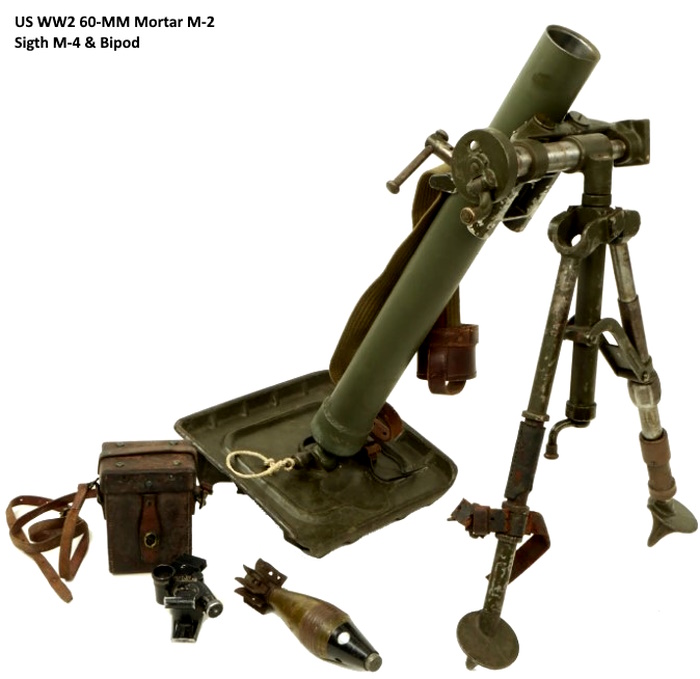 The remainder of the day was uneventful. Firing was spasmodic around the perimeter. Whistling Willie paid his respects a few times and, of course, the snipers fired on anything that crossed the paddy. The night was quiet, save for the usual grenades and harassing mortar fire. The next afternoon, July 29, Capt Brubeck, the Heavy Weapons Company Commander, got a call from the battalion. He was ordered to attack with the forces across the paddy, less Love Co, which was on outpost duty to the north. The three Company Commanders got together and determined on a plan. The terrain and size of our force ruled out any maneuver. We decided to attack straight south with our right on the paddy. Mortars of the Heavy Weapons Company and the 60’s in the Rifle Companies would support the attack. We jumped off, and from the start, the going was very slow. The jungle growth in front of my company was so dense that visibility was limited to a few yards. The terrain in front of Item Co was more open, more in the nature of hedgerows, but almost as hard to traverse. The Japs would not back up a yard. It was necessary to kill each one individually and to grenade every dugout or opening that might possibly house a Jap. I made my way over to my left platoon, whose left flank was on the trail, the boundary between Item and King Companies. The aggressive Capt Brubeck was there, personally directing the fire of his heavy machine gunners who were trying to knock out some enemy across the trail who were delaying the advance. The guns were right on the front line. I made my way along the line to my right platoon. They were stopped by a solid wall of interwoven jungle growth 8 feet high, broken only by one opening and only large enough to admit one man at a time. On the enemy side was Sgt Jasinsky, leader of the second squad, and one of his men engaged in a firefight with an enemy just a few yards to the front. On our side of the wall, Lt Meade, my weapons platoon leader, was removing a mortar tube from the base plate. He suggested pulling Jasinsky back and let him drop a few on the Nips.
I told Jasinsky and the other man to pull back. He began to crawl back and then jumped up to dash through the opening. As he did so, a grenade came hurtling towards him. The man with him screamed, ‘Down!’. Jasinsky hit the ground the instant the grenade exploded. He was not hurt, and both men managed to make their way back. I noted from where the grenade came, and Lt Meade began firing and brought the shells progressively closer until they were exploding less than twenty yards to our front and on the spot where we were certain the Japs were. Capt Brubeck came up as this was going on, and after Meade had fired a few rounds, Brubeck said, ‘Let’s get the ‘Son of a Bitch’ and we rushed through the opening and in on top of the Japs, killing three, not ten yards beyond the hedge wall. The men now came pouring through, fanning out to the right and left, forming a skirmish line. I could see only part of the line because of the heavy growth. I directed the men to put a fresh clip in their weapons, keep contact to right and left, and fire straight to the front as we went forward, and to fire into any opening or clump of brush or anything that could conceivably hide a Jap.
We went forward with marching fire, shooting up every clump, raking every tree, and grenading every hole. We made good progress, halting several times to replenish ammunition. We reached our objective line about an hour before dark. I halted the company to regain control and to determine the exact location of the unit on my left, to ensure that we were still in contact. My radio operator said that the Battalion Commander wished to speak to me. He asked me how things were going. I replied that we had reached our objective and were preparing to organize a defense. He screamed, ‘Keep going, keep going, gain as much as you can.’ Completely ignoring the fact that we had only about one hour of daylight left. A few moments later, Capt Brubeck came over. I remarked that we had reached the designated line but that the Battalion Commander had ordered the attack to continue. He expressed his opinion quite emphatically, and then said, ‘Well, I guess we’d better keep going.’ From that point on, we ran into serious opposition. We kept driving forward through the tangled growth. My third platoon, under Lt Rowe, was next to the paddy field. A thick hedgerow now separated his platoon from the rest of the company. I could not see him, but kept him abreast of the company by verbal directions. We came to a trail running perpendicular to our line of advance. One side was bordered by an old bamboo fence. I kicked a section of it down and proceeded on through in a small clearing with thick, tall jungle growth on all sides. Behind me was Pvt Cooper and several others were on their way through the fence.
 Two machine guns opened fire, one from my right front from a position near the paddy field, the other from my left front. The first burst struck Cooper, who was a few yards behind me. He said quietly, ‘I’m hit’. I looked back. He was lying on his back. I asked him where he was hit and he answered, ‘In the leg’. That didn’t sound very serious to me. I directed a soldier who was a few feet from Cooper to crawl over and help him. Lt Meade, my Weapons Platoon Leader, came up to the fence and said, ‘It’s getting dark. What are we going to do?’ I said, ‘We’ll dig in along that trail and tie in with Item Co.’ The soldier who was attempting to aid Cooper remarked that he couldn’t get Cooper’s uniform off. I tossed him my trench knife and told him to cut it off. Then one of our aid men, Pfc Sheppard, came running up and took charge of Cooper. I walked over to where they were working and, for the first time, realized the seriousness of his wound. The burst had torn a gap in his thigh, cutting an artery. He bled profusely. I ordered two soldiers to cut some bamboo and make a litter. Sgt Jasinsky came up, and when Sheppard had applied a tourniquet, he helped carry him back beyond the trail and into the perimeter. Sheppard gave him a bottle of plasma, the last he had, but it was too late. Cooper was dead. From the time he was hit until he was carried back was less than ten minutes.
No single event of the whole eight days of battle have I regretted more than the death of this one man. His death can be attributed to two causes. First, his quiet courage completely deceived me into thinking his wound was not serious. He didn’t scream for a medic or beg for someone to do something quickly; never excited or hysterical as many soldiers are when they see their lifeblood running away. He seemed to realize that the soldier who was helping him was doing the best he could. He simply and quietly said, ‘I’m hit’ and when asked where, said, ‘In the leg’. He never spoke another word. The second reason was the lack of first aid training among these men. In my concern for the safety of ny company with night coming on and in close contact with the enemy, I lost sight of the probability that the soldier I directed to help Cooper might not know what to do. He tried and did the best he could, but while he fumbled, Cooper was bleeding to death.
This young soldier, Pfc Harold R. Sheppard (asn 34356314) Medical Detachment, 5307th Composite Unit (Prov.) – Merrill’s Marauders (Burma, 1944 (Walawbum – Nhpum Ga – Myitkyina), Aid Man (King Co, 2nd Battalion – Green Combat Team), about 18 years old, was extraordinarily brave, and was possessed of an intense devotion to duty. For six days, he attended to the wounded under any and all conditions, with complete disregard for his own safety. On August 1, 1944, he was severely wounded while attending a stricken soldier. He received the Silver Star for gallantry.
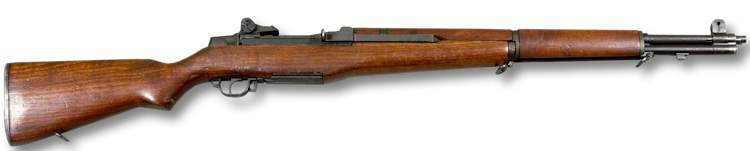
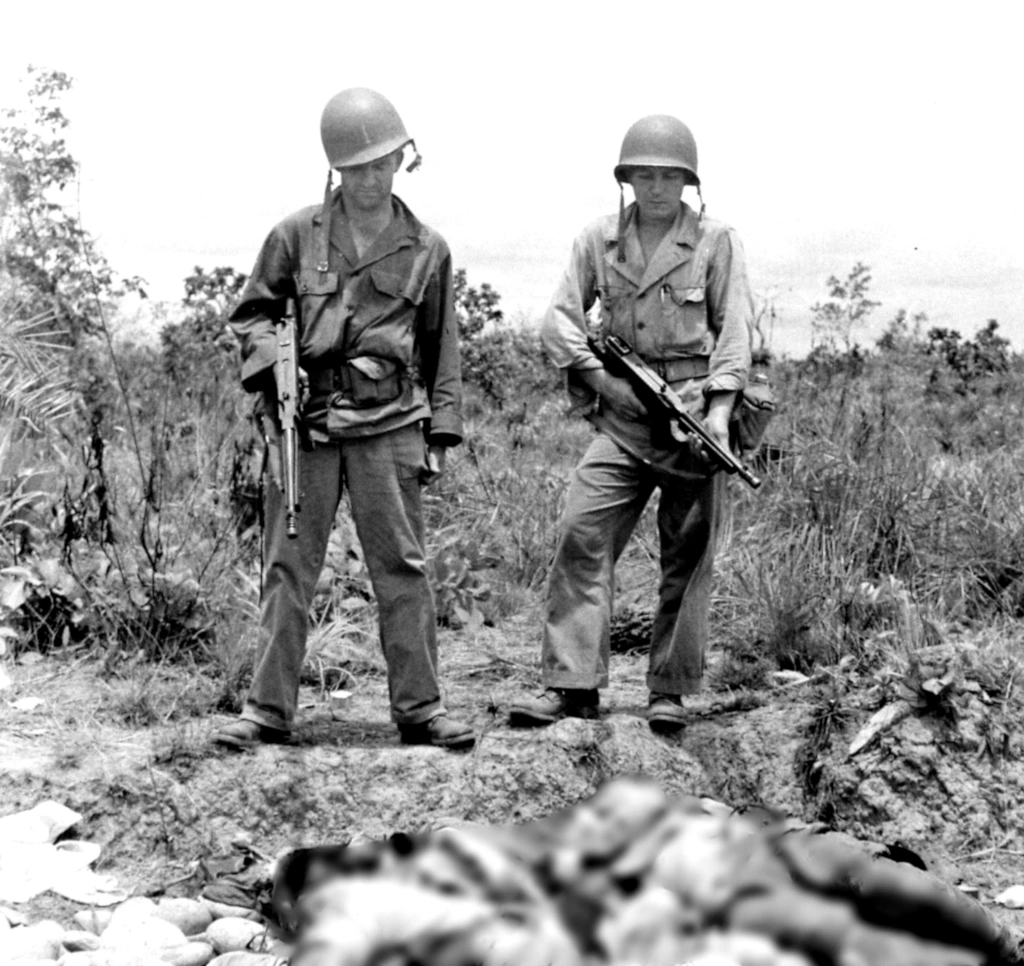
As Cooper was being carried into the perimeter, a soldier came up to me and said, ‘They got Rowe’. I asked, ‘Is he dead?’ He said, ‘Yes’. I directed a soldier to help Sheppard give blood plasma to Cooper, then walked over to check our tie-in with Item Co. The men were still digging their foxholes. I was walking back towards the place where they were working on Cooper when this same soldier came up to me again and said, ‘What are we going to do about Lt Rowe?’ I said, ‘Where is he?’ He pointed towards the enemy and said, ‘Out there.’ He said Rowe had been killed at the farthest point of our advance. He evidently was abreast of me when the machine guns opened fire and, like Cooper, was probably hit by the first few rounds. I said, ‘OK, we’ll get him.’ I was not enthusiastic about going out for him. The Japanese usually fired their machine guns ‘right down the alley’; that is, without traversing or searching. I knew that anyone going near Rowe was flirting with the same fate. I called Lt Meade and one of his light machine gunners. I instructed the gunner, upon signal, to fire into a suspected area and for Meade to have one of his mortars fire into another suspected area. I was carrying a submachine gun, which was heavy and clumsy, so I exchanged it for a carbine and was ready to go out when the platoon sergeant came up and said, ‘I’ll go out with you, Capt’ I said, ‘OK.’ I gave the signal to fire, and we went out. Rowe was lying face down, near the edge of the paddy field.
Next to him, face down, was another soldier, Pvt Garcia. Both were dead. Rowe was a large man. It was all we could do to drag him back, making sure to bring the M-1 he was armed with back too. As we were carrying him into the perimeter, someone remarked that Garcia was out there, too. Lt Meade ran out, and as Garcia was a small man, he was able to drag him back. I had three seriously wounded men who had not yet been evacuated. It was nearly dark. I called the Battalion CP to send up some men to take them back, as I could not spare that many men from the perimeter. I was told to leave them until morning; that no one could go up there during darkness. I directed that three deep holes be dug large enough for a man lying down. Put brush and grass in the bottom, wrap the men in shelter halves, and place them in the holes for protection against the inevitable mortar fire. I used my own and two other officers’ shelter halves to put a cover over the holes to help ward off the rain, and then dug a drainage ditch around each hole. Before we finished, complete darkness had descended. Lt Lane, my Executive Officer, then dug a hole for ourselves. All during the night, the rain came down in torrents, and as we had no cover, we spent a disagreeable night, made more so by the groans of the wounded who were next to us. Early next morning, July 30, we evacuated the wounded and dead.
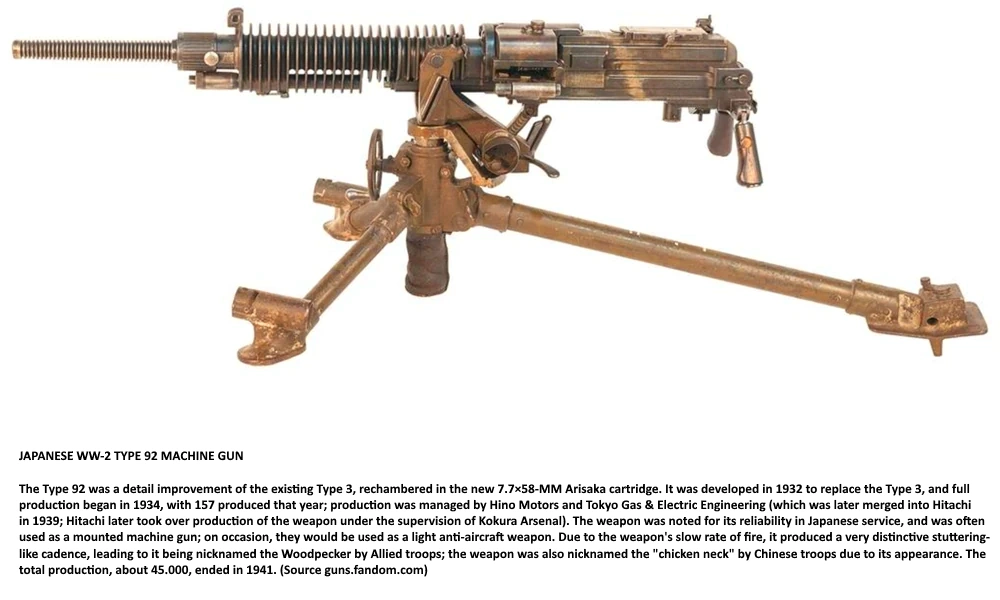
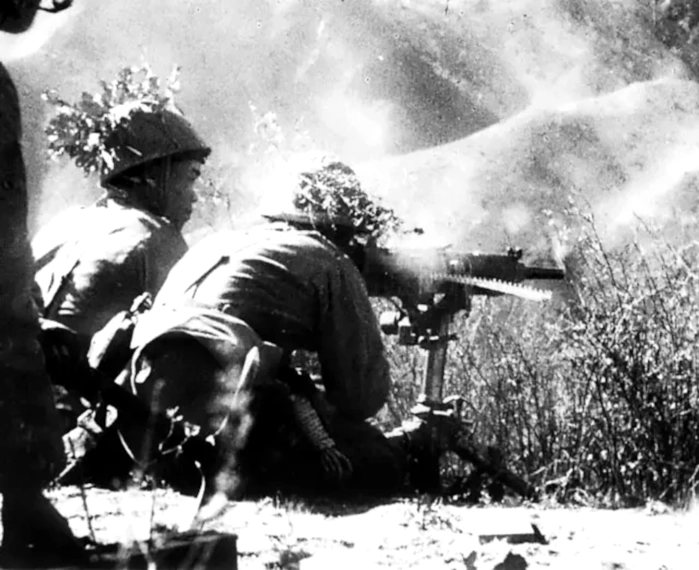
After cleaning our weapons, we remained in the perimeter until about noon, when we attacked again. Progress was again slow. We had not gone far when fired on by two machine guns. One heavy machine gun was firing from a position off to our right front near the paddy’s edge. Sgt Jasinsky yelled to me that the other gun, a light Nambu, was firing from a Basha just beyond the hedgerow. Lt Delores, leader of the Machine Gun Platoon, went in and captured the heavy machine gun, killing three Jap soldiers. I was attempting to find a passage through the thick wall of hedge separating us from the open field containing the Basha. In the meantime, the heavy machine gunners had worked their way forward and were firing into the hut. Then Sgt Jasinsky yelled, ‘Hold your fire,’ I’m going in and get that ‘son of a bitch’. He jumped up and rushed in. An instant later, Lt Algieri and Cpl Touhet rushed forward. Algieri was on the left of the Basha, and Touhet on the right. The front and two sides were closed right to the ground with only an opening in the front for the enemy to fire through, but the back was open. Jasinsky went right in through the rear and killed the crew of three. We were running short of mortar ammunition, and as we had only a few hours of daylight left, we decided to dig in for the night. The night again was active with the usual attempts at infiltration. Our grenades exploding and the usual Jap harassing mortar fire.
After the death of Lt Rowe, I put Lt Van Matre in command of the 3d Platoon. He was assigned to my company the day before we crossed the paddy. As I already had five officers, I did not have an appropriate assignment for him until now. On the afternoon of July 31, we were ordered to attack again. We jumped off, and the going was very slow again because of the nature of the enemy and terrain. We were in hedgerow country now, and visibility was a little better. After gaining about 200 yards, we decided to dig in as we had less than an hour of daylight left. The men were digging in, and after checking the perimeter and being satisfied with the tie-in with Item Co, I walked back to my CP. Lt Van Matre came up and was slated over the way his men had fought. He said that when notified that we were to attack again, they grumbled and were becoming reluctant to continue these constant attacks, but that he had talked to them and when we jumped off, they went forward in great shape. He left me and went back towards his platoon. Two minutes later, a soldier came running up to me and said, ‘They got Van!’ I asked him if he was dead, and he said, ‘Yes’. I walked over to the 3d Platoon area. Van Matre was shot through the head. He was not yet dead, but did die after being evacuated.
In today’s fighting, Lt Delores was wounded for the second time and was evacuated. Lt Pearson took command of the machine guns. I was checking the perimeter and stopped for a few moments to talk to Sgt Jasinsky, who was checking his squad. I had left him only a few moments when Jap mortar fire came in, and Whistling Willie opened up. He was hit. I ran over to him. There was a large gash in his arm. I was opening a first aid packet when the aid man, Sheppard, ran up. He put a bandage on his arm, and he was evacuated. Later in the day, Sheppard was hit and evacuated. The I & R Platoon had been relieved from outpost duty on the river and had taken position on the left of Item Co. It was given an attack sector and participated in the day’s fighting. Its leader, Lt Adkins, besides fighting with his platoon during the day, led several night patrols behind the Jap lines. He was extremely brave. He was later killed in the Central Burma Campaign.
On August 1, Love Co moved up on the right of King. We attacked on this day with three companies abreast, plus the I & R Platoon and made the usual gain of a few hundred yards after heavy fighting. In this day’s fighting, I lost two more lieutenants: Lt Lane, my Executive Officer and Lt Campbell, 2d Platoon. Toward evening of this day, Lt Algieri was wounded and evacuated. I now had one lieutenant left: my Weapons Platoon Leader, Lt Meade. On August 2, Love Co attacked to the southeast to secure a wooded area. They accomplished their mission but this left a large gap between Love and King Companies. The remainder of the battalion was ordered to attack straight to the south to close the gap and protect the flank of Love. The men were out of their foxholes and we were forming for the attack when the Japs opened with everything they had, including Whistling Willies. I lost 17 men in about five minutes. This completely disrupted the attack and it was called off. The Battalion Commander called me and I explained the situation to him. Then he gave me this GEM of advice: ‘when caught in an artillery or mortar barrage, the best way to go is forward’. After the casualties were evacuated came the order to attack again. My 1st Platoon was now commanded by a Pvt. He commanded two other privates. There were six men in the 2d Platoon, commanded by a Cpl. Lt Duncan, who had been on duty with Regimental Headquarters, was sent up and I gave him the 1st Platoon of 12 men. My Weapons Platoon consisted of Lt Meade and 4 men.
For this attack, I consolidated the 2d and 3d Platoons (9 men) and commanded them myself. The field to our front was bordered by hedgerows, I ordered Lt Duncan to advance along the left hedgerow, keeping contact with Item Co on his left. I would go up the right row and at the same time protect the right flank. The attack was supported by my one remaining 60-MM mortar and two mortars from Item Company. We moved out almost immediately and came under mortar fire. We continued on for about 75 yards when Whistling Willies joined in and wounded two of my men, leaving me with seven. This fire stopped my group. I then attempted to make contact with Lt Duncan who was supposed to be moving up on my left. I then discovered I was doing a solo. When the mortar fire came down, Duncan moved out but Item Co did not. Duncan advanced a few yards, but because the unit on his left had not moved out, he withdrew to the perimeter.
Now realizing the attack was completely disorganized, I withdrew to the perimeter.
A short time later, Maj Harrold (Battalion ExO) came up with the Battalion Headquarters Company Commander, Capt Prevo, to see what the trouble was. He asked me to show him Love Co’s position. We were walking down a trail towards Love when the Japs laid down another mortar concentration. In attempting to escape the fire, the three of us took cover in a hole not large enough for one man. Maj Harrold then agreed that we should not attack without more supporting fires and went back to the Battalion CP. Because of its exposed position, Love Co withdrew to its original position and tied in with King Company.
The next day, August 3, after stocking up some mortar ammunition, the battalion attacked, driving straight for the river. We came out of a hedgerow into a clearing when Whistling Willies opened up not 50 yards to our front. It was behind a clump of bamboo at the end of a hedgerow. I moved up the left followed by Pvt Sardella and Pvt Tickey. Lt Pearson, the Heavy Machine Gun Platoon Leader, came running across from the right, straight for the gun. He threw a grenade right into the olump of bamboo and when it exploded we moved in right under the muzzle of the gun and killed the crew. We continued on and soon reached the river. Eight Japs committed suicide on the river bank. The only fire now was coming from a temple in Love Co’s sector. As our men were closing in, the seven remaining enemy committed suicide. While Item Company guarded the rear (north) of the battalion, King and Love formed a line to the south facing Myitkyina. The artillery liaison officer said he still had about 50 rounds left. I told him to fire them. He did and we jumped off and overran a Jap position designated as a ‘strong point’ on our aerial photos. It proved very weak, containing only a few Japs. We soon made contact with the Chinese force that was driving north and the 78-day battle of Myitkyina was over.
John J. Dunn, Major, 5307 Composite Unit (Provisional)
Advanced Infantry Officers Course 1947-1948
Academic Department – The Infantry School
Fort Benning, Georgia