


Twenty Army Group unter Gen Huo Kuei-chang (TFA – TFB – TFC)
Task Force A – Salween River Offensive: Task Force “A” was a composite Chinese formation operating under the overall direction of the Chinese Expeditionary Force (CEF) during the Salween River Campaign of 1944. The task force was commanded by Gen Sun Li-jen, the highly regarded commander of the Chinese 38th Division, whose leadership had already distinguished itself in the Burma Campaign alongside American and British units under the Northern Combat Area Command (NCAC) of Gen Joseph ‘Vinegar Joe’ W. Stilwell, US Army. Task Force ‘A’ was ordered to cross the Salween River at Meingku Ferry, advance westward through the Mamien Pass toward the Shweli River, and continue its movement south through Chiaotou toward Kaitou. The operation was part of the larger Allied effort to reopen the land route to China by linking the Ledo Road from India with the Burma Road from Yunnan.
Task Force B — Salween River Offensive: Task Force B was to cross the river at Mengta Ferry, then advance westward via Tantangtzu and the designated pass to Chiangtso, thereafter proceeding along the Shweli River toward Watien. Together with the complementary force operating on the adjacent axis, these two formations constituted the principal combat power and were to be prepared to pivot southward toward Tengchong once the designated objectives on the Shweli corridor were secured. The plan required strict adherence to movement timings for river crossing operations, establishment of forward supply and maintenance points to sustain the axis of advance, and secure lines of communication between the two principal forces to enable the coordinated pivot to the Tengchong Axis.
Task Force C — Salween River Offensive: Task Force C was to cross the Salween River in the vicinity of the Hwei-Jen Bridge, then advance to Laochai. Once positioned at Laochai the formation would be prepared to initiate a westward drive on Tengchong. Planning emphasis: secure and controlled river-crossing procedures at Hwei-Jen, establishment of forward supply and maintenance points to sustain the Laochai lodgment, and reliable communications to enable coordinated movement with adjacent forces.
Eleven Army Group unter Gen Huang Chieh (TFD – TFE – TFF)
Task Force D — Salween River Offensive: Task Force D was to cross the river at Tahai Ferry, then advance via Ping-Ka and Hsiang to occupy and consolidate positions at Longling. The movement was planned to secure the designated lodgment on the Longling Axis and to preserve freedom of manoeuvre for subsequent operations. Planning emphases: controlled timing and sequencing of the Tahai River crossing, immediate establishment of forward supply and maintenance points to sustain the advance, route-reconnaissance and engineer support for movement through Ping-Ka and Hsiang, and redundant communications to ensure timely coordination with adjacent task forces.
Task Force E — Salween River Offensive: Task Force E was to cross the Salween south of Tahai Ferry, then advance via Ping-Ka and Hsiang to secure Mangshi. Employed as a secondary force alongside Task Force D, its principal objective was to interdict and sever the Burma Road by occupying key nodes on the Mangshi Axis and denying lateral movement to enemy forces. Planning emphases: synchronized timing with adjacent crossings to prevent gaps in the interdiction scheme; rapid establishment of forward supply and maintenance points to sustain the Mangshi Lodgment; engineer reconnaissance and route clearance through Ping-Ka and Hsiang; and redundant command, control, and communications to ensure the task force could co-operate effectively with the primary axes.
Task Force F — Operational Plan (Salween Sector): Task Force F was to commence operations well east of the
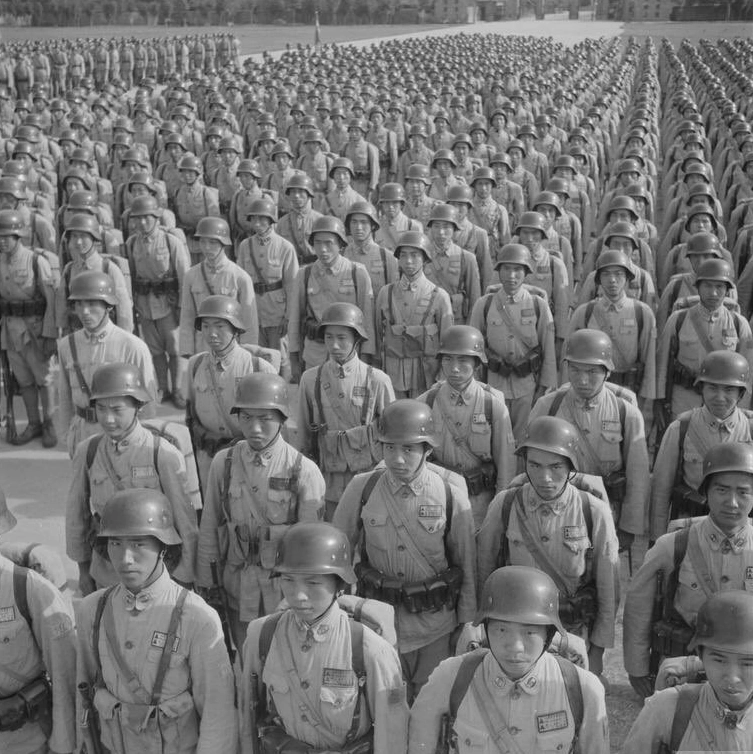
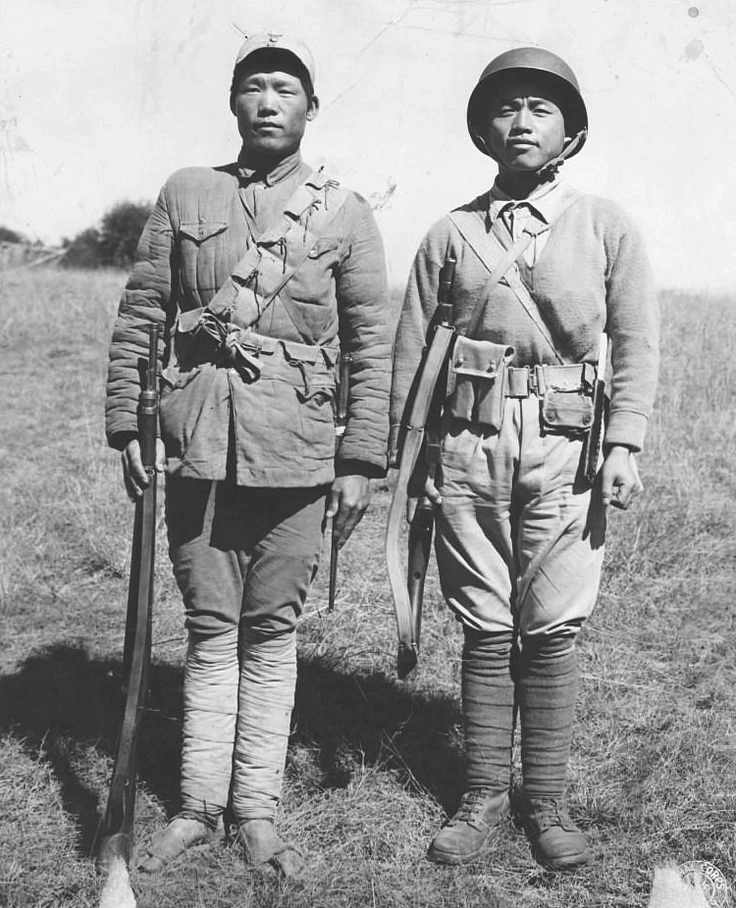
By May 1, four Chinese Armies on the Salween Front were considered sufficiently trained for offensive combat. These four armies, totaling about 100.000 men, were organized into the 11th Army Group and the 20th Army Group. These units comprised the Chinese Expeditionary Force commanded by Gen Wei Li-Huang. Japanese forces to the west of the Salween River had occupied the area west to the India-Burma Border for almost two years. They had prepared strong defensive positions in and outside of cities, towns, and villages, and were entrenched firmly throughout the mountains. The Japanese forces on the Salween Front consisted of the 18th Division on the north, 56th Division in the center, and the 37th Division on the south.
Operations Phase
The Chinese 20th Army Group, commanded by Gen Huo Kuei-Chang, was organized into Task Forces A, B, and C. The 11th Army Group, commanded by Gen Sung Hsi-Lien, was organized into Task Forces D, E, and F. On May 10, these units were poised on the east bank of the Salween prepared to assault the west bank during darkness. On the night of May 10/11, 1944, troops of all Task Forces began to cross the Salween River according to plan. American Field Liaison Teams accompanied these troops into action. This marked the beginning of China’s first major offensive on Chinese soil in more than seven years of war against Japan. The Chinese troops crossed in pneumatic rubber boots furnished by American engineers of Y-Force Operations Staff. The crossings were further expedited by using bamboo rafts and rafts supported by empty oil drums. The initial river crossings were performed efficiently and quietly without incident, suffering one casualty by drowning. This can be attributed to river crossing training and rehearsals earlier on the Mekong River, east of the Salween River, under close direction and supervision of American engineers.
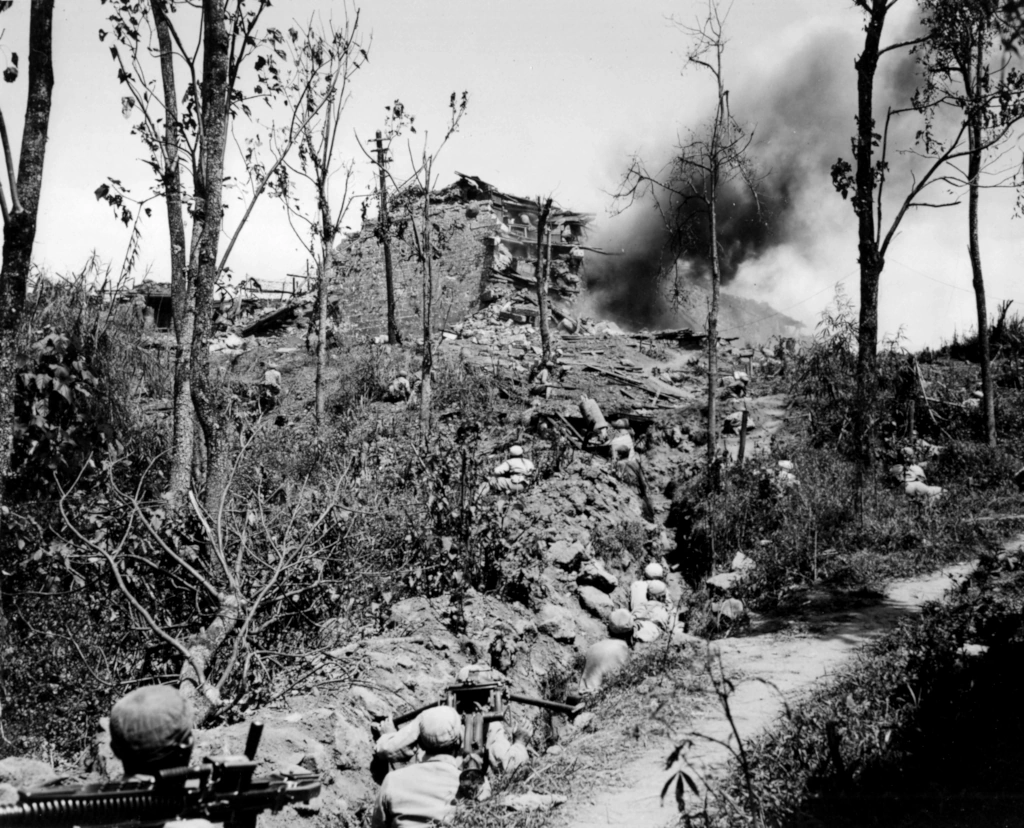
The Japanese forces on the western bank at all crossings were completely surprised by the attack. At dawn the Japanese forces came to life and resisted the attack with small arms, automatic fire, mortars, and artillery. But this oppositional was beaten off by the Chinese troops advancing up the steep slopes, aided by the supporting fire of friendly forces on the east bank. North of the Burma Road, Task Force A completed it’s crossing of the Salween River before midnight on May 11. One column advanced to the southwest, by-passed Lengshuikuo and the Mamiem Pass, and continued toward the Shweli River. A second column reached Mamien Pass and were in position to attack the Japanese fortified positions in that area on May 15. Efforts to reduce the Japanese positions in the Mamien Pass area were hampered by difficult terrain, weather, logistical problems, and the fanaticism of the enemy. Mamiem Kwan, just west of the pass, was captured by the Chinese on May 18. On May 22, an attack was launched to capture Chaikungtang, two miles northwest of Lengshuikuo, and two days later attacks on Lengshuikuo itself began. These attacks continued until June 14, when the Japanese units withdrew westward into the Shweli River Valley, followed by the Chinese.
Meanwhile the first column which had by-passed Mamien Pass, advanced westward, attacked and captured the Japanese strongpoint of Chiatou on May 17. A week later they captured Kaitou, 4 miles to the south. But Japanese counterattacks, with reinforcements from Watien, drove the Chinese units from Kaitou on May 26, and Chiatou on May 28. Chiatou changed hands two times in the next two weeks, and Kaitou changed hands once more. The second column, successful in clearing the Japanese positions in the Mamien Pass area joined the first column on June 15, and gave the added strength necessary to capture Chiatou and Kaitou on June 16, driving the enemy to the south.
Task Force B crossed the Salween River at Mengta Ferry and advanced toward Tatangtzu. Initial contact was established with the Japanese east and northeast of Tatangtzu on May 12. On May 13, a Japanese counterattack drove the attackers back towards the river, but Chinese reinforcements on the following day drove the enemy back into the town. Another attack to capture the town was launched but without success. Chinese efforts to capture Tatangtzu were finally successful on May 23, when additional strength was brought up. From Tatangtzu the Chinese attack developed into two movements, one on Chiangtso and the other on Watien. On June 3, Tapa, 1 mile south of Chiangtso, was captured. A Japanese counterattack on June 5, was repulsed by another counterattack on the following day, supported by reinforcements and artillery, drove the Chinese out of Tapa into defensive positions to the south of the village.
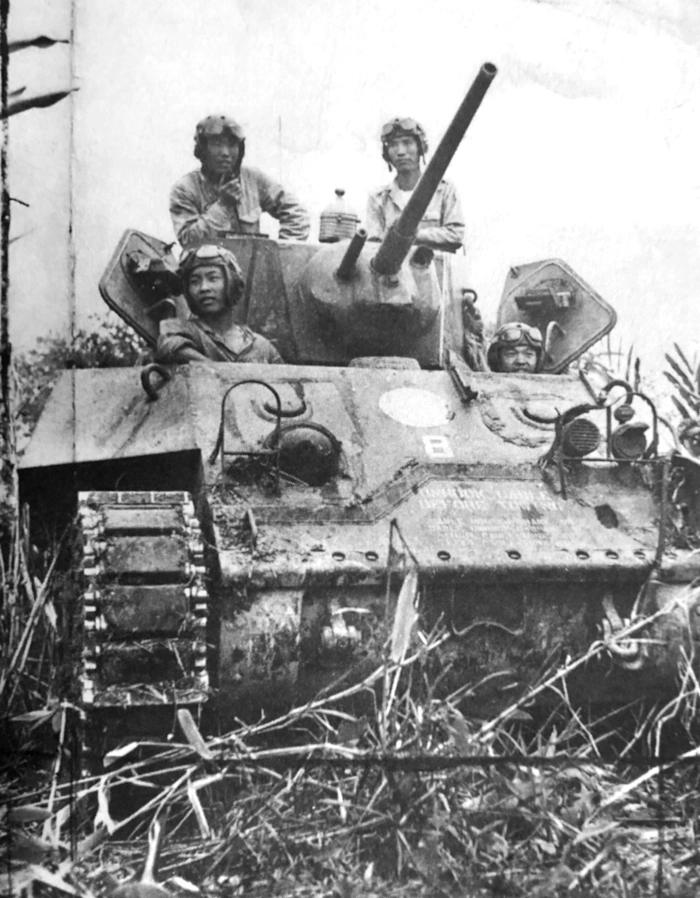
The drive on Watien followed a similar pattern. On May 29, villages surrounding Watien on the northeast, east, and southeast were captured by the Chinese. Japanese counterattacks drove the Chinese from their newly gained villages on June 3. Chinese counterattacks on the following day recovered the villages. On June 10, units of Task Force B were holding defensive positions around Chiangtso and Watien in readiness for favorable conditions to renew attacks on the two towns. Chinese units of Task Force A moving from Kaitou, joined with Task Force B on June 18, in the Waiten Area. With the added strength of Task Force A, attacks on Watien and Chiangtso were launched on the following day. Watien fell to the Chinese on June 20, and Chiangtso on June 21. The enemy withdrew across the Shweli River toward Tengchong followed closely by the Chinese. By June 22, Task Forces A and B had moved passed Chuchih and Poshangtsun to within 10 miles of Tengchong where they went into defensive positions awaiting further instructions.
Task Force C completed crossing the Salween River on the evening of May 11, and the following day were engaged with the Japanese northeast of Hungmoshu. The town was captured on May 15. The usual Japanese counterattacks prolonged the operations in this area for almost a month. On May 17, the enemy recaptured Hungmoshu but it fell again to the Chinese in an attack on May 20. A Japanese counterattack on May 29, drove the Chinese out again. Finally on June 12, the Chinese forces launched a coordinated attack, captured Hungmoshu, and drove the enemy westward through Laochai and across the Shweli River. By June 15, Chinese units had taken up defensive positions 10 miles east of Tengchong. The Chinese operations in the Kaoli Kung Mountains and the Shweli River Valley by units of the 20th Army Group were now completed. Approximately 4000 square miles of Japanese held territory had been regained in some 40 days of operations. The Chinese Forces now occupied a defensive position to the north and east of Tengchong, preparing to launch a coordinated assault on the Japanese stronghold.
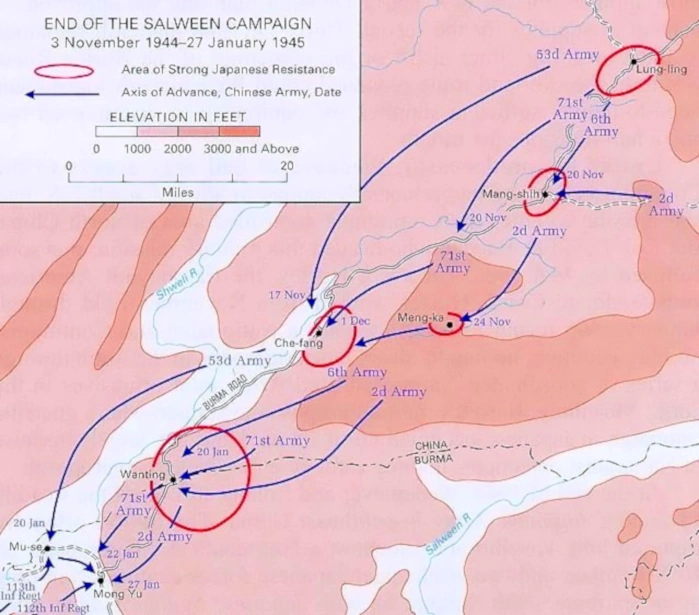
On June 27, the Chinese 20th Army Group launched a coordinated attack to capture Tengchong. This attack was supported by fighters and bombers of the Fourteen Army Air Force with the coordination of Y-Force Operations Staff. Chinese forces moving to the southwest, captured Mienching on June 26, 7 miles west of Tengchong, and eliminated the Japanese positions in the hills surrounding Tengchong on the east, north, and west continued. On July 1, the capture of Laifengshan, well-fortified hill in the outer defenses of Tengchong, was affected. The attack and subsequent capture of this hill illustrates the assistance rendered by Y-Force Operations Staff personnel.
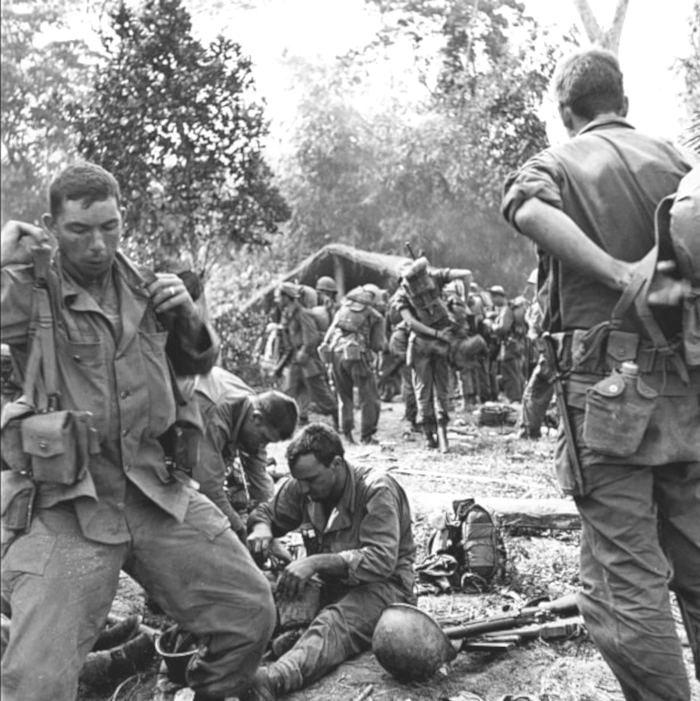
The plan of attack on Laifengshan was formulated by the Chinese with the assistance of the accompanying American personnel. A thorough reconnaissance of the position was made by officers of units concerned, employing American reconnaissance principles. When the attack was launched, units were employed in a coordinated effort instead of the piece-meal fashion often dictated by Chinese military tradition. Troops continued to advance steadily after capturing intermediate objectives, instead of the usual pause for consolidation, thereby preventing the enemy to regain the initiative. American flamethrowers were flown to the area and quick instruction in their use was given by American engineers. American personnel accompanying the attacking troops spotted targets for the Fourteen Army Air Force fighters and bombers supporting the attack. In the reduction of the hill, the Chinese killed or wounded over 600 enemies, captured a considerable quantity of material, and repulsed several Japanese counterattacks, each of battalion strength.
Chinese units continued to move south and southeast of the city, cutting the Tengchong-Lungling Road. Several fortified positions surrounding the airstrip, southeast of Tengchong, were taken on July 5, while other units advancing from the east captured Tatung on the same day. These units continued to move down the road, eliminating Japanese resistance making contact with units of Task Force D at Chiaotoukai on August 10. In the vicinity of Tengchong Chinese units had advanced up to within half a mile of the city walls on all sides by July 6. The period July 6-29, was devoted to eliminating all enemy resistance in the suburbs as the advance continued toward the walls of the city. By nightfall on July 29, all areas outside of the city walls were in Chinese possession. All units were ordered to dig in and reorganize in preparation for the assault on the high walls of Tengchong. Strong enemy attempts to break the encirclement around the city were repulsed with many casualties on both sides. The city of Tengchong was not an easy objective to take. It was a natural fortress, completely surrounded by a wall approximately 30 feet high and 8 feet wide at the top, sheer in the front and sloping down to thicknesses of 15 feet or more inside the city. On these walls the Japanese had constructed hundreds of pillboxes which had to be captured individually by the attackers. Compounds and temple areas throughout the city had also been fortified into strong points.
On August 2, Chinese attempts to breach the walls with artillery, mortars, and rockets failed. On the following day the Fourteen Air Force Mitchell bombers, using skip-bombing technique, made gaps through the walls in the southwest corner of the city. Chinese units assaulted through the gap shortly after the bombing and proceeded to engage Japanese strongpoints with small arms fire, rockets, and flamethrowers. American Air Force fighters and bombers strafed and bombed Tengchong again on August 4, making two additional breaks in the southeast portion of the wall. Friendly forces assaulted through the gaps to engage enemy units inside the city. On the night of the same day, Chinese forces battling in the southwest part of the city were forced to withdraw under pressure of strong enemy counterattacks. Similar counterattacks to eliminate Chinese units in the southeast portion of Tengchong were repulsed by small arms fire and flamethrowers. On August 7, the assaulting troops used scaling ladders to scale the northwest portion of the wall. Flamethrowers, rockets, and grenades were used to eliminate enemy pillboxes and other defensive positions on the wall. Finally, Tengchong was captured on September 14, after a bitter fight lasting 51 days. Heavy casualties were suffered by the attackers due to the hand fighting. The hundreds of pillboxes on the walls and in the compounds within the city had to be eliminated one by one. In many cases pillboxes were destroyed by pouring gasoline through small embrasures and then firing them with flamethrowers. With the fall of Tengchong the Japanese power in this area was broken.