


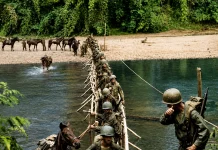


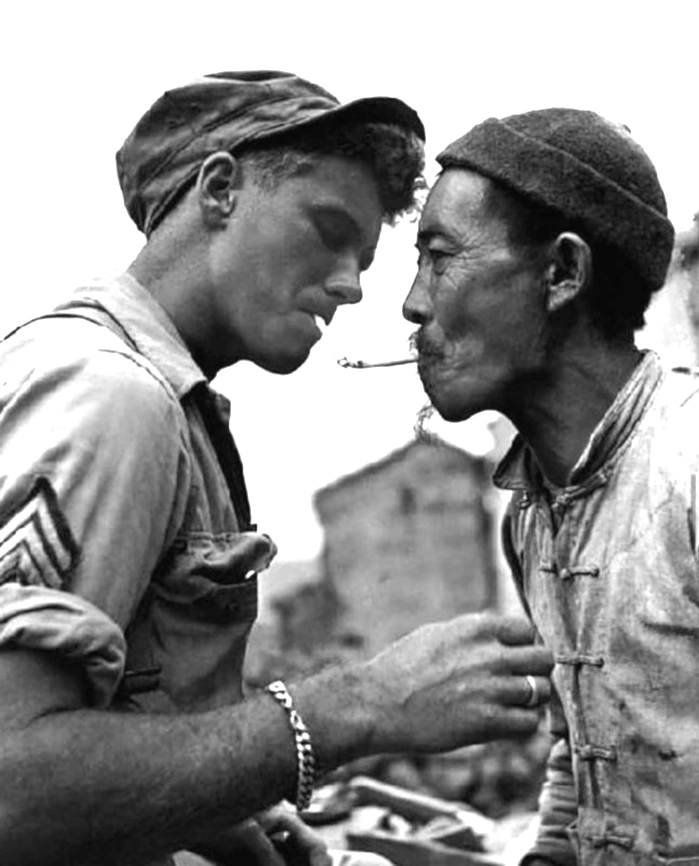
After the fall of Tengchong all units of the 20th Army Group were reorganized, additional supplies and equipment distributed, and preparations made to move south to assist 11th Army Group in a coordinated attack on Lungling and Mangshih. After the reorganization period the Chinese 20th Army Group, less the Fifty-third Army, advanced southeast on the Tengchong-Lungling Road toward Lungling. The Fifty-third Army, commanded by Gen Chou Fu-Cheng, advanced south with the mission of eliminating all Japanese resistance in the Shweli River Valley west of the Burma Road. South of the Burma Road, Task Force D crossed the Salween River at Tahei Ferry and by midnight of May 11, were advancing northward toward Lameng and Chenanso. On May 14, the rear of Task Force D was attacked by the Japanese, inflicting heavy casualties. Continuous harassing action by the enemy forced the Chinese to take up defensive positions about 10 miles to the southeast of Lameng. Reinforcements were sent across the Salween on May 28, to strengthen the Chinese units.
On June 4, Task Force D attacked and captured the village of Lameng, the first Burma Road village west of the Salween River. The Japanese withdrew to strong fortified hill positions north of Lameng. This area consists of a series of mountain peaks. Shungshan, the principal peak, dominates the entire area. Almost every peak and village in the area contained strong pillboxes. The mountain walls were cut by deep curving caves and tunnels which the enemy used for communications and protection from bombings. Japanese light tanks were dug into the mountainside and used as fortified artillery positions. From here, Task Force D was organized into two columns. The first column was given the mission of reducing these positions while the second column advanced down from the Burma Road toward Lungling. On June 15, the Chinese launched their attack to reduce the positions in the Shungshan Area. Tayzkou, southwest of Shungshan, was captured on the first day. Two days later the Chinese troops stormed up the almost vertical slopes of Yingtungshan to capture the second peak in the area. American antiaircraft batteries were placed on this peak and later employed to fire direct fire in support of Chinese attacks on other positions. Only Shungshan and Kunglungpo, which dominated the Burma Road to the southwest, remained to be reduced. From June 17, to July 1, reorganization and preparations for full-scale assault on these enemy-held positions were made. Meanwhile action was limited to patrolling.
Under the supervision of Y-Force Operations Staff personnel friendly artillery fire from the east bank of the Salween bombarded the Japanese positions almost daily. American antiaircraft batters on Yingtungshan added to the artillery fire in the softening-up process. On July 4, a special combat team which was specially trained and rehearsed under supervision of American personnel for the operation, attacked Shungshan and Kunglungpo with demolitions, flamethrowers, and rockets, supported by artillery, mortars, and small arms automatic fire. The attack was repulsed and the Chinese were driven back down the slopes. Several more attempts to reduce the heavily fortified enemy positions were made by the Chinese without success. On August 20, Chinese engineers, under direction of Y-Force Operations Staff officers, planted 6000 pounds of dynamite under the main Japanese positions and blew the peak and its defenders into oblivion. This was the beginning of the final assaults which ended with the extermination of the Japanese defenders on September 7. Of the estimated 2000 enemy on Shungshan, nine were captured, ten escaped. Chinese casualties in this operation were approximately 7700. The Shungshan operation has reduced the strength of this force considerably. It was reinforced with Chinese units form the French Indo-China Front. Following reorganization the Chinese troops advanced southwest along the Burma Road to form a junction with the second column of Task Force D in the vicinity of Lungling.
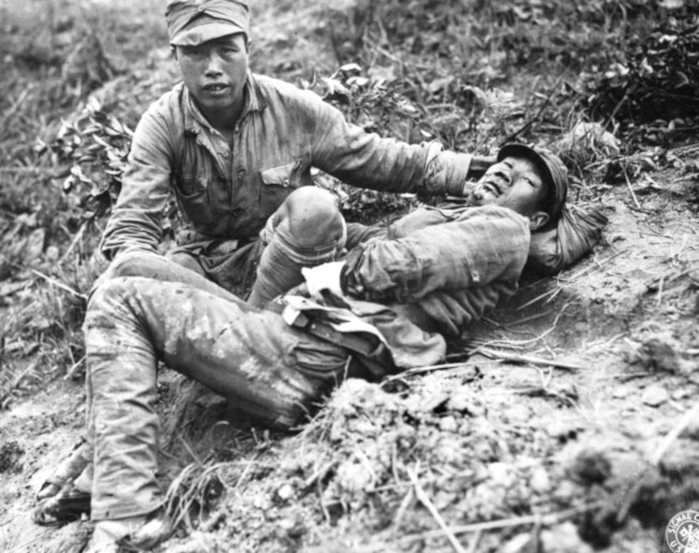
Meanwhile, the second column of Task Force D advancing down the Burma Road, captured Chenanso on June 8. Two days later, the Japanese in Lungling were surprised and the city captured without many casualties to either side. But enemy reinforcements moving up the Burma Road from Mangshih in the south and down the Tengchong-Lungling Road in the north, forced the Chinese to withdraw on June 17. The Chinese withdrew to defensive positions 5 miles to the northeast, east, and southeast of the city. A portion of this force moved around to the north of Lungling to effect a junction with units of the 20th Army Group advancing south from Tengchong, and to cut the Tengchong-Lungling Road near Chiatoukai. The Japanese made numerous attacks on the Chinese positions to force them to withdraw from the Lungling Area, but were unsuccessful. On July 5, the Chinese resumed the initiative and launched an attack to drive the enemy from Lungling again. Heavy monsoon rains limited the operation to small local skirmishes and intensive patrolling by the Chinese. Continued attacks on limited objectives by the Chinese improved their tactical positions. The occupation of the hills around Lungling changed hands several times with the Chinese gradually pressing forward. This pressure was maintained on the enemy until September 25, at which time the Chinese occupied defensive positions surrounding the city on the north, east, and south.
Meanwhile, on August 10, troops north of Lungling contacted the 20th Army Group units moving to the south from Tengchong. The Chinese force which had been successful in reducing Shungshap, joined the second column of Task Force D northeast of Lunglign on September 11. Task Force D was again intact. From September 25, to October 29, there was little activity in the Lungling-Mangshih Sector. Monsoon rains confined the operations to minor skirmishes and patrol activities. The Chinese forces took this opportunity to regroup their units, collect supplies, and prepare for the final assault in Lungling. A coordinated attack to capture Lungling was launched on October 29. Throughout the attack, American Air Force fighters and bombers flew strafing sorties and bombed the city in support of the Chinese ground attack. The continuous fire from Chinese positions in the hills surrounding Lungling forced the enemy to withdraw into the hills to the west on the night of November 2/3. Chinese forces moved into the city early on the morning of November 3, and found a shattered city with scarcely a building standing intact. From Lungling units of the Chinese Expeditionary Force, less Task Force F and the Fifty-third Army, continued the advance down the Duma Road preparatory to launching a coordinated attack to drive the remaining Japanese from Mangshih, Chefang, and Wanting.
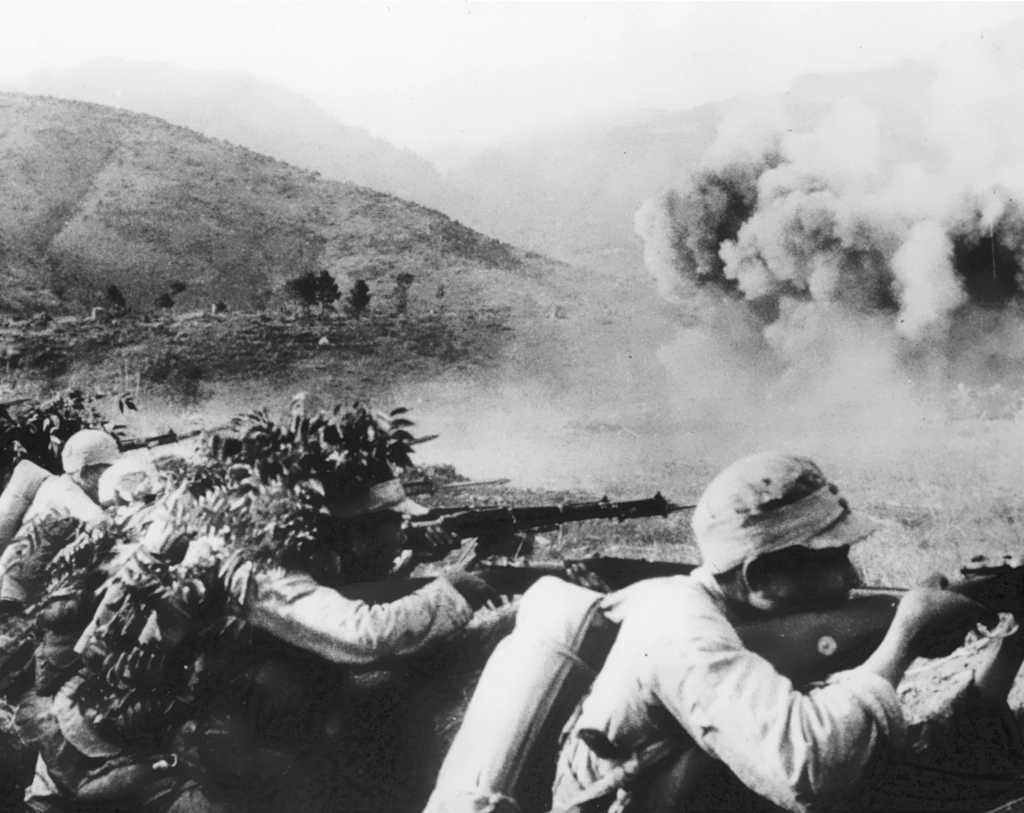
Task Force E crossed the Salween in the vicinity of Santaun, advanced eastward, and attacked Pingka on May 12. It fell on May 15. At this point, Task Force B was organized into two columns. One column remained to continue mopping up operations in the Pingka area while the second column proceeded northwest to attack the village of Hsiangta. On May 23, Japanese reinforcements launched a counterattack and recaptured PingkaPingka area through July 13. On July 13, an enemy force estimated to be a reinforced battalion, attempted to reinforce the Pingka garrison. This column was engaged by Chinese troops from July 13, to July 16. During the night of July 16/17, the Japanese column divided into several forces launched a coordinated attack on the Chinese from the west, south, and north attempting to penetrate the defenses around the town, but were unsuccessful. Simultaneously the Pingka garrison endeavored unsuccessfully to break through and join the relief column. Successive attacks by the enemy column were repulsed with considerable Japanese casualties. The remainder of the column withdrew towards Mangshih on July 18. Other columns from Mangshih attempted to relieve the Pingka garrison during the next two months, all without success. On the night of September 22/23, a Japanese column estimated at one battalion engaged the Chinese in the hills around Pingka. During the attack, the Pingka garrison succeeded in withdrawing from the town. All enemy forces in the area withdrew towards Mangshih, closely pursued by the Chinese. This column joined the second column of the Task Force which had established a roadblock three miles northeast of Mangshih.
Meanwhile units of the second column which had advanced toward Hsiangta, occupied positions in the surrounding bills on June 10. On June 13, the Chinese captured the village, driving the enemy westward toward Mangshih. Heavily reinforced, the Japanese counterattacked on June 14, and recaptured Hsingta. However they were unable to take advantage of their success and could not drive the Chinese from all positions around the village. The Chinese regained the initiative on June 19, and recaptured Hsingta in a night assault on June 24/25, driving out all enemy troops from this area. From Hsiangta the Chinese continued to advance west over the Mangshih-Hsiangta Road. On June 26, they succeeded in cutting the Burma Road 3 miles northeast of Mangshih. No attempt was made to attack the city. Until the assault on Mangshih the activities of Task Force E were confined to harassing the enemy communications in the Lungling-Mangshih Area. With the loss of Lungling, the Japanese in Mangshih began to withdraw the major portion of their forces to the southwest along the Burma Road. Enemy forces in the Shweli River area withdrew following the river towards Wanting. American air spotters on the ground directed the Fourteen Air Force fighters and bombers to Japanese supply dumps, troop concentrations, truck columns, fortifications, and many other vital installations in the Mangshih, Chefang, and Wanting areas. The Fourteen Air Force flew two to three missions each day in the softening-up process preceding the ground attack.
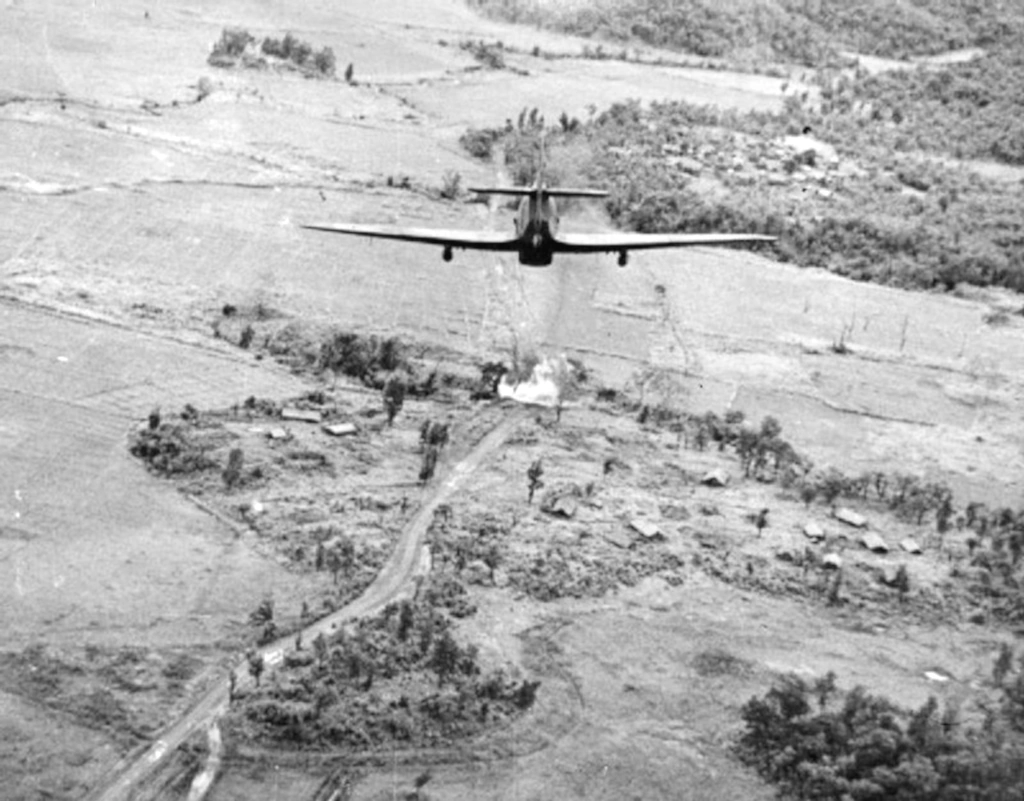
Japanese resistance in the entire area to the south of Lungling was confined entirely to a delaying action. Mangshih was captured on November 20, and Chefang on December 1. The retreating enemy moved into defensive positions in Wanting on the Burma-China Border in an attempt to halt the attacking Chinese. Wanting fell on the night of January 20/21, 1945. With the capture of Wanting, all Japanese were cleared from the Yunnan Province. Further to the south, Task Force F started its advance to the west toward Kunlong on May 11, in conjunction with the assaults across the Salween by Task Forces A, B, C, D, and E. On May 17, it made contact with the Japanese in the Hopang area, 6 miles east of Kunlong. Hopang was captured on May 28. With the capture of Hopang, the Chinese organized defensive positions and there was little activity in this area for the remainder of the campaign. However, a large Japanese force was kept engaged preventing reinforcements for the enemy units fighting in the north.
Ending of the Salween Campaign
The Salween Campaign ended on January 20, 1945, concluding the first successful major offensive waged against the Japanese by the Chinese in over seven years of war on Chinese soil. The campaign to break the Japanese blockade around China was over and a land supply route via India from the United States and other allied nations was open. On February 4, 1945, the first land-route convoy over the Ledo-Burma Road reached Kunming from India. This convoy of American military vehicles and military supplies for China, driven by both American and Chinese drivers was the first to reach China from the outside world by a land route since May 5, 1942. In opening this road, the Chinese Expeditionary Force had suffered many casualties. The units were forced to assault Japanese defensive positions which had been in the process of construction for two years. Some of these positions were located on mountain peaks and had to be attacked up almost vertical slopes practically bare of cover. In summarizing the casualties, more than 40.000 Chinese casualties were suffered during the campaign. Of this number, approximately 17.000 died of battle wounds, about 2000 died of diseases, and more than 21.000 were wounded in action. Of the enemy casualties, approximately 15.000 were estimated killed in action.
Summary of Support by Y-Force Operations Staff
During the campaign, officers and men of almost every branch of the American Army were represented among the liaison teams accompanying the Chinese units in the field. The Chinese soldier’s expression of Ding Ho (meaning the best) for the American officers and men speaks for the support rendered by Y-Force Operations Staff towards the success of the first major offensive against the Japanese in China. The support rendered by the American personnel may be summarized briefly as follows:
1. Y-Force Operations Staff personnel constantly rendered advice on all tactical plans and operations
2. Artillery officers supervised the placing and firing of the American-supplied 75-MM pack howitzers
3. American personnel directed artillery fire, in many cases, on the ground and from the air
4. American engineers supervised the use of American river crossing material in the assaults across the Salween and in subsequent river crossings
5. They also supervised the use of demolitions, and gave instruction in the use of engineer equipment
6. The engineers further supervised the construction of bridges across the many rivers in the area
7. Many roads and trails, notably the Burma Road, were maintained and kept open by the engineers
8. L-5 planes, attached to the Y-Force Operations Staff, performed supply missions, acted as couriers, and evacuated wounded under the most adverse conditions of weather and enemy air activity
9. American tactical air control parties were responsible for the destruction of many targets by the Fourteen Air Force fighters and bombers
10. All landing strips were operated under direct supervision of American personnel
11. In the rear, American supply personnel expedited the delivery of all classes of supplies by trucks along the Burma Road, by pack trains or laborers over the mountain trails, or by air dropping
12. The American Troop Carrier Command, in coordination with Y-Force Operations Staff, supplied Chinese ground forces operating in areas inaccessible to motor transportation
13. All supplies dropped by the American Troop Carrier Command were packed by Y-Force Operations Staff Air Dropping Detachment
14. American Personnel were used at all airdrop fields
15. American personnel supervised the use of Chinese truck regiments in moving supplies. Later American SOS personnel took over all motor transport to further expedite the movement of supplies to the using units
16. The use of communications were constantly supervised by American signal corps personnel
17. Medical support was rendered by American medical personnel assigned to the Chinese units. In addition, the 21st and 22nd American Field Hospitals supported the entire campaign. Over 15.000 Chinese casualties were treated by American medical personnel. Of this figure approximately 5 percent died, a low figure considering the many difficulties of terrain, supply, and climatic conditions
18. American veterinary officers and non-personally cared for the animal transport. Pack animals were used to a very large extent in the mountainous terrain
19. Much needed information of the enemy and the terrain to the west of the Salween was obtained by long-range infiltration patrols
a. The first of a number of long-range infiltration patrols was organized under the G-2 section in the latter part of August 1943. Its mission was to obtain information of the enemy and terrain in the area of Pingka-Mangtud-Mangshih-Hsingta. The patrol was organized into two groups; an American group of two officers, one enlisted man, and two interpreters, and a Chinese group of ten officers. Due to the American group having no command function over the Chinese group and vice versa, it was necessary that close cooperation and a friendly attitude by maintained at all times between the two groups. In the latter part of September the patrol successfully infiltrated across the Salween River after a decision has been reached whereby all uniforms were discarded in favor of civilian attire. The mission was successfully accomplished in the latter part of November without any serious casualties.
b. Another long-range infiltration patrol, similarly organized, penetrated the enemy lines in the later part of February 1944. Its mission was to obtain information of the enemy, attitude of civilian population, and the terrain west of the Burma Road to the Nan River, with special emphasis on the Tengchong-Kuicheng Road. Information obtained added materially in the success of the Salween Campaign.
c. The advance of the Fifty-third Army in the area to the west of the Burma Road and the capture of Mangshih and Chefang were aided materially by a similar patrol operating in the hills to the west of Mangshih. This patrol had penetrated the enemy positions in the early part of November 1944 with the mission of obtaining information of the enemy activities in Mangshih, Chefang, and the hills west to the Shweli River.
20. Additional intelligence support was rendered from serial photographs furnished by the American Air Force in support of the ground attack through coordination with Y-Force Operations staff
21. During the campaign, Y-Force Operations Staff personnel continued to train and equip officer and enlisted replacements in training centers at Kunming
22. Training in higher-level staff duties was given in the General Staff School and Kunming, organized during the early phase of the campaign.
Added comment: Thank you for this factual breakdown of Y Force’s role in China and Burma. My father was a U.S. Army liaison officer in China and took part in the Salween River Campaign. He was in China from 1943-45. He took some pictures (black and white) of the Chinese troops and rafts at the Salween River. My sister has them in her collection.
Bob Phillips