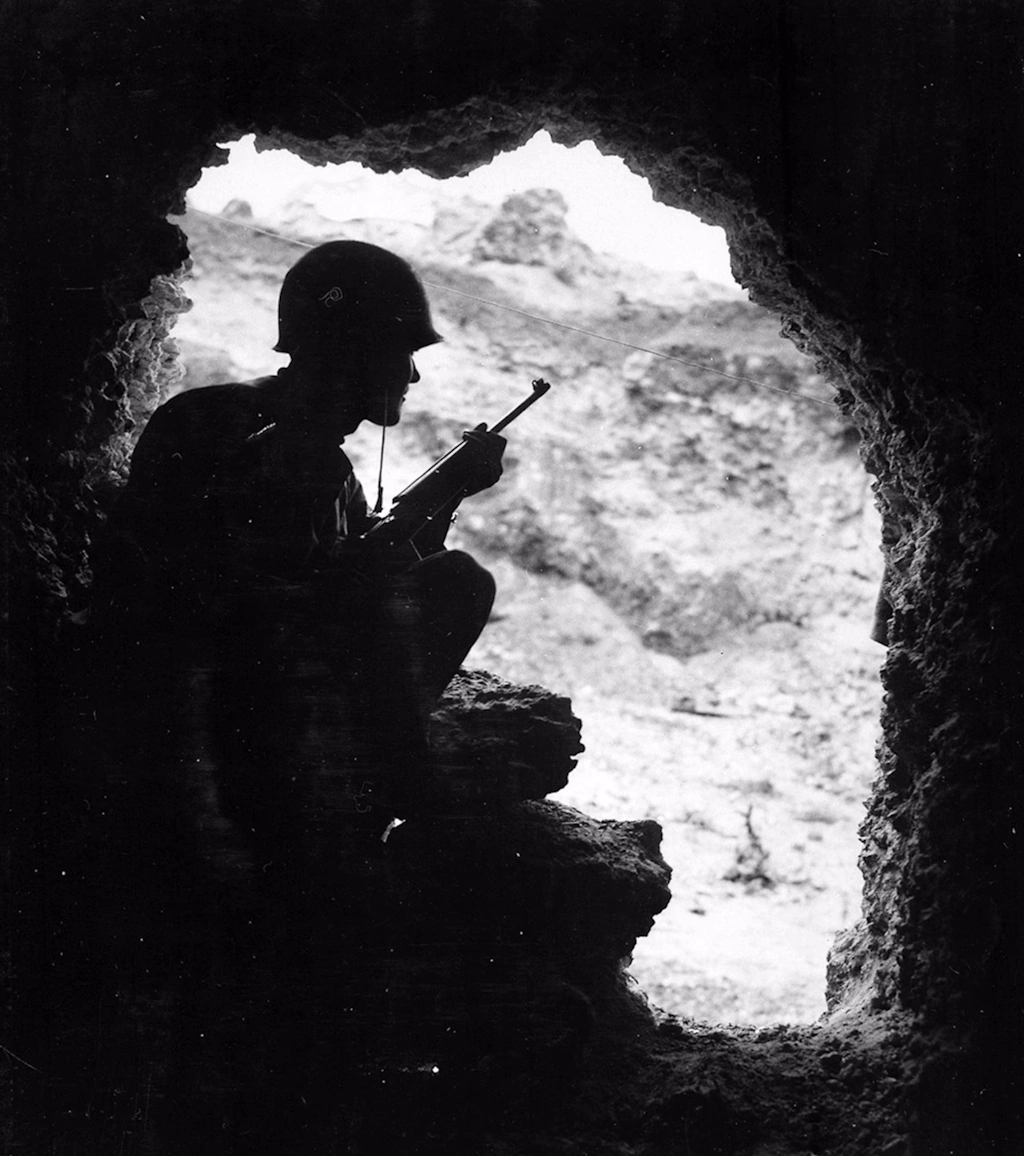


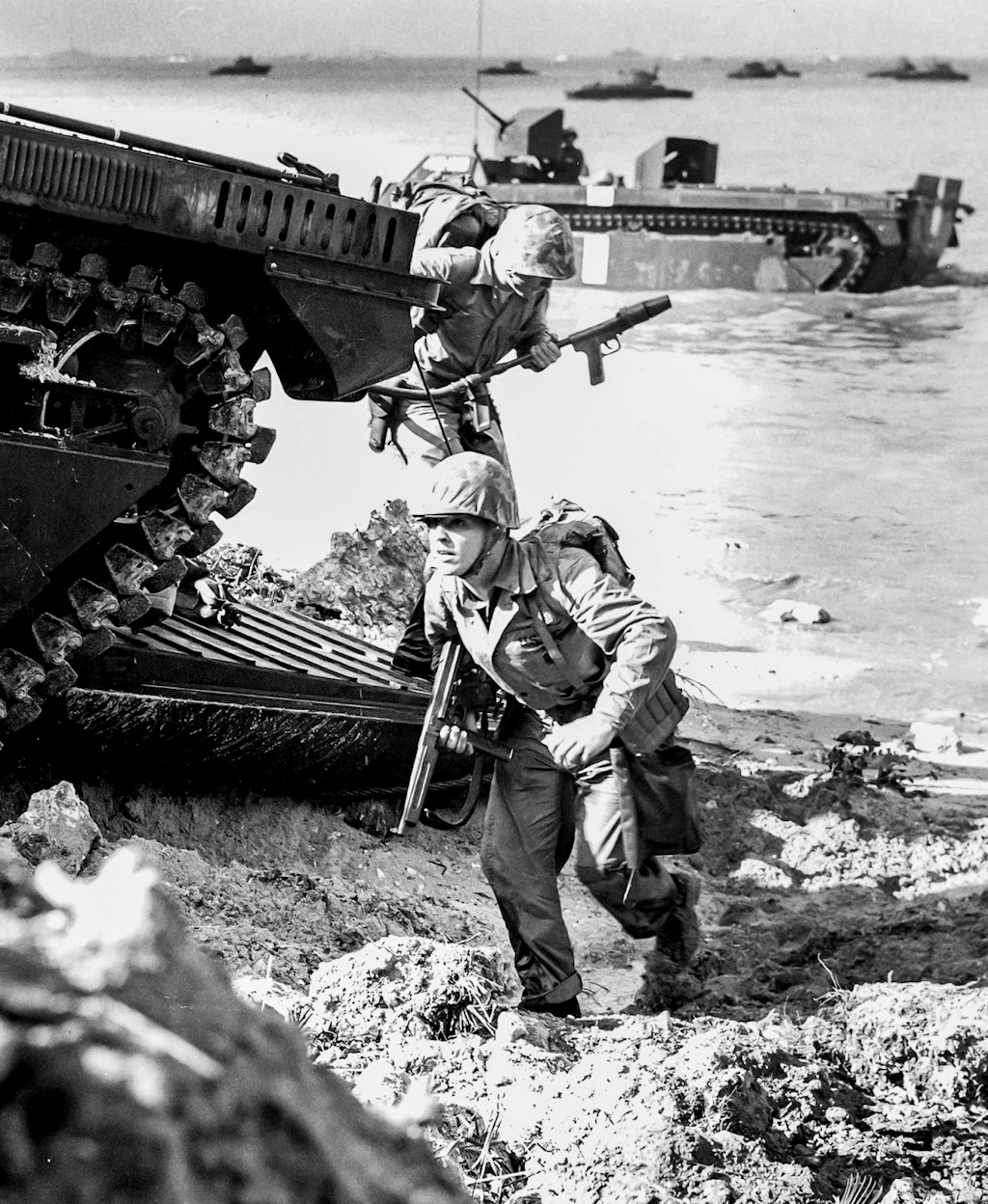
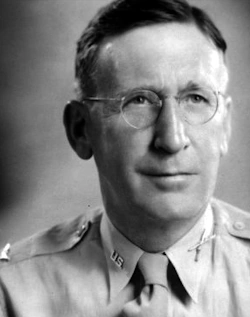
 Col Michael E. Halloran, CO of the 381-IR appeared on the scene and expressed his satisfaction at the excellent advance made by the battalion. By 1600, the 3d Battalion had advanced inland about 3000 yards and decided to try and capture Shido before dark. Progress continued with only sniper fire slowing up the advance of the infantry. The spirit of the troops was superior as they moved out for Shido. Maj Howard R. Miles, Battalion Executive Officer, landed with the sixth wave and communication with the Battalion CP was established and operating.
The troops’ water supply was getting low as the advance had been made during temperature in the 80 degrees. About 800 yards to the Northwest of Shido terrain with deep ravines, gullies, foliage and sharp escarpments was encountered. The battalion commander did not desire to dig in for the night in this area since the observation and dangers of infiltration would make our position for the night very precarious. The battalion S-3 was notified to radio regiment we were halting for the night in present position and overlay of battalion positions would be forwarded to the regimental CP. The 383-IR on the Division right and driving south with their flank anchored on the coastline, made substantial gains and by nightfall had captured Kue and had stopped for the night just northwest of Momobaru.
The 361-FAB, in direct support of the 381-IR, was landed via DUKWS by 1400. The Field Artillery Liaison Officer with the 3d Battalion immediately established radio contact and was anxious to register the artillery prior to darkness. The battalion commander was concerned primarily with the terrain to our direct front. Visibility was poor and the area was covered with trees and thick foliage, making an attack on our positions during the night very dangerous. The artillery was registered and the battalion commander and the S-3 made a personal reconnaissance of the entire front and decided on digging in with two companies on the main line of resistance. Due to the gap between the 33-IR (7-ID) on the left and the 1/381-IR on the right, the battalion was disposed in a modified perimeter for the night. The flanks would be bent to the rear and the reserve company would defend the battalion rear with the Battalion Headquarters (-) and Mike Co M (-) disposed generally in the center of the perimeter. The 1st MG Platoon was placed in direct support of Item Co on the right.
The 37-MM AT Guns were placed on the battalion right to cover the trail leading into the positions. The 81-MM Mortar Platoon registered their mortars in the deep ravines and avenues of approach in the woods. King Co, in reserve, dug in and moved its flanks forward to tie in with the front line rifle companies. The diameter of the perimeter was approximately 600 yards. The battalion hastily dug three man foxholes and by 3000 the battalion was gradually completing the gun emplacements and individual shelters. The Naval Gunfire Liaison Officer had arranged for illumination during the night by firing one naval shell every three minutes. In case of attack the rate would be stepped up to one every minute. Communication was established by laying wire to each company and tieing in with the Battalion switchboard.
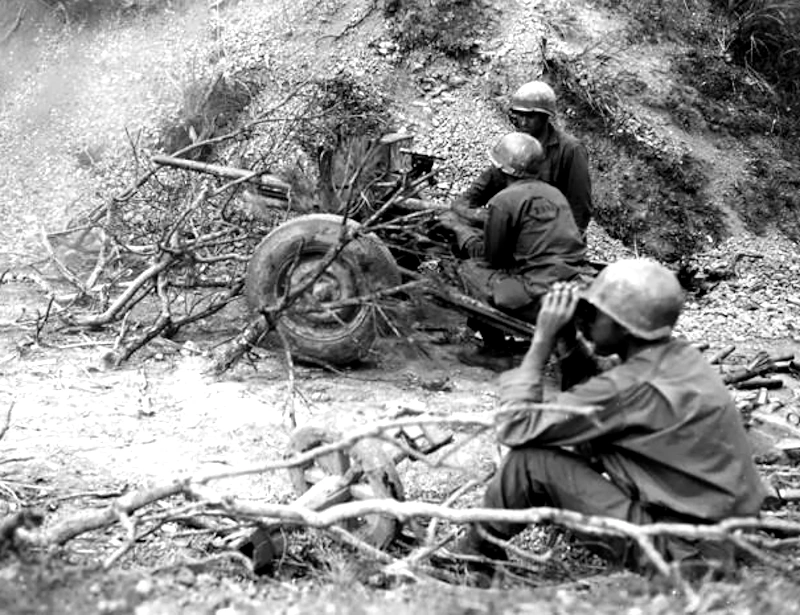
(note) Shells used with the US M-3 37-MM AT Gun were mostly (field combat) the M-63 HE Shell. Almost completely filled with explosive and base-detonating impact fuze this was a small projectile but very lethal. M-51 APCT (Armor Piercing Capped with Tracer) Shot. This shell could be used on thin armor mostly beside we have an archive telling us that Halftrack mounted with a 37-MM Gun disabled a Mark VI-2 King Tiger during the Battle of the Bulge. Anyway, this M-51 projectile is nothing else than a piece of steel with a tracer. The M-2 Canister. This strange little projectile is a derivativ from the 75-MM ‘Boite à Balles’ used in WW1 and WW2. For close quarter use against massed infantry. The M-2 Canister is filled with 122 3/8″ (.38 cal) steel balls and bursts open as soon as it leaves the muzzle. The effect is that of a large shotgun, with an effective range of 250 yards. Kind of 37-MM shotgun. (Doc Snafu)
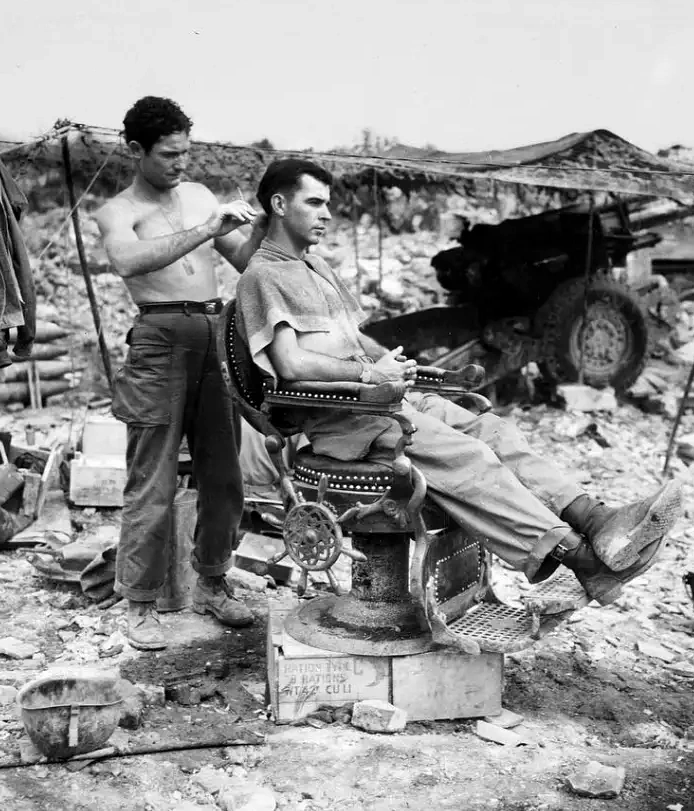
The S-4 resupplied the battalion with water and ammunition. The battalion commander and the S-3 made a complete inspection of the positions and felt the battalion would be able to stand off an attack – if and when it came. As the sun set a strange feeling came over the battalion with the realization that we had driven 3000 yards in the heart of Okinawa without the Japanese putting up a fight. The temperature dropped from a high of 80 degrees during the day to the low 50’s. Rolls were aboard the ship so the soldiers hunched in their ponchos to keep warm. They were set for the enemy but as the night passed without an attack the morale of the battalion improved. The only incident during the night was a small infiltrating group endeavoring to get through our lines in an attempt to reach the beaches. No casualties were sustained and only three Jap soldiers were killed.
 Where Are the Japanese ?
Rumors were flying that the Japanese had abandoned Okinawa and shifted to the Formosa Island. Since Formosa was our cover plan it seemed possible that maybe the Japanese had decided to let us capture Okinawa without a fight. The navy reconnaissance planes reported seeing troops moving in the hills to the south. G-2 96-ID, reported the Corps 155-MM Gun Group on Keise Shima was shelled the night of March 31, by 150-MM caliber guns from positions in the area of Naha. The natives had disappeared to the north and south. The Marines driving to the north reported that only small scattered groups of Japanese were encountered. The location of the Japanese 32d Army was not established. The Japanese air force did not appear over the beaches and as the night passed, the 96-ID realized it had come to stay until the job was finished.
The Second Day & Capture of Shimabuku
 The field order for the second day, April 3, 1945, gave the 3d Battalion a simple order. ‘Continue the attack 0800 with the mission of capturing Shido and Shimabuku‘. The Battalion ate an early breakfast of K Rations, rolled their ponchos, and made preparation for the continuation of the attack. Col Nolan ordered the attack and designated the line of woods as the area of departure. Jump off called for Item Co on the right, King Co on the left and Love Co following Item Co by 200 yards, thus protecting the battalion right flank. A ten minute artillery preparation was fired on the town of Shido. The battalion then crossed the Area of Departure on time and plunged into the woods to its front.
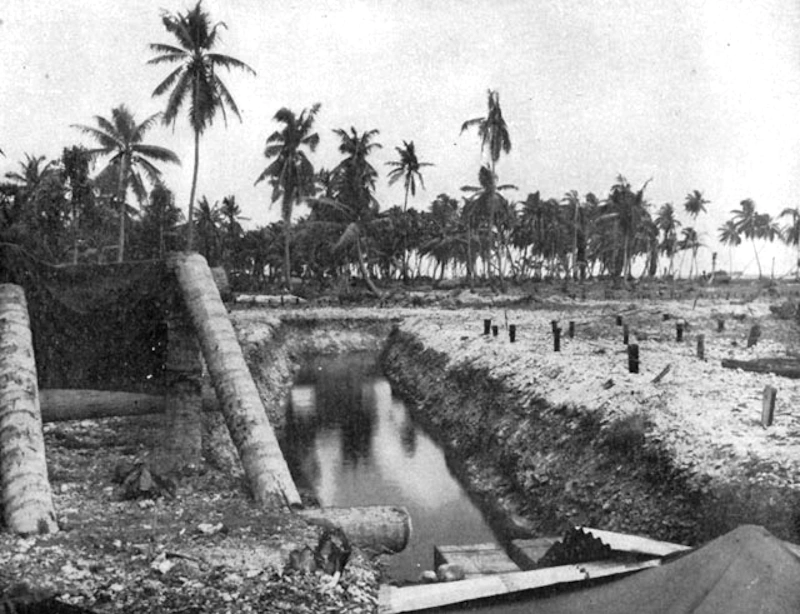
By 0900, the battalion had advanced 600 yards through the woods without receiving any fire. The advance was continued and as the battalion approached the high ground near the outskirts of Shido an obstacle which would hamper our progress was encountered. The Japanese had dug an antitank ditch across our entire front. The Antitank ditch was reinforced with mines, logs and barbed wire. The ditch was 10 feet in depth and 14 feet in width making it impassable to track and wheeled vehicles. Coincident with the discovery of the antitank obstacles, the 3d Platoon of Cannon Company was landed over the reef and reported for action about 0930. The 3d Platoon of Cannon Company was equipped with Self Propelled 105-MM Howitzers mounted on M-7 chassis. Knowing that enemy resistance was sure to stiffen, the appearance of the Cannon Platoon was most welcome. The battalion commander made a hasty reconnaissance and decided to move forward without transport. The obstacle proved to be no hazard to foot troops. The division was anxious to secure all the terrain possible in a minimum of time.
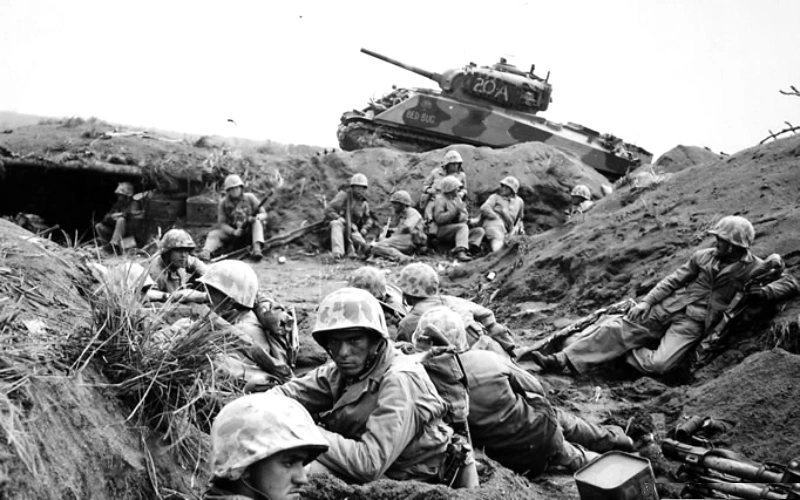
Due to the absence of the enemy the battalion observation group moved forward with the assault echelons, Col Nolan ordered the front line troops to set fire to the town of Shido. The battalion moved into Shido and only sniper fire was received. Every hill was a fortress and mines were only half buried. It appeared the enemy abandoned the positions only a few days previous and placed the mines along their route of withdrawal. The battalion S-3 notified the 3d Platoon of Charlie Co 321st Engineers to dispose of the mines and make plans to move a bulldozer forward and bridge the antitank ditch along the narrow road leading into the town. The time was 1230 as the battalion left Shido and passed through the woods and entered open terrain again. Observation was excellent and the weather was aiding the entire Tenth Army in no small measure. The small village of Yamaji lay between the battalion and its main objective for April 3, namely Shimabuku. King Co passed through Yamaji and no enemy were discovered. As the leading elements advanced into the open artillery fire began to fall 300 yards to the front. The units quickly dispersed into small ravines and no casualties were received. The artillery stopped as suddenly as it began and the fire was estimated to be 150-MM. It was apparent the troops had entered a long range prearranged concentration for as they moved out of the area the enemy stopped firing. The battalion was ordered to halt pending a reconnaissance and issuance of new orders for the seizure of Shimabuku.

 The battalion commander followed by the S-3, Artillery Liaison Officer, Naval Gunfire Officer and Battalion S-2 stopped at Koad Junction. A which was 500 yards northwest of Shimabuku. The Reconnaissance party then proceeded 300 yards to the south in order to reach an excellent vantage point which we shall call Hill 68. This small jagged rocky hill gave observation over the entire terrain. As the staff members reached the OP and looked toward the town they noticed that the entire area was extremely level and without vegetation or covered routes for the attacking infantry. The battalion plan included an attack with two companies abreast – King on the left, Item on the right. Luckily the attached Cannon Platoon was able to rejoin the battalion prior to the attack by passing through the zone of the 7-ID. The self propelled 105-MM howitzers would support the attack by overhead fire. The plan called for the navy to fire a ten minute concentration followed by a five minute artillery preparation. Time of attack was set for 1600. The unit commanders were assembled on Hill 68 and necessary orders were issued.
The battalion jumped off following the navy and artillery preparations and reached within 100 yards of the city when King Co on the left was shelled heavily by 50-MM and 81-MM mortars from positions in the zone of the 7-ID near the battalion left flank. King Co, caught in the open, hit the ground as the fire continued. The intelligence Observation Post Section spotted the Japanese firing their mortars from open positions 800 yards north of Shimabuku. The artillery liaison officer called for fire but the fire direction center would not clear the mission since it was out of our zone. Finally the 81-MM Mortar Platoon took the positions under fire and silenced the enemy mortars. It is felt the Japanese hid in a cave when the 7-ID passed through this area and our fire only drove the Japanese back into the cave. Since it was but a small delaying foroe the battalion commander gave orders to continue the attack.
King Co suffered five casualties from the mortar fire. By this time Item Co on the right had entered the town, receiving only sporadic rifle fire. King Co moved ahead when the mortar fire lifted. The 105-MM firing by the Cannon Platoon frightened the Japanese and the majority slipped out of the town and disappeared to the south. Approximately 30 Japanese were killed in this action. The town of Shimabuku was cleared of all enemy by 1730. After clearing the town and notifying higher headquarters that our supplies were low, the regimental commander ordered us to halt on the high ground 500 yards southeast of Shimabuku. The battalion S-4 appeared on the scene and informed the battalion commander that the antitank ditch serving our main supply route was still impassable. This announcement came as a severe shock to the battalion commander as the regimental S-3 had reported the road would be repaired by dark. The battalion was tired, hungry, and in need of water and ammunition.


 In the meantime, the regimental commander had committed the 2/381-IR in the gap between the 3/381 and the 1/381. As the regiment started the turning movement toward the south the regimental front was greatly increased. The 32-IR (7-ID) on our left had reached the eastern coastline thereby being the first unit to sever the island. The Corps Commander realized it would be necessary to change the boundary between the 96-ID and the 7-ID. The 1st and 6th Marine Divisions continued their drive to the north against light resistance.
For the night, King Co reverted to Battalion reserve and Love Co moved forward to take over the Battalion left flank. Item Co would tie in with Love Co on the left. The battalion defense was to consist of a reduced perimeter since no friendly units were within 800 yards. While the battalion was digging in, Col Nolan, in conference with the SD-4, decided something had to be done about the supply situation. The Regimental Commander stated the engineers could not repair the Battalion Main Supply Route since all available bulldozers and personnel were engaged in setting up beach installations and building runways over the reef so supplies could be unloaded direct into vehicles. Col Nolan asked the Air Liaison Officer what the chances would be for an air supply drop from the carriers. All airplanes operating in the area were stationed aboard carriers as the distance was too great for fighters to fly from Iwo Jima or the Philippine Islands. The air liaison officer contacted the regimental air officer and he stated he would begin work immediately on the details of an air drop for the morning of April 3, 1945.
The battalion continued digging in and just prior to darkness a soldier from King Co decided to remove the enemy artillery triangulation station near the hill top. Just about the time the station was removed heavy 75-MM fire began to fall in the King Co area. The location of the Jap 75-MM Field Gun could not be located but the general direction of fire was from the vicinity of Hill 161. During this short barrage the battalion suffered two men killed and three men seriously wounded. Shimabuku shelling cost the battalion one of their most valued soldiers, 1/Sgt Walter M.Korejwo of King Co. 1/Sgt Korejwo had been with the third battalion since activation at Camp Adair (Oregon) and had completed 29 years and seven months active service when he was killed. The loss of this man shocked the battalion and especially King Co. Immediately after this, the battalion commander placed artillery fire and direct 105-MM fire from the Cannon Platoon on the suspected firing position. The enemy withdrew. The tactics of the Japanese were proving to be difficult and most unusual. Strike at long range with various weapons; then disappear before you could strike back. A few days later the Japanese returned to their normal method of fighting to the last man and holding at all costs.
The battalion dug in as darkness fell over the island. It was 2200, April 2, 1945, and word was received from the regiment that the air drop had been approved.