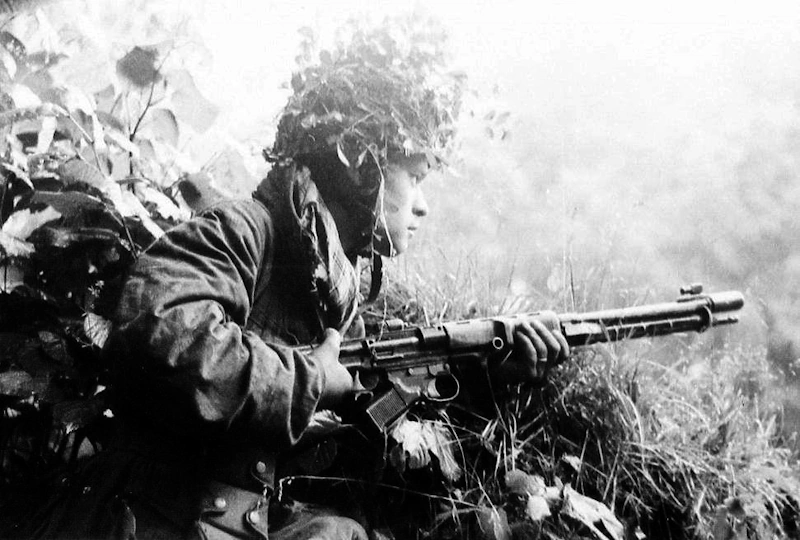
 On the morning following this night withdrawal from the area of Périers the commander of the 2.SS-PD, the former commander of the regiment who, a few days previously, after the division commander had been wounded, had assumed command of the unit, arrived at the 6.FR’s command post and informed the regimental commander that it had not yet been possible to check the breakthrough of American tanks and that the new position of the 2.SS-PD had already been outflanked by American armored forces advancing from the east. He stated that if the division did not wish to be encircled then and there it would have to withdraw immediately to the area of Coutances. Sobbing, the SS commander concluded by sayings ‘I am an old tank fighter and this breakthrough has decided the issue. We have lost the war in France‘.
That these developments came as a surprise not only to the 2.SS-PD but also to the divisions on its left was demonstrated by the fact that the commander of the 6.FR, while trying to locate a proper site for a regimental command post in the vicinity of St Sauveur-Lendelin came across the troops of the supply section of an infantry division who were living in a chateau under real peacetime conditions, lolling in bed, and wearing pajamas. This was also evidenced by the fact that neither the supply officer nor the operations section of this division, when informed by telephone, gave credence to the regimental commander’s statements concerning the German withdrawal.
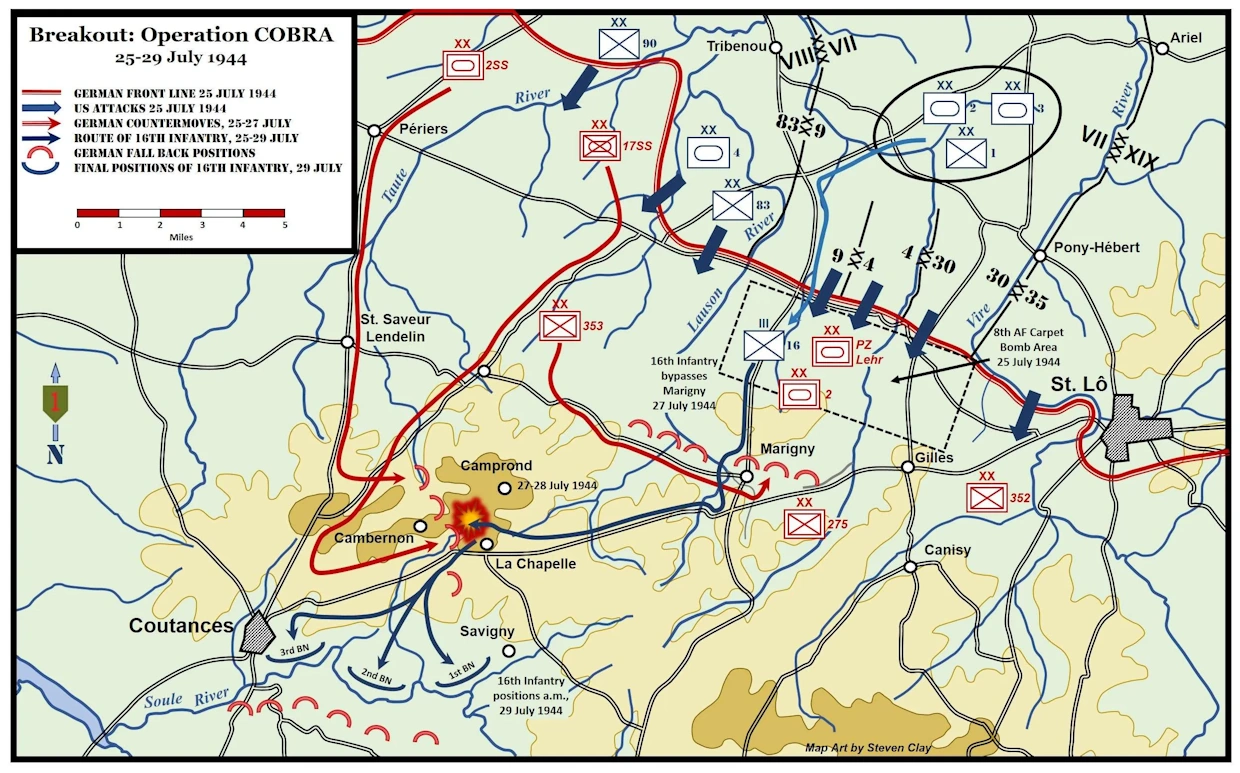
The commander of the 6.FR decided not to carry out the order of the 2.SS-PD which called for immediate withdrawal, while it was still daylight. He preferred to bring up the 16.Company, which he knew to be still in the Sèves sector, to grant the exhausted troops some rest after the long night march and to avoid any unnecessary losses from strafing planes. He therefore ordered the troops to remain in the vicinity of St Sauveur-Lendelin for the time being and he himself went ahead with only the absolutely necessary reconnaissance elements to the vicinity of Coutances in order to reconnoiter the new position in the Soulle sector extending from the bridge 2000 meters north of Ouville to the south of Courcy; the division sector ran from Cerisy to the eastern edge of Coutances. The 17.SS-PGD Kampfgruppe was to effect a junction with the 6-FR on its right and the motorized infantry regiments of the 2.SS-PD on the left.
(4) The Coutances Pocket
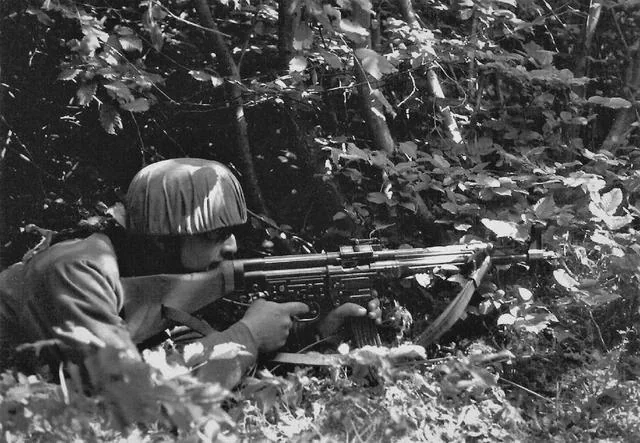
After another night march the 6.FR occupied at dawn the positions which had been hastily reconnoitered by the regimental commander. Since the enemy situation was obscure, strong reconnaissance forces were committed at daybreak. By noon they made a report approximately as follows: along the Périers – Coutances road the Americans appear to be pursuing the withdrawing German troops only very cautiously and in small numbers. On the other hand, American tanks advancing from the St Lo area have apparently pushed far to the south; we must expect an armored attack along the St Lo – Coutances road and south of it. As a result of these reconnaissance operations the regimental commander decided to have each of his two battalions pivot at a 90-degree angle on their own right flanks, so that these battalions, which had originally been committed side by side with the front facing northward would now be echeloned one behind the other with their fronts facing east. The left flank of the former left battalion was now along the St Lo – Coutances road. Elements of the regiment of the 2.SS-PD were inserted between the two parachute battalions with their front facing northward; at the St Lo – Coutances road the majority of the armored infantry units of the 2.SS-PD joined the parachute battalion stationed on the left, producing a stair step position. It was impossible to establish contact with the 17.SS-PGD Kampfgruppe which was located somewhere to the right of the 6.FR.
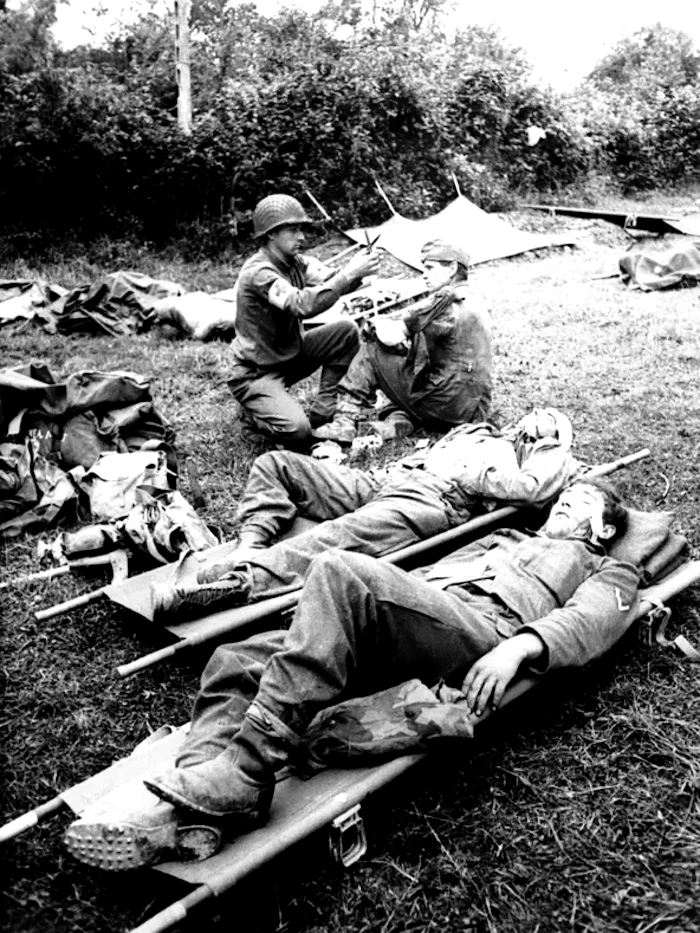
Shortly after the two parachute battalions wheeled eastward they were engaged by the enemy. The St Lo – Coutances road especially seems to have been the scene of heavy and costly fighting during which the 11ompany of the regiment was completely annihilated. The morale of the parachute troops as well as that of the SS forces began to deteriorate. The SS troops blamed the parachute elements for not holding out longer, while the latter accused the SS of fighting to the last parachutist. One battalion commander of the 6FR suffered a nervous breakdown. Even more alarming than the dispatches from the front were the reports received at the regimental command post from the rear. The regimental paymaster reported that he had been cut off from the baggage train by enemy tanks; the regimental surgeon reported that he was no longer able to evacuate the wounded because the division’s main dressing station had been surrendered to American units. The regimental commander now made plans for a speedy withdrawal, gave instructions to reconnoiter withdrawal routes, and sent his adjutant to the division command post with instructions to keep him informed about the situation. Toward the evening, it was reported that the commander of the 2.SS-PD had been killed by tank fire in the immediate vicinity of the division command post.
After nightfall the adjutant returned to the front with an order from the Korps entitled ‘Order Concerning the Perimeter Defense of the LXXXIV Corps‘. The order specified that the regiment should shift its position a few kilometers to the right, an arrangement which in view of the situation and the fact that the night was unusually dark, was not exactly welcomed by the regiment. The new position was to be set up in a semicircle around the town of Ouville about 2000 meters from its outskirts. The regimental commander immediately set about reconnoitering the newly assigned position, as far as such reconnaissance was possible in the darkness, and while still in the field, he transmitted to the advance parties of the battalions which had accompanied him, the order concerning the movement planned by the LXXXIV Korps.
About 0100, when the regimental commander returned to the regimental command post, he was informed that an urgent radio message had been received from the division which it was not possible for the regiment to decode because the division had used the code from the day before and the regiment’s decoding charts had been burned at midnight in accordance with the instructions. It was not until 0300, that the regimental commander obtained the clear text of this radio message which read approximately as follows: ‘the 2.SS-Panzer-Regiment and the 6.FR, beginning immediately, will, under cover of darkness, effect a breakthrough in the direction of Percy via St Martin-de-Cenilly. After successfully accomplishing this mission, the 6.FR will assemble in the area of La Mancellière and await instructions from the division‘.
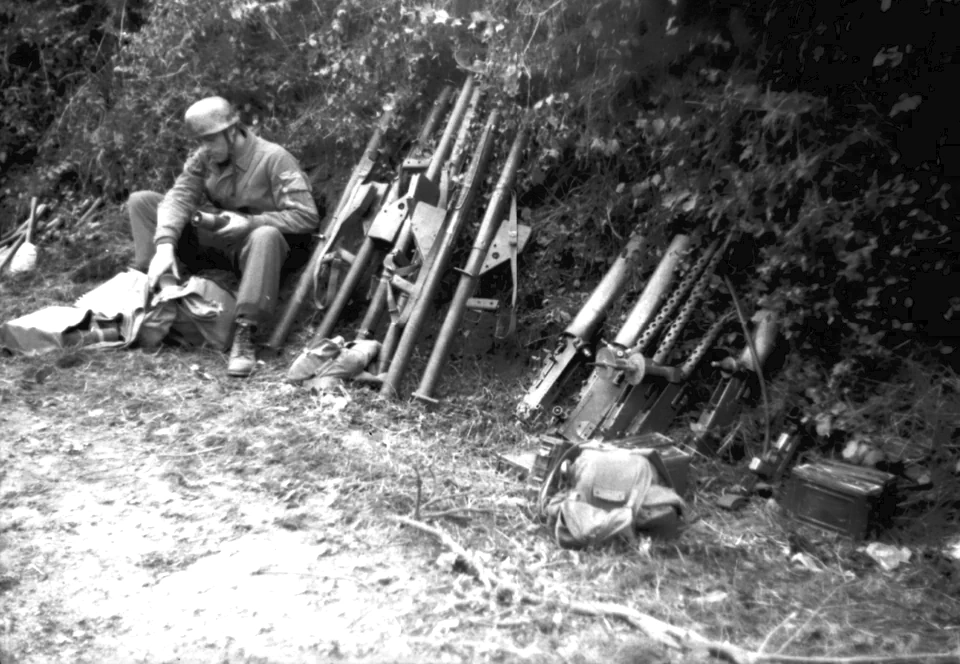
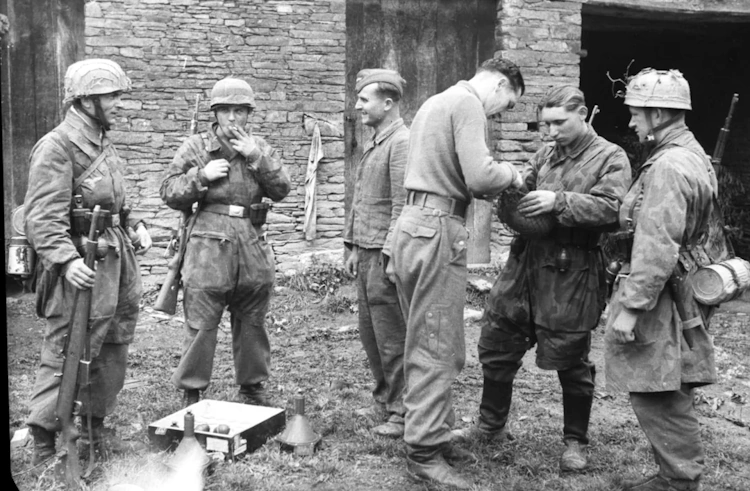
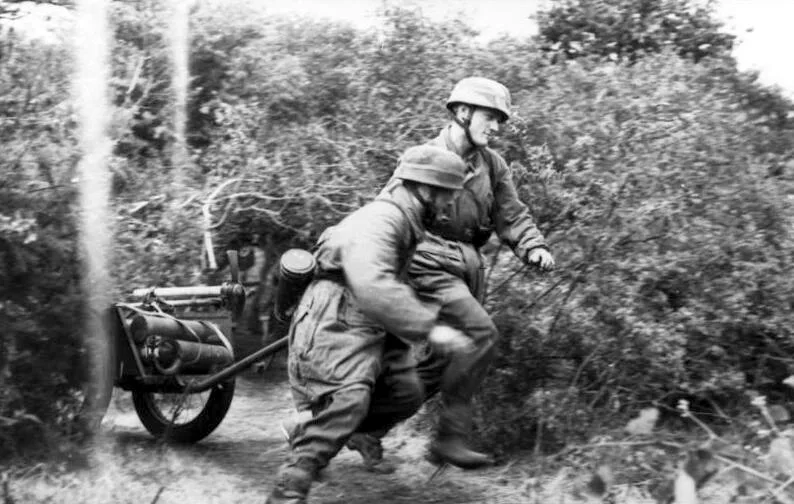
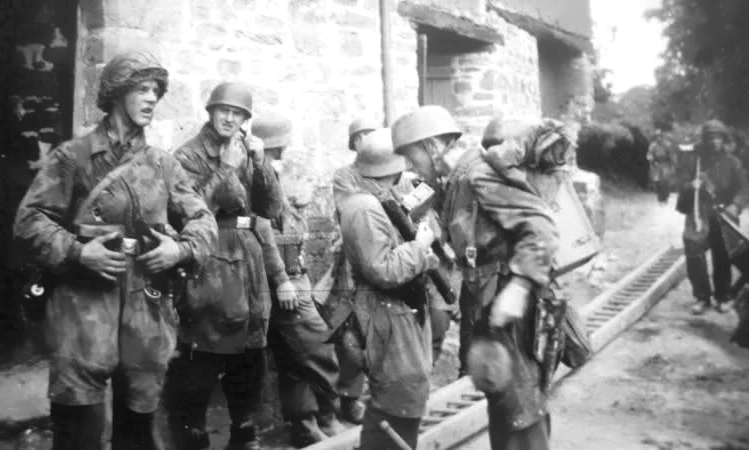
It was no simple matter to collect the battalions, which by companies and platoons were now moving into the new position, and to assemble them at a rendezvous point where the forces were to mount the armored vehicles of the 2.SS-Panzer-Regiment. This regiment apparently experienced similar difficulties in trying to assemble its individual units into a march column. It was not until dawn, about 0600, that it was possible for the long column of SS tanks, on which the parachute forces rode, to begin moving on the assigned road. In all there may have been about two hundred armored vehicles of all kinds (including a number of assault guns of the 17.PGD Kampfgruppe and various Seventh Army battalions) and roughly 1500 parachute troops. The commander of the 6.FR rode behind the advance armored element in an armored personnel carrier which had been assigned to him.
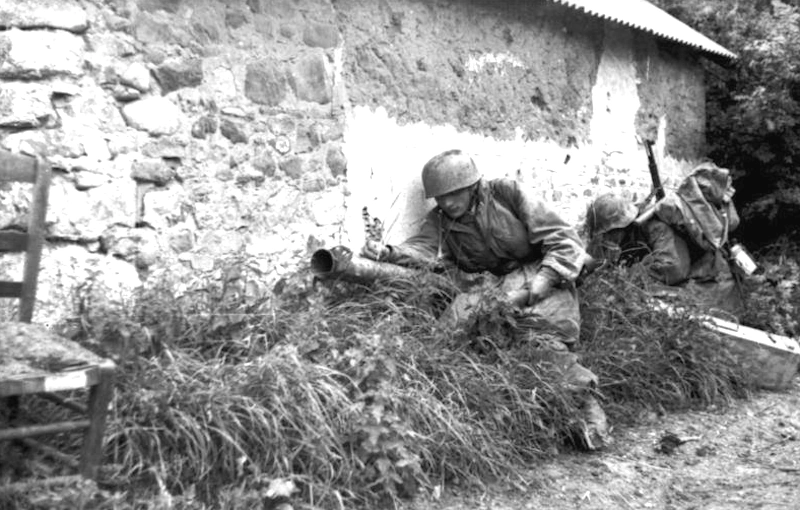
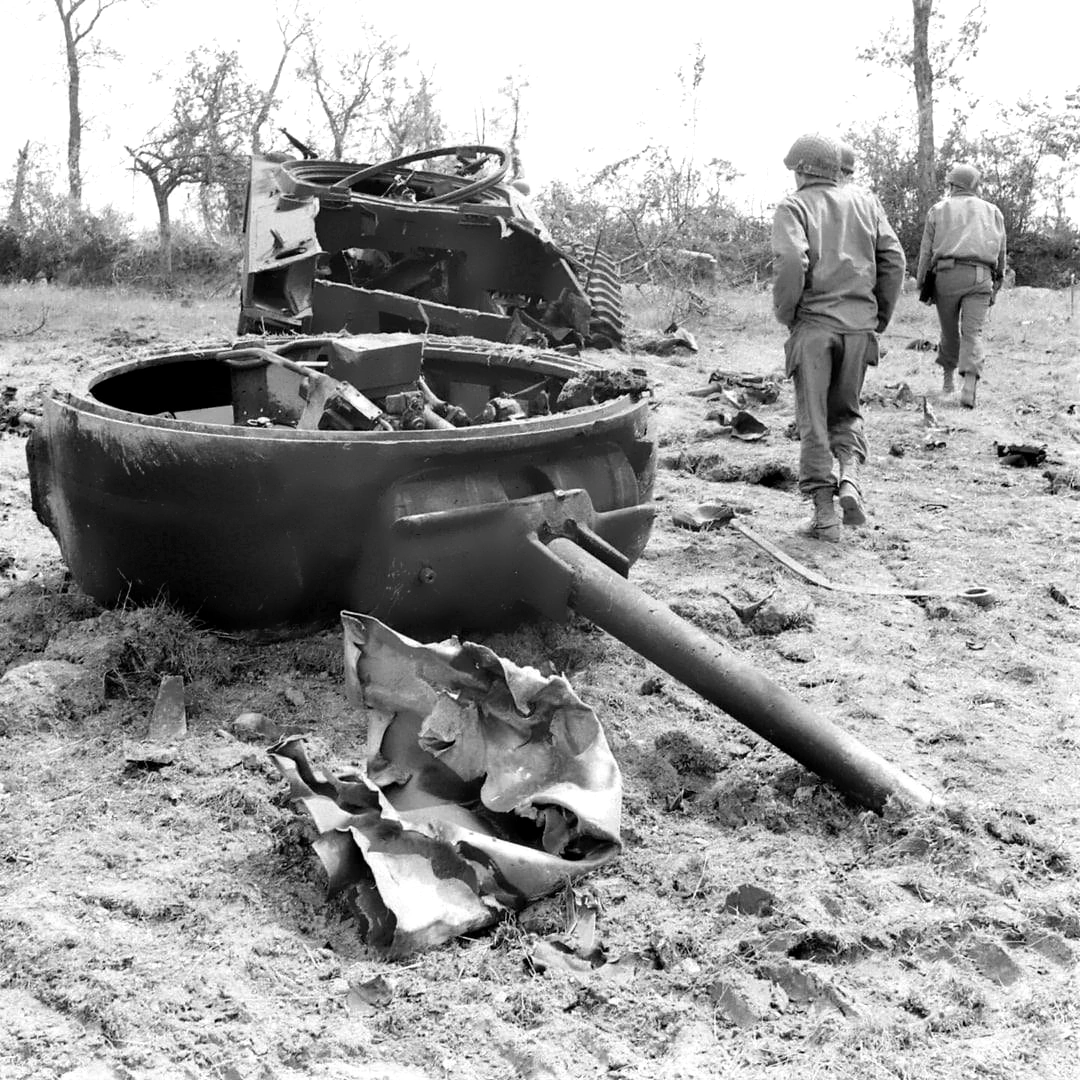
It was too late for a breakthrough under cover of darkness, as ordered by the division. Fighting had to be done in daylight. At first the weather seemed to be favorable for this undertaking for during the early morning hours a light fog provided cover for the column against air observation. At about 0800, the fog lifted and the German armored column drove along in brilliant sunshine. All eyes nervously watched the cloudless sky; we all expected enemy strafing planes to attack at any moment. Throughout the previous days American strafing planes had supported the ground attack from early morning until late at night and had kept all march routes under surveillance, but this morning not a single American plane appeared in the sky. At about 0830, the German armored spearheads suddenly encountered at La Corbinière an American antitank obstacle covered by either tanks or antitank guns. The armored elements halted; one or perhaps two German tanks were put out of action; the rest came to a sudden stop so that in the front third of the column the tanks were standing on the road one behind the other at intervals of barely five meters. The parachute troops jumped off the tanks, rushed forward, and gathered in the ditches on both sides of the road.
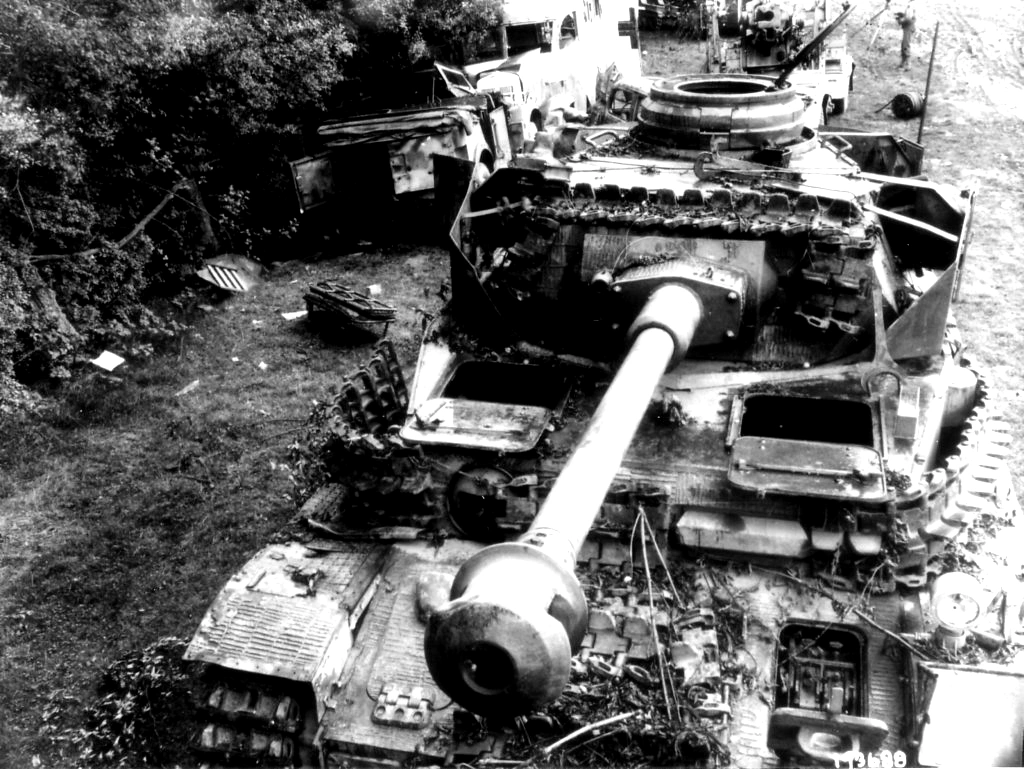
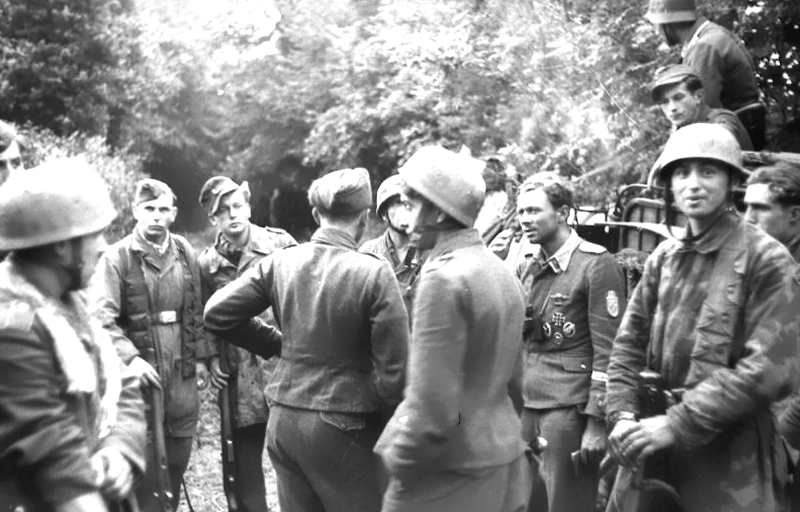
The enemy situation was completely obscure. There was from one or two antitank guns or tanks and few machine guns. Unfortunately, the German situation was also totally obscure. It became apparent immediately that the armored column had been cut half in the morning fog and that the second half of the column of tanks on which the forces of the 3.Battalion of the 6.FR were mounted had evidently lost its way. The command status was equally confused. The Commander of the armored regiment, an SS commander with rank equivalent to major refused to obey the commander of the 6.FR, or even accept his suggestions although the commander of the 6.FR held the rank of lieutenant colonel. On the other hand, the SS commander himself was unable to come to any decision. His column of tanks standing at close intervals, was helpless. The 2.Battalion had in the meantime been deployed on both sides of the road and distributed over an area of perhaps five hundred meters in width. It was able to advance a few hundred meters in terrain which offered practically no cover but was then brought to a stop fire of American machine guns and mortars.
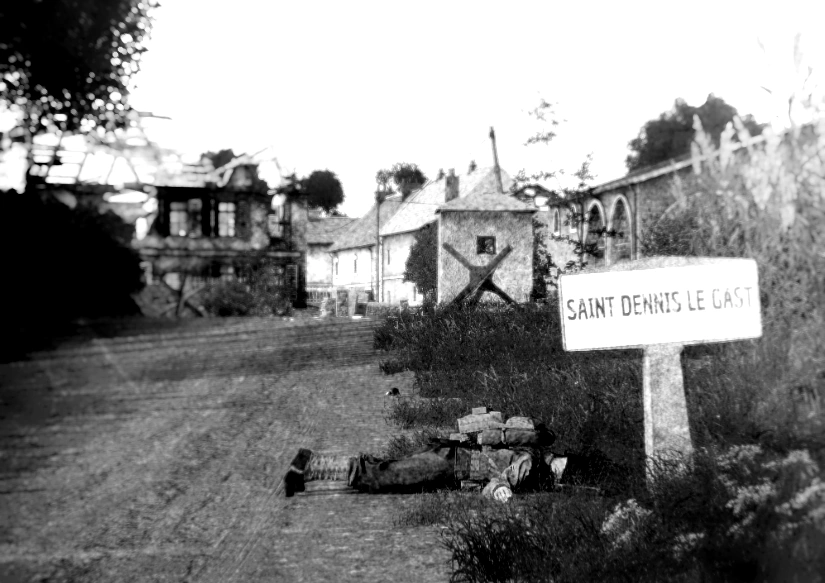
In view of this situation, the commander of the 6.FR decided to have his 16.Company make a wide detour to the left around the antitank obstacle in order to either break up the obstacle in a flank attack or at least find a way to bypass it. Led by the regimental commander the company advanced single file to the vicinity of a village, probably Notre-Dame-de-Cenilly, without encountering enemy troops. In this village American trucks were being peacefully driven up, and a period of about ten minutes an estimated two companies of infantry were unloaded. At the outskirts of the village the regimental commander believed he saw a well-camouflaged tank. It would have been useless for the 16.Company to attack the village. The regimental commander and the company turned back and reached the command post by the route over which they had come. Here the picture had not changed greatly. The American forces had noticeably increased in number; the parachute forces had not been able to advance a foot; and for the last two hours the SS tanks had been standing idle at close intervals on the road. The regimental commander called on the SS commander who informed him that one armored vehicle of his regiment, which had lost its way, had reported by radio at about 0900 that the road via St Denis-le-Gast was still open and clear of enemy troops.
The commander of the 6.FR thereupon proposed to the SS commander that he withdraw from action and try to reach St Denis-le-Gast by the quickest route possible, before this means of escape was also blocked and before the enemy air force could take a hand in the fighting. This was the first suggestion made by the regimental commander which was immediately accepted by the commander of the SS tanks. However, he did not comply with the request of the regimental commander that the SS tanks delay the evacuation until the parachute troops had had a chance to break off action with the enemy and remount their vehicles with some degree of order. On the contrary, he ordered immediate withdrawal. The commander of the 2.SS-Panzer-Regiment was one of the first to leave the field of combat to take his place behind the newly formed armored spearheads which headed the column of his regiment advancing via Roncey toward St Denis-le-Gast.
The commander of the 6.FR was in an unfortunate situation. There was still no news whatever from his 3.Battalion; when the SS tanks drove off without taking along the elements of the 2.Battalion, these had to try to reach the opening at St Denis-le-Gast on foot. It was highly questionable whether the gap would still be open by the time they reached it. The commander of the 6.FR therefore issued an order to cease fighting immediately and to break off contact with the enemy; all who could reach the SS tanks were to mount them, while the rest were to be collected by the commander of the 2.Battalion and under his command seek a way out of the pocket.
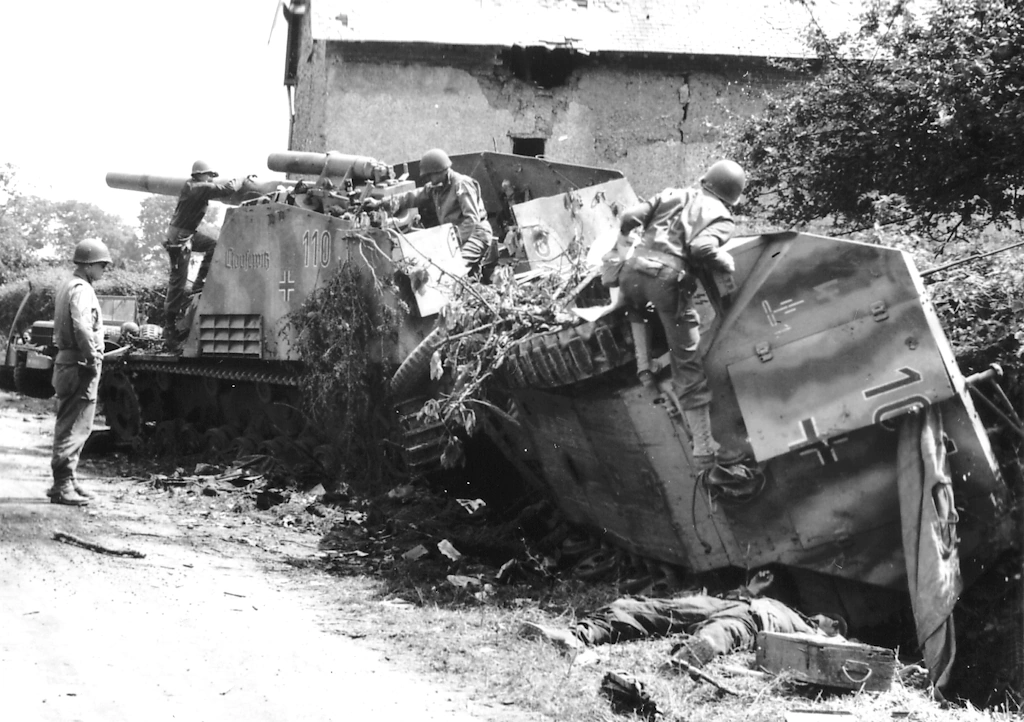
After he had transmitted the order to the commander of the 2.Battalion, the regimental commander joined the tank column in order to take over, if necessary, the command of those portions of his regiment which had mounted the armored vehicles. The regiment was thus divided into three separate groups: the first group led by the commander of the 3.Battalion and consisting of the troops which had mounted the SS armored vehicles which had lost their way in the morning; the second group, in charge of the regimental commander and composed of those troops which after the battle at the antitank obstacle at St Martin-de-Cenilly had again reached the SS tanks and mounted them; and finally, the third group consisting of those elements which had remained at the battlefield at St Martin-de-Cenilly and had been placed in charge of the commander of the 2.Battalion.
Little is known concerning the fate of the first group. They apparently succeeded in escaping through the opening at St Denis-le-Gast without encountering enemy troops. Just south of St Denis-le-Gast however the column of tanks was apparently attacked by American strafing planes and in part annihilated and in part dispersed. The commander of the 3.Battalion, who had been leading this group, was killed during this air attack while seeking cover under a tank. The column of tanks carrying the second group was attacked north of St Denis-le-Gast by American fighters planes. The regimental commander rallied the parachute troops (to whom motorcycle messengers sent in advance had previously called out instructions that in case of an enemy attack they were to leave the attacked vehicles and withdraw to the left) and in a march covering more than sixty kilometers led them to the area of La Mancellière, four kilometers southwest of Percy. No casualties were suffered during this movement.
By the time the third group reached St Denis-le-Gast, it had already been occupied by the Americans. The commander of the 2.Battalion who was in charge of this group therefore waited until dark and then led his men out of the pocket past the American armored security elements without encountering any enemy troops. A large number of stragglers from the Seventh Army units and members of the first group of the regimental troops made their way to the second and third groups.