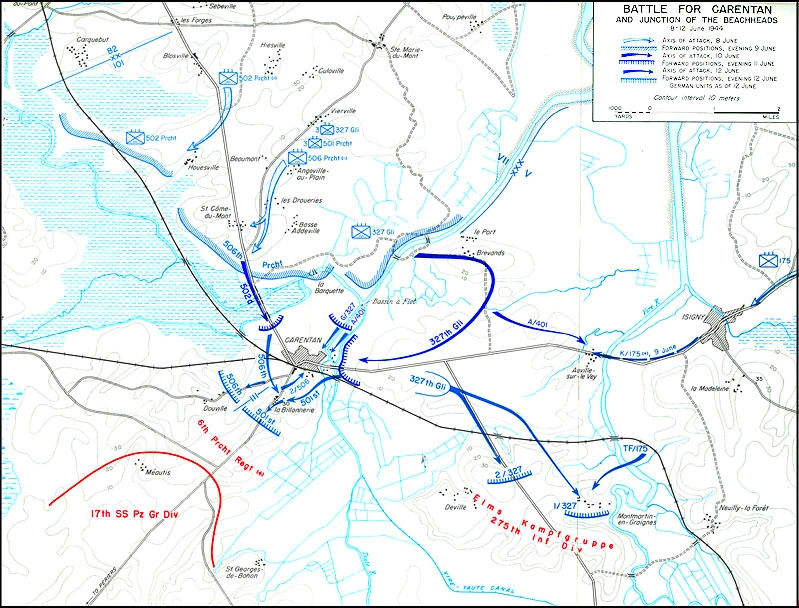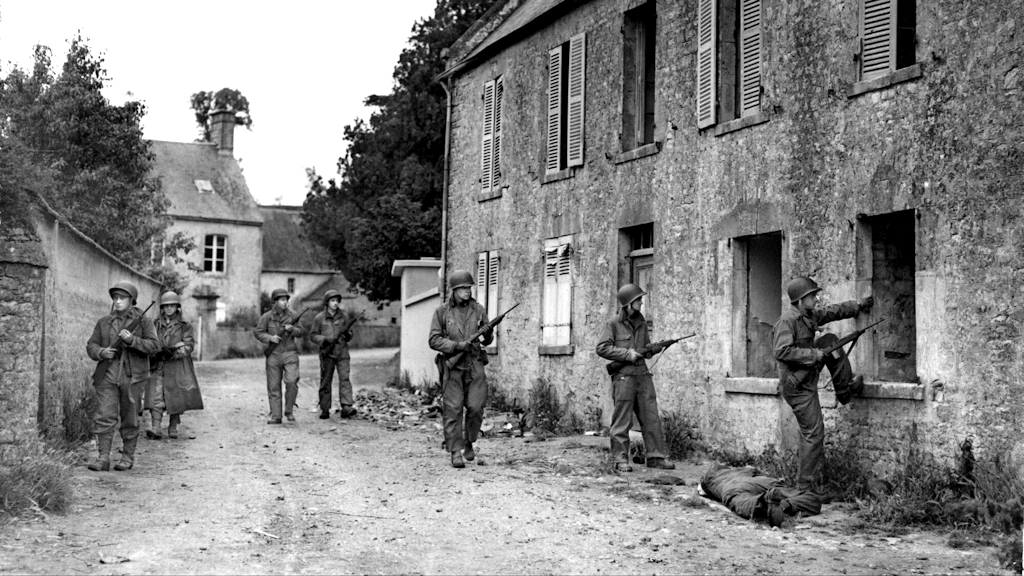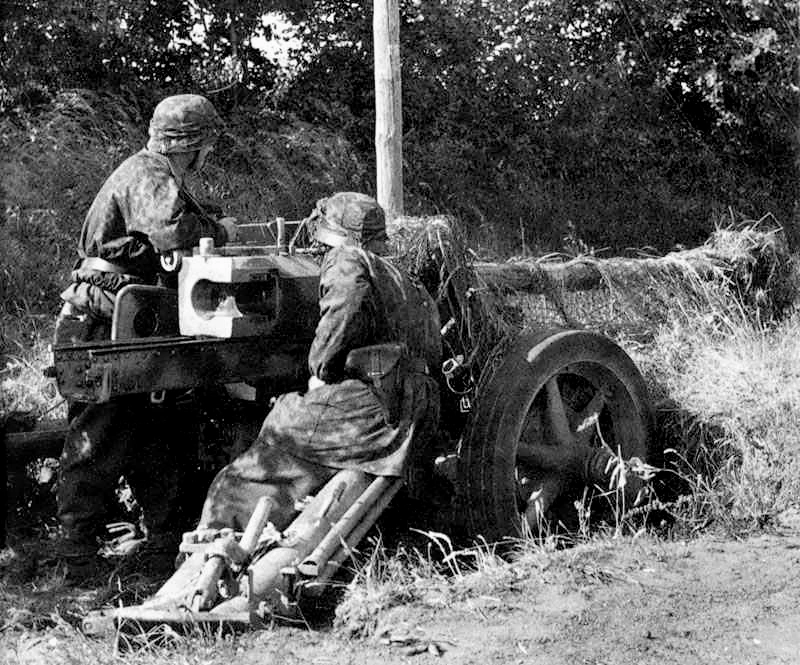
Severe fighting raged from hedge to hedge at close quarters, and hand to hand. The Fallschirmjäger forces nevertheless succeeded in gaining several hundred meter of terrain north of the railroad embankment, while the SS Panzer Grenadier units were stopped cold in unfamiliar terrain where observation was obstructed. The exercise of command in such terrain is extremely difficult. During combat, the SS units became disorganized and commanders, no longer maters of the situation, lost control of their units to an increasing degree; communications were disrupted, sometimes at one and sometime at another point; gaps developed through which the enemy skillfully infiltrated. At one farm, the division commander himself was for several minutes engaged in close combat with enemy troops who had broken through. In short, by about 1200, it was obvious that for this day the attack on Carentan had failed. The casualties among the SS forces were unusually high; the fighting spirit of the inexperienced troops was weakened; and an ever-increasing number of individual SS soldiers as well as whole groups straggled to the rear, so that the Commander of the 6.FR had to instruct his adjutant to check the fleeing SS forces and assemble them in the vicinity of his regimental command post. In some instances the adjutant was compelled to enforce this order at the point of a gun.
While the attack on Carentan launched by the SS troops was thus hopelessly bogged down, the commander of the 6.FR received about noon alarming reports from Baupte. The 100.Panzer-Battalion of the Seventh Army reserve had been committed at the Douve River in the area of Baupte, at first facing eastward. For unknown reasons the commander of this battalion evacuated these positions on the Douve on the morning of June 12, and dug in in Baupte proper, after which he and a few other officers left his battalion. In the meantime, the Americans had apparently crossed the Douve without encountering resistance and had cautiously approached Baupte. There utter chaos apparently prevailed among the German forces; some of the troops who had been forsaken by their commander surrendered, while others still tried to fight. There was no doubt, however, that it would be only a matter of hours before the Americans were in undisputed possession of Baupte and thereby threaten the flank and the rear of the 17.SS-PGD. In view of this situation, the commander of the 6.FR sent one company of the 2.Battalion which was engaged in combat west of Carentan, to protect the bridge east of Baupte against forces advancing from Baupte to attack the rear of the division. Anxious hours passed until this company arrived at Baupte, for there was a distinct possibility that the American commander in Baupte would recognize his opportunity and make a quick decision to push across the bridge. The danger was not over until about 1600.

In the meantime, the situation west of Carentan continued to deteriorate. The commander of the 6.FR was under the impression that a single energetic thrust by the Americans would be sufficient to induce large portions of the SS regiment to take to headlong flight which would result in a deep breach at a decisive point in the German lines – a breach which might make possible a breakthrough during the night. He therefore employed his 3.Battalion and the regimental units to form a rear line along the road leading from Raids southeastward to the Carentan – Périers road. He placed the dazed commander of the SS regiment under his commands and ordered the SS and Fallschirmjäger forces to fall back to a position which had been reconnoitered and in part improved prior to the invasion. This extended from Le Varimesnil, southwest of Meautis which was to be given up, and along the southern edge of a marshy valley to a point north of Raffoville, about 3000 M northeast of Bléhou at the eastern edge of the big swamp, Prairie de Gorges. In relation to the jump-off point for the attack on Carentan, the withdrawal to this position amounted to retiring generally about four kilometers. The regimental commander considered it absolutely essential to get beyond the range of the American heavy infantry weapons which would require the Americans to shift the position of these weapons and especially to advance their artillery to the south side of the Oure River.
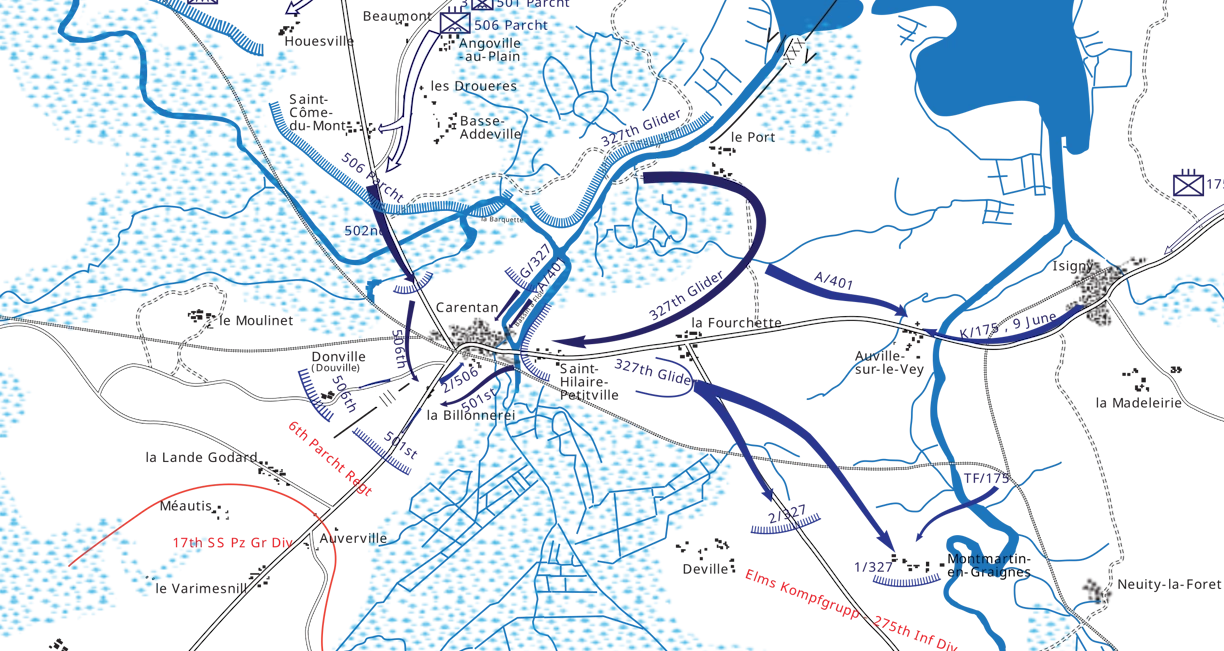
The cover provided by the wooded terrain, which rendered tile daytime attack so difficult, facilitated disengagement from the enemy and withdrawal even in daylight. Without marked interference by the enemy, the SS regiment and the 2.Battalion of the 6.FR, crossing the rear line formed by the 3.Battalion of the 6.FR, moved into the new position in which, by verbal agreement between the two regimental commanders, the SS regiment was committed on the right to about 300 meters of the main road from Carentan to Périers with the point of main effort at the road. The 6.FR was committed on the left. While the commander of the Fallschirmjäger was supervising the withdrawal of the retreating elements of his regiment along the road leading southeastward from Baupte to the Carentan – Périers road, he was suddenly called for personally by the operations officer of the SS division and escorted to the division command post. There he was reproached by the division commander for his arbitrary actions and his cowardice in the face of the enemy, as indicated by his order to withdraw. The division commander informed him that he was under arrest and that very night had him questioned by an SS military judge. However, the next morning, when the commanding general of the II Fallschirmjäger Korps, who was temporarily in charge of the LXXX±V Corps, approved the conduct of the commander of the 6.FR, the commander of the 17.SS-PGD released the regimental commander, and allowed him to return to his regiment.
The reader may wonder at the strange lack of activity on the part of the LXXXIV Korps during the second phase of the Battle for Carentan. The initiative was taken exclusively by the division and the regiments. The reason for this inactivity by the corps can be found in the fact that during this period the corps commanders were being continuously changed. On June 12, the day on which the evacuation of Carentan took place, Gen Erich Marcks, then commanding general of the LXXXIV Korps, was killed in an attack by fighter bombers on the Carentan – St Lo road. General der Artillerie Wilhelm Fahrmbacher, the commanding general of the LXXIV Korps, was first appointed to succeed on June 12, but as early as June 14, General Eugene Meindl, the commanding general of the II Fallschirmjäger Korps, was assigned to act as commander of the LXXXIV Korps. Two day later, General der Infanterie Dietrich von Choltitz arrived to take over the Korps. To complete the record, it should be noted that during the night of June 11, the 6.FR was, in accordance with its request, actually resupplied by the Parachute Army with sufficient ammunition by air, by means of Junker 52’s and Heinkel 112s. After June 12, the 17.SS-PGD assumed responsibility for the regiment’s supply.
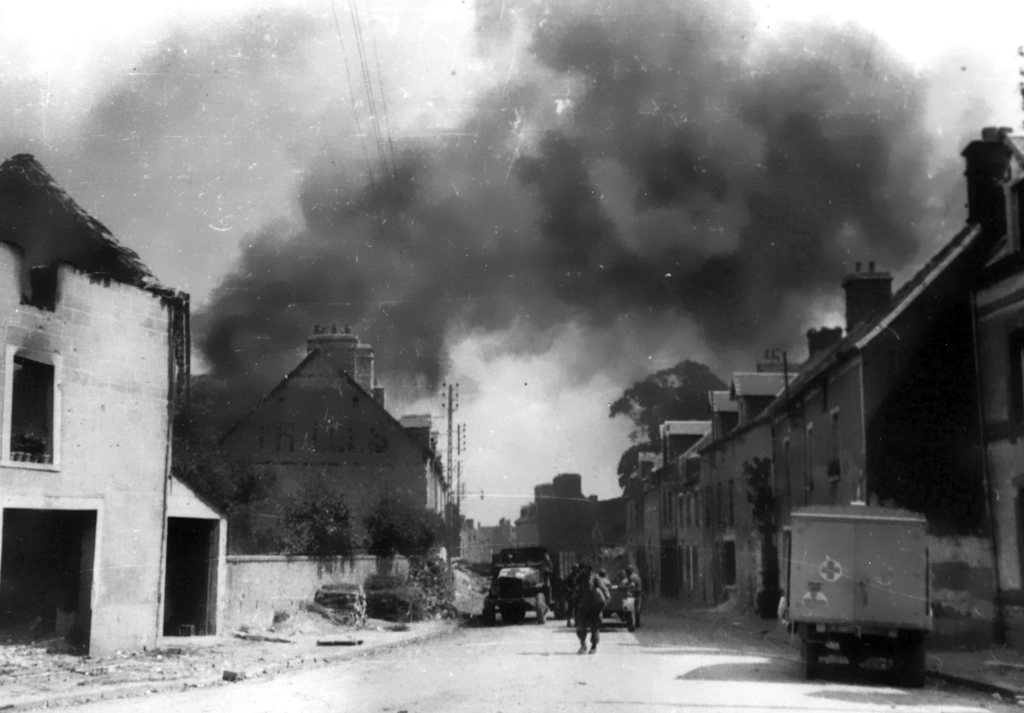
With the conclusion of the battle for Carentan, the 6.FR broke off contact with the American 101st Airborne Division which had been its first opponent during the invasion battles; the regiment was not to meet these forces again until September 1944 when it encountered them again at Schijndel (Holland). During and after the war, the commander of the 6.FR was frequently asked for his opinion of the American paratroopers. The caliber of the American paratroopers who fought against the regiment was outstanding; they were excellently trained in combat techniques and their armament and equipment were first-class. The regiment experienced similar stubborn fighting only against the Russian NKVD divisions (Field divisions of the NKVD, the former GPU), the British 52nd Highland Division, and the Canadian 1st Infantry Division. However, as in the German parachute forces, the tactical ability of the American command, from the lower echelons up to and including division level, did not always appear to be on a par with the excellent combat efficiency of the units. During the first days of the invasion, the Americans could have saved a great deal of time and avoided many casualties if their troops had made their jumps and landings directly into the target to capture individual objectives of tactical importance, such as the Douve Bridge north of Carentan. In Normandy, as later on at Arnhem, the Americans seem to have employed the same tactics of jumping and landing some distance away from the target and then attacking the tactically important individual objective on the ground a method which did not always lead to immediate victory. In 1944, the Americans seemed to be unfamiliar with the procedure of capturing villages or small towns from the air by jumping into them. I am not in a position to offer any opinion concerning the technical aspects of night jumping, because I have no data indicating the speed with which these units were able to assemble nor the percentage of those who made false landings. The Americans proved to be far superior to the Germans in the employment of troop-carrying gliders at night. It was odd that the Americans did not use Sturz-lastensegler even where their commitment would have been advantageous.
In the opinion of the German parachute troops, the American 101st Airborne Division, and particularly its 506th Parachute Infantry Regiment (Col Robert F. Sink), far surpassed the other American Airborne units because its commander and staff were on a par with the outstanding combat efficiency of the troops themselves.
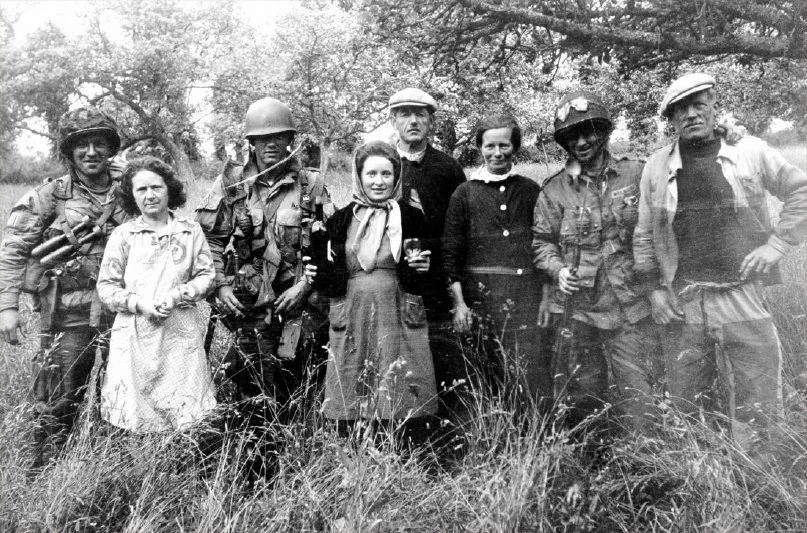
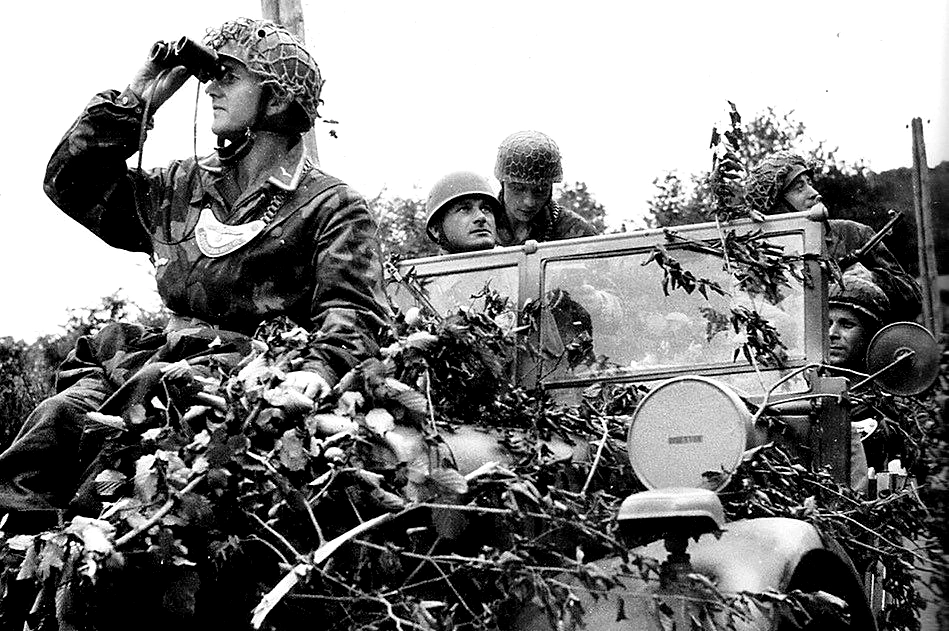
Withdrawal – Fighting in the Meautis Area
After the 17.SS-Panzer-Grenadier-Division, in conjunction with the 6.Fallschirmjäger-Regiment had withdrawn to the line running from Le Varimesnil to a point southwest of Meautis to Raffoville to Prairies de Gorges, there was a lull in the fighting in the sector on both sides of the Carentan – Périers road which was interrupted only by small-scale reconnaissance patrol operations, and light artillery action on the part of the German as well as the American forces.
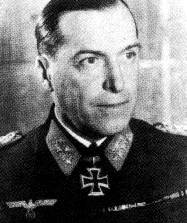 (Note).The inaction on the Carentan front on the part of the Americans following their capture of this vital junction point was due to their wise decision to establish firm contact quickly between their forces on the Cotentin Peninsula and their forces east of the Vire River, and also with the British. (Pemsel)
 The 17.SS-PGD had in the meantime brought up its second regiment, which had not yet participated in the struggle for Carentan and committed it on the right flank of its sector to the right of the Carentan – Périers road, with the main body probably at the Taute depression, in the vicinity of St Georges de Bohon. In the middle of June 1944, the lower units were apprised of the German plan to place around the Allied beachhead an iron ring which was to hold out until the arrival of fresh troops and materiel made it possible to attack the beachhead and wipe it out. Never before, either in Russia,or in North Africa, had the troop of the 6.FR witnessed on the German side such an accumulation of materiel and troops for purely defensive purposes. In the sector on both sides of the Carentan – Périers road, commanders and troops did their utmost to form this iron ring. During the second half of June, the 5.Fallschirmjäger-Division was committed in a second line behind the 17.SS-PGD. In addition, an AT barrier (Panzerabwehrriegel) was set up in this second line with several Seventh Army controlled heavy antitank battalions equipped with self-propelled mounts and Panther tank destroyers.
The commander of the 5.Fallschirmjäger-Division was Generalleutnant Gustav Wilke and Maj Reimann served as operations officer, but neither was a paratrooper. The division was activated in January 1944, and until June, was stationed at Auxerre (France). At the end of May 1944, it was transferred to the Rennes area in Brittany. The combat efficiency of this division was poor. Barely 10 percent of its personnel had received, jump training and not more than 20 percent of its officers had had infantry training or combat experience. Weapons and equipment were neither complete nor uniform; only 50 percent of the units were equipped with machine guns; one regiment had no steel helmets; no heavy antitank weapons were available and there were no motor vehicles. Beginning in the middle of June, the division was brought up and committed at the front in piecemeal fashion; at first, during the second- half of June the 15.Fallschimjäger-Regiment was employed behind the 17.SS-PGD; then, at the beginning of July, this same regiment was committed in the Mont Castre area, and finally, in the middle of July, the main body of the division was employed in the area of Marigny, west of St Lo.
(Note) The 5.Fallschirmjäger-Division was committed in piecemeal fashion by order of the Wehrmacht High Command, because its individual units were not uniformly organized or trained. (Pemsel)
During the last days of June, 1000 replacements were assigned to the 6.Fallschirmjäger-Regiment but owing to incompetent leadership, 170 men were lost while still on the march from wounds, death, or in a few isolated cases, probably from desertion. The replacements were unarmed and their clothing and equipment were amazingly poor; about one-third of the troops did not even possess steel helmets, while the footgear of more than 50 percent of the men was torn; their training and fighting spirit seemed inferior to that of the original cadre of the regiment. It was only with great difficulty that the regiment succeeded in obtaining weapons, clothing, and equipment for the replacements.
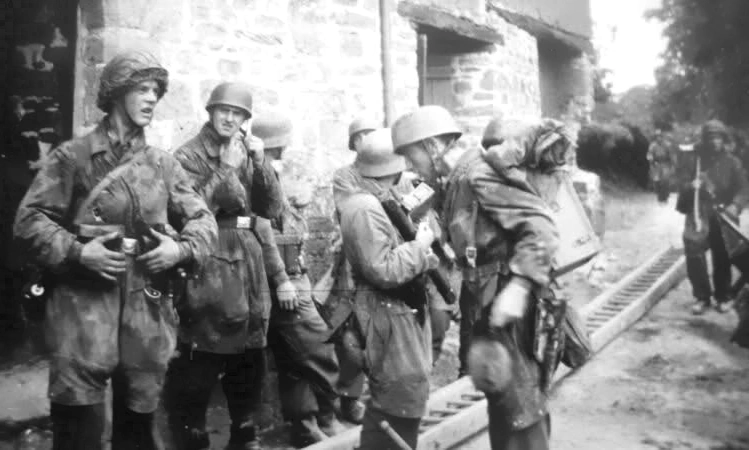
The troops committed in the forward line, at least those in the sector of the 6.FR, utilized the three week lull in the fighting to dig in and to establish a consecutive system of positions, with a double line of trenches at the focal defense points. In the first days in July, the regiment reported to the division that enemy troop movements in the area of Baupte, which had been followed by observers and reconnaissance patrols, indicated that the Americans were going to attack; and one or two days after this report, the Americans actually launched an attack on the left of the 17.SS-PGD, in the Mont Castre area. This American attack induced the higher command to withdraw from their positions the units of the 5.FD which were stationed in the second line behind the 17.SS-PGD, as well as the heavy antitank battalions which formed the antitank barrier on both sides of the Carentan – Périers road, and to commit them in the area of Mont Castre.
The day after this withdrawal, the Americans also attacked in the sector of the 17.SS-PGD, with the main effort, at least as far as could be seen from the German side, concentrated at two points, the Carentan – Périers road and Raffoville. At the former, the Americans encountered the SS.PGR Fick, while at the latter they faced the 6.FR. During this attack in the sector of the 17.SS-PGD, the impression was gained on the German side that the Americans intended to tie down the German forces at whichever point they encountered the greater resistance, and at the other, to effect a breakthrough deep enough to enable them to roll up the front of the 17.SS-PGD, from the point of penetration and strike the deep flank of the German forces which had been tied, down at the first point.
In the sector of the 6.FR, during the first day of the attack, a breakthrough was effected at Raffoville. It was, however, possible to stop this, and with the aid of an SS assault gun detachment to mop up by evening. The SS regiment, which was committed along the Carentan – Périers road, also claimed to have cleared up all breakthroughs.
After one day of rest, the Americans repeated the attack in the same manner and apparently based on the same plan. While on that day too it was possible in the sector of the 6.FR, to straighten out a comparatively deep American breakthrough by evening and to reestablish the old main line of resistance, the situation in the sector of the SS regiment on the right did not seem to be entirely favorable for the German forces, in spite of optimistic situation reports submitted by the regimental commander in charge there. In any event, it was definite that the Americans on that very day had succeeded in effecting a deep penetration at the Carentan – Périers road, which the SS forces were no longer able to clean up.
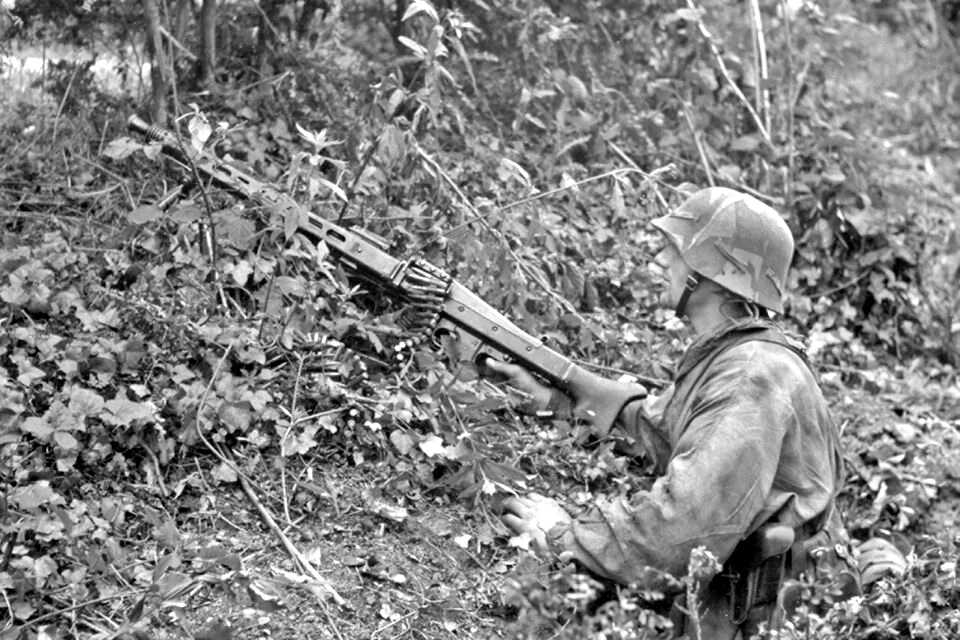
By the third or fourth day of the attack, the Americans had pushed forward on the Carentan – Périers road to such an extent that their foremost elements were abreast the regimental command post of the 6.FR. Since, from the very beginning, the main line of resistance of the 17.SS-PGD had formed a 90-degree angle with the right, wing of the 6.FR opposite Meautis, the position of the latter regiment now formed a deep salient protruding into the American front. The paratrooper forces constituted the point and left (northern) flank of this wedge, while its right (southern) flank was formed by the reconnaissance battalion of the 17.SS-PGD which, for the purpose of sealing off the American breakthrough at the Carentan – Périers road, had been placed under the control of the 6.FR. The point of the wedge was turned eastward towards Meautis. The division had originally instructed the 6.FR to hold this wedge at all costs, since it intended to attack southward from this wedge in order to seal off the point of the American penetration.
However, this counterattack, which did not offer much chance of success, failed to materialize. The unit to the left of the division had in the meantime lost Mont Castre, and counterattacks launched by the parachute troops of the 5.FD did not recapture this dominating height. Either army or the corps, probably chiefly influenced by this loss, consequently decided to evacuate the old positions which had been bent inward and penetrated at many points, and to withdraw to a new line of defense in the Sèves sector.
In order to execute this plan the 6.FR was given instructions on about noon of July 8 or July 9, to evacuate immediately the salient protruding in the direction of Meautis and to occupy a position which extended northward in a fairly straight line from the roadblock at La Roserie on the Carentan – Périers road to the southeastern corner of the Prairie de St Gorges. The regiment was charged with the responsibility for the Carentan – Périers road and the defense of the roadblock; the reconnaissance battalion of the 17.SS-PGD remained under the control of the 6.FR.
 On the right, south of the Carentan – Périers road, the remnants of the two regiments of the 17.SS-PGD, which had been combined into a single Kampfgruppe (combat group), joined the 6.FR; they were reinforced by the remnants of the assault gun battalion of the 17.SS-PGD and one battalion belonging to one tank regiment of the 2.SS-Panzer-Division (Das Reich) whose tanks were equipped with Panzer IV flat trajectory guns. These tanks, probably on orders from a higher commander, were to be dug in at regular intervals along the forward line to provide strong points.
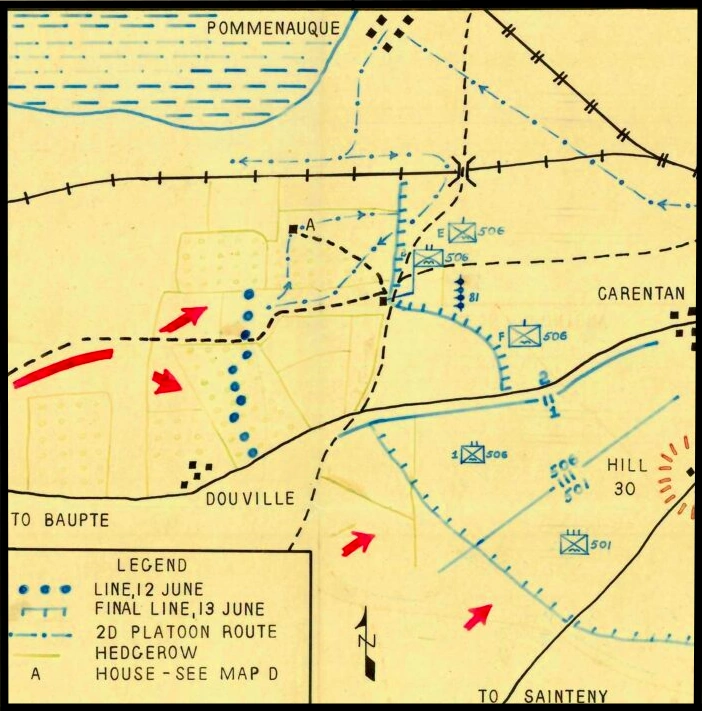 The withdrawal of the 6.FR from this salient to the new main line of resistance was a fairly difficult undertaking. The Americans employing strong forces, had been attacking the point of the salient since the early hours of the morning, and there was a great danger that the constant enemy pressure would panic an orderly withdrawal into a disorganized flight. On that day for the first time American close support aircraft heavily strafed the forward areas and handicapped all movements in the main defensive position. Nevertheless, at about 1700, the 6.FS succeeded in evacuating with some degree of order the point of the wedge, in which the command post of the 3.Battalion was located; however it was not until dusk, when the Americans ceased attacking, that the regiment was able to extricate itself from the critical situation and complete the withdrawal.