Morton jumped with a silk parachute folded in his arms which he threw out as he left the plane. Berry had a 36 ft. parachute packed into a metal case beneath the fuselage. The parachute had a trapeze bar for him to hold on to as he jumped and descended to the ground. In 1911, a successful test was done with a dummy at the Eiffel Tower in Paris. The puppet’s weight was 75 Kg (165 lbs); the parachute’s weight was 21 Kg (46 lbs). The cables between the puppet and the parachute were 9 M (30 ft) long.
On February 4, 1912, Franz Reichelt (1878–1912), was an Austro-Hungarian Empire-born French tailor, inventor and parachuting pioneer, now sometimes referred to as the Flying Tailor,  who is remembered for jumping to his death from the Eiffel Tower while testing a wearable parachute of his own design. Reichelt had become fixated on developing a suit for aviators that would convert into a parachute and allow them to survive a fall should they be forced to leave their aircraft in mid-air. Initial experiments conducted with dummies dropped from the fifth floor of his apartment building had been successful, but he was unable to replicate those early successes with any of his subsequent designs. Believing that a suitably high test platform would prove his invention’s efficacy, Reichelt repeatedly petitioned the Parisian Prefecture of Police for permission to conduct a test from the Eiffel Tower.
He finally received permission in 1912, but when he arrived at the tower on February 4, he made it clear that he intended to jump personally rather than conduct an experiment with dummies. Despite attempts to dissuade him, he jumped from the first platform of the tower wearing his invention. The parachute failed to deploy and he plummeted 57 M (187 ft) to his death. The next day, newspapers were full of illustrated stories about the death of the reckless inventor, and the jump was shown on newsreels.
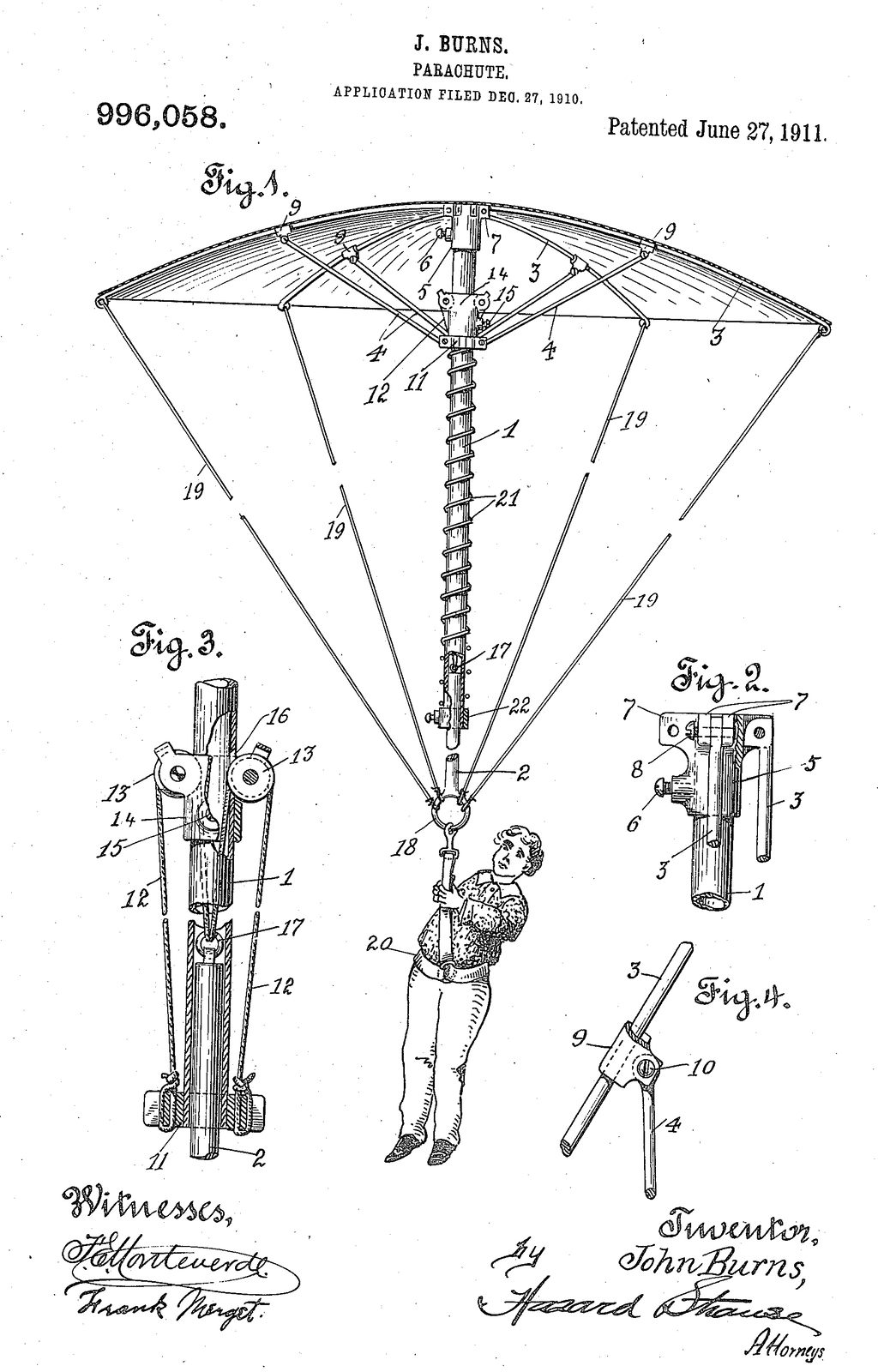 Italian Joseph Pino’s patent granted early in 1911 for a flexible parachute, including a pilot chute, is also one of the major milestones in parachute history, as he claimed in the patent, the jumper using this new device could wear his parachute in a pack like a knapsack. On his head would be a hat-like device fashioned into a leather cap, which would blossom out into a smaller open parachute. Meanwhile, hundreds of people all around d the world but particularly in the USA were also involved in the creation of the ultimate modern parachute, for example (Patent US996058A) in which John Burns, Los Angeles, California propose a device to provide a parachute for this purpose with improved 1 means for opening the same and for support in a load there below and it is a .further object of the invention to provide removable means for holding the ribs and other portions of the parachute whereby the parts may be adjusted for the use of a greater or less numb of parts as found
 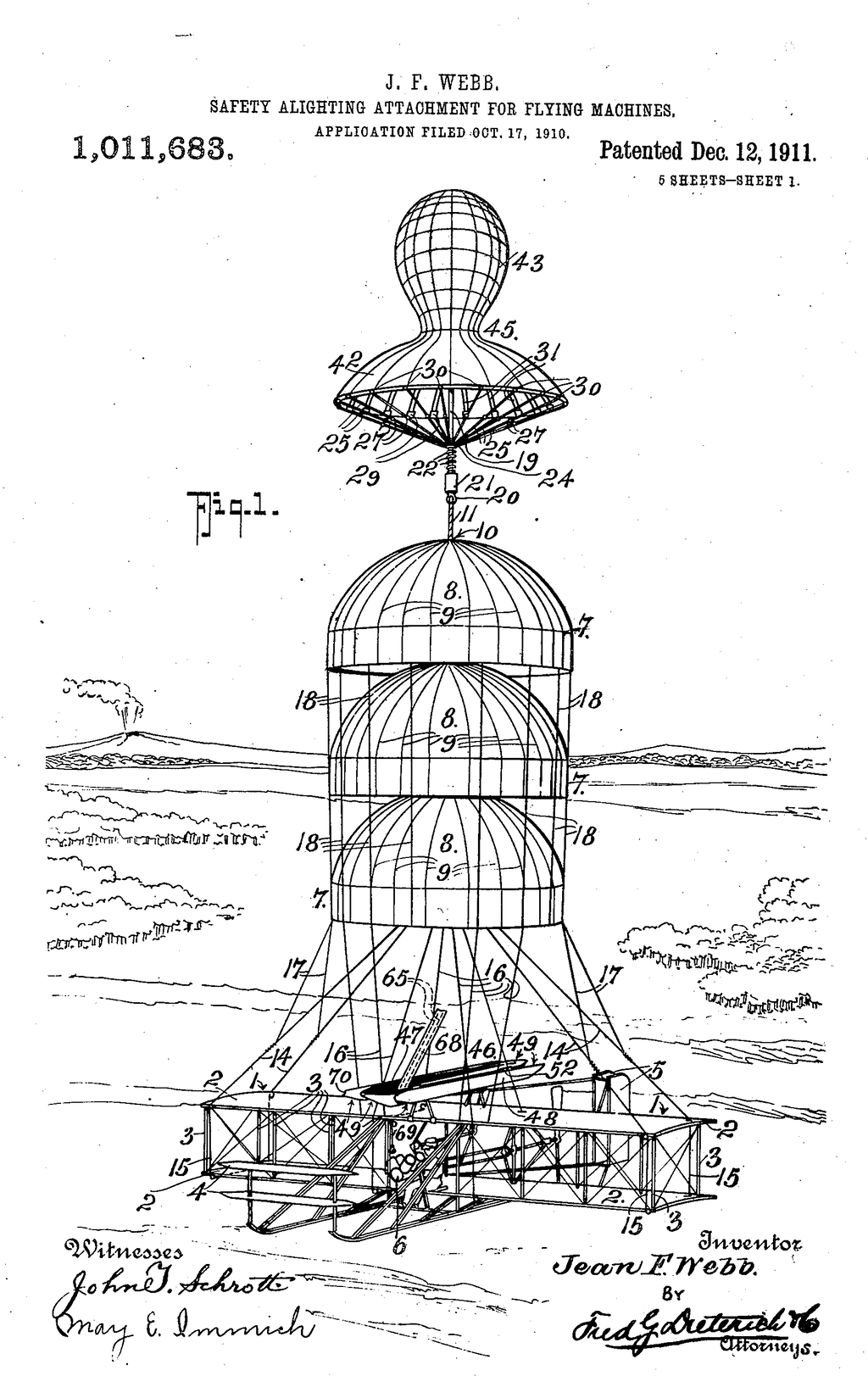 desirable. (Patent US1011683A-1910) Jean Francis Webb, New York, N.Y., developed a safety alighting attachment for flying Machines. In the (Patent US60266811A-1911) Louis
 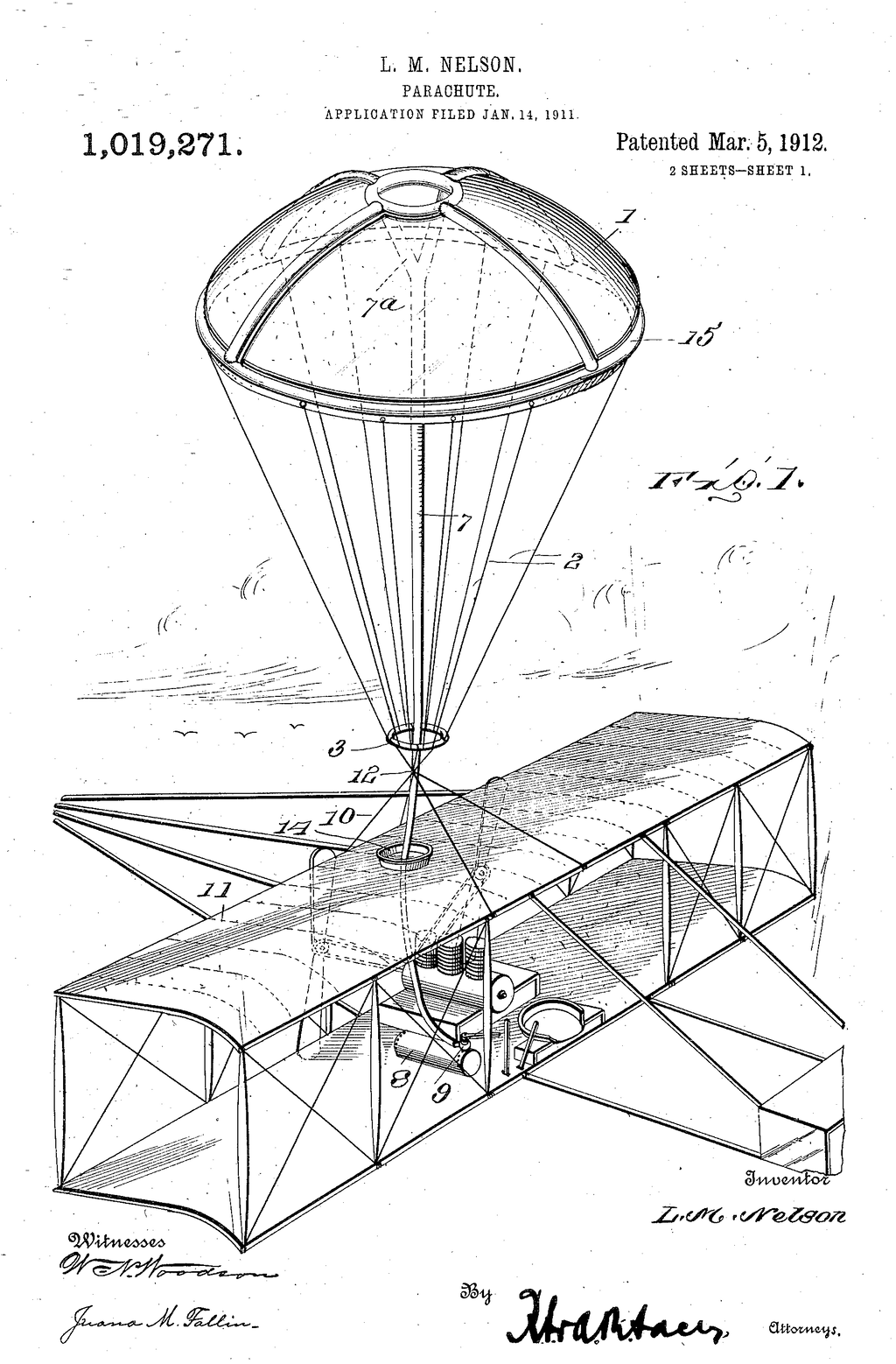 M. Nelson, from Pennington, New Jersey, has invented certain new and useful improvements in parachutes, of which the following is a specification: A collapsible parachute, a receptacle designed to contain said parachute in a collapsed condition, the receptacle is open at its top, a distensible cover formed with a marginal bead by which it is designed to be stretched over and removably secured to the receptacle to cover the same and the receptacle being of a size to contain the parachute in the collapsed and deflated condition of the latter, the parachute including an inflatable frame, and means leading into the receptacle for inflating said frame, whereby to forcibly remove the cover from the receptacle and to raise the parachute therefrom into distended condition.

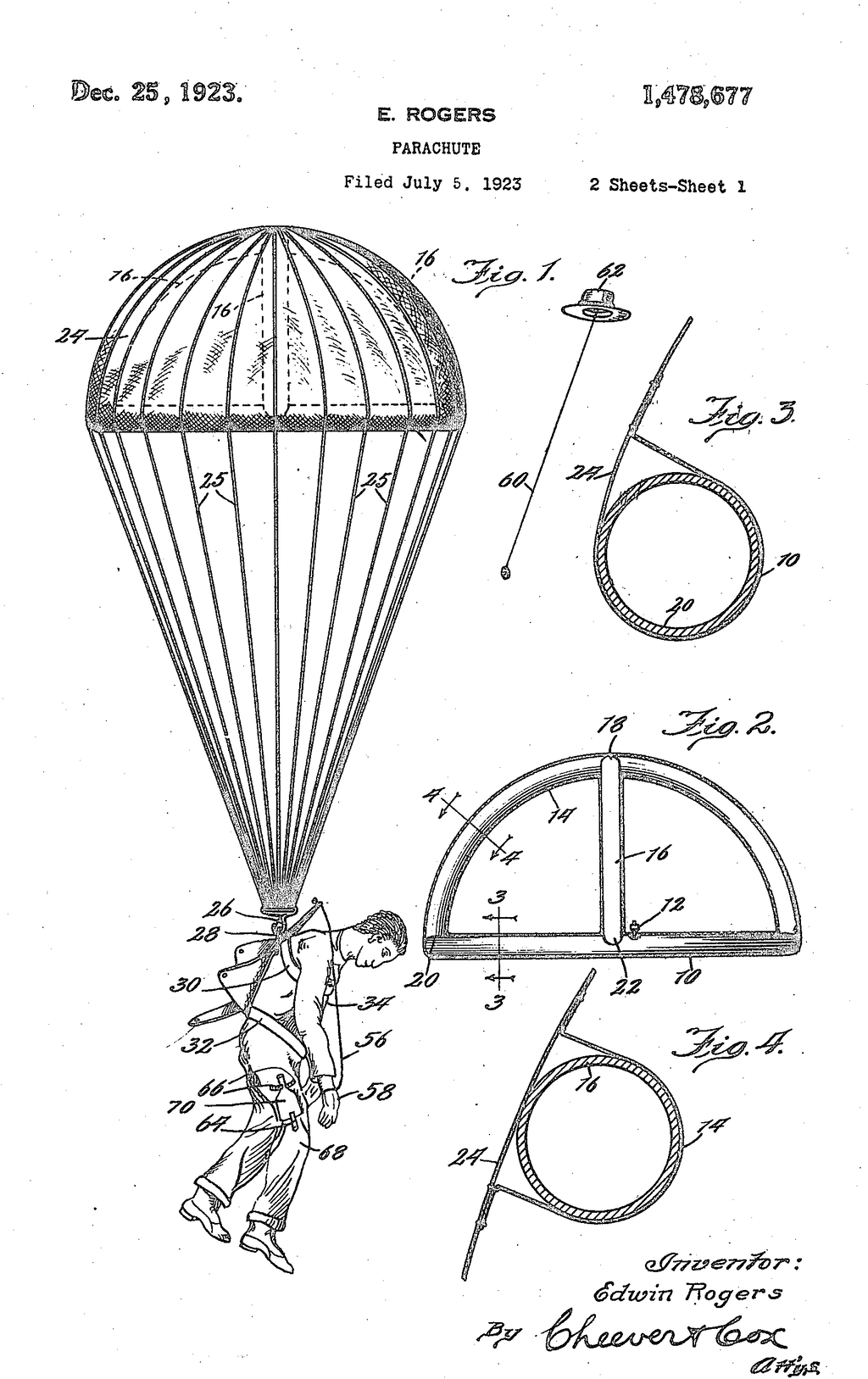 (Patent US1189112A-1915) American inventor Claude R. Howorth, his invention relates to safety parachutes for aeronauts and one of its objects is to provide a normally collapsed parachute which may be secured to the person of the aeronaut or upon the machine and thrown into action and employed by the aeronaut in case of danger to make a safe descent to the ground. A further object of the invention is to provide a parachute that is adapted to be instantly inflated or expanded to an outspread condition by means of a charge of compressed air or gas. A still further object of the invention is to provide a parachute that is a simple construction, positive, efficient, and reliable in action, which when not in use will occupy but a comparatively small amount of space, which may be readily and conveniently stored or transported. (Patent US1478677A-1923) Rogers Edwin, Illinois, USA, with an invention which relates to parachutes for use in safely landing on the ground a person who jumps or falls off from an aeroplane, balloon or the like. The object of the invention is to provide a parachute construction which automatically opens in such a positive manner and under such conditions that there is practically no possible danger of the device failing to operate in time to properly protect the persons using the device.
The cruel law of research and invention. I think that if a list containing the names of all those who killed themselves during the pre-WW1 period, during the WW1, and post-WW1, existed it would be much larger than the list of survivors. However, it is the entry into the war of the United States which will make evolve the development of a real parachute most quickly. So let’s continue this study. As already told earlier in this page, Italian Joseph Pino’s patent granted early in 1911 for a flexible parachute, including a pilot chute, is also one of the major milestones in parachute history, as he claimed in the patent, the jumper using this new device could wear his parachute in a pack like a knapsack. On his head would be a hat-like device fashioned into a leather cap, which would blossom out into a smaller open parachute. Although still having this artisanal character, Pino made evolve the parachute in three crucial points; 1 the use of a solid harness to wear the parachute as and rucksack; the canopy of the parachute and the lines of lines fixed to the harness as well as what will direct the extraction system of the canopy at the time of the jump. It should be noted that if the small parachute is used to extract the main parachute from its bag it will be the idea that it was missing to create a static line that can now be attached to the balloon or the plane and will take care of the extraction. But we are not at that stage yet. Let’s continue.
 Accordig to Pino, during the jump, the small pilot chute would pull off the hat and deploy the larger parachute from the knapsack and this worked pretty great. Using parachutes for military reasons was an idea first introduced by US Col William Wild Bill Mitchell, sometime during World War One. A great deal of planning went forth to try an experimental drop of one battalion of the AEF’s Big Red One 1st Division, behind the German lines. Unfortunately, by the time Mitchell and his staff could overcome the logistical obstacles the war had ended.
Note: Included in Billy Mitchell’s Staff in France in 1918 was a young lieutenant called Lewis H. Brereton. In 1944, he became the CG of the 1st Allied Airborne Army.
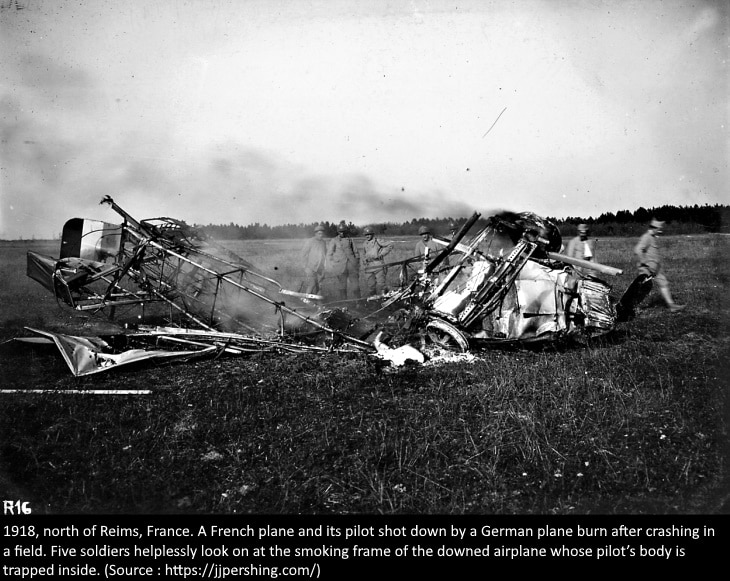
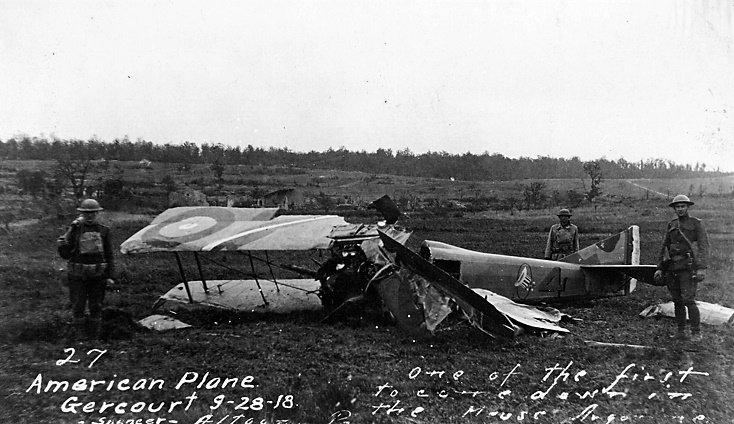
Over the next ten to twenty years the US Army basically shelved the idea, although there were some small-scale experiments conducted during this time frame. It was not until the German’s skillful use of Airborne troops in 1939 that the US Army turned up the heat on the idea and seriously preceded the US program. However, despite the fact that all the improvements made to the Parachute seemed to be entirely forgotten, things were very soon about to move again. The facts were as follows:
(1) the Parachute (Lines and Canopy) moved from a container to a backpack;
(2) The crash of (US Signal Corps Air Section) Lt Edward Selfridge with his Wright Airplane on December 18, 1908;
(3) Albert Berry, became the first man to jump from a flying airplane on March 1, 1912;
(4) The Benoist Airplanes Manufacturing Company (France) engaged in Airborne Parachute Jumps;
(5) Frederick Rodman Law jumped out of a Hydro Plane piloted by Anthony Janus and Philip Page;
(6) In 1913, a study of over 80 airplane crashes found that over 40% of the pilots involved were not killed from the plane crash itself but from injuries inflicted while crashing on the ground.
 It became pretty urgent to find a way to save the pilot’s life from going down airplane. Finally, Billy Mitchell gave the order that a military study section was stationed along with McCook Field near Dayton, Ohio, and placed Maj E. L. Hoffman in charge. Hoffman while creating his team, called Smith, Russel, Irvin, and Bottriel into his staff. The new section had to study, test, use nearly all available parachutes worldwide, as the Broadwick Parachute, US; Hardin Parachute, US; Irvin (Irving) Parachute, US; Jahn Parachute, US; Martin Parachute, US; Scott-Omaha Parachute, US; Sperry Parachute, US; Stevens Parachute, US; Mears Parachute, UK; Calthrop Parachute, UK; Robert Parachute, France; Ors Parachute, France; Heinecke Parachute, Germany; Bae-Gu Parachute, Germany. The Study Section, included later in the US Army Air Service, started a wide range of tests like the one in Kelly Field in 1926, Bolling Field in 1927 and Anacostia in 1928.
Meanwhile, in Italy, testings were also conducted. The Italians were even among the very first to see the potential of airborne warfare, dropping agents behind Austrian lines during World War I. Military experiments with paratroopers began in 1927 with a drop at Cinisello near Milan. The Italians used the Salvatore Parachute operated by a handgrip on the belt or a static line. Unfortunately, the death of Gen Allesandro Guidoni, the founder of the Italian airborne forces in a parachuting accident in 1928 slowed further development. However, tests were still conducted and the same year, 9 Italian paratroopers were dropped with guns and ammunition for testing purposes.
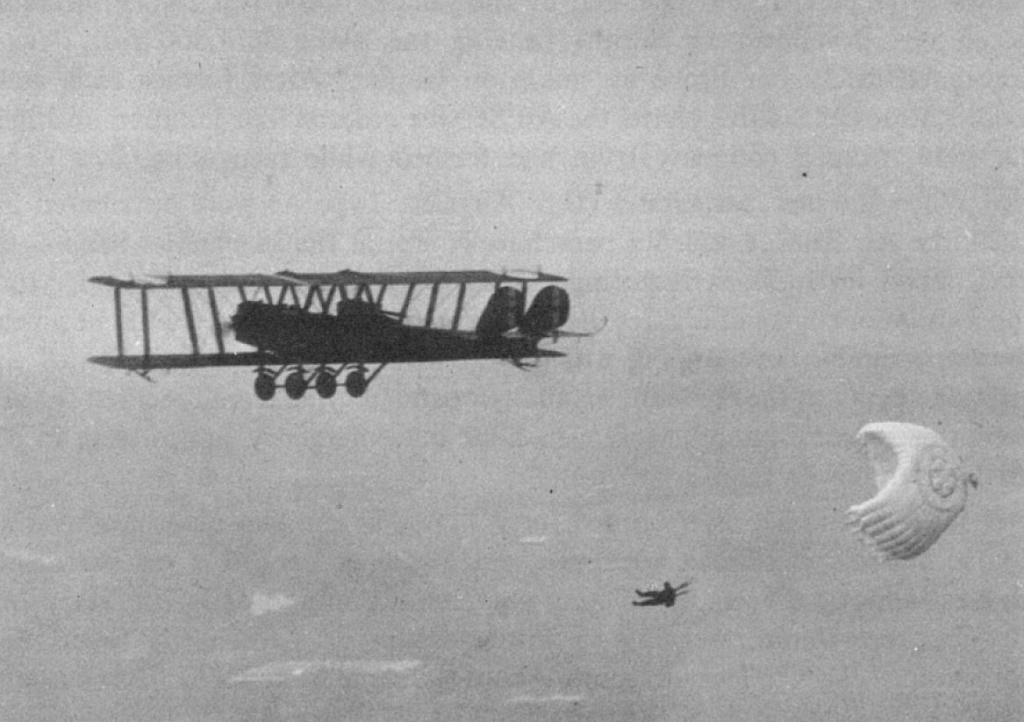
Billy Mitchell, well informed, ordered also a test, and 3 paratroopers with a separate machine gun were dropped at Brooks Field near San Antonio, Texas. Their mission was to regroup, get the gun in firing position then seize a dummy target on the ground. During this last test, present as International Military Observators, were the soon-to-become Father of the Red Army Russian Airborne, Maj Leonid Minov, and his Deputy, Lt Mochkowski. Back in Russia, they also started testing, and on August 2, 1930, 10 Russian paratroopers were dropped with guns and ammo. In 1931, the Russian Provisional Parachute Section was created. In 1932 this became a Paratrooper Regiment, and in 1933 a Paratrooper Brigade, their first mass jump happened in 1934 when 46 men and a small Tank were dropped. In 1935, 1200 paratroopers were this time, dropped with success, and a little later, 5200.
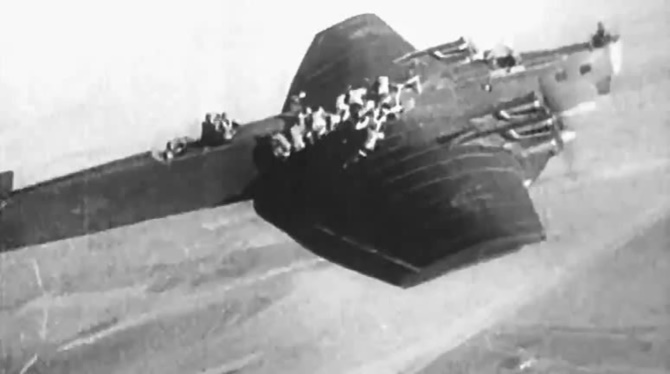
In the United States, the first Glider test happened in 1931. B Battery of the 2nd Field Artillery Battalion was moved from France Field (East coast) to Rio Hato (West coast). In 1933, the whole 2nd Field Artillery Battalion was Air moved with success from Rejuca to Cherrea (Panama Zone). The Infantry Board requested to go further on improving Air Transport at Fort Benning while the British Air moved an entire Infantry Regiment from Egypt to Iraq. In Italy again, in 1935, an entire Infantry Regiment was Air Transported from Rome to Albania. Note that the Italian paratroopers will be the second Airborne troops after the Germans to make a Military Combat Jump in World War Two, (1941, Cephalonia Island).
 In France, since Lt Jean Levassor, who became the first man to use a parachute device in combat and jumped out from a going down airplane on March 16, 1916, during World War One, developments were conducted till 1940 and were stopped when the French Army had an Operational Paratrooper Battalion. This Elite Battalion was reactivated in 1942, renamed 1er Régiment de Chasseurs Parachutistes, and sent to England to be added into the SAS (Special Air Service).
US Airborne! Who? What? How?
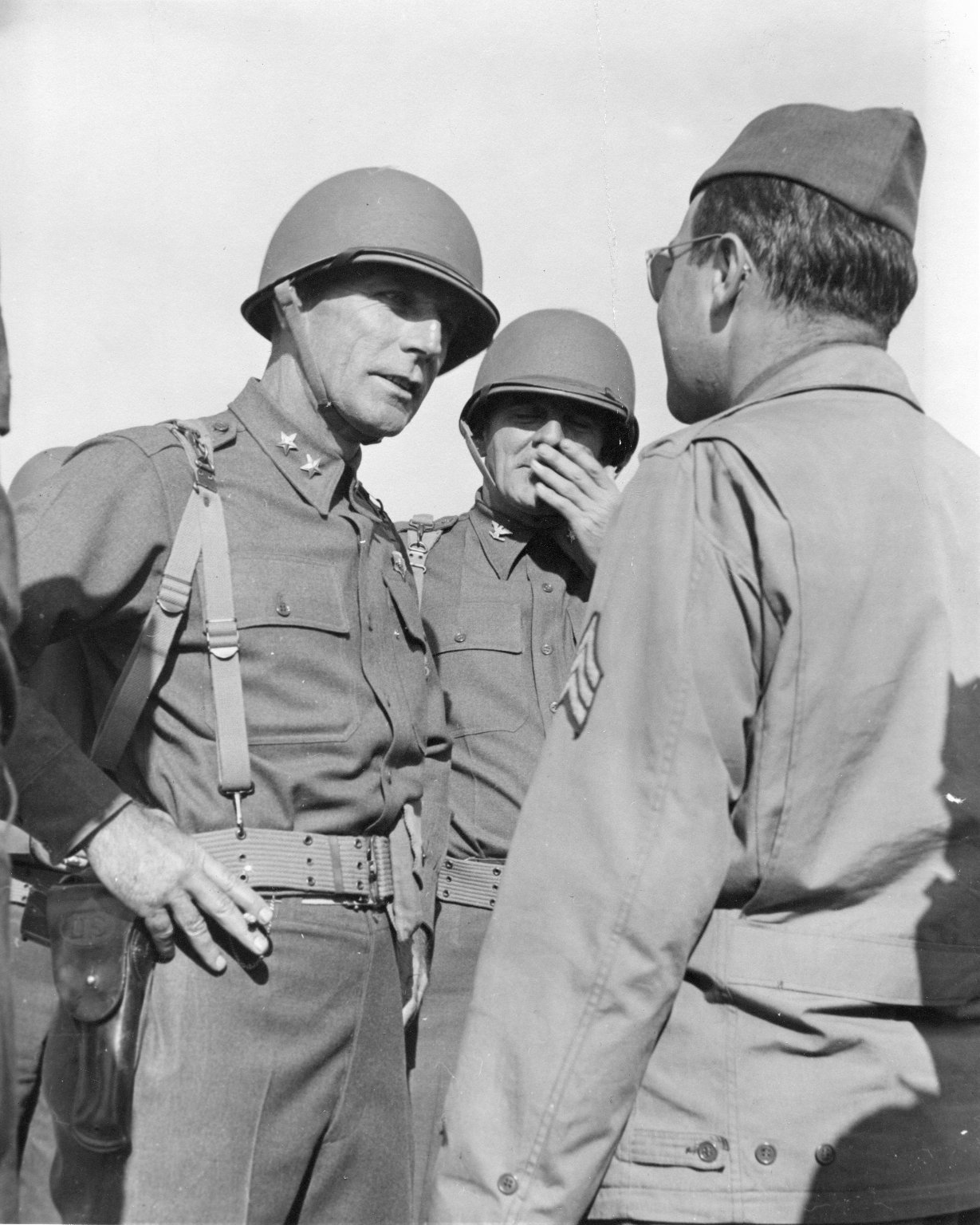
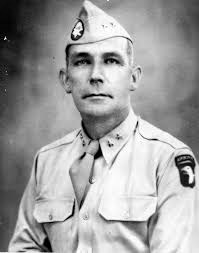 If you read McNair’s Folly Archive (available also on EUCMH) you will see the same problem for the affectation of new combat units. At the beginning of World War Two, the Army had no problem with combat efficiency nor improved combat forces. The Army was simply not able to make up its mind following the creation of a new combat force. With the Paratroopers, things followed the exact same way as they did for the Tank Destroyer Units (Towed or Self Propelled). American paratroopers should be an Air Force Unit and become part of the Army Air Corps! American paratroopers should be an Army Unit and stay as yet, and Army Ground Forces unit! American paratrooper should be one of ours said also the Engineer Corps! The Chief od Staff, Gen George C. Marshall turned to Gen George A. Lynch and said: ‘George, can you take this over? Sure and I will pass it over to William Lee’. William C. Lee answered: ‘we are late but we have to go ahead; 1st, sent all those materials to Lawson Field, create a shelter village and be ready because if we do, then we will have a Rendez-Vous with Destiny’. According to this statement, in June of 1940, a test platoon was formed at Fort Benning with volunteers from Army’s Demonstration Regiment, the 29th Regiment.
(Doc Snafu) Anecdote – When I was collecting info for my book there wasn’t any Internet and all was still done with regular mail. When I tried to locate this Order for the creation of the Test Platoon I sent several letters out to my main involved contacts in the USA, Gen William T. Ryder, Test Platoon, Gen William P. Yarborough, 509th Parachute Infantry, Gen Matthew B. Ridgway CG XVIII Corps A/B, Gen James M. Gavin CG 82nd A/B, and Gen William M. Miley CG 17th A/B. After some time, I got 5 letters back, William Ryder: the copy of the order below and a WW-2 silk map used in Italy; William Yarborough: a dedicated 509-PIB wartime photo and another copy of the order below. From William Miley (he got my address from William T. Ryder), I got a great gift, a dedicated wartime photo, and a couple of insignias. Mrs. Gavin’s letter wasn’t a great one because she was telling me that Jim was in very big health trouble. Matthew B. Ridgway didn’t forget me either. He sent me the canopy cut-off scarf he used in Normandy. I don’t know who in the hell cut that piece of the canopy but he managed to cut just around the date and markings.

Headquarters Twenty-Ninth Infantry (Rifle)
Office of the Regimental Commander
Fort Benning, Georgia
July 1, 1940
Special Orders – N° 127
1. First Lt John Sammons Bell, 29th Infantry Reserve, having been ordered to active duty for a period of fourteen (14) days, effective June 30, 1940, and having joined that date, the verbal orders of June 30, 1940, attaching him to Company A 29th Infantry are hereby confirmed and made of record. Unless sooner relieved by proper authority Lieutenant Bell will stand relieved from this attachment on July 13, 1940.
2. Pursuant to authority granted by General Orders N° 101 Headquarters, Fort Benning Georgia, 1922, and under the provisions of Section VIII, Amy Regulations 615-360, April 4, 1935, a Board of Officers is appointed to meet at this station at the call of the senior member thereof for the purpose of investigating, making a report, and recommendations as to whether or not such persons as may be properly brought before it should be discharged prior to the expiration of their term of enlistment:
Captain Frank G. Davis, 29th Infantry
First Lieutenant Philip S. Gage Jr, 29th Infantry
Second Lieutenant Carl A. Buechner, Jr 29th Infantry
Detail for the Board
3. Pursuant to authority granted by General Orders N° 101, Headquarters, Fort Benning, Georgia, 1922, and under the provisions of Section VIII Army Regulations 615-360, April 4, 1935, a Board of Officers is appointed to meet at this station at the call of the senior member thereof for the purpose of investigating, making a report, and recommendations as to whether or not such persons as may be properly brought before it should be discharged prior to the expiration of their term of enlistment:
Detail for the Board
Captain Richard Chase, 29th Infantry
First Lieutenant Francis T. Pachler, 29th Infantry
First Lieutenant Willis R. Crawford, 29th Infantry
4. Private John J. Sullivan, 7087204, having enlisted at this station for this regiment, is assigned to Company F, 29th Infantry, and will report to the company commander thereof for duty.