


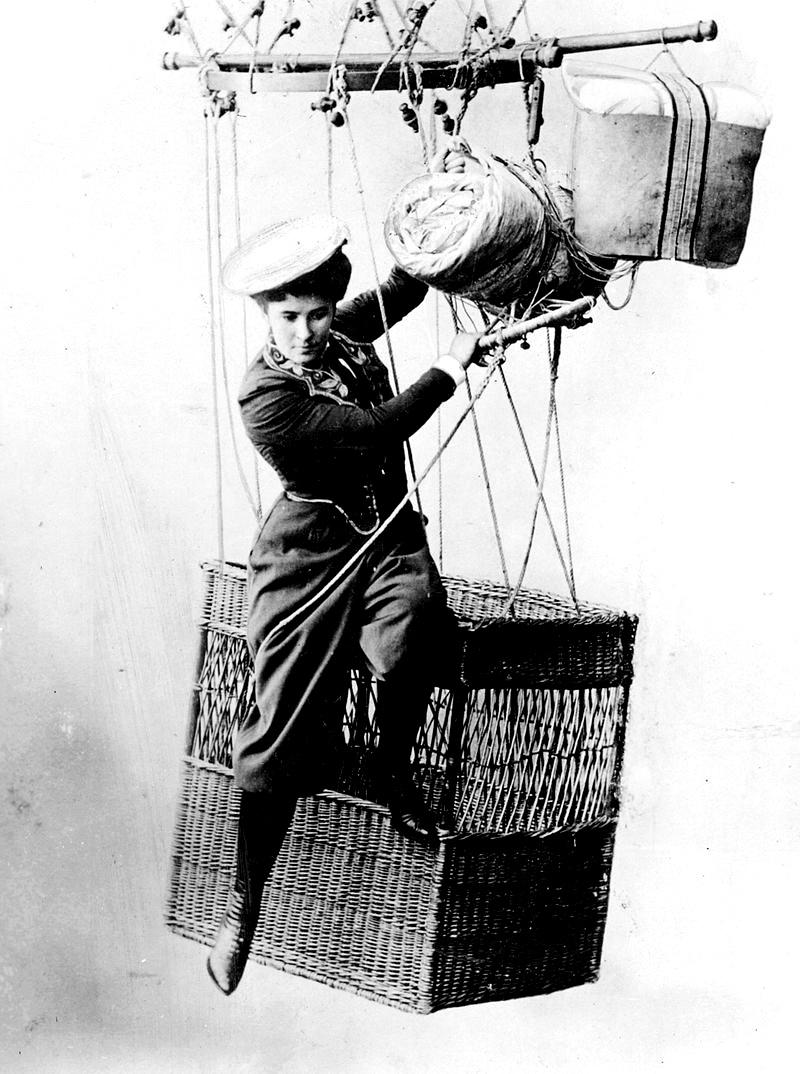
Some years later, a major contribution to the parachute systems was the development of a harness by the Baldwin Brothers, Samuel, and particularly Thomas Scott, who was a pioneer balloonist, became a US Army major during World War I and also the first American to descend from a balloon by parachute on January 30, 1887. Another step ahead was the concept of folding or packing the parachute in a knapsack-like container which was developed by Käthe Paulus and her husband Hermann Lettemann in 1890 and became the first Remote Automatic Sack. Käthe Paulus also demonstrated an intentional breakaway. After the first parachute inflated, it was released, and pulled open a second one. Besides Paulus and Letterman did manage a way to get the canopy folded into a bag fixed to the basket of the balloon, parachutes were still not described as lifesaver devices. A major improvement had still to be made to disconnect the device from the balloon’s basket. This improvement came a little later from the USA, in 1907.
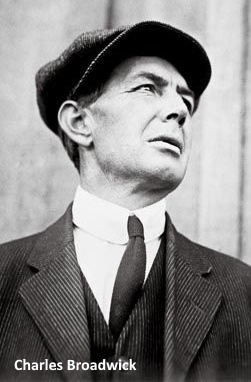 Charles Broadwick, born in the 1870s as John Murray, was an American pioneering parachutist, who created the Coat Parachute and the Static Line. For the Coat Parachute, he folded his parachute into a pack he wore on his back, and the parachute was pulled from the pack by a static line, he had also developed, attached to the balloon. Broadwick’s static line was attached to an aircraft and designed to pull the parachute from its pouch. In addition, Broadwick demonstrated parachute jumps at fairs and taught and equipped famous female parachutist Georgia Ann ‘Tiny’ Thompson, later Tiny Broadwick.
The next step in the evolution of the parachute which is even considered a major milestone in history was the backpack-type parachute developed by an Italian inventor Joseph Pino in 1911. The newly designed deployment system, that is, was a small deployable parachute that anchors into the airstream and pulls out the actual main canopy of the parachute. In 1912, Albert Berry used a pack-like system from an airplane over Jefferson Barracks, Missouri, and in 1914, Charles Broadwick’s foster daughter Georgia Ann ‘Tiny’ Thompson Broadwick performed a manual free fall activation of a parachute. Throughout her parachuting career, she did some thousand jumps.
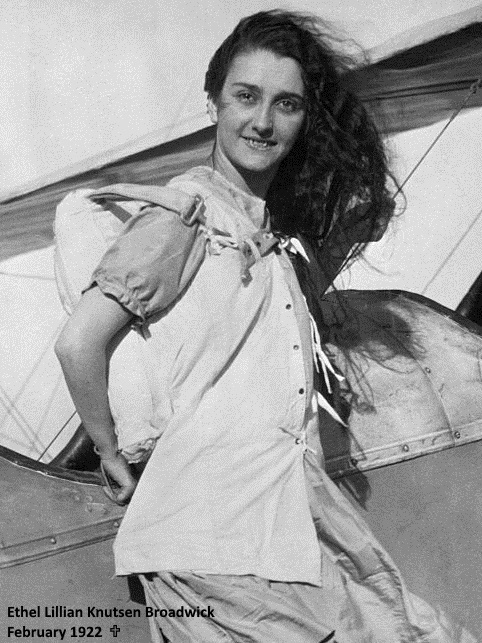
Charles Broadwick was probably the most unlucky guy in parachute history. On November 2, 1905, during a performance in Anderson, South Carolina, Broadwick’s performing partner and wife known as Maude Broadwick in the Riddell’s Southern Carnival Company, fell to her death. She either was caught in the ropes as the balloon rose and then fell or, as some witnesses pretended, she committed suicide in front of a crowd of 1000 people. Broadwick adopted then Georgia Ann ‘Tiny’ Thompson who became Tiny Broadwick and later when she married, Broadwick, married Ethel Lillian Knutsen who continued the act as Tiny Broadwick but was also was killed in a parachuting accident in 1922.

 This modest study on the development of the parachute cannot in any way ignore the contribution of this multitude of women who, very often, gave their lives in the practice of parachuting and who deserve just like the men to be quoted even if, as you can imagine, this list is by no means exhaustive.
Jeanne Geneviève Garnerin (née Labrosse) (1775–1847). was a French balloonist and parachutist. She was the first to ascend solo and the first woman to make a parachute descent (in the gondola), from an altitude of 900 meters (3000 ft) on October 12, 1799. Jeanne Geneviève’s husband died in 1823.
Later, Jeanne Geneviève met French heroine Marie-Thérèse Figueur, Madame Sans-Gêne, who had fought in the French Revolutionary Wars and Napoleonic Wars, with whom she reportedly opened a table d’hôte restaurant passing the reins to her niece Elizabeth ‘Elisa’ Garnerin, born 1791, who learned to fly balloons at age 15 and made 39 professional parachute descents from 1815 to 1836 in Italy, Spain, Russia, Germany and France.
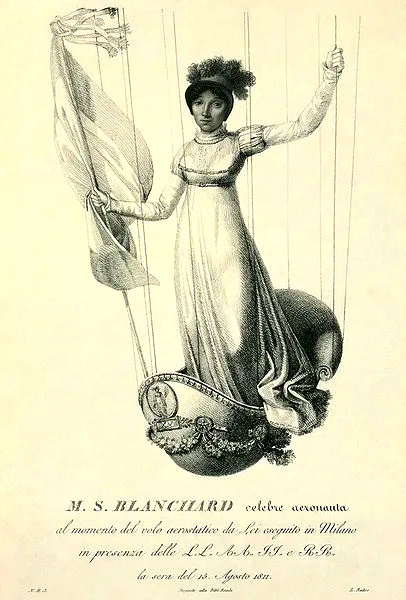
Sophie Blanchard, ((1778 –1819). Although she may have never actually jumped in a parachute herself, French aeronaut Sophie Blanchard did, during the turn of the eighteenth-nineteenth century, perform early parachuting experiments, parachuting dogs and launching pyrotechnic parachutes from hot-air and hydrogen balloons. Sophie’s chief rival at the time was of course Élisa Garnerin.
Sophie made her first ascent two days after Christmas 1804 with Jean-Pierre Blanchard in Marseilles. Sophie was not the first woman balloonist; Elizabeth Thible made an ascent to entertain Gustav III of Sweden in Lyon on June 4, 1784. Anyway, Sophie was the first woman to pilot her own balloon and is credited as the first lady professional balloonist. On the evening of July 6, 1819, at the age of 41, Marie Madeleine-Sophie Armant Blanchard made her last flight at the Tivoli Gardens in Paris.
She had planned to do her ‘Bengal Fire’ demonstration, a slow-burning pyrotechnics display. As she mounted her balloon she said ‘Let’s go, this will be for the last time’.
As her hydrogen balloon ascended over the crow, the balloon caught fire and Sophie fell to her death.
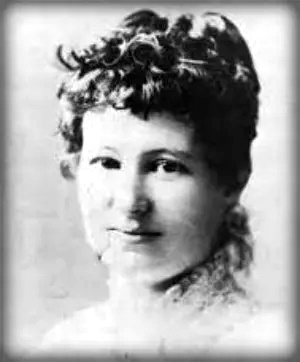 Mary Breed Hawley Meyers (Carlotta the Lady Aeronaut) 1849–1932. On July 2, 1883, Carlotta the Lady Aeronaut making her 180th balloon ascension, saved herself by floating twelve miles on fragments of the silk balloon ‘Flying Cloud’; the makeshift parachute carried her to a safe landing. While a wrecked hydrogen balloon may not be a parachute it worked! Mary was the first woman in the United States to pilot her own aircraft.
In 1871 Mary Breed Hawley, a descendant of the Breeds of Boston’s Breed’s Hill, married the New York balloon inventor, Carl Myers, a self-taught engineer whose experiments led to a patent for a new kind of balloon fabric—lightweight and impervious to hydrogen gas. Mary decided that she, too, wanted to fly.
Her first ascent took place in Little Falls, New York on Main and Second Streets, during the rain. Thinking her own name was not exciting enough for such daring behavior, she took the moniker Carlotta the Lady Aeronaut and on July 4, 1880, made her debut as fifteen thousand people, mesmerized by her daring antics, watched from the ground.
 Adelaide Bassett (1859-1895). Adelaide Bassett, a British parachutist, was the wife of Henry Bassett and was a smoke balloonist in the early 1890s as a student of Capt Orton. Adelaide made about 30 ascents in her career and probably completed the first ‘double-aeronaut’ para-jump in Europe. On August 5, 1895, as her balloon ascended, it struck several telegraph lines that destroyed her parachute. She fell 60′ to her death.
Jeanette Van Tassel (1864-1892). Jeanette Van Tassel, daughter of Jenny Rumary Van Tassel. On March 16, 1892, the plan was to have Jeanette launch from a south riverbank of the Buriganga River, float north of the river, and land on the roof of the main building of the Nawab compound at Ahsan Manzi. A fire of wood and kerosene produced the hot air that filled the balloon, which began its flight without incident. Unfortunately, the winds didn’t cooperate. Instead of landing on the palace roof, Van Tassel’s balloon came to rest in a tree at Ramna Garden, nearly three miles away. Police soon arrived and attempted a rescue by extending a bamboo pole to the gondola. As Jeanette descended, the pole snapped and she crashed to the ground, severely injured. She died a few days later. Jeanette as well as Jenny were both part of the balloonist ‘Professor’ Parker Atkinson Van Tassel Touring Troupe.

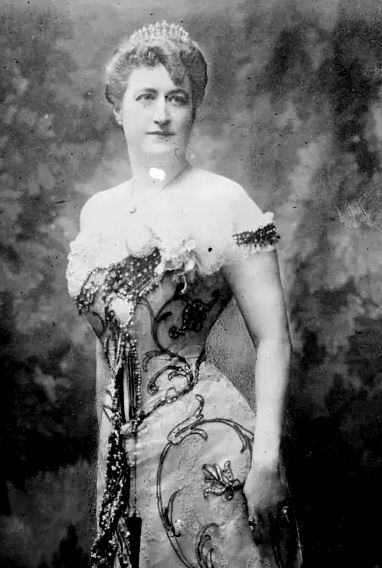 Marie Marthe Camille Desinge du Gast (1868-1942). Marie Marthe Camille Desinge du Gast was born in Paris. A balloonist, parachute jumper, fencer, tobogganist, skier, rifle and pistol shot, horse trainer, as well as a concert pianist and singer, Marie and her husband, Jules Crespin, were enthusiastic hot air balloonists; she flew with the pilot Louis Capazza. Surviving an assassination attempt by her daughter and co-conspirators around 1910, she became a recluse until her death in Paris in April 1942. She is buried in the Crespin family tomb at the Père Lachaise Cemetery in Paris.
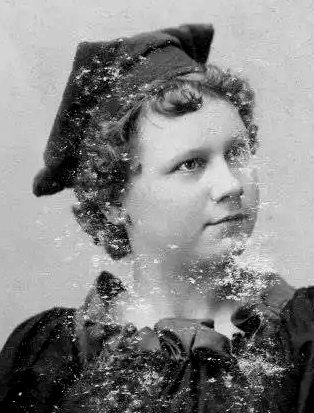 Aliss Ruby Deveau. was born in Germany, came to the USA at the age of four, and was orphaned at an early age. Ruby made her first parachute jump in 1892 at 15 years of age.
Billed as the ‘Queen of the Clouds’, Miss Deveau made 175 jumps; on her last parachute jump in 1895 in London, Ontario, she drifted into a chimney and broke her back.
 Edith Maud Cook (1878–1910). Edith Maud Cook was born on September 1, 1878, in Ipswich, Suffolk, England. Edith was variously known as Miss Spencer-Kavanagh, Viola Spencer-Kavanagh, Viola Spencer, and Viola Kavanagh. She is also reputed to have been known as Viola Fleet and Elsa Spencer Edith was the daughter of James Wells Cook, a confectioner, and Mary Ann Baker. She was a pupil at the Blériot Flying School and at Claude Grahame-White School at Pau, in France.
In 1909, she became the first British woman to pilot an airplane. Edith died from injuries sustained following a jump from a balloon at Coventry on July 9, 1910. Her parachute collapsed after a gust of wind blew her onto a factory roof. It was reported that another gust of wind caught the parachute and she fell from the factory roof sustaining serious injuries. She died on July 14, and her death certificate states the cause of her death as ‘Internal injuries, broken pelvis, and arm, caused by a fall from a parachute’.
 Elizabeth Mary (Lily) Cove (1886-1906). Elizabeth Mary (Lily) Cove was born to a working-class family in London’s East End, threw in her lot with Capt Frederick Bidmead, and ended up dying a dramatic death. Rising in a trapeze attached to a balloon from what was then the football field on West Lane, Haworth, she tried to make the ascent but the balloon would not rise, a tiny tear was found in the fabric. The descent was postponed until two days later, Monday, June 11, 1906. This time the balloon was able to lift. Lily theatrically tore off her skirt, revealing bloomers beneath, then strapped herself into her harness, and began to ascend on the trapeze. The wind began to blow her towards Ponden, and as Lily neared the vast expanse of Ponden Reservoir, she was seen to shrug out of her harness and plummet to the ground in a field behind Ponden Hall. Although there was speculation
 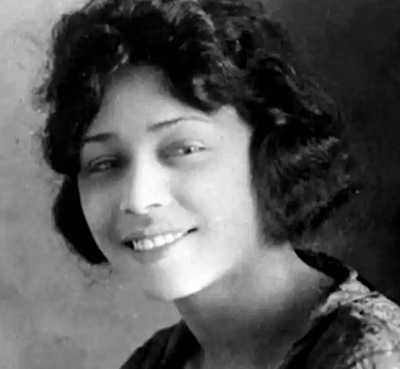 hat Lily may have committed suicide, it is likely that her known fear of drowning prompted her to try to escape before she was over the water. A M. Cowling Heaton, seeing her falling body, rushed to the spot and gathered her into his arms, saying, ‘My good woman, if you can speak, do’. Lily’s eyes were open, there was no answer, and she died immediately from multiple fractures and internal injuries. She was just 21.
Bessie Coleman (1887-1983). Bessie was born January 26, 1887, in Atlanta, Texas to Susan and George Coleman, who were cotton farmers. George left Bessie, her mother, and 12 siblings when she was 9. Bessie completed all eight grades in a one-room school and at 12, began attending the Missionary Baptist Church in Texas; after graduation, she attended the Oklahoma Colored Agricultural University. At the age of 23, Bessie Coleman  went to Chicago to stay with her brother who one day said ‘I know something that you’ll never do – Fly!’ Bessie decided right then and there that she would become the first black woman to earn a pilot’s license. The US Flying Schools denied her the chance so she taught herself French and enrolled in the Ecole d’Aviation des Frères Caudron in Crotoy, France, earning her license in just seven months. On September 3, 1922, at the Curtiss Field near New York, in Glenn Curtiss’s Jenny, the first public flight by a Black American woman in America was done by Bessie Coleman! Specializing in stunt flying and parachuting, she earned a living barnstorming and performing aerial tricks. On her third exhibition on October 15, 1922, after a series of flights, she performed a perfect Richthofen glide and loop-the-loops. During a show in Wharton, Texas, a woman parachutist failed to show, and ‘Brave Bessie’ donned a parachute and jumped in her place. She raised money to open a Black American flying school by giving lectures. On April 30, 1926, Bessie Coleman’s life ended in Jacksonville Florida at Paxon Airfield when she asked mechanic/pilot William D. Wills to take the controls so she could study the field for a good site to parachute. At
  2000 feet, a loose wrench jammed the controls, the plane suddenly flipped and Bessie, who was not wearing a seat belt or a parachute, fell to her death. Wills, who was strapped in the plane, died when it crashed to the ground not far from Bessie.
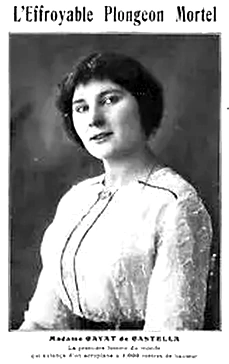
Madame Cayat de Castella, Lucienne Blaise (1887-1914). Lucienne Blaise was a French parachutist, who died on July 26, 1914, at the Stockel Racecourse near Brussels Belgium during a demonstration flight, she found it impossible to deploy her parachute; her previous jump on May 17 had gone perfectly. Only 22 years old, she was the first french woman to parachute from a plane in 1913, the same year as the American ‘Tiny’ Broadwick. Testing one of the canopies made by her husband Georges Cayat, she was tied by three leather straps under the tail, the parachute being fastened under one wing and connected by another harness to her armpits; her hands were wrapped in rags so as not to be injured by the cables to which she clung. Her husband, the inventor of an air-assisted opening system, detached it at an altitude of 800 meters, while her face was only 50 centimeters away from the propeller.
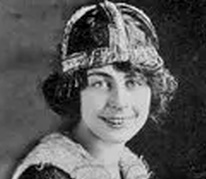 Ethel Dare Deborah DeCostello (1893-1920). Deborah DeCostello was only seventeen, when on October 1, 1920, during a jump she drowned as high winds carried her out in Lake Michigan. Details are unclear whether the winds were misjudged or before she was ready to drop, the rope was accidentally cut. The pilot made a few attempts to snag Deborah once she started drifting out over the lake. Rescue craft was dispatched from the US Lifesaving Station at Sleeping Bear Point, but was unable to locate DeCostello for 6 days. No family members could be located so money was raised for her funeral and tombstone by selling a diamond ring found on her body. She was buried in St Philip Cemetery, at the very west edge of the cemetery near the center from where she started her final flight. Her tombstone simply reads ‘Deborah DeCostello, 1893-1920’. There were at least
  two other Ethel Dares during that time, Ethel Gilmore, killed during a jump in 1924, and Margaret Potteiger – Margie Hobbs – The Flying Witch (died 1970). Whether or not they worked together or even knew each other is speculative at best.
Ethel Dare II Ethel Gilmore (1896-1924). Ethel Gilmore was born January 20, 1896, illegitimate, in Grand Ledge, Michigan to Josephine Gilmore and Frank Shattuck. Ethel married Frederick Harris on June 20, 1914, in Lansing, having one daughter on April 20, 1914. Ethel began leaping from balloons in 1917; her daughter Lonnie, who was living with her aunt Bertha, died at the age of four on January 4, 1919, while Ethel was performing. The details are tragic, heartbreaking, and too difficult to write! Frank divorced her in March 1920, because his wife’s serial dare-deviltry destroyed his peace of mind and caused him untold anguish. Ethel claimed, ‘keeping house was too tame’. She married her second husband, Arthur Edward Johnson on September 27, 1920, in Kalamazoo, Michigan. Getting married again did not appear to deter Ethel, who began jumping from airplanes in 1921. She made her 600th leap during an Air Circus at Dayton, Ohio Thursday, October 2, 1924. On November 15, 1924, she was pulled from the fuselage of an airplane as she was preparing to make a parachute drop. Her broken body was found in a cornfield. There were at least two other Ethel Dares during that time, Deborah DeCostello, killed during a jump on October 1, 1920, and Margaret Potteiger /Margie Hobbs -“The Flying Witch” (died 1970). Whether or not they worked together or even knew each other is speculative at best. Ethel Gilmore Johnson is buried with her daughter Lonnie in Riverside Cemetery in Kalamazoo, Michigan, under a stone that reads: Aviatrix Ethel Dare 1896-1924.
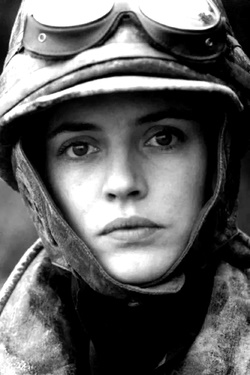 Elsa Teresia Andersson (1897-1922). Elsa Teresia Andersson was born on April 27, 1897, the daughter of a farmer in Strövelstorp and was Sweden’s first female aviator and stunt, parachutist. Full of determination and a taste for physical activity and adventure, she went shooting with the boys and she learned how to drive, cutting the image of a flapper sailing through the Swedish Landscape. At age 24, she got accepted into Enoch Thulin Flying School and became Sweden’s first woman pilot (#203). Elsa felt at home among the other (all male) aviators. An embodiment of her own motto that ‘courage and determination are the best qualities in a human being’; an article from the time, stated: ‘Such a curious woman; silent, serene, and completely lacking nerves!’ In September 1921, Elsa decided to go to Germany to train under parachuting instructor Otto Heinecke; the course lasted a few weeks. Elsa made her first jump from 2000 feet during an aerial exhibition in the south of Sweden. On a glorious autumn day with 2000 spectators, Elsa was the most thrilling act on the bill. Elsa exited head first. It was a perfect jump; landing gently and jubilant on the lake grass. The men making fun of her parachute, called it a ‘Heinecke sack’, exclaiming ‘You’d never get me in one of those, not for a million kronor!’ ‘It’s a piece of cake’ Elsa cuts back with a smile. On a cold January Sunday in 1922, standing on the wing, left hand holding onto the wing, she waves to the crowd of thousands, gathered below on the ice of Lake Alsen and jumps, doing a few somersaults, she had trouble releasing her parachute, which finally unfolded barely above the treetops and she crashed into the ground; Elsa was killed during that jump.
 Sophie Catherine Theresa Mary Peirce-Evans, Lady Sophie Mary Heath (1897-1939). One hundred years ago, when male aviators flew only with ham sandwiches and hard-boiled eggs, Sophie Heath, the first Irish woman to parachute from an airplane and the first to land in the middle of a soccer match, piloted a tiny open-cockpit airplane from Cape Town, South Africa to London with a Bible, shotgun, a couple of tennis rackets, six tea gowns, and a fur coat. One of the best-known women in the world during the 1920s, Britain’s Lady Lindy, as she was known in the US was the first pilot, male or female, to make that flight. ‘A woman can fly across Africa wearing a Parisian frock and keeping her nose powdered all the way’. Sophie had already set a number of altitude records when she married Sir James Heath in October of 1927. Lady Heath landed in the middle of a football match after becoming the first British woman to parachute from a plane, and in 1927, the first female pilot to win an open race. In July 1929, she wrote an article for Scientific American magazine, entitled ‘Is Flying Safe?’ Sophie would once gain experience tragedy when just before the National Air Races in 1929, she was badly injured in a plane crash. Lady Heath would never be the same after her accident. Running her own company near Dublin into the mid-1930s, helping produce a generation of pilots, and creating Air Lingus Airlines, Sophie Catherine Theresa Mary Peirce-Evans, the great Lady Mary Heath at the age of 42, died of a head injury following a fall on a tramcar in 1939; the fall was thought to have been caused by an old blood clot from the 1929 crash.
(Note) I know this list is by no means complete hence why it will remain subject to change over time. Feel free to add your own information using the comment feature below. Please note that most of the info above was picked up at ladiesofskydiving.com/early-history/
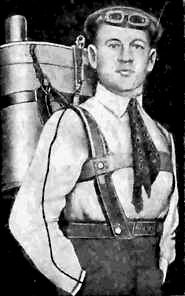 Another pioneering balloonist who started balloon ascensions in 1889 at age 12 was Albert Leo Stevens born on March 9, 1877 in Cleveland, Ohio of Czech parentage. Not only did he starts making balloon ascents, but he also began manufacturing balloons and dirigibles at the age of 20. In 1895, he made his first parachute jump from a church spire in Montreal, Quebec, Canada. Stevens also played a key role in the development of safety features for parachute use, particularly, a new parachute automatic opening system using a Rip Cord. Sometime later, in 1911, Russian Gleb Kotelnikov invented the first knapsack and transportable parachute, although Hermann Lattemann and his wife Käthe Paulus had been jumping with bagged parachutes in the last decade of the 19th century.
To define with certainty that this is when the modern parachute was born would be a bit of an exaggeration. However, the fact of bringing together the different elements of the parachute by separating it from a balloon or an airplane wing sent the inventors of the time with certainty in the right direction. Gant Morton and Capt Albert Berry used this kind of device for their first parachute jump from an airplane in 1911.
