


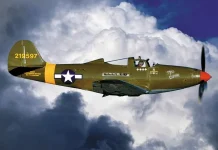
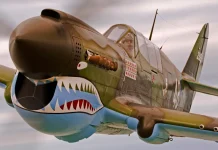


In the same category as the overwhelming Allied air and ground offensive toward the end of this war are the battles of Vittorio, Venato and the rapid Allied advances in the Balkans at the end of the last war. There are no more battles in the old classic sense. In France we styled our reports in the old manner. The result of the impression was thus one of the gigantic land battles and clever generalship, a totally false impression. In my opinion, the Allies are in danger of making the same erroneous interpretations of air victories.
Nothing could be more erroneous than to belittle air power, but the fact remains that modern war is determined, fought, and won by a combination of land, sea, and air power, backed by industry, manpower, material, and the brains of the nation’s overall strategic leadership. The basic conception of winning a war through strategic air power is sound. Historically, the strategic objective of any war has been to destroy the enemy’s armies in the field. With increasing technological development, however, and the military fact that wars are no longer exclusively decided by generalship and battles, but by a nation’s material might and war potential, it is obvious that in the future, the first strategic objective in the war can be not the destruction of the armies in the field, but the destruction of the enemy’s resources and war arsenals. Without these, the armies in the field are doomed to eventual defeat. A war might conceivably start with the attempt to destroy a nation’s material power by employing a powerful weapon of long-range striking power. In this war, such a weapon was the long-range heavy bomber. In the future war, it could conceivably be a type of perfected V bomb. Or instead of striking air blows at the enemy’s war materials, you could conceivably wage a powerful land campaign with the sole purpose of conquering new raw materials, and diminishing the enemy capability to carry on the war and simultaneously increase your own.
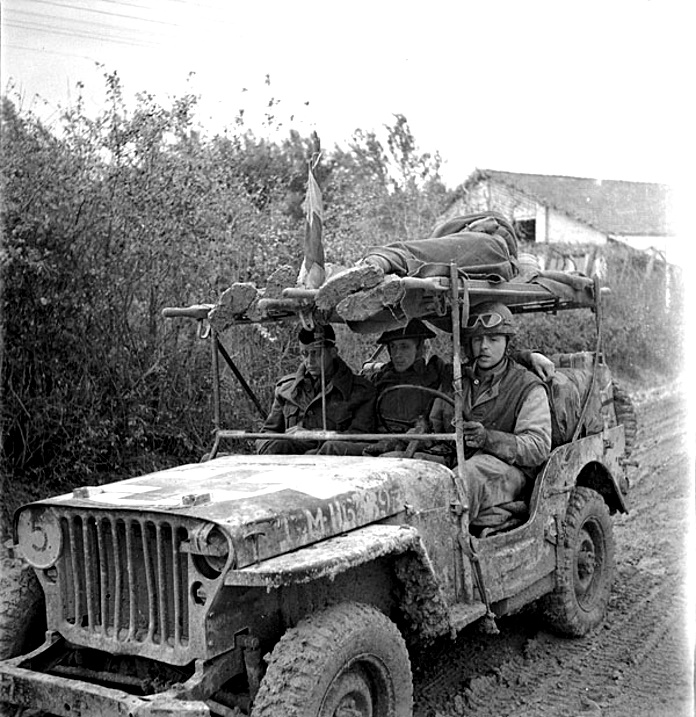
This was not the case in the war either on your side or on ours. In my opinion, you might have won the war through strategic bombing alone granting adequate bases tactically secure. Since you wanted to end the war quickly, you did not rely on strategic bombing alone; you fought the war in combined operations on land, sea, and air. At the beginning of the war we failed to see that the material power of the coalition against us was strong enough to destroy our war industries by strategic air attacks, even if we took the whole continent. As our leaders couldn’t see this, and as you were unwilling to rely entirely on strategic bombing, you brought the war to an early and successful close by both strategic and tactical use of air power.
In the future, a nation may wage war only if it is secure in its own industrial centers and is able to cripple or take by storm the industrial and raw material centers of the enemy. The use of strategic air power is closely related to the tactical employment of air power and both are necessary to end a war quickly. Strategic bombing of the centers of aircraft production seriously reduces the number of aircraft available for tactical operations, and through defensive dispersal of fighter aircraft to forestall surprise attacks by strategic bombing, the strength of aircraft available for tactical operations is weakened at all points. The collapse of the Luftwaffe was complete. As soon as you can not afford to fill strategic needs because of tactical losses, you are beaten.

Relative Value of Air Attack and Artillery Fire
The effect of air bombardment on ground troops is not as great as commonly imagined, as the troops can always move out of their shelters immediately after the air raid. Men accustomed to continuous artillery barrages for days on end are not likely to be absolutely demoralized by an air bombardment lasting 15 minutes. An experienced soldier knows that an air attack will be over in a few minutes at the most, while the shell fire may continue for hours. If he has a foxhole or ruins to protect himself he can sit out the air bombardment without moving from his position and with little effect on his morale, (ex. Monte Cassino). The effect of bombing attacks against green and inexperienced troops is of course more demoralizing.
The really demoralizing experience for the ground soldier is the sight of the artillery-directing aircraft circling over our positions for hours. You know for a certainty that if you make one move, you will have a shell in your foxhole within two minutes. In the position of warfare which was so characteristic of the Italian Front, the troops were afraid to move about, and when the fighting started they were reluctant to come out and fight, feeling that they were being constantly observed.
In an aerial bombardment you do not feel that an attack is personally directed against you. Jabos (Jadg Bombers – Fighter Bombers) and artillery-observation aircraft on the other hand seem to have a personal grudge against you. Strafing attacks were particularly demoralizing because finally, your Jabos began strafing anything that moved, even my orderly collecting vegetables. Toward the end of the war, movement in vehicles and on foot became almost impossible and during the last stages of the battle of the Apennines, I reported that our troops could accomplish movements only during a three-hour period at night. At dawn, their positions were frozen by Jabos and artillery directed from the air.
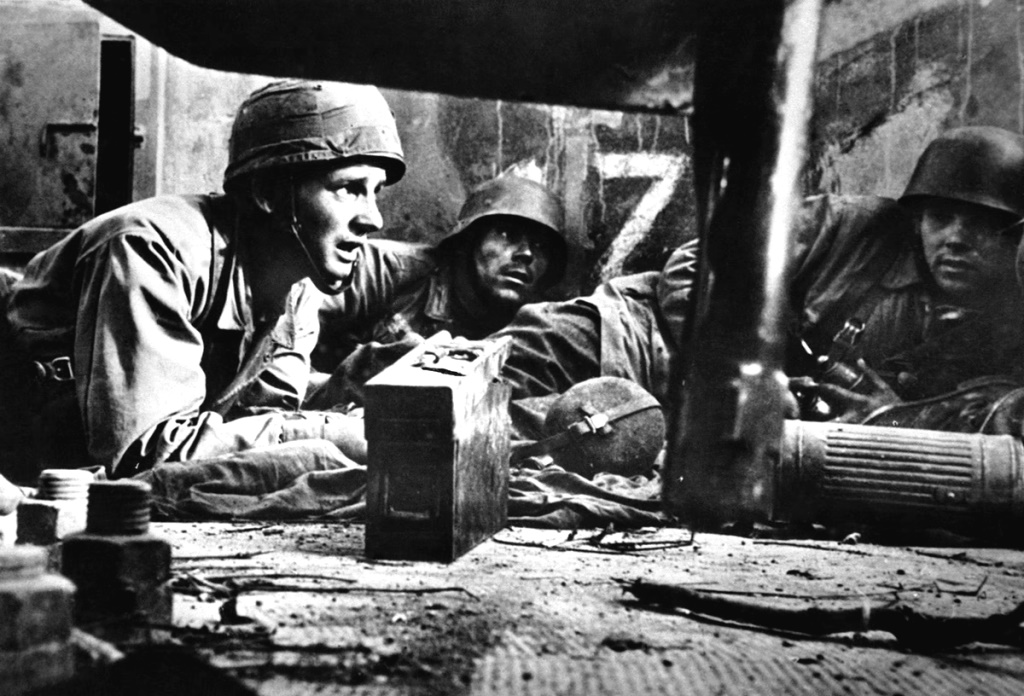
German Countermeasures to Offset Allied Air Supremacy
It is easy to form a false impression of the role of air power since toward the end of the war our own air arm had practically ceased to exist, and you were free to operate unhindered against our ground forces. In the last round, we were fighting only with ground forces against your overwhelming might in three mediums, land, sea, and air. Possibly naval tactics have been more influenced by the new air war than the ground forces have been. In Sicily, we could not attack your aircraft carriers near the shore and our own air force was so small that your carrier-launched planes could destroy many of our aircraft on the ground. It was my task to check the Allied invading forces, who had three weapons at their disposal (ex. land, sea, and air forces), with one weapon, my two ground divisions. We had to contend with troops dropped from the air before the actual invasion, with troops, landed from the sea, with naval guns and naval aircraft, and it proved to be an impossible task.
There were no coastal batteries or fortifications of importance so our only real means of delaying your advance was our 88-MM AA gun. We used it against your aircraft, we employed it against your troops and tanks, and during our retreat along the Messina road, we used it as a coastal defense gun to prevent an outflanking movement from the sea, Without this threefold use of the 88-MM gun we could never have retrieved our land forces in such number, nor saved the quantity of material we did.
In evacuating troops from Sardinia and Corsica, I again faced the difficult task of fighting back with a purely land army against Allied triple threat forces, submarines, planes, and an invading land army. To evacuate my one-and-one-half divisions I was forced to rely on flat landing barges and transport planes without fighter escorts. My only defensive weapon against your land-sea-air forces was large concentrations of AA batteries around the harbors. With these, I succeeded in partially checking the effectiveness of the air attacks, and forming fairly effective ground batteries.

The Effect of Allied Air Activity on Tank Warfare
Allied air attacks compelled us to execute most of our tank movements at night and remain concealed by day. Troops were very reluctant to cross streams by day in spite of the fact that our camouflage was good. Jabos (Jagd Bombers) were sometimes successful in seeing through our camouflage and destroying our tanks. Air attacks against our tanks became more and more effective with the decline of our own air force and as soon as Allied air superiority was complete
they were able to pick out and forestall any tank movement through a. Air reconnaissance, b. Artillery-observation aircraft, c. Fighter bombers. From the beginning of the battle of the Po Valley (April 13, 1945) our tanks could not move even halfway freely by day. Earlier in the war, at Cassino for instance, our tanks were still able to move about individually, protected by trees, ruins, and so forth. It must be admitted, however, that at Cassino our tanks were used separately as a sort of mobile artillery and not in large-scale movements like in Russia.
With the attainment of air superiority on your part, the fate of tank units operating in masses was predetermined. Very large tank units could not, of course, be used in Italy by either side because of the terrain, but our relatively small-scale movements were constantly harassed by your air attacks and also discovered by artillery-observation aircraft.
 The Luftwaffe and the Future of Air Power
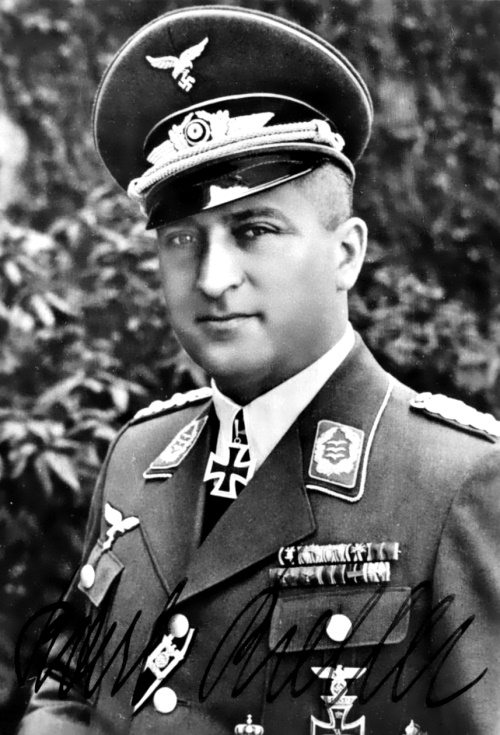
by General der Flieger Karl Koller, CoS, Luftwaffe
July 12, 1945
The fact that the Luftwaffe claimed priority was considered by the OKW (Oberkommando der Wehrmacht) to be a one-sided view of the Luftwaffe; perhaps it was not emphatic enough about its claims. The OKW itself was too shortsighted for such far-reaching conceptions. Its mental horizon was too narrow and how could it be otherwise? Few men there were able to think in terms other than those of the ground combat troops. The Fuehrer (Adolf Hitler) himself had repeatedly asked: ‘Why should Luftwaffe leaders be required?’ A general of another branch could lead the Luftwaffe just as well. An infantry general had been in command during World War I. The Fuehrer told me that as late as April 1945. What a view to take! It wasn’t only that the production figures were not increased; new types of aircraft were not forthcoming either. At the end of the war, we were still flying the same types, though highly developed, as at the beginning of the war. A failure of the air armament industry, although it would have to be determined whether this was due to inherent incapability within our own industry or whether it was a result of the structure and leadership forced on the industry by the State.
It is true that unheard-of inventions and progress were made in individual fields, far ahead of the rest of the world, but they all came too late and, again, because of the short-sightedness of the German High Command and of certain ‘know alls’ at the head of the German industry, they came in such small numbers that they could no longer be decisive. We were smothered by the enormous superiority of American and Russian material, because the German High Command undertook too much on the ground in the East and because it did not direct the main weight of armament right from the beginning towards air supremacy and thereby safeguard Germany’s vital zones and armament industry and ward off any attack from the West.
Outlook and the Future
Everything depends on air supremacy, everything else must take second place. The supremacy of the sea is only an appendage of air supremacy. Look at the development in the European war and the developments in the situation in the Pacific area. Even the strongest fleet is of no value if the enemy has air supremacy. It can no longer leave its ports or does so only to be destroyed. The country that has air supremacy and vigorously strengthens its air power over all other forms of armament to maintain its supremacy will rule the lands and the seas will rule the world. The proper conclusions with respect to leadership and planning of armament must be drawn from this fact. A strong and independent Air Force command, but far above the others, or an Air Force command on equal footing with the command of the rest of the armed forces. The requirements for maintaining air supremacy are decisive in all questions of organization, relative strength, and allotment of manpower and supplies. All plans for the defense of a country, a continent, or a sphere of interest or for offensive operations must be in the hands of the Air Force command.
The Army and Navy commands are subordinate authorities. Although they cannot be done away with entirely, they must adapt themselves to all requirements in the air, which covers the entire world and extends to the high heavens. The Air Force must be allowed to move its wings freely and must be relieved of the ballast of ground and naval forces. Future OKWs must have Air Force officers in decisive positions, men who can think in terms of the world and have a wide horizon. Every soldier generally thinks only as far as the radius of action of his branch of the service and only as quickly as he can move with his weapons. For this reason, naval officers will rarely, and army officers almost never, be able to keep pace with the large-scale thoughts and wide horizon which the men of all air forces in the world have more or less acquired.
What a giant machine a Corps with a number of divisions is on the ground; 50,000 men with thousands of vehicles and a great deal of artillery, a large command machinery, and it fights on a front of 15 or 20 kilometers. A monster, and yet it is interested only in its neighbors on the right and on the left; what happens to an army or, two further on is hardly noticed by the Corps. But the Air Force officer sees much, much more and thinks further; he thinks in entirely different channels. What is the large fighting front of a Corps even to a little Lieutenant flying long-range reconnaissance? The width of a thumb and no more. That is the way it is on the battlefield; how must it be in the High Command?
We have been beaten and eliminated, we have nothing more to say. But it will be interesting to watch the development of the Great Powers and the battle of wits. Will it be as it always has been, that they all, every one of them, will not learn from the past and will continue to make the old mistakes again and again?

 Answers to US Strategic Air Force Questionnaire
Oberst Edgar Petersen, July 20, 1945
 Oberst Edgar Petersen, whose long career in the Luftwaffe included periods as Kommodore of KG 40 (Kampfgeschwader 40 – Fighter Group 40) and as Commanding Officer of the Kommando der Erprobungsstellen, Rechlin, has supplied the answers to a questionnaire submitted by the United States Strategic Air Force. While Oberst Petersen no doubt deserves the reputation he enjoyed in the Luftwaffe as a man better employed on missions for KG 40 than as responsible head of the Luftwaffe testing organization, his position in both capacities gave him the opportunity for an objective view of the Luftwaffe which would have been impossible to the more academic type of specialist, and it is felt that his answers to the questions will be of value.
Question: What major changes did the inauguration and continuance of American air operations over Europe effect in: a. the Luftwaffe; b. the German aircraft and other industries?
a. The chief effect was to force a change from the offensive to the defensive and a discontinuation of the bomber program and an increase in the fighter program. b. The aircraft industry had to be widely dispersed with a consequent drop in production.
Question: When did the Germans first realize that the American Air Force intended intensive operations over Europe?
In the summer of 1943. With the fall of Sicily it was obvious that targets in the South of the Reich would come within the range of concentrated American attacks.
