Reviewed by Doc Snafu on November 1, 2025.
ATTACK PLAN – MYITKYINA AIRSTRIP
Col Hunter selected the time of the attack on the airstrip as 1000, May 17. His plan called for the 1/5307 (Col Osborne), to lead the Chinese 150th Regiment southwest of the field and leave them to attack the airstrip at that point. Osborne and his men were to move southwest and secure the ferry terminal at Pamati. By controlling this terminal, the Marauders had possession of the nearest crossing of the Irrawaddy River. The plan for the attack on the airstrip was based on information brought back by a six-man patrol under Sgt Clarence E. Branscomb which enable Col Hunter to accurately estimate the number of Japanese troops and Burmese workmen on the airstrip as well as the fact that the Japanese habitually withdrew during daylight to the thick scrub and bamboo clumps at some distance from the airstrip in order to avoid strafing of the field by Allied aircraft.

ATTACK ON MYITKYINA AISTRIP
The attack went off as scheduled. The Chinese 150-IR was led to the southwest end of the field and launched their attack from that point. The airstrip was not strongly defended and the attack came as a complete surprise to the Japanese. Sporadic fighting occurred in the morning but by 1200, the airstrip was in Allied hands. Osborne pushed to Pamati and by 1100, he had secured the village and ferry terminal. One company of Marauders reinforced with machine guns was instructed to hold the ferry site, while the remainder of the Battalion returned to the airstrip, where Col Hunter ordered the Battalion to seize Zigyun, the main ferry terminal from Myitkyina. The Battalion left the airstrip at 1700 and moved southeast to the Irrawaddy River near Rampur, bivouacking there for the night, prepared to move on Zigyun in the morning. Immediately after the seizure of the airstrip, Col Hunter radioed Gen Merrill asking for reinforcements and supplies. The airstrip could handle transport planes delivering larger cargoes than could be profitably airdropped. Supplies that had been too bulky or too heavy for parachute drops could now be brought in and light motor transportation could also be made available. The evacuation of casualties could also be carried out much easier now that larger aircraft could be used.
Previously the light liaison aircraft had been required for landings or sandbars, rice paddies, or cleared jungle areas, but now larger aircraft could be used on the airstrip. The Chinese 89-IR waiting on rears fields was ordered to Myitkyina and one battalion arrived at Ledo late this afternoon. Col Hunter also radioed M and K-Forces, requesting their assistance and both forces immediately began a forced march for Myitkyina. When it became apparent that the Japanese were not attempting to reinforce their troops near the airstrip on May 17, Col Hunter concluded that the enemy did not hold Myitkyina in strength. Intelligence reports confirmed his assumption, and although the Marauders were not organized nor equipped for an assault of prepared Japanese positions, he decided to take maximum advantage of his surprise assault by attempting to seize the city. The question confronting Col Hunter was whether he or the enemy could build up strength quicker.

ATTACK PLAN MYITKYINA CITY
Gen Frank D. Merrill (CO Galahad) flew in and established his Hqs ordering Col Hunter to attack Myitkyina with the disengaged portion of the H-Force. Two battalions of the Chinese 150-IR were to attack Myitkyina, while the one battalion of the Chinese 89-IR, which was flown from Ledo and had just arrived, would protect the airstrip. The third battalion of the Chinese 150-IR was to remain in reserve at the airstrip. The 1/5307 would continue to hold the ferry terminal on the Irrawaddy River at Pamati with one company reinforced and the remainder of the battalion would continue toward Zigyun to secure the other ferry crossing south of Myitkyina. If done this way, the H-Force would then control two of the approaches to Myitkyina from the south.
ATTACK MYITKYINA CITY
On May 18, the 1/5307 (-) seized Rampur where they captured several warehouses of clothing and other supplies. They occupied Zigyun without opposition by 1000 and took several Burmese prisoners. While defensive positions were being prepared, the battalion was informed that a company of Chinese was on there to relieve them and that they were to return to the airfield. This relief was considerably delayed as the Chinese unit engaged several groups of enemy stragglers en route and consumed 48 hours in reaching Zigyun. The Chinese had to dig in nine times in five miles. On May 18, the two battalions of the Chinese 150-IR attacked Myitkyina from the north. After seizing the railroad station, they became involved in confused fighting and had to retire to a position about 800 yards west of the town, where they dug in. The primary reason for the failure of the attack and the confused fighting of the Chinese was the discovery of a supply of native liquor and the looting of a jewelry store. K-Force was approaching Myitkyina, however, the guides lost their way about eight miles from the city and the unit was forced to bivouac for the night.
With daylight, K-Force discovered the Myitkyina – Mogaung Road near their perimeter, and they pushed on along this road. Learning of their approach, Gen Merrill radioed K-Force to attack and secure Charpate, which they did without appreciable Japanese resistance, and the 3/5307 dug in around the village, while the Chinese 88-IR moved to the southwest on a line from Charpate to the railroad. The mission of the 3/5307 was to block the Mogaung Road and to patrol the trails converging on Charpate. The village of Charpate was situated in a flat area surrounded by rice paddies. The ground rises slightly four to five hundred yards to the northwest and this high ground was covered with a dense growth of scrub and vines. The 3/5307 overlooked the importance of this high ground in preparing its defensive positions.
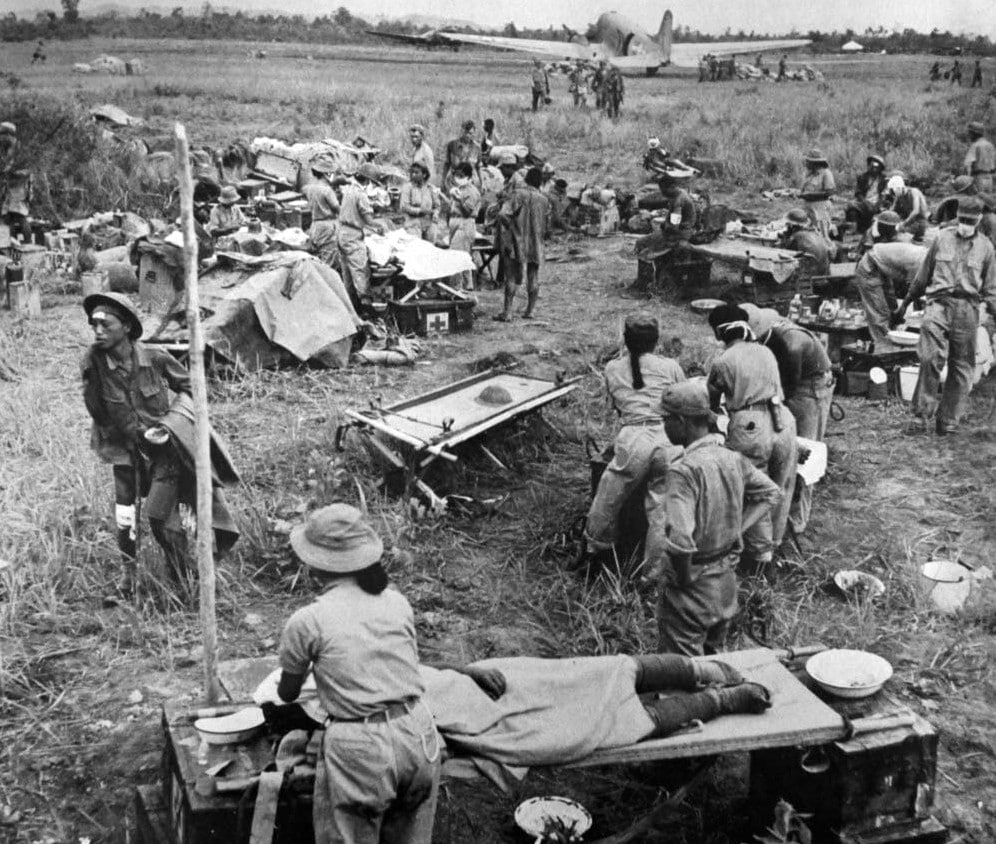
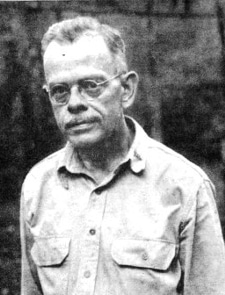 Still, on May 18, Col Gordon S. Seagrave, the famous Burma Surgeon, landed on the airstrip at Myitkyina with four medical officers and eighteen Burmese nurses. He immediately established his small hospital in a revetment adjacent to the airstrip and began operating on Chinese casualties.
One day later, on May 19, small bands of Japanese trying to enter Myitkyina via the Mogaung attempted to the perimeter hold by the 3/5307, however, none of these engagements was serious. Gen Merrill began a buildup of his force along the Namkwi River to the southwest of Charpate. The reinforced Company of the 1/5307 at the Parmati ferry was relieved by a company of the Chinese 150-IR on May 19, and the Marauders company returned to Namkwi to take up a defensive position along the Namkwi River. The M-Force reached Namkwi the evening of the 19, ill and weak from hunger, for the supplies of food which they had requested and anticipated had not been dropped. Food was secured from H-Force, and the unit then out-posted Namkwi and patrolled to the west and the southwest. Merrill had now placed his lines so that the Japanese reinforcements could reach Myitkyina only across the Irrawaddy River to the east or along the Irrawaddy Mankrin or Myitkyina Radhapur Roads from the north. The Allies covered all approaches from the northwest, west, southwest, and south. Thus far, the enemy activity had been slight; even the airstrip was handling an ever-increasing amount of supplies, in spite of continual sniping.

CIC ACTIVITIES MYITKYINA
The first Counter Intelligence Corps personnel arrived in Myitkyina at this time and began preparations for carrying out counterintelligence missions of the command. British Intelligence Agencies had classified the residents of the area into three categories of security risks. (1) The Black List: containing names whose presence in the area was prejudicial to Allied security and whose apprehension and incarceration was desired by the British. (2) The White List: containing names of persons who were known to be loyal to the Allied cause and could be trusted to cooperate. (3) The Gray List: containing names of persons who could not be placed with certainty in either of the above categories. These lists had been prepared as a result of interrogation of civilian and military personnel fleeing Burma in 1942, as well as information gained by Gen Orde Wingate’s LRPGs which had operated in south-central Burma. With these lists in their possession, the Counter Intelligence Corps Agents undertook the task of screening the large refugee camp which was being established at Pamati. (Personal knowledge; Statement of Maj D. E. Mackenzie, then Commanding Officer, Counter Intelligence Corps, China – Burma – India Theater, May 29, 1944.) 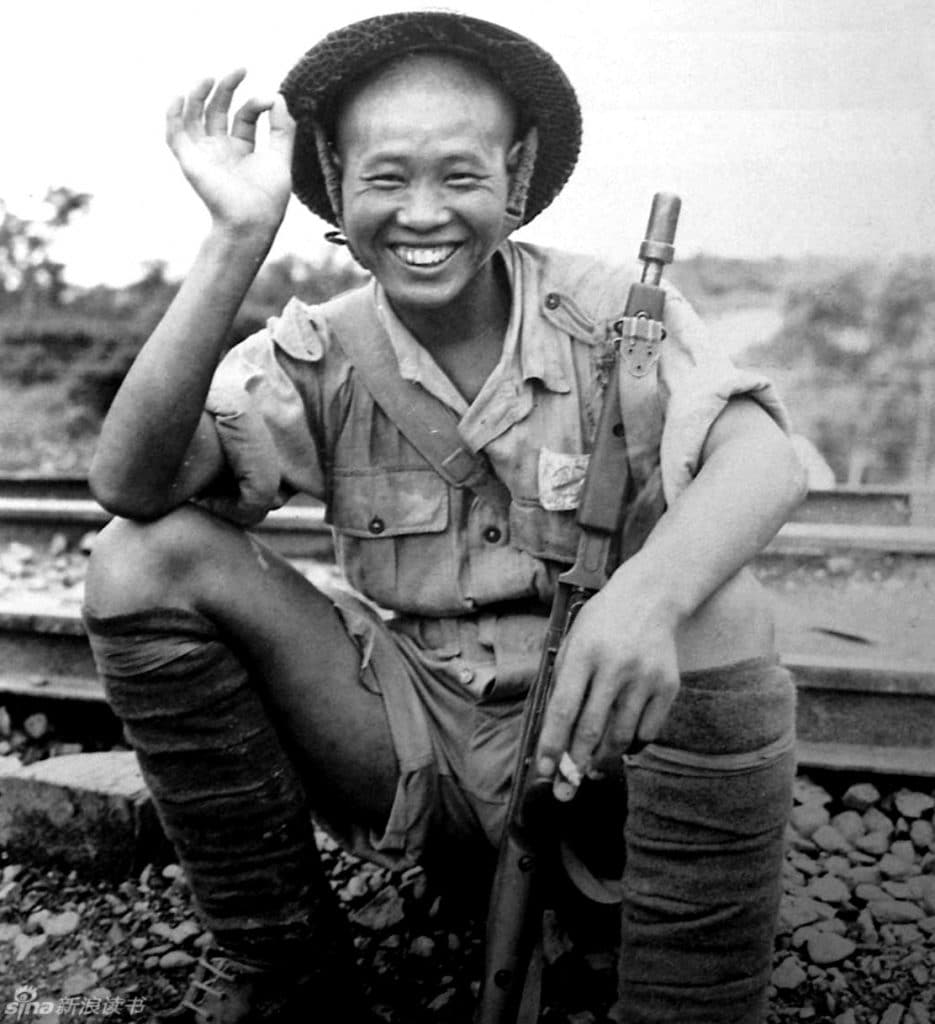
The Japanese were sending the residents of the town out of the Marauder lines in an attempt not only to cause confusion but also to conserve for themselves what little food there was in Myitkyina. The refugees were fed by the Allies in spite of the additional strain on the air supply facilities. In addition, a few Burmese had made huge profits trafficking in American flyers shot down over Burma. After having received a large prepaid reward of silver Rupees which the American flyers carried for the purpose of rewarding anyone who helped them return to Allied lines, the Burman would bury the silver Rupees where he could reclaim them at a later date, and then lead the American flyer into the hands of the Japanese. In this manner the Burman received two bounties; one from the American flyer, and another from the Japanese who were paying large sums for American flyers.
Several of these individuals were captured as a result of the interrogation of the refugees and investigations conducted in the hills surrounding Myitkyina. Native labor for use on the airstrip was screened and refugees and line crossers were interrogated for information of tactical value. Information was gathered on Japanese strength, morale, supplies, and the location of headquarters and command posts in Myitkyina. Maj White of the British Civil Affairs Services arrived in the area and took charge of the stockade which was housing a large number of Burmese. One young girl was engaged in the dangerous occupation of running Japanese troops through the Marauders’ lines.

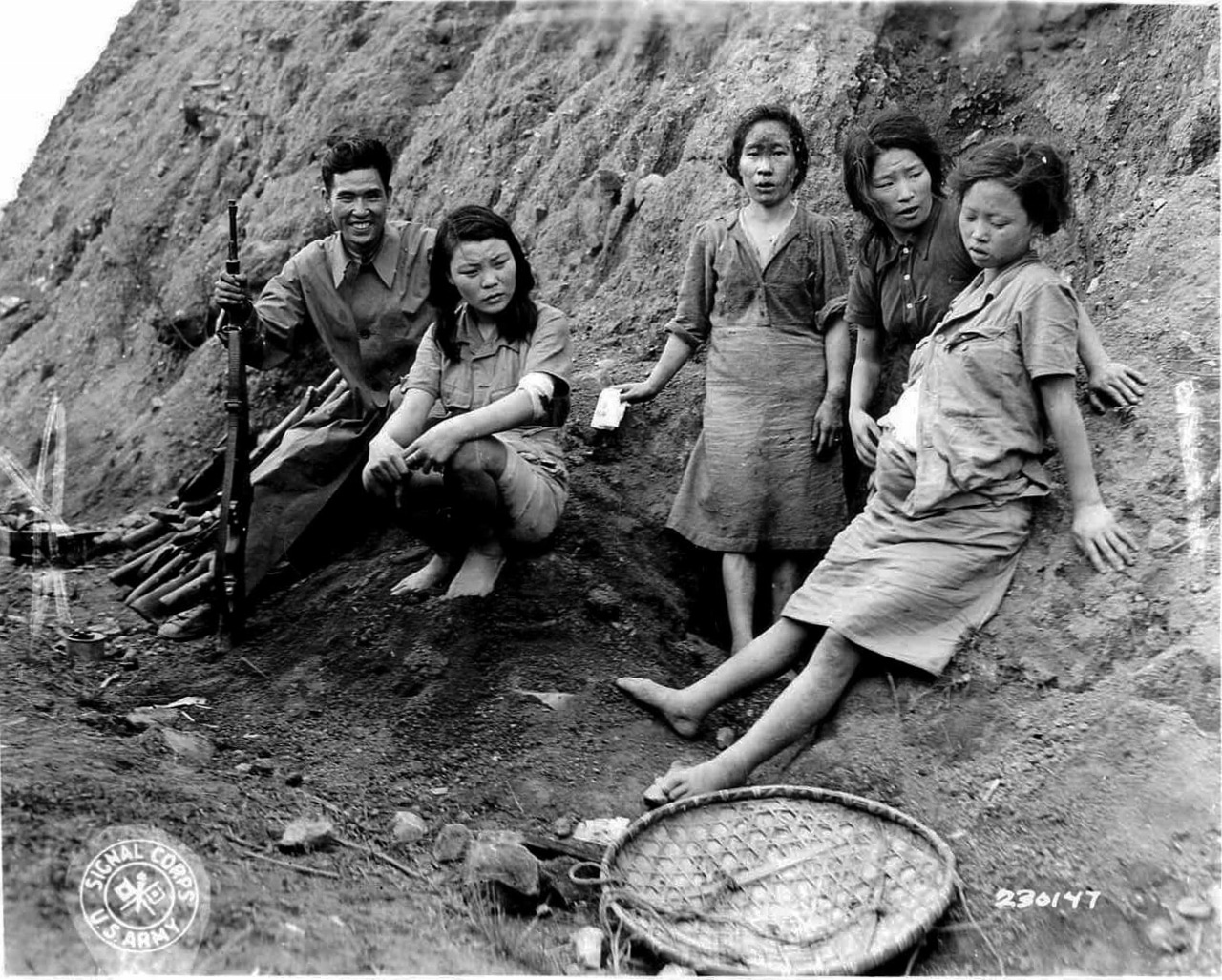
After her capture by the Counter Intelligence Corps, she readily admitted that she had led numerous groups of Japanese soldiers through the Kunai grass and jungle surrounding Myitkyina into the city, using several devious routes whereby she had been able to avoid Marauder or Chinese lines, patrols, or outposts. This young girl was later executed by the British for her assistance to the Japanese in the Myitkyina campaign. It was learned from refugees at the Pamati camp that a number of Japanese comfort girls had been present in Myitkyina when the city was attacked. The comfort girls were camp followers of various Asiatic races whose mission was to entertain the Japanese troops, a sort of legalized prostitution. Efforts were immediately made to locate these women, and one by one they were gradually accounted for; one was not found until many months later when she was located living in India. The pilots of transport planes leaving Myitkyina airstrip for India had been only too glad to furnish transportation to their bases in India for any refugee who had asked, and as a result, a close check had to be maintained at the airstrip to ensure that no civilians left Myitkyina without authorization. In spite of this security check at the airstrip and the briefing of all flying crews’ landings at Myitkyina, illegal air traffic flourished.

A pass system was initiated for the refugees and many were given permits to travel away from the combat area, however, the majority remained in the refugee camp at Pamati. An illicit radio station in the hills surrounding Myitkyina was broadcasting news of Allied plane arrival and troops equipment unloading at the Myitkyina airstrip, and as a result several teams of Counter Intelligence Corps Agents, together with Burmese police, entered the hills in an effort to locate the broadcaster. Signal Intelligence units were employed and after a lengthy, arduous chase one long Japanese and a small, but powerful, radio was captured. Plans were made to place the Counter Intelligence Corps personnel with assault units to insure that trained intelligence personnel was available when Japanese command posts were uncovered. In this manner, looting and unnecessary destruction of documents was avoided. Japanese prisoners were evacuated by air to India after a cursory interrogation at Myitkyina. The Counter Intelligence Corps had several agents present who could speak Japanese and these agents assisted in the interrogations.
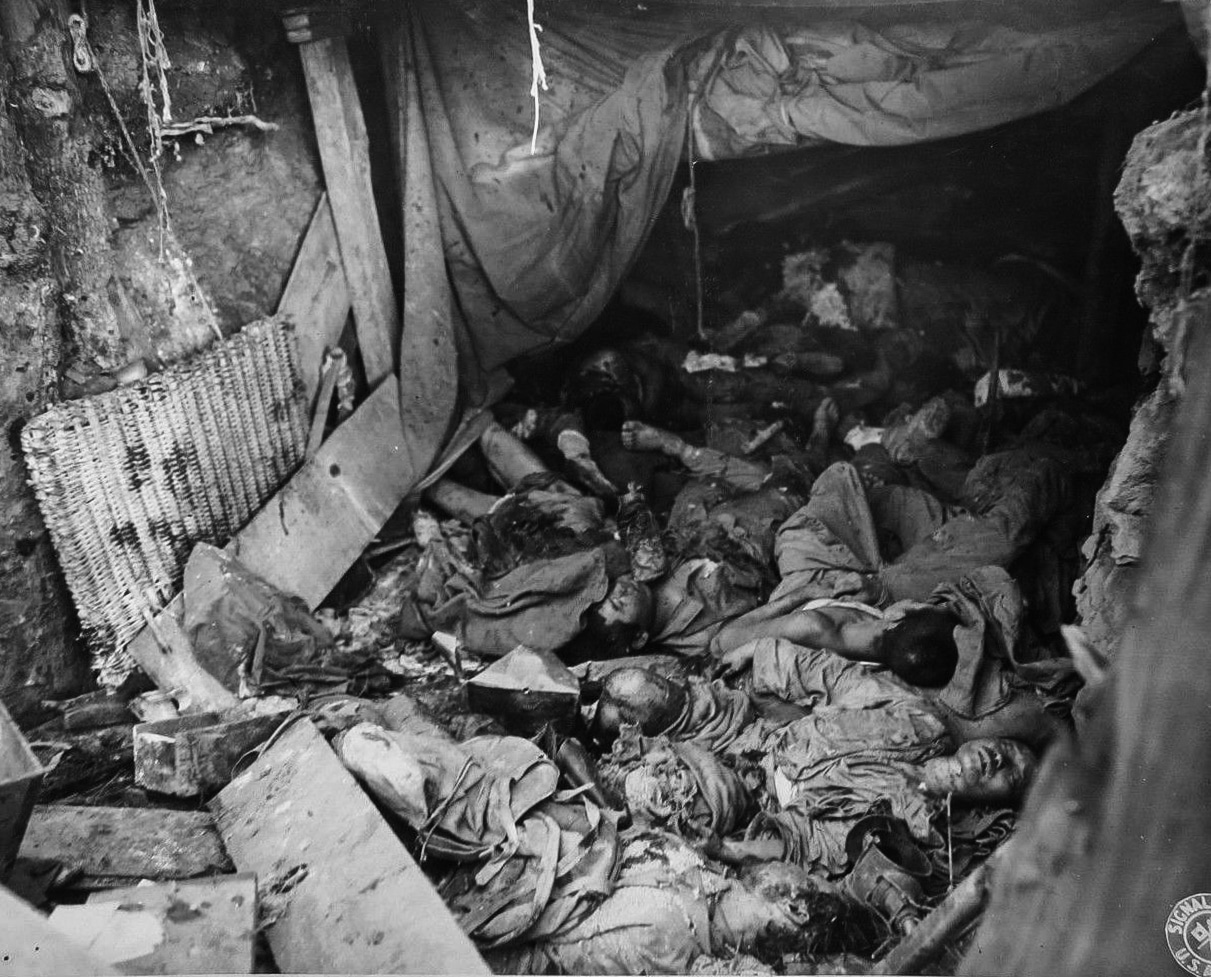
Meanwhile, Gen Merrill began forming a Myitkyina Task Force for his planned coordinated attack on the town. This plan involved the reshuffling of all units of his command. The Marauder Battalions were to be combined under the command of Col Hunter, and the Chinese Regiments were to operate as separate units. As this reorganization was completed, Gen Merrill became ill and had to be evacuated, and Col John E. McGammon assumed command. The Myitkyina Task Force was unable to undertake its mission of a coordinated attack on the town. The Japanese had been able to reinforce the garrison and an estimated 3000 to 4000 enemies had come in from Nsopzup, Mogaung, and even further south, despite the Marauders’ efforts to cover the main approaches to the town, and the last ten days of May saw the Allies engaged in a defensive struggle to hold the airstrip. The Japanese had built up more strength at Myitkyina than the Allies and by May 23 were passing over on the offensive. If the Japanese were successful in their attempt to regain the airstrip, then the American and Chinese troops in the Myitkyina area would be left with no way to escape except the rugged jungle trail over which they had come, and they were in no condition for such an ordeal. The most drastic measures were justifiably taken to muster a force adequate to defend the airfield. Since no infantry replacements were available within the theater the higher command reluctantly directed that the evacuation of sick and exhausted Marauders be held to an absolute minimum. Marauders convalescing in India after evacuation from Burma were rushed to Myitkyina. Some 200 arrived at the airstrip, but medical officers declared that 50 were unfit for combat and these were returned to India. Fortunately, a small group of replacements did arrive from India, and these were rushed to Myitkyina by air. These replacements, together with the 209-ECB arrived on May 28 to further strengthen the defenses.
The first evidence of difficulty became clear on May 21, in the area north of the airstrip. The 3/5307 had left Charpate at 1000 in an attempt to reach the road junction north of Madhapur. Short of the junction, they encountered an enemy position with tight bands of automatic fire directed over level terrain which pinned down the Marauders to the ground and forced them to dig in. During the night, the Japanese came down the Mogaung Road through Charpate to attack the rear of the 3/5307, however, they were beaten off after a severe fight. The 3/5307 withdrew to their original position near Charpate at daylight and resumed patrolling. At 2200, on May 23, a battalion of Japanese launched an attack on Charpate from the high ground northeast of the village. This was the high ground that the Marauders had overlooked in their preparation for the defense of Charpate. The Japanese attack penetrated the Marauder lines early in the action, and the Marauders were barely able to repel the attack after suffering severe casualties. The following morning, May 24, the Japanese resumed the attack, and in order to avert a route, the 3/5307 was ordered to break contact with the enemy and withdraw to the railroad 2.5 miles to the south. The Japanese occupied Charpate and held it in force immediately upon the withdrawal of the Marauders. On May 25, the Japanese, supported by mortar fire, attacked Namkwi in great strength, forcing the 2/5307 to pull back to a ridge about halfway from Myitkyina. With the Japanese seizure of Namkwi, they had recaptured two of the villages on the approaches to Myitkyina.
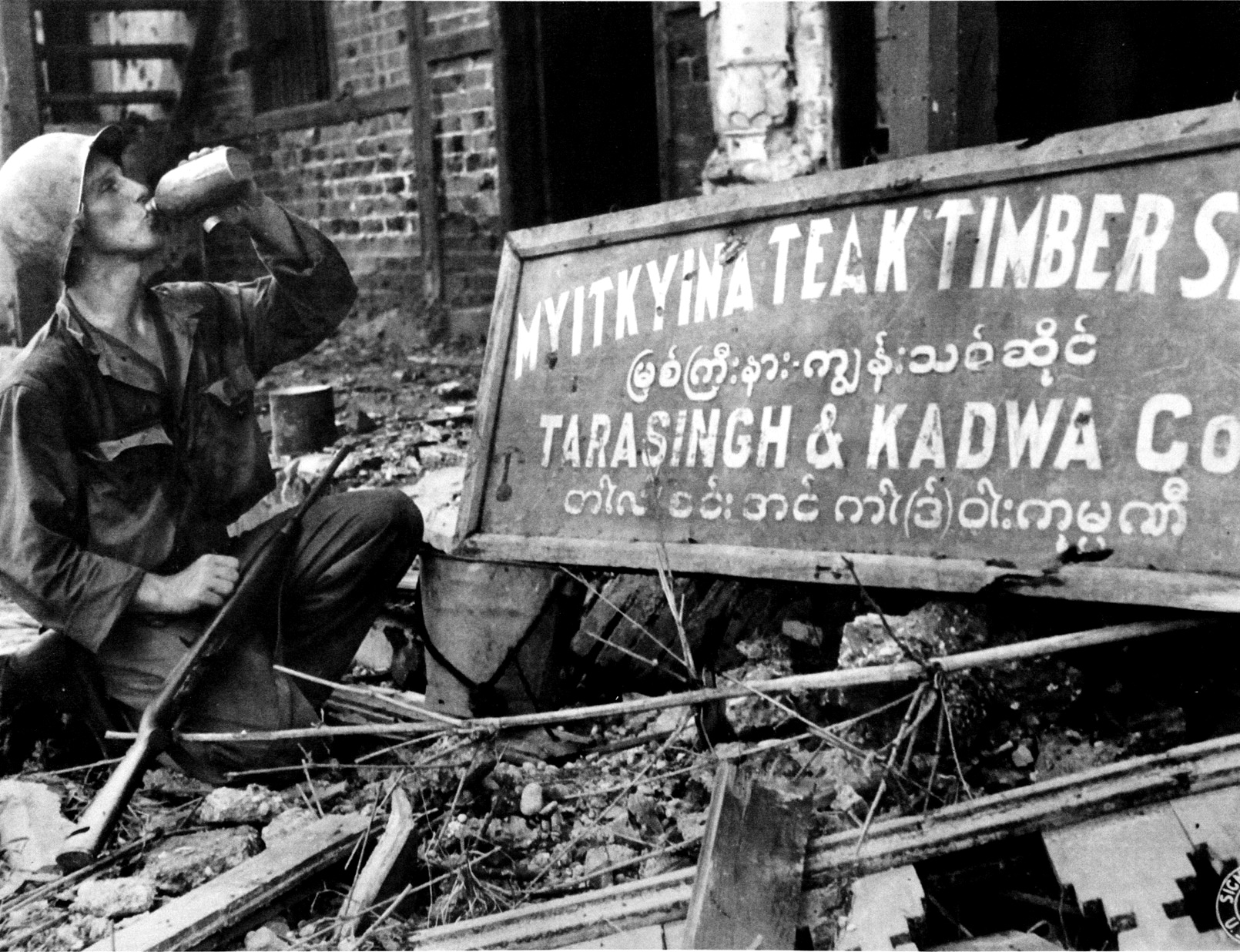
On May 27, Charlie 209-ECB was attached to the 2/5307, and this force was forced to recon the Charpate area and to attempt to reach Madhapur. South of Charpate, the 2/5307 was attacked, and though the Japanese were not present in great strength, fatigue dysentery, malaria, and malnutrition had so decimated and wasted the Marauders that the unit was not effective for combat. Several men went to sleep from exhaustion during the engagement. Even Col McGee, CO of the 2/5307, lost consciousness three times, and between relapses directed the battalion from an aid station. The attack was successfully beaten off, however, Col McGee was convinced that his troops were unfit for further combat and asked to have his unit relieved as soon as possible. This was the last action at Myitkyina for most of the Marauders. The 1/5307 and the 3/5307 were back near the airstrip, and neither had sufficient men fit for combat to be termed a fighting force. It was apparent that a larger force was required to besiege the city, a task for which the Marauder unit had not been organized nor trained, and which it was not strong enough to accomplish. Only 1310 men had reached Myitkyina between May 17 and May 27. Allied reinforcements finally arrived to carry on the fight, and about 200 men of the 1/5307, nearly all replacements who had recently joined Galahad, remained in the area until the fall of Myitkyina on Aug 3. The remnants of this force took part in the final attack on Myitkyina.
Results of the Operation
The 5307th Composite Unit (Provisional), although it did not capture its assigned objective – Myitkyina, did succeed in capturing the only hard-surfaced airstrip in the north Burma area. The capture of this airstrip, only two miles from the objective, enabled the Allies to reinforce and build up for the ultimate capture of Myitkyina, and also to support the further offensive effort in North Burma which culminated in the successful completion of the Ledo Road, on January 28, 1945. The name of the road was changed on that date to the ‘Stilwell Road’ in honor of Gen Joseph Stilwell. Myitkyina was the key to the Allied effort opening land communications and supply routes to China, and the Marauders by taking and holding the adjacent airfield made its capture possible.