



The Fire Plan
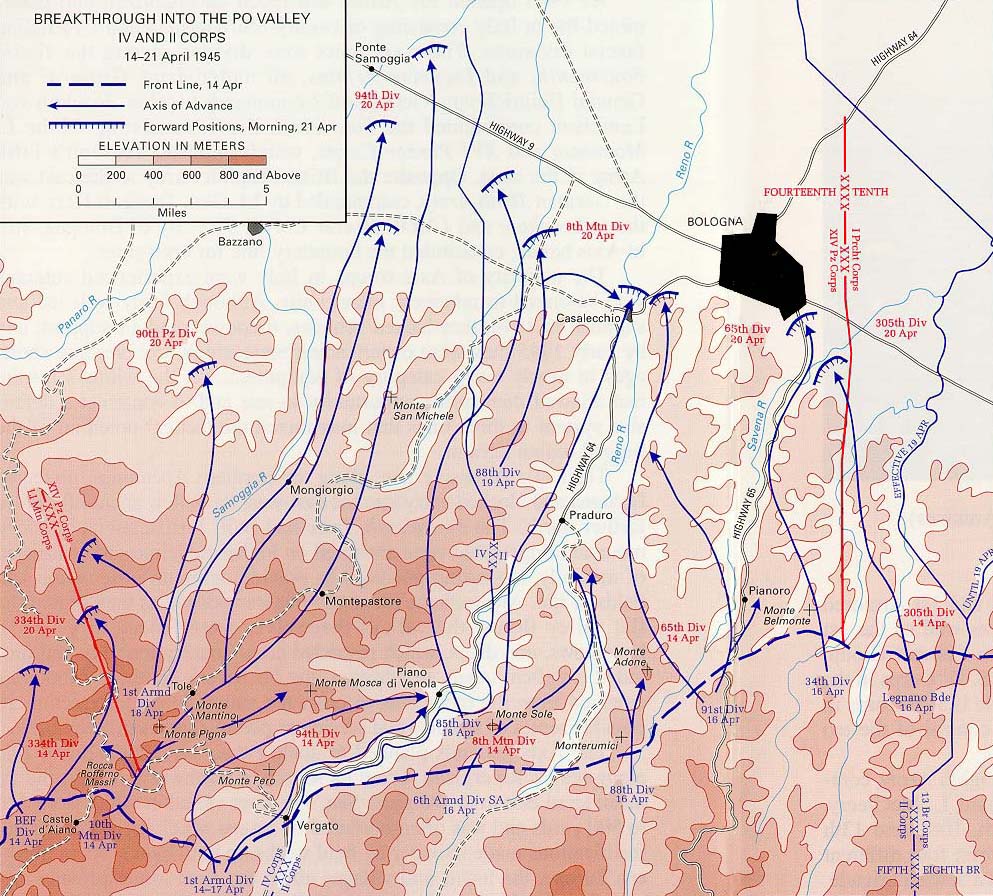
The detailed fire plan was set up to initially cover the enemy outposts east of Fazzano with machine-gun and mortar fire as Fox Co worked across the Savena Creek. From then on the fire would shift on call as Fox progressed up the trail toward Fazzano. The 1st Platoon of machine guns and 3rd Section of 81-MM mortars would lift and fire on the bluff above the trail. The 2nd Platoon, the 1st Platoon, and 2nd Sections of mortars were to shift up the trail sweeping a path in front of Fox Co. When Fazzano was taken the guns would lift to San Lucia and Ca Di Mazza. When Fox Co scaled the cliff north of Fazzano, the 2nd Platoon would shift its machine-gun fire left of San Lucia and all mortar fire would go in the rear of the ridge trail to give added safety for the riflemen. The 1st Platoon of machine guns and the 3rd Section of mortars were to box the Ca Di Mazza area off during this action and they were to shift to the trail west of Monte Adone as to the attack on Ca Di Mazza developed. The 1st Platoon and the 3rd Section of mortars were to be ready to displace to positions near Fazzano to give continued close support of the attack. The 2nd Section of mortars was to be ready at all times to deliver counter-mortar fire on all close probable enemy mortar positions.
On the night of April 11/12, the squad leaders and gunners moved up on four jeeps along with tools, guns, equipment, and ammunition. Heavy overloads on the vehicles were necessary to restrict the traffic. All equipment and ammunition were carried at night from the supply point to the gun positions. The remainder of the company moved into position on the night of April 13/14, along with additional ammunition supply. A large amount of ammunition had to be placed on the position because the battalion supply point was located at La Gorda and resupply during daylight was not possible. Each machine gun had forty boxes on position with an additional one hundred boxes in the company supply point. Each mortar had one hundred rounds on position with an additional six hundred rounds at the supply point.
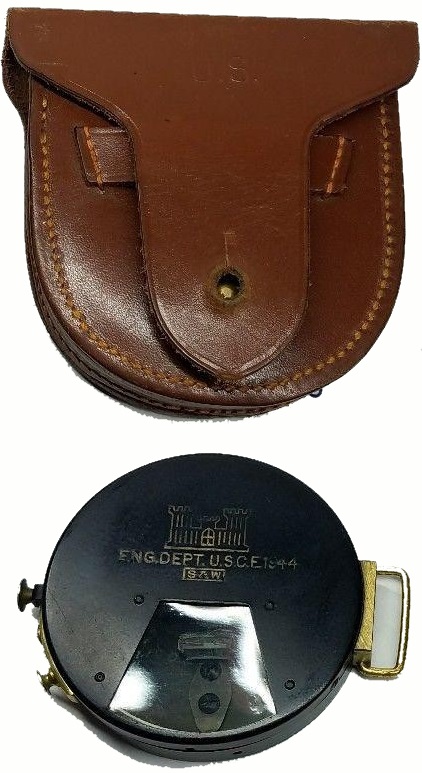
The Company Commander returned to the front line positions on the night of April 12/13 and inspected all gun positions. Platoon Leaders were given the plan of attack and their fire plan. They were instructed to begin registration the following day, using extreme caution. One machine gun was to register from each section at widely dispersed intervals and at only one target. The remainder of the data was to be carefully sighted and measured with the mill scale and Clinometer (photo below). Aiming stakes and safety bars were to be placed out for night firing. All positions were to be improved and sandbagged. No alternate positions were selected because of the limited area. Covered exits were to be dug from all gun positions to facilitate resupply and control. A sound-powered phone was to be placed with each gun section and tied in with the platoon leaders and the company CP located midway between the two machine and gun platoon positions.
 From the company CP two heavy EE8 phone lines were to run to the battalion CP at Laghi. Three SCR 300 radios were employed, one to be at the company CP, one with the mortar platoon leader, and one with the company commander. These were not to be used unless the telephone system failed. Each mortar was to register on one of its primary targets with a minimum of two or three rounds. This registration was also to be conducted at long intervals of time so as not to attract the enemy’s attention. Six mules were stationed near the company supply point to aid in the forward displacement of the mortars. The company executive officer, Lt Frank Matte, was to carefully supervise all work, paying particular attention to the maintenance of secrecy. Over two hundred men would soon be in the area right under the enemy’s nose and no movement could be allowed in the daytime. The company commander returned to the forward battalion assembly area, which had moved to Anconella, to check on final plans. The Company Commander checked the positions again on the night of the 13 and found that all preparations were nearly complete. Registration had been successful and had drawn no enemy fire. Remaining that night, the Company Commander checked final plans with the battalion CO, Col Donald A. Yongue, and Fox Co’s CO, Capt Charbonnet. The mortar registration nearest Savena Creek was shown to Capt Charbonnet and he was confident that all fires were correct.
The rifle troops at Anconella were eating their last B rations; How Co men were already on a strict C ration diet. Morale was good but all men of the battalion had a certain feeling of reluctance about the coming attack, mainly because of the good news about the success on the western front. Everyone felt that the war was almost over and that this struggle in the Italian Mountains would not add much to the cause.
Continued explanation to the troops that all units must now make a final drive to shorten the war was necessary to overcome this feeling of reluctance. The battalion had suffered previous heavy losses in other similar operations of the long Italian Campaign and the desire to close with the enemy was not as keen as it had been previously. The companies were almost up to strength, but a large percentage of the officers and men were new replacements, yet untried in the offensive. The battalion assembly area, near Pietramalo, was located near a temporary cemetery, which contained numerous graves of former members of the 350th Infantry. This seemed to serve as a solemn warning to veterans of the battalion who remembered their former buddies. It was no help to morale! So, on the afternoon of April 15, 765 heavy bombers came over to hit targets behind the enemy front lines, between Highway 64 and Highway 65 to Bologna. 200 medium bombers attacked Praduro and 120 fighter bombers bombed and staffed targets on Monte Sole, Monterumici, and Monte Adone. The IV Corps on the left was attacking against heavy opposition and had gained some ground. The II Corps was quietly awaiting H-Hour. At first dark, troops of Fox and George Cos moved down from Anconella and stopped along the road west of Laghi. The night of April 15 was partly cloudy and dull, a mist of smoke and dust hung low over the enemy positions, lending a fearful atmosphere for the men quietly awaiting the attack.
The Attack
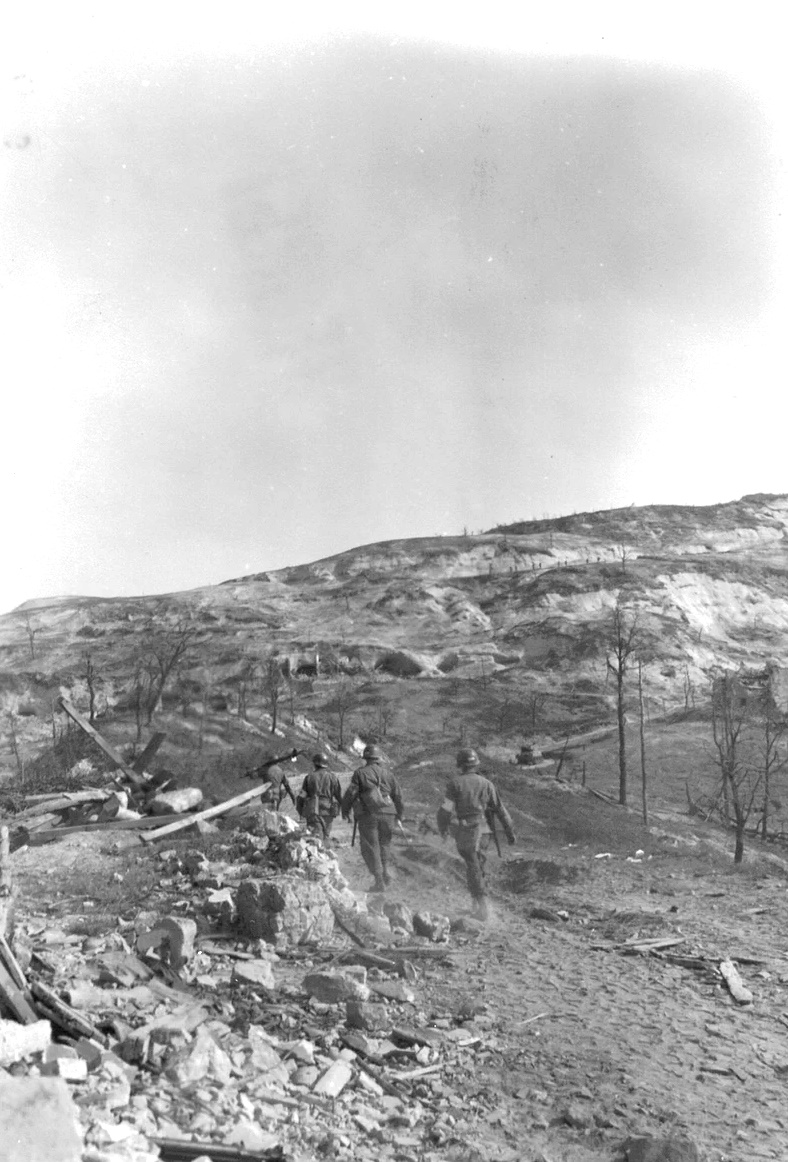
At 2230, the sky erupted with a 75.000-round artillery, tank, and heavy mortar preparation, directed at Monte Sole and Monterumici. How Co tied in with the preparation at 2245, firing slowly at first, checking fires under the light of Jerry flares. Fox Co worked across the Savena Creek under the cover of the barrage and breached the minefield, reaching the trail leading to Fazzano against little opposition. As the barrage lifted, scattered machine pistol and rifle fire came from the enemy outposts near Fazzano. The heavy weapons shifted fire on call and Fox Co started up the trail. The enemy was alert and quickly directed a mortar barrage on the advancing riflemen, forcing them to move north toward the shelter of the cliff. The company became disorganized and considerable time was taken before a move could be started on Fazzano. How Co machine guns continued to provide cover with a heavy volume of fire directed up the trail and on the bluff below Ca Di Mazza. Moving carefully along the cliff, Fox Co closed in and captured Fazzano at about 0100.
Reorganizing quickly, Fox Co moved toward Ca Di Mazza in two columns and under extreme difficulty, managed to get a few men up the cliff north of Fazzano. George Co was slow in moving up behind Fox Co and became disorganized in the attack on San Lucia. How Co continued on the fire plan but the enemy was extremely alert and active even under fire. The Germans again poured in mortar fire and Fox Co fell back behind the cliff. Two men were killed, eight wounded, and many others injured in falls down the cliff. Many others became lost, including the artillery forward observer and party. Capt Charbonnet, the Company Commander, was among the wounded.

At 0500, the attack stopped and Fox Co fell back to secure Fazzano. George Co retired to cover positions west of Laghi because of the crowded and exposed area around Fazzano. How Co continued to cover the enemy positions with a slow rate of fire. At daylight, Fox Co had not yet organized around Fazzano, and How Co’s mortars were given the mission of smoking the ridge, which was effectively done until 0800 when Fox Co was well dug in. At noon, the ADC, Col J. C. Frye, arrived in the area and checked the situation from the CP, north of Laghi with the 350-IR CO, George Co, and How Co’s CO. He instructed that an all-out effort be made the following evening to capture San Lucia and Ca Di Mazza. The 3/350 on the left had reached a point 400 yards short of the peak of Monterumici, against strong enemy opposition. The 361/91-ID on the right was similarly stopped cold below Brento. The enemy’s reaction had been violent all along the line.
During the night of April 15, How Co’s Supply Sergeant had managed to bring in 600 rounds of mortar and 50 boxes of machine-gun ammunition. A shortage of 81-MM smoke existed and the supply sergeant was instructed to bring in a jeep load during the daylight, which was effected without difficulty although it disclosed the location of the supply point to the enemy. The enemy had picked up How Co’s weapons during the night and shelled the area with artillery and mortars. Many close rounds fell but the men were able to take cover and no casualties resulted. The fire plan was to remain the same for the attack on San Lucia and Ca Di Mazza. The 1st Platoon of machine guns and the 3d Section of mortars were to be ready to displace on call to Fazzano for continued close support. This was necessary to get more accurate fire on known enemy positions and to aid in holding the ridge if it were taken. All ammunition bearers of the 3d Plat were to make one trip to the forward position and then return to their covered positions upon completion of the displacement.

Shortly after dark the battalion CO and the Commander of How Co moved to Fazzano. The 3d mortar section sergeant was taken along to select positions for his guns. The party strayed off the trail through the minefield but reached Fazzano without mishap. The enemy harassed the crossing point on Savena Creek continually with mortar fire and at intervals placed a deadly stream of machine-gun fire down the trail from San Lucia. George Co moved in later with supplies for Fox Co and everything was ready to continue the attack.
The attack jumped off at 2230, one hour late, under a machine-gun and mortar preparation from How Co. Both rifle companies worked up along the cliff north of Fazzano, George Co this time made an effort to scale the cliff but an extremely alert enemy zeroed in with machine-guns and mortars. This attack was confined to the cliff area because enemy machine guns continued to pour a steady stream of grazing fire down the trail from San Lucia. Enemy soldiers quietly slipped up to the edge of the cliff and dropped hand grenades down on the riflemen. As the attack slowed, the battalion commander ordered the displacement of some of How Co’s weapons to counteract the enemy’s actions. The 3d Mortars Section was started first, guided by the section sergeant. They were followed closely by the 1st Machine-Gun Platoon. As the men were crossing the Savena Creek a mortar barrage caught the tail end of the 1st Platoon, destroying one gun and killing one man, wounding four others. The 1st Platoon was placed in position northwest of Fazzano but was unable to go into action because of the constant enemy mortar fire harassing the area. The mortar section had even more difficulty, they found many enemy shoe mines and trip mines in their area, which had to be cleared before the guns could be put into operation. The ammunition bearers were caught in a mortar, barrage as they returned across the Savena Creek losing one man killed and six wounded. The mortar observer, Lt Carmody, joined Fox Co at 0400, with a sound-powered phone connected to his section. By daylight the rifle companies were badly disorganized and intermingled, the attack had failed and the riflemen dug in hurriedly to hold the ground already gained.
On the left, King Co reached the peak of Monterumici but was driven back, badly cut to pieces with the loss of twenty men killed. The 1/350 was committed to recapturing the peak, which was secured by Charlie Co at 0800 on the 17 against stubborn opposition. The 361-IR on the right was still stopped below Brento. Easy Co moved into covered positions west of Laghi to support the 2/350. In the afternoon, the ADC again visited the 2/350’s Commander at Fazzano. Plans were made to commit all three companies to break through the German ridge positions. How Co’s forward weapons secured data during daylight to support this attack. Early in the evening on the 17, some scattered machine-gun fire from the 2d Platoon hit Fox Co’s area. This was from the dispersion of some fire directed at the trail junction above Ca Di Mazza. The company commander ordered a replacement of gun barrels but found that all available ones had been burned out. The replacement took considerable time and two of the guns were not ready for the night attack. Only light guns were available and these were not suitable for a long-range overhead fire at night. In the late afternoon tank and tank destroyer direct fire was concentrated on the machine-gun nests at San Lucia and Ca Di Mazza in an attempt to break up the enemy’s bands of fire. The direct fire looked good but was not accurate enough to destroy the enemy guns hidden deep in their fortified holes.

All during the attack, after the initial jump-off, companies were making separate attacks to break into the enemy’s strong points. Coordination was lost and the enemy was able to shift his limited artillery and mortar fire to break up each attack. Love Co tried to gain the ridge west of San Lucia late in the afternoon of the 17. This attack was supported by the fire of How and George Cos from the vicinity of Fazzano. One platoon of Love Co was caught crossing the open field below San Lucia and was mowed down by an enemy machine gun. The attack was abruptly halted. At about 2030, the 2/350’s attack again got underway with Easy Co leading up the cliff northwest of Fazzano. How Co’s fire was split, half directed at Ca Di Mazza and the remainder at San Lucia. The forward guns were held to engage observed machine-gun locations. Easy Co managed to scale the cliff, losing sixteen men injured in falls and moved directly on Ca Di Mazza. George Co advanced along the cliff toward San Lucia with Fox Co on the left in the open field. Easy Co made the most progress but was driven back after reaching a point 300 yards from Ca Di Mazza. Reorganizing, Easy Co shifted directions and moved on the right of George Co toward the ridge trail. The enemy reacted violently and swept the area with fire badly disorganizing the attack. How Co command group lost the radio operator and one messenger badly wounded by mortar fire. The instrument Corporal of the 1st Platoon was secured to replace the 300 radio operator. By 0800, on the 18, Easy Co reached the ridge trail and the enemy was found to be withdrawing. How Co Commander ordered an immediate displacement of all guns. The 1st Platoon was sent to positions near San Lucia to protect the left flank. The 2d Platoon displaced rapidly to Ca Di Mazza in time to aid Easy Co mop up some enemy soldiers at Onercia.
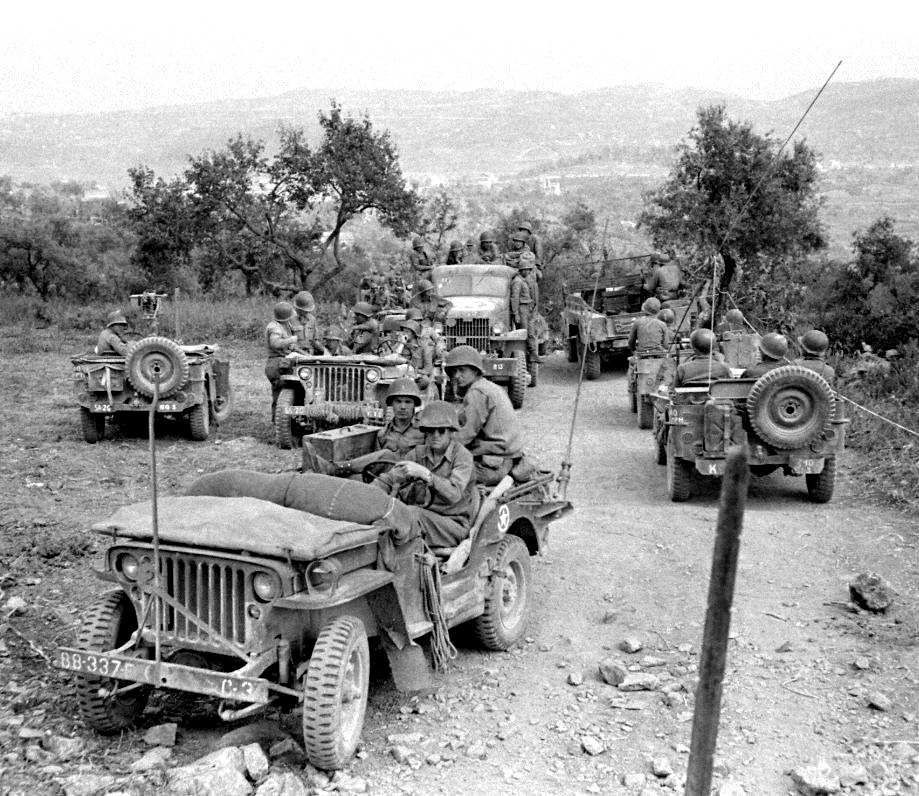
The mortar platoon was displaced by mule to positions behind the cliff northwest of Fazzano but did not get to fire. Easy Co pushed rapidly down the trail west of Monte Adone at 1000 and the 2d Plat displaced to a position above the trail junction to support this advance. The enemy was withdrawing rapidly but many prisoners were captured as the battalion closed in. Moving in a column of companies, the battalion quickly cleared La Serra and advanced on Badolo. The enemy left numerous mines strewn along the road to slow the advance. The heavy weapons moved along in the battalion column without going into any more firing positions. The 3rd Platoon was forced to hand-carry part of the distance because the mules had difficulty dodging the mines along the road. As Easy Co reached Badolo a sharp firefight developed. The 2nd Platoon, following closely behind Easy Co moved rapidly up to give fire support. The platoon sergeant, T/Sgt Forbes, quickly placed a section of guns in position along the trail east of the village. He engaged in a duel with a Jerry machine gun located five hundred yards to the northeast. The accurate fire of our machine guns quickly cut the German gun crew into pieces with the loss of only one man wounded from the 2nd Platoon. The advance was halted as more enemy guns opened up from the hill to the east. Several riflemen were wounded and the Battalion S-3.
How Co Commander directed the heavy weapons into position fire from the battalion column. The mortars were emplaced off the trail fifty yards south of Badolo and started shelling the enemy positions. Plans were prepared to continue the attack later that night. At the end of the third day, the 2/350 had made the greatest advance of the regiment and the other two battalions were shifted to push through Badolo toward the division objective, Monte Mario, which was eventually taken on the afternoon of April 19 by the 2/350. With the capture of Monterumici and Monte Mario, the German lines before Bologna were broken and the path was clear for a drive into the Po Valley.

End
I was in the 313th combat engineers,88th inf.division blue devil’s
Hello Thomas
Welcome aboard.
I’ll see what I can find to publish about the 313 Engr
Doc