



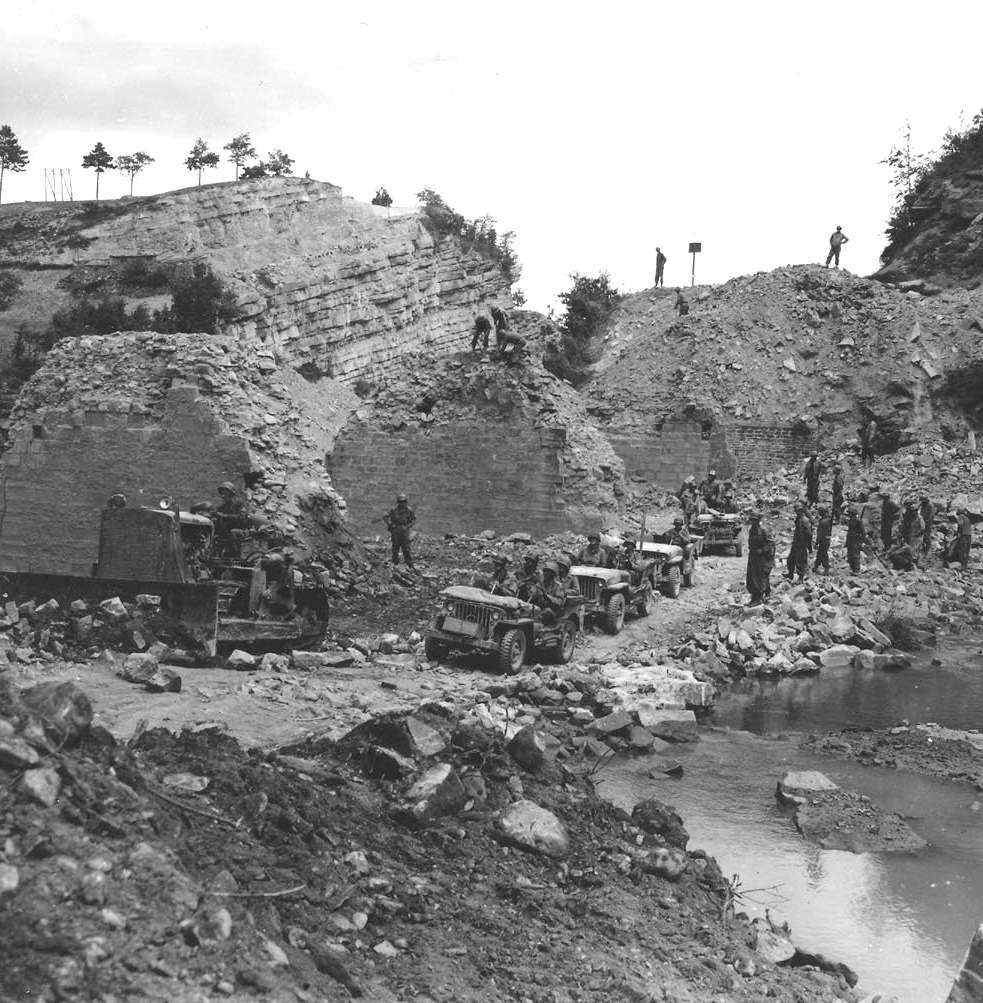
General Plan of Attack
 The general plan of the 15-AG was to drive through the German lines just west of Bologna, breach the Po River line near Ostiglia, capture Verona, to bisect the Po Valley in half and to seal the route into the Brenner Pass to prevent the withdrawal of enemy units out of Italy. Phase I, the main effort, was to break the German defenses between Highway 64 and Highway 65; to isolate Bologna leaving it to be captured later as the drive was pressed on to the Po River. Prior to and in conjunction with Phase I, a diversionary attack was planned along the Ligurian Coast directed at La Spezia.

 The British 8-A was to breach the Senio River and attack the right of Highway 9 up to the Po Valley to draw enemy reserves away from the center. The US 5-A’s II Corps was to make the main effort after the US IV Corps units had reached a line abreast of US II Corps along Highway 64.

 The advance would generally follow the Reno River line, which offered the best approach to Bologna except for the key enemy defenses on the Monte Sole, the Monterumici, and at the Monte Adone. These points were the most heavily fortified of the entire German Line. The II Corps Plan was to attack these positions directly with the 6th South African Armored Division against the Monte Sole, the US 88-ID employed against the Monterumici, and the UD 91-ID attacking the Monte Adone.

 In the initial planning, D-Day was set for April 12, 1945, but a little later, had to be set back to April 14 to allow the Army Air Corps to take advantage of better weather to participate in the attack.
 6-AD-SA Order of Battle
11th South African Armoured Brigade
– Prince Albert’s Guards
– Pretoria Regiment (Princess Alice’s Own)
– Special Service Battalion
12th South African Motor Brigade
– Royal Natal Carbineers
– First Capetown Highlanders
– Witwatersrand Rifles / De La Rey Regiment
13th South African Motor Brigade
– Natal Mounted Rifles, South African Air Force Regiment
– Royal Durban Light Infantry
– Imperial Light Horse / Kimberley Regiment
4th Battalion, 13th Frontier Force Rifles (Indian)
– South African Artillery
– 1st/6th South African Field Regiment
– 4th/22nd South African Field Regiment (Self-Propelled)
– 15th South African Field Regiment
– 7th/23rd South African Field Regiment Medium (5.5in)
– 1st/11th South African Anti-Tank Regiment
– 1st/12th South African Light Anti-Aircraft Regiment
– Z Survey Troop
– 42nd Air Observation Flight, South African Air Force
– 535th Searchlight Battery [1sec]
South African Engineers
– 5th South African Field Squadron
– 8th South African Field Squadron
– 12th South African Field Squadron
– 17th South African Field Park Squadron
An elaborate deception plan was started in March designed to conceal the actual point of attack and the true disposition of the 85-ID and the 88-ID. A false II Corps was created and moved into dummy CP in the 8-A sector. Visits were made to these CPs by Army Commanders and other staff members. A simulated thinning out of the line in the II Corps sector was made by the removal of the 88-ID, which was sent blacked out to Pisa for specialized training in river crossings. All traffic in the II Corps sector was carefully restricted. New artillery units, were moved into position and were not allowed to fire. A careful twenty-day artillery firing schedule was set up with gradually increasing fire as D-Day approached to mask the actual hour of the attack. A total of 328.000 rounds over the basic rate of fire was set aside for this program.
The 88th Infantry Division Plan of Attack
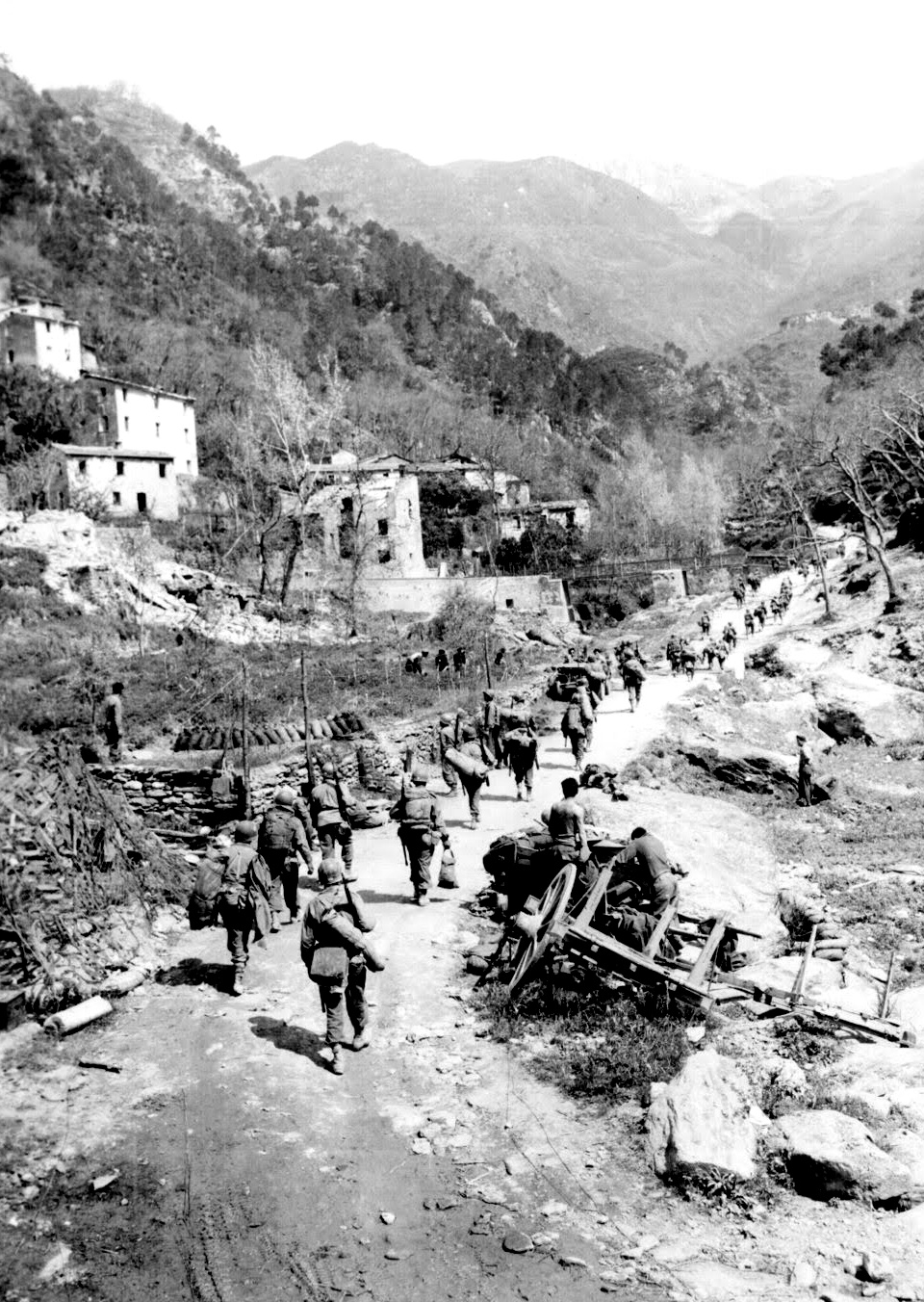
The 88-ID started moving up from Pisa on April 1 to take over its sector in front of the Monterumici. The 349-IR was to be employed on the left against the Furcoli – Monterumici ridge and the 350-IR on the right against the Monterumici – Monte Adone ridge. The division’s mission was to break through the Monterumici sector and capture Monte Mario where it would be pinched out by the 6th South Africans Armoured coming across from the left.
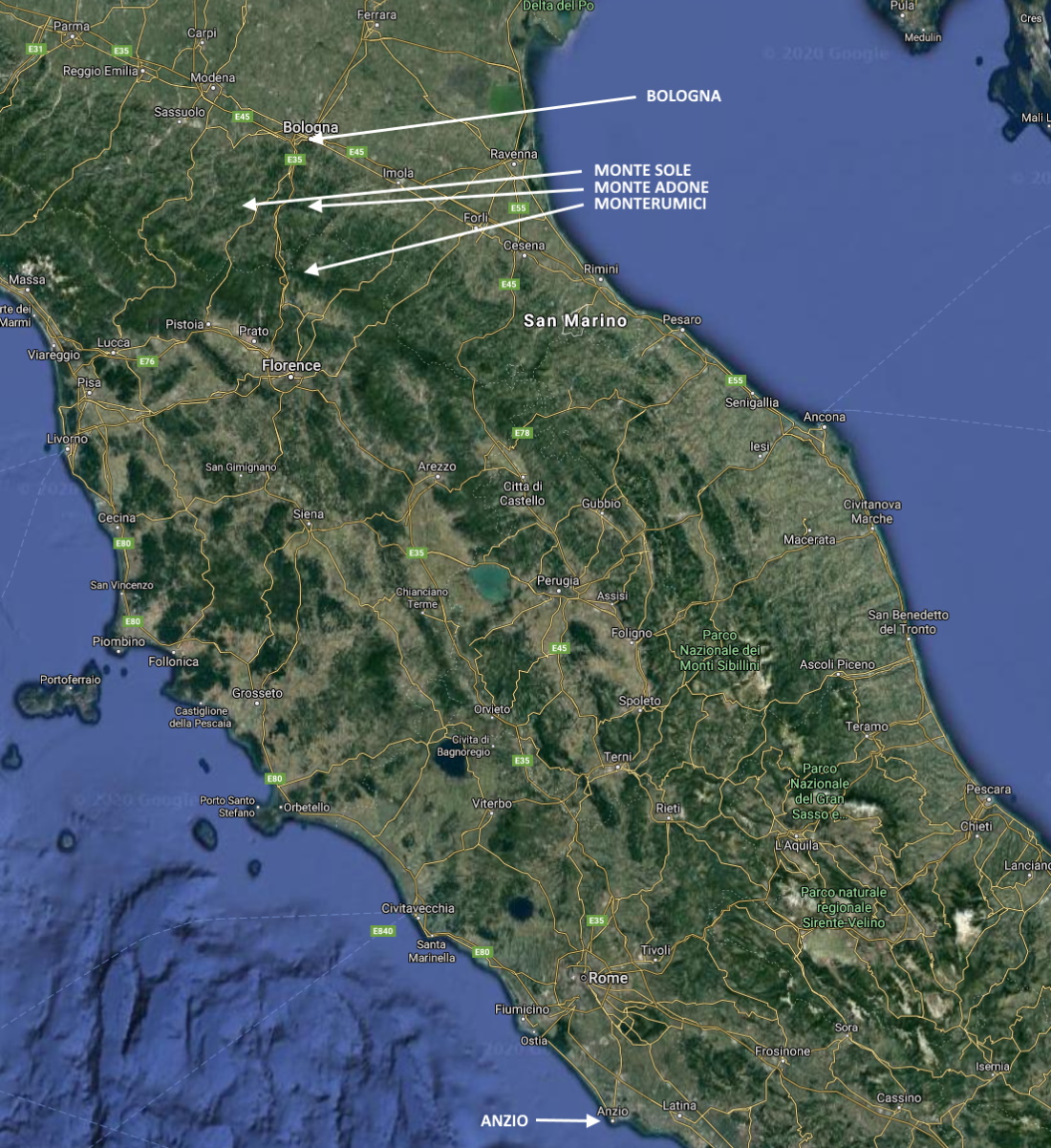
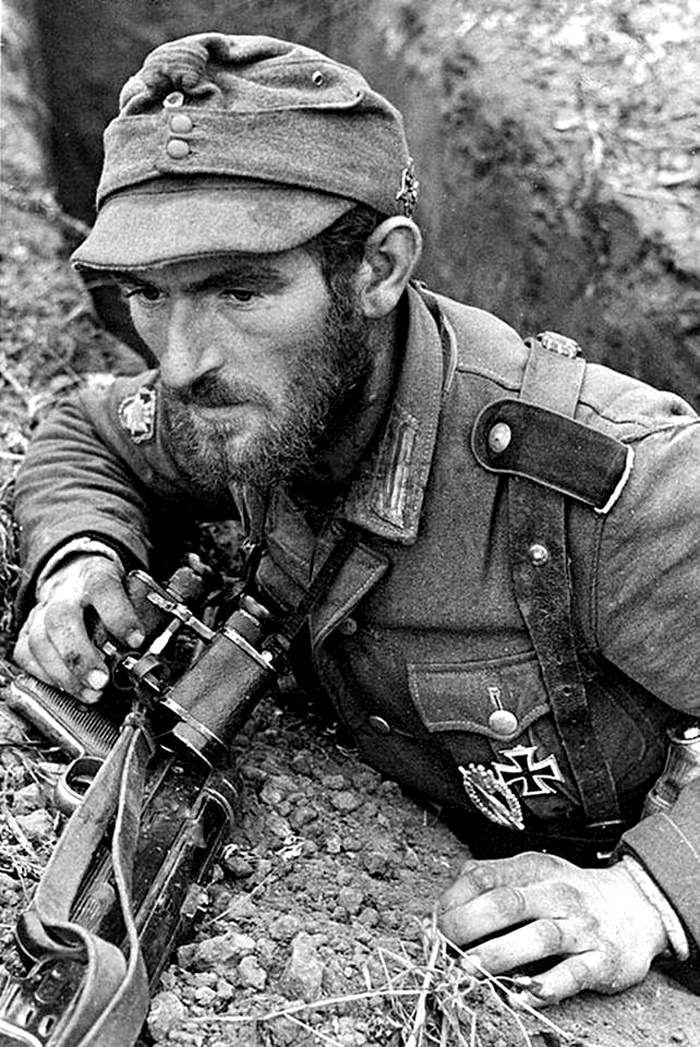
Monterumici was a formidable barrier rising 678 feet from the Setta Creek with high extending saddles to mutually supporting Monte Adone and Monte Sole. The ground gradually sloped toward the mountain from our positions along Highway 65 thus giving the enemy perfect observation of any activity within a range of over two miles. The only approaches to the mountain were heavily covered by enemy minefields and fire. The German 296.Infantry-Regiment and the 297.Infantry-Regiment (8.Gerbirgsjäger-Division) (Mountain Division) held Monterumici. This was one of the best enemy units in Italy.
The 350th Infantry Regiment Plan
The 350-IR moved from Pisa to a forward area near Pietramalo along Highway 65 on April 6 and started making plans for the attack. Detailed meetings with battalion and company commanders were held to discuss and complete the plan. The troops participated in special practice problems in night operations before their final entry into the front lines. The plan placed the 1/350 on the line on D-2 to relieve elements of the 362-IR (91-ID) and was to remain there as a regimental reserve. The 3/350 was to attack from La Valle directly up the peak of Monterumici toward Di Sotto and Le Mandrie. The 2/350 was to attack right up the Fazzano Ridge to take San Lucia and Ca Di Mazza and then continue north to capture Onercia. Easy Co 2/350 was attached to the 1/350 until H+30 took over part of the front-line positions. The 1st Platoon of Charlie Co 752-TB and the 1st Platoon Charlie Co 805-TDB were to give general support from positions forward of Anconella and La Garda. The 338-FAB and the 1st Platoon Able Co 10-CB (Chemical 4.2 mortars) were to fire in direct support of the Regiment. For the 3/350, the priority of fires was to protect Baker Co 313-ECB (Engineer) which was to clear and prepare a road through the minefields to assist the tanks and TDs to displace when the Monterumici ridge was cleared. Company Commanders of the attacking units were to make an aerial recon over their sectors in Artillery liaison aircraft prior to D-Day. The regimental CP moved to Anconella on April 10, and a forward CP was set up in La Valle. H-Hour and D-Day were set for 2230, April 14, 1945, but was later postponed twenty-four hours.
The 2/350 plan was to attack in a column of companies, Fox Co leading followed by George Co. Fox Co was to move out under cover of one thirty-minute artillery preparation, cross the Savena Creek, and mark a path through the minefield with the aid of the A&P Platoon (Ammunition & Pioneer Platoon), then attack northwest along the trail to Fazzano. With Fazzano secure, Fox Co was to scale the cliff north of Fazzano while the enemy strong points of San Lucia and Ca Di Mazza were boxed off with machine-gun and mortar fire from How Co. Fox Co would then cut the ridge trail and attack Ca Di Mazza from the rear in coordination with an attack on San Lucia by George Co launched from the direction of Fazzano.

Easy Co was to remain in reserve on the front line position and attached to the 1/350 until H+30. How Co was to start moving into firing positions along the front line on April 10 to complete a detailed fire plan before D-Day. The battalion forward CP and the aid station were to be located at Laghi. The line of departure was the trail near San Ansano. A battalion wire team was to follow Fox Co laying WD 110 wire for communication during the attack. Extreme care was to be exercised by all personnel on recon or working in the forward area to avoid disclosing to the enemy any indication of the preparations for the attack. All activity had to be restricted to nighttime because of the excellent observation maintained by the enemy over the entire area.
How Company Preparations
A recon party consisting of the Company Commander, the Platoon Leaders, and a Recon Sergeant left the battalion area and moved up Highway 65 in time to reach the forward area at first dark. Transportation was limited to two jeeps in keeping with the restricted traffic regulations. The party moved down the unimproved road from La Garda to Ca Bianca, where a check was made with the CO of the unit of the 362-IR in position, to coordinate movement in the forward area. The road from Ca Bianca to Laghi had not been traveled previously by vehicle and How Co’s Commander was warned that it probably contained old enemy mines left there through the winter. Since it was of utmost importance that a forward company supply point was established near the gun positions, the vehicles were carefully moved down the road to a point where they crossed a ford in the creek just west of Laghi. The jeeps were left at this point to be unloaded while the Company Commander and Recon Sergeant continued on foot to the platoon CP at Laghi.
Before he reached the CP the Company Commander was captured by a group of the jittery 91-ID men who had not received word of the arrival of any newcomers in the area. The Company Commander was taken to the CP with a BAR in his ribs and held under guard until word finally came down announcing his arrival. Obtaining then a guide from the line platoon, a thorough recon was made of all likely positions in the forward area. The Company Commander set off a flare as he stumbled through an unmarked mine area thus alerting all riflemen along the front line. This greatly slowed the recon, M-1 rifle’s safety locks clicked at almost every move because the 91-ID men were still jittery from the activity of strangers in their area. The forward bluff, west of Laghi, proved to be a good position for the emplacement of the company weapons and was chosen because no other place forward of this was suitable to conceal means in the daytime. The platoon leaders were shown their areas and were left there to carefully select gun positions the next day. They also had to mark a path through the brush and old mine area from their gun positions to the company supply point to facilitate movement at night. The company commander returned with the jeeps to the battalion area to work out the final fire plan.
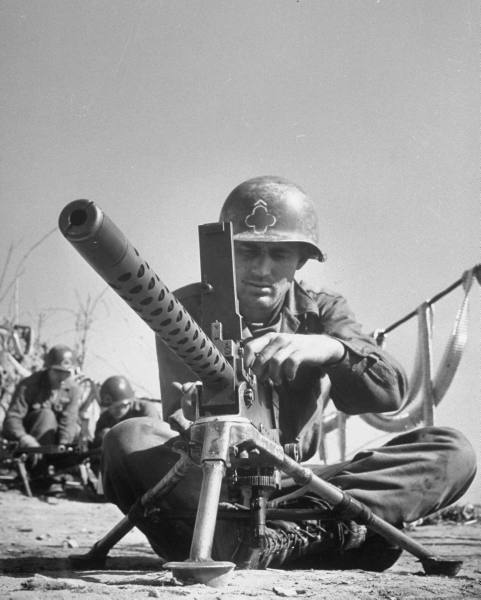
I was in the 313th combat engineers,88th inf.division blue devil’s
Hello Thomas
Welcome aboard.
I’ll see what I can find to publish about the 313 Engr
Doc