


Operations on November 18, followed pretty much the pattern of the previous two days. The 2/26 going north now was stopped again at the road junction of the secondary gravel road and the trail at Point #2 by enemy defenses similar to those encountered the previous day. Again the platoon of engineers was called upon to rush the road reconstruction so that the tanks and the TDs could be brought up to support the assault. Late in the day the tanks and TDs were brought up into position to support by fire. The coordinated attack jumped off after a short preparatory blasting of enemy installations by the self-propelled mounts, however, the battalion made little if any progress during the remainder of the day. The 1/26 had jumped off at 0800 hours like the 2/26 going generally north parallel to the Schevenhutte – Langerwehe Road. Again the battalion hit stiff opposition and made small gains. The battalion holed up for the night 200 yards north of Hill #272. During the day, the regimental commander ordered the 3/26 to move from its assembly area to occupy positions vacated by the 1/26 that morning. The battalion commander was called to the regimental CP to receive the order for his battalion’s attack on the following day. It was the intent of the regimental commander that the 3/26 pass through the 2/26 as soon as the enemy was cleared from the road junction.
The road north from that point appeared to be capable of supporting armor even at this season. Moreover, it was felt that if the 3/26 could move as soon as the 2/26 had cracked this line the shook action of a fresh Battalion reinforced with a platoon of tanks and a platoon of TDs might force a deep wedge into the enemy line. On the following morning, 2/26 successfully attacked the positions at the junction. The 3/26 spearheaded by tanks moved through the 2/26. By 1600 hours, it had taken its objective, the high ground and road junction east of Laufenberg (Point #3), by-passing the castle itself. Meanwhile, the 2/26 was ordered to hold its positions to protect the regiment’s right flank. At the time, the regiment had no contact with the unit on the right except by patrol.
At about 1800 hours, Easy Company 2/26 right received a counter-attack from the right flank which it repelled with well-placed mortar and artillery fire. Apparently all units in the division were facing extremely heavy opposition and were making maximum use of their supporting fires. Division artillery reports firing 200-300 missions daily during this period. The 1/26, continued with its mission on the left flank keeping abreast of and in contact with the 16-IR. The regimental picture was brighter than it had been since the offensive opened. The 3/26 gains showed a deep salient pushed into enemy territory but the regiment was now entirely committed with its right flank open. The cost of ground gained had been extremely heavy in manpower – casualties had sapped the strength of the 1/26 and the 2/26, especially so in key personnel. The problem of assimilating replacements in this situation was particularly difficult. All of the rifle companies were dangerously low in strength at one time or another during the drive, moreover, those units needing reinforcements most were necessarily in contact and under fire.

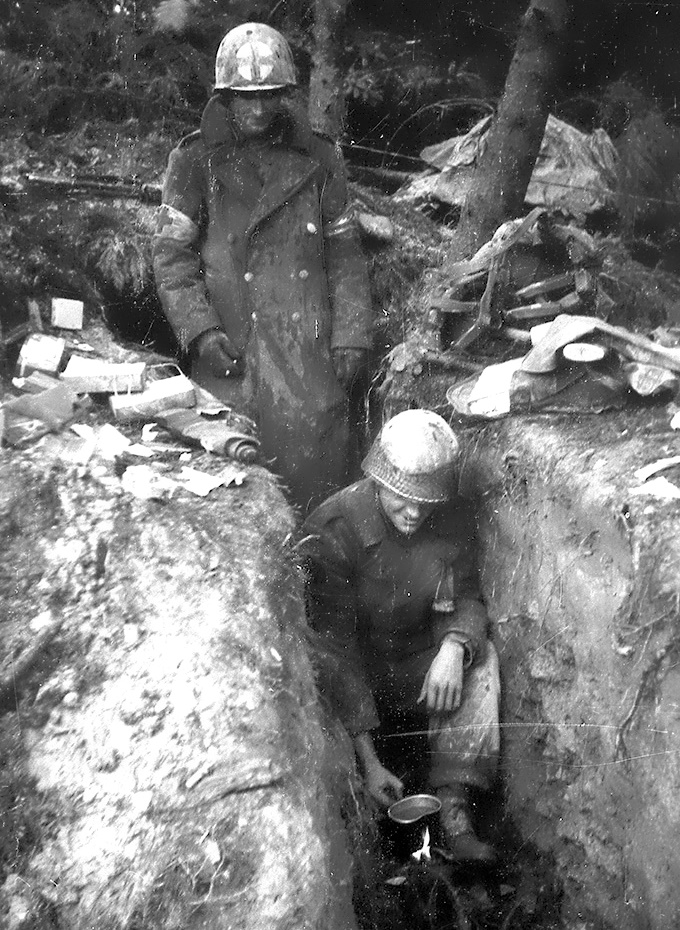
When the regiment was notified that replacements were available they were picked up at the division and brought to the regimental rear CP where the regimental Executive Officer met and received them. There he saw to it that they had a hot meal and were properly clothed and equipped to join their units. They were then briefed on the Division and Regimental histories, on the type of men they were to be with, or what to expect when they joined their companies, and all those things a newcomer should be acquainted with. Unfortunately, they then were sent up to the Battalions, all of which were in line. It was impossible to get them to their companies in daylight – companies were generally attacking or in contact and under extremely heavy fire. At night when the Battalions had stopped and buttoned up the new men were brought to the company areas. Before they knew where they were the men were hustled to a foxhole or a site for one – to them it must have been a hell they never thought existed.
As might be expected, attrition was high among the newcomers. Many of them never made their first attack – their first night with a company in the line had cost them their lives or limbs. The 1/26 and the 3/26 were ordered to move again at 0800 hours. The 1/26 again was moving west and north against heavy opposition to protect the left flank by clearing woods to the Schevenhutte Road – contacting the 16-IR. The 3/26 was moving north and east. As might be expected the Battalions eventually could no longer tie in and a gap developed between them. The regimental commander requested additional troops to cover the area between these units. The division commander made the Division reconnaissance troops immediately available and they were thrown into the line between the two rifle Battalions. As previously noted the 2/26 was still holding positions on the right flank north of the Closter Ruins and was being probed by enemy patrols.
The Battalion reported heavy casualties from the never-ending artillery and mortar fire, every round a tree burst, which over an extended period was falling at the rate of 500 rounds per hour by count. Finally at 1225 hours, elements of the 115.Grenadier-Regiment, hit the Battalion with a strong attack – but by now the Battalion was firmly entrenched and by darkness was still holding its own when the enemy was forced to withdraw. The 3/26 moved well initially and by 1100 hours, was on the high ground east of Laufenberg and south of the trail into Merode from which they could observe certain Roear Valley towns to the north. Throughout the day, the 3/26 received extremely heavy artillery and mortar fire. The enemy had evidently gotten a fix on them once they had stopped. That was one of the great penalties of fighting in the woods – once stopped the enemy got an accurate location and literally showered the area with artillery and mortars. Not that moving troops received none – that was not the case. The amount of fire received in woods fighting (all things being equal) was relative to fixing the target and friendly troops. Conversely, an enemy being pushed closer and rapidly is unable to bring down indirect fires on the pursuer – he happened to be as thin-skinned as his target when on the move toward his Fatherland or elsewhere.
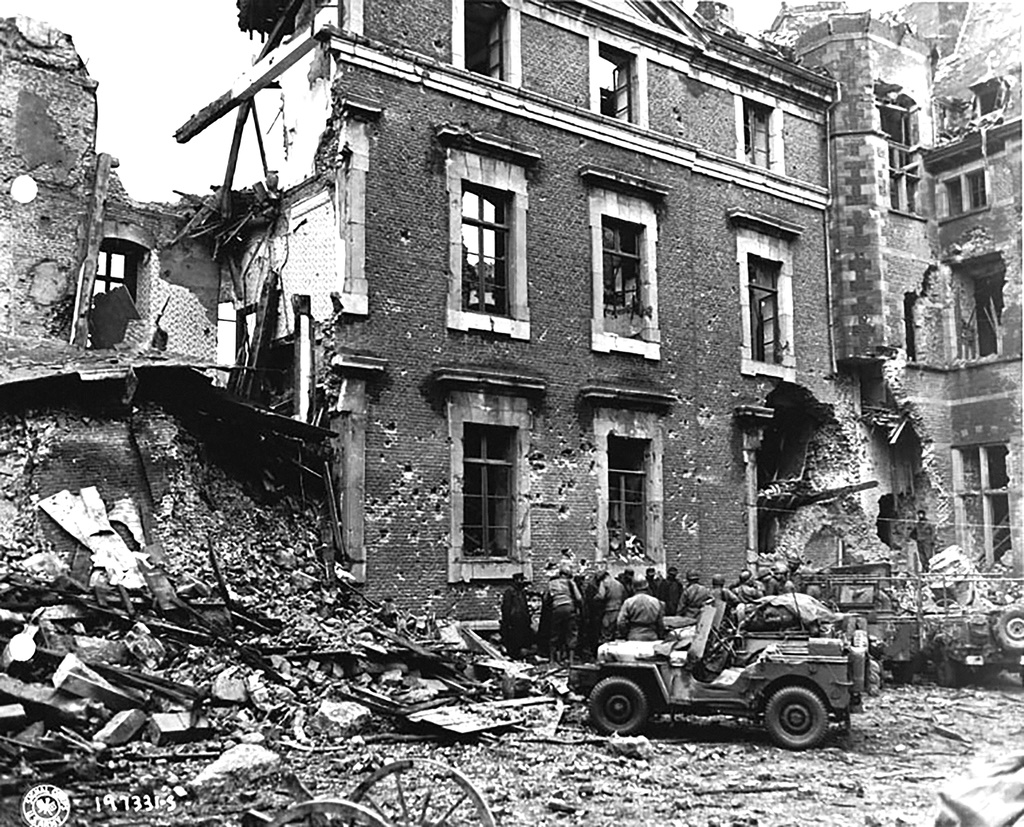
At the end of the day, the 3/26 held the high ground above and east of Laufenberg and positioned across both roads running northeast and northwest about 1000 yards south of Laufenberg. The 1/26 held a line in the woods overlooking the north-south road extending from just south of Hamich to the north for 1000 yards. Plans for the following day called for the 1/26 to pass through the 3/26 to take an objective in the vicinity of triangulation point 245 just west of Merode, however, Division insisted that the 1/26 remain in its present position in Division reserve because the 16-IR on our left had been receiving extremely heavy counter-attacks. By 0930 hours on November 21, the 16-IR situation cleared and Division released the 1/26 to the regiment. Plans, as outlined the previous day, were put into order and the 1/26 moved through the 3/26 east and then north toward the triangulation station and the road junction to the south but progress was slow as both Battalions took heavy shelling.
By 1600 hours, the 1/26 had Able Company 100 yards south of Point #4. After the 1/26 had passed through the 3/26 and moved forward a few hundred yards, the 3/26 brought the 3d Platoon, 734-TD up to fire on the Laufenberg castle preparatory to its attack to seize it. The four 3″ guns fired 27 rounds of APC and 20 rounds of HE into the castle without once piercing the walls of the fortress, Col Corley had planned his attack to start as soon as the rounds had been fired and he insisted that the attacks take place as planned – and fortunately so, because some of the Germans in the castle had been broken to the extent that they chose to be relieved of the responsibility of defending to the last man.
As is customary some chose to fight longer but the 3/26 gained entry into the fortress and proceeded to mop up those remaining as holdouts. Late in the afternoon, the Division ordered that the Regiment straighten out its line and tie in by the following morning. The regiment’s mission was to cover the right flank of the 18-IR in its attack for Schontal on the morning of November 22. Coordinating with the attack of the 18-IR on Schontal, the 1/26 and the 3/26 jumped off at 0800 hours. By noon the 1/26 had reached the high ground just south of their objective (Point #5) when they received a great amount of direct fire from Merode. Division artillery was requested to place a TOT (Time on Target) on the town and did so within a short time. The results were apparently quite effective. For some time the 1/26 received little direct fire from Merode, however, by late afternoon the 1/26 received a twenty-minute enemy-sponsored serenade of artillery and mortar fire which they estimated to consist of some 300 rounds of high explosives. The 2/26 and the 3/26 moved little as they absorbed another day of punishing mortar and artillery fire. Casualties in all Battalions were heavy again. For the past seven days, the medical aid stations were extremely busy places. Casualties were flowing through the aid stations at a rate never before known in the Regiment.

The company aidmen performed their duties heroically as they always had. They suffered casualties too – a shell does not have a name on it: Capt Kuby, Battalion Surgeon of the 2/26 marveled at the quality of work of the company aid men under fire. He stated that dressings were so well applied up front that the majority of casualties could be dispatched to the rear without further attention at the aid station. This was particularly gratifying information because approximately a month prior to this operation the Assistant Battalion Surgeon had been replaced by a lieutenant MSC in all Battalions. This change in the Battalion medical organization brought about an immediate improvement in the evacuation of casualties from the front-line units to aid stations. Since the new officer was not an MD his main job was administration and evacuation. In the forest, they did a fine job of expediting and coordinating evacuation from the lines to the aid station and the aid station to the rear.
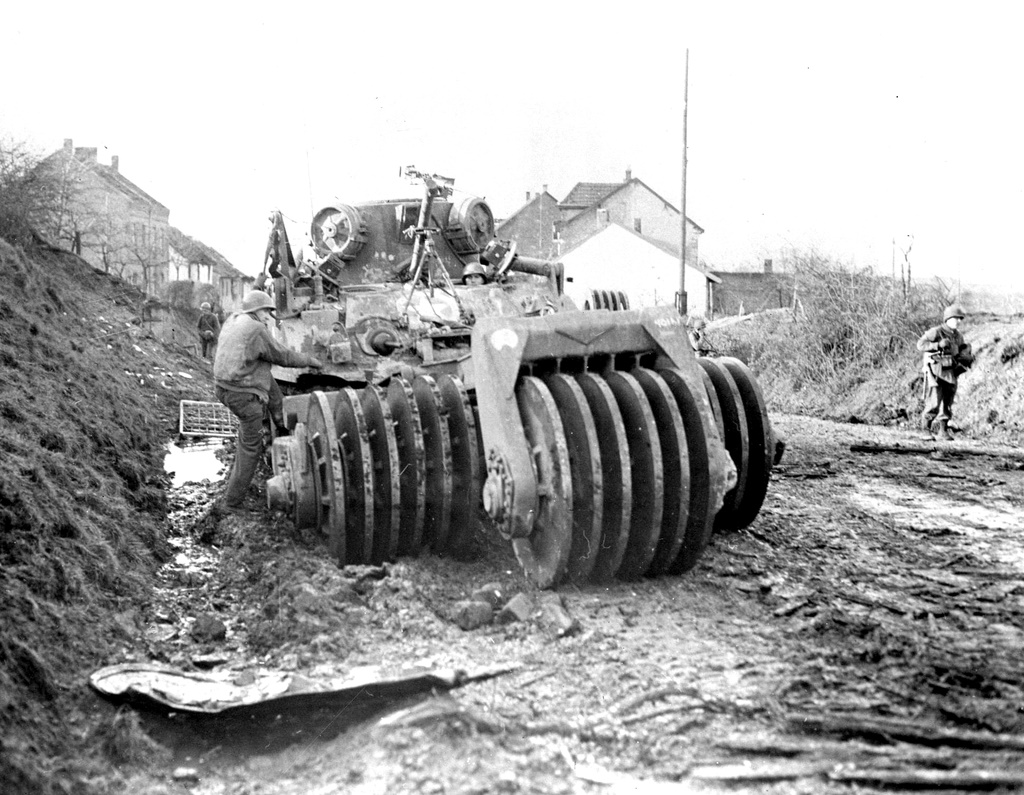
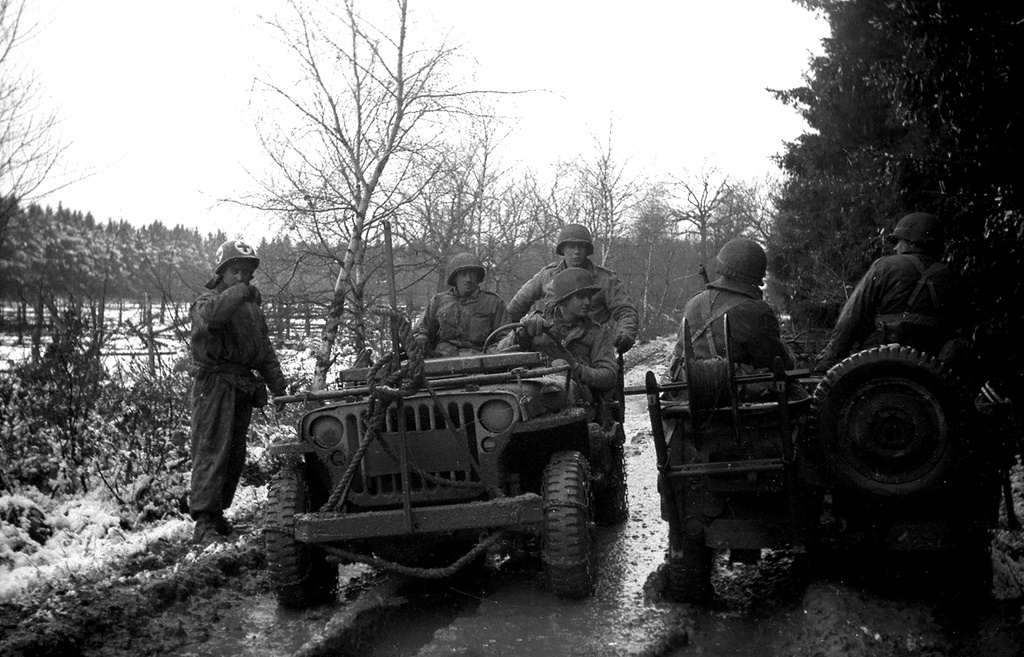
Even this increase in efficiency however could not overcome the delays brought about by local conditions – the extremely heavy casualties, lack of roads, and the shortage of medical personnel. The Regimental Surgeon was forced to request additional medical corps personnel to supplement his overworked crews. Army litter bearer teams were sent to the regiment and were employed in the front-line evacuation of casualties. Even so, the heavy number of casualties coupled with the inability to transport by vehicle over the murky lanes allowed for much improvement. The regiment informed the division of the fact that evacuation and supply problems were becoming more acute and requested that a sufficient number of Weasels, 1/4 ton tracked vehicles, be procured to alleviate worsening conditions. The regimental half-track vehicles were already being used but even these were not particularly mobile in this terrain. Within a short time, six Weasels were attached to the regiment which in turn released two to each battalion. Needless to say, these new additions were immediately put into operation and worked days without cooling off.
 During the early evening hours of November 22, the Division attached elements of the 4th Cavalry Group to the Regiment for employment in a defensive role and to cover the gap on the regiments right flank – in order to release the 2/26 for further offensive actions in the direction of Merode. On November 23, only the 3/26 moved. By noon, the Battalion was north of Hill #155 and its reserve company were in contact with the 18-IR on the left. Early in the evening, the 3/26 was forced to stop and button up short of Hill #200. The 2/26 situation was unchanged from the previous days with the exception of Easy Company on the right flank which had been relieved by elements of the 4-CG. The relief was to continue the following morning and be complete by dark. As planned the 2/26 was entirely relieved on November 24 and pulled back for a short rest and preparation for the final push out of the forest.
The 2/26 had moved into reserve positions in the vicinity of the Regimental CP awaiting final orders for the Merode push. As the Battalion CP Group moved into its area enemy artillery hit them before they had dug their foxholes. The artillery liaison officer was killed, the Battalion S-3 was wounded, and several CP personnel were killed or wounded. During the day, the 1/26 and the 3/26 were ordered to hold what they had, consolidate, and tie in. By noon, the Battalions reported that they were tied in just south of triangulation Point 245. The line was now facing east from the south boundary to Hill 245, then facing north with the 3/26. The 3/26 moved north along trail #6 to tie in with the 18-IR. For the next two days, no offensive action of note took place. Both sides patrolled extensively sparring as though looking for an opening. Advance notice had been given by the Division that Jungersdorf would be the next regimental objective. The 3/26 commander was advised that it would be his job in order that he might feel out the opposition by patrols and begin planning his method of attack.
On November 27, the Corps ordered the Division to take Langerwehe and Jungersdorf. The 18-IR was given the job of talking Langerwehe simultaneous to the 26-IR taking Jungersdorf. The Regiment then ordered the 2/26 to send one Company to take over part of the 3/26 area adjacent to the 1/26. At 1500 hours, the 3/26 jumped off with King Company taking the high ground to the south of the town and overlooking it, Item and Love Companies moved cross-country into Jungersdorf and were engaged in extremely heavy fighting. The Battalion Commander dispatched the tanks and TDs into the town to support the companies in clearing it. The companies were so notified and met the vehicles, and proceeded to mop up resistance. By dark, the town was reported taken and secured.
At about 0300 hours, the King Company positions on the high ground overlooking Jungersdorf were heavily counter-attacked. One of the 3/26 TDs was knocked out and another was threatened before the counter-attack was repelled. During this action, one of the Battalion 57-MM AT guns knocked out a Mark IV tank. Later in the morning about 1000 hours, the enemy counter-attacked Jungersdorf. Now we had observation and the enemy was caught in the open and given the treatment. His forces, unsuccessful in taking Jungersdorf withdrew toward Langerwehe where the 18-IR was attacking. Friendly artillery took the backtracking enemy force under fire and caused extremely heavy casualties. Later in the day, as friendly aircraft hovered over our lines, the enemy dropped red smoke on Jungersdorf in an attempt to get the US Air Corps to bomb the 3/26, however, the trick was detected in time to prevent the bombing.
Now that Jungersdorf had been taken plans were made for sending the 2/26 east to seize the town of Merode. The 1st Recon Company and the Recon platoon of the 734-TB were attached to the regiment to hold positions between the 1/26 and the 3/26. The 2/26 was then ordered to attack east along the unimproved road to clear the woods (500-600) yards and take and hold the town of Merode. The remainder of the regiment was to hold its present line. Except for the 3/26 positions on the north (facing north) the line was well inside the forest on high ground with little if any observation of the Roer River valley to the east.
At 1000 hours on November 29, after artillery preparation, the 2/26 jumped off with Easy and Fox Companies, each reinforced with a Heavy Machine gun platoon. From the outset, the attacking troops received heavy artillery and mortar fire as they plodded through the last enemy defenses in the forest. Again they hit a well-dug-in enemy behind a mesh of wire and mines. Of the estimated 350 personnel in the assault approximately 130 were casualties before the two companies emerged from the forest into the open overlooking Merode. Moving out for the assault on the town, Lt John D. Hamilton, Company Commander of Fox Company called for the tanks and TDs to be employed in the clearing of the town. The companies proceeded with their assault on the town and seized that portion along the road east into town. Fox Company moved up and held the edge of the woods facing Merode. Meantime, the tanks had been dispatched and appeared on the outer edge of the woods where they drew considerable fire. Two of these tanks proceeded to join the companies and helped in clearing the remainder of the town.
However, Merode, a small town, is joined with its larger neighbor Schlich so that it is difficult to tell where one ends and the other begins. Easy and Fox Companies took all that they could hold and the enemy held the rest strongly. The defense consisted mainly of holding the houses along the two roads of Merode. While the companies organized their positions the enemy in Schlich took Merode under fire with their tanks and assault guns and kept all of the buildings and the two tanks covered. During the day the two tanks left the troops in Merode and made an attempt to return to the forest. On their way, west of the town on the only road back, one of the tanks bogged down in the mud and turned over and the other was hit by an enemy shell. They now blocked the road so that it could no longer be used to reinforce the troops in town. About this time, it was noted that communications to the town were particularly bad, Lt Hamilton did have intermittent contact with his SCR 300 until approximately 2800 hours, thereafter no contact whatsoever was made except by one runner. That night, a coordinated German infantry and tank attack on Easy and Fox Companies systematically proceeded to wipe out or capture the group in Merode. The gallant fighters had no defense except their small arms against the tanks and infantry moving in. The fighting lasted throughout the night. At daybreak, George Company could observe enemy tanks firing directly into the Easy and Fox Companies buildings. German tanks drove their guns into windows and blasted the insides of buildings then the infantry moved in to mop up. Finally, on November 30, the Germans recaptured Merode. Throughout the siege, patrols were sent from Battalion to the companies in Merode but none ever reached the town.
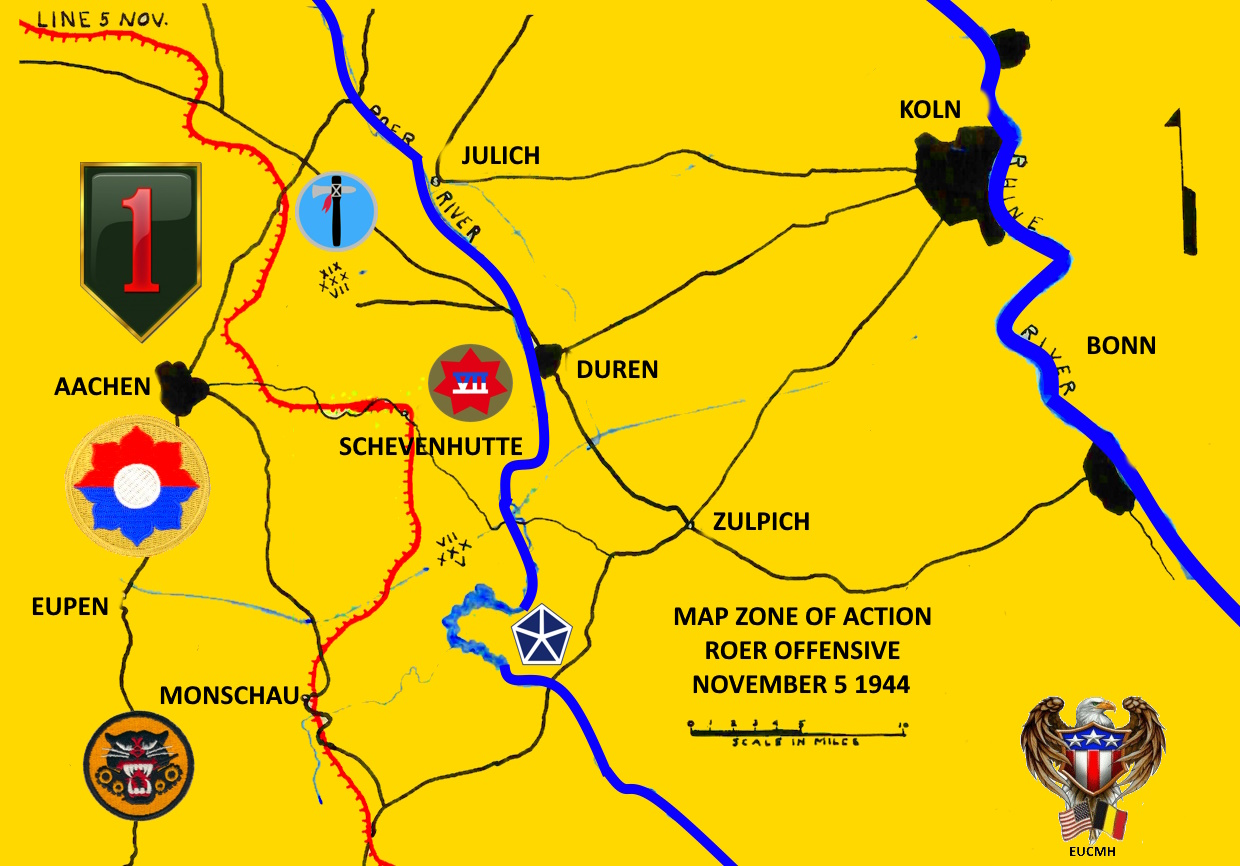
One patrol consisted of twelve bazooka teams to make up for the lack of armor in the defense of the town but it never reached Easy and Fox Companies. The enemy had apparently first cut off the town from the forest by setting up a line west of Merode. Any movement toward the town drew immediate and intense small arms, mortar, and artillery fire. The platoon of engineers and tank recovery tried to clear the road several times but were unable to remove the obstacles under the terrific fire. During the night in question, several illuminating shell fire missions were fired in an attempt to catch enemy reinforcement in the open. At the time Merode was counter-attacked the regiment had no reserve. It is estimated that a Company had an effective strength of approximately 50 men employed in the line holding the edge of the forest west of Merode. Division at first alerted a battalion of the 16-IR then ordered the 18-IR to relieve elements of the 3/26 in Jungersdorf on November 30. It was the evening before the battalion became available and that was too late. Strong patrols were unable to make any progress toward the town.
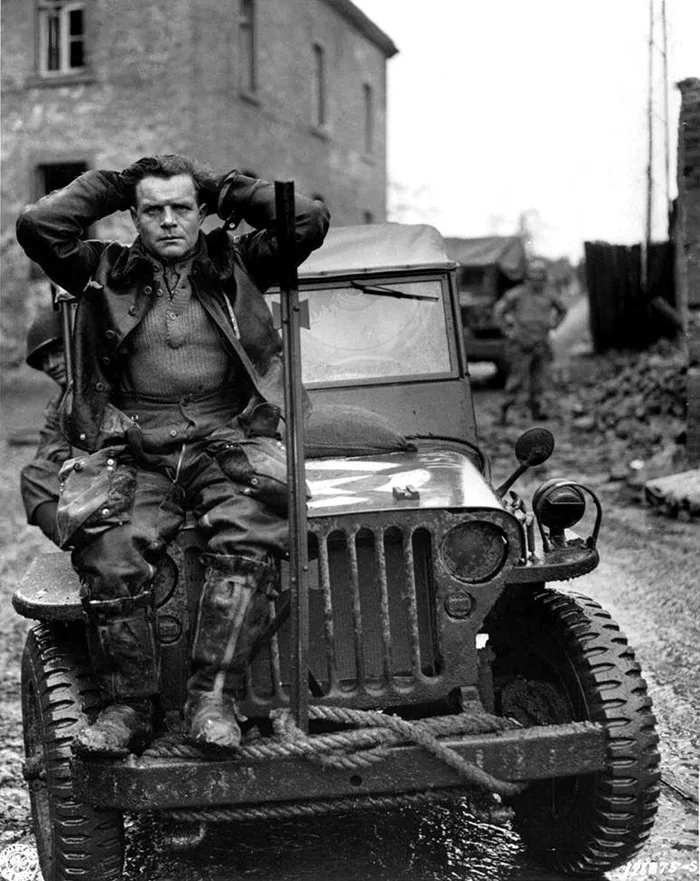
In fact, the enemy was beginning to feel aggressive, he had regained the initiative in Merode and apparently decided to continue. During the day he launched an attack on the 1st Recon Company positions just north and west of Merode which was broken up by our mass of artillery and mortars. On December 1, the two companies were given a loss. Four 2/26 men who had been taken prisoners escaped and returned to our lines confirming the fact that there were no longer any friendly troops in Merode. The regimental front required all available troops – any major move might so weaken the line as to make it vulnerable in the event of enemy attack and so for that reason, the 1st Battalion and 3rd Battalion were ordered to hold what they had and to clear the woods in their respective areas. The 1st Battalion was to clear the area south of the Merode road and the 3d Battalion, the area southeast of Jungersdorf. The 3rd Battalion cleared its area during the day while the 1st Battalion ran into heavy fighting and cleared little, George Company pulled back on line with the 1st Battalion and held its position north of the road. For the next three days, only the 1st Battalion moved, sweeping its assigned area against heavy resistance. The enemy captured by the 1st Battalion during this action told of the enemy’s recent reinforcement to the 1st Battalion front. On December 4, the division notified the regiment that elements of the 9-ID would relieve the 26-IR on December 5. During the afternoon of December 4, reconnaissance parties from the 9-ID arrived to plan the relief and gather information about their new area. On December 5, the regiment was relieved and moved to a rear bivouac area in the vicinity of Henri-Chapelle in Belgium for rest and rehabilitation.