


Reviewed by Doc Snafu on May 28, 2026.
Document Source: Resume of Operations for November 1944, by Headquarters 117th Infantry Regiment, Capt William A. Buckley, Personnel Officer, 117th Infantry Regiment. Text correction and Photos added by Doc Snafu.
Introduction – The 30th Infantry Division: Context and Sources
The following document, written shortly after the end of the Second World War, presents an internal operational analysis of the 30th Infantry Division during its campaign through France, Belgium, Holland, and Germany, including its actions during the Battle of the Bulge. Known as the ‘Old Hickory’ Division, the 30th Infantry Division was composed primarily of National Guard troops from North Carolina, South Carolina, Georgia, and Tennessee. It earned a formidable reputation on the 0Western Front for its combat effectiveness, particularly during the Normandy breakout, the crossing of the Roer River, and the defense of the northern shoulder during the German Ardennes Offensive. This document reflects both the tactical challenges and the command-level insights drawn from those critical months. It offers invaluable perspectives into unit cohesion, field leadership, and the brutal realities of winter warfare.


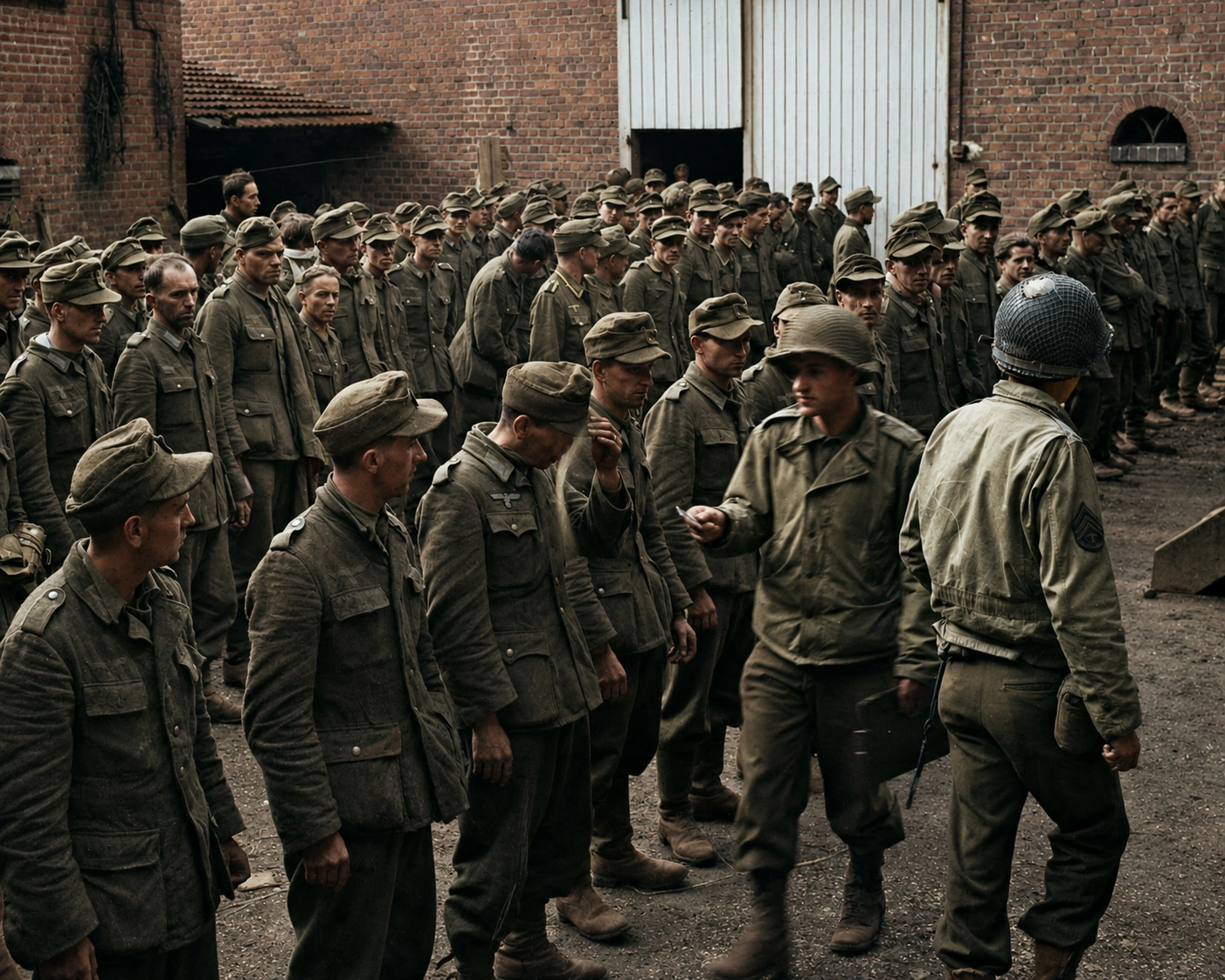
 During November 1944, the 117th Infantry Regiment made substantial additions to its already voluminous record of victories and successes in the destruction of the German Army. In the great offensive that carried the Allied Armies to the banks of the Roer River (Germany), the 117-IR, in the initial assault, carried out what was termed by higher headquarters as three perfect infantry attacks with artillery, tank, direct fire, and other supporting weapons coordinated faultlessly. Although engaged offensively for but a short part of the period, the Regiment captured more than 800 prisoners, large supplies of enemy ammunition, weapons, and other equipment.
At the beginning of the period, the 117-IR was maintaining an active defense along a line running from Schaufenberg (Germany), Alsdorf (Germany), to Kellersberg (Germany). Deep penetrations were made repeatedly into enemy territory by reconnaissance elements. The aggressive and highly successful patrolling by units of the 1st Battalion evoked the commendation of the Regimental Commander.

 On November 15, 1944, the Distinguished Service Cross, Silver Star, and Bronze Star awards were made to members of the Regiment by Gen Leyland S. Hobbs, Division Commander. The following day, the troops, in a perfectly conducted attack, gained the town of Mariadorf (Germany). Within fifteen minutes of the inauguration of the assault, this section of the hostile Main Line of Resistance had been taken. Dense enemy mining was encountered by the attacking force, the foe having made extensive use of the wooden box-type (Shu Mine) mine, which was extremely difficult to detect. Numerous casualties were suffered while crossing the mine fields, and considerable mortar and artillery fire was encountered. However, strong concentrations of friendly artillery and mortar fire had neutralized the bulk of the enemy resistance prior to the attack. 104 German prisoners were taken during the day’s activity.

 The attack was resumed at 0700, November 17, 1944, with the 1st Battalion cleaning out the remainder of the town of Mariadorf and progressing 700 yards beyond the Aachen – Köln Highway against stubborn enemy resistance. Only ground weapons were available for fighting considerable tank opposition. Because of the inclemency of the weather, a scheduled air mission had to be canceled. The 2nd Battalion jumped off towards Hoengen (Germany), and although subjected to severe hostile artillery and mortar fire as well as a fiercely determined infantry, seized the town by 1645. 228 additional prisoners were captured during the operations.
 At 0730, November 18, the 1st Battalion 117-IR launched an attack upon the town of Warden (Germany). The initial blow was thwarted by powerful screens of enemy artillery and small arms fire, as well as direct fire from dug-in tanks. At 1115 hours, the attack was renewed, but again the devastating superiority of opposing fire power caused heavy casualties and stopped the advance short of its goal. Baker Co alone lost more than seventy men in the short engagement.
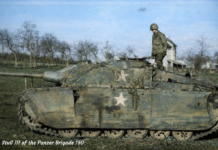
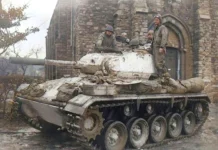
At 1515 hours, following closely behind an intensive artillery preparation and friendly fire from direct fire weapons, the 1st Battalion plus Fox Co 2nd Battalion, launched a coordinated attack against the strongly fortified town. Our troops rode forward on tanks, four men upon each tank. Three rifle companies and eleven tanks approached the city from three sides. The enemy utilized concrete emplacements and houses as strong points, and with the support of at least four direct-fire assault guns resisted the drive fiercely. Nevertheless, the key town was seized and cleaned out in bitter house to house fighting. Finally, 209 prisoners were captured in addition to tons of ammunition and two self-propelled assault guns.
On November 19, the 2nd Battalion 117-IR passed through the 1st Battalion and attacked south in the direction of Kinzweiler (Germany). Simultaneously the 3rd Battalion directed an attack against Sankt-Joris (Germany). Mortar, artillery barrages, and direct fire from supporting arms preceded the drives in each instance. Both objectives were taken within thirty minutes as the troops of the 117-IR again rode forward upon the armor. 223 prisoners was the bag for these skillfully executed operations, while our forces sustained only light casualties.
During the balance of the month, the 117-IR constituted Corps Reserve. The battalions alternated in going back to a Rest Camp for well earned periods of relaxation. Reorganization, maintenance, and training was also conducted. The training included practice firing with mortars, bazookas, and other small arms. On November 28, Gen Hobbs again awarded numerous decorations to officers and enlisted men of the Regiment for heroic acts and meritorious service. These decorations included The Distinguished Service Cross to Lt Col Robert E. Frankland, Commanding Officer of the 1st Battalion, and an Oak Leaf Cluster for the Silver Star to Col Walter M. Johnson, the Regimental Commander.

When the enemy initiated its spectacular counter-thrust against the American First Army, on December 16, 1944, the 117-IR was in a Rest Status at Mariadorf (Germany). Training schedules were being conducted while the Battalions and Special Units alternated in taking advantage of the Rest Camp facilities at Kerkrade (Holland), for forty-eight hour periods. Rocket firing and armored demonstrations took place during the second week. On December 11, Gen Hobbs, presented the Distinguished Service Cross, and Bronze and Silver Stars, to officers and enlisted men of the Regiment. Additional awards were made by the Division Commander on December 16; and, on the same day, Col Walter M. Johnson, the Regimental Commander, departed for London (England) on a short leave.

 Constant vigilance was maintained, by the troops as renewed enemy activity became manifest. The command was alerted frequently to be on guard for hostile aircraft. Two German planes appeared over the Regimental Area during the early hours of December 17, but dropped no bombs. At about the same time, six Nazi Fallschirmjäger were picked up in the vicinity of Bardenberg (Germany). At 1140, December 17, the Regiment was alerted to move south within six hours. The Quartering tarty left two hours after receipt of the order. Col Johnson returned from Brussels at 1550, and the Command Post at Mariadorf was closed by 1945. Original plans called for movement through Aachen (Germany), to an Assembly Area near Eupen (Belgium), where the Regiment was to be attached to the Fifth Corps. Gen William K. Harrison, Assistant Division Commander, intercepted the convoy enroute with instructions to proceed to Malmedy (Belgium), and to assume an all around defense of the area without delay.
A temporary Command Post was set up for the night at Kettenis (Belgium), and orders issued for continuing the move. The 3rd Battalion was to lead out at 0230, December 18, preceded by the Regimental I&R Platoon, and a platoon of tho 30th Reconnaissance Troops. Enemy aircraft harassed the convoy with flares and dropped some bombs causing no casualties and little effect upon the movement. By 1010, December 18, the Regimental Command Post had been established in Malmedy.

 The enemy penetration was then in a fluid state. Forward elements had reached the town of Stavelot (Belgium), on the way to Liège (Belgium) Able Co 526th Armored Infantry Battalion had been driven from this key objective by superior forces after knocking out three hostile tanks. The 3rd Battalion 117-IR took up an immediate defensive position around the south-eastern edge of Malmedy while the 1st Battalion and the 2nd Battalion advanced toward Stavelot. By 1245, December 18, the 2nd Battalion was in position midway between Stavelot and Malmedy, dominating the main road linking the two towns, and destroying three German tanks in ninety minutes. The 1st Battalion moved into Stavelot and
 occupied the city by 1520, after disposing of a sizeable force of infantry and armor. A counter-attack sustained several hours later with the enemy using three American half tracks and three jeeps was quickly repulsed and all of the vehicles knocked out. At 2200 hours of the next day, the vital bridge at Stavelot, spanning the Ambleve River was blown out. The northern salient of von Rundstedt’s mighty effort was contained along this line and the imperilling of Liège averted by the determined and aggressive action of the troops of the 117-IR.


 On December 19, the 3rd Battalion was directed also to recapture the town of La Gleize (Belgium). With the 120-IR assuming responsibility for defense of the Malmedy Sector, the 3rd Battalion proceeded to this objective at 1115. At 1510 the Regimental Command Post was moved to
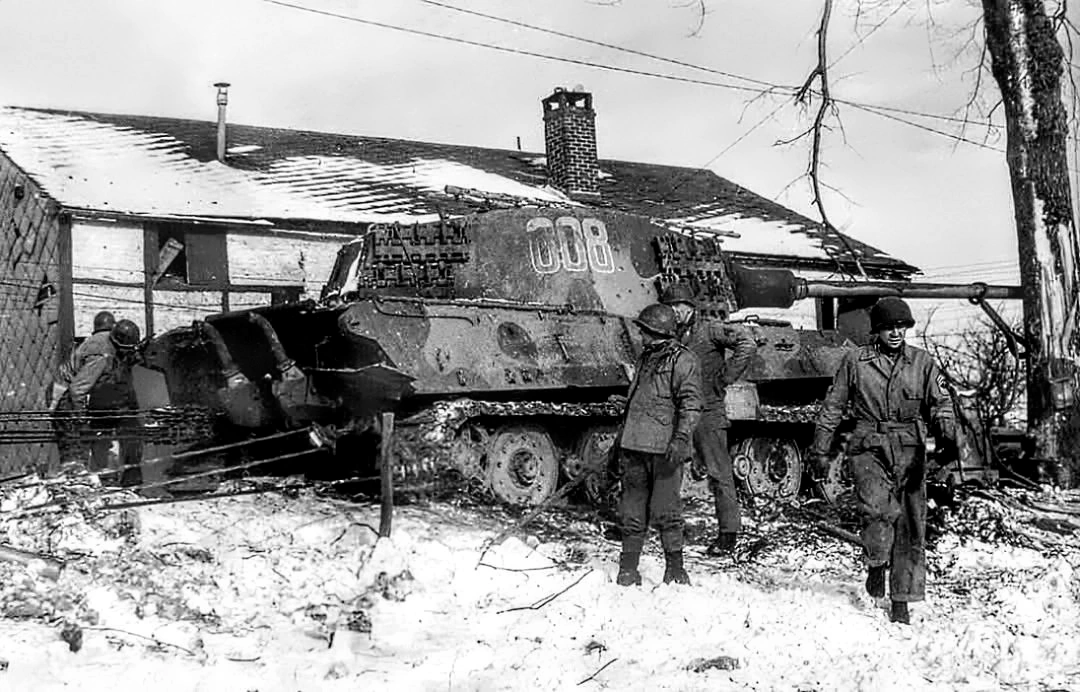
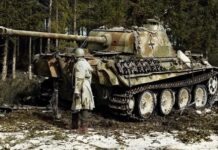
  Francorchamps (Belgium). After knocking out a Mark V Panther, the 3rd Battalion took up a defensive position near Moulin Du Ruy (Belgium).Love Co was disposed at Roanne-Coo (Belgium); King Co, at Cour (Belgium); and Item Co, at Ruy (Belgium). A twilight attack upon the 1st Battalion was dispersed by artillery fire. The 823rd Tank Destroyer Battalion incapacitated four enemy tanks during the day’s operations including a Mark VI-2 King Tiger and a Mark V Panther, while Able Co of the 105th Engineer
 Combat Battalion destroyed the main bridge across the Ambleve River leading into Stavelot from the south. This feat was accomplished in total darkness under extremely hazardous conditions. During the night. Able Co 117-IR, smothered several enemy attempts to penetrate its lines.

 The following morning. Gen Hobbs authorized the use of Fox Co 120-IR, in support of the 1st Battalion 117-IR in case of emergency. Strong forces of German tanks and infantry attacked the right flank of the Battalion, engaging Able and Baker Cos in a stiff fight and compelling the unit to withdraw approximately 100 yards. In the meantime the enemy was reported to be constructing a bridge across the river south-east of Stavelot. Artillery concentrations slowed up the enemy advance and demolished the river installations. The Nazis then began massing a large force upon the south bank of the river confronting the 2nd Battalion positions; but, the artillery
  hurriedly put an end to this threat with a voluminous barrage which inflicted heavy casualties upon the foe. Whereupon, the 2nd Battalion completed the task of cleaning out the remaining enemy troops north of the Ambleve River and two platoons outposted the area from Challes (Belgium) to Chefosse (Belgium).
 During the afternoon of December 20, the 526-AIB was counter-attacked west of Stavelot and the 3rd Battalion 117-IR reported strong enemy opposition at the road junction north of La Gleize. However, with a Task Force from the 3rd Armored Division, which was attached to the 117-IR at this time, King Co battered down the fanatical resistance of the enemy and reached the outskirts of the town by 1800. The attack was resumed during the night and King Co, with the cooperating Task Force, succeeded in penetral La Gleize only to be surrounded by the foe. Encirclement was averted with a slight withdrawal to the north after the 3rd Battalion had opened a wedge.
La Gleize – After the Battle


 At 0800, December 21, the 105th Engineers established a road block at Roanne. Shortly thereafter the tank destroyers attached to the 2nd Battalion demolished three Nazi tanks which had pierced the right flank of the 120-IR. With all points of direct contact firmly stabilized the enemy endeavored to infiltrate the 1st Battalion positions by swimming the Ambleve River. Baker Co sharpshooters picked them off like clay pigeons in a shooting gallery. None succeeded in getting across, but a few managed to escape the watery grave. Approximately 150 of the foe were eliminated in this spectacular fashion. Mines impaired the two lead tanks of a 3rd Armored Mike Task Force, advancing on La Gleize from the west. The two rear tanks were put out of action by enemy fire. Consequently, the remaining armor, in the center of the column, was wedged in and could not be moved. The Task Force then attempted to enter La Gleize from the south. Meanwhile, Item and Love Cos 117-IR, by an attack through the woods from Roanne, attained the cities
 of Ster (Belgium) and Renardmont (Belgium) after overcoming strong opposition, occupied the town of Parfondruy (Belgium) while heavily engaged from both sides of the river, and made contact with the 1st Battalion 117-IR in Stavelot. The 823-TDB assisted in the operation by knocking out some more United States’ M-8’s and M-1O’s which were being used by the enemy.

Between midnight and 0700 on December 22, no fewer than twenty-two V-1 flying bombs—referred to at the time as ‘robot bombs’ were observed passing directly over the Regimental Command Post. These unmanned weapons, launched by German forces in a desperate attempt to disrupt Allied logistics and civilian morale, moved steadily in a northwesterly direction. The frequency and consistency of their flight paths suggested a systematic targeting pattern, likely aimed at key infrastructure or urban centers behind the front lines, such as Antwerp or Liège. Their distinctive buzzing engines, audible well in advance of visual contact, created a constant atmosphere of tension among troops stationed below. The passage of so many V-1s within a single seven-hour window highlighted both the intensity of the German effort and the vulnerability of rear-area installations to long-range attacks. For the men on the ground, it was a stark reminder that even areas perceived as secure remained within reach of this new and terrifying form of warfare.

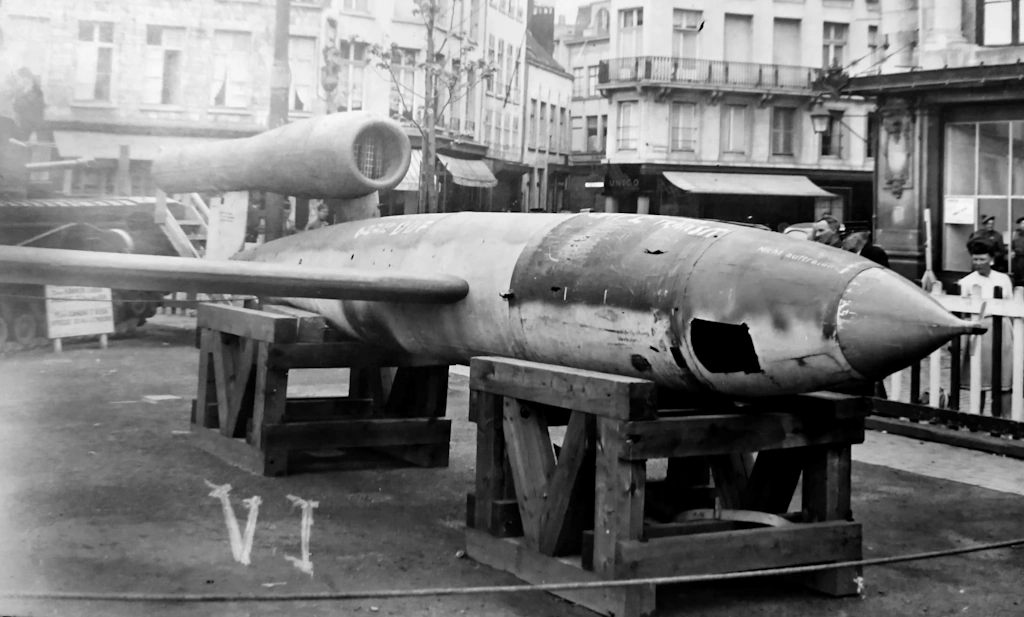
The V-1 Flying Bomb (Buzz Bomb) – Technical, Strategic, and Operational Aspects
The V-1, officially designated Fieseler Fi 103 by the Luftwaffe, was the world’s first operational cruise missile. Developed by Nazi Germany during the Second World War, it was part of Adolf Hitler’s Vergeltungswaffe (retaliatory weapons) program, conceived to counter Allied bombing of German cities and to instill psychological terror in enemy populations. Between June 1944 and March 1945, more than 10.000 V-1s were launched against England and Belgium, notably London and Antwerp.
1. Design and Propulsion
2. Launch System and Sites
V-1s were launched from fixed ramp systems (approximately 50 meters long) using steam-powered catapults, primarily located in northern <France and the Low Countries. Later in the war, the Germans developed air-launched variants deployable from Heinkel He 111 bombers, extending their operational reach and complicating Allied interception efforts. Launch sites were designed with hardened concrete facilities and a network of camouflage and decoys to evade Allied reconnaissance and bombing campaigns. Despite extensive Allied countermeasures, including Operation Crossbow, many V-1 launchers remained operational until the Allied advance neutralized their range.
3. Strategic Impact and Effectiveness
While the V-1 lacked precision—often missing targets by several kilometers—its primary effect was psychological and logistical. In London alone, over 6000 civilians were killed and more than 18.000 injured due to V-1 strikes. The attacks prompted widespread evacuations, disrupted industrial output, and necessitated the redirection of significant resources to air defense. In Belgium, Antwerp became a key target following its liberation in September 1944. As a vital Allied logistics hub, Antwerp endured intensive V-1 and V-2 bombardment during the winter of 1944–45, threatening supply lines critical to the Ardennes campaign. From a purely military standpoint, the V-1 was cost-effective but strategically limited. Each unit cost less than a conventional bomber mission, and its production could be decentralized. However, its low accuracy and the development of effective countermeasures—including anti-aircraft fire, barrage balloons, and rapid-response fighter patrols (notably the Hawker Tempest and Spitfire XIV)—greatly reduced its long-term effectiveness.
4. Legacy and Technical Influence
The V-1’s technological legacy is significant. As the first successful cruise missile, it laid the groundwork for postwar missile development in both the United StatesSoviet Union. Captured German engineers and prototypes played a direct role in shaping Cold War-era guided missile programs. From a military scientific perspective, the V-1 demonstrated the feasibility of autonomous, long-range weapons, but also exposed the limitations of inertial guidance, simple propulsion systems, and fixed-launch infrastructure. These lessons directly influenced the evolution of cruise missiles into the late 20th century.
References:
Imperial War Museums – V-1
National Air and Space Museum
CommsLink: The V-1: World’s 1st Cruise Missile
Neufeld, M.J. – The Rocket and the Reich
Zaloga, S.J. – V-1 Flying Bomb 1942–52
The 1st Battalion jumped off early to attack the Chateau des Montys, encountered heavy fire from hostile tanks and infantry, but cleared the town past the cross roads and established a road block while maintaining an active defense of the sector. The 2nd Battalion also defended actively, knocking out a number of German vehicles. The 3rd Battalion, less King Co, which had started out for the Chateau des Montys before daylight, was stopped by a superior enemy force, so it supported the attack of the 1st Battalion and assisted in defending the area.

 The enemy managed to infiltrate west of Trois Ponts in the evening, and Love Co moved into Ster in order to protect the south flank of the Regimental line. Easy Co 120-IR relieved the 3rd Platoon of Able Co, 105-ECB, which had been holding out at Petit Coo, after assisting Task Force L recapture the Aid Station and village of Arret de Coo. Able Co 117-IR, cleaned the remaining enemy out of Stavelot when a robot bomb struck in the
 2nd Battalion area but caused no serious damage. Prisoners of War admitted killing Belgian civilians in cold blood, and Col Johnson requested that photographic evidence be taken of the atrocities. He then cautioned the troops that the foe is not surrendering easily, that no chances should be taken with them since some are dressed in American uniforms, and that gas masks were to be carried at all times.
On December 23, the 2nd Battalion 120-IR, which was attached to the 117-RCT (Regimental Combat Team), and Love Co 117-IR, jumped off in the early morning hours to clear the woods on the north bank of the Ambleve River. The 1st and 2nd Battalions maintained a vigorous defense of their sectors and engaged in continuous party rolling. Further enemy penetration was held and contained despite fiery efforts by the foe to augment its break through. As the 3rd Battalion was liquidating the opposing force in the woods on the west bank of the river, the I&R Platoon reconnoitered the edge of the forest between Stavelot and Roanne, picking up stragglers and probing enemy strength. The enemy still held strongly fortified positions in La Gleize and on the hills south of the town. Elements of the 117-IR and the 3-AD Task Force tenaciously protected their line east and north-east of La Gleize. At 0730, December 24, Task Force Harrison attacked the town from three directions, north, south, and west. By 1030, this enemy strong point was in American hands, along with 300 prisoners, 200 American soldiers recaptured, and large quantities of materiel and supplies were seized.
 King Co 117-IR, was released from attachment with Task Force M and proceeded to Moulin Du Ruy. The 1st and 2nd Battalions continued defending their respective sectors. An enemy patrol struck at George Co, at 1500, December 24, and evidently captured two enlisted men. The 1st Battalion was instructed to mine the bridge to its front and the 2nd Battalion to watch for vehicular traffic in its area moving from west to east. Because of heavy nebelwerfer and direct fire from emplaced tanks the mines could not be laid so the bridge was ordered destroyed. Enemy resistance north of the river was whittled down further and Item Co moved down to the railroad tracks under cover of darkness while Love Co took up a position on the edge of the woods.
By December 25, the Nazi bulge into Belgium was firmly held and the 117-IR had practically wiped out an entire German SS Regiment. Not many prisoners were taken but enemy dead filled the forests, the fields, and the river, in the Regimental Sector alone, twenty-two tanks were knocked out, twelve half tracks, thirty-two trucks, and seven guns of various calibers destroyed, in nine days fighting. The balance of the month was spent in vigorous patrolling and active defense of the corridor. A patrol from the 1st Battalion swam across the Ambleve River, the night of December 29, and returned with three prisoners.