

Reviewed by Doc Snafu on April 4, 2026.
Document Source: Order of Battle of the United States Army, World War II, European Theater of Operations. Office of the Theater Historian, Paris, France, December 20, 1945.
 26th Infantry Division ‘Yankee Division’.
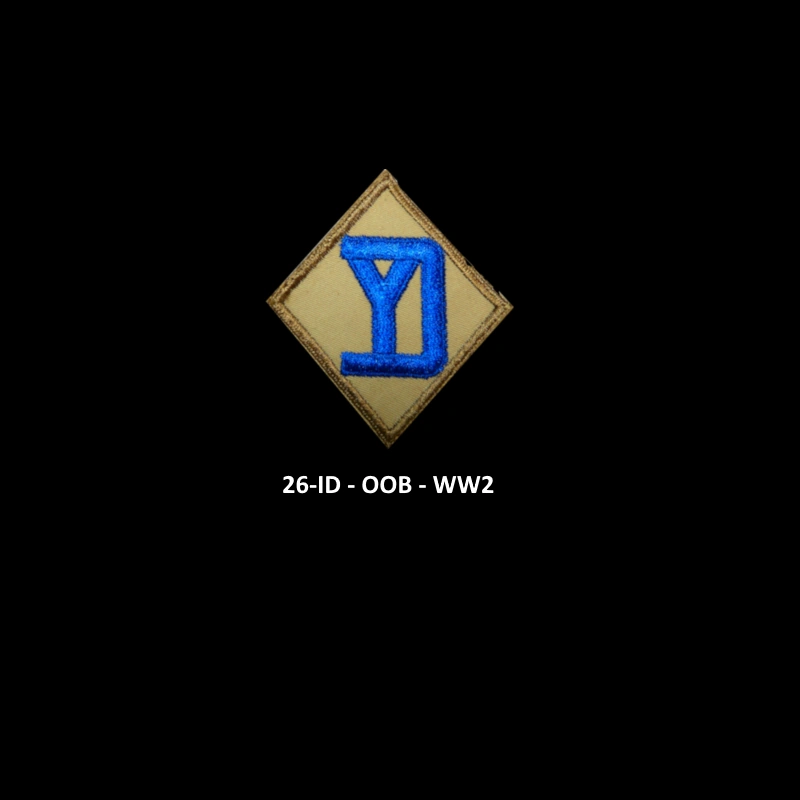
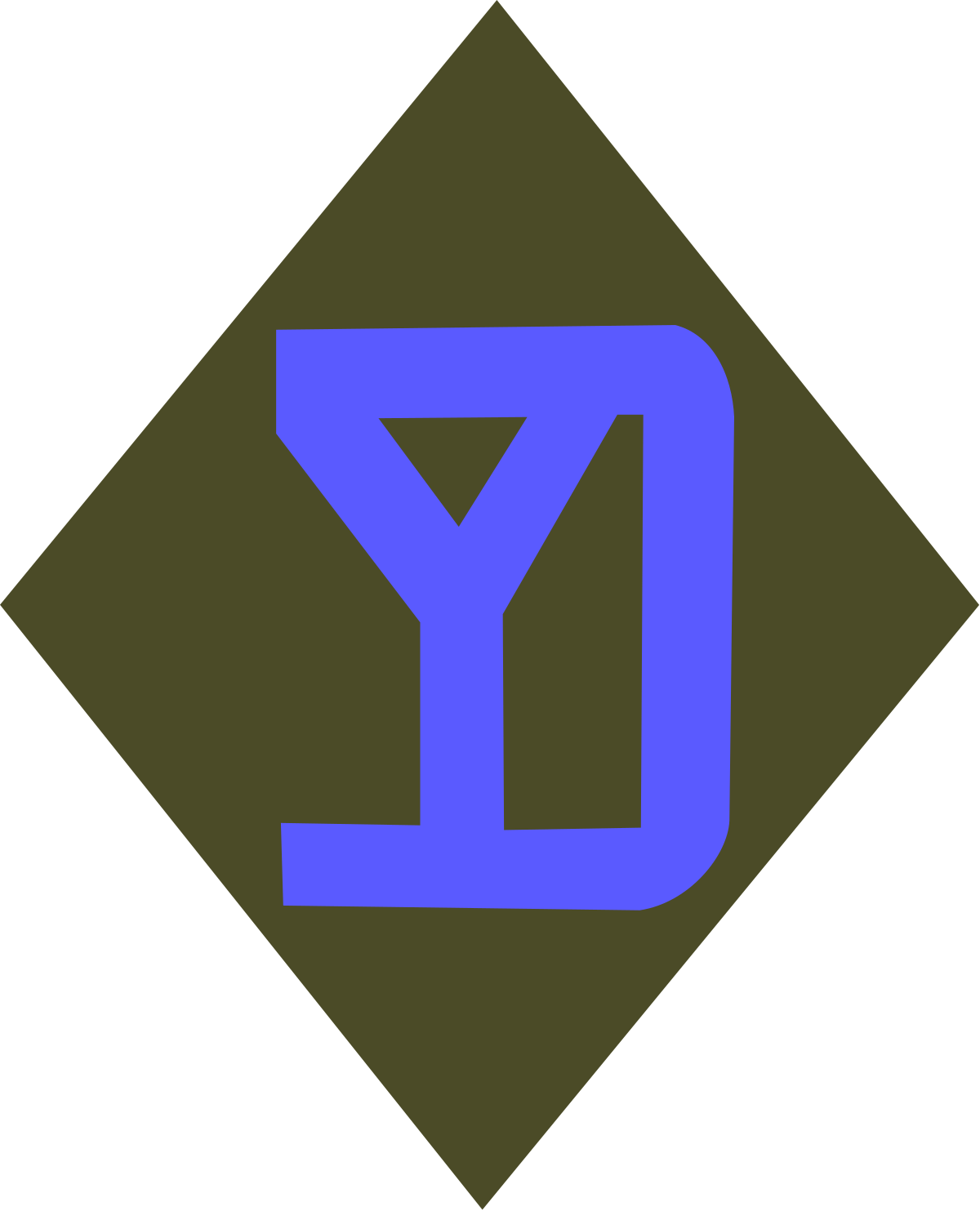
During World War One, a press conference of Boston newspapermen was called by the Commanding General to determine a nickname for this division, which had just been inducted from New England National Guard units. The adopted suggestion was, ‘Call it the Yankee Division’ and à dark blue monogrammed ‘YD’ on an olive drab background was officially designated as the division insignia.
| COMMAND & STAFF |
| POSITION | DATE | NAME |
| Comdg Gen | 7 Sep 1944 | Maj Gen Willard S Paul |
| Asst Div Comdr | 7 Sep 1944 | Brig Gen Harlan N Hartness |
| Arty Comdr | 7 Sep 1944 | Brig Gen Morrill Ross |
| CofS | 7 Sep 1944 | Col Bernice M McFadyen |
| ACofS G-1 | 7 Sep 1944 | Maj George A Sullivan Jr |
| ACofS G-2 | 1 Dec 1944 | Lt Col George A Sullivan Jr |
| ACofS G-3 | 7 Sep 1944 | Lt Col John Cotter |
| ACofS G-4 | 7 Sep 1944 | Lt Col John L Pauley Jr |
| ACofS G-5 | 7 Sep 1944 | Lt Col Walter H Lippincott |
| Adj Gen | 12 Oct 1944 | Maj Edward I Condren |
| CO 101st Inf | 1 Mar 1945 | Lt Col Edward I Condren |
| CO 104th Inf | 7 Sep 1944 | Lt Col Cecil A Hileman |
| CO 328th Inf | 7 Sep 1944 | Col Walter T Scott |
| CO 329th Inf | 10 Nov 1944 | Col Dwight T Colley |
| CO 330th Inf | 7 Sep 1944 | Col Ralph A Palladino |
| CO 327th Inf | 26 Dec 1944 | Col Ben R Jacobs |
| CO 401st Inf | 15 Mar 1945 | Lt Col Paul Hamilton |
| CO Div Arty | 1945 | Col Aloysius E O’Flaherty Jr |
| STATISTICS |
1 – CHRONOLOGY
Inducted – 16 Jan 1941
Arrived ETO – 7 Sep 1944
Arrived Continent (D+105) – 19 Sep 1944
Entered Combat – 12 Oct 1944
Days in Combat – 199
2 – CASUALTIES (TENTATIVE)
Killed in Action – 1,678
Wounded in Action – 7,379
Missing in Action – 740
Captured – 159
Battle Casualties – 9,956
Non-Battle Casualties – 6,895
Total Casualties – 16,851
Percent of T/O Strength – 119.6%
3 – CAMPAIGNS
Northern France
Ardennes
Rhineland
Central Europe
4 – INDIVIDUAL AWARDS
Distinguished Service Cross – 38
Legion of Merit – 7
Silver Star – 927
Soldier’s Medal – 42
Bronze Star – 5,331
Air Medal – 98
ORGANIC COMPISITION
101st Infantry Regiment
104th Infantry Regiment
328th Infantry Regiment
26th Reconnaissance Troop (Mecz)
101st Engineer Combat Battalion
114th Medical Battalion
26th Division Artillery
110st Field Artillery Battalion (105-MM Howitzer)
102nd Field Artillery Battalion (105-MM Howitzer)
263rd Field Artillery Battalion (105-MM Howitzer)
180th Field Artillery Battalion (155-MML Howitzer)
Special Troops
726th Ordnance Light Maintenance Company
26th Quartermaster Company
39th Signal Company
Military Police Platoon
Headquarters Company
Band
| ATTACHMENTS |
|
Antiaircraft Artillery 390th AAA AW Bn (SP) ……………. 14 Oct 44 – 25 May 45
Armored Cavalry Chemical Engineer Infantry Tank Destroyer |
| DETACHMENTS (ATTACHED TO) | ||
| Cavalry | ||
| 26th Rcn Tr | 2d Cav Gp | 7 Oct 44 – 12 Oct 44 |
| Infantry | ||
| 328th Inf | 80th Div | 2 Oct 44 – 15 Oct 44 |
| 1st Bn, 328th Inf | 4th Armd Div | 6 Dec 44 – 8 Dec 44 |
| 3d Bn, 101st Inf | 94th Div | 23 Feb 45 – 24 Feb 45 |
| 2d Bn, 101st Inf | 5th Div | 23 Mar 45 – 24 Mar 45 |
| 104th Inf | 4th Armd Div | 24 Mar 45 – 26 Mar 45 |
| 328th Inf | 4th Armd Div | 26 Mar 45 – 28 Mar 45 |
| 328th CT | 11th Armd Div | 3 May 45 – 6 May 45 |
| ASSIGNMENT AND ATTACHMENT TO HIGHER UNITS |
|||||
| DATE | CORPS | ARMY (ASGD) | ARMY (ATCHD) | ARMY GROUP (ASGD) | ARMY GROUP (ATCHD) |
| 24 Aug 44 | Ninth | ETOUSA | |||
| 28 Aug 44 | Ninth | 12th | |||
| 5 Sep 44 | III | Ninth | 12th | ||
| 28 Sep 44 | — | Third | 12th | ||
| 1 Oct 44 | XII | Third | 12th | ||
| 12 Dec 44 | III | Third | 12th | ||
| 28 Jan 45 | XX | Third | 12th | ||
| 23 Mar 45 | XII | Third | 12th | ||
| COMMAND POSTS | |||
| DATE | TOWN | REGION | COUNTRY |
| 7 Sep 1944 | Valognes (Staging Area) | Manche | France |
| 30 Sep 1944 | Amfreville-l’Estre | Manche | France |
| 4 Oct 1944 | Fontainebleau | Seine-et-Marne | France |
| 6 Oct 1944 | Hoéville | Meurthe-et-Moselle | France |
| 8 Nov 1944 | Arracourt | Meurthe-et-Moselle | France |
| 10 Nov 1944 | Vic-sur-Seille | Moselle | France |
| 13 Nov 1944 | Hampont | Moselle | France |
| 19 Nov 1944 | Puiss | Moselle | France |
| 21 Nov 1944 | Bessingen | Moselle | France |
| 27 Nov 1944 | Albestroff | Moselle | France |
| 2 Dec 1944 | Altweiler | Moselle | France |
| 5 Dec 1944 | Saarunion | Bas-Rhin | France |
| 8 Dec 1944 | Ormingem | Bas-Rhin | France |
| 10 Dec 1944 | Achen | Bas-Rhin | France |
| 13 Dec 1944 | Metz | Moselle | France |
| 19 Dec 1944 | Eischen | Luxembourg | |
| 22 Dec 1944 | Redange | Luxembourg | |
| 25 Dec 1944 | Grosbous | Luxembourg | |
| 30 Dec 1944 | Doncols | Luxembourg | |
| 8 Jan 1945 | Eschdorf | Luxembourg | |
| 20 Jan 1945 | Bavigne | Luxembourg | |
| 22 Jan 1945 | Doncols | Luxembourg | |
| 24 Jan 1945 | Boevange | Luxembourg | |
| 28 Jan 1945 | Boulay-Moselle | Moselle | France |
| 7 Mar 1945 | Saarburg | Rhineland | Germany |
| 11 Apr 1945 | Schleusingen | Thuringia | Germany |
| 6 May 1945 | Aigen | Bavaria | Germany |
The 26th Infantry Division (“Yankee Division”) in the European Theater of Operations, 1944–1945
The 26th Infantry Division, widely known as the “Yankee Division,” was among the National Guard formations mobilized for overseas service during the Second World War. Composed largely of men from New England—principally Massachusetts, Connecticut, Rhode Island, and New Hampshire—the division carried with it a long lineage dating back to the First World War, when it had first earned its distinctive identity. In 1944, after years of preparation in the United States, it was finally committed to combat operations in the European Theater. Following its induction into federal service on 16 January 1941, the division underwent an extended period of training within the continental United States. This phase, essential to transforming a National Guard formation into a modern combat division, included unit cohesion exercises, combined arms coordination, and increasingly complex field maneuvers. By mid-1944, the division was deemed ready for overseas deployment.
The division arrived in the European Theater of Operations on 7 September 1944, landing in France several months after the Allied invasion of Normandy. At that stage of the war, Allied forces were advancing rapidly across France following the breakout from the Normandy beachhead. The 26th Infantry Division entered the continent on 19 September 1944 and was soon committed to operations under the Third United States Army, commanded by George S. Patton Jr. Its initial deployment brought the division into the Lorraine region, where the tempo of operations slowed considerably. The rapid pursuit across France gave way to difficult, methodical combat against well-prepared German defensive positions. The terrain—characterized by rolling hills, dense forests, and fortified villages—favored the defender. The division entered combat on 12 October 1944, marking the beginning of what would become 199 days of continuous engagement.
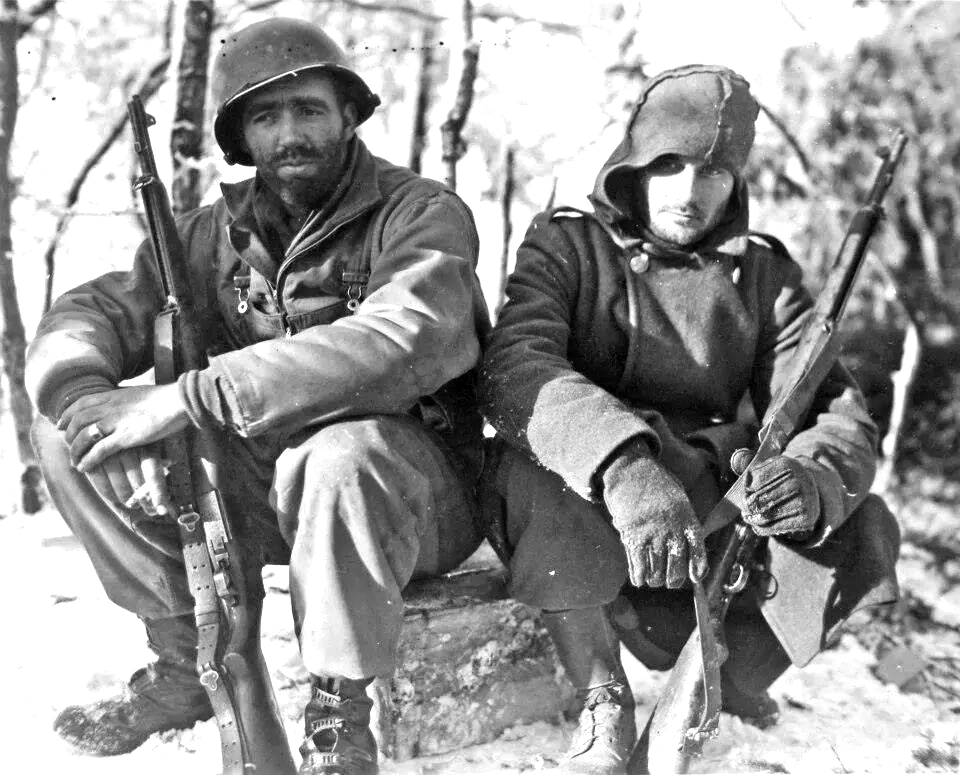
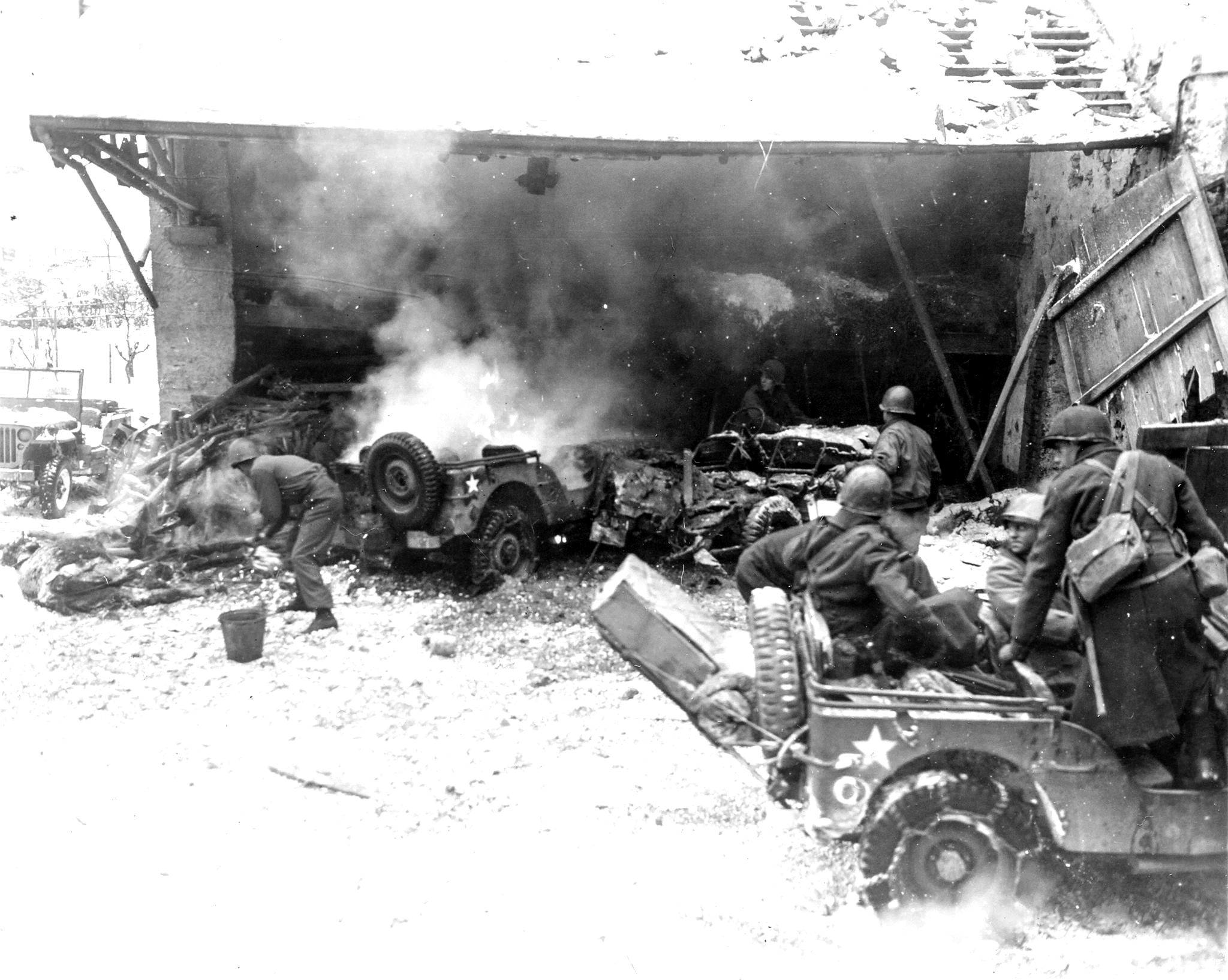
The early operations of the division were centered on the struggle for control of the approaches to the Saar region, a key industrial area of Germany. Fighting in places such as Château-Salins, Moncourt, and the surrounding sectors proved costly. German resistance was determined, and the division had to adapt quickly to conditions far removed from the rapid advances seen earlier in the campaign. Artillery support, coordination with armored units, and aggressive infantry tactics became essential to overcoming entrenched opposition. By November 1944, the division was engaged in sustained offensive operations designed to penetrate the German defensive belt west of the Saar. Progress was slow and casualties mounted. The division’s regiments—the 101st, 104th, and 328th Infantry—were committed in successive attacks against fortified positions, often under adverse weather conditions. Mud, cold, and limited visibility compounded the difficulty of operations.
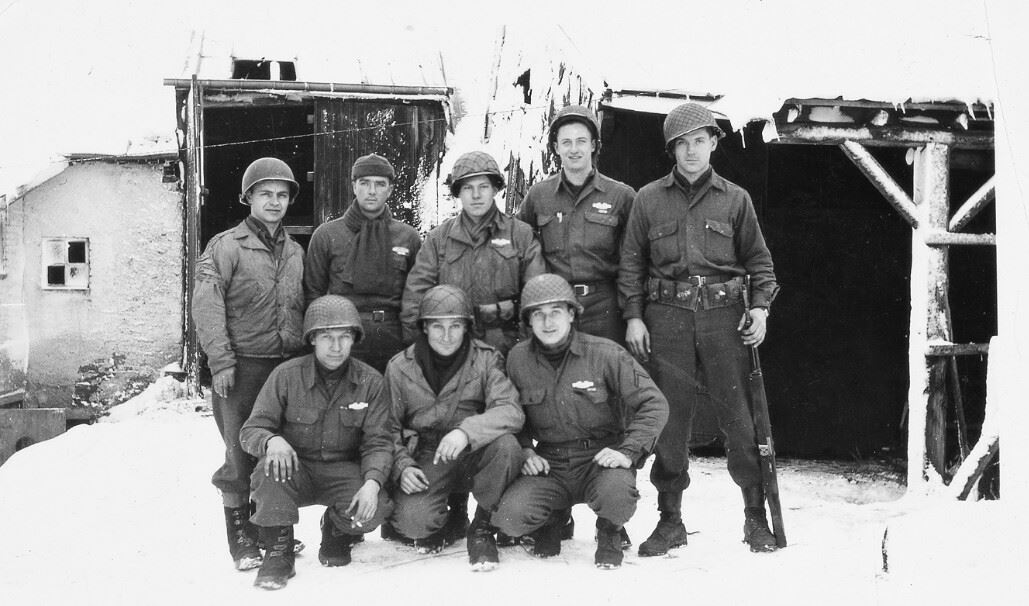
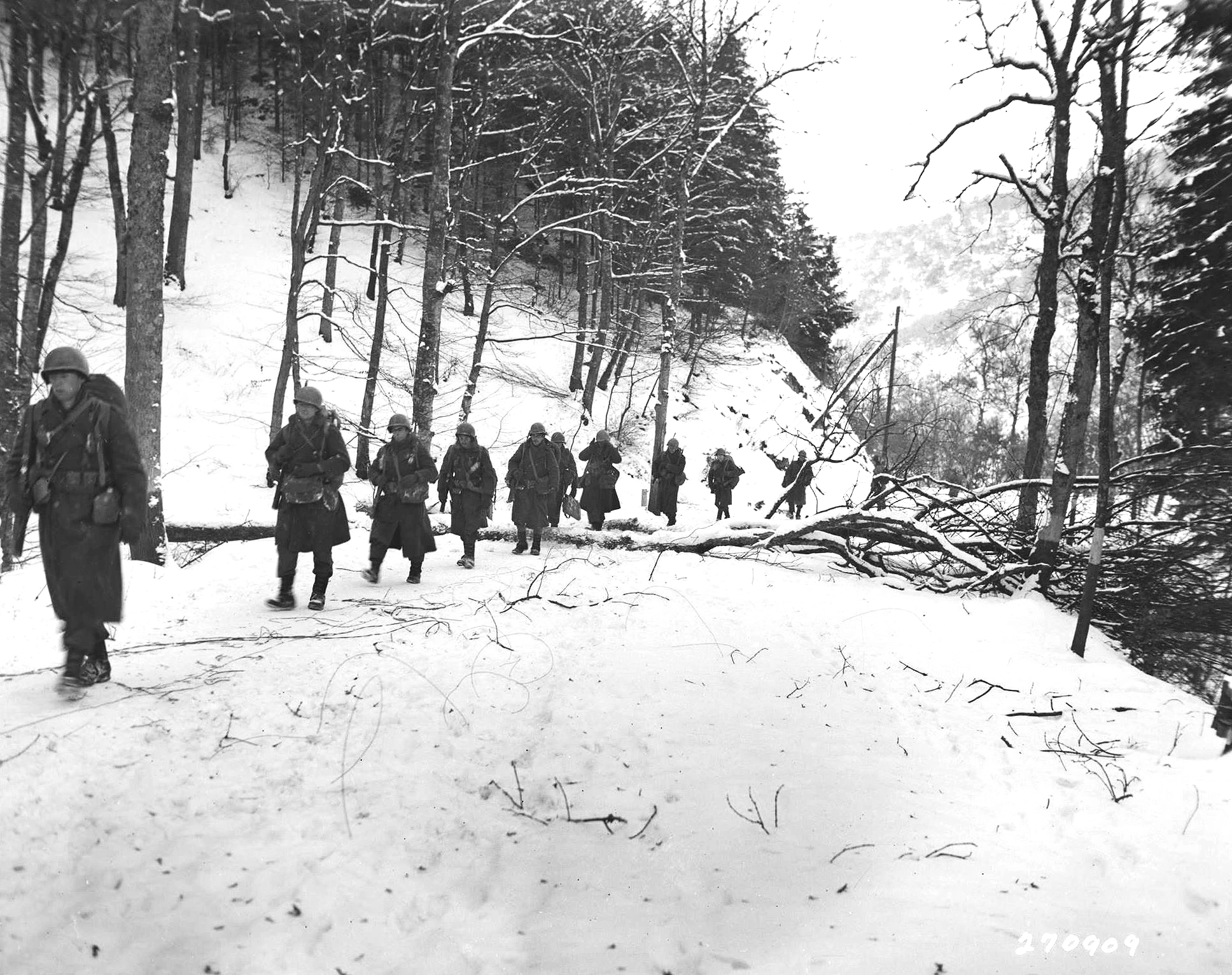
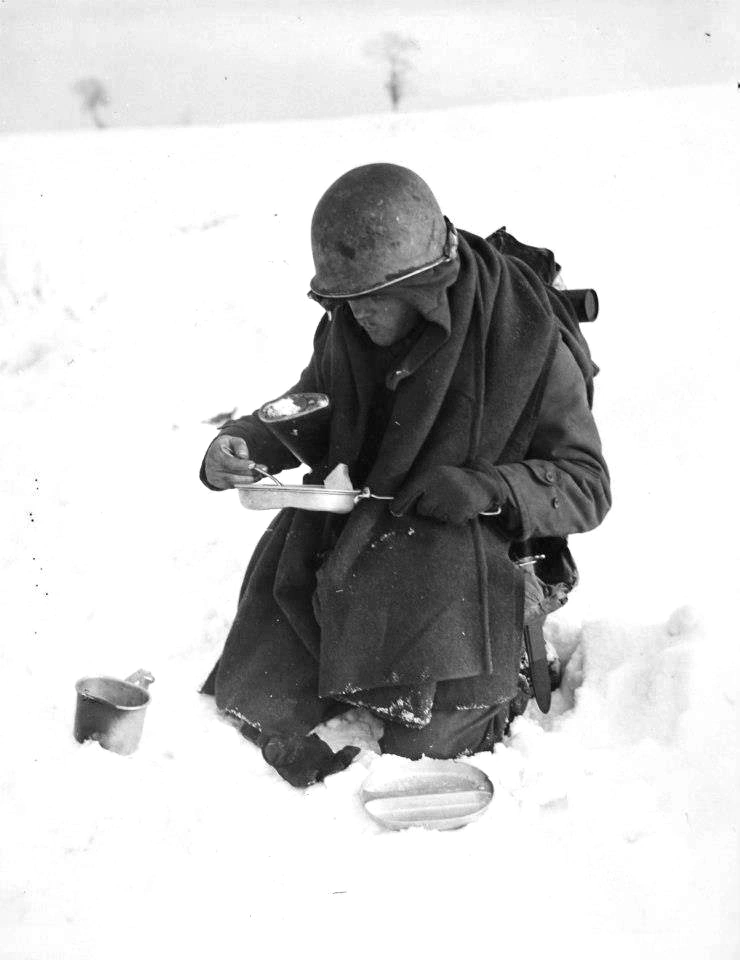
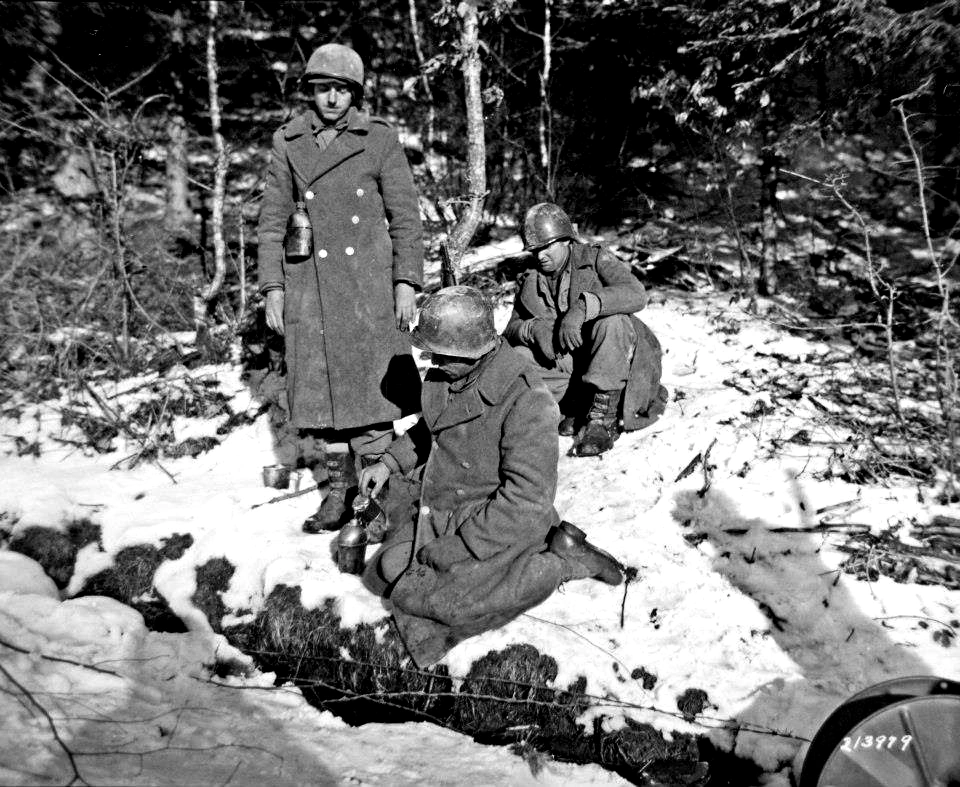
In December 1944, the strategic situation changed dramatically with the launch of the German Ardennes offensive, known as the Battle of the Bulge. The 26th Infantry Division was rapidly redeployed northward to help contain the German breakthrough. Moving into Luxembourg, the division occupied defensive positions in the path of advancing German forces. The fighting in Luxembourg was intense and often chaotic. The division was required to hold key terrain, delay enemy advances, and participate in counterattacks under severe winter conditions. Temperatures were low, supply lines were strained, and the operational picture remained fluid. Despite these challenges, the division contributed significantly to halting the German offensive and stabilizing the front. Once the immediate crisis of the Ardennes had passed, Allied forces resumed offensive operations. In early 1945, the division returned to the Saar region and participated in renewed efforts to breach German defenses. The capture of Saarburg and subsequent advances into the Rhineland marked a turning point. German resistance, while still formidable, was increasingly disorganized.
During March 1945, the division crossed into Germany proper and continued its advance eastward. Operations became more fluid as German forces retreated or collapsed in place. The division participated in the broader Allied advance into central Germany, contributing to the encirclement and destruction of remaining German formations. By April 1945, the division had moved deep into German territory, operating in regions such as Thuringia and Bavaria. The character of combat changed once more, with increasing numbers of German troops surrendering and organized resistance diminishing. Nonetheless, isolated pockets of resistance remained, and the division continued to engage enemy forces until the final days of the war in Europe.
The war effectively ended for the division in early May 1945, when German forces capitulated across the European Theater. By that time, the 26th Infantry Division had advanced from the fields of eastern France through Luxembourg and into the heart of Germany, participating in four major campaigns: Northern France, Ardennes, Rhineland, and Central Europe. The cost of these operations was significant. The division suffered nearly 17,000 casualties, including over 1,600 killed in action. These figures reflect the intensity and duration of its combat service. At various points, cumulative casualties exceeded the division’s authorized strength, requiring a continuous influx of replacements. In addition to its operational achievements, the division earned numerous individual decorations. These included Distinguished Service Crosses, Silver Stars, and thousands of Bronze Stars, reflecting acts of gallantry and sustained performance under fire. Such distinctions underscore the level of commitment displayed by officers and enlisted men alike.
The experience of the 26th Infantry Division in the European Theater illustrates the broader transformation of the United States Army during the war. From its origins as a National Guard formation, the division evolved into a seasoned combat unit capable of sustained offensive and defensive operations under a wide range of conditions. Its campaign—from arrival in France in September 1944 to final operations in Germany in May 1945—represents a continuous engagement against a determined enemy. The division’s role in the Lorraine fighting, the Ardennes defense, and the final advance into Germany places it firmly within the narrative of the Allied victory in Europe. In retrospect, the operational history of the “Yankee Division” reflects not only tactical and strategic developments but also the endurance and adaptability of its personnel. Their experience, marked by prolonged combat and significant sacrifice, remains an essential component of the historical record of the Second World War in Europe.