

The strategic purposes of the operations were stated by the Combined Chiefs of Staff to be as follows:
– (1) Establishment of firm and mutually supported lodgements in the Oran-Algiers-Tunis area on the north coast, and in the Casablanca area on the Northwest Coast, in order that appropriate bases for continued and intensified air, ground and sea operations might be readily available.
– (2) Vigorous and rapid exploitation from lodgements obtained in order to acquire complete control of the entire area, including French Morocco, Algeria and Tunisia, to facilitate effective air and ground operations against the enemy, and to create favorable conditions for extension of offensive operations to the east through Libya against the rear of Axis Forces in the Western Desert.
– (3) Complete annihilation of Axis Forces opposing the British Forces in the Western Desert and intensification of air and sea operations against the Axis on the European Continent.
The ‘concept of United States participation’ issued by the Joint United States Chiefs of Staff called for the following military and naval forces:
– (1) A Joint Expeditionary Force to seize and occupy the Atlantic Coast of French Morocco.
– (2) United States Forces required in conjunction with British Forces to seize and occupy the Mediterranean Coast of French North Africa.
– (3) Additional Army Forces as required to complete the occupation of Northwest Africa.
– (4) Naval local defense forces and sea frontier forces for the Atlantic Coast of French Morocco and naval personnel for naval base maintenance and harbor control at Oran.
– (5) The United States to be responsible for logistic support and requirements of all United States Forces.
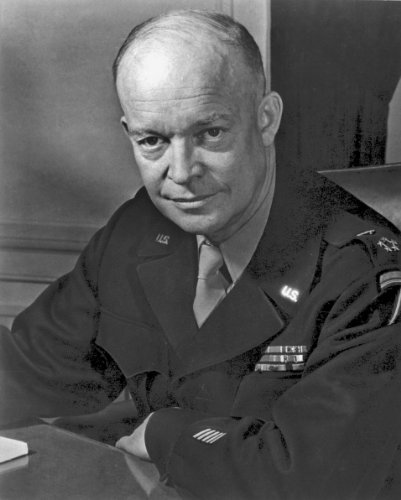 The directive of the Joint United States Chiefs of Staff further provided that the United States should furnish the Commander in Chief, Allied Forces. This command was given to Gen Dwight D. Eisenhower, then our Commanding General, European Theater of Operations. Gen Eisenhower had already established his headquarters in London. He was supplied with a combined United States-British Staff. Later, Gen Mark W. Clark was appointed Deputy Commander in Chief. VAdm Bertram H. Ramsay (RN) was selected initially to be Gen Eisenhower’s principal naval subordinate but was replaced in mid-October by Adm Sir Andrew Browne Cunningham (RN), who assumed the title Naval Commander Expeditionary Force. The United States Navy was represented at Allied Force Headquarters by RAdm Bernhard H. Bieri (USN), Deputy Chief of Staff, United States Atlantic Fleet.
The extension of the original British plan to include action on the en tire Barbary Coast had wider implications than were involved in the operation’s diversionary effect on the Russian Front. Allied strategy called for the formation and the gradual tightening of a ring around the Axis Powers. The Northern Coast of the Mediterranean was an important segment of that ring, and the occupation of French North Africa an essential prelude to the opening of a second front on the European Continent. At the same time, countermeasures by the Axis would be forestalled.
That Germany might attempt to send forces across the Straits of Gibraltar was a possibility that could not be ignored. The threat to the South Atlantic area, which would result from an Axis penetration into French Equatorial Africa, made it imperative that access to that region be denied to our enemies at once. In this respect, the attitude of Spain had to be taken into account.
Although not a belligerent, Spain was watching Allied strategy in North Africa with lively interest. Rumors that Gen Franco might attempt an occupation of French Morocco in the event that Allied Forces occupied Dakar had been current for some time. That Spain would not be averse to enlarging her Moroccan Colony was well known, but her ability to do so without Axis cooperation was questionable. The possibility of a Hispano-Axis bargain was, however, serious enough to render it imperative that sufficient forces be stationed on the French-Spanish Moroccan Border to forestall any Spanish move.
As can be seen, the contemplated operations had to be on a very large scale. We were undertaking possibly the most ambitious combined operation in the annals of warfare. Careful preparation and, above all, absolute secrecy were essential if the operations were to be successful at a cost that would not be appalling.
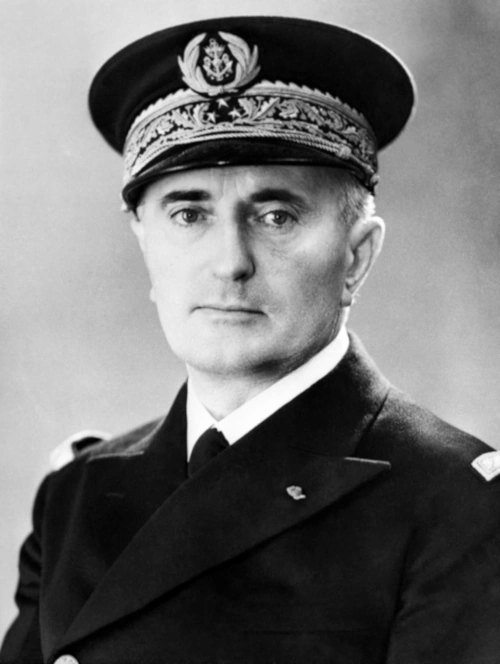 The question of how much resistance the French North African Colonies would offer was difficult to gauge. The situation prevailing in the French Navy was a peculiar one. French naval officers have for generations been chosen largely from certain families, most of whom are Bretons and avowedly royalist. The traditions of the ‘Grand Corps’ are still very much alive. As a result, French naval officers are inclined to think more in terms of the service than of the nation. The enlisted men, who like their superiors are mostly Bretons, have long been accustomed to following the lead of their officers. Their ambition is to achieve a rating and retire with a pension. In order to do so, an unblemished record for discipline and subordination is necessary. Adm François Darlan was especially popular among the enlisted men because of his efforts on their behalf at the time of the armistice.
That the rank and file of the French Navy would resent any interference in French affairs, no matter how well intentioned, was a foregone conclusion among all competent observers. The traditional antipathy to the British, the ‘hereditary enemy’, had been revived by the attack on Dakar and Mers-el-Kebir in 1940. British designs on Bizerte were suspected. The fact that Great Britain was now joined by the United States made little difference. It was generally accepted that Anglo-Saxon sea power was opposed to the French Colonial System. The determined resistance the French Naval Units offered at Casablanca and on the Algerian Coast was in marked contrast to the pro forma resistance offered by the land forces.
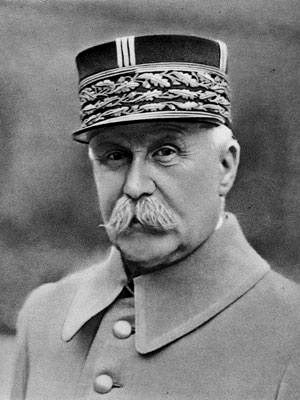 The situation in the French Army was slightly different in that it reflected the views of the average Frenchman. Maréchal Henri Pétain was personally popular, and his relations with the Reich were condoned on the grounds that no other course was open to him. The senior officers were, as a rule, loyal to the Maréchal, anxious to make an honorable show of resistance, and inclined to be anti-foreign. The junior officers and enlisted men, however, were inclined to look favorably on the United States. For this reason, it was deemed advisable throughout the entire French African Campaign to stress the American complexion of the expedition. The government officials as a class were resentful of all interference and concerned about their salaries and pensions. The civil population was neutral and mainly interested in bettering its economic condition. The natives, including the indigenous troops, were apathetic.
Generally speaking, it may be said that in North Africa, France was a ‘house divided’, in which respect it reflected the political situation in European France.
The occupation of French North Africa was accomplished by means of simultaneous assaults on Casablanca, Oran, and Algiers. Gen Eisenhower exercised command over all elements of the three attacking forces, with the exception of the permanent British Naval Units in the Mediterranean. These remained under the control of the British Admiralty.
Geographically, the three operations fall into two regions based on the seas to which they are related. From a military point of view, those in the Mediterranean were primarily British and designed to supplement somewhat the British land operations proceeding from Egypt. On the other hand, the attack from the Atlantic to a certain extent owed its inception to the strategic needs of hemispheric defense. For purposes of clarity, the Moroccan and Algerian expeditions will therefore be considered separately.
The Moroccan Expedition
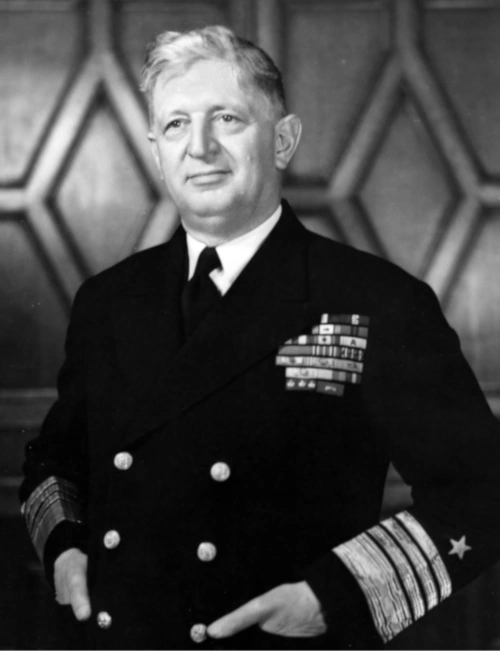 In the Moroccan Expedition the naval component was known as the Western Naval Task Force and was under the command of RAdm Henry K. Hewitt (USN). The Army component was known as the Western Task Force and was under the command of Gen George S. Patton. The mission assigned to the Naval Task Force was: ‘To establish the Western Army Task Force on beachheads near Mehdia, Fedala and Safi, and support the subsequent coastal military operations in order to capture Casablanca as a base for further military and naval operations’. The principal objective of the expedition was therefore the harbor of Casablanca, a modern seaport on the Atlantic protected by an adequate breakwater and possessing docks and other facilities. To accomplish the task, it was considered advisable to occupy simultaneously three other harbors. The most important of these was Fedala, situated 14 miles northwest of Casablanca. Secondary landing places which were deemed necessary for the success of the operations were Mehdia, 65 miles north of Casablanca, and Safi, 125 miles south of Casablanca. The object of the landings at Fedala and Safi was to facilitate the capture of Casablanca from the land side. Mehdia was occupied because of the adjoining airfield at Port Lyautey. Although capable of being expressed in a few lines, the mission assigned to the Western Naval Task Force presented serious difficulties.
Characteristics of the coast
The coast of Morocco is generally rocky with occasional long shelving beaches which require transport to lie a considerable distance from the shore. Rocky outcrops add to the difficulties of making safe landings. The number of possible landing places is relatively limited. Fully navigable rivers are nonexistent. Such harbors as exist are artificial. Intelligence reports, however, indicated that several practicable beaches were located in the vicinity of the ports to be occupied.
The beaches are subject to heavy ground swells, high surf, and a considerable tidal rise and fall, which render debarkation operations extremely difficult. A swell of 16 feet, which in breaking doubles in height, is not uncommon. Very high surf and swell are frequently observed in spite of fair local weather. Low pressure over the Azores moving toward Southern Spain will cause a heavy surf off Morocco in about one day. A depression passing south of Iceland, on the other hand, will not be felt until 2 or 3 days later. The worst swell and surf, however, result from a depression in the area between Bermuda and Newfoundland. After a lag of about 36 hours, surf, accompanied by gale winds, may be expected along the Moroccan Coast. The chances of these disturbances naturally increase with the approach of winter weather. In view of the late date chosen for the North African expedition, the meteorological factor was of the utmost importance.
In fact, immediately after the debarkations, a surf developed which, had it occurred a day or two sooner, would have immeasurably increased the hazards of the landings. Predictions require the continuous study of meteorological conditions over the entire Atlantic. The efficiency of the meteorological service of the Navy contributed in no small degree to the success of the undertaking. In order that no source of information be neglected, five beacon submarines were dispatched to the Moroccan Coast two days ahead of the main body. Among their duties was the prompt reporting of meteorological conditions.
Fixed Defenses
Although the French fortification plan was far from completed, the coastal area was protected by numerous fixed defenses. These consisted of (a) naval coast defense batteries, (b) emplaced army field artillery, (e) army or naval antiaircraft batteries, and (d) machine guns, usually mounted in pillboxes. The exact location and nature of all these batteries were not known in advance. The intelligence reports, however, proved remarkably accurate. Such slight inaccuracies as were discovered will be mentioned in dealing with the operations. The defenses reported were as follows:
Mehdia – This town, situated at the mouth of the Sebou River on the southern bank, had been fortified with two batteries. One, known as the Batterie Ponsot, consisted of two 138.6 MM guns and was located halfway between the Kasba (walled native quarter) and the lighthouse. It commanded all sea approaches to the Sebou River. Estimated range: 18.000 meters. Another battery, known as the Batterie des Passes, consisted of two 75 MM guns and was located on the river’s edge below the Kasba.
Fedala – This village, mainly a pleasure resort, 12 miles northeast of Casablanca, had been fortified with four batteries. The Batterie Port Blondin was located at Chergui about 3 miles northeast of the harbor of Fedala. It consisted of four 138.6 MM guns. Estimated range: 18.000 meters; (b) the Batterie du Port, located just southwest of where Cape Fedala starts to jut out, consisted of two 100 MM guns with an estimated range of 14.000 meters. It dominated the small harbor of Fedala; (c) the Batterie des Passes, consisting of two 75 MM guns, was located on the tip of Cape Fedala; (d) an army antiaircraft battery of four 75 MM guns was located just south of the village alongside the railroad tracks.
Casablanca Area – At Table d’Aukasha, a headland about 5 miles northeast of Casablanca, a battery of four guns had been mounted. These were reported to be either 164.7 MM or 138.6 MM guns. Three miles south west of Casablanca, the El Hank promontory juts out into the Atlantic. Here, two batteries had been mounted. Battery No. 1 consisted of four 194 MM guns aligned northeast and southwest to the west of Point El Hank lighthouse. Battery No. 2 consisted of four 138.6 MM guns spread in a line between Battery No. 1 and the tip of the point. These two batteries were formidable. The former was said to have a range of at least 23.500 meters, the latter a range of about 18.000 meters. The guns were mounted on central pivots and could be trained both east and west. The fire control and magazines were modern.
Casablanca Harbor – The harbor of Casablanca is formed by two jetties located at right angles to each other, the Jetée Delure and the Jetée Transversale. The former extends along the ocean in a northeasterly direction for a distance of 2.600 meters. The entrance to the inner harbor is close to the 1500 meter point on the Jetée Delure, opposite the end of the Jetée Transversale. The area thus enclosed is approximately bisected by a spacious wharf, the Mole du Commerce. The outer harbor is formed by the coast, the Jetée Transversale and the portion of the Jetée Delure projecting beyond the entrance to the inner harbor. Two rocky outcroppings located near the coast, about 1300 meters from the Jetée Transversale, are within the red sector of the Roches Noires lighthouse.
The harbor area had been fortified with air raid protection, mainly in view. On the Jetée Delure, at the 1000 meter point, a battery of four 40 MM AA guns had been installed. Further along, at the 1700 and 2100 meter points, blockhouses had been constructed. They were believed to contain 37 MM and 13.2 MM machine guns. On the spur extending toward the Jetée Transversale, four 13.2 MM AA machine guns had been mounted. At the angle formed by the Jetée Transversale and the shore, two batteries had been mounted, each equipped with a search light. The westerly battery was believed to contain four 75 MM guns, the easterly battery four 13.2 MM AA guns. At the end of the Jetée Transversale, a battery of two 75 MM guns and one 13.2 MM AA gun had been mounted. On the roof of the adjoining Phosphate Building, another battery of four 13.2 MM AA guns in towers had been erected.
The uncompleted battleship Jean Bart, moored at the southeastern end of the Mole du Commerce heading northwest, may be considered as part of the fixed defenses of Casablanca. Her normal armament consisted of eight 15-inch guns in two turrets (range 35.000 yards), of which only four had been installed, fifteen 6-inch guns, of which only five had been installed, twelve 37 MM guns, and twenty-four 13.2 MM AA machine guns.
Safi – The harbor of Safi had been fortified by two Navy coast defense batteries, the Batterie Railleuse and the Batterie des Passes. The Batterie Railleuse was located on the Pointe de la Tour, a promontory jutting out into the Atlantic 2.75 miles northwest of Safi. Here, the French had placed four 130 MM guns on circular concrete emplacements. Estimated range: 19.000 yards; estimated rate of fire: 8 rounds per gun per minute. The fire of this battery was controlled by a fire control station equipped with a modern range finder. Four .50 cal AA machine guns had also been mounted. The Batterie des Passes consisted of two 75 MM guns and was situated about 2000 yards north of the city. About 2 miles south of Safi, an army battery had been emplaced. It consisted of three 155 MM guns. Its exact location was not determined until operations began. Other fixed defenses need not be considered, as they played no appreciable part in the operations.
Mobile Defenses
The fixed defenses of the Moroccan Coast were supplemented by mobile defenses drawn from the French Army. Normally, the number of units maintained in Morocco was 13 infantry regiments, 8 cavalry regiments, and 4 artillery regiments plus 3 batteries. The exact composition of the French land forces need not detain us. Suffice to say, these forces were variegated, colorful, and picturesque, and could undoubtedly have put up a stiff resistance had they so desired. The only ones to do so were the professional soldiers of the Foreign Legion.
The artillery consisted of two regiments of African Artillery, two regiments of Colonial Artillery, and three batteries of the Foreign Legion. Most of the field pieces were 75’s, but some were 65’s. In addition, there was one regiment of anti-aircraft artillery. These mobile units caused considerable trouble by compelling our transports to keep well out of range and by contesting the advance of the landing parties. They frequently bolstered the fixed defenses by taking positions in emplacements usually prepared in advance. Owing to their mobility, some were motorized and others were horse-drawn. Their location could not be determined beforehand.
The French Air Forces in Morocco were too inconsiderable to be able to affect operations. The total number of planes, both Army and Navy, in the area was estimated at 168. During the landing operations at Fedala and Mehdia, some Italian planes were identified among those strafing the beaches. In addition to the air base at Port Lyautey, numerous airfields were scattered throughout Morocco, weakly defended by antiaircraft units.
The French Naval Forces
Intelligence reports credited the French with the following vessels based on Casablanca.
– Battleship – Jean Bart.
– Light Cruisers – Gloire and Primauguet.
– Flotilla Leaders – Albatros, Le Malin, Milan.
– Destroyers – Alcyon, Brestois, Fougueux, Frondeur, Simoun, Tempête.
– Submarines – Actéon, Archimède, Aurore, Cérès, Conquérant, Iris, Méduse, Orphée, Pallas, Psyché, Tonnant, Vénus.
– Sloop – Boudeuse.
This list, except for some unimportant errors in names, proved substantially correct. These vessels, with the exception of the Jean Bart, were in full commission and fully manned. Well-trained, well-equipped, thoroughly disciplined, and the leadership is energetic and able, is how one report summed up the situation.
Organisation of the US Amphibious Force
The organization of the Amphibious Force commanded by RAdm Hewitt, designated Task Force HOW, varied at different times as the operations progressed. Roughly speaking, the Task Force went through three states: (1) departure, (2) passage, (3) attack, the details of which will be found in Appendix I. The basic idea was the formation of a Covering Group to contain the French Fleet at Casablanca and, if necessary, the French Units at Dakar, while three Attack Groups effected landings at Mehdia, Fedala, and Safi.
The expeditionary force that participated in these operations was built around two Army divisions, the Sixth and the Ninth. Both were reinforced by special detachments. This force was commanded by Gen George S. Patton, upon whom command devolved as soon as satisfactory beachheads were established.
Care had been taken to make this force as letter-perfect in amphibious operations as circumstances permitted. The doctrine adopted by the US Army was the result of tests conducted for a period of 3 years prior to the North African Campaign. The unit chosen for these maneuvers was the 1st Infantry Division (US). During the winter of 1939-40, this division began its experimental work at Culebra Island, off Puerto Rico, and continued it in northern waters, gradually evolving principles which form the ‘basic training’ of the Army.
Briefly stated, the basic training, besides thorough physical conditioning, involved instructions in such details as the proper method of loading, stowing, and unloading equipment, the protection of critical items such as gas masks, rifles, and ammunition while wading through surf, and the manner in which safe landings from boats to shore can be made. All Army contingents forming part of the Task Force had received this training prior to reporting to the transports. Whenever possible, as in the case of the 3rd Infantry Division (US), which had been trained on the West Coast, this training was conducted on actual beaches. When this was not possible, a simulated landing was made. Automobiles riding over artificially undulating ground took the place of small boats. Beaches marked off were then occupied, and unloading operations performed with as much realism as practicable.
Once at Hampton Roads, the units were placed on transports and sent up Chesapeake Bay to Solomon Island, where they remained on an average of 3 weeks performing actual landings. The training usually included three ‘dress rehearsals’. The system adopted was undoubtedly the best that could be devised. It was deficient, however, in one important respect. No surf comparable to that encountered on the Moroccan Coast was available. The heavy loss of landing craft, which was the cause of so much trouble and anxiety, had not been taken into consideration. No doctrine of boat salvage was perfected. The North African landings had been scheduled perilously near the season of winter storms. In fact, one broke right after our landings were completed. Our unpreparedness to meet the meteorological risk was such that our avoidance of a costly failure has been described by many officers who participated as ‘providential’.
Departure
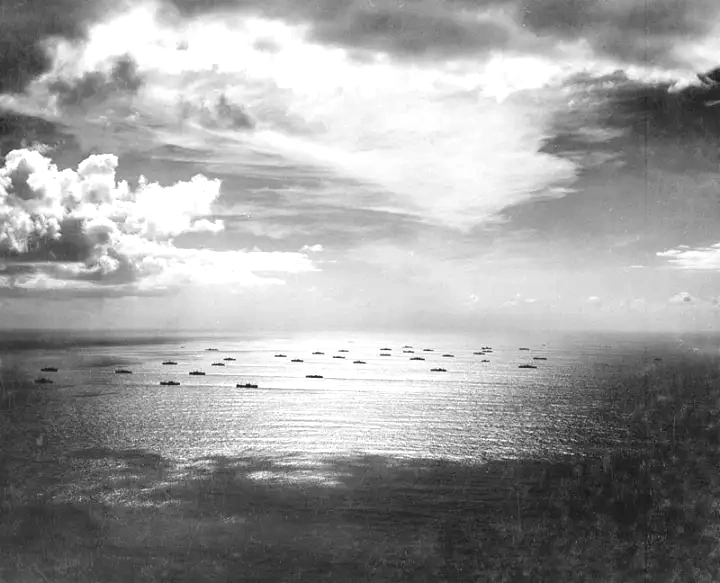
The shipping problem was a difficult one. The Army contingent to be transported amounted to 1920 officers and 35.385 men. The equipment and materials were in proportion. Space had to be provided for 250 tanks. The landing craft were bulky and numerous. On June 1, 1942, there were but 8 ships assigned to and operating with the Amphibious Force, United States Atlantic Fleet. This number was gradually increased by assignment of newly constructed vessels, by the transfer of 5 ships from the West Coast and by the conversion of 11 ships during August and September, with the result that by October 1, 26 transports and 7 cargo ships had been assembled at Hampton Roads.
By October 23, loading operations were complete, and the Task Force organization was put into effect. In order to avoid congestion, the Covering Group was dispatched to Casco Bay and the Air Group to Bermuda just before the main body sailed. The departure from the United States was set for 2 successive days. Detachment One, consisting of units assigned to the Mehdia and Safi landings, began threading its way through the swept channel at Hampton Roads about 1000 on October 23.
Detachment Two, consisting of units intended for the Fedala landings, sortied 24 hours later. The Covering Force put to sea from Casco Bay on October 24. The Air Group, however, did not leave Bermuda until October 25.
Just prior to sailing, the transport USS Harry Lee, fully combat-loaded, developed engine trouble. Her commanding officer, Capt James W. Whitfield, performed the difficult task of transferring men and materials to the USS Calvert in the remarkably short time of 48 hours. With an escort consisting of the destroyers USS Boyle, Lt Comdr Eugene S. Karpe and the USS Eberle, Lt Comdr Karl F. Poehlmann, the USS Calvert sailed from Hampton Roads on October 25, and joined the main body in mid-Atlantic on October 30.
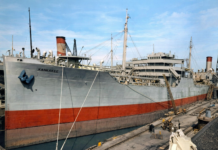
A picturesque touch was furnished by the SS Contessa. Considerable difficulty had been encountered in finding a vessel of sufficiently light draft to negotiate the shallow, 12-mile passage up the Sebou River to Port Lyautey. Unless the planes our forces intended to land at that airport were to be immobilized through lack of gasoline and bombs, some means must be found to deliver these and other aviation supplies promptly. A survey of the available transports failed to disclose one that did not draw more than the channel depth, 17 feet. The SS Contessa, an old 5500-ton British-built fruit vessel, then en route to New York, was accordingly contacted by wireless and directed to Newport News. Although operated by the US Maritime Commission, she flew the Honduran flag. Her captain, William H. John, was British, the first-mate Italian-American, the second mate Norwegian, the third mate American. The first engineer was British, the second German-American, the third Honduran. In her crew were Filipinos, Swedes, Danes, Estonians, Spaniards, Portuguese, Mexicans, Peruvians, Belgians, Brazilians, Finns, Arabs, and Australians.
On reaching Newport News, the crew of the SS Contessa scattered before the vessel could be impressed into service, and many men could not be reached. In order to man the ship, the jails of Norfolk were combed. With this motley crew, her captain nevertheless volunteered to sail her unescorted over the submarine-infested Atlantic. A Reserve officer, Lt A. V. Leslie, was put on board as a liaison officer with authority to assume command should the crew become obstreperous. The crew, however, proved exemplary. On October 26, the SS Contessa sailed independently from Hampton Roads. The largest armada in history was now on its way.
The Atlantic Crossing
The cruising formation of the Task Force was normally as follows: the Protective Screen (consisting of the former Covering Group reinforced by additional destroyers) took station about 14 miles ahead of the convoy, the Air Group about 12 miles astern. The escort ships (Convoy Screen) formed an outer and an inner screen. The vessels of the outer screen maintained station approximately 10 miles ahead of the main body or at the extreme limits of visibility (about 8 miles) on the quarter or beam of the convoy. The vessels of the inner screen patrolled sectors approximately 6500 yards ahead, 4000 yards on the beam, or 2000 yards astern of the convoy. The convoy itself steamed in 9 columns preceded by the USS Augusta, the Force Flagship. The USS New York and the USS Texas headed the two outer columns. The escorting vessels not otherwise assigned were stationed around or among the transports with a line of lighter vessels to the rear to deal with trailing submarines.
In routing the Task Force across the Atlantic, extreme care was taken to mystify the enemy as to the actual destination. Detachment One took an initial southerly course as if heading for the West Indies. When well clear of the coast, this course was changed to east and later to north. Detachment Two took a northeasterly course as if heading for the British Isles. The two groups effected their junction in the afternoon of October 26. The Air Group proceeded northeast from Bermuda and joined the main body in the afternoon of October 28, in approximately longitude 510 W., latitude 400 N. Here, the course was changed sharply to the southeast, as if the ultimate destination were Dakar. This general southeasterly course, with slight variations necessitated by the fueling of the combat ships, was continued until a point was reached approximately due south of the Azores and west of Canary Islands. There, the course was again changed to the northeast, in the general direction of the Straits of Gibraltar. Care was taken, however, to avoid possible unfriendly air searches from the Azores and the Canaries. Passing to the north of Madeira, the destroyers fueled again on November 6, after which the entire Task Force proceeded to a point northeast of Casablanca, preparatory to separating according to objectives.
Once off soundings, the true destination of the expedition was revealed to the personnel, thereby putting an end to considerable speculation and arousing great enthusiasm. The ‘useless chatter’ over the TBS that resulted brought a pointed admonition from Adm Hewitt to whom it sounded ‘more like a Chinese laundry at New Year’s than a fleet going to war’. Other precautionary measures were taken in the interest of security. Nothing was to be thrown overboard during daylight. Bilges were not to be pumped until after twilight. All cans were to be well punctured before disposal.
Stringent regulations were adopted to deal with any craft sighting the Task Force. ‘Neutral merchant vessels and aircraft which are met at sea shall by their presence be considered as having established prima facie evidence of aiding the enemy’, read the instructions to the screen. All such vessels were to be boarded and set on the quickest course that would take them out of sight. If necessary to ensure secrecy, they might be detained in an Allied Port. Flagrant violations of the rules against unneutral service might lead to capture and even sinking. Aircraft were to be shot down.
The amount of drilling in the small boat technique given to the men during the crossing varied with the individual commanders. One ranking Army officer reported that on his transport, ‘very little’ training was done en route, and on the others, ‘apparently less’. On the other hand, another officer noted that on his transport, ‘all boat crews and soldiers familiarized themselves with the plan, harbor, and facilities. Everyone rehearsed in their detailed duties’. Radio silence was strictly enforced, but at home the broadcasters were busy, so much so that many officers were afraid all their elaborate precautions would be nullified. When finally the magic word ‘Casablanca‘ came over the air, ‘the armchair jockeys who pontificate on the radio and in the press to the menace of our lives and the detriment of our efforts’ were roundly denounced. ‘One need not have the perspicacity of the Three Wise Men’, one irate officer reported, ‘to see that bit by bit injudicious admissions as to the location of likely operations have gone so far as to bring the name of Casablanca into the news. And here we are at sea, still hundreds of miles from our objective, and the ocean lousy with U-boats’. No wonder the fleet zigzagged so continuously that its track looked like that ‘of a reeling drunk in the snow’, to quote one eye-witness. During one of these gyrations the USS Brooklyn was compelled to reverse engines to avoid colliding with the USS Hambleton. ‘I believe in a two-Navy ocean for you and me’, was the good-natured comment the cruiser made to the destroyer.
On October 31, a radio message was picked up. ‘Going down slowly 35-06 North, 16-59 West. Many wounded and dying. Please send help’, a grim reminder of the serious business in hand? In spite of frequent alarms no authenticated submarine attack was recorded. This is all the more remarkable and indicative of the efficacy of the protective measures adopted, as numerous enemy scouting lines had been formed across the route that was being traversed and the Task Force numbered no less than 99 vessels. One stationary line was reported along latitude 400 N., from Spain to the Azores. Another extended from the African Coast westward to the Cape Verde Islands, thence south to Dakar. A third was said to extend initially from west of the Azores to west of the Cape Verde Islands and to be retiring northeastward as the convoy approached. It is probable that the convoy was sighted by submarines as early as October 25; yet no attacks developed.