


By 0600 on August 17, CCA was in bivouac in vicinity of Blainville, southeast of Dreux, and the assembly of the Division in the Dreux area was completed at 0830. At 1035, CCR was given the mission of securing crossings from Dreux to Muzy inclusive. At this time, 1035, August 17, the Division CP received its only strafing to date. One plane only was employed and it was shot down on its first attack. At 1420, August 17, orders were received from Corps that not more than four crossings over the Eure River were desired for use of the 2nd French Armored Division at Montreuil, at Marcilly-sur-Eure, at Croth, and at Ézy-sur-Eure, but that the Corps Commander did not want the division to become involved in a serious fight to seize these crossings. CCR had secured a crossing at Muzy and had considerable enemy opposition in tanks, infantry and artillery.
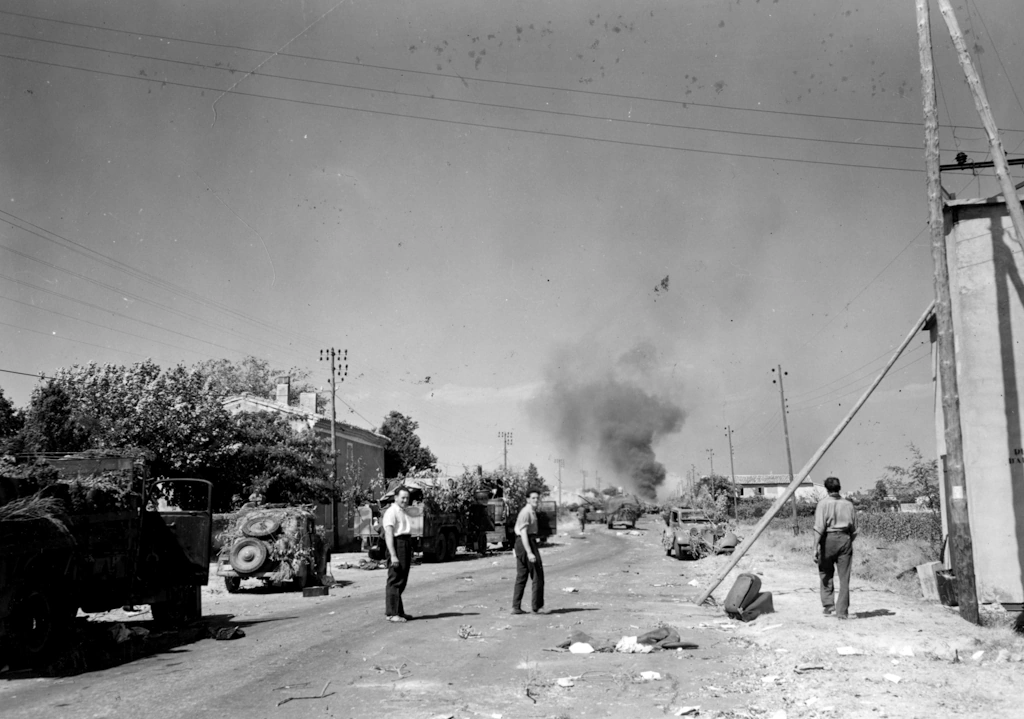
The enemy resisted stubbornly along the Eure River to allow his troops escaping from the Argentan Gap to withdraw safely. Reinforcements from 17.Luftwaffe Division arrived on CCR’s front. Small groups of tanks were reported around Houdan and Saint-Lubin-de-la-Haye. Enemy front lines were on the south bank of the Avre River at Le Mesnil, thence northwest. The Reconnaissance Squadron found a line of resistance from Tilly south for about 6 miles. The 17.Luftwaffe-Division was to our north and west along the Avre, having come from the channel coast to defend Dreux, too late to accomplish the mission. One ME-110 was shot down by CCR but little air activity was reported in the area. An Army Air Force escapee reported that the enemy was moving everything out or the Somme River and the Seine River areas. The action was carried on throughout the afternoon, and at 1845, CCR reported that the bridge at Avre could be used, but enemy opposition made it impossible to cross before dark. The CO of CCR, was ordered to hold along Avre for the night. CCB had crossed the Eure to the north by 1900. At 2030, a warning order was issued to all units for a probable move or the Division on August 18. The enemy opposition had been strong throughout August 17 but our losses were light in both personnel and equipment. Enemy casualties during the day were 65 killed, 44 captured; and 6 tanks 2 artillery pieces and 8 motor vehicles destroyed; 2 motor vehicles and 9 artillery pieces captured. Morale of the 17.Luftwaffe-Division was reported high by one PW, due to promises of a counteroffensive.

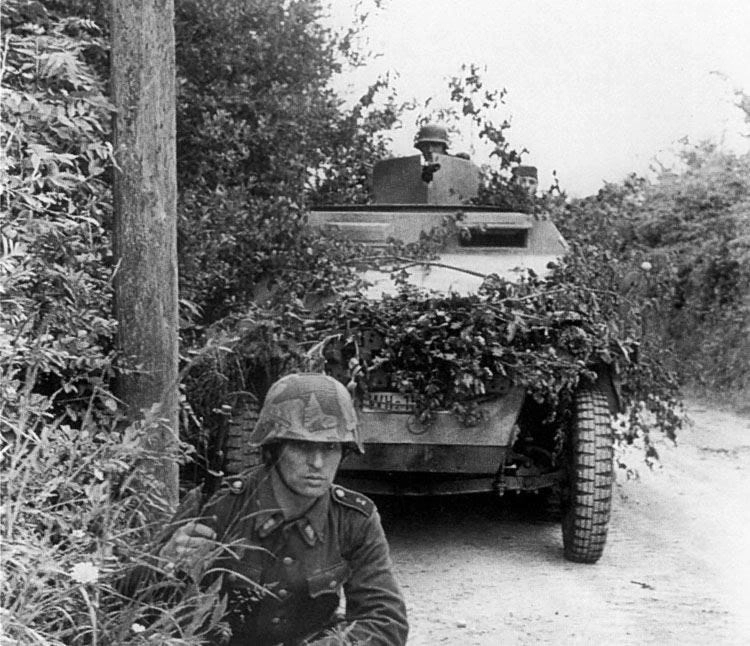 At 0815 on August 18, new orders were received. The Corps mission was to secure an objective in the vicinity of Mantes-Gassicourt. The Division was to occupy the Mantes-Gassicourt area, to interdict the Seine River and roads east or the river and to protect the left flank of the Corps. Orders were issued at 1015,
  August 18, for movement of the Division with CCB on the right, CCA on the left, CCR to protect the bridgehead at Dreux until relieved by elements of the XX Corps (7th Armd Division), Trains to remain in vicinity of Blainville, the Division CP to follow in the right zone. CCB moved out at 1220 and CCA at 1230. Enemy resistance on this march was very light. CCA had first contact at 1800, some light machine gun resistance which was easily reduced. CCB had its first resistance at 1735 and either drove out or destroyed the opposition. At 1900, CCB combat elements had closed in assembly area. Orders were received from Corps that CCR, upon being relieved of its mission in vicinity of Dreux was to proceed to and hold high ground four kilometers east of Anet to prevent movement of enemy to east of the Eure River in that vicinity. Orders were sent to Division Trains to move to vicinity Les Bossis early on August 19. The combat elements of CCA closed in their assembly area at 2215, August 18. The Division CP bivouacked in the vicinity of Les Bossis at 2245.
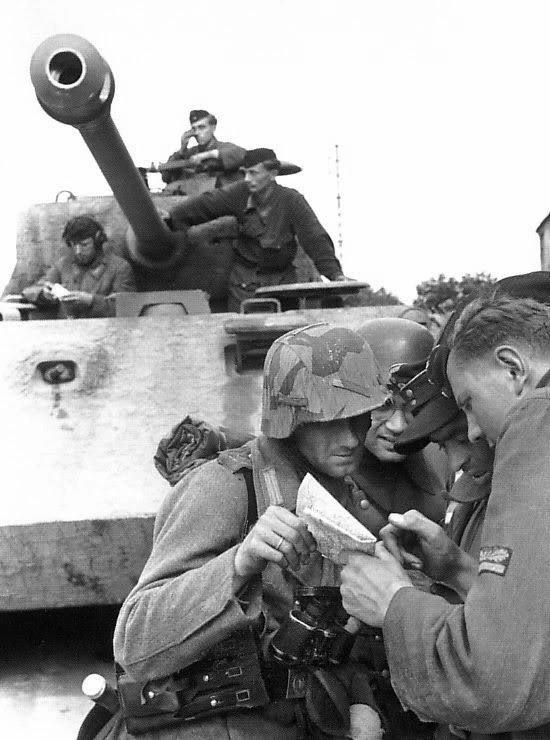 On August 19, enemy front was along line La Haie de Béranville-Chaufour-lès-Bonnières-Villegats-Breuilpont. Our roadblocks along this line were picking up PWs coming from scattered disorganized groups, who offered no opposition. The enemy offered slight delaying action at isolated points, such road junctions. The 22nd Armored Engineer Battalion column was attacked about 0100, when passing through Gilles, by 100 infantry with MG’s. The column lost 6 vehicles. CCR repulsed several counterattacks south of the Avre River, killing 100 foot troops, and destroying 3 tanks and 3 75-MM AT guns. At Bréval Troop B, 85-Cav Recon Sq, captured 142 PW’s from 146.Replacement-Training-Battalion of 116.Panzer-Division, without the loss of a single man. Other PW’s were captured during the night, when overrun by the advance of the Combat Commands. AT guns were reported in several localities in roadblocks, but little armor was reported. Hostile aviation was extremely active. 30 planes attacked CCR’s column in the morning, and other columns were attacked; planes were over our area both day and night.
The Division CP moved from Les Bosses to the vicinity of Cravent at 1345. During the day of August 19, CCA placed interdictory fire on Pacy-sur-Eure and surrounding roads and CCB placed fires on roads and targets or opportunity in its sector. The Division Trains closed in their assembly area at 1840 completing the move of the Division from the Dreux area. At 1920, both CCA and CCB reported tanks to their front. Artillery fire dispersed those in CCA sector to the northeast. CCB reported that two enemy tanks have been knocked out in its sector others dispersing into a woods nearby. CCR reported that the enemy had withdrawn from the town of Anet; that enemy motor fire was falling in the town and that the enemy had withdrawn anti-tank guns from that area by hand. At 1800 on August 19, the Commanding General ordered the Division Engineer to blow a lock on the Seine River. At 2130 the Engineer reported the lock out of commission. The Division Artillery was placing fires on known enemy assembly areas at 2100. At 2030 orders were received from Corps that a new mission was planned for the Division with probable operations early August 20. Total enemy casualties this date: killed 100; captured 260; 3 tanks, 6 motor vehicles, 1 armored car, 20 SP 105-MM guns, and three 75-MM AT guns destroyed. PW’s from scattered division had apparently been banded into march battalions. The units of the 17.Luftwaffe-Division predominated in PW;s from regularly organized units.
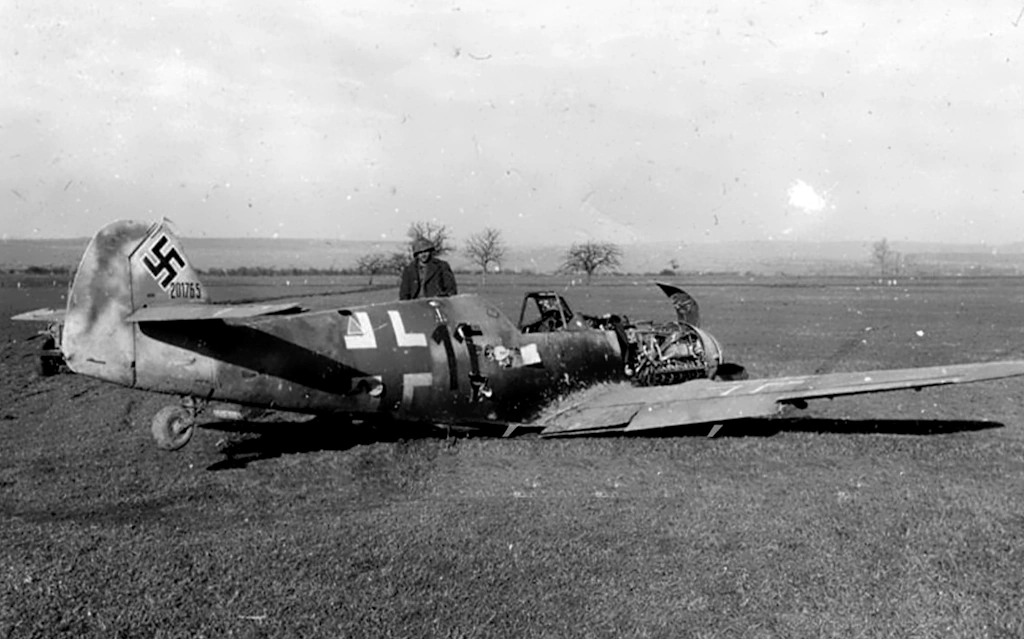
At 0700, August 20, CCA was ordered to move north between the Eure and the Seine to block crossing at Les Andelys and to occupy ground at Heudebouville and cut road net there. CCA started this action at 0845. At 0930 orders were issued to CCB to move north between the Eure and the
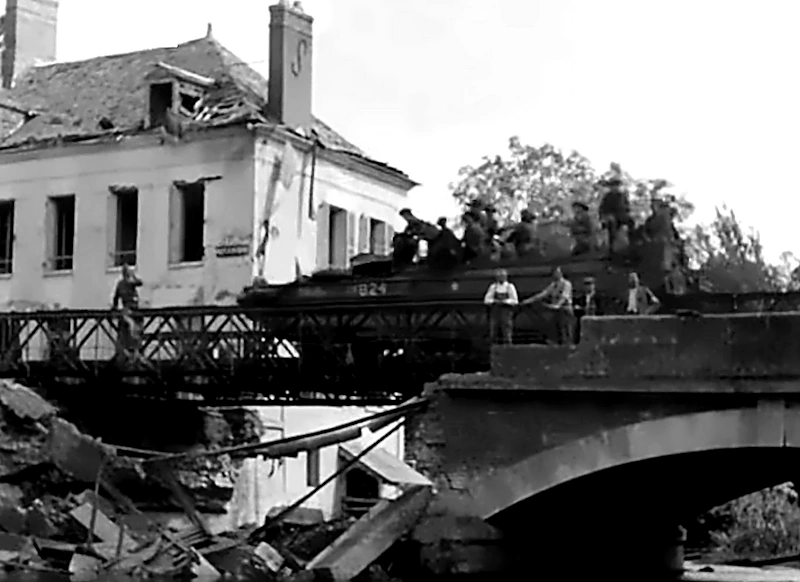
At 0900, 20 August CCR was attacked Southeast of Anet by approximately three companies of enemy infantry with some artillery support. The attack was repulsed and the command continued on its new mission. At 1100, CCA was moving up GC75, had its first contact, some enemy machine gun fire. The opposition was cleared away and the advance continued. At 1220, CCA had further contact with an enemy force of 15 tanks and some infantry. The enemy was engaged by artillery fire. Air support assisted CCA to resume its advance by 1300. At 1415, CCA again met strong enemy resistance from tank anti-tank and infantry elements. Losses of CCA to this time were three M-4 tanks and three attached M-10 tank destroyers. By 1620, the advance had carried only one quarter mile but by 1920, CCA was by-passing to the West in an effort to regain Highway 75 in the vicinity of Saint-Vincent-des-Bois, and to reach Champenard by dark. By 2055, it had reached a point two miles north of Douains and was held up by relatively strong resistance. CCA continued its attack, and at 2345, its advance guard was holding the town of La Heunière with out guards on the east-west highway north of the town. CCR, at 2000, went into bivouac in vicinity of Cravent, having had no further contact with enemy.
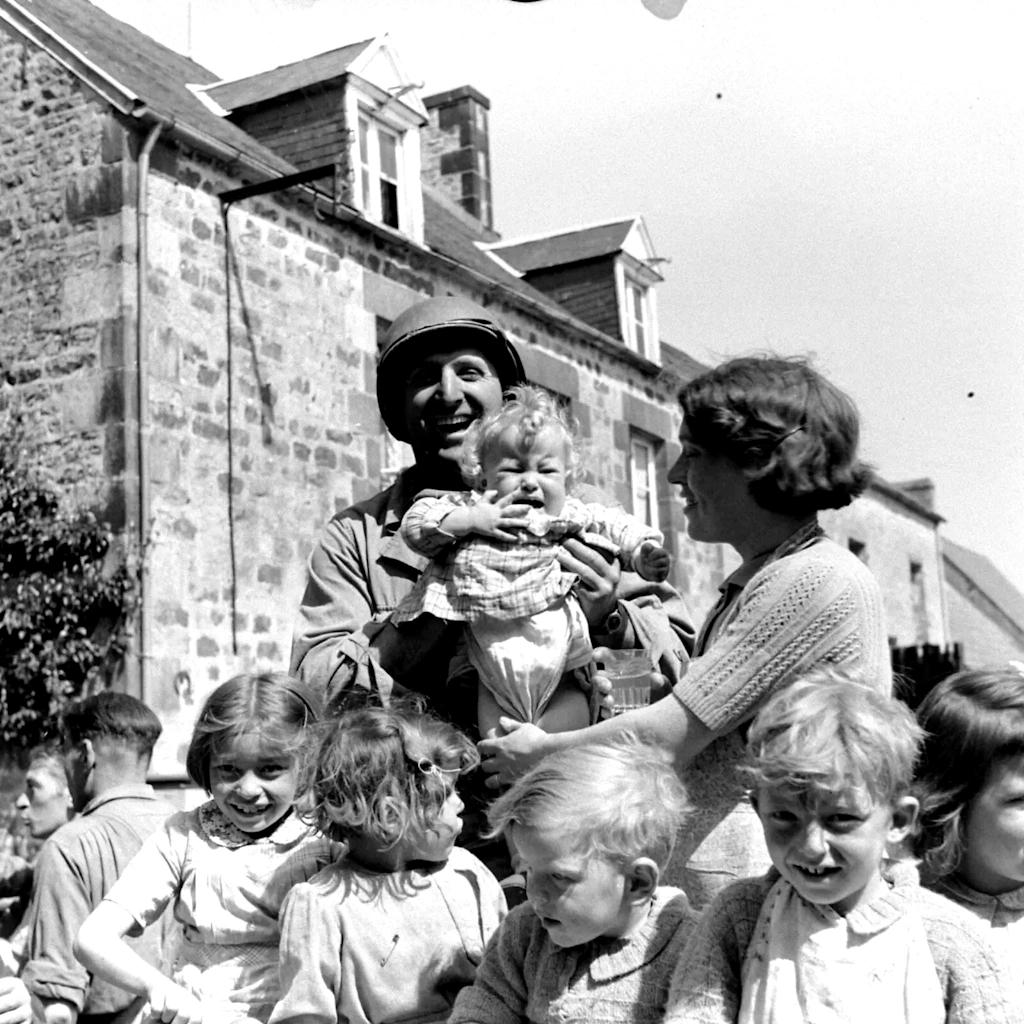 The enemy front line on August 21, was Saint-Pierre d’Autils – Saint-Étienne-sous-Bailleul – Villez-sous-Bailleul – Champenard. The enemy resisted our advance with road blocks and strong points. There were still enemy forces in the Forêt de Bizy and in the vicinity of Pacy-sur-Seine. The east bank of the Eure south of Pacy was clear and the enemy was driven out of La Chaussée-d’Ivry. AAA was reported at Bonnières-sur-Seine and at Bennecourt. Dual purpose 88-MM guns were located in the Forêt de Bizy and nearby towns, being used as AT. Enemy tanks encountered increased in number. Artillery fire also increased. Hostile aviation was limited to reconnaissance at night.
At 0845, the Corps Commander visited the Division CP and stated that the enemy was reported attempting to cross the Eure to the east between Anet and Ivry. The 85-Cav Recon Sq was directed to observe the road net between these two towns and to report any major movement across the river to the east. CCR was alerted to move to the south in the event of a serious threat to the Division rear and lines of communication. The Division Commander visited the front, returned to the CP and at 1100, ordered CCB to proceed as soon as possible to the Forêt de Bizy to relieve the pressure on CCA. CCB was ordered not to operate north in the vicinity of Highway GC75, so as not to interfere with the operations of CCA and not to advance north of Highway 181 without orders from Division. The Division Artillery ordered to furnish all available artillery support to CCA and CCB.
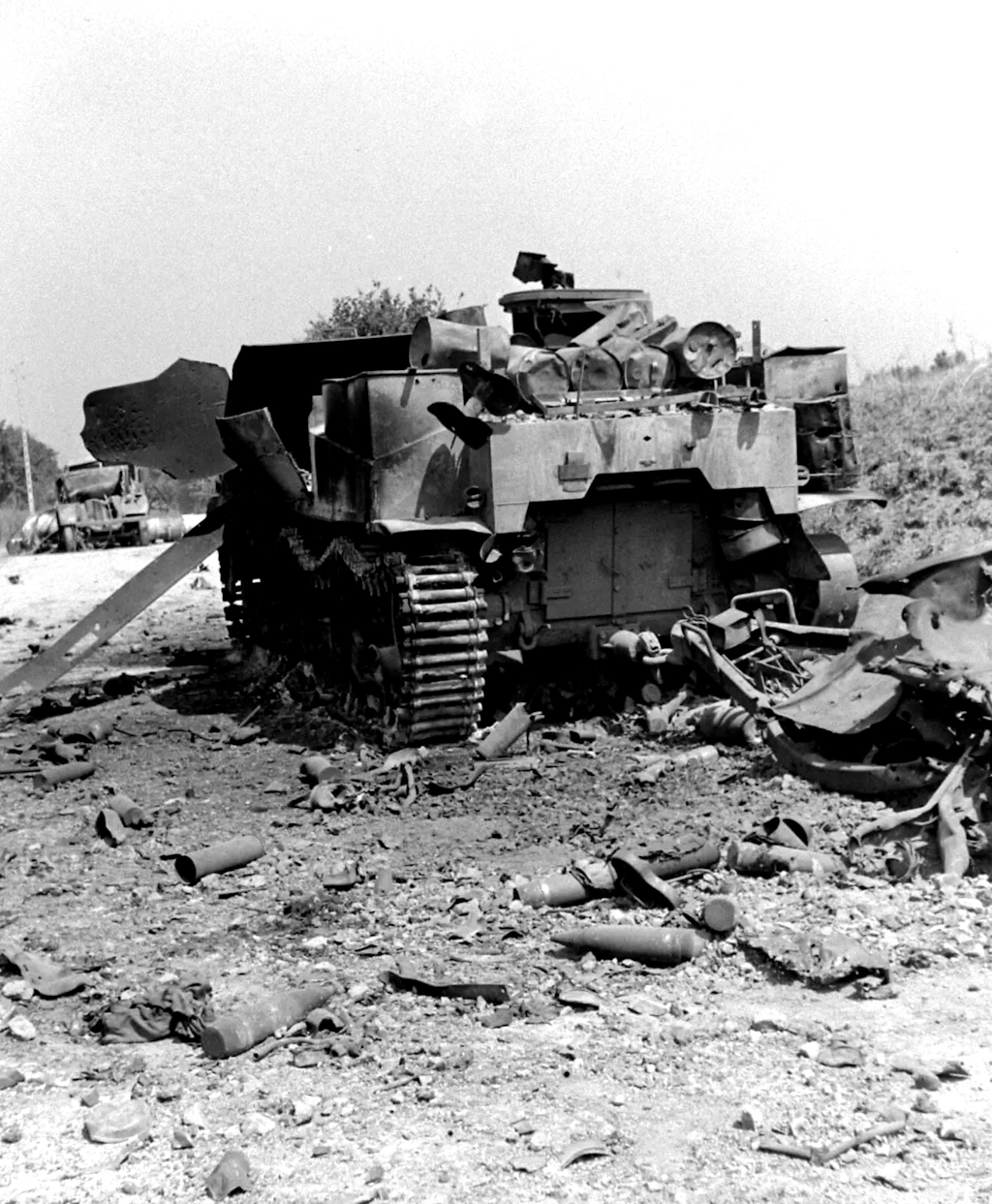 At 1100, CCA’s advance guard was still holding La Heunière, the main body of CCA had not yet effected a junction with it. There were still. some enemy tanks and ground machine guns between the two forces. At 1100, our recon made contact with the recon of the XIX Corps in vicinity of Ivry. At 1600, CCB started its attack into the Forêt de Bizy with dismounted infantry and had made no contact by 1700. The Commanding General ordered CCB to continue to its objective to probe the town of Vernon, and if no serious opposition was encountered to take possession of the town, and to continue to clear out woods along the west bank of the Seine River as far to the northwest as the stream which runs from Le Goulet southwest to La Chapelle-Longueville. At 1720, CCR was ordered to block the two main highways running east and northeast to Pacu-sur-Eure, to be prepared to move early on August 22, to clear out the Forêt de Pacy.
By 1720, CCA was approaching Mercey. Some anti-tank opposition had been met and overcome at Saint-Vincent-des-Bois. At 1800, CCB had a medium tank company skirting the southwest edge of the Forêt de Bizy proceeding to northwest. Its infantry at this time was halfway through the forest, meeting no opposition. At 1845, the advanced elements of CCB were at Mercey. At this point there had been a misunderstanding on the time of a concentration of artillery fire, and elements of CCA advanced too closely to the point of concentration. The result was six casualties including the former EXO of CCA, Lt Col Scott M Case who had been placed in command of the 46-AIB, and who was seriously wounded. At 2030, the infantry of CCB had passed through the Forêt de Bizy and were on the main highway to Vernon. Here they stopped for the night, having reported Vernon clear at 2300. By 2045 CCR had the road blocks placed, in two cases using German mine fields reinforced with out mines. At 2235, CCA had reached a point just south of Champenard, and stopped for the night, probingthe town by dismounted reconnaissance. No strong enemy resistance appeared at this time.
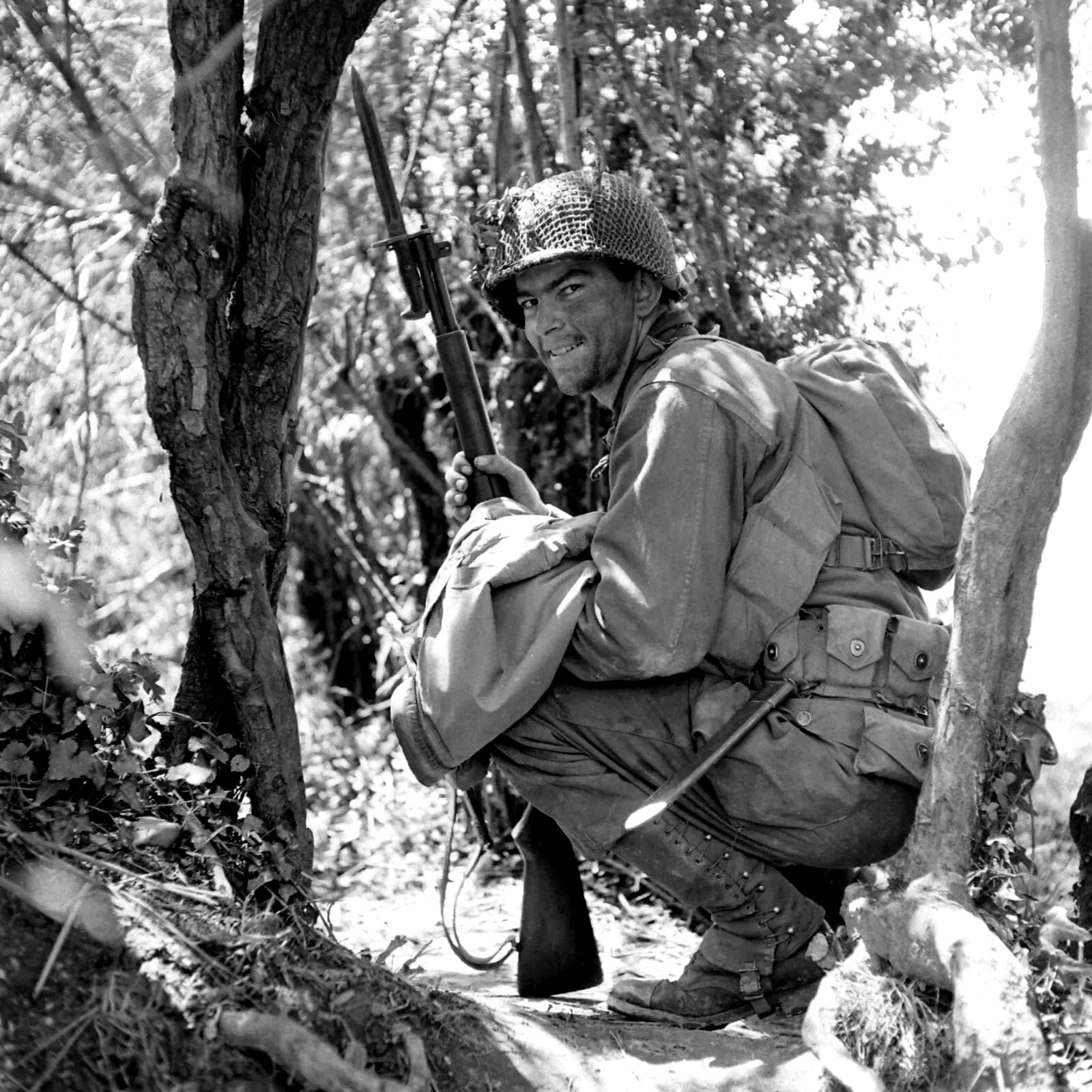
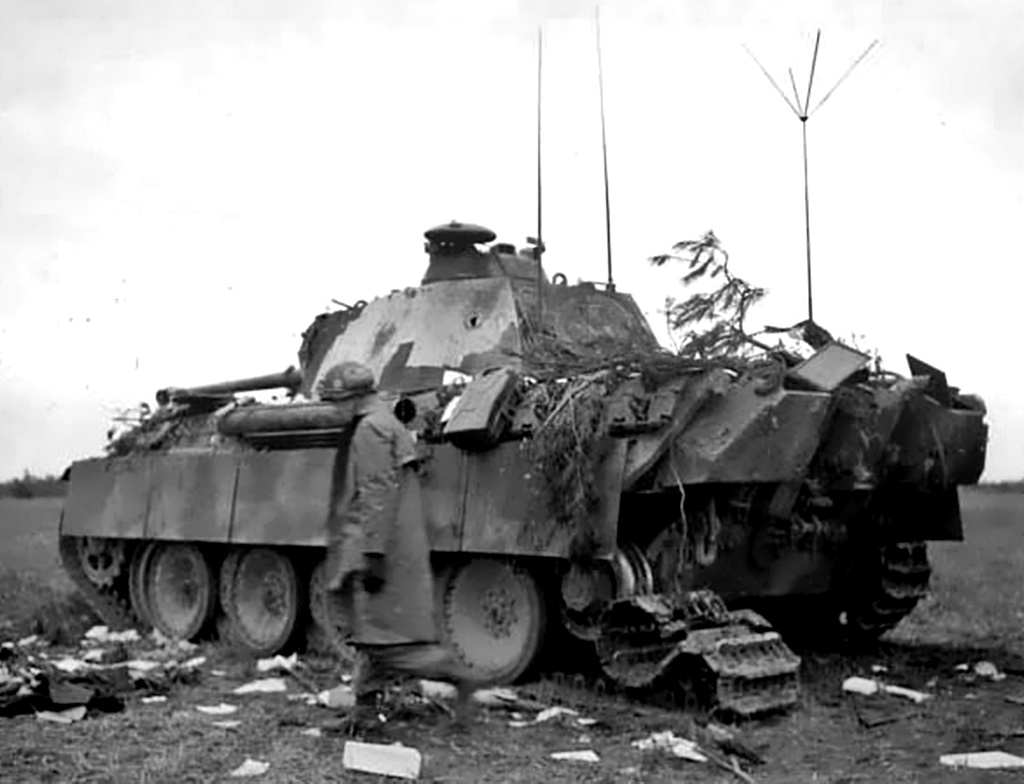
CCA resumed its attack at 0700, August 22. It reported that two enemy Mark V Panther tanks had infiltrated into its position during the night and had knocked out three light tanks just after daylight. The infiltrating tanks were destroyed. CCB continued its advance at 0800, August 22, and at 0940, was still moving north without opposition. At 1030, CCB had made contact with light resistance. The advance continued with artillery support. At 1045, the infantry of CCA had taken the town of Champenard and was deployed in the fields north of the town opposed by some infantry and the two Panthers. The fog was so dense at this point that observation of artillery fire was impossible. The weather cleared by 1230, and at that time Air Support and artillery were used on targets in front of CCA, just north of Champenard.
At 1245, CCR was taken under Corps control and ordered to dislodge the enemy from the area within the boundary Ménilles – Douains – Chaufour-lès-Bonnières and the main highway through Pacy – Ménilles then to return to original position. By 1315, the right column of CCB had reached the stream (Ruisseau de St Ouen) running southwest from Le Goulet to La Chapelle Reanville, and was waiting to cross. It crossed behind the left column at 1335, and at 1550, was opposed by enemy anti-tank guns and dug-in infantry. At 1600, CCB was attacked from the air by ten ME-109’s, bombed and strafed. Casualties were ten wounded. By 1700, on August 22, Combat Command B had penetrated the north of Champenard and was facing Combat Team Wahl Franke, which had 30 tanks and 10 assault guns, plus 500 to 600 infantrymen. A fortified line was reported in front of them. Combat Command B was through the Forêt de Bizy to Saint-Étienne-sous-Bailleul were about 200 infantry opposed it, backed up by an estimated reserve of 200 infantry with one tank in the vicinity. CCR on the north side of the Forêt de Pacy was confronted by a Combat Team of 20 tanks and 300-400 infantry in the north half of the forest. the 85-Cav Recon Sq was holding a line along the the east side of the Eure River south of Pacy, facing elements of the 17.Luftwaffe-Division, Combat Team Wahl Franke, including elements of 1.SS-Panzer-Division (LSSAH), the 17.SS-Panzergrenadier-Division, the 2.SS Panzergrenadier-Division, the 4.SS-Panzergrenadier, the 711.Infantry-Division, the 7.SS-Gebirgsjäger-Division (Mountain), the 12.SS-Panzer-Division, and also scattered AA and replacement units. The enemy had been digging in and reorganizing along the front between the Eure and the Seine, while task forces composed of tanks and infantry were delaying us at strong points to the north. Tank fighting was heavy in the vicinity of Champenard where enemy infantry fought from dug-in positions. All three combat commands were bombed and strafed by hostile aviation. One plane was shot down by CCR.
At 2300 CCB. reported that its forward elements were just short of the objective. Four British Paratroopers, having eluded German captors, escaped to our positions. Total enemy casualties for the 24 hours period included killed 80, captured 42, tanks destroyed 7. Visibility was poor during this period.