


At 0400, August 9, orders were received from the XV Corps to recon the line Saint-Martin-des-Monts-Saint-Cosme-en-Vairais-Courgains-Fresnay-sur-Sarthe, prepared to advance to the north and to protect the east flank of the corps. At 1940, August 9, the division was given the mission of seizing and holding the crossings of the Sarthe River between Moncé-en-Belin and Sainte-Jamme-sur-Sarthe, and to recon to line Nogent-le-Rotrou-Mortagne, and Alençon. During the consolidation in the Le Mans area, normal maintenance and evacuation was accomplished and basic loads of most items were reconstituted. Diesel fuel and White Phosphorus ammunition were in short supply and neared the critical point. There was some delay in providing adequate stocks of Class I, III and Class I, V supplies at the Army dumps northeast of Le Mans but reserves carried by units proved sufficient to provide for such contingencies.

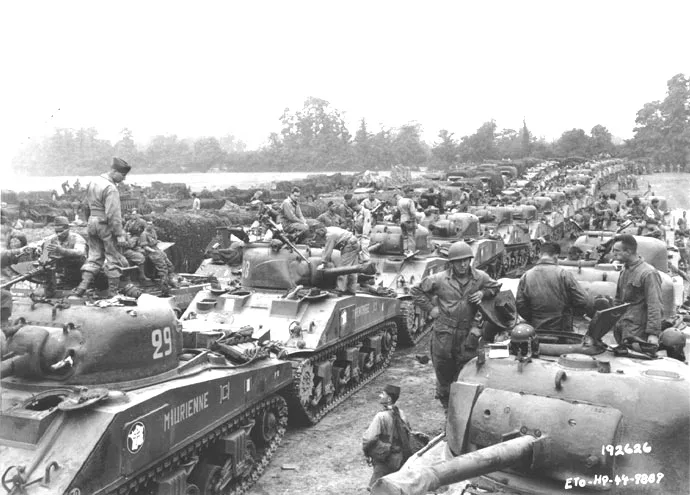
 At 0300, August 10, information was received that the XV Corps would attack at 0800, to seize the line Sées-Carrouges. The division was to attack in the East Zone with 2d French Armored Division on the left. The French 2nd Armored Division, under Gen Philippe de Hauteclocque, landed on Utah Beach during the night of July 31 – August 1, and formed up near La Haye-du-Puit. They joined the XV Corps of Gen George S. Patton’s Third Army and were readied for their role in Operation Cobra. They were ordered to
  attack through the Avranches Corridor towards Le Mans. After several days of hard fighting through the countryside, the French 2-AD and the US 5-AD liberated Le Mans. This was the first of many major French cities that Leclerc and his 2-DB would liberate in the next year of the war. (Note: Hauteclocque took the name Leclerc to protect his family from German reprisals in occupied France).
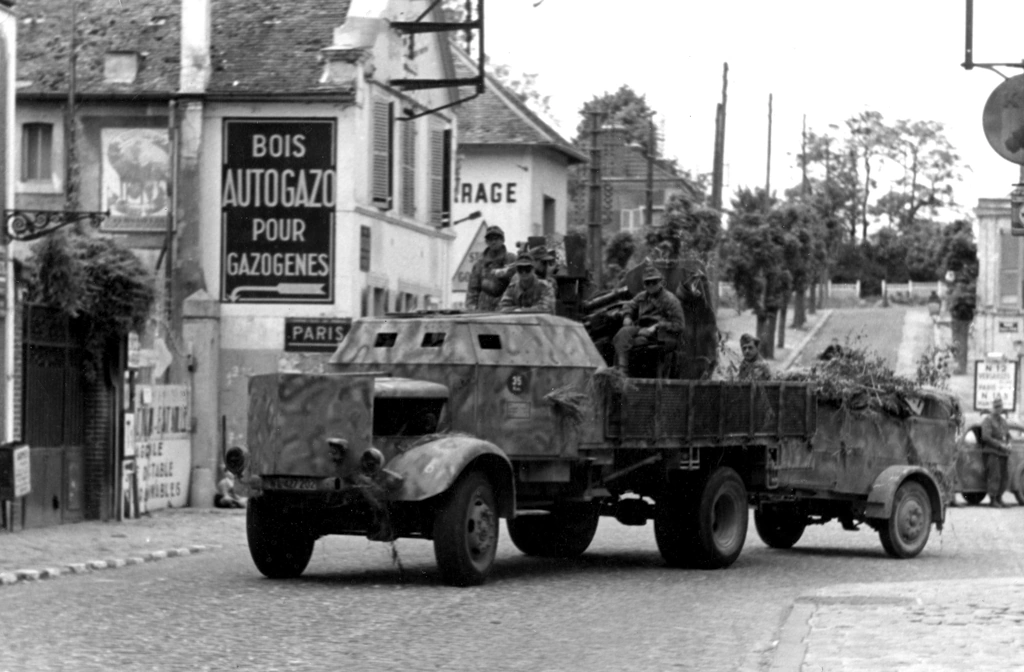
The 5-AD crossed the line of departure at 0800 with CCA on the left and CCR on the right. At 1100, both columns were meeting strong armored and artillery resistance. Some 50 enemy tanks were active and several counterattacks were repulsed in securing the river crossings. Hostile elements identified were portions of the 708.Infantry-Division (left), the 9.Panzer-Division (center), and the 130.Panzerlehre-Division (right). AT units were found at road junctions and critical points. Nine tanks and 2 armored cars were destroyed on August 10, with 84 enemy dead and 116 POW’s. Morale of the enemy was reported by IPW teams as somewhat better and greater resistance was noticed in enemy positions. Weather continued warm and dry.
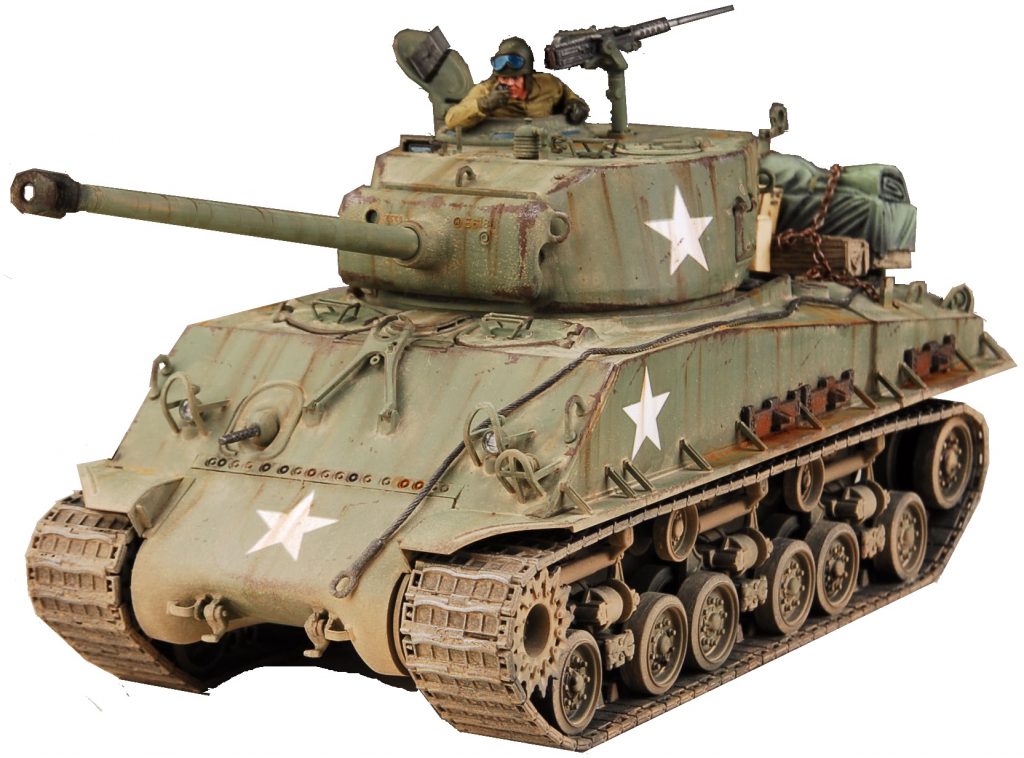
By 1700, all elements of CCA had pushed north of the river and the situation was more favorable in its sector. By nightfall on August 10, CCA contacted strong tank forces in vicinity of Marollette and CCR was in contact with the enemy in vicinity of Mamers. The enemy had been steadily withdrawing before our pressure all day. Both Combat Commands remained in position for the night with instructions to continue the attack at 0700, August 11, on the same objective with same axis of advance, CCA to by-pass the town of Marollette and CCR to by-pass Mamers. The 79-ID was to take the towns. Recon was to stay forward and on the flanks. It was during this day’s action that the division experienced its first loss among battalion commanders. Col John S. Wintermute, CO of 15-AIB, an element of CCB, was seriously wounded in action and evacuated. Maj Toney Giorlando, Battalion Executive Officer, 15-AIB, assumed command. The advance of the Division was much slower during August 11, due to enemy roadblocks and armor. Bitter resistance was encountered at some roadblocks, and the rear guard action of the enemy continued. Concentrated fire from 105-MM and 155-MM artillery howitzers was reported for the first time. Advance recon had reached the southwestern corner Foret de Perseigne, Mamers, Bellême, Rogent-le-Retrou, east around the Foret de Perseigne, northeast of the Foret de Bellême, north to Fresnay-sur-Sarthe, Pervenchères and La Maurie.
The division plan contemplated that CCA should pass through the Foret de Perseigne and directly north to the objective. Information indicated that the enemy held this forest in some strength and that it was a tank trap. CCA was, therefore ordered to by-pass the forest to the east and to push on to the north. Further information was received that the forest was to be bombed with oil bombs on the following day, but the bombing was subsequently canceled. At 1800, CCR’s column was at Les Mesles and CCA was passing to the east of the Perseigne Forest which had the appearance of being and enemy trap, due to dense woods. The Division CP was just south of Bonnetable. The 3907-QMT Co was attached to the division on August 11 and generally was used in this and subsequent operations for drawing Class II supplies from depots in the rear areas. At 1945, orders were received giving a new objective and at 2210, the CP moved into an area four miles north of Mamers to prepare plans for new advance. The division was given the mission of continuing on the way to Argentan, to cut all communications to north, and to help close the Argentan-Falaise Gap. The Division Artillery was ordered to have fires prepared to catch enemy trying to get out the east. CCA was to cut communications to the northwest, CCR to the northeast, and CCB to fill in the gap to the south and the east. At this time the head or CCR’s column was in contact with the enemy in vicinity Sées, and CCA was north of the Perseigne Forest.
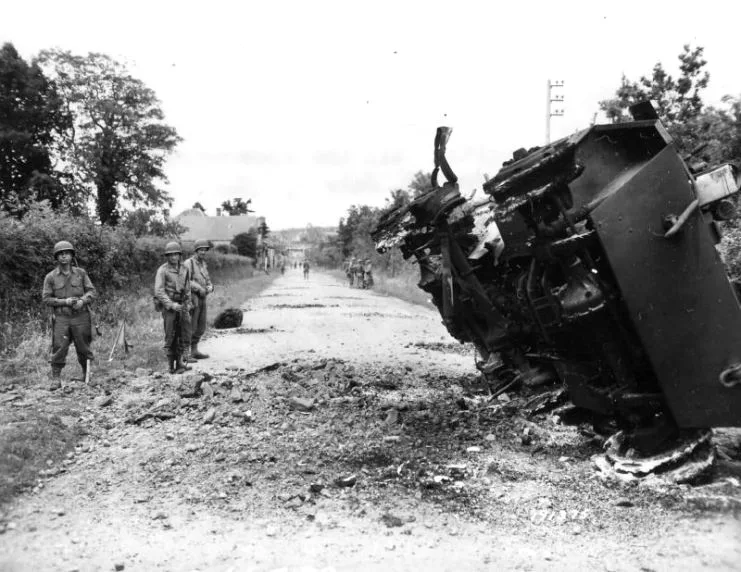
The resistance in front of CCA on the morning of August 12 was very light, CCA having turned in the direction of Sées to relieve the pressure on CCR. The town of Sées was taken by the combination of CCA-CCR at 1000 and the advance continued to the north. The division was in vicinity of Les Mesles at this time. The advance of the division was held to a slow pace until noon. By afternoon, the main line of contact was north of the Bellême Forest, Saint-Jouin-de-Blavou, then Coulonges-sur-Sarthe, north of Mortruis. The enemy continued withdrawing, attempting to evacuate troops to Evreux, Dreux and Bernay. Armored forces, appeared in greater number in an effort to stop the advance, as many as 200 tanks being reported in the general area. Tanks replaced AT positions at some roadblocks, showing more tenacious defensive tactics. Support from our Air Forces materially assisted in regaining and maintaining the rapid rate of advance. At 1445, CCR cut the railroad at Marmouillé and at 1635, was advancing on Gacé. The division CP at this time was in the vicinity of Sées. By 1700, CCR had the railroad cut at an additional point and had roadblocks out to the northwest on Highway N24.
The 10-TB, advancing on the town of Gacé, ran into a well defended mine field in vicinity of Nonant, (Villiers-sous-Mortagne). Enemy appeared in considerable numbers, with several tanks to the north and the east of Gacé. At 1900 the head of CCA was at Mortrée. By 2000, CCA was five miles south of Argentan but was unable to carry out the attack due to the lack of fuel. During the afternoon and early evening a column of a combat command of the 2-DB (French) blocked the supply route through Sées. Sées was some five kilometers east of the boundary between the 2-DB (French) and the 5-AD (US) Zones. Refueling of CCA was delayed six hours by this conflicting traffic. Consequently CCA’s attack towards Argentan was not launched until just before dark and was stopped short of the town by darkness. During the night patrols did enter the town.
The Luftwaffe was active, strafing out columns three times during the day. Casualties of the enemy this date were: Killed 301, captured 362; vehicles destroyed: 70 tanks, 88 miscellaneous motor vehicles, 2 armored cars, 7 pieces of artillery. Units identified through PW interrogation: 2.SS-Panzer-Division, the 6.Fallschirmjäger-Division, 9.Panzer-Division, 9.SS-Panzer-Division, 10.SS-Panzer-Division, 12.SS-Panzer-Division, 17.SS-Panzergrenadier-Division, 130.Panzerlehre-Division and scattered service and GHQ units. At 0700, August 13, CCA resumed the attack on Argentan. It met with strong resistance and was repulsed. During the night the enemy had moved in more infantry and AT guns. 88’s had been placed in concealed positions on the flanks and on the dominating ground to the north or the town. The 34-TB lost seven M-4 tanks, and its commander Lt Col Thomas B Bartel who was seriously wounded and evacuated. Maj Glen L Foote, Executive Officer, assumed command.
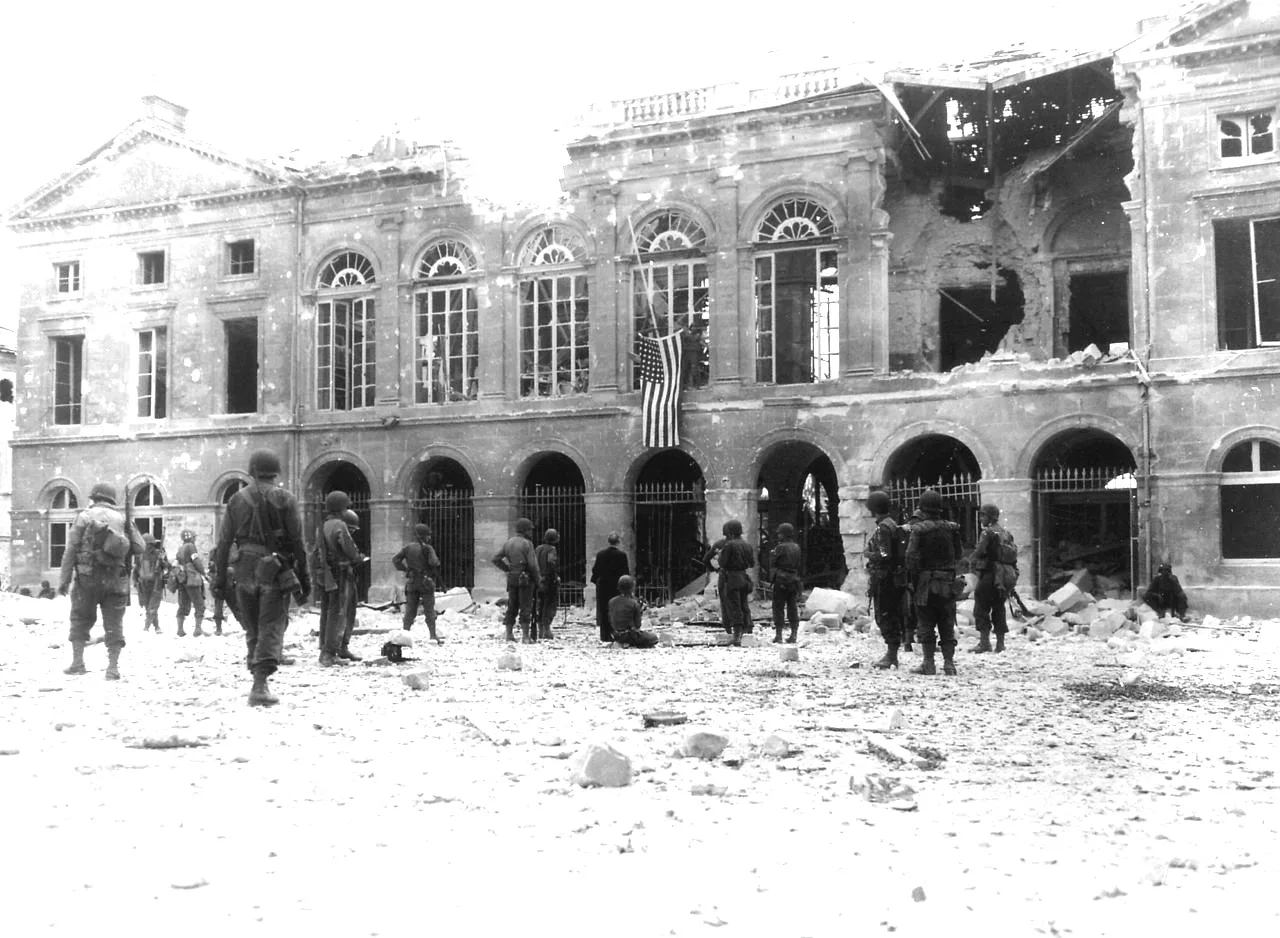
 At 1200, CCA was reinforced by the attachment of the 639-TDB and Recon was started with a view to going around the town. At this point orders were changed and re-changed. Corps ordered that the town of Argentan be taken. After the attack was again started by CCA, this order was counter commanded. Orders were also received to send a combat command up the Argentan-Falaise Highway in an attempt to join the Canadians in the vicinity of Falaise. This plan also was changed before it could be put into effect. The Division was then ordered to follow a plan as follows: The French 2nd Armored Division would relieve CCA at Argentan. CCA was to be put into position southwest of Argentan; CCR which had put in additional roadblocks at Falaise to remain in position on roadblocks, being given the 15-AIB from CCB to perform this mission; CCB to move into position just north of Sées. The necessary moves to put this plan into effect were accomplished on August 13. The division was ordered to perform as much maintenance as possible and get ready for further movement.
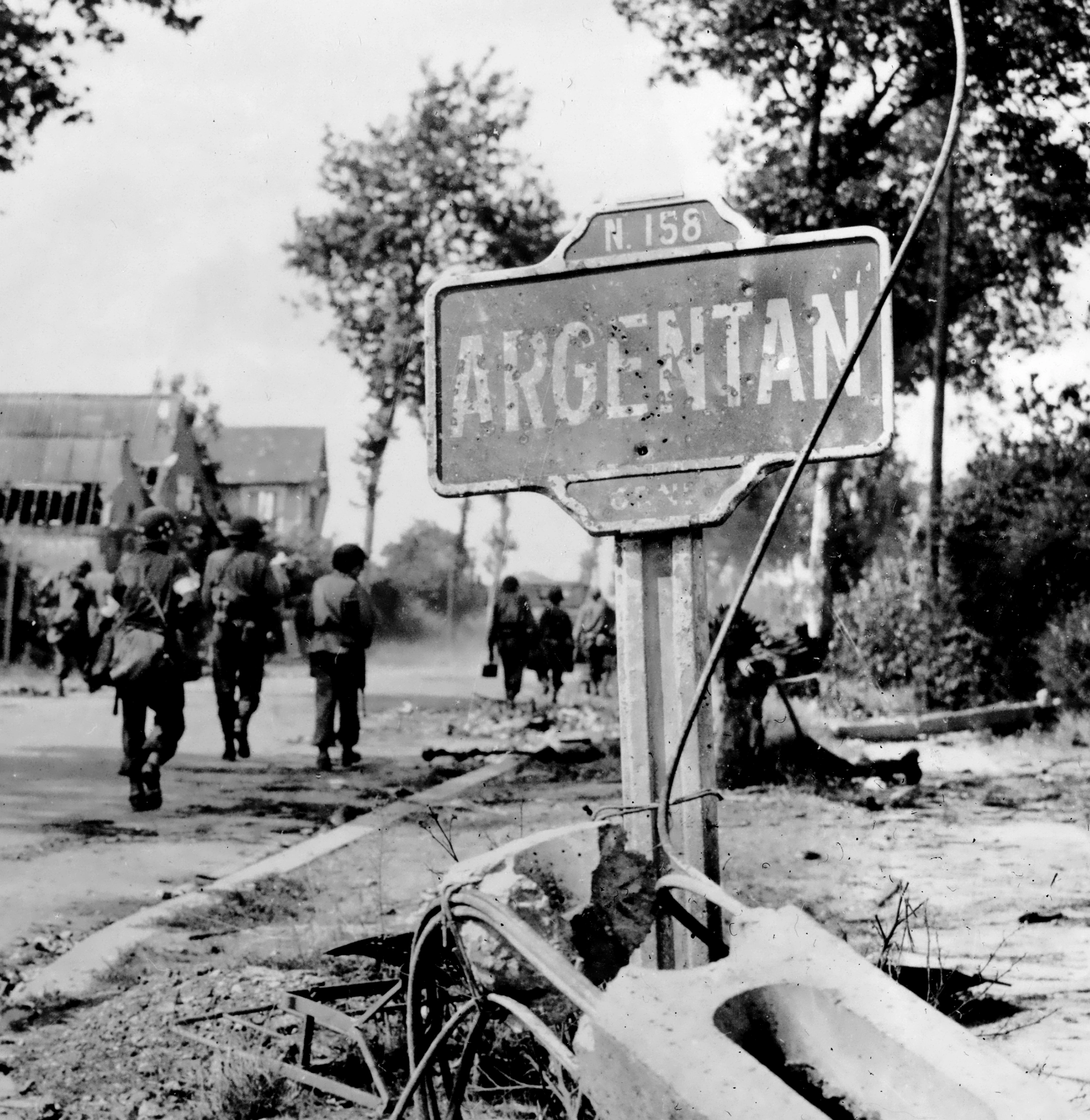
At 0500, August 14, orders were received to withdraw all patrols from Argentan and shell the town. In the gap north of Argentan the enemy continued to pour through under our heavy air attacks attempting to escape from the gap. The artillery concentration was begun at 0620. Orders received at 0800 to withdraw CCA from its holding mission south of Argentan and move it east of the railroad to the vicinity of Almenaches. This was accomplished without delay. During the morning of August 14, CCB repulsed a harassing attack by ten enemy tanks. At this time enemy disorganization became general throughout the entire area. Columns of various sizes, from three to fifty vehicles, were reported in all sections of the Division Zone as well as in the zones of other friendly divisions. The only known major unit facing us at the time of withdrawal was the 331.Infantry-Division (GER), which was holding the north half of sector east of the Moulins-Lanches line. Our Air Force was actively engaged in bombing and strafing. At 1030, a column of enemy foot troops and tanks was bombed between the CP of the 5-AD and the CP of the 79-ID (vicinity of Le Mesle). Two enemy tanks were destroyed at St Hilaire. Enemy casualties resulting from the Division’s action were 410 PW’s, 215 killed; 1 tank and 6 motor vehicles destroyed and 3 armored cars and 16 trucks captured.
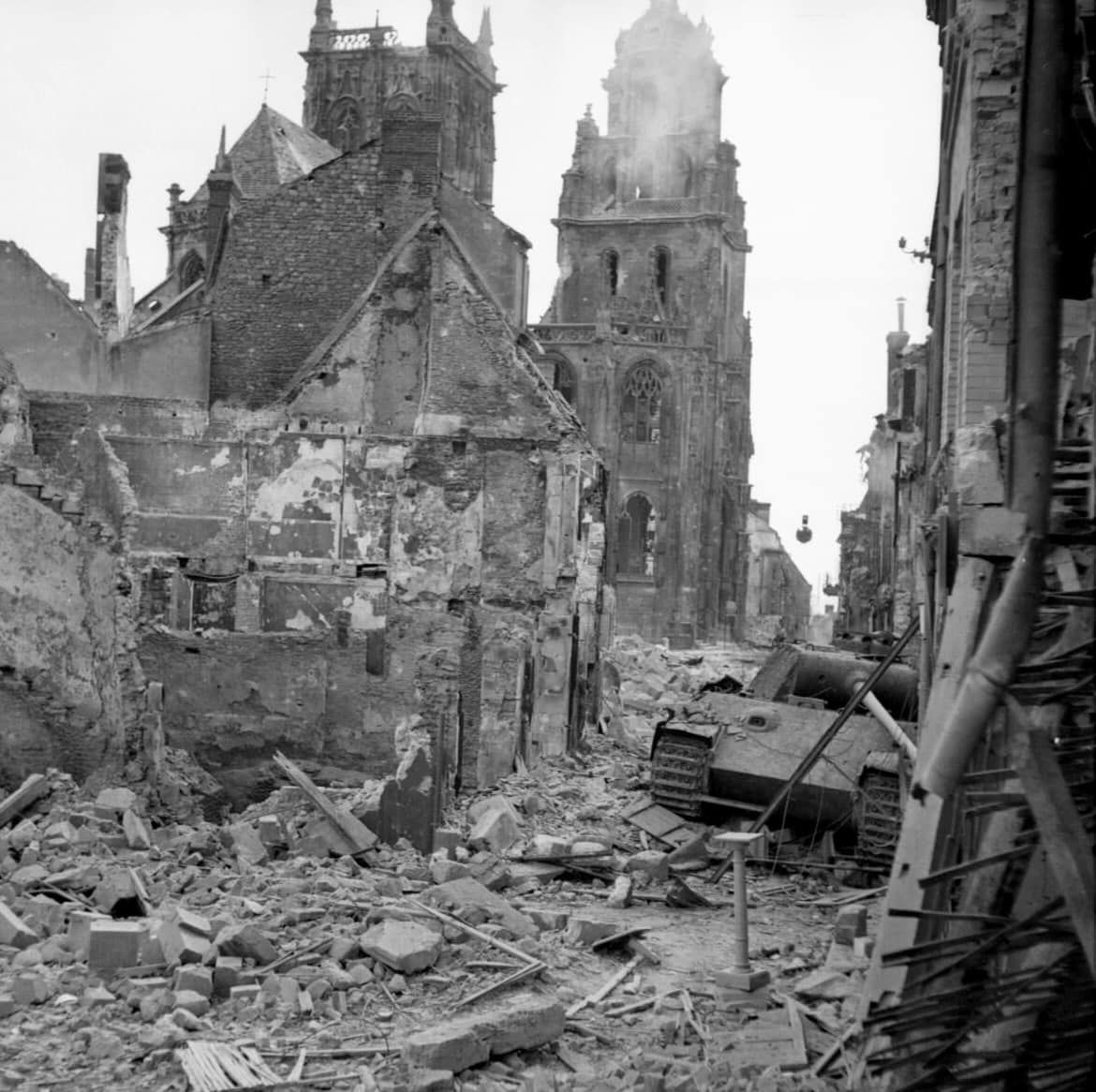
At 2240, our units were alerted for movement early August 15. The Division’s new mission was to proceed east, seize line of Seine River between Meulan and Vernon. Formation was to be two Combat Commands abreast, CCB on the right, CCR on the left; CCA in reserve; both CCB and CCR marched in two columns. The Division Headquarters, Division Troops and Division Trains followed CCB in the right zone with CCA following CCR in the left zone. On August 15, the enemy front line was in the vicinity of Dreux with isolated strong points in the bend formed by the junction of the Avre River, the Eure River and the Blaise River along a general line with a salient facing directly East like a spearhead. Our attacks were to be in the direction of the Euvre River around both sides of Dreux to the north and south. Elements of the 1.SS-Panzer-Division and the 2.SS-Panzer-Division were identified near Dreux and a concentration of tanks, infantry and artillery was reported at Chartres. All regiments of 331.Infantry-Division and elements of 116.Panzer-Division reported in addition to the other two panzer divisions.
During the day (August 15) the 90-ID relieved the 5-AD in the Argentan-Gage sector and the 5-AD started on its new mission. CCB moved at 1600 and CCR at 1630. During the march maintenance of radio communications was very difficult due to enemy interference and unfavorable terrain features. At numerous times the Combat Commanders lost contact with heads of columns, which made control difficult. The enemy resistance on all routes was light, consisting mostly of road blocks. These were not strongly defended, an occasional anti-tank gun being the only armament. The enemy withdrew to Dreux and east of the Eure River. 85 enemy were killed, 160 captured. Weather was good. At 1100 on August 16, CCB had accomplished its mission, a crossing having been seized and held to the south of Drerux. Our forces found the town defended, with large forces of enemy fleeing to the east out of the town. The enemy resistance was reported to be strong tank forces and anti-tank defense.
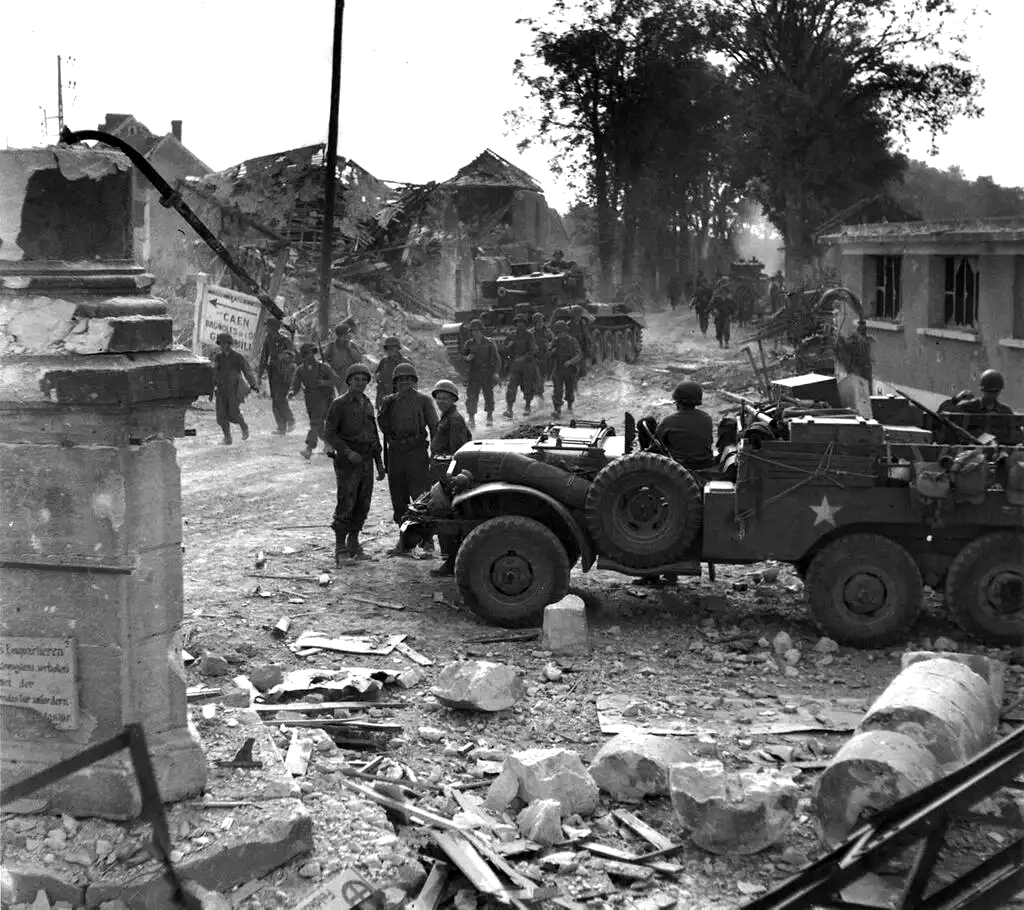
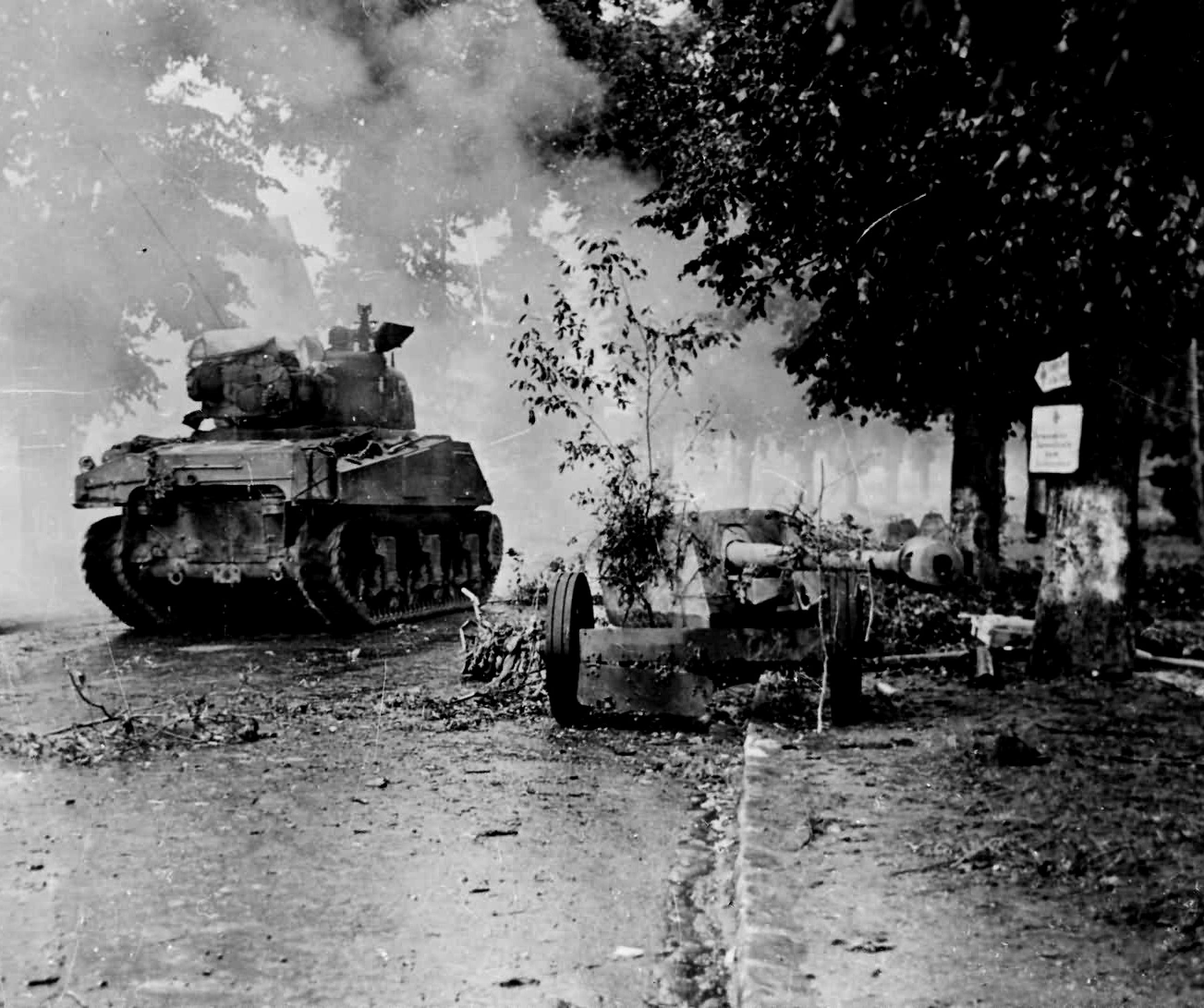
At this point the boundary between CCB and CCR was changed to give the town of Dreux to CCB. The energy line along the Avre River extended to Cloches-Houdan-Brissard then along bank of Avre River from junction west to Vert-en-Drouais. Reconnaissance elements of our division were pushing east and northeast to establish a line Mantes-Gassicourt-Poissy-Trappes. Of two enemy battalions left in Dreux one was destroyed on late afternoon or August 16, and the other retreated across the Eure River pursued by our Recon Squadron. AAA fire was active during this period and artillery fire was reported in vicinity Dannemarie and Bourdonné. Engineers demolished the bridges across Eure leaving only three. One company of tanks was reported vicinity of Houdan and we engaged a company across the Eure, damaging 7 out of 30 tanks. Hostile planes were active, 6 attacking once, and 13 at another time. 129 enemy were killed, 181 captured, and 6 motor vehicles mere destroyed. Civilian reports indicated that the German withdrawal through this area had been going on for about 7 days, SS troops earliest. The Division CP closed in bivouac this day in vicinity of Marville, having marched one hundred ten (110) kilometers. CCA, following CCR, had met some tank opposition, also heavy artillery fire, and had dropped behind. CCA was ordered to push rapidly to just north of Dreux by any routes. The town of Dreux was taken by CCB at 1745.