

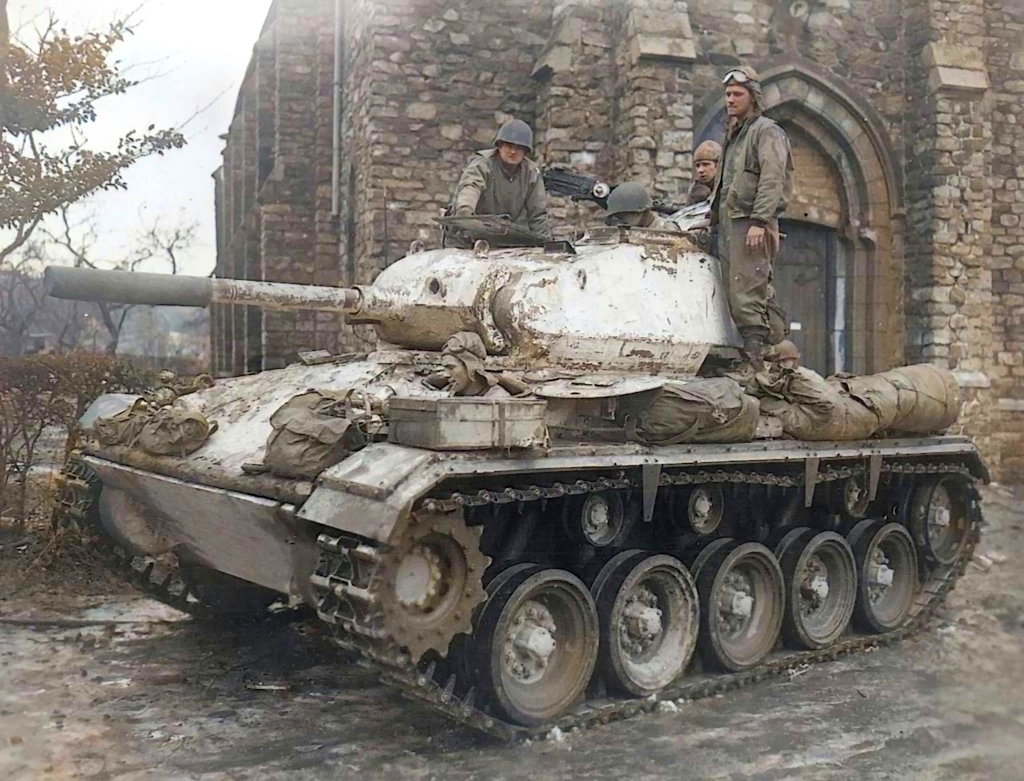
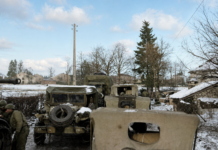
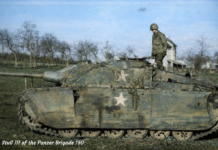


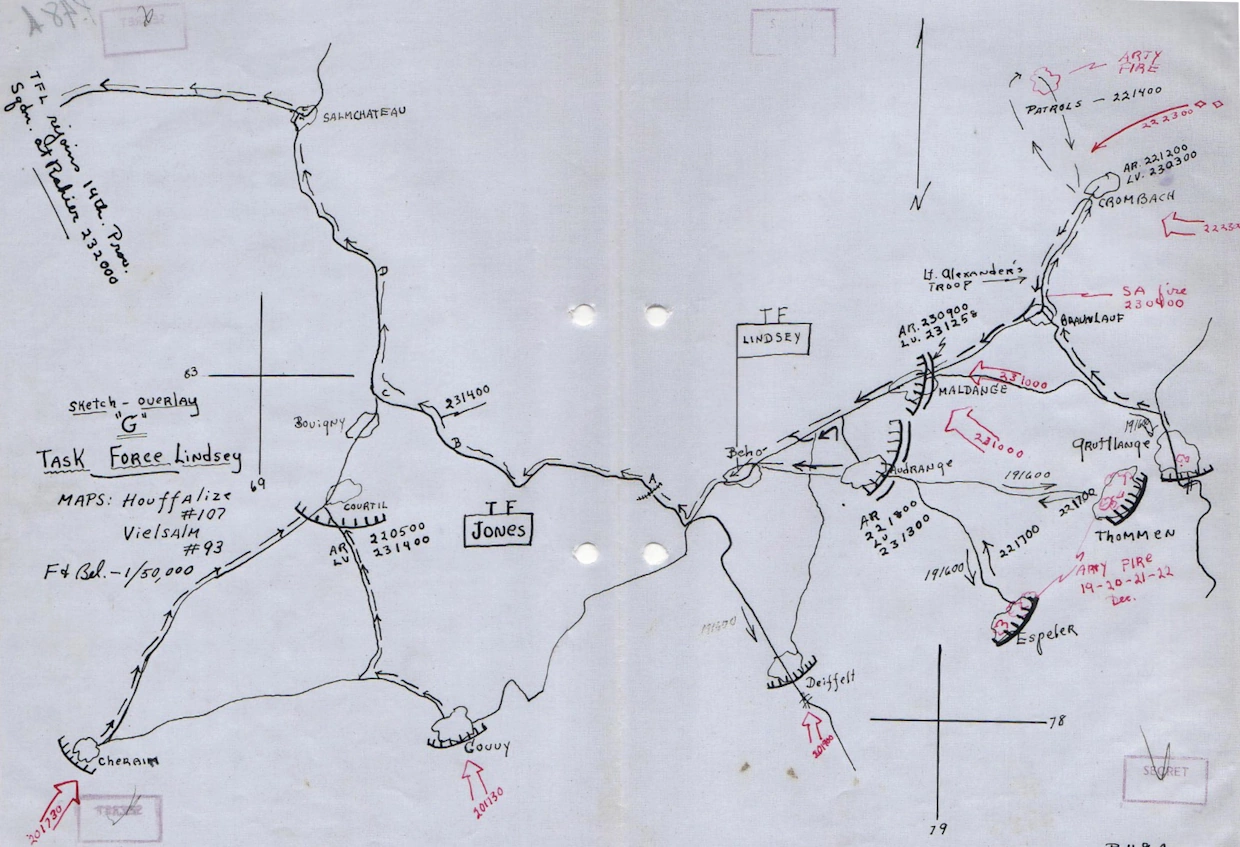
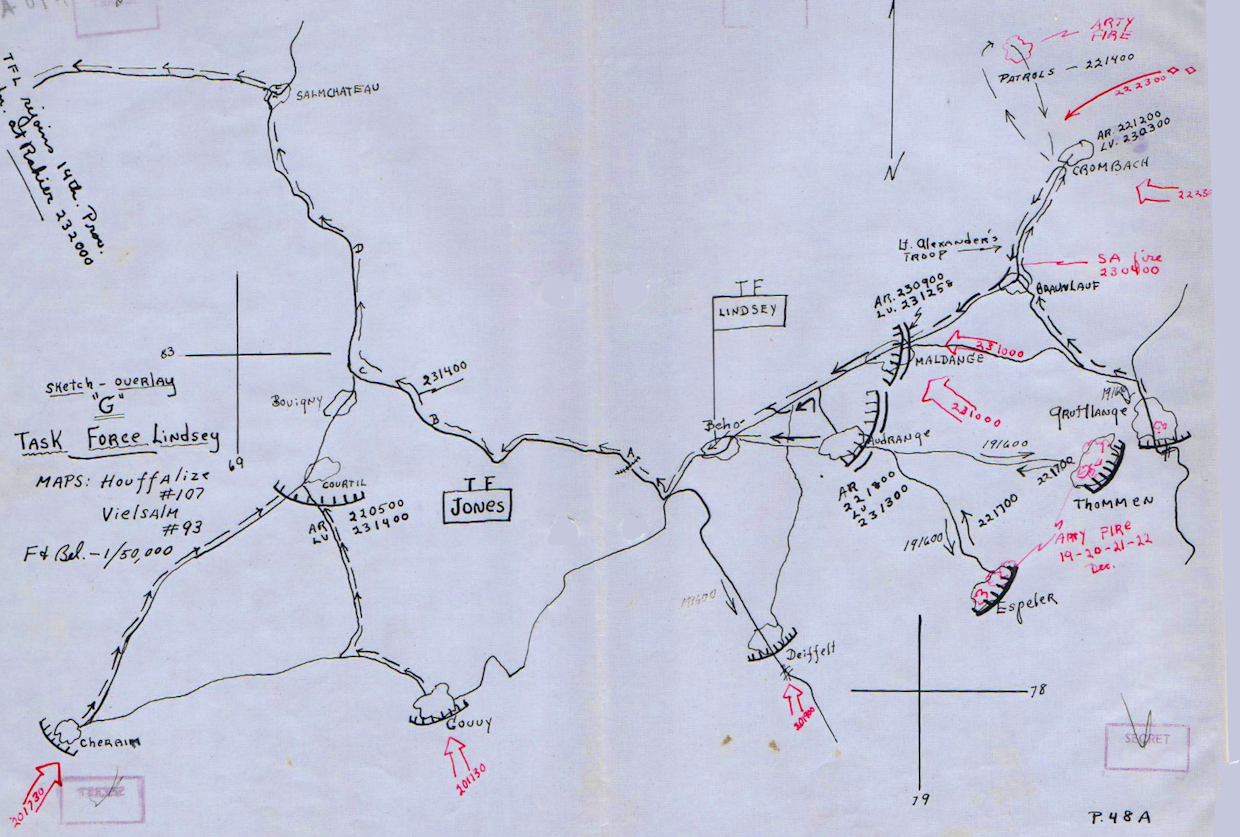
Lindsey moved his task force to the Beho (Belgium) crossroads he had been told that neither friendly or enemy troops were in the three towns that he had been instructed to occupy and hold, with the specifications that he secure the towns by darkness on December 19. Lindsey split his reorganized reconnaissance troop into its component three platoons, sent the first platoon to Espeler (Belgium), the second to Thommen (Belgium) and the third to Gruflange. With each of these three reconnaissance platoons went one platoon of assault guns from the reorganized E Troop. The 11 light tanks were initially held near Beho in the position of a mobile reserve for the Task Force. The sub-task forces held their assigned towns from darkness December 19 until December 23, when they joined in the general withdrawal of all elements from this sector of the huge ‘Fortified Goose Egg’ that was beîng held by 7th Armored Division elements and attachments. (The following breakdown of stories at the various garrisons was secure from the platoon leaders who were present in the three towns).
Lt Marshall Alexander’s sub-task force had an uneventful two days at Gruflange during December 20 and 21. Spasmodic artillery fire of medium caliber struck the town several times, but 1t did not hinder the emplacements or mined roadblocks that the cavalrymen and assault gunners had established there. On December 22, a request from the 7th Armored Division specified that mopping-up patrols be sent through the Hohenbusch Woods (Belgium) and through the wooded terrain that surrounds CR 515 at (847816). The patrolling mission took about four hours, and while the Reconnaissance Teams were engaged in the mopping-up (no contact with the enemy), some medium tanks from the 7th Armored Division’s tank complement passed throuÿh the town to the south. The tankers said that they were to assist elements of the l4th Armored Infantry Battalion in an effort to withdraw. The cavalrymen were not sure of the position of the 14th Armored Infantry Battalion, nor were they exactly sure that the 424th Infantry Regiment of the 106th Infantry Division was in the vicinity of CR 515. Most of them had ‘heard’ that the infantry troops were there, but were uncertain as to the exact dispositions of any friendly troops in the area.
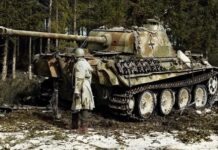
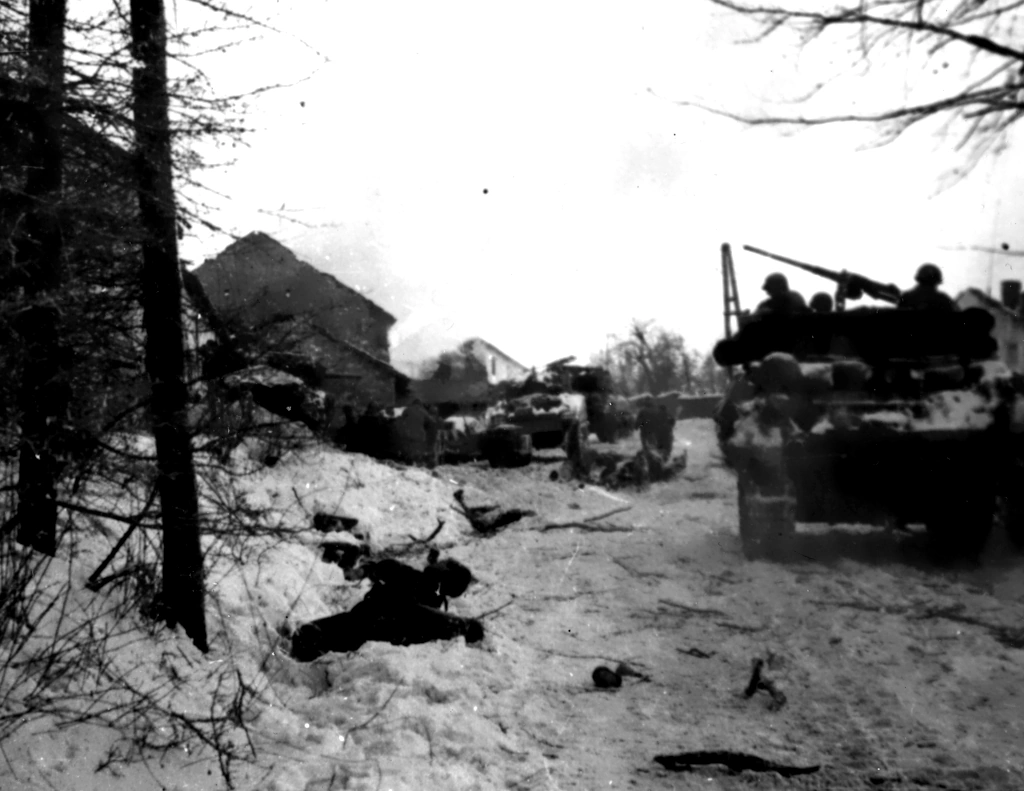
At 1200, December 22, the Gruflange garrison was ordered to move north to Crombach (Belgium) where the CP of CCB 7-AD was located. There, Alexander reported to Gen Bruc e C. Clark, and received a mission to provide foot patrols to go northwest towards Hinderhausen (Belgium). The foot patrols were completed, but in doing so the members of the patrols found that their activity drew enemy artillery fire from the east and southeast whenever they moved across open terrain. The patrols returned and the Cavalry elements were billeted in the houses of Crombach as darkness fell on the night of the 22nd. In the building that he had chosen for a CP, Alexander and some of his non-coms listened to the radio traffic that was going on between the tank and tank destroyer elements of the 7-AD in the Crombach area. It was around midnight when the intercom blurted out the news that ‘one or four or six Mark VI-2 Tiger tanks were headed for Crombach from a northeasterly direction. The enemy were reportedly coming along the rail line that passes near Crombach as it runs from St Vith, south torards Gouvy (Belgium). Alexander reported the gradual development of the morale of the tankers and TD men as they spoke over the Intercom. At first there was a studied coolness to the voices that reported the tanks. Frequent assertassions that ‘#e’re ready, let the bastards come’, crackled back and forth over the wireless. However, each successive message held less confidence, and soon it was realized by the personnel in the CP that the mediums and TD’s were not breaking up the tank threat, but rather were abandoning their tanks and withdrawings. They seemed to have little desire to match the armor and fire power of their vehicles against the vaunted Tiger.
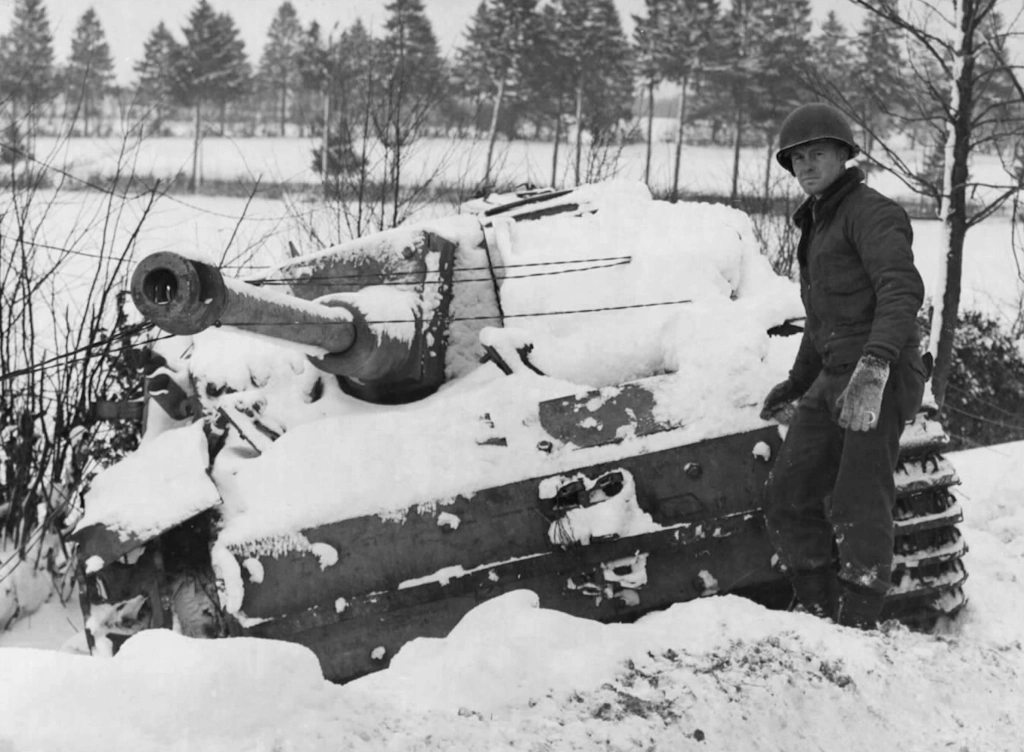
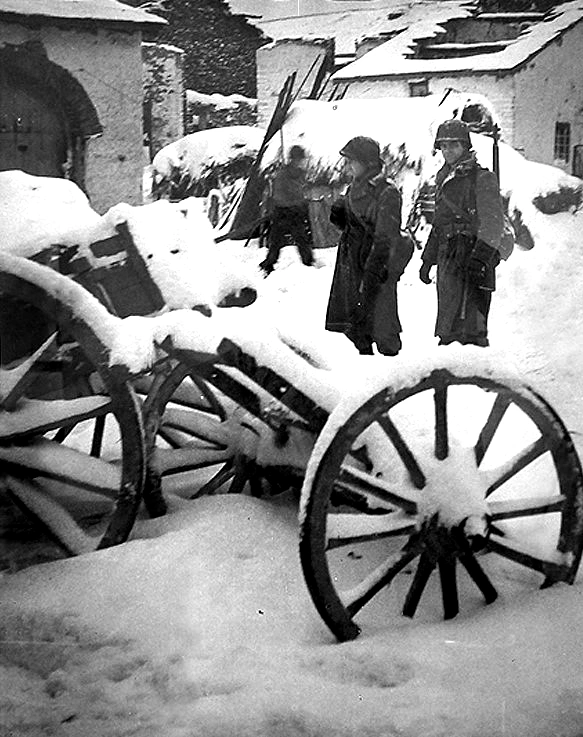 An unidentified colonel grasped the situation quickly and set out on foot to bally the men who were breaking. He collared the crews of two M-10 TD’s and three medium tanks, made them place their armored vehicles in positions for the close-in defense of the town. Meanwhile, there was a hurried scuffling to get the remnants of the infantry troops back in their positions together for a defense of the town. In the confusion few of the squad leaders or platoon leaders knew exactly where their men had gone to sleep. Names were a called by many different voices, and there were altercations amongst the junior commanders as to who was responsible for what sector. Alexander deployed the cavalrymen in a firing line, gave them sectors of responsibility, but could get no cooperation from other junior leaders as a means to protect his tank and rear. Finally, though from what source no one seemed to know, a rumor-order passed through the group in the town, announcing that this place was ‘untenable’. Troops and vehicles on all sides began to pack up shop and leave. Alexander’s troops held for half an hour, but as small arms fire and what were thought to be bazookas started blazing at the other end of town, the cavalrymen, too, mounted vehicles, picked up the infantrymen that wanted to ride with them, and started back for Gruflange.
On the way out of Crombach, just prior to the first light of day, small arms fire sputtered against the cavalry column at (805843). Everyone immediately dismounted and returned the fire. Several long bursts of .50 cal fire in the direction of the enemy fire seemed to suffice in quieting it, and when it was not returned, the cavalrymen again mounted and continued towards the southwest. Arriving at the high ground that overlooks Gruflange, the troops found that Gruflange, in their absence, had been taken over by the enemy. There was still a good deal of confusion around the road intersection at Maldange (Belgium), but the superior ground there, and the necessity for keeping that intersection open resolved a defense of that area. Under the directions of Capt Lindsey, Lt Alexanders’ troops were stationed there. The fire of the cavalry reconnaissance vehicles and assault guns was augmented by the arrival of the light tanks that had been in mobile reserve.
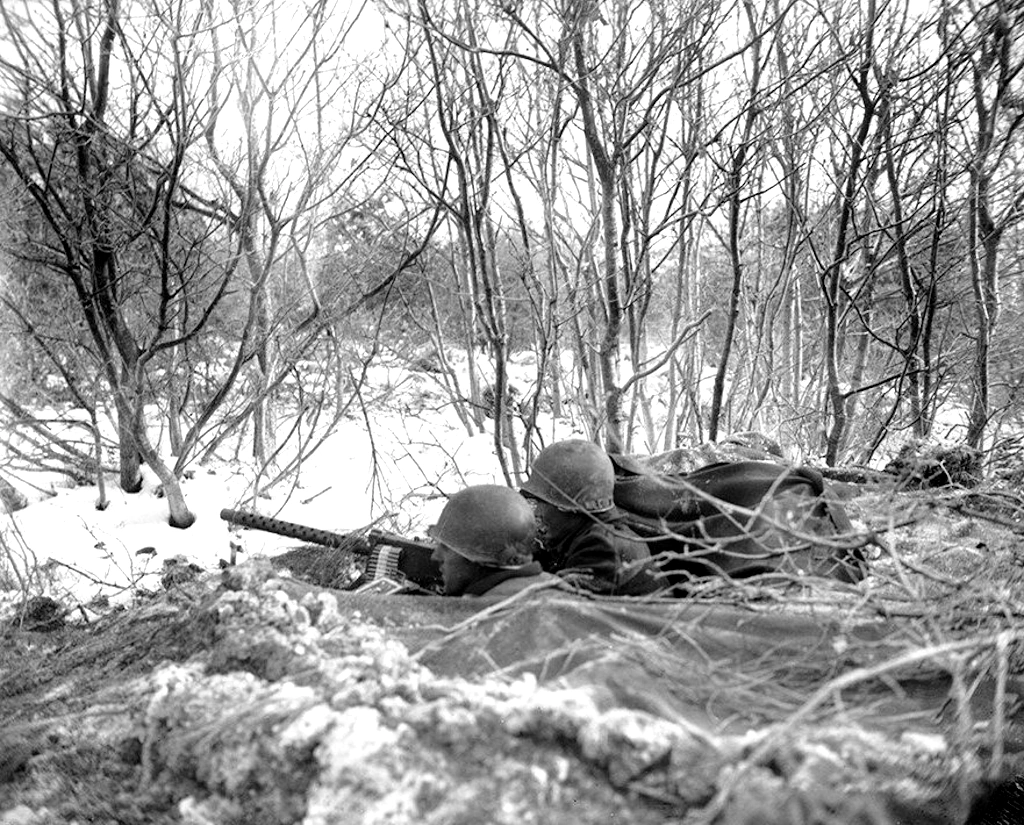
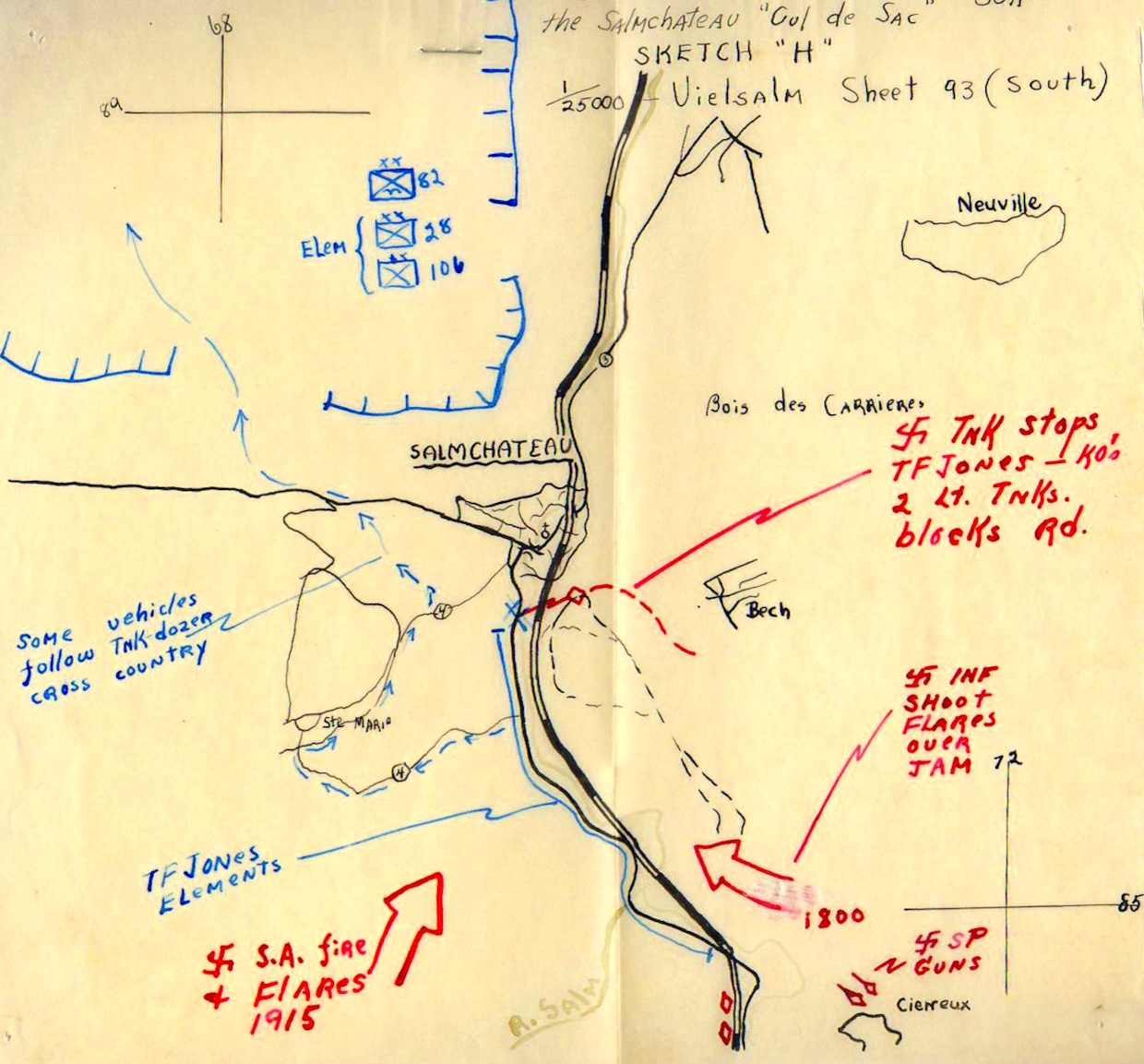
The defensive position at Maldange was established at 0900, December 25. In addition, to the troops of Task Force Lindsey, there were about 200 infantry troops that had been straggling past. They were pressed into service to man this defense line. At that time, the elements of Task Forces Jones, Task Force Lindsey and other 7-AD elements within the ‘Fortified Goose Egg’ had started their withdrawal from the perimeter’s shell. H-hour, designated by the 7-AD Command had been 0600, and at that time elements started to systematically withdraw out through the Bovigny – Salmchateau escape corridor. Task Force Lindsey had been instructed to fight a delaying action in the area near Maldange – Beho. More specifically they had been instructed to hold at Beho until 1500 at all costs, then , at H + seven hours they were to withdraw through the corridor. The cavalrymen automatically assumed the responsibility for the safe withdrawal that had attached themselves to the vehicles. Hardly had the defensive line been established than the enemy started to attack. Initial estimate of the attackers was somewhere in the vicinity of 500 foot troops, supported by artillery, mortars and self-propelled assault guns. With a generally stubborn defensive stand, the elements of Task Force Lindsey stood their ground and smashed the infi1tratton attack of the enemy. There seemed to be little effort made on the part of the enemy to coordinate the use of its supportings fires to complement the advance of the foot troops. It was just a case of all the enemy spasmodically working forward, while the cavalry weapons sought remunerative targets for automatic weapons, light cannon and mortars.
The defensive barrier eventually began to disintegrate at 1245 when the 1st platoon of the task force, accompanied by its assault guns, broke contact and withdrew to Beho. In turn, the second and then the third platoon climbed onto their vehicles, followed the first and passed through it at the Beho crossroads. Self-propelled TD’s from the 7-AD were at the crossroads when the elements of Task Force Lindsey passed through there at 1315. Experiencing none of the difficulty that later caught elements of Task Force Jones in the Bovigny – Salmchateau ‘cul de sac’. With no other opposition from enemy sources, the B trooper went to Cierreux (Belgium), where they were released from the Task Force Lindsey assignment by Maj Dill, executive for Lt Col Damon in the reorganized Cavalry squadron, At Rahier (Belgium) the cavalrymen tacked onto the group column that was headed for Aywaille (Belgium), where they spent the night of December 23/24. Their task in the operations of Task Force Lindsey had come to a conclusion, a conclusion that prompted Gen Clark of the 7-AD to say of them: One dam good job of delaying action – a job well done’.
From Aywaille the B troopers moved to Xhignesse (Belgium) where they arrived at 1200 on December 24. They had only managed to get about four or five hours of sleep the night before. By 1515, the original B troopers had been separated from the attachments with which they had been working in Task Force Lindsey. At 1700, Maj Dill instructed Capt Lindsey to form a T/O troop for immediate attachment to the 87th Cavalry Reconnaissance Squadron of the 7-AD. To do this it was necessary for Lindsey to draw about 24 men from the Group’s Headquarters Troop, and requisition about 14 vehicles from the newly-organized Headquarters Troops of the 14th Provisional Cavalry Squadron. Finally, Lindsey found that he had about 120 men, the necessary vehicles, and was more or less ready for combat. All of the men were very tired from the eight days of fighting that they had done, and this fatigued state was reflected in their sleep-sluggish eyes and wearied reactions. It was with no Christmas spirit that they set out on a new mission of Christmas Eves. It was with difficulty that the B Troop of Capt Lindsey located the command post of Lt Col Boylan’s 87th Cavalry Recon Squadron. Having first gone to Grand Bru (Belgium), he finally made contact with Boyland at 1150 on Christmas Day. Boylan sent the troop to be billeted at Deux-Rys (Belgium), where they had a Christmas diner of hotdogs. ‘That, we will never forget‘, said Lindsey.
At 0200 on December 26, Lt Col Jones, the commander of Task Force Jones that had fought and then been trapped in the Bovigny-Salmchateau corridor, arrived at the CP of Lt Col Boylan’s Reconnaissance Squadron. Jones was in an excited state. He reported that as his jeep passed through the central road net in the vicinity of Grandménil – Manhay, 6000 meters to the south; he had been fired upon by German tanks. This road net nerve center was regarded as a critical communications point and steps were immediately taken to retake it, and/or event the German armor from using it. Lindsey’s troop was immediately alerted, rolled out of their blankets and prepared to move. In the hodge-podge planning that was necessitated by the enemy’s unexpected appearance in this sector, the command had difficulty in marshalling forces from the many units that were scattered through the area. Few units were cognizant of just who or where their neighboring units were.
Lindsey visited the CP of Gen Clark, CO of CCB 7-AD, where he was instructed to reform his reconnaissance troop into two infantry platoons. He hurried back to the billets of his troop, split the troop into two parts – designating these separate platoons as the first and third – the men from the second platoon were interspersed amongst the personnel of the other two platoons. Finally, the organization resolved itself into two platoons composed of two 12-man squads in each platoon. In addition to the M-1 rifle, M-1 carbine and M-1A1 Thompson Submachine Gun’s that the individuals were equipped with, Lindsey distributed two M-1919 cal .30 LMG’s to each platoon. Lt Col Fuller of the 38th Infantry gave Lindsey his first movement orders indicating that the troop should be formed on an Line of Departure at (605019). Leaving the radio operators behind, Lindsey moved his bastard platoons out mounted on eight jeeps. These jeeps were left on the main road that led to Grandmenil, where the drivers stayed to care for them. The second of a series of contradictory and confusing orders came about 0500 on December 26. Lt Col Fuller returned to tell Lindsey to move his troop to (615229) a few hundred yards south of a rustic crucifix, where they prepared to attack towards the south. The situation was continually confused by orders during which the troopers did little but dig-in to escape the spasmodic shelling that the enemy infrequently threw into the area. Greatest danger was the possibility of tree bursts for the area was heavily wooded.
Finally, at 0730, Fuller informed Lindsey that the troopers would move south from their positions at 0915 for the purpose of securing Grandmenil. At the start of the attack, B company of the 38th Infantry was on the right of the B troopers, and a company of the same regiment was on their left. Communications were poor because of the unorthodox system of assigning sectors to the remnants of all units that happened to be în the area. As the attack developed, the cavalrymen were to find that their flank units kept continually changing, and finally, in the last phase of the attack, completely new units would be situated on their left and right. Little enemy opposition was experienced as the troops left the Line of Departure and started sweeping towards the south. The same control that made the flow of information insufficient hindered the control of the attackins units, and the attack moved more slowly than it should have.
Shortly before noon, as the troops reached a section of the terraïn where the woods thinned out into semi-open fields, the B troopers received the single heaviest casualty blow that they had taken in the counterattack. A Single round of flat-trajectory fire slammed into a group of troopers who were working towards a suspected enemy machine gun position in a strawstack near a house, seven were wounded, two of them mortally by the burst. Shortly after this occurrence, the B troopers found that the narrowing of their sector of the advance had caused them to be ‘squeezed out’ of the attack. They were instructed to move to the west and were committed in a second sector that faced towards Grandmenil. Little advancing was done from this new commitment, when they were again shifted back to their old sector. There they worked forward to the line along the secondary road at (524003) where their advance eventually ended. There they dug in, shivered in their foxholes during December 28-29 while the enemy continued to throw in occasional artillery fire.
At 1400, on December 29, 1944, the troop was relieved by Love Co of the 291st Infantry Regiment (75th Infantry Division). Lindsey moved his men back about 1000 yards where they remained in regimental reserve for the 291-IR, then the cavalrymen were released to the 87th Recon Squadron, who, in turn, released them to the 14th Cavalry Group at 0700 on December 30. The Group was withdrawn from the front on January 1, 1945, and went to the positions near Liège where these interviews were made.
(For fuller details on the activities at Thommen and Espeler see Interviews with Fox Cos of the 18h and 32nd Squadrons. Repetition of detail made it inadvisable to treat these actions fully in this interview).
Additional Images
(French) – https://www.whitebison.be/historique/cela-sest-passe-chez-nous/id/157/des-v1-v2-sur-bierset
(French) – https://www.belgiumwwii.be/image/slideshow/54797-liAge-place-du-marchA.jpg
(French) – https://vielsalm.blogspot.com/search/label/Vielsalm