



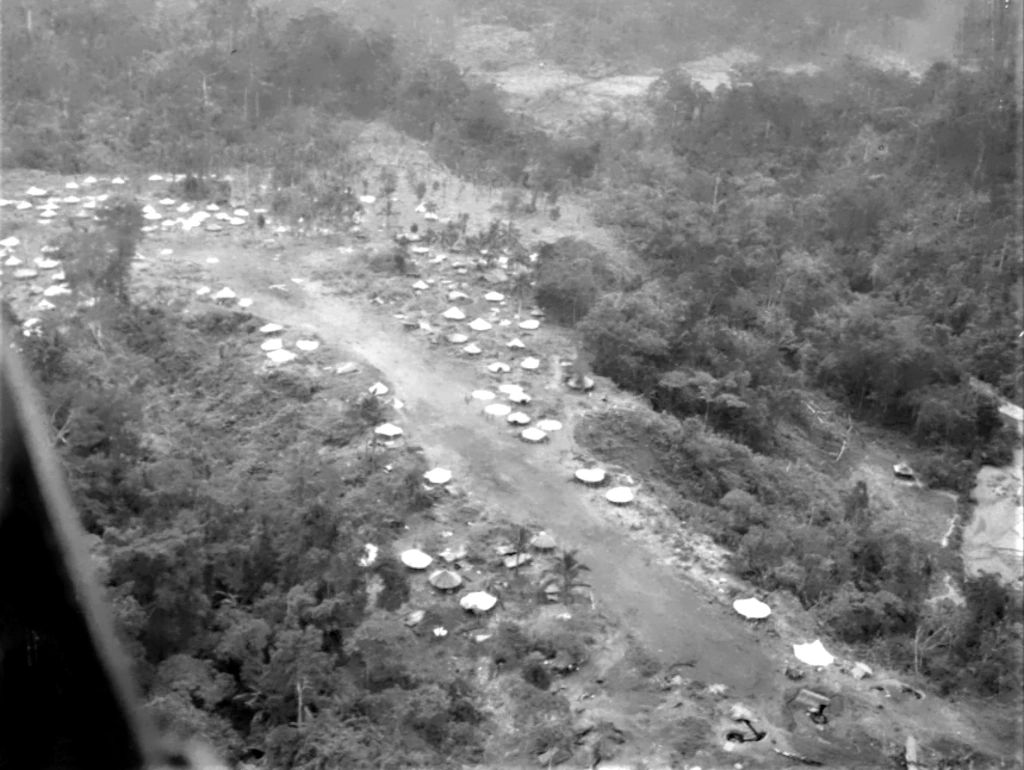
The next morning, the 3/511 moved out along a creek bed from its perimeter at Mawala, to join the 1/511 at Manarawat. As the last man of HQ Company was leaving the perimeter, it was brought under intense rifle fire from the gorge below. Upon investigation, it was found that the creek bed had made a hairpin turn and that the lead elements of the battalion were firing at the top of the hill where they had just left. Luckily, all shots were, wild and no one was hurt. The rest of the trip to Manarawat was upstream and very slow; but by late afternoon, the battalion, less How Co, joined the 1/511 and became part of the perimeter defense.
Upon arriving there, the battalion found that Manarawat was being cleared for a liaison plane strip. The next few days were spent clearing the strip and while receiving a small amount of supplies, dropped by liaison plane. The 81-MM mortar platoon of HQ Co, left Burauen without any of its mortars. The probability of its employment in our advance to the west made it necessary for the platoon to be able to provide at least a small amount of support to the battalion. As a result, two mortars and approximately 60 rounds of HE light ammunition were dropped by liaison planes. The tube, bipod, and ammunition were dropped by parachute; but the base plate was merely thrown out of the plane. It was here that the 3/511 received the first of several casualties by aerial drop. Pfc Jack Jones, of the mortar platoon, was hit on the back of the head by a free-falling base plate and died the same night.
George Co, with the regimental executive officer leading, moved out from the strip to relieve Charlie Co. Their attack combined with the attack of the 2/511, moving up from Burauen, finally accomplished their relief. At Manarawat, the division made its first combat jump. Battery A of the 457th Parachute Field Artillery Battalion utilizing one C-47 with para-packs, dropped four 75-MM pack howitzers with ammunition and crew ready to fire. It was a short, difficult point to hit and only three or four men were able to jump at each pass. This battery was destined to fire thousands of rounds with a 6400 mil firing sector and a maximum range in support of elements of the division. In the meantime, How Co had joined the 3/511 from Patog and the 2/511 was on its way to the strip from Burauen. At Manarawat the regiment received the mission to proceed to Mahonag and secure the Jap supply trail in that vicinity with the secondary mission of attacking west on December 7 in a coordinated attack with the other elements of the US 6-A operating on Leyte.

On December 2, Lt Fenske, (Item Co), was ordered to take a patrol and locate the route to Mahonag and the Jap supply trail. By 1700, Lt Fenske had returned with the information that he had located a route to Mahonag but had failed to locate the Jap supply trail. The trail taken was from the strip to Mount Gatmon, over Mount Gatmon to Mahonag, a distance of about 7 miles. At 0800, the following morning, the 3/511 moved out by companies, over the same trail that Lt Fenske’s patrol had taken the previous day. Initially, a few caribou were used to carry the mortar and ammunition; but they soon had to be discarded. The condition of the trails, due to the almost continuous rain and the steep inclines made them entirely too slow. In some places, it was impossible for caribou to pass. The mortars and ammunition were unloaded and hand-carried the rest of the way. By late afternoon the 3/511 reached Mahonag without opposition.
Mahonag was a stump studded clearing on the top of one commanding hill about 400 by 500 yards that had been used by the natives and the Japs as a camote (sweet potato) field. It was covered by prepared positions and showed evidence of a Japs bivouac, but the Japs had withdrawn to the surrounding jungles and the hills. When the battalion arrived at Mahonag, a perimeter was set up to ward off any attacks, and again Lt Fenske was sent out with a patrol to locate the Japs supply trail. By 1700 he had returned to the perimeter with the information that he had located a trail some 1000 yards to the south and had surprised and killed 10 Japs. A Japs wire was tapped, but there was no conversation. In the meantime, the regimental headquarters with most of the 1/511, arrived in the perimeter. One company was immediately ordered to set up an ambush on the Japs supply trail, that Lt Fenske had discovered and to take along a wiretapper and an interpreter.
The mortar platoon, of the 3/511, had been busy digging in their two mortars on top of the hill inside the perimeter. Before nightfall, the mortars had been dug in and registrations fired on three different points. On the night of December 5, a small group of Japs using an American BAR (Browning Automatic Rifle) attempted to enter the perimeter but were not successful. The next morning a message was sent from Mahonag to division headquarters, that all troops were out of rations; and if rations, oil, ammunition, and signal supplies were not sent to the positions, we would not be able to continue the attack. By 1600, one C-47 and two liaison planes dropped some ammunition and K rations in a small quantity.

During this ration drop, the 81-MM mortars of the 3/511 did their first firing. While the liaison planes would circle the drop zone they would be fired on from the surrounding jungle by a Japs machine gun. A hurried shift would be made and a few rounds fired in the general direction. This went on for about 5 minutes. Whether or not any rounds hit or even came close to them is not known but they soon stopped firing. On December 6, the 3/511 S-2 section was sent out to reconnoiter a route from Mahonag to Anas to prepare for the advance on the following day. This patrol returned with the information that they had discovered a well-developed Japs supply trail that seemed to continue on through the mountains to the west coast.
THE ATTACK TO THE WEST
On December 7, as a part of a general drive by all units, to wipe out the last resistance in Western Leyte, the 511-PIR pushed west from <Mahonag to Anas. At this time it is appropriate to describe briefly the general drive by the units in Leyte. On December 5, the 7th Infantry Division launched an attack from Daraulaan on the west coast and was proceeding north towards Ormoc. On December 7, the 77th Infantry Division landed at Deposito, 3 miles south of Ormoc, and the 11th and the 96th Divisions started their push over the mountains to the west.
The 3/511 moved out of Mahonag in the order Item Co, George Co, HQ Co, and How Co at 15-minute intervals. Just before HQ Co moved out of the perimeter, two artillery rounds landed; one in the CP, and one about 100 yards north of the CP. No one was hurt and no further artillery landed. The ration supply had been limited since leaving Manarawat and when the battalion started out each man had two days ration, consisting of four boxes of K’s per man. All the small arms that a man could reasonably carry were issued and, in addition, each man had two or three hand grenades. The 81-MM mortar platoon of HQ Co carried two complete mortars, and each man who was not carrying part of a mortar carried two rounds of HE light ammunition (M-49). No ammunition bags were available and the men were left to carry the bulky rounds as best they could. The platoon carried around 30 rounds. The battalion moved out generally west along a narrow undefined trail. The trail was even more difficult than the one from Manarawat to Mahonag. The heavy rains had made it ankle-deep in mud in some places and dangerously slippery in others. At some places, it was necessary to pass the parts of the mortars up to a man on a ledge above, and then, the men had to help one another over the ledge. Frequent breaks were necessary and the movement of the column was very slow.
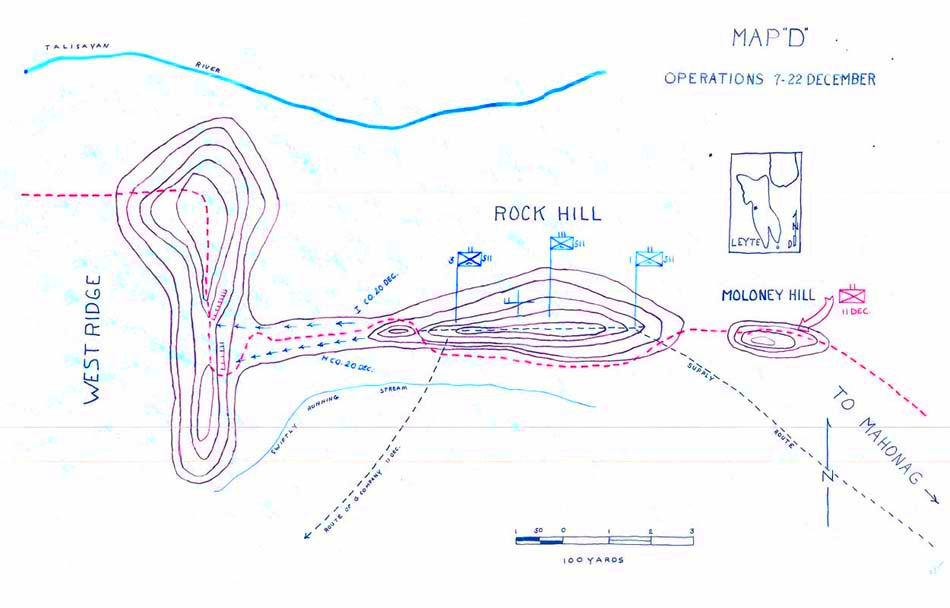
Around 1300, after the leading elements of Item Co had advanced up a steep, jungle-covered mountain ridge, approximately one mile, they surprised a platoon of Japs on top of the mountain. After a sharp firefight, the mountain was taken and most of the Japs were killed. One officer, Lt Maloney (Item Co), was killed in this action. After capturing the mountain (named Maloney, in honor of Lt Maloney) Item Co discovered that the main Japs supply trail in our sector came over it. The battalion commander ordered How Co to organize and defend it and the rest of the battalion passed through and continued the advance west along the supply trail. After moving about 800 yards against light resistance, Item Co captured another high mountain which was even larger than the Maloney Hill. It was late afternoon at this time, so the battalion, less How Co, organized a perimeter for the night. The mountain just captured, Rock Hill (named in honor of the late Col Orin D. ‘Hard Rock’ Haugen), was a narrow, thickly wooded ridge, about 400 yards long and 35 yards wide and an elevation of about 3000 feet. The slopes on the northwest side toward Ormoc were very steep, averaging around 60 degrees. Around it skirted the Japs supply trail.
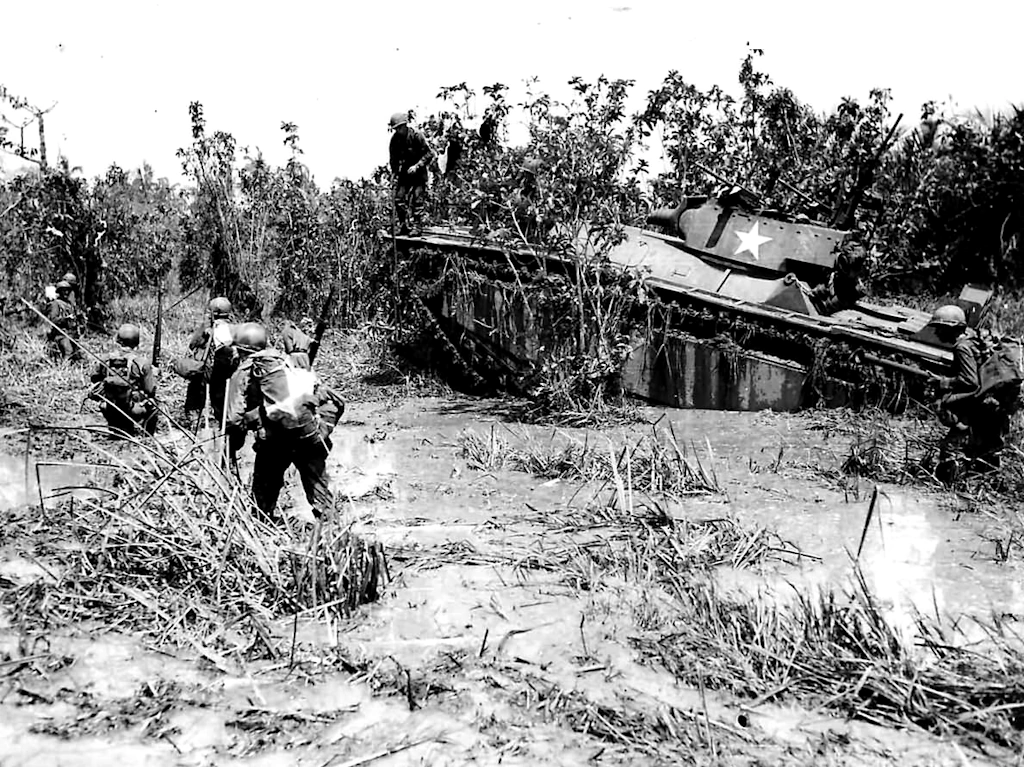
At one point on Rock Hill, a beautiful view of Ormoc Bay could be seen to the northwest. This was indeed a welcome sight and the words I’m dreaming of an Ormoc Christmas were being sung by everyone. We had many more days in store for us, though, before we were to have an Ormoc Christmas. During the day and throughout most of the night, How Co, back on the Maloney Hill, had repulsed a number of Banzai attacks. At 0700 the following morning, George Co moved out from Rock Hill to continue the advance along the supply trail. After proceeding for a short time they were held up by heavy machine gun fire coming from a ridge to the west. One officer and one enlisted man were missing and three men were wounded by this action. Following this, by 0830, the company was ordered back to Rock Hill. The battalion had received orders from the regiment to hold on to Maloney Hill and Rock Hill pending the arrival of the CP group and the 1/511.
During the day, a series of attacks were made on the battalion perimeter by the Japanese using light mortar, machine guns, and riflemen. All attacks were repulsed. During these attacks, the poor quality of the Japanese mortar ammunition was noted. Many rounds landed close to troops but the powdery fragmentation seemed to have little effect. A few men from How Co tried to join their company on Maloney Hill but were unable to do so because of the heavy sniping between the two hills. The next day, the battalion started clearing the top of Rock Hill so it could be located by liaison planes, for the dropping of needed rations and supplies. A trail was made on top of the hill so that the Jap trail running along the side could be used in setting up ambushes. How Co, back on Maloney Hill, had counted 244 dead Japs up to date and were continuing to repulse all attacks. Capt Van Epps, from the battalion aid station on Rock Hill, fought his way through the Jap snipers to the How Co position to take care of three badly wounded men.
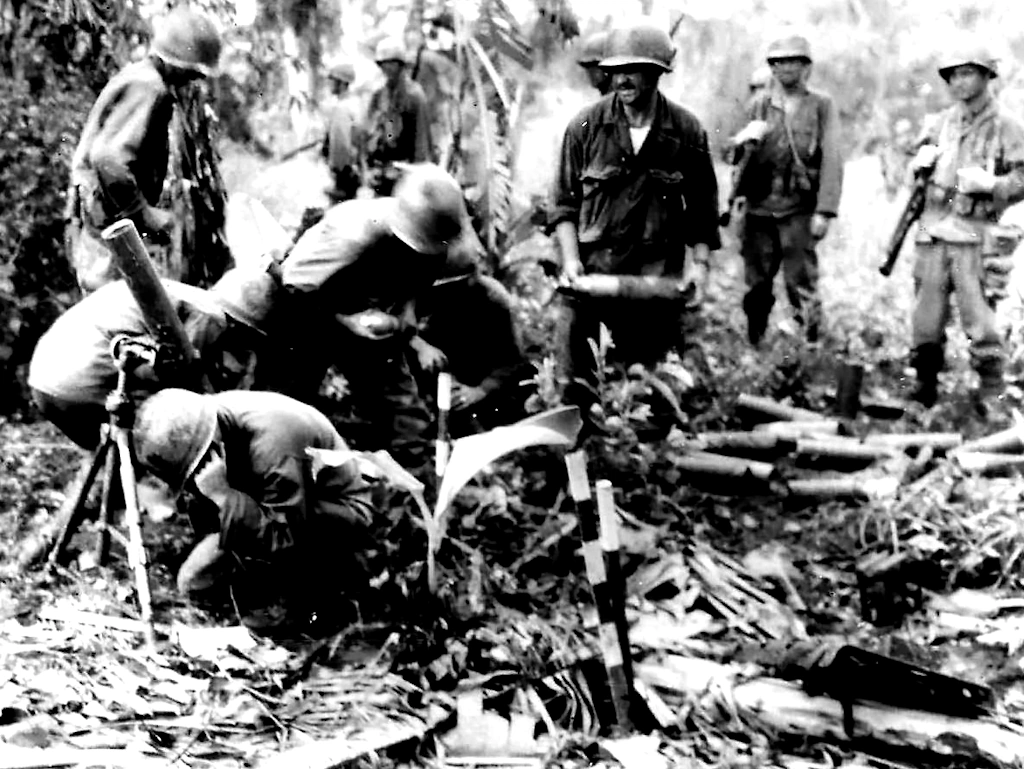
On the morning of December 10, the regimental headquarters group and the 1/511 moved out from Mahonag to join the 3/511 on Rock Hill. On this day the 81-MM mortars of HQ Co participated in an attack for the first time. A strong point had been located about 200 yards southwest of our position and a platoon of Item Co was ordered to take it. This was to pave the way for the continuation of the attack to the west the following morning. One mortar was set up on the trail on top of Rock Hill facing down the route of the Japs supply trail. Two wiremen with a roll of assault wire followed the observer as he moved out behind the rifle platoon. The attack moved for about 100 yards when the lead riflemen were brought under fire by a machine gun on the high ground to the front. One squad was sent around the left and two squads continued down the trail but all of them were soon pinned down by the fire. The mortar observer and wiremen crawled up to the lead riflemen and had the approximate location of the machine gun or guns pointed out. One round was fired at a range that was sure to be substantially over and from there the mortar fire could be worked up to the target.
The first round was way over to the right and a big deflection shift was made to get the fire approximately on the line. The next round was almost on the line but was still way over. A small deflection change was given and about twelve turns up on the elevating crank. This brought the next round on the line and just a little over. It was difficult to sense the rounds because they could not be seen. They had to be sensed by sound. The next round was brought in just a little closer by coming up four turns. This brought the round in very close to the troops but another burst of machine gun fire proved that it was not close enough. The men were told that the next rounds would really be close and the command was given for up two turns – three rounds. These rounds landed practically on top of our men; but after the third round had hit, they walked in and took the hill. Only one man was killed and he was killed before the mortar started firing. After the mortar was brought in on the target area, the rounds could have been placed at any point on the hill and eliminated any troops or machine guns that insisted on staying there. At 1500, How Co had been relieved from Maloney Hill by one of the companies from the 1/511 and had occupied the hill that had just been taken by the platoon from Item Co.
On December 11, How Co moved west along the supply trail towards Anas but was unable to advance because of a strong Japs position about 600 yards west of Rock Hill. George Co was then ordered to bypass this position. The company was given the primary mission of contacting the lead elements of the 7th Infantry Division that were attacking the west coastal plain and a secondary mission of reconnoitering a route from which to attack the ridge that held up How Co. It was unable to carry out its secondary mission due to lost contact but continued on its primary mission of contacting the 7th Infantry Division. The rest of the battalion withdrew to the same position that they had held before and the elements of the 1/511 were withdrawn from Maloney Hill, in preparation for the continuation of the attack on the west.
MOPPING UP
On December 12, the mission of the regiment was changed from attacking to the west to holding the Anas-Mahonag Pass and destroying all enemies in the vicinity of Mahonag and Rock Hill. The battalion commander of the 3/511 insisted on following George Co but was emphatically told by the regimental commander that he would stay where he was. The battalion aid station at this time had eighteen serious casualties on hand and the medical supplies that were desperately needed were not available. The men had not had rations for four days and the supply of ammunition was low, especially for hand grenades. HQ Co of the 3/511 was ordered to carry all the litter patients over the Japs supply trail to the advanced hospital at Mahonag, and on the return trip, to bring rations. After spending most of the morning improvising litters out of cut trees and ponchos, the company was finally ready to move out.
One squad of the mortar platoon with a machine gun attached was ordered to proceed in advance of the main column. This squad had moved out of the perimeter about 25 yards when the lead elements suddenly hit the ground. Upon investigation, a lot of activity and the clicking of bolts were heard immediately to our front. The machine gun was set up in the middle of the trail and started firing rapidly on both sides while both litters withdrew into the perimeter. This fire was returned by machine guns and rifles. No casualties occurred. These Japs had come from Maloney Hill between, our position and Mahonag; a position formally held by How Co and elements of the 1/511, before they were left unoccupied on December 11. In the meantime, the Japanese forces in Leyte were in the process of launching a well planned, but poorly executed, counter-offensive through the mountains to the east.
Beginning around December 4, a marked increase in ground activity west of the Burauen Airfields was noticed, with a large number of Jap troops infiltrating through the mountains. These troops launched an attack on the Buri Strip, near Burauen, at dawn on December 6. At dusk on the same day, an estimated 400 Jap parachute troops landed on Buri and San Pablo Airstrips. They destroyed several liaison planes and a few drums of gasoline before they were dispersed and driven into the mountains. Captured orders and prisoner-of-war statements indicated that the Japanese 35th Army had planned to participate on a major scale with the airborne landings. The 16th Jap Division succeeded in moving large forces into the area west of the airfields, but the 26th Jap Division, advancing through the Mahonag-Anas Pass was stopped by the 511-PIR.
