



The aims of this group were simple. They wished to prepare for the advance of the Americans, save as many lives as possible in the last critical phase before liberation, and keep a record of criminal SS activities and personalities. In this program, they seem to have been quite successful. Since last December they tried to keep certain key inmates as ‘patients’ in the camp hospital where they enjoyed certain protection. They likewise enlisted the help of a great number of block and cell seniors to control the activities of criminal elements among the prisoners and to nip in the bud any provocative action which the SS might use to unloosen mass massacres. They prepared lists of crimes and criminals among the SS and their prisoner stooges. Finally, they tried to keep informed about the advance of the Allies, listening to foreign broadcasts, and spreading the news by their men throughout the camp. When American troops were near Augsburg, they even established contact with prisoners working on farms in that area.
The building up of this rather closely-knit network of activities was facilitated by the gradual disintegration of SS controls during the last months, the replacement of old SS Guards, the comparatively small number of guards toward the end (about 250), and confusion created by orders and counter-orders from higher headquarters. In the last days before liberation, the IPC came practically out into the open. On April 27, for example, a large transport of 6700 Russians, Poles, Germans, and Jews was scheduled to leave the camp. By changing national identity patches and padding the camp records, 1000 Russians were ‘hidden’ in the camp and escaped the transport and destruction. Of this transport, only 60 men survived the massacre staged by the SS guards on the road south of Munich.
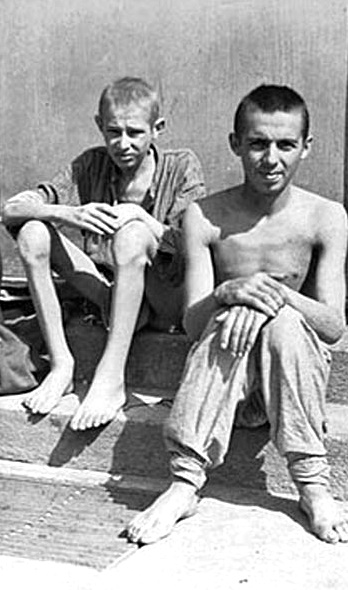 On the following day, the IPC issued circulars informing their fellow prisoners that the committee had taken over, that they should stay in their barracks and maintain law and order to prevent provocations. An attempt by the SS to evacuate another transport on the evening of April 28 failed when the inmates simply did not leave their barracks. Besides this simple aim of organizing to save as many lives as possible, the IPC did not have any program. There was no political activity of any kind and no social differentiation within the group. Even the national distinction which excluded the Germans (except for Mueller) was not actively directed against the German inmates of the camp, but rather a protective measure to guard against possible sabotage of their efforts by German prisoners who were at the service of the SS. Thus, even the activities of the one well-organized group emerging in the camp proved that the only rationale for organizing any group activity under the conditions of Dachau was derived entirely from the primitive motive of personal survival, and not from any social, political, or religious associations.
The IPC is now the highest prisoner authority in the camp. At present it is headed by a former Soviet General (Michailow); the Belgian Haulot is Vice-President. The Committee has daily meetings with the army authorities and is charged with carrying out the orders issued by the American camp commandant. Sub-committees for all necessities, police, food, sanitation, work, disciplinary measures, etc., have been established. In this way, the Committee and its various branches continue to assist in the process of maintaining order in the camp and preparing the conditions for the release and repatriation of the prisoners at Dachau.
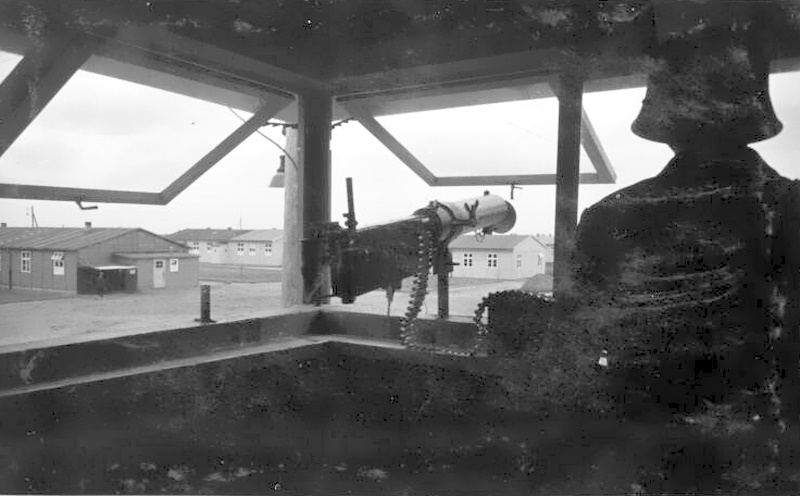
DACHAU, CONCENTRATION CAMP AND TOWN
FWB Section, Seventh Army
INTRODUCTION
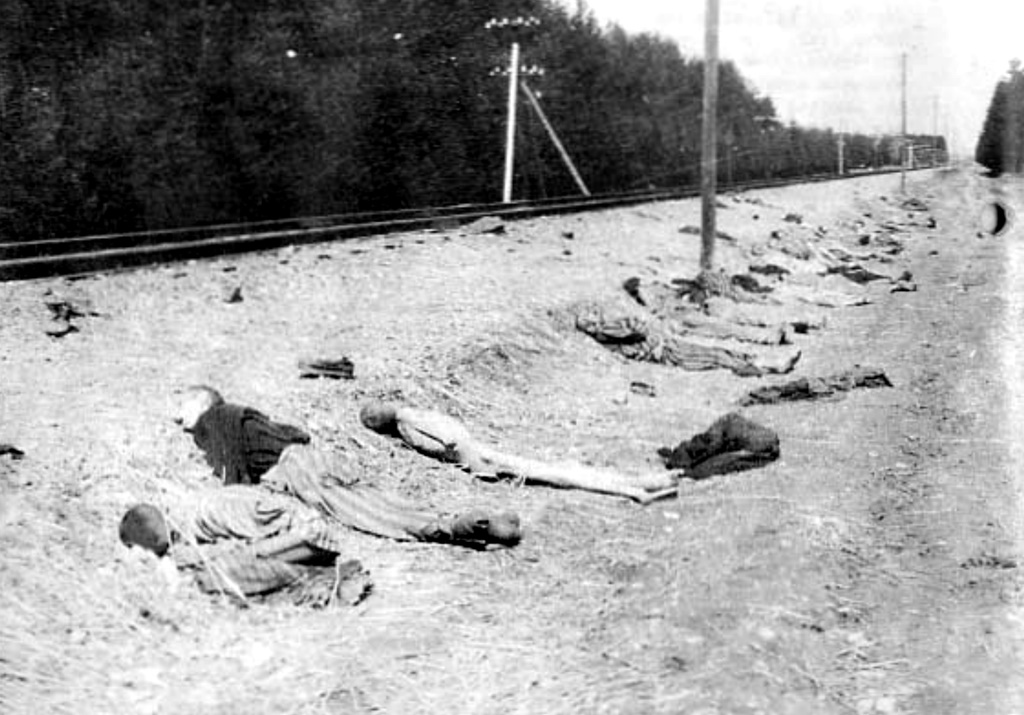 There are no words in English which can adequately describe the Konzentration-Lager at Dachau. Even though one had known of its existence for years, and had even spoken to people who had spent some time there, the first impression comes as a complete, stunning shock. One had always had – in the back of one’s mind – the reservation ‘But surely human beings can’t do this to other people’. The first thing that was seen outside of the Camp was a train of some forty railway cars of all types – mostly flat cars, a few box cars, and two or three ancient third-class railway carriages. In each of the cars thin corpses were lying in all postures, each clad in the pyjama-like uniform of the concentration camps. They lay in their refuse. Some corpses lay on the gravel roadbed, exactly where they fell when they were ordered out of the cars. There were two or three by almost every car door or gate. These were the few who were left alive when this weird train with its ghastly cargo arrived outside the gate to the camp in the afternoon of April 28; for these unfortunates were alive when they were loaded on. They were expected to be dead by the time they reached Dachau so that their corpses could be done away with in the famous crematory.
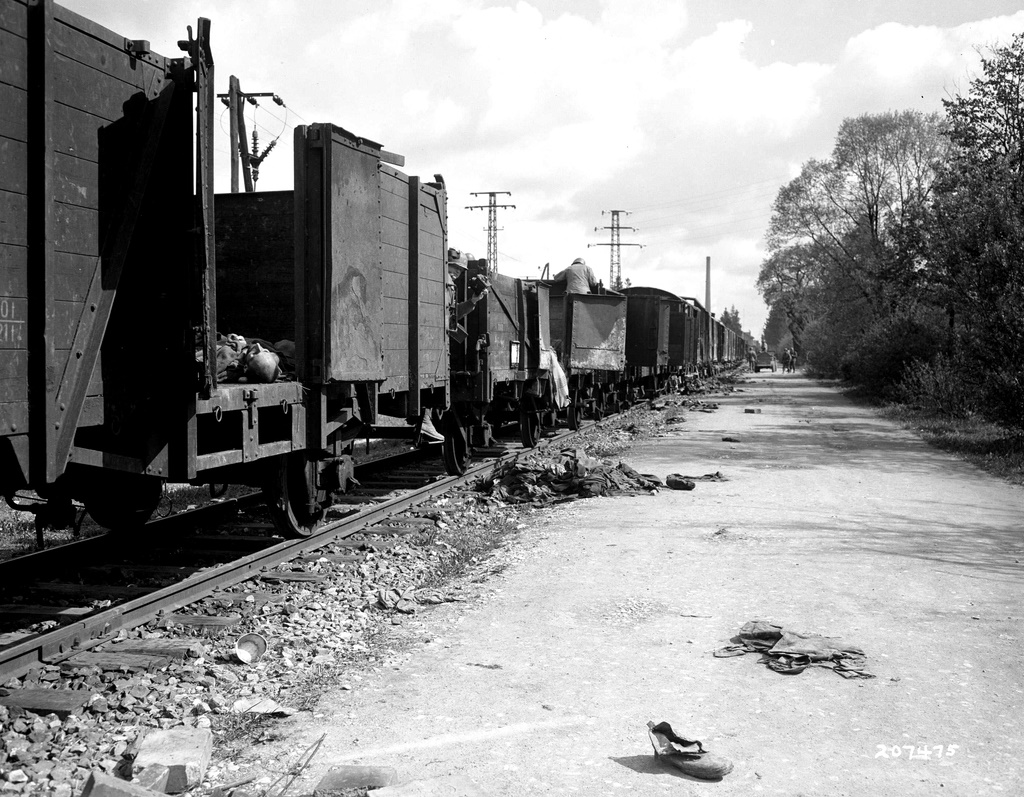 On the spur going directly into the Camp was another train that had recently been unloaded. Human refuse was still caked on the floors of the boxcars that had been the death chambers of unknown human beings. American troops had arrived before the unloading of the train on the main line had been completed. At this writing proof positive of one of the greatest crimes against humanity still lies in the rickety cars and along the road bed leading into the Camp at Dachau. It lies in the shape of the broken, starved-out corpses of what once had been strong men. Men were consigned to a horrible death with a cynicism brutal beyond words or belief.
The purpose of this investigation was to find out two things: (1) What conditions in the Camp had been like, and (2) How much did the townspeople of Dachau know of the goings-on and what was their present attitude toward this monumental crime of twelve years’ duration that had transformed their sleepy little town into a world-famous place. A total of some twenty prisoners were interviewed in the compound itself to determine what conditions had been like in the judgment of these men. Care was used to pick only those with red triangles on their uniforms. (This designates the political prisoner, it was found. There are also hardened criminals in the Camp (Schwerverbrecher). After spending the afternoon interviewing these men, the next day was spent visiting townspeople. As many parts of the town of Dachau as possible were covered, and all possible leads were followed to reach as many different types of people as could be found. While it would be fatuous to claim too much for the results of a sampling technique such as was used in trying to get at the townspeople of Dachau, it is felt that the major types were reached and that the dominant attitudes were discovered.

THE CAMP
It is extremely doubtful if one could, in any other given spot on this continent, find in two minutes fifteen to twenty men who would be prepared to converse with one in any of the following languages: English, French, German. Perhaps in another concentration camp. The objectivity of these men in discussing problems was nothing short of amazing. After eight, ten, and twelve years of being subjected to organized brutality, one still finds men explaining ‘Ja, sehen Sie; Das ist was man muss unter einem faschistischen Staat erwarten‘ (Yes, but you see; That is what one must expect under a Fascist state’ Richard Titze). It can be said that among the political prisoners in Dachau there is nothing that could be called hatred of the German people as such. Their respect for anyone wearing an American uniform is deep. These, then, are the men who gave the facts detailed below, which give a picture of what life was like in the unearthly place called Konzentration Lager Dachau, ‘Es gibt einen Weg zur Freiheit‘: Thus begins the arrogant slogan that faced these unfortunates every morning as they stood roll-call. Roll call? They were counted. From all over the compound the large white letters painted on one of the buildings can be seen. They seem to follow one around. ‘Es gibt einen Weg zur Freiheit‘. Seine Meilensteine heißem: Gehorsam, Sauberkeit, Nüchternheit, Fleiß‘ (There is a road to freedom. Its milestones are: Obedience, Cleanliness, Sobriety, Industry).
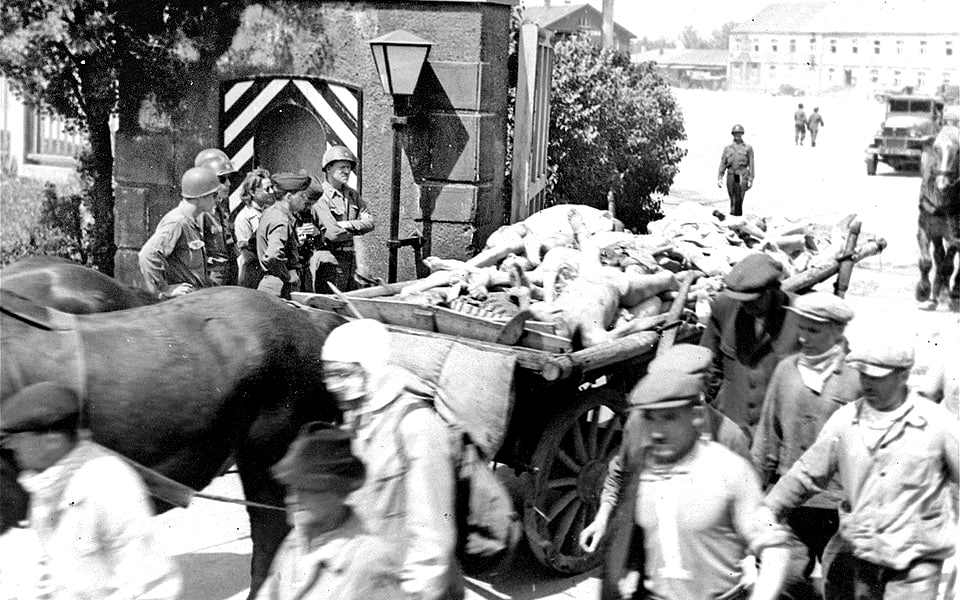
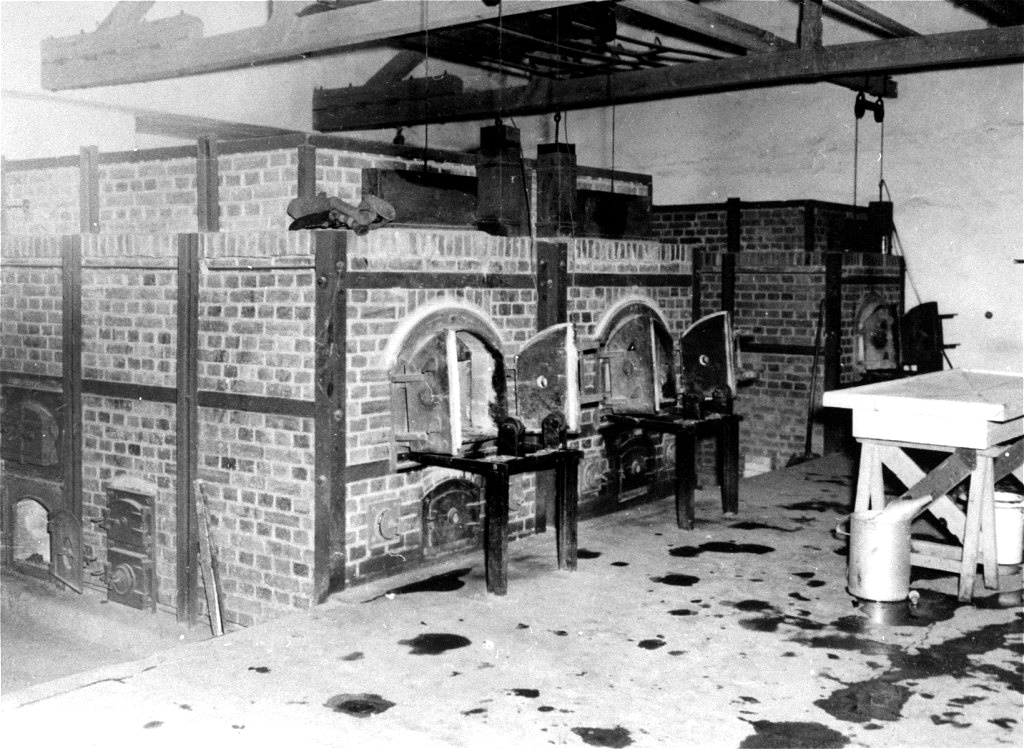
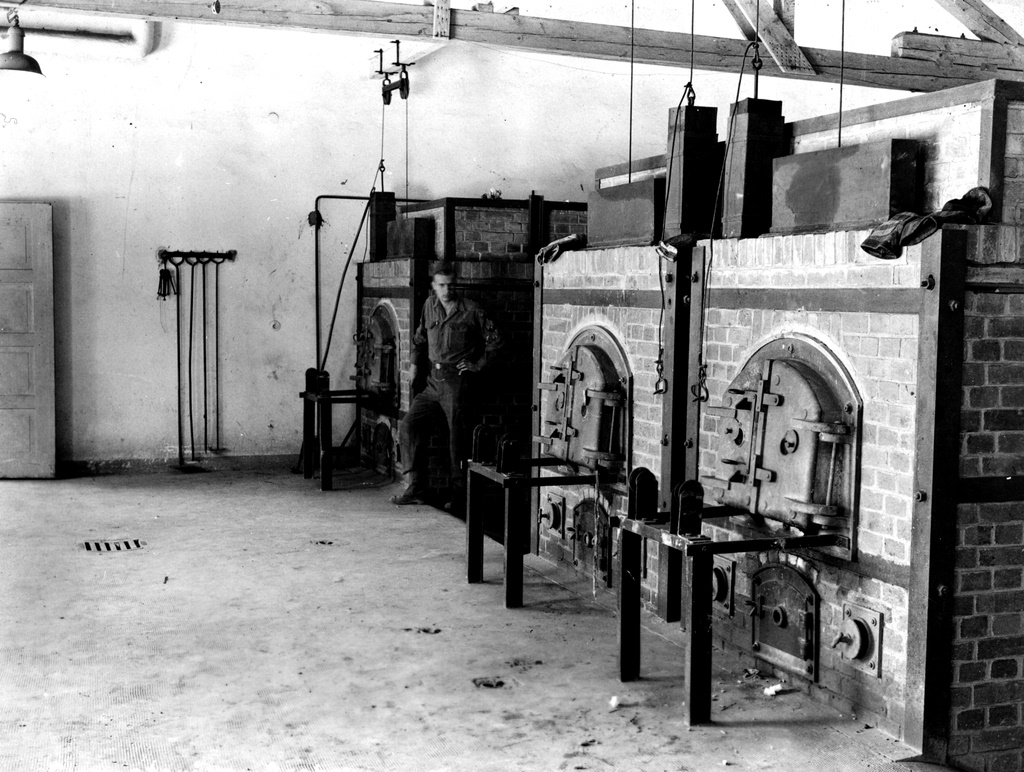
Within sight of this slogan, between 13.000 and 15.000 men died in the last three months alone. They died mainly of starvation and an epidemic of typhus fever. No one was concerned about the dead as far as name, family, and origin were concerned. It was merely an administrative problem involving so many corpses on such and such a morning and for which a certain number of men had to be detailed. A report was always made – stating how many carts had been used and how many corpses were delivered to the crematory (Robert Rollin). During the epidemic the crematory became overtaxed (the corpses are still piled eight feet high, stacked neatly) so that the prisoners were set to digging huge pits for mass graves. This had been done once before according to the older inhabitants. While digging the pits in which their comrades – perhaps they – were to be buried, the prisoners may have thought of another ironic slogan that they saw on the grilled gate as they came in: Arbeit Macht Frei‘ (Work Makes one Free).
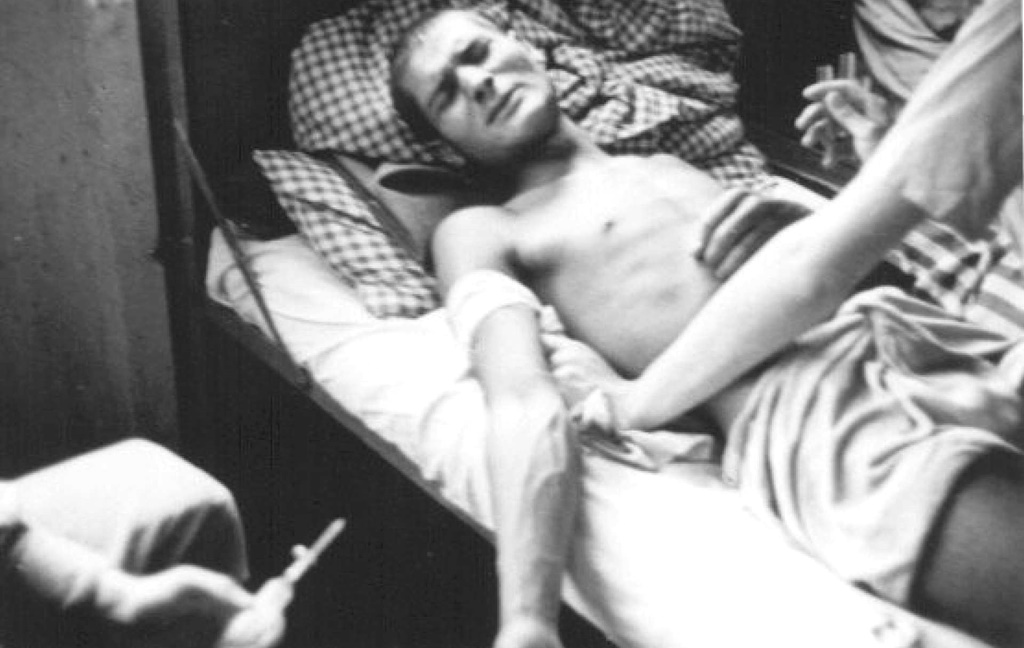
The medical care at Dachau was scarcely of the best. The director and chief surgeon of the hospital was a carpenter by trade. He performed operations personally. The SS rarely murdered anyone: This statement was made by Albert Kervyn, who had been an instructor in Economics at the University of Louvain (Belgium). It is a bitter commentary, but it must be said to his honor and credit that he is still serving the academic ideals of objectivity and truth. He went on to explain how the Camp had been run. The SS men, it seems, had little actual contact with the inmates. The dirty work was done by hardened criminals (Schwerverbrecher) – men who were safe-crackers by profession or who, for a small consideration would murder a person or torture him in a predetermined manner and think nothing of it. This high type of human was quite often put in charge of a room, a block, or a group of blocks. The last (Lagereltester) Camp Leader, was an Armenian who was a murderer by profession. He was responsible directly to the SS Verwaltungsstab. His men were in turn responsible to him in a well-organized hierarchy. These were the creatures, then, who had the power of life and death over teachers, lawyers, university professors, doctors, clergymen (all creeds), and assorted patriots representing practically every country in Europe. Ministers of state have spent time at Dachau.

 The use of typhus as a means to kill prisoners in Dachau concentration camp or any other setting would be considered a war crime and a crime against humanity. It is important to remember that the prisoners in concentration camps during World War II were subjected to horrific conditions, including forced labor, starvation, torture, medical experimentation, and mass murder. The deliberate use of disease as a means of killing prisoners is a violation of the Geneva Conventions and is considered a war crime under international law. In the case of Dachau, it is true that typhus was a significant problem in the camp, with thousands of prisoners dying from the disease during the war. However, it is important to note that the spread of the disease was largely due to the unsanitary living conditions and lack of medical care in the camp, rather than any deliberate attempt to infect or kill prisoners with the disease. In short, the use of typhus or any other disease as a weapon to kill prisoners in Dachau or any other setting is a heinous crime and a violation of international law.
Typhus itself is a serious bacterial infection that can cause a range of symptoms and complications, particularly when left untreated. While I cannot provide a specific description of a prisoner contaminated with typhus up to their death, I can provide a general overview of the stages and symptoms of typhus infection. The early stage of typhus infection typically involves symptoms such as fever, headache, body aches, and a rash. The fever may be high and persistent, and the rash may spread over the body and become more severe. Other symptoms may include nausea, vomiting, and confusion. As the infection progresses, it can cause complications such as pneumonia, meningitis, and kidney failure. These complications can lead to a range of additional symptoms, including shortness of breath, chest pain, seizures, and decreased urine output. Dehydration can also become a concern as the body loses fluids through sweating and may not be able to replenish them without medical intervention. In severe cases, typhus can lead to septic shock, which is a life-threatening condition that occurs when the body’s response to infection causes widespread inflammation and organ failure. Symptoms of septic shock may include a rapid heartbeat, low blood pressure, and decreased consciousness. If left untreated, typhus will be fatal.
The SS rarely murdered anyone. But scenes in which an SS guard figured in a detached sort of way were not uncommon. According to Friedrich Mellwig, a guard might appear in a block at night, and the thug in charge would yell attention (if one weren’t quick about it one might be beaten on the spot). In the hearing of all the inmates a little conversation might take place: ‘Wie viel Personen haben Sie hier Heute?‘ ‘Achtzig, Herr Unterscharführer‘ ‘Schon gut!” (Looks at wristwatch) ‘Also – Morgenfrühe, ich möchte hier nur sechzig sehen‘. ‘Jawohl, Herr Unterscharführer‘ (How many persons have you got here today? – Eighty, Sir! – Very well Now then, tomorrow morning I want to see only sixty – Very well Sir). That night a detail of twenty men would be told off. The SS rarely murdered anyone, but you can bully a man to death, you know – particularly if he is old, was once proud, and you have cut down his rations to three potatoes a day, to conclude Kervyn’s statement. The manner of dying at Dachau was as varied as it was unpleasantly gruesome. It is sickening to detail them. A detail might be told off to disappear into the crematory, never to be seen again. It was most unwise to ask questions. A man’s rations – or those of a whole block – might be systematically cut down. The most horrible sight at Dachau is the corpses who are still actually alive. A detail might be told off on a cold winter’s night, marched off into an unfrequented place in the huge compound, told to strip until naked, and then have a hydrant turned on them. In the morning a cart (manned by another detail) would collect the corpses. A man might become ‘insubordinate’ – i.e., he might cry ‘Stopl‘ while being beaten. In such a case he was taken to the room where other ‘dangerous’ characters were trussed up, wrists behind back, feet just above the floor, was tied similarly – and left there.
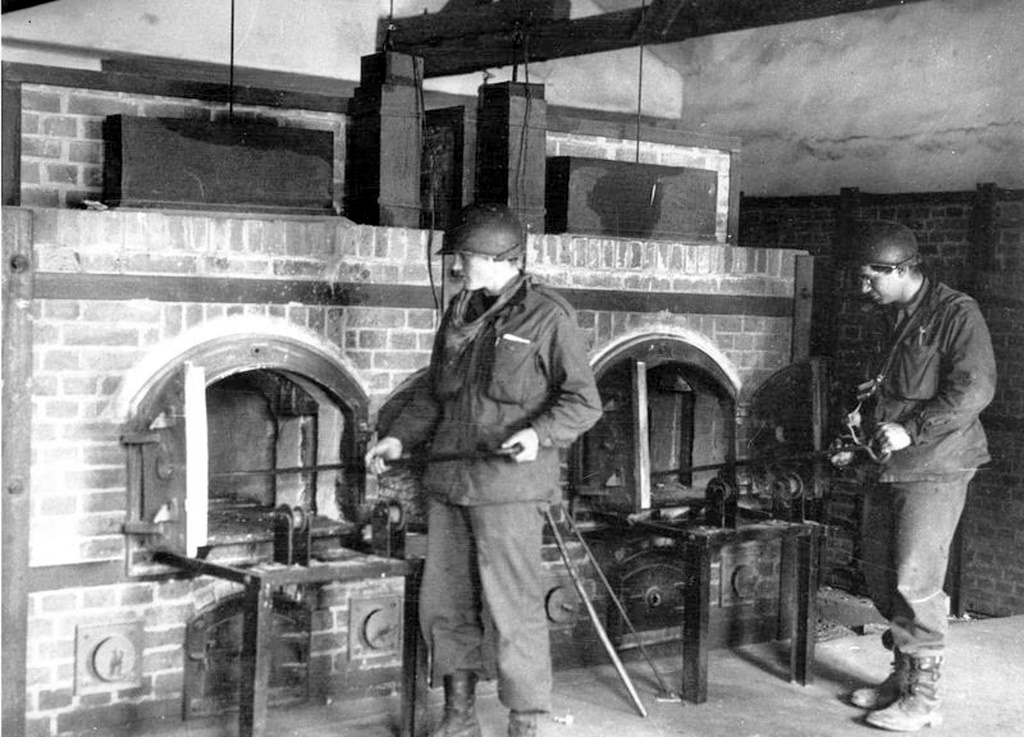
Over the long and infamous history of this place, the most common way of dying was ‘on transport’. Hence the crematory. Random examples: From a transport of 200 Belgians last July, 70 dead; a transport of French civilians arrived last October consisting of eight flat cars in which there were 484 dead on arrival. The few who could walk away were beaten to death on the spot by the guards. Asked by the interviewer whether this was not an unusual instance, Adolf Weber laughed and said: ‘Hier hatten Sie beinahe jeden Tag so ein Bild gesehen!‘ (You could have seen such a spectacle here almost every day!).
THE TOWNSPEOPLE
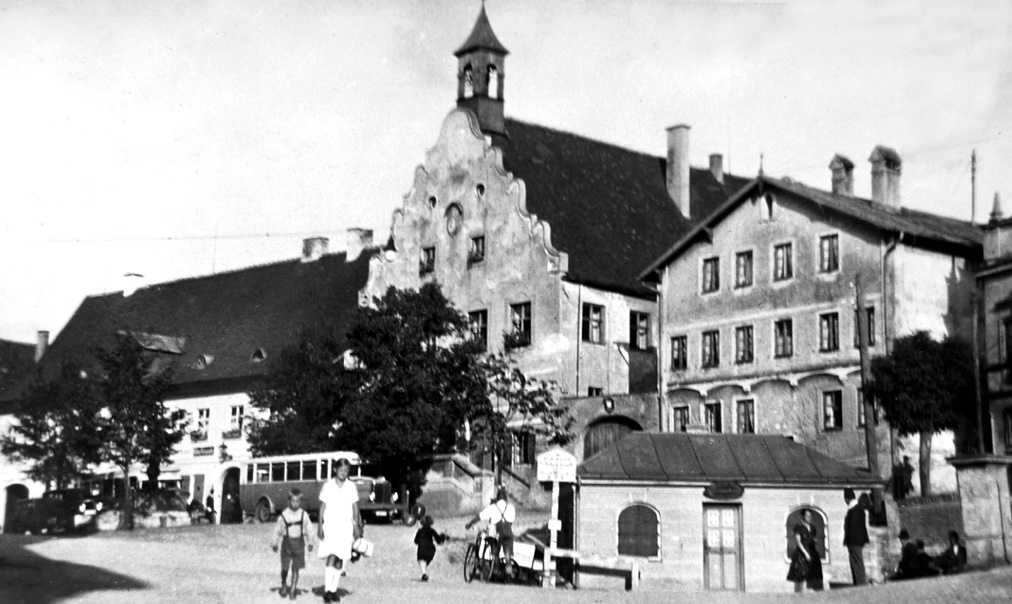
It seems possible to define three broad groups among the Dachau populace concerning their attitudes toward the grisly death camp on the edge of their town. The worst of course have left (the SS officials and their families). This is a fact that was confirmed both by inmates of the Camp and the townspeople. An interesting side-light on the preparations for evacuation made long in advance by these characters is furnished by the incident reported by a Fraulein Scherrer. Some time ago she was walking down a street behind the wife of an SS Hauptsturmführer. As a work detail of inmates passed by in the striped uniforms, the little child of the SS man tattled Mama, Papa has a striped suit just like those at home tool. The woman glanced around and said to the child Don’t you ever say such a thing again!
Wir sind überall belogen worden‘. These words crop up again and again. It is the rationalization of the man who admits, like Franz Egger, that he was a member of the Nazi Party. They generally add a hasty I was forced to by business reasons. This type invariably claims that We were lied to in every respect. They admit that they knew the Camp existed, that they saw work details of inmates passing through the streets under guard, and that in some instances (particularly in the years of ’34 and ’35) the SS behaved brutally – toward the townspeople. When asked whether they realize that in the last three months, a minimum of 13.000 men have lost their lives within a stone’s throw of where they live, they claim shocked surprise. When asked whether they ever saw transports of dead and dying pass through the streets along the railway, they refer only to the last one. They insist that most of the trains came in at night and that they were sealed cars. Did they never ask what was in the endless procession of cars that came in full and always went out empty? Es ist uns erzahlt worden, dass das war Wehrmachtsmaterial und Baummaterial aus Frankreich. (We were told that it was all Army material and booty from France). It can be stated that anyone in Dachau who now claims to have seen only one train of prospective inmates come in in the daytime is telling a flat lie. There are quite a few such people in Dachau.
Was konnten wir tun?; This statement would seem to represent the most popular attitude in the town of Dachau at present. Josef Scherrer is a typical example of this attitude. Here is a man who was without a doubt an anti-Nazi. He had come into conflict with the authorities on numerous occasions because of his anti-Nazi attitude, and the Landrat had already issued a warrant for his arrest by the SS. He was saved in the last minute by his physician who was a good friend of the Landrat – also he might very well have been one of the people on the inside of the compound. The picture given by this man of what life was like in Dachau for people of human decency and some conscience is not a pleasant one. Scherrer insists that the people of Dachau knew very well what was going on in the Camp. He states that resentment was fairly general, particularly because the SS misbehaved toward the civilian population as well. He says that this aspect was at its worst in the years 33, 34, and 35. Civilians quite often tried to give food to inmates who were on work details but were almost invariably prevented from so doing by the SS guards. In the last year, the SS guards became more lenient in this respect, since large numbers of them had been drafted into the SS against their will. (This is a well-known fact that was discovered some time ago in P/W interrogations. Several inmates also told the story of how, last October, a whole SS Regiment was recruited – from of all sources, the inmates of Dachau Concentration Camp. These men were all Reichsdeutsche and under 40 years old. They were given no choice. Das war reiner Zwang (That was pure force). Inmates of all nationalities also admitted that recently the townspeople had been better toward them in the matter of giving them food when they were out on work details).