


February 1 (Friday). Left Chaumont in an open Fiat, but warmly dressed in my flying clothes – stopped at Gen Liggett’s quarters at Neufchateau long enough to say ‘How’ to Heintzelman and Craig and show them my order, then on to Colombey-les-Belles where I lunched with Capt Huntington and the officers of the 88th Observation Squadron. (In July, the 88th would join the 1st and 12th Observation Squadron to form the 1st Observation Group). Colombey field is beginning to take on an air of business – hangars spread around, railroad sidings being put in – Otho Cushing is giving it a good dose of camouflage. On to Toul where I found Capt Macherat expecting me. Met Commander Marmiès who commands the 1st French Aéronautique Army – young and very bright. Capt. Marmiès took me to Ménil-la-Tour at the US 1st Division HQs. Gen Bullard was out at the front with Gen March. On to the French 91st Balloon Company, then thru Ansauville, Hamonville, Mandres-Aux-Quatre-Tours, through a beautiful forest to Raulecourt. We located places for three balloons. The woods were filled with our men and our transport (especially horses). In Toul found a room in the Hotel de Metz annex, a fine large room with steam heat which the landlady offered me as a great favor, the only one left as a matter of fact, and with some doubt as to whether I would accept it at 8 Francs (19 cents). I jumped at it but had to put them stoking up to get any, heat out of the radiator. Dined at the Aéronautique Mess with Maj Marmiès, Capt Macherat, and others.
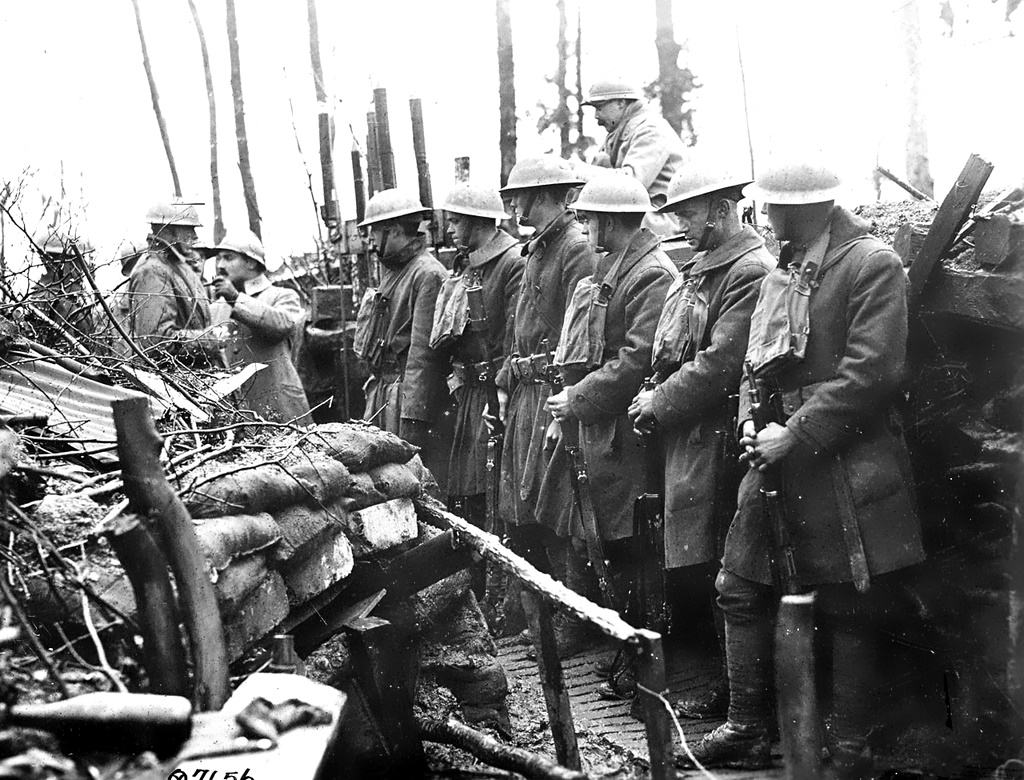
February 2 (Saturday). Beaumont where 1 found Frank Parker nicely located at his HQs, a half dug-out on the side of a high wall that protects him from the Boche shells. Col Aultman (Artillery), Col O’Herne of the Ordnance came în. Lunch in the dug-out – afterward we organized a party to visit the 1st line trenches. This meant rubber boots, steel helmets, gas masks, and pointed canes. With a runner to guide us, we entered a communicating trench on the edge of the town and after walking for 45 minutes reached Battery HQs at Seicheprey. Found Maj Elliott here in command – the one who went to the P.T. with us in 1911. He had had no sleep for 2 days and 2 nights. Another runner then took us on to Company HQs close to the first lîne. Here we found Capt Creswell who conducted us thro’ his lines. It was decidedly interesting. There is a perfect maze of trenches. In one place a line ran through swampy ground, where trenches could not be dug, so a line of gabions (baskets filled with earth) was set up along the enemy side. Large open spaces between these made it advisable to leave about 10 yards distance between each two as we crossed.
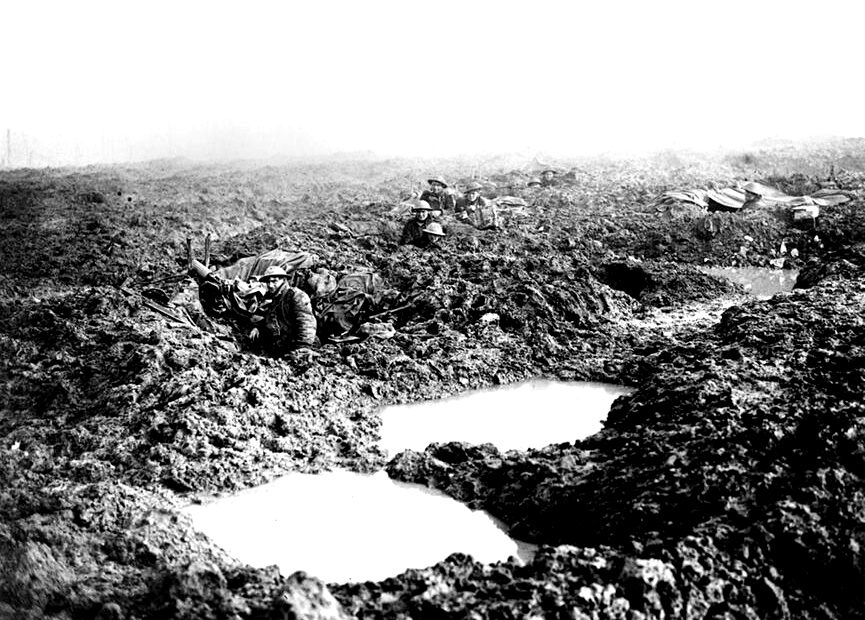
All the trenches have water in them – duck boards are continuous and very necessary. Dug-outs are cut in from time to time and furnish the only shelter the men have. Some of the dugouts were full of water and uninhabitable. Pumps were in constant use to keep the water out of trenches and dugouts. Snow and water were making the trench walls give way, so the chicken wire was used to hold them. In Some places the walls had come so close together that one man could hardily squeeze thru – generally, there was just room for two men to pass. On the front line were occasional machine gun positions and observer’s posts. The latter was little shelters in the front of the trench, with a steel plate with a small hole to look thru, and a blanket was dropped over the entrance to keep the light out. In many places, it was necessary to stoop to keep from being seen over the top. Sniping was going on from both sides while we were there. One old sergeant was particularly active. He pointed out a small concrete shelter in No Mans Land which was supposed to be occupied by Boche snipers at night.
At another point, a rag on the end of a pole near the Boches first line, indicated a guide used at night by the Boches to locate one of his own sniping posts. Small piles of hand grenades were placed at frequent intervals for use when needed. One of the men in this company had tried to use one in the morning, did not throw it when he should, so had both hands blown off and was otherwise pretty well cut up. It was hard to see where the men or officers got much sleep during the six days they are in the first line. At night they work on repairing the trenches. Twice a day, all have to be on the alert ready to receive Boche attacks. During the rest of the day, a large number have to be always on the lookout and ready. Meals are all brought up from the rear by carrying parties.
Our men are in a fine 1ooking outfit and in an excellent state of morale. All seemed very keen and alive. They had not been allowed to fire the first two days they were in, which had been pretty hard on them, and as a result of which the Boches had grown very cocky. However, now they are permitted to fire, and keep the Boches busier and make him more cautious. Creswelt showed us his dugout – a little hole in the ground, lighted with a candle – bunks for two to sleep on, a very small sort of a table – a blanket across the opening to keep out gas. He had got hold of a ham which reposed on a shelf and provided a lunch when wanted, fuses (rockets) were set up with men ready to set them off in case a barrage was needed, barrage to be lengthened, or gas required. One of the men fired a couple of rifle grenades but they exploded in No Man’s Land – did not have sufficient range to reach the Boches. We visited only this one company sector – and spent a couple of hours in it. To the right in the next company sector, they said the water was so deep in some places that hip boots would not keep you dry.
Back to Beaumont and ran back to the 1st Division HQs – missed Gen Bullard, but Col King said they approved of the Balloon program.
February 3 (Sunday). Stopped in Neufchateau for a conference with Heïntzelman – arrived in Chaumont before noon.
February 5 (Tuesday). (Doc Snafu) Lt Stephen Thompson recorded the first combat victory in American aviation history. It certainly wasn’t the most conventional way to get a win. Thompson was in a French aircraft, and he wasn’t even supposed to be in the air.
February 7 (Thursday). To Paris for another conference. Foulois, Fowler, Delagrange on the train.
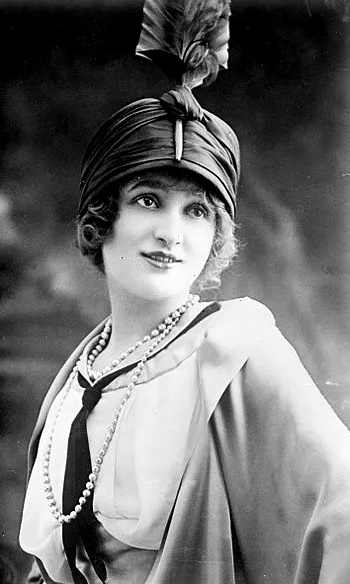 February 8 (Friday). Paris is pretty well stirred up over the recent air raid. The top of a house blown off in the Avenue de la Grande Armée, one bomb in the Rue du 4 September. A French plane that went up to drive away the Boches, landed in the Place de la Concorde, and smashed up – the fate of aviators uncertain. 40 Boche planes are supposed to have been over the city. No warning was given until they arrived at 1130. It then kept up for some two hours, and the French planes apparently did them no damage. The Arc de Triomphe, the statue in the Place Vendome, and the horses at the foot of the Champs-Elysées are being protected with covering. Shopped this morning at the Avenue de Montaigne where I met Fleischman, Gurney, and Jouett in the afternoon. Katherine was pouring tea at the Y.M.C.A. in the afternoon so I met her there. In the evening we went to see Gaby Deslys – very good, very prettily staged. Gaby herse1f is a good dancer, a good actor, and a good looker. She has very good company to back her up including a sort of vaudeville accompaniment.
February 9 (Saturday). Conference at the Avenue de Montaigne in the morning. Chandler, Jouett, Fleischman, Gurney, Capt Verné. Met Grafton at the Café de la Paix. Grafton has added a fierce twisted-up mustache and lost the hair from the top of his head – he looks older, but otherwise the same little Grafton. Had a heart-to-heart talk with Chandler in the afternoon – found what he was disgruntled about and straîghtened it out. Now I am supposed to handle the operations end of the Balloon game.
February 10 (Sunday). Chaumont. This afternoon I took Smith, W.D, for a walkout to Hill 402 where I had a lesson from Fumat on the Nieuport 23.

February 11 (Monday). We had an alert this evening which was interesting but not alarming. The bells all rang, whistles blew and sirens sinned. Truck Toads of Marines went out with machine guns, and everyone watched the sky but no Boches were seen or heard. Probably one crossed the line near Toul and a general warning went out. In three-quarters of an hour, a French trumpeter went around in an auto-blowing the recall.
February 14 (Thursday). Smith and I got into a mess today, in a very nice house on the Boulevard Gambetta No. 16. Col Brown and Col Fleming of the Cavalry, Maj Capp of Gen Atterbury’s staff, Maj Galloway, Capt Joralemon (of the Air Supply Service); Bruce Palmer belongs to it but is sick in the hospital. I had an X-ray taken of my leg and foot today. Visited Col C. deW. Willcox, Barber, and Bruce Palmer are in the hospital today – mostly the same old thing – sore throat, bronchitis, and similar ailments.
February 15 (Friday). The X-Ray shows nothing remarkable, except another probable break near the heel that had not appeared on the X Rays taken last summer. But the doctors assure me that no operation would help, that the exercises I am taking are just what is needed, and that eventually, the foot will return to normal or nearly so. It turned cold today after a month of very mild weather.
February 16 (Saturday). The much-looked-for order came out today. All the services get out of Chaumont, mostly to L of C at Tours, to which place Foulois, as Chief of Air Service moved. Operations move forward, and this takes me to Colombey-les-Belles it is what I asked for, but I admit my steam-heated, electric-lighted billet looks pretty good this winter weather, compared with what is to be found at Colombey.
(0n February 23, Lahm would move from Chaumont to Colombey where he would become Balloon Representative for the Air Service at the Advance Section, Service of Supply. This assignment gave him supervision over the battle training of balloon companies prior to their assignment to tactical units at the front).
February 17 (Sunday). With Fumat, started out in dual control this morning, but tore off the tail skid so had to give it up. This afternoon in a single control two-seater we went to Neufchateau in 30 minutes. I called on Capt Petit, coming bombardment squadron where we landed. I had known him în 1907 – his brother was an ‘écuyer’ (riding instructor) at Saumur while I was there – was killed the following year in an obstacle race. Petit is very much interested in his bombing and has been doing some great work apparently. He is getting over a frozen nose, the result of one of his bombardment expeditions. I nearly froze mine on the 25-minute return trip.

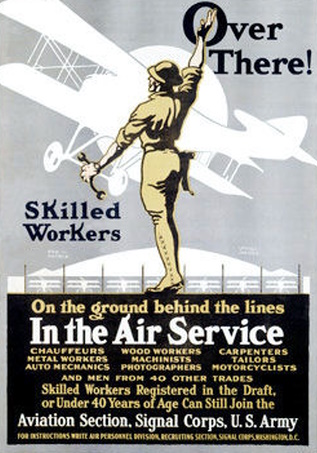 b>February 18 (Monday). The Air Service closed up business at HQs AEF Chaumont today and moved to Colombey. I took the train for Tours, where the Aîr Service Headquarters (Gen Foulois) and the Training, Personnel, Balloon, Radio, Photographic, and Cables Sections of the Air Service were located. There also was the air arm’s HQs Service of Supply; so located because HQs S0S, AEF, was there. This is a training run largely for the benefit of the US and I had been duly warned against it. So with a heavy dressing gown, sleeping slippers, steamer rug, and overcoat thrown over me, I was fairly warm during the night. I gave up the ‘couchette’ compartment to some of our women stenographers who were being transferred to Tours. The cars on this train evidently date from before the war of 1870, so bumped against each rail hard enough to wake you once each half second.
During a brief stop in Bourges, I found an American Red Cross canteen where they brought out hot coffee for the men, stenographer, and myself – this together with the bread and chocolate I had with me, settled the food question satisfactorily. There were signs of great activity at various points along the road. American troops put in large store depots, raîlroad tracks, switches, etc. I am going into this war on no mean scale. Arrived at Tours only 3 1/4 hours late, which was considered very good. Tours is a large place, much more of a city than Chaumont, but already there are signs of its filling up with Americans. Had a long confab with Chandler and turned over to him all the many balloon matters which I have been handling at Chaumont, except operations and instruction in the Zones of the Advance. Chandler, Bérard, and Lt Sebille at the Hotel de l’Univers – met a great many of our people who are already installed here. Poor Chapman is now here in the Training Section, as he says, spending all day passing papers from one basket to another.
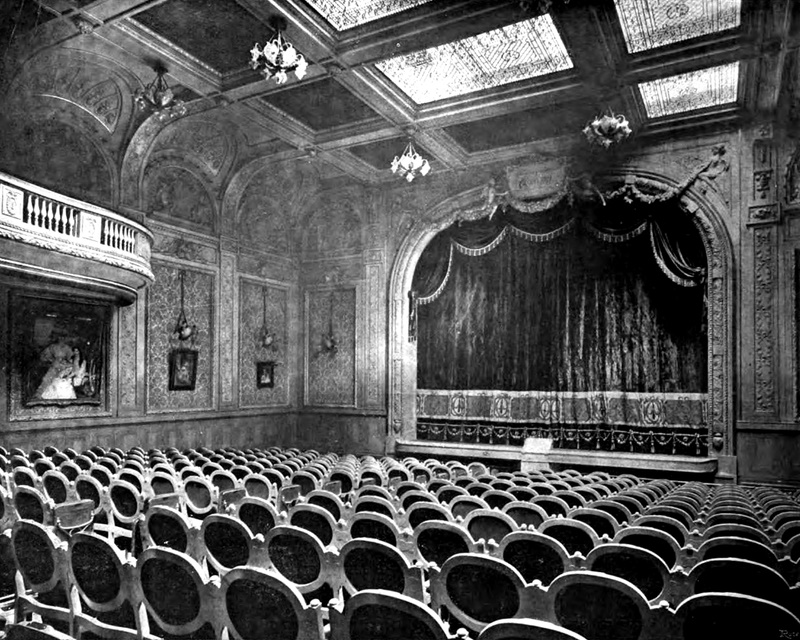 February 20 (Wednesday). Chandler came down to the train for a final word before I left for Paris. Talked to Jouett in the afternoon, and shopped (bathtub and dress suitcase). Poor Emma has the ‘grippe’ and feels pretty bad, but is getting better. She says she is going to give me a needle case for Mme. ‘Votre femme’ (your wife). Dr. Wadhams is in. Took Katherine to a Revue at the Theatre Femina. Very pretty, but Jouett’s morals are being corrupted as he recommended it as a perfectly proper show, and it’s the most ‘undressiest’ thing I ever saw anywhere, even here. Telegrams from Chandler indicate he still wants me to assume the responsibility for the Cuperly Balloon School. Mygatt is calling for help and Chandler passes it on to me.
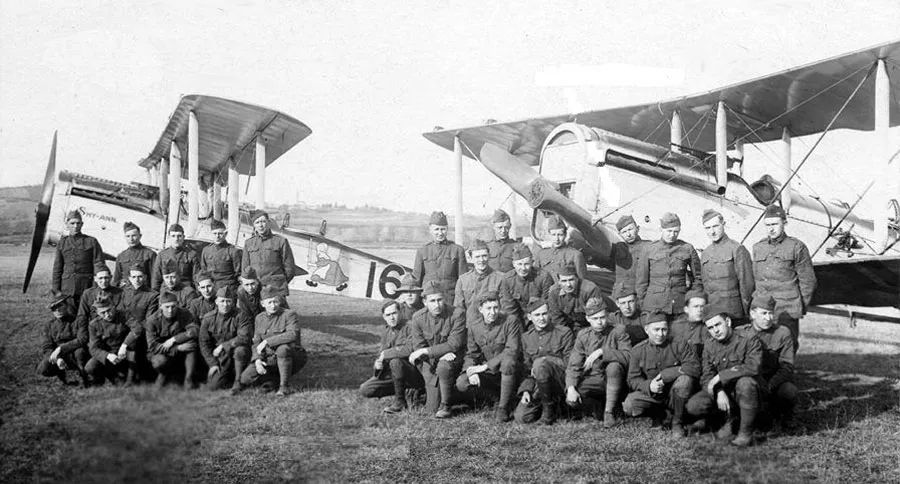
February 21 (Thursday). To avenue de Montaigne to communicate with Chandler relative to Cuperly. Took the noon train for Chalons. Lovell on the train. Met by Mygatt. Kellogg, one of the new instructors coming from Baker Company of the 24th Balloon Squadron. Sat down at our table on the train. It is a pleasure to see how the School is growing – a lot has been done, tho’ much still remains to be done. Thaw was in for dinner. Most of the buildings are here now, tho’ due to lack of labor they have not all been put up. Quarters for the 400 permanent enlisted personnel are ready; for 20 permanent officers, storehouse, headquarters. and one hospital building is all completed. With six instructors on the ground, the Balloon School should be ready to operate shortly. Capt Verne came in this evening to talk things over. He is of great assistance.
February 22 (Friday). Took Bryan and Pleiss in the car with me as far as St Etienne-au-Temple where they were to inspect the French tube dump and park. Had to stop in Chalons to drain the water out of the carburetor (sic). Reached Montepreux just at lunchtime. Capt Isaac was away. The six student officers were very glad to see me, especially the four to whom I gave verbal orders to proceed at once to Valdahon for their artillery instruction. They have been here for over a month and a half and will be delighted to move. Ran over to Mailly and had a few minutes with Gen Coe and Murphy – arranged for the installation of one of the companies of our newly arrived squadron. Then with 50 minutes to catch my train in Chalons started to ‘burn the wind’. A flat tire caused a delay of five minutes and I arrived at the station 3 minutes before train time. It proved to be a half hour late, so I had time to go to the American canteen and lay in a few supplies for the long tiresome trip to Chaumont.
February 23 (Saturday). Busy all day running down orders, getting my own for Colombey.
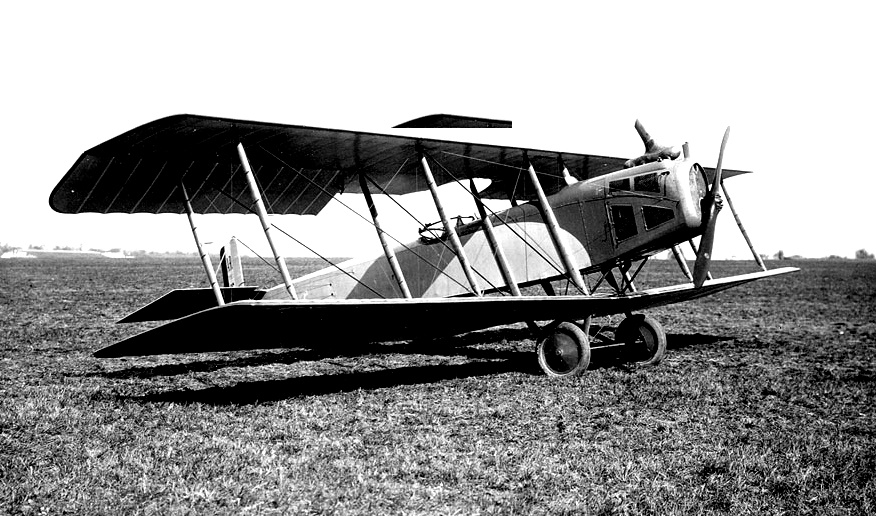 February 24 (Sunday). Started out with Brown in an Avion Renault, (French observation plane. American pilots claimed that Avions Renault stood for Antique Rattletrap), a reconnaissance machine at noon to fly to my new station at Colombey-les-Belles. We had just crossed the woods after leaving Hi11 402 when the motor heated up and started to miss badly. We landed in a field half a mile from the Neufchateau Road, and I started to walk back to Chaumont, 8 kilometers. Soon met a motorcycle train, and borrowed the use of a sidecar, which took me back to the Hill 402 where I got a car into Chaumont – ran on to Walmsley in the hotel. After lunch started out in the Fiat that had come down from Colombey. Mitchell overtook me in his big Mercedes runabout which brought us up in no time – 100 Km (63 miles) an hour on the straight stretches. Had dinner with Van Horn and Monell and slept in a room adjoining Fowler’s in another billet. In the morning when I was paying the woman who owns the house, she said of course, the money makes no difference, and I suggested that in taking în officers to lodge she was doing her part in winning the war. Her reply was a sad one and brought tears with it, Sir, I have helped in another way, my husband died in a military hospital three weeks ago. War is real to these people, and we do not always appreciate the sacrifices being made by the ones we come in contact with.
February 25 (Monday). Otho Cushing is here and is on camouflage duty. Page is out on the hill in charge of the 1st Air Depot. (The 1st Air Depot, at Colombey, was a major receiving and distributing point for personnel, materiel, and supplies, and a site for minor repairs to airplanes, engines, etc). I moved into the billet he vacated in town. My landlord is M. le Receveur of funds for old age insurance, as his door sign shows. He carefully and minutely explained when he gave me my key, that as he would be in bed when I came in at night, I should carefully lock then bolt the door – as he carried large funds, as much as 5000 Frs (about $965.00) in the house. I am in a good mess next door to my billet, run by Louise, who takes excellent care of eight of us in the Operations Department. Met Hall and Pulsifer in Toul this morning and found Baker Company (Balloon) is not due until tonight. After calling on Maj Marmiès and Capt Macherat at the Aéronautique, ran out to the French 91st Balloon Company where I met Butler, a very bright-looking young artilleryman, who has prepared all the documents for Baker Company to use when it starts work.

February 26 (Tuesday). Installed my office this morning and then ran into Toul in the Hudson that has been assigned to me for my use. Baker Company did not arrive until 0400 so stayed (sic) in its cars until morning. It was just starting out with all its transportation and materiel for its position adjoining that of the French 91st Balloon Company. Hall and I went over the details of Baker Company and its operation on the line. Then out to the Company, which had arrived and was about to settle in its quarters. Lt McFarland in command, Koenig and Grant with him, also Sedgewick the artilleryman, and three of our extra officers under instruction. Capt Macherat and Capt Repoux came along. I hurried back to meet Yon at Colombey.
(On March 5, Baker Company, later 2d Balloon Company, became the first US balloon unit to enter into active operations with US troops. Earlier, on February 19, the 103rd Aero Squadron had become the first US air unit of any sort to enter combat. When Baker Company went into the lîne it was located near Ansauville, north of Toul).
February 28 (Thursday). With Col Monell left in Hudson (and the rain) for Flavigny, where we stopped to see Commandant Perrin, then on to Lunéville where we lunched with Capt Porquet and the Aero personnel of the Army Corps. Then visited the 50th Balloon Company where we found Lt Owen, just about to leave for the 74th Balloon Company to be trained as a balloon officer; then on to the 42nd Balloon Company where two of our artillery observers are under instruction; then to the 73rd Balloon Company (all these are French companies) where we found two big huskies detailed from artillery – they are so large that they cannot wear the parachute harness and cannot go up until larger equipment îs received. The wind and raîn today preclude a chance of outdoor work, but they showed us their interesting scheme for indoor spotting, by flashing lights through small holes in a panorama of their sector. We saw the operation of the basket parachute on the ground – it was too stormy for an outdoor demonstration. Left Capt Porquet in Lunéville is about dark, then had a miserable ride back to Colombey in a wet snowstorm.
March 1 (Friday). Took the Anti-Aircraft Board, Lt Col Wright, Chapman, and Capt Pearmain of the Ordnance to Ochey and introduced them to the Royal Naval Air Service (RNAS) Bombing Squadron Commander – who gave some interesting information on the need for anti-aircraft protection. This place has been bombed and machine-gunned five times in the past 4 months. And the Handley-Page bombers! Chapman and I stood and marveled at these leviathans – one hundred foot span, then thought of the little Wright type C we flew at Fort McKinley in the Philipinnes while learning Chapman to fly in 1913. The Wright C type had a 30 HP engine (in fact it was a 50 HP), and these have two 350 Rolls Royce engines. The French squadron moved away from Ochey after the last raid, and when the British tried to do likewise, were informed by the French that there was no other location available! So the Britishers stayed and acted as reception committee to the Boches on future raids. Lunéville looked like an American garrison when we went thru it yesterday. Our division and artillery brigade, operating in that sector, make it apparent that the US is in the Great War – tho’ this is a very quiet sector.
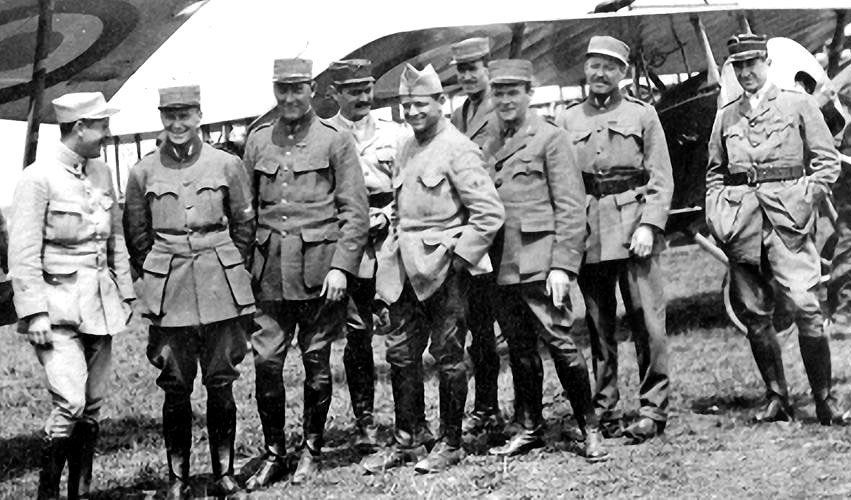
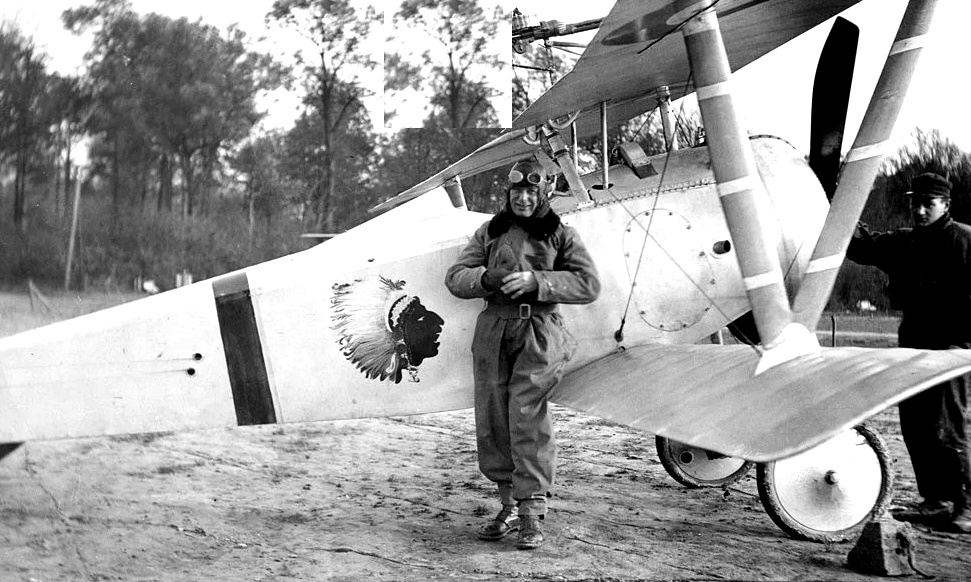
March 2 (Saturday). Started to visit Baker Company this afternoon, but a flat tire held me up at Ochey so I called on the British Royal Flying Corps commander (The British Royal Flying Corps, on April 1, 1918, was combined with the Royal Naval Air Service to create the Royal Air Force). They all talk mostly of the Boche visits they receive occasionally.
