





 Nobody ever defended anything successfully,
there is only attack and attack and attack some more.
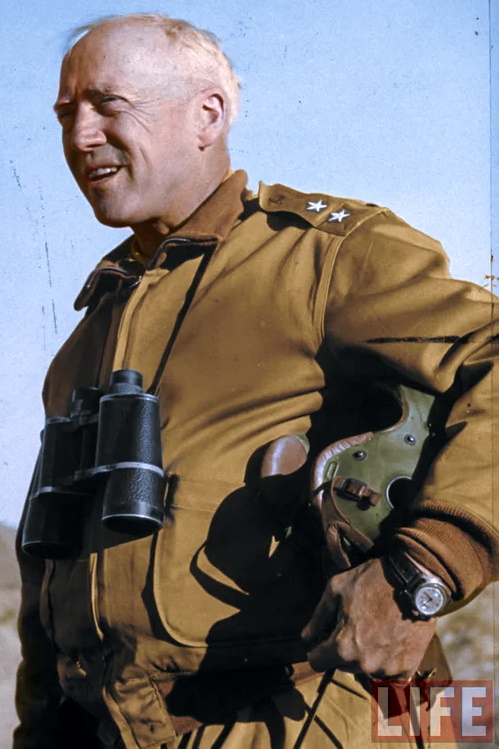
proclaimed Gen George S. Patton. (1) This aggressive approach to warfare perfectly reflected Gen George S. Patton’s views on waging conflict. He was universally recognized as one of the most accomplished Generals of all time, not just during World War II. Patton was critical to the eventual success of the Allied forces in Europe. Throughout the war, Patton consistently defeated the German armies quite decisively, a feat that no Allied general could claim. What made Gen Patton so effective and such an exceptional warrior? To answer that question, it is necessary to examine Patton’s personality and leadership traits and to see how those characteristics directed his aggressive, and successful, battlefield tactics.
Patton exhibited a no-nonsense personality and a direct, usually unfiltered approach and communication style. He always spoke his mind, from the very beginning of his military career before he progressed to the role of General. (2) His interactions with other soldiers and civilians never changed whatever his rank. Beyond those personality traits, Patton’s battlefield strategies, especially his later adoption and mastery of his opponent’s tactic, the German Blitzkrieg, truly set Patton apart from other military leaders. The Battle of Argentan, the Falaise Gap as part of the Avranches Campaign, and the Battle of the Bulge provide evidence of two famous battles in which Patton successfully defeated the German armies by using his own interpretation of their Blitzkrieg strategy. Both these battles in which Patton defeated the Germans by adapting their own techniques against them served as influential battles that ultimately swayed the course of World War II.
While much of Patton’s success can be attributed to his intense study of battlefield tactics, he was also just naturally blessed with the traits of a hardened military leader. More than any other American soldier, General George S. Patton, Jr. epitomizes the American combat commander, explained Maj George A. Higgins. (3) The core of the American soldier’s identity consisted of being abrasive and strict yet always loyal to his brothers in arms, helpful traits for anyone who will be away from their home engaged in bloody fighting for years on end. As such, Patton is generally seen as a rude, aggressive man. He never offered excuses and did not care to hear excuses, regardless of whether they may have been legitimate. (4) He imposed strict rules on his troops. He swore constantly and spoke his mind. While these characteristics may not be desired in civilian life and ordinary American society, they are critical advantages in warfare. These aggressive, assertive personality traits underpin Patton’s ability to push his troops to their limits and ensure that they perform properly in battle. (5)
(1) Gifford, Jonathan. Taking The Offensive: General George Patton And … Elizabeth Garrett Anderson. (2) Province, Charles. George S. Patton. Web 28 Apr 2017. (3) Higgins, George A. Operational Tenets of Gens H. Guderian and G. S. Patton, Fort Leavenworth, CGSC. (4) Province, Charles. George S. Patton. Web 28 Apr 2017. (5) Province, Charles. George S. Patton. Web 28 Apr 2017

Like most military commanders, Patton had extensive rules and regulations for his soldiers. The extent to which Patton ruled over his troops, however, was much greater than most other generals. Patton instituted rules and regulations that went to appearances and grooming. It was the seeming absurdity and intrusiveness of Patton’s commands, however, that set him apart from other military leaders. For example, Gen Patton required all soldiers to be clean-shaven every day. (6) Even while in battle, when soldiers in many other battalions had perennial stubble, Patton’s soldiers were required to be clean-shaven and well-groomed. Patton demanded this level of detail in order to promote order within his army units, self-pride, and unit cohesion. Perhaps more importantly, the constant grooming rituals, shaving every morning, reminded Patton’s troops that daily, small routines were important and that they would have to be followed regardless of how minor they may have seemed. (7) If a soldier chose not to shave in the morning, Patton would fine the soldier and publically reprimand him. (8)
As a result, nearly every soldier in Patton’s army followed each and every one of Patton’s instructions no matter what those instructions may have been. Every soldier knew the consequences for disobeying orders would likely be worse than the original task that Patton had requested. This form of training, and getting soldiers to respond to even trivial orders, helped to develop a cohesive culture within Patton’s army. By instilling extreme discipline outside of the battlefield, Patton ensured that his teams of soldiers would have the discipline necessary to fight and defeat the Nazis in difficult battles. (9) Since his troops recognized that every order had a punishment if not followed, Patton created an army that was prepared to fight without hesitation.
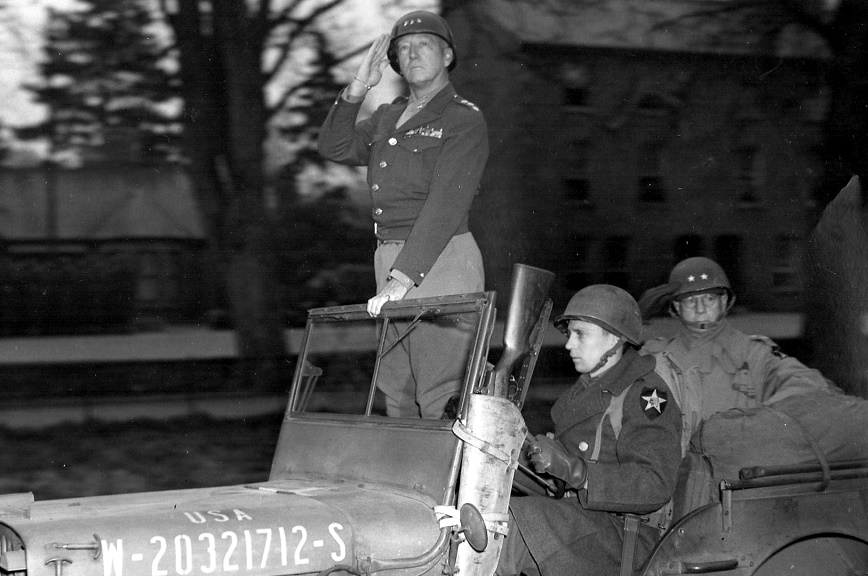
Every soldier in Patton’s army wore a helmet and tie at all times, even in battle. While somewhat impractical, this rule reinforced Patton’s authority. Patton’s soldiers understood that he could dictate what they wore and did both in battle and outside of battle. There was a fine of $25 if a soldier was found not wearing a helmet or tie. (10) These fines confirmed the authoritarian culture that Patton believed was essential to victory. He created a system that disincentivized anyone from disobeying General Patton’s decrees. Through the use of trivial regulations that came with significant punishments if they were not followed, Patton’s soldiers learned to listen, obey and follow orders even under the extreme conditions of war. (11) This fear that Patton ingrained in his soldiers allowed Patton to push his troops to their limits. He knew, after all the training he had forced on them, that his soldiers would not disobey his demands.
Patton’s disproportionate punishments for disobeying even minor orders reflected his personality. Charles Province of the Patton Foundation describes Patton’s personality perfectly, writing that, His toughness, his profanity, his bluster and braggadocio were appurtenances that he assumed because he believed that only he-men (12) stimulated other men to fight. (13) As a leader, Patton fit the mold. He was a macho man. He never once showed fear or distress. He didn’t believe in showing any form of weakness to his enemy, or even his own troops. Since he was tasked with leading his troops, Gen Patton felt as though he should serve as the backbone for the unit, meaning that he would have to exude courage at all times. Patton admitted as much when he stated that, never ask any man to undergo risks which I, myself, do not incur. (14) He believed that to be a successful general he would have to demonstrate to his soldiers that he was not just someone who would give orders from the safety of a fortress, but rather, he would lead his army from the front lines.
(6) McKay, Brett. ‘The Obligation of Being an Officer By George Patton’. The Art of Manliness (citing Patton’s own writing). N.p., 2016. Web. 28 Apr. 2017. (7) McKay, Brett. ‘The Obligation of Being an Officer By George Patton’. The Art of Manliness (citing Patton’s own writing). N.p., 2016. Web. 28 Apr. 2017. (8) McKay, Brett. ‘The Obligation of Being an Officer By George Patton’. The Art of Manliness (citing Patton’s own writing). N.p., 2016. Web. 28 Apr. 2017. (9) Province, Charles. ‘George S.Patton’. patton-mania.com. Web. 28 Apr. 2017. (10) Atkinson, Rick. The Day Of Battle: The War In Sicily And Italy, 1943-1944. 1st ed. [S.1]: Henry Holt and Co., 2007. Print. (11) McKay, Brett. ‘The Obligation of Being an Officer By George Patton’. The Art of Manliness (citing Patton’s own writing). N.p., 2016. Web. 28 Apr. 2017. (12) Note: The language and aggressive attitude that Patton used would not be considered appropriate in modern warfare. During World War II, much more leeway was given to generals to use whatever means necessary to inspire their soldiers. Today, however, generals are constantly under strict scrutiny and the culture of warfare has drastically changed. Thus, a modern general trying to emulate Gen Patton’s personality would likely not achieve the same success as he did back in the mid-1940s. (13) Province, Charles. ‘George S.Patton’. patton-mania.com. Web. 28 Apr. 2017. (14) Rabieh, Linda R. Plato and The Virtue Of Courage. 1st ed. Baltimore: Johns Hopkins University Press, 2006. Print.


Aside from his actions, Patton’s words also played an important psychological role in his success. Patton became famous for constantly used profane language. But he did it for a purpose; it was done to help achieve his military objectives. He thought that profanity showed toughness and fortitude. He believed it helped him to assert his dominance and superiority over his troops and to maintain the military hierarchies he so desperately wanted to create. (15) Additionally, Patton’s use of profanity created an atmosphere of increased tension and drama. Patton thought that the increased tension and drama would help prepare his soldiers for the tension-filled atmosphere would help to mimic the chaotic environment of battle. (16) Patton hoped that the constantly high tensions would help his soldiers respond to whatever came their way in war. One of Gen Patton’s most famous speeches was delivered to his troops in the US Third Army right before the Allied offensive in France began. The profanity in his speech made the speech resonate with his troops. British historian Terry Brighton reports that General Patton spoke: in the language of the barracks. (17) He spoke like the men he was leading in battle and who were about to risk their lives for him. In this sense, Gen Patton placed himself on the same level as his soldiers. Patton did not talk down to them or elevate his language just to impress his troops. Rather, he wanted to be a warrior like them. He knew what his soldiers were about to undertake. He wanted them to know that he knew.
As Charles Province of the Patton Foundation writes, … his blunt blue-flamed profanity (was) what he gave to his men in large doses to create the necessary warrior psychology, the will to confront and to destroy the enemy. These things gave his men the confidence to defeat the enemy. (18) Ultimately, Gen Patton’s constant swearing worked, as instilled the ‘warrior psychology’ in his soldiers that allowed Patton to command them effectively in battle. As Patton himself explained, When I want my men to remember something important, to really make it stick, I give it to them double dirty. It may not sound nice to some bunch of little old ladies at an afternoon tea party, but it helps my soldiers to remember. You can’t run an Army without profanity, and it has to be eloquent profanity. (19) To Gen Patton, obscenities made his speeches and orders more memorable. Patton, however, made a distinction between profanity and ‘eloquent profanity. (20) He felt that swearing just to express emotion was not constructive. Rather, Gen Patton viewed his profanity as a method for enabling his soldiers to relate to him, to make his speeches easier to understand and grasp, to make his words more memorable, and to ultimately inspire his troops. (21)
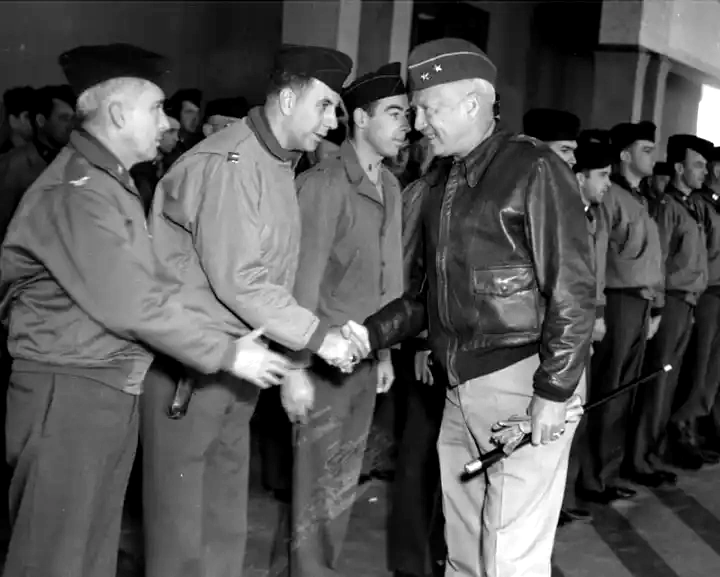
Despite his abrasive personality, Patton always won over his troops by demonstrating his undying loyalty to his soldiers. While most military generals see themselves as the leaders of the army and more important than the ordinary solider, Patton understood that his relationship with his troops would decide the course of battle. (22) When asked why his soldiers loved him and were willing to die for him, Gen Patton replied that There’s a great deal of talk about loyalty from the bottom to the top. Loyalty from the top down is even more necessary and is much less prevalent. One of the most frequently noted characteristics of great men who have remained great is loyalty to their subordinates. (23) Patton understood that for his troops to be willing to trust him without questioning his orders, Patton himself would have to be willing to trust his troops and the advice that they gave him. Gen Patton’s personality traits determined his approach to war. This helped him create a culture within his troops that let him lead them into battle after battle without rest. But, Patton also remained an intellectual soldier, always interested in learning more about battle tactics and stratagems. While stationed at Fort Meade, Maryland, before he became a general, Patton studied Sun Tzu’s Art of War and even commented that he derived some of his personal rules from Sun Tzu’s book. (24) These characteristics led to battlefield innovation. The most significant factor that led to Patton’s incredible victories was his ability to innovate and adopt the most effective battle tactics that he saw in the war.
Patton studied the German Blitzkrieg intensely after watching the Nazi forces conquer almost all of Europe in only a few years, a feat that not even the greatest military minds thought was possible. He took the German Blitzkrieg tactic and modified it depending on the situation at hand. In German, ‘Blitzkrieg’ literally means a ‘lightning war. (25) It stood for the offensive military tactics used by the German army to create widespread fear and confusion against the enemy on the battlefield. Generally, the German’s Blitzkrieg offensives combined a rapid advance of Panzer tanks followed by ground units, meant to split up the defending forces into smaller, weaker groups that are easier to fight. (26)
(15) Province, Charles. ‘George S.Patton’. Patton-mania.com. Web. 28 Apr. 2017. (16) Province, Charles. ‘George S.Patton’. Patton-mania.com. Web. 28 Apr. 2017. (17) Adware, Corey. ‘6 Badass Lines From Patton’S Famously Vulgar Speech’. Task & Purpose. N.p., 2015. Web. 28 Apr. 2017. (18) Province, Charles. ‘George S.Patton’. Patton-mania.com. Web. 28 Apr. 2017. (19) Province, Charles. ‘The Famous Patton Speech’. Pattonhq.com. N.p., 2017. Web. 28 Apr. 2017. (20) Province, Charles. ‘The Famous Patton Speech’. Pattonhq.com. N.p., 2017. Web. 28 Apr. 2017. (21) Province, Charles. ‘The Famous Patton Speech’. Pattonhq.com. N.p., 2017. Web. 28 Apr. 2017. (22) Province, Charles. ‘George S.Patton’. Patton-mania.com. Web. 28 Apr. 2017. (23) Robere, Bruce. ‘General Patton Quotes’. Tankmastergunner.com. N.p., 2016. Web. 28 Apr. 2017. (24) Sanderson, Jeffrey. General George S. Patton, Jr: Master Of Operational Battle Command. What Lasting Battle Command Lessons Can We Learn From Him?. 1st ed. (United States): Army Command and General Staff College Fort Leavenworth Kansas School of Advanced Military Studies, 1997. Print. (25) Staff. Blitzkrieg – History And Present Form. longwood.edu. N.p., 2003. Web. 28 Apr. 2017. (26) Staff. Blitzkrieg – History And Present Form. longwood.edu. N.p., 2003. Web. 28 Apr. 2017.

Despite the public associating the Blitzkrieg offensive with the Germans, the Blitzkrieg strategy had been used in previous wars. In fact, the earliest known use of the strategy was in 216 BC during the Battle of Cannae between Hannibal and the Romans. (27) But the true innovators and adopters of the tactic were the Nazi Generals. One of the more prominent German proponents of the blitzkrieg strategy, Carl von Clausewitz, authored the book On War that contained what he believed to be the most effective military strategies throughout history. (28) In his book, Clausewitz dissected the Blitzkrieg tactics and provided a first-hand account to what parts of the strategy worked and didn’t work. His writings would later serve as huge influences on Patton and his strategies. While Patton was stationed in Hawaii in 1936, he analyzed Clausewitz’s book and underlined and annotated certain military tactics that he thought were both contemporary yet proven by historical cases as being successful. (29)
While the blitzkrieg offensive is mainly recognized for being a quick, decisive attack, some German Generals, like Clausewitz, believed that the popular blitzkrieg tactic could be combined with other strategies to make it more effective. Clausewitz proposed that armies use the fast attack as a way of confusing and freezing the enemy while secondary forces worked around the stalled army and encircled it. (30) This concept, called ‘Kesselschlacht’ (literally meaning Cauldron Battle) by German military historians, created a situation where the entrapped army would be unable to retreat and would be completely vulnerable. (31) This strategy in coordination with the blitzkrieg offensive would create a ‘pincer’ formation that could fully encircle the enemy forces and annihilate them. Germany used the combination of a fast frontal attack and two encircling forces to create pockets of unguarded troops. (32) Once encircled, the German air force and artillery units could bombard the enemy army, inflicting heavy casualties and forcing the enemy troops to retreat.
General Patton studied these tactics. He utilized them against the Germans during World War II and was able to consistently defeat the Germans in key battles using this basic strategy. (33) But, Patton was truly the first General in history to combine the ancient ‘Kesselschlact’ tactic with the modern ‘Blitzkrieg’ strategy so effectively, mainly due to his incredible efficiency in moving troops. (34) We regarded General Patton extremely highly as the most aggressive panzer-general of the Allies … His operations impressed us enormously, probably because he came closest to our own concept of the classical military commander, commented Nazi General Gunther Blumentritt. (35) That opinion represented the shared consensus among Allied and Axis military leaders. General Patton had been able successfully to co-opt and perfect the German’s own ‘lightning warfare’ and used it effectively against German forces.

How did Patton become the foremost expert and practitioner of the blitzkrieg tactic? It all started at the Battle of the Argentan – in the Falaise Gap, which is viewed as the first major battle that helped to develop General Patton’s reputation as a military genius. After landing in Normandy for the D-Day Invasion on June 6, 1944, the Allied armies under General Bradley and General Montgomery drafted a plan to swiftly push the German armies out of France. (36) Operation Cobra, which commenced on July 25, 1944, was created to liberate occupied regions of France from German rule. General Patton led the Third Army during the Normandy Invasion and was originally tasked with defeating the German troops stationed in France’s port cities, mainly in the region of Brittany. Due to disorganized and overwhelmed German troops, Patton easily defeated the German troops and reclaimed the Brittany region. (37) General Bradley wrote of Patton’s easy success that Patton blazed through Brittany with armored divisions and motorized infantry. He conquered a lot of real estate and made big headlines. (38)
By August 3, just a little over a week after the operation began, the Allied commanders had realized that it would only require a small number of troops to clear Brittany. General Bradley relieved Patton of his obligation to lead the forces into Brittany. (39) Now free of his former duty, General Patton was given the green light to use the remainder of his army, the XV Corps, to push eastward into central France as far as he could. With the help of his highly trained troops, Patton quickly passed through much of central France before eventually making it to the southern portion of the Argentan-Falaise Gap. Bradley’s ultimate goal was to push the German forces back until they reached the Seine River, where they would be unable to continue retreating and would be trapped by Allied forces. (40) The masterful decision to entrap the German troops between Argentan – Falaise by General Bradley was prompted by General Patton to take advantage of a developing situation. (41) Patton saw the genius in creating a pincer movement that would cut off any German supply routes or roads for new troops to join the battle since it would create a pocket of stranded German soldiers that the Allied troops and air force could destroy. Bradley decided that the pincer formation would be formed by a Canadian army and the XV Corps headed by Patton. (42)
(27) Altman, William H. F. The German Stranger. 1st ed. Lanham: Lexington Books, 2012. Print. (28) Astore, William. “American Blitzkrieg – The U.S. Military’s German Fetish”. Southern Cross Review. N.p., 2010. Web. 28 Apr. 2017. (29) Sanderson, Jeffrey. General George S. Patton, Jr: Master Of Operational Battle Command. What Lasting Battle Command Lessons Can We Learn From Him? 1st ed. [United States]: Army Command and General Staff College Fort Leavenworth Kansas School of Advanced Military Studies, 1997. Print (30) Zabecki, David T. Germany At War: 400 Years Of Military History [4 Volumes]: 400 Years Of Military History. 1st ed. Birmingham: University of Birmingham, 2014. Print. (31) Zabecki, David T. Germany At War: 400 Years Of Military History [4 Volumes]: 400 Years Of Military History. 1st ed. Birmingham: University of Birmingham, 2014. Print (32) Zabecki, David T. Germany At War: 400 Years Of Military History [4 Volumes]: 400 Years Of Military History. 1st ed. Birmingham: University of Birmingham, 2014. Print (33) Staff. “Blitzkrieg – History And Present Form”. Longwood.edu. N.p., 2003. Web. 28 Apr. 2017. (34) Staff. “Blitzkrieg – History And Present Form”. Longwood.edu. N.p., 2003. Web. 28 Apr. 2017. (35) Yeide, Harry. “Patton: The German View”. HistoryNet. N.p., 2012. Web. 28 Apr. 2017. (36) DeLauder, Major Braden P. “The Falaise Pocket. World War II Allied Encirclement Of The German Armies. Failure Or Success Of The Allied Leadership And Planning?”. MASTER OF MILITARY STUDIES. N.p., 2002. Web. 28 Apr. 2017. (37) DeLauder, Major Braden P. “The Falaise Pocket. World War II Allied Encirclement Of The German Armies. Failure Or Success Of The Allied Leadership And Planning?”. MASTER OF MILITARY STUDIES. N.p., 2002. Web. 28 Apr. 2017. (38) Granier, Major Thomas R. “ANALYSIS OF OPERATION COBRA AND THE FALAISE GAP MANEUVERS IN WORLD WAR II”. Air Command and Staff College. N.p., 1985. Web. 28 Apr. 2017. (39) DeLauder, Major Braden P. “The Falaise Pocket. World War II Allied Encirclement Of The German Armies. Failure Or Success Of The Allied Leadership And Planning?”. MASTER OF MILITARY STUDIES. N.p., 2002. Web. 28 Apr. 2017. (40) DeLauder, Major Braden P. “The Falaise Pocket. World War II Allied Encirclement Of The German Armies. Failure Or Success Of The Allied Leadership And Planning?”. MASTER OF MILITARY STUDIES. N.p., 2002. Web. 28 Apr. 2017. (41) Carpenter, Colonel Douglas C. “A FAILURE OF COALITION LEADERSHIP: THE FALAISE-ARGENTAN GAP”. Strategy Research Project. N.p., 2002. Web. 28 Apr. 2017. (42) Carpenter, Colonel Douglas C. “A FAILURE OF COALITION LEADERSHIP: THE FALAISE-ARGENTAN GAP”. Strategy Research Project. N.p., 2002. Web. 28 Apr. 2017.

By August 12, General Patton had moved his troops to the predetermined meeting point at Argentan and was told to wait for further orders from General Bradley. Under Patton, the XV Corps had made much more progress than Bradley had expected and now had to wait for the Canadian forces to move to their meeting point. (43) The Canadian forces were still far away from Falaise and over 30 miles away from linking up with Patton’s force.
As seen in the troop movements illustrated in the map above, General Patton’s Third Army was scattered throughout Northern France. (44) The majority of troops, however, continued with Patton as a part of the XV Corps and moved north until they reached Argentan, which is when General Patton’s forces were ordered to halt. While awaiting instructions, Patton wrote in his diary that he could easily advance to Falaise and completely close the Argentan-Falaise Gap, and encircle the Germans. (45) Patton clearly demonstrated an acute sense of strategy, as he knew that it would be critical for the Canadian forces and his troops to meet in order to complete the encircling. But, General Montgomery forced Patton to halt his advances in order to allow time for the Canadian army to get into position. (46) General Patton, as a student of the blitzkrieg technique, knew that in order for the movement to be successful, the pincer attack would have to be swift and decisive, otherwise the German troops would be able to flee through the gap that the armies left open by not meeting together as planned. Further complicating matters, while Patton waited for the Canadian forces to make it to Falaise, the German troops under Field Marshal Günther von Kluge conducted a counterattack against the Allied forces. (47) The counteroffensive at Mortain saw the German troops make small gains against the Allies. Unfortunately for the Germans, their counterattack only played right into the Allies plans, as they threw more of their troops and tanks into the pocket that the Allied forces had created.
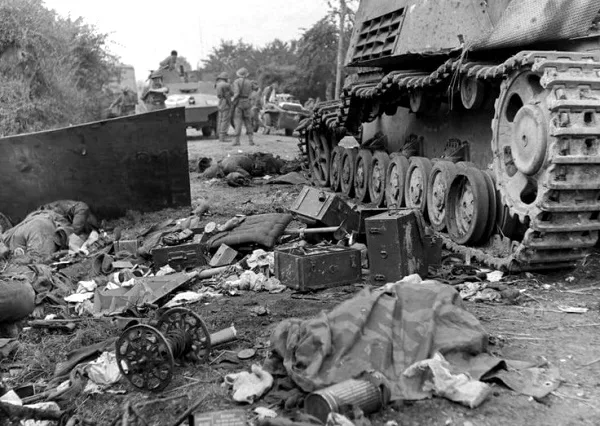
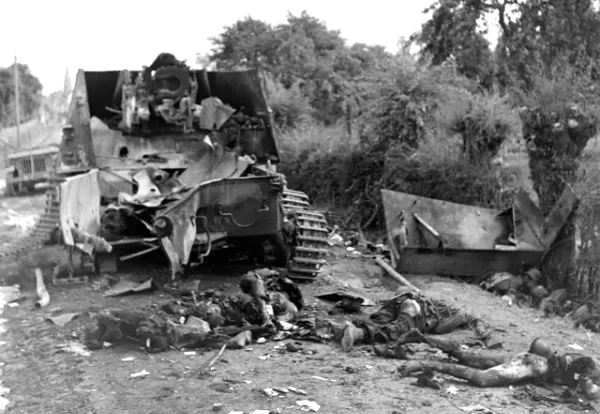
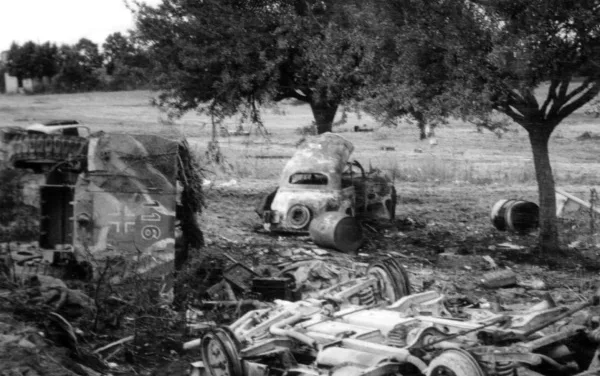
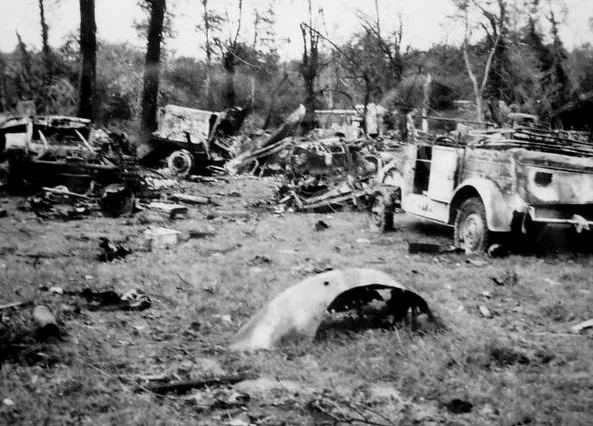
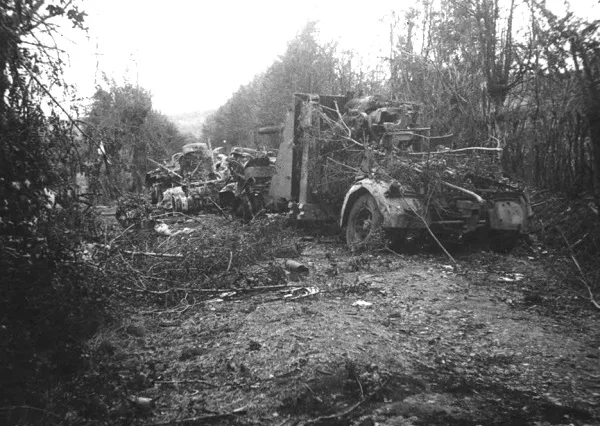
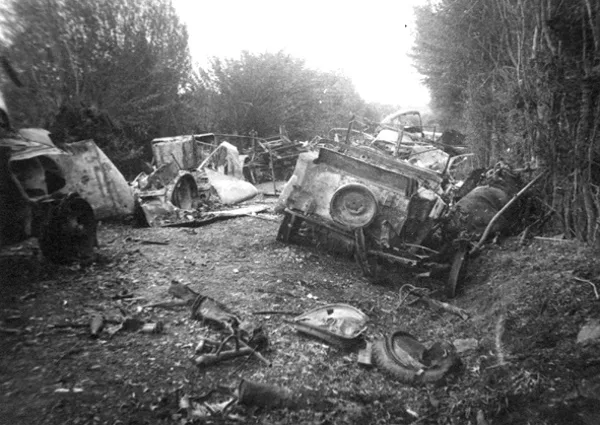
The Battle of the Argentan-Falaise Gap was generally regarded as a victory for the Allies. Over 10.000 German troops were killed during the battle and another 50.000 were captured. (48) The Allied forces used air support to bomb the entrapped German army, inflicting massive damage on both troops and equipment. (49) Once German General von Kluge saw that he would be unable to repel the Allied forces, he ordered his troops to retreat through the hole that the Canadian army and Patton’s troops had left open. Even with the gap, Allied fighter planes wreaked havoc on the German troops. But, despite the success of the Allied plans, the offensive could have been much more decisive for the Allies if they had listened to General Patton. Patton wrote in his diary that he warned the commanders that I am sure that this halt is a great mistake, as I am certain that the British & Canadian force will not close on Falaise. (50) If the Allies had fully closed the gap, the German troops would have had no escape. The German army would have been completely destroyed or captured if the gap had been closed as Patton believed he could have.