




By late September 1944, the Allied advance through France slowed as combat units overstretched logistical support and German resistance stiffened with the Allies’ approach to the Fatherland. In support of Lt Gen Patch’s goal to enter Germany prior to winter, Maj Gen Truscott’s VI Corps, consisting of the American 3-ID, 36-ID, and 45-ID, was tasked with breaching the Vosges Mountains and securing the Saales Pass running from St Dié to Strasbourg. The 36-ID, with the 100/442-RCT attached, was initially designated the main effort and advanced on this axis with the 45-ID supporting on its left (north) and the 3-ID Division in reserve.
By mid-October, the 3-ID had been brought out of reserve and assumed the main effort between the 45-ID and 36-ID for the push on St Diè. The 36-ID had seized Bruyères, but the advance slowed in the Vosges Mountains, a few miles past the town. In his bid to be the first in Germany, Maj Gen Dahlquist was anxious to breach the mountains and press forward. On October 23, the 36-ID sent an ill-defined order to the 141-IR to send a patrol of company or battalion strength to work down a trail through the Forêt Domaniale du Champ de Fen to the high ground north of La Houssière. The regiment set out in column with its 1st Bn in lead and was soon heavily engaged. By the evening of the 24, elements of the 1st Bn were cut off from support, nearly a kilometer short of their objective, and dubbed by the press as the Lost Battalion.
Mission
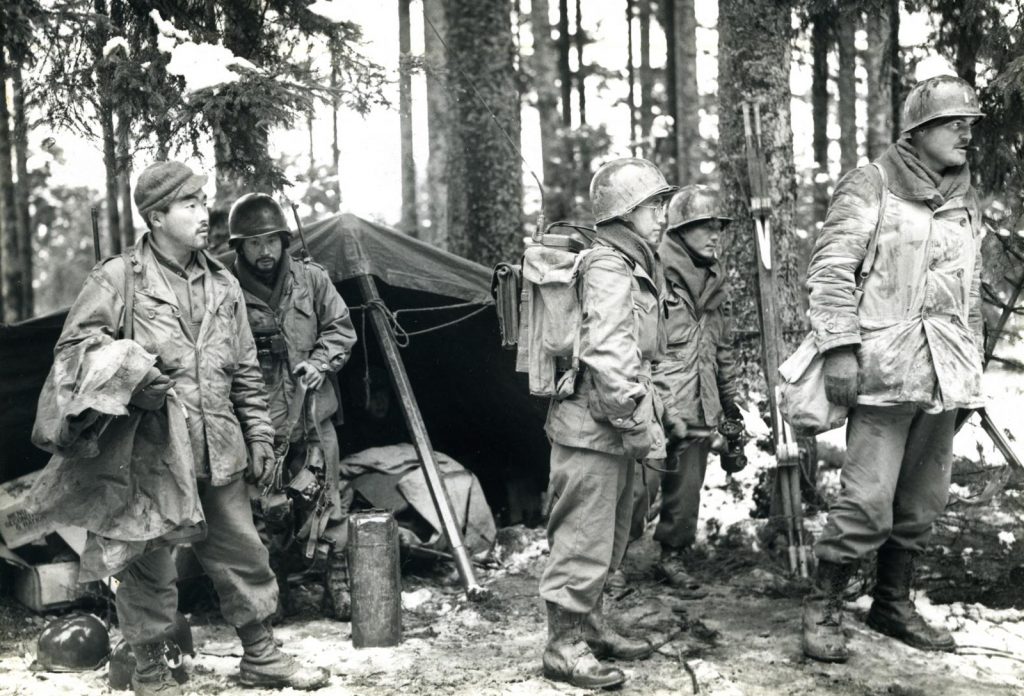
By the time the 100/442-RCT was given the mission to relieve the Lost Battalion on October 25, the Texans had been cut off from their parent regiment for nearly thirty-six hours. Efforts by the battalion’s two sister units had proved futile. At the division level, the mission was clear: rescue the Lost Battalion. As part of the visualization, the commander determines the mission, focusing on identifying and specifying the tasks that must be accomplished, as well as the mission’s overarching purpose. The determination of the mission also specifies which units will accomplish the tasks, as well as where and when the operation is to take place. Since these elements will be more thoroughly addressed through the remainder of the METT-TC (Mission; Enemy; Terrain & Weather; Troops; Time Available and Civilian Considerations) analysis, this discussion of the mission at hand focuses on the tasks and the purpose of the operation. Missions originate from orders from higher command or are developed from ongoing operations. Missions that follow other missions or plans that follow the conclusion of a given mission are sequels. Branches are options built into the original base plan. Since the rescue originated neither as a planned outcome sequel nor as an anticipated option branch, it was a wholly new, though hastily defined, mission. Yet, although hastily developed, the task was unambiguous: the cutoff unit needed to be rescued. Less clear was the purpose behind this task.

Plainly, the relief of an isolated force is tactically necessary to minimize the loss of lives and preserve combat power, to maintain morale, and to maintain the momentum of the advance, but the Lost Battalion episode had additional and arguably less noble motivations. At the start, the Lost Battalion comprised only some 275 men commanded by a lieutenant; it was not a battalion, but only the size of a reinforced company. Additionally, the commander of the 1/141, Lt Col William Bird, as well as his staff, was not even located with the cut of the force. Thus, the losses suffered by the 100/442-RCT through the six-day effort to rescue the trapped men raise the question as to the actual worth of the entire operation: was the relief of 211 men worth the culmination of an entire regiment?
Tactical considerations notwithstanding, the consensus among the veterans of the rescue is that Maj Gen Dahlquist needed to rescue the trapped battalion to save his career, the assumption being that the loss of one of his nine infantry battalions would surely have cost him his command and prevented him for reaching his eventual four-star rank. That Gen Dahlquist repeatedly ordered the Nisei regiment to effect the rescue -at all costs- adds a further element of doubt to the motivations behind this mission also, especially in light of the fact that the rest of the 141st Regiment sat idle during the fight. Still, regardless of the purpose and personal motivations behind the formulation of the mission, the task was clear and it stood: rescue the Lost Battalion.
Enemy
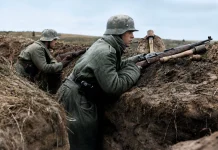
To avoid encirclement and annihilation by the Allied 3-A and 7-A, Gen Heinrich Friedrich Wiese’s 19.Armee began Operation Herbstzeitlose [Meadow-Saffron] in mid-August to withdraw across France and establish defenses along the French-German border. By mid-October, the 36-ID encountered stiffening resistance in the High Vosges. It directly faced elements of Gen Wilhelm Richter’s 716.VGD, Gen Ernst Haeckel’s 16.VGD, Oberst Walter Rolin’s 933.GR, the 602.Schnellabteilung, the 201.Gebirgsjäger-Bn, the 202.Gebirgsjager-Bn and the 285.Reserve-Bn. German forces defending in this area of France also employed troops from the Légion des Volontaires Français (LVF Waffen SS); the Milice Française (French Pro-Vichy Militia); the Reich Security Police (SIPO-SD) and the 19.SS-Polizei-Regiment.
Prisoners taken by the 100/442-RCT during this period indicate that they were fighting against the 933.VGR, the 201.Gebirgsjäger-Bn, the 202.Gebirgsjäger-Bn, the 388.ID and the 198.Pioneer-Bn in their area of operations during the rescue. While the forces facing the 36-ID seem impressive, closer scrutiny reveals that the divisions were severely undermanned with the approximate strength of a regiment, or about 2000 men, and utilized significant amounts of less-capable older men and teen-aged boys, or Volksturm, to fill ranks depleted through the retreat across France.
To overcome these deficiencies in the face of the American VI Corps advance through the Vosges, Operation Dogface, the Germans bolstered their meager defenses with an additional 3000 reinforcements and established a defense in depth well integrated with the terrain. Plans were developed to utilize dedicated Kampfgruppen and fire brigades, as well as alarm units composed of rear-echelon support troops to counterattack any significant breakthroughs. In addition to the available typical infantry small arms, German armament included additional machine guns (twenty additional battalions to the Army Group), mortars, and larger assets, such as Nebelwerfer multiple rocket launchers, self-propelled artillery, and tanks.
To further strengthen the defenses, vast quantities of mines and artillery were employed. Mines of all types, including Bouncing Betties and the difficult-to-detect, nonmetallic Schuh mine, were employed to great effect. Artillery fire was incessant, the effects of which were magnified by the tree bursts caused by the dense forest and tall trees. If the strength and quality of the forces facing the Allies and the 100/442-RCT in their efforts to relieve the Lost Battalion were less than intimidating, the Americans also had to face defenders fighting with the fervor inspired by decrees from higher command. The first Fuehrer befehls, issued by Hitler as the Allies approached the German frontier, mandated that German forces hold at all costs. The enemy would be fighting to defend his homeland, with his back to the wall. A second decree later demanded a battle to the death to capture the Lost Battalion and prevent its rescue for morale and, undoubtedly, propaganda purposes.
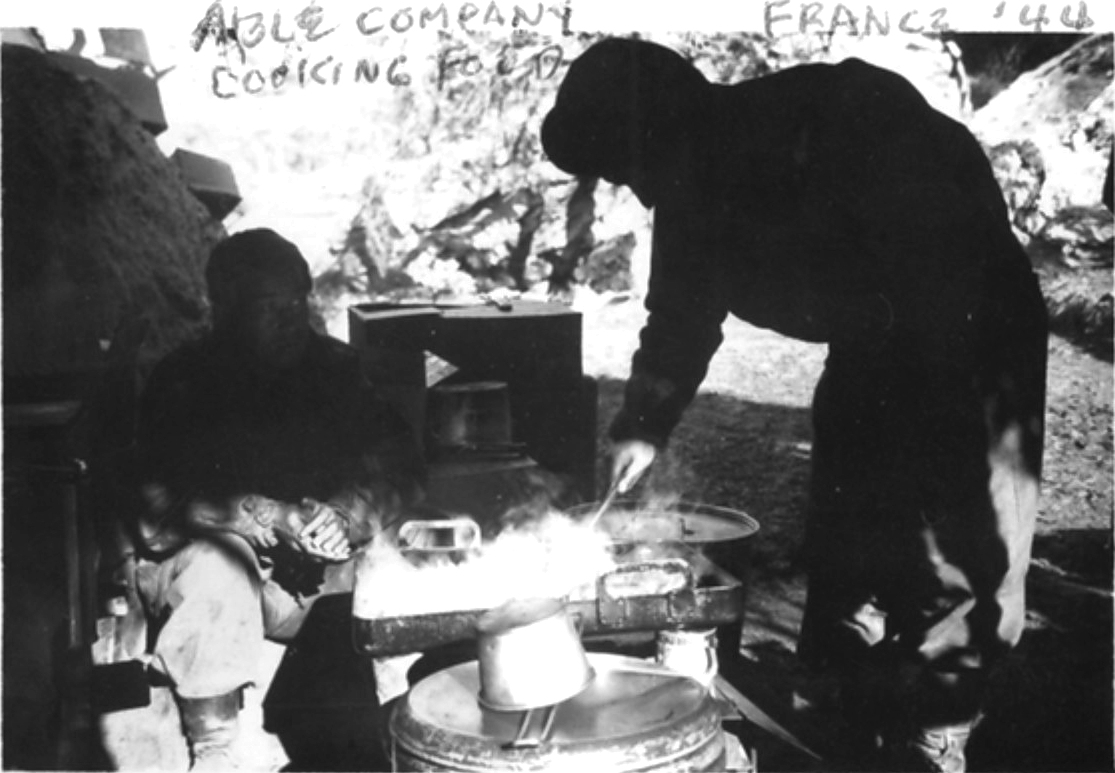
By early October, this enemy situation at the start of the rescue by the 100/442-RCT was vague and, unfortunately, misinterpreted. This poor grasp of the enemy situation contributed directly to the predicament of the Lost Battalion and continued to hinder the Nisei in their efforts. Since the seizure of Bruyères on the 19, resistance had apparently lightened and the 36-ID was generally optimistic. Gen Dahlquist erroneously assumed that the German defenses were broken or were located at least another fourteen kilometers further to the east, as evidenced in his orders to the 141-IR: we’ve taken six hundred German prisoners in the past six days, not counting the number of men we have killed or wounded. We have either broken his line, or he has completed another one here – pointing to the Meurthe River. Gen Truscott is trying to make up his mind this morning about the attack. If we break through, we will not have to fight terrain and enemy, we’ll just have to fight terrain.
His intelligence section mirrored his assessment and, without any mentionable reconnaissance efforts, told the 141-IR to expect only light to moderate resistance in their advance on October 23. This error contributed heavily to the 1/141 being cut off as its formation, advancing in a column along a single, narrow trail, easily lent itself to being enveloped. Additionally, further errors in judgment surfaced once the 100/442-RCT was committed as rates of advance were overestimated in the face of the mistaken assessment of the enemy’s strength and disposition.
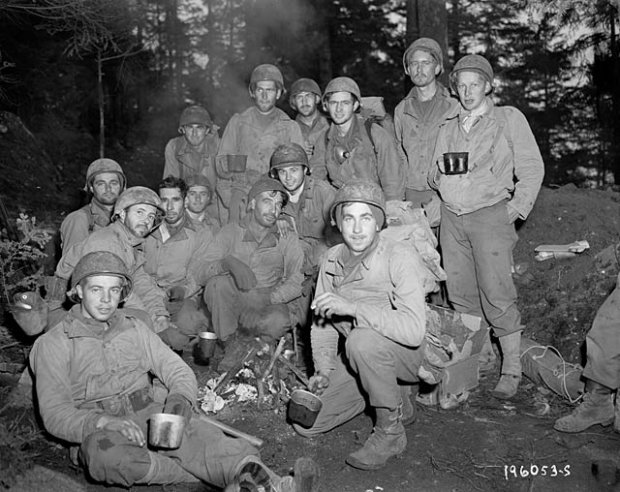
These errors would have to be disproved through direct action and the intelligence gained through close-quarters combat, an action that would see Gen Dahlquist’s aide, Lt Wells Lewis, killed. Yet, even when the information was gained, it was often distrusted or written off by the division as the general openly questioned the integrity and judgment of his subordinates on the line.
Often, too, what little intelligence was known was not passed down to the troops on the line, although to many of the men, the intelligence information would have seemed superfluous anyway. Thus, the enemy forces facing the 100/442-RCT in their task to aid the trapped battalion had been in retreat for over two months and had suffered massive losses. Unit strengths and capabilities were low but were soon bolstered by additional units and manpower. While outnumbered, the Germans were motivated and had to their advantage a significant ally in the terrain of the Vosges Mountains. Still, faulty intelligence and an incorrect assessment of the enemy situation, based solely on the number of captured prisoners and unsupported by reconnaissance, were the overriding factors that magnified the problems faced by the 36-ID and the Nisei regiment. It was this poor visualization of the enemy situation that led to the predicament of the Lost Battalion and made the 100/442-RCT’s task more difficult.
Terrain and Weather
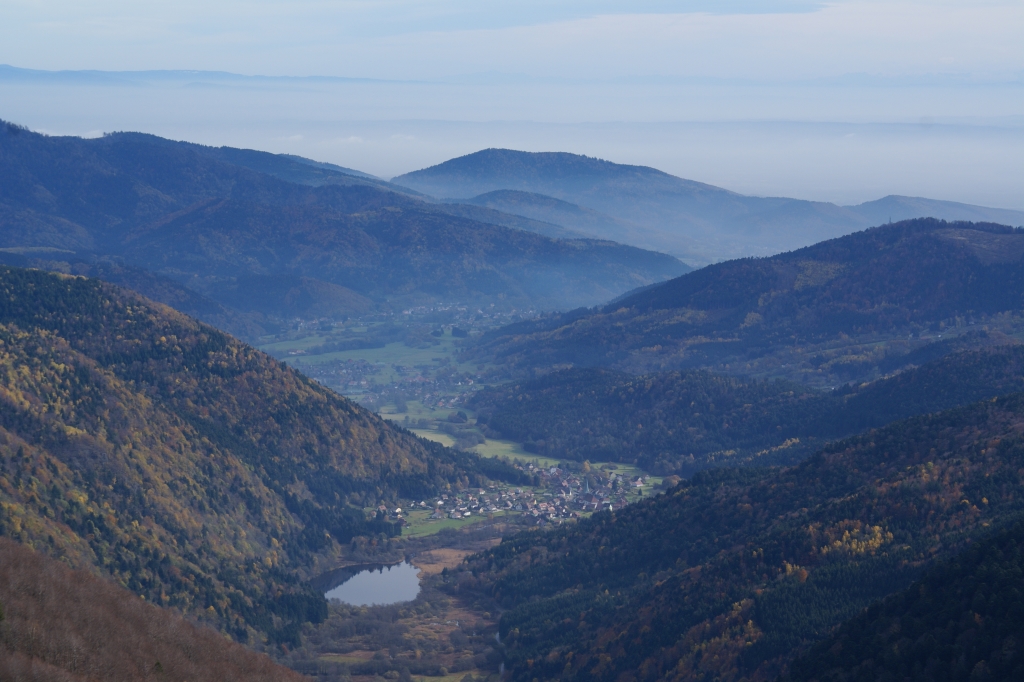 Terrain and weather for operation are usually assessed in terms of the factors of OAKOC (Observation and Fields of Fire, Avenues of Approach, Key Terrain, Obstacles and Movement, Cover and Concealment).
These factors are interrelated. For example, many of the conditions that limit observation and fields of fire may conversely enhance cover and concealment. These same factors may also amplify obstacle effects and obstruct movement. In general, the terrain and weather in the Lost Battalion area of operation favored the defenders and proved to be serious hindrances to the Nisei.
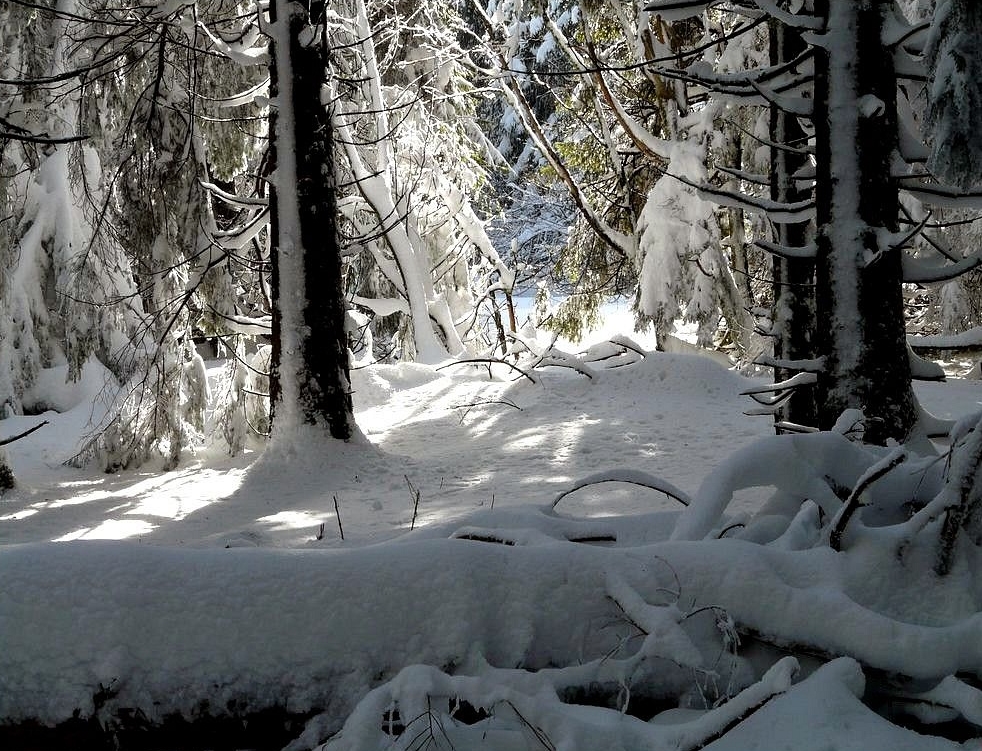 The Vosges Mountains, separating Alsace from Lorraine in eastern France, run generally from the cities of Saverne and Strasbourg in the north to Belfort in the south and are the last natural barrier in this region before encountering the Rhine River and the German border.
As the 36-ID approached Germany, it was operating in the Epinal region and sought to seize the Saales Gap in support of the 3-ID’s attack on St Dié. When the 1/141 began its advance on October 23, the Alamo Regiment had passed through the 100/442-RCT and begun operations in the Forêt Domaniale de Champ du Fen east of the town of Bruyères, about 10 kilometers southwest of St Dié.
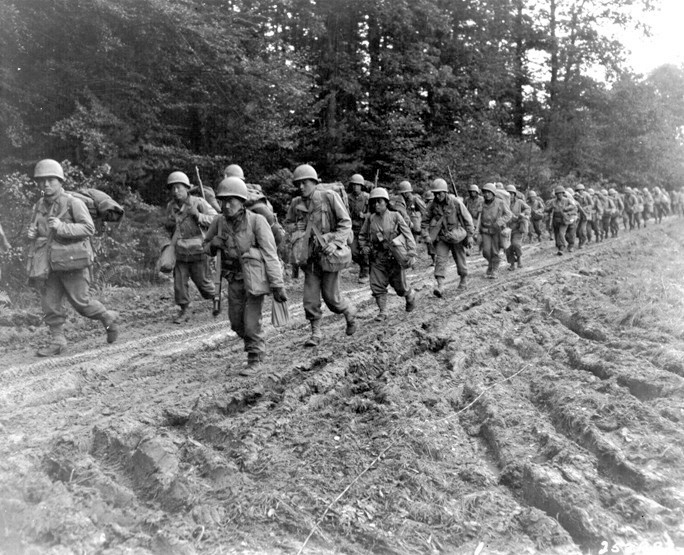
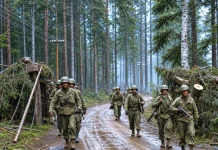
The exact operational area of the 100/442-RCT and the Lost Battalion thus encompassed roughly 60 square kilometers, dominated by the Forêt Domaniale de Champ du Fen and the towns of Belmont, Biffontaine, and La Houssière. The entire region, heavily wooded, with steep mountains and ridges and few roads, combined with the miserable wet and cold weather to give a decided advantage to the Germans, who fought from well-prepared positions in a defense in depth well ahead of and along their main line of resistance at the Meurthe River Winter Line. The region is mountainous, with the highest peaks in the Vosges reaching over 1400 meters. The terrain in the 100/442-RCT’s sector itself is rough and undulating, with peaks reaching almost 700 meters in elevation and with numerous steep ridges with between 45 and 60 percent slopes. The actual ridgeline along which most of the fighting occurred runs about seven kilometers from the west to the east and southeast and is characterized by numerous fingers and draws extending north and south of the primary ridgeline.
The forests, too, are forbidding. At the time, the primary industries in the region were forestry and logging, with the result that some areas were thick, managed forests while other areas were overgrown and jungle-like, with considerable underbrush. The few roads in the area were mostly on low ground and high-speed approaches were limited by the canalizing effect of the narrower streets in the numerous towns and villages strewn along with them. The forest itself had only a few firebreaks and one or two logging roads. Only a single trail ran the length of the single ridgeline from the units’ line of departure to the Lost Battalion and their objective.

Additionally, the early onset of the worst winter in forty years, which brought blustery winds, freezing temperatures, and steady, penetrating rain, turned the ground to mud and made conditions miserable for the soldiers and nearly impossible for vehicles. Taken together, these factors conspired with the Germans’ defenses to constitute a formidable obstacle, which was not thoroughly appreciated by the 36-ID or higher echelons, as evidenced by the demands of the VI Corps to press on and maintain the momentum of the September advance through southern France. In this area, the hilly terrain, heavy forests, and thick vegetation combined to limit observation and fields of fire, provide abundant concealment, restrict avenues of approach, and acted as a huge obstacle, drastically hindering movement.
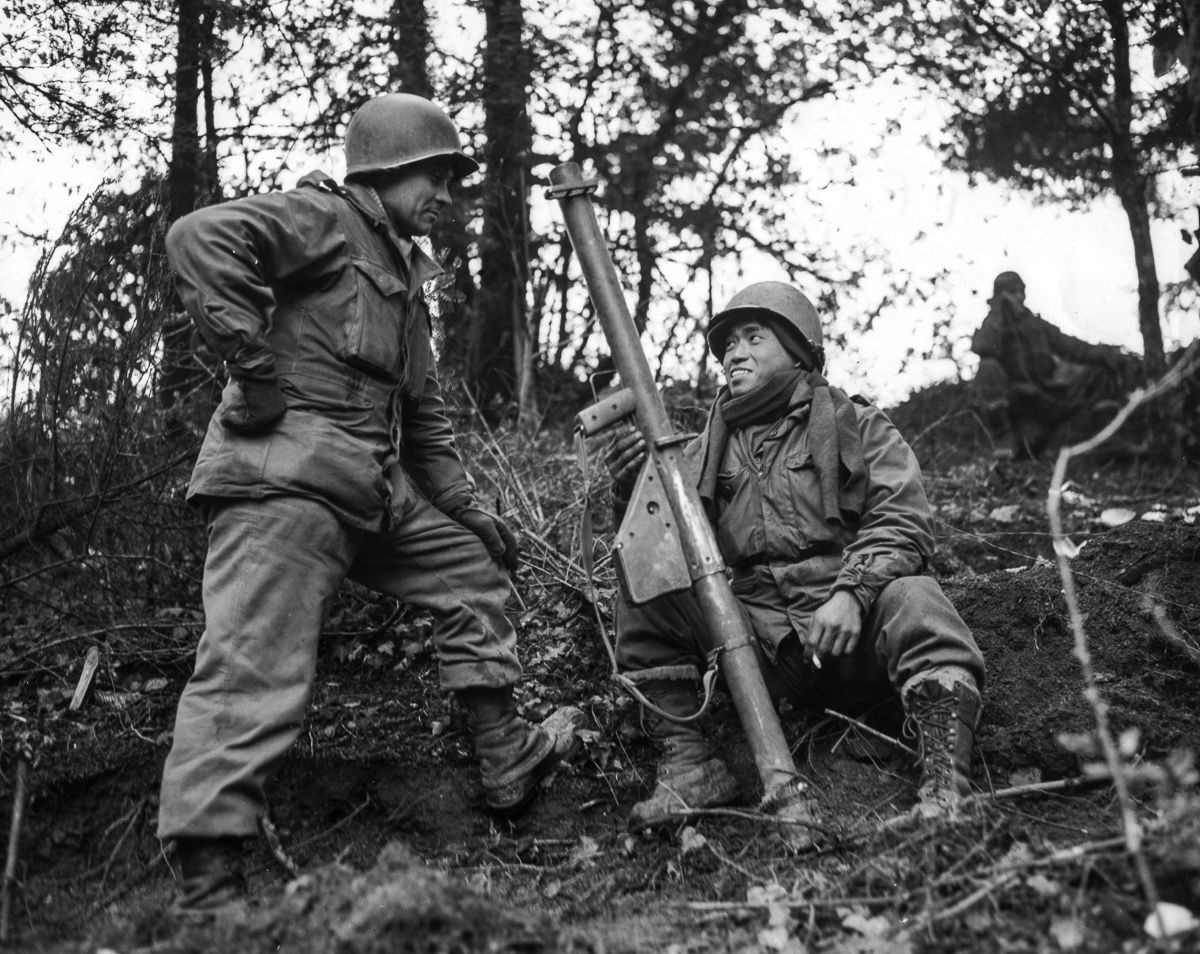
Whereas the Nisei had been accustomed to the vast stretches of Italy that offered observation measured in kilometers, the dense foliage of the Vosges proved challenging, obscuring enemy positions until within only a few meters. As Colonel (retired) Young O. Kim, then-S3 for the 100-Bn, described it: The Vosges were Tommy gun country versus the M-1 country of Italy. The steep, rugged terrain and heavy forests severely limited the number of avenues of approach in the region in general, and in the 100/442-RCT’s area in particular. What roads and trails that did exist in the area soon became impassable either due to the incessant rain, the enemy’s strong points, roadblocks, or both. As mentioned in the 7-A: for six weeks, from Oct 1 to Nov 15, their advances might be more easily measured in yards than in miles indicative of the obstacle effect of the terrain and vegetation.]
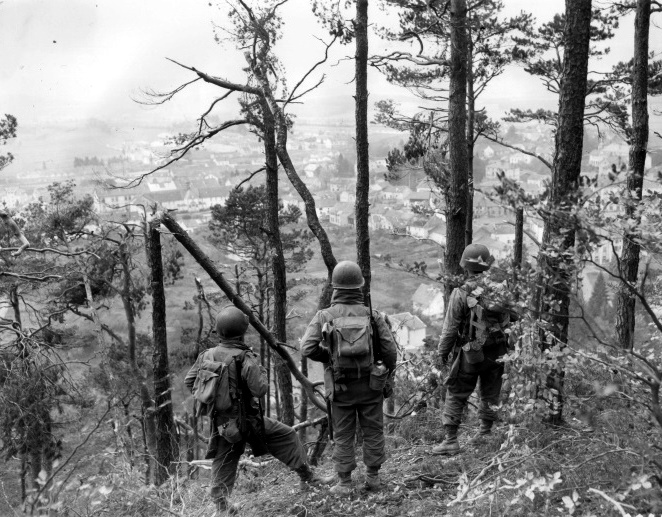
The dense forests also had an adverse psychological factor on the men. The unknown enemy disposition and darkness created by the tall trees proved more intimidating than in previous conditions and compounded the problems of advancing through these obstacles. Said another Nisei soldier: These forests would be garden spots for summer camping but they’re no place to fight a war. I would rather take Italy’s barren rocks than these damned trees where it’s never dry and the sun shines through only once a week. Where the little iron men of the 100/442-RCT once seemed without nerves and without fear, the cold and the unending shelling and tree bursts began inflicting shell shock and combat fatigue on a few of the Nisei.
Key terrain is defined as any locality, or area, the seizure or retention of which affords a marked advantage to either combatant. Inasmuch as the objective of the operation of both sides centered on the Lost Battalion, any terrain that directly influenced its rescue or destruction could be considered key.
The remnants of the 1/141 were isolated on high ground immediately north of La Houssière, and while no single terrain feature in the immediate vicinity offered a marked advantage to the German defenders or the Nisei rescuers, the very ground occupied by the Lost Battalion was key to its continued existence and eventual rescue. Had the Lost Battalion been located on less defensible terrain, it might have been easily overrun and the employment of the 100/442-RCT might well have been superfluous. Other than the location of the Lost Battalion itself, the ridge upon which the fighting occurred possesses no one location that offers any greater advantage to either side.

The art of war is subjected to many modifications by industrial and scientific progress. But one thing does not change, the heart of the man. In the last analysis, success in battle is a matter of morale. In all matters which pertain to an army, organization, discipline, and tactics, the human heart in the supreme moment of battle is the basic factor. It is rarely taken into account, and often strange errors are the result.
(Ardant du Picq, Battle Studies)
Once forces are engaged … winning comes from the courage and competence of our soldiers, the excellence of their training, the confidence in their equipment, the soundness of their doctrine, and above all, the quality of their leadership.
(General Eric K. Shinseki)
War is timeless. As long as men have ranged the face of the earth and have fought each other, and despite dramatic advances in weaponry, technology, and tactics, the very earliest recorded battles are comparable to present-day operations around the globe in the need for leadership and competent command. Whether undertaken with stone or sword, rifle and machine gun, or tank and helicopter, close combat require leaders to instill motivation and direction to the troops who will do the fighting. In this regard, lessons can be drawn from the past that still has relevance today.
442-RCT’s Rescue of the Lost Battalion
A Study in the Employment of Battle Command
A thesis presented to the Faculty of the US Army Command and General Staff College in partial fulfillment of the requirements for the degree MASTER OF MILITARY ART AND SCIENCE Military History by NATHAN K. WATANABE, MAJ, USA B. S., U.S. Air Force Academy, Colorado, 1988 Fort Leavenworth, Kansas 2002