

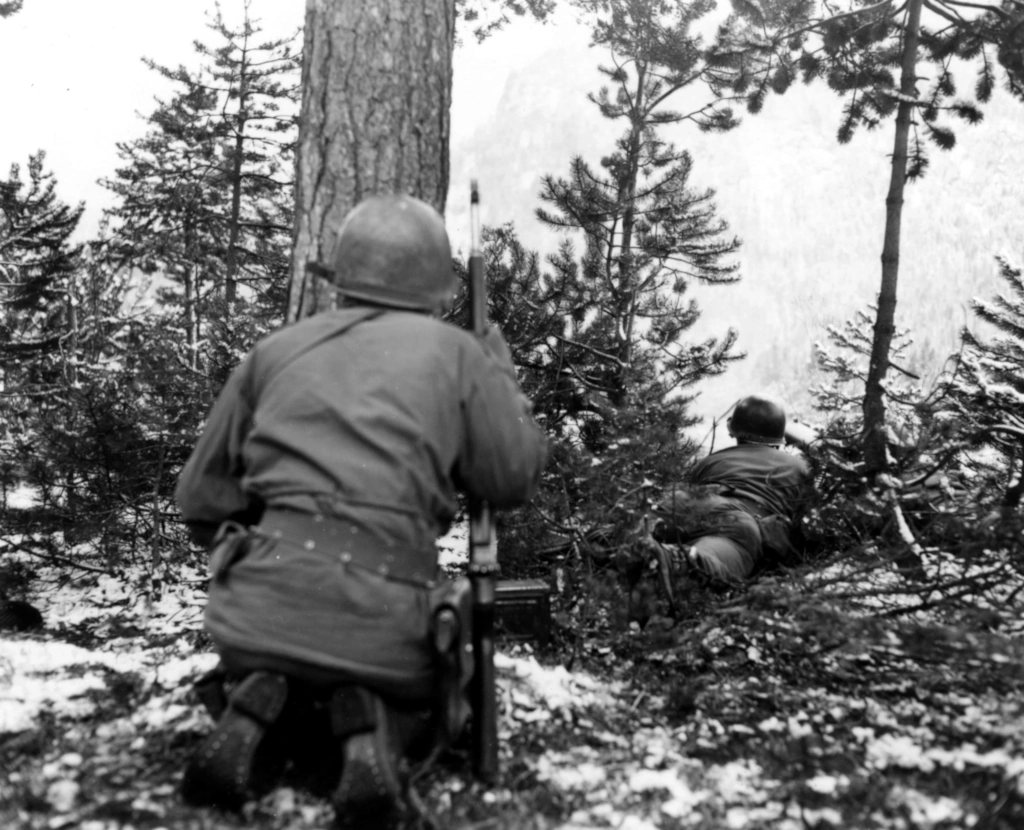
The Task Force Command Post was established approximately one hundred and twenty-five yards behind the crest of the ridge shortly after the employment of the tank destroyer platoon and the rifle platoon of Fox Co. In order that the Task Force Commander could maintain direct communication with the Regimental Commander, he returned to the Command Post. The method of continuing the attack and the successful completion of the assigned mission were delegated to the Company Commander, Fox Co. The wire construction team from Regimental Headquarters had been able to maintain pace with the column as it progressed, and direct telephone communication with that Headquarters was available throughout this action. Equipment failure caused a breakdown in radio communication between Fox Co and the Task Force Commander, who were using SCR-300 radios. The radio equipment in the armored vehicles performed as required and was used to adjust artillery fires. The Company’s command net failed to function because of equipment failure and necessitated the use of foot messengers for communication within the Company.
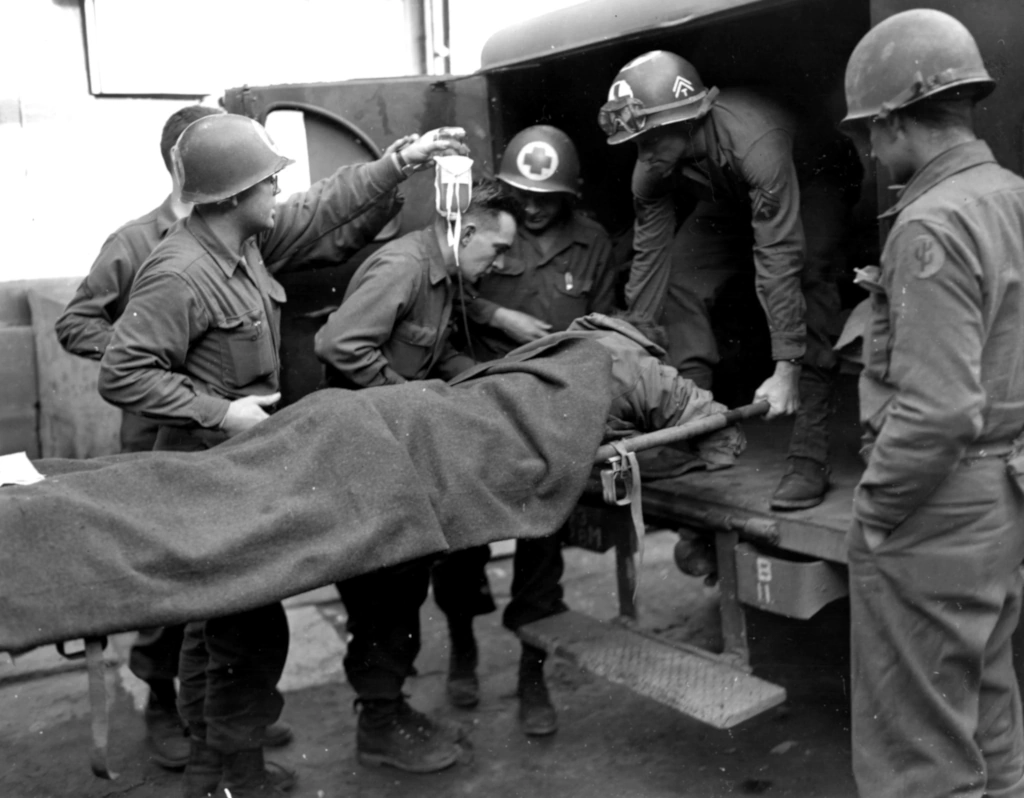
The SCR-536 radios used within this net failed shortly after the M-8 scout car was knocked out. An aid station was also set up at this time near the Task Force CP by the medical and administrative officer. Covered routes of evacuation were not available, and the aid men worked tirelessly and courageously under fire. Numerous examples of heroism by the medical aid men were displayed during the battle. The company command post was established near that of the Task Force. A company observation post was established on the crest of the ridge to the right of the road leading into Climbach. It was here that plans for the assault were made by the Company Commander, Fox Co. Four main problems were faced at this time:
(1) – Neutralize enemy fire superiority.
(2) – Resume forward motion of all troops.
(3) – Coordinate supporting fires.
(4) – Disseminate information to troops on plans to accomplish the above.
A map and terrain study indicated the likely positions for enemy direct fire anti-tank weapons as hills 455, 376, and 378. Some defensive positions could be determined by visual observation of enemy troops. High ground to the southeast of Climbach appeared to be unoccupied by the enemy, and offered excellent positions for the support of a frontal assault. In a conference with the artillery liaison officer, the Company Commander requested that artillery support be lent to effect the neutralization of enemy fires. Excellent results were obtained by the liaison officer who received three battalions of Corps Artillery to support the organic medium artillery of the Division and the one battalion of light artillery in direct support of the Regiment. The Corps Artillery was given targets on hills 435, 376, and 378. The medium battalion was assigned the rear (northwest) section of Climbach, and the direct support battalion was given the forward (southeast) section of Climbach. All fires were to be brought down on order and all targets hit simultaneously. The direct support battalion was to lift on call; the remainder of the other battalions, after all guns had fired five volleys. No smoke screen was to be employed. Fire commenced when ordered by the Company Commander, Fox Co.
The first platoon of Fox Co was ordered to occupy positions on the high ground to the east of Climbach. A messenger was to be dispatched to the Company Commander when the platoon was in position to support the attack. One section of heavy machine guns was attached to the first platoon.
The third platoon, which had been committed with the tank destroyer platoon, was engaged in a firefight with the enemy. Since their advance to positions near the tank destroyer guns, they had attempted to dig foxholes, but the soggy condition of the ground prevented more than six or eight-inch ditches. Seepage at this point made their efforts to dig deeper unsuccessful. The temperature was approximately thirty-five degrees, and some casualties from exposure were sustained. The dispersion of this platoon made control difficult at the beat and precluded the possibility of using these men in the initial phases of the assault. The second (X) platoon, then, was used as the assault platoon, passing through the position of the third platoon. The third platoon was used to support the second platoon by fire, initially, and join the assault as the second (X) platoon passed through.
One section of heavy machine guns was attached to the second (X) platoon for employment after the capture of the objective. The weapons platoon was to accompany the third platoon into Climbach for defense against possible counter-attack. Tentative positions for mortars and machine guns were given the platoon leader. The 81-MM mortars, from positions behind the ridge, were given first responsibility to support the second (X) platoon, second responsibility to support the first platoon, and third to fire on targets of opportunity. It was assumed that the platoon of tanks would participate, but the invitation was vehemently declined by the tank platoon leader. This plan was submitted to the Task Force Commander by the Company Commander of Fox Co. The time of attack was dependent upon the receipt of information that the first platoon had occupied positions as ordered. The plan, as submitted, was approved.
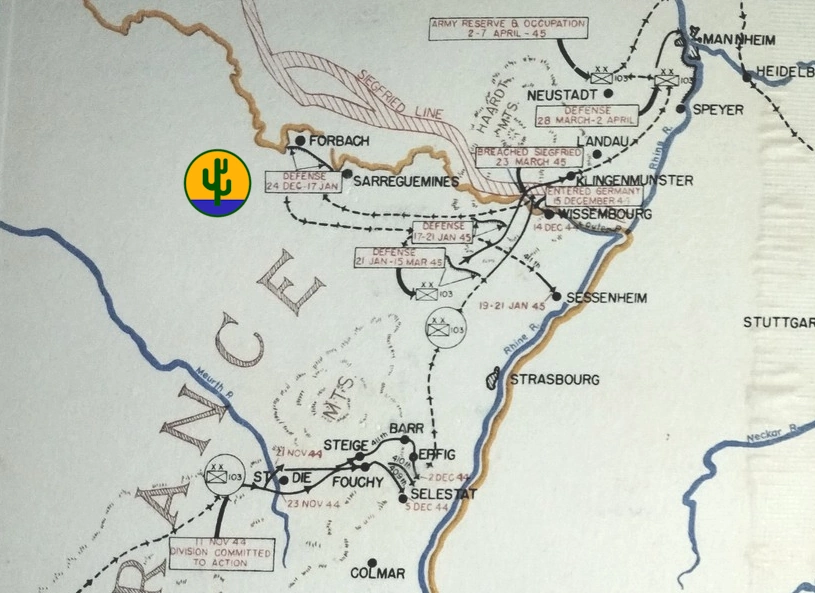
Phase 3 – Assault – Clearance – Security of Climbach
The arrival of Pfc Shane E. Riordan, the messenger from the first platoon, at 1500 hours, saw plans complete and everything in readiness for the assault. The artillery fire was dropped to perfection; the second platoon moved out at 1530, supporting fires from the first and the third platoons were well placed; fire from the 81-MM mortars left little to be desired. The assault was underway. The first rounds of the 928th Field Artillery Battalion were dropped approximately 75 yards in front of the positions occupied by the third platoon. The liaison officer lifted these fires in one-hundred-yard increments as the troops advanced. Very little fire was received by the assault troops after the initial artillery preparation.
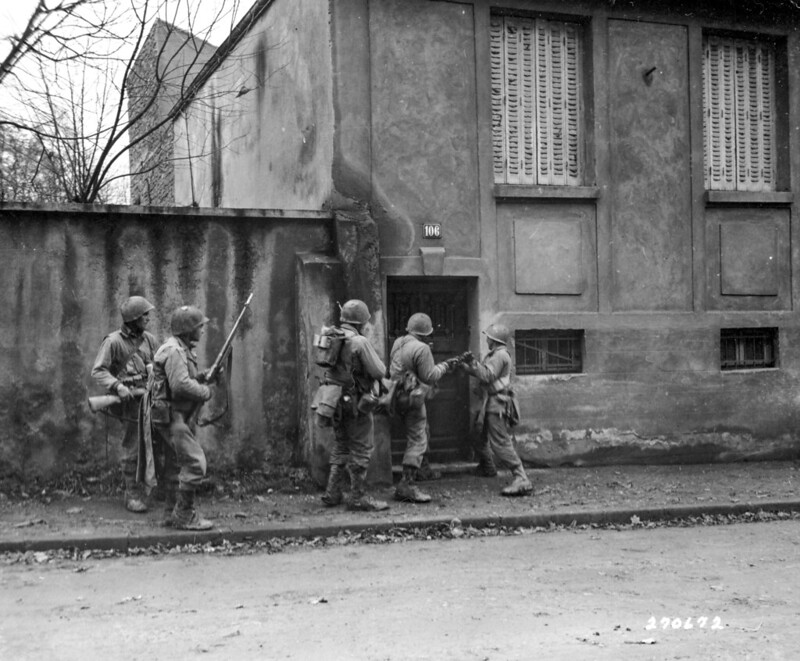
Foot troops followed closely behind the receding artillery and were not delayed by enemy fire. The first houses in the outskirts of Climbach were reached at approximately 1540. The defenders of Climbach were taken from their defensive positions on the outskirts by the second (X) platoon, disarmed, and sent to the rear to be collected by the third platoon and weapons units. Vicious artillery fire, followed closely by infantry units, had broken the defenses of Climbach and had convinced the defenders that continued resistance was suicide. The artillery concentration had accomplished the purpose of inflicting casualties on those exposed to it and forcing others to seek shelter. Before those who took cover could reorganize for the defense, they were greeted by the business of an Infantryman’s weapon.
Shortly after arrival in the village, a company command post was established, and a message was dispatched to the Task Force Commander to the effect that resistance had ceased in Climbach, and that the remaining few enemy soldiers were being collected. The time was approximately 1730 hours. The messengers who were sent to the Task Force Commander were ordered to continue to the first platoon positions and notify the platoon leader that he was to clear that portion of town southeast of the main road junction. The messengers were to guide the platoon leader to the company CP when the assigned portion of town was cleared of enemy personnel. These messengers failed to reach the first platoon. However, a messenger from the first platoon arrived in the Company CP at 1745 hours, and identical instructions were issued. The delayed entry into town by the first platoon until after dark caused considerable difficulty in the clearing of those houses assigned in its sector.
The Task Force Commander arrived in Climbach at approximately 1900 hours. Before he arrived in town, the attached armor and tank destroyer units had been released to Regimental control. Neither of these units advanced into Climbach. The Fox Co CP was moved shortly after the Task Force Commander’s arrival to a more central position in Climbach to facilitate control.
The mission of seizing Climbach and cutting the enemy supply route was accomplished by 2000 hours, December 14, 1944. The Task Force Commander was notified that the 1st and 3rd battalions were abreast of this position and that lateral contact patrols would be established. These patrols were selected from the weapons platoon. The patrol sent to contact the 3rd battalion returned in about one and one-half hours and reported their failure to contact troops from that unit. The Commander of the 1st Battalion returned with the other patrol in about 45 minutes. A conference with the Regimental Commander was held by telephone shortly after the 1st Battalion Commander’s arrival, and plans for the continued attack were discussed,
Phase 4 – Mission Changed – Night Attack
Fox Company was ordered to continue the attack immediately to the northeast to the German Border and cut the road from Wissembourg (France) through Willer (France) to Bad Bergzabern (Germany). The 2nd Battalion, which was advancing along the same route Task Force Blackshear had taken earlier in the day, was ordered into Climbach to secure the town as Fox Co made its departure. The platoon leaders of Fox Co had been assembled, and were issued the order to continue the attack shortly after the message from the Task Force Commander had been received. Fox Co, minus all attachments, with only a fighting strength of approximately fifty officers and men, quickly assembled to continue the attack and moved out prior to the arrival in Climbach of the 2nd battalion. Using the road leading northeast from town, Fox Co advanced to the vicinity of the cemetery. From prepared positions, the enemy subjected the company to heavy small arms, mortar, and direct fire artillery. Twin pillboxes, one on each side of the road, seemed to deliver the bulk of the fire. The difficulty of reducing these positions and neutralizing enemy fire was increased by darkness and the absence of armor and tank destroyers.
Two messengers were dispatched to the Task Force Commander requesting permission to pull back into the town after the attack was halted, and one unsuccessful flanking maneuver to the right had failed miserably due to the grazing machine gun fire received. These messengers did not return, nor did the next ones dispatched by the Company Commander. Fox Co was ordered to withdraw to the protection of the buildings in the outskirts of Climbach by its commander, who then returned to the Task Force Command Post. At the same time, the Commander of Fox Co arrived at the Task Force Command Post, the Regimental Commander also arrived, and when apprised of the situation, ordered Fox Co to establish defensive positions and local security at its present location and prepare for the continued attack on December 15. In summary, the mission assigned to Fox Co, 2nd Battalion, 411th Infantry Regiment, the capture and holding of Climbach (France) was successfully completed at 2000 hours, December 14, 1944.