




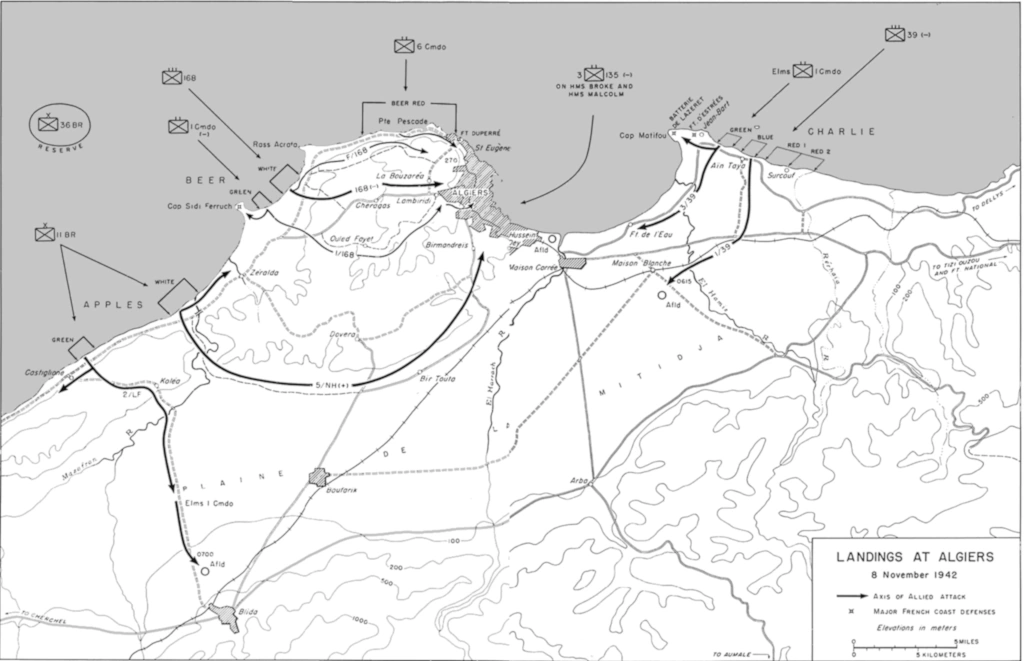
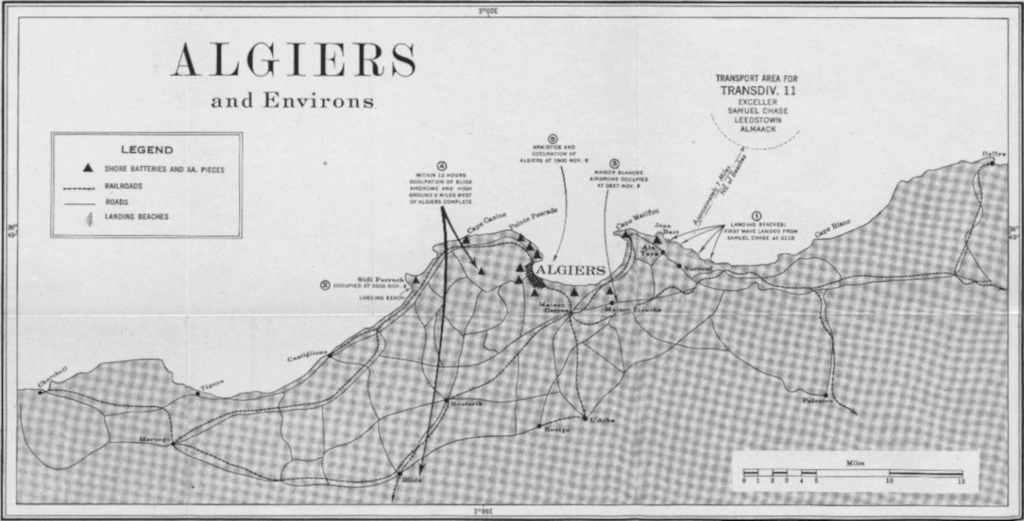
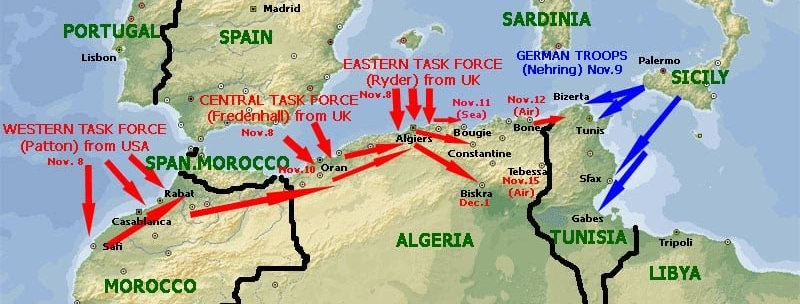
The objectives assigned to the 3rd Battalion extended from the Port Offices and Graving Docks near the Mole al Mouchez, south along the shore to the Jetée, Brise Lames Est, a total distance of more than 3000 yards. These objectives were to be reached by ramming the destroyers through the boom stretched across the entrance to the Bassin de Mustapha, from the Jetée de Mustapha to the north end of the Brise Lames Est. Our map indicated that the shore batteries situated in the city could inflict heavy casualties on us if the French offered determined resistance to our attack. We noted that the Batterie des Arcades, located south and west of the harbor on a small rounded hill about 100 meters high, could probably cover most of the harbor with fire. It was also evident that batteries located on the Jetée du Nord and the Ilot de la Marine could inflict severe damage on us as we entered the harbor. Capt Fancourt relieved our fears with the statement that British Commandos had been assigned missions of capturing and destroying all those batteries prior to our landings. It was also calculated that the Jetée du Nord and the Ilot de la Marine batteries could not be depressed enough to fire over the jetées to the south with any degree of accuracy.
We were greatly handicapped by our complete lack of trained aerial photograph interpreters. Several features on our aerial photo maps appeared to our untrained eyes to be positive locations of coastal defense guns, but when we inspected them later at close range we discovered that they were outdoor latrines. Since our landing was to transpire two hours later than those of the Eastern Assault Force, we were informed that we probably would meet little or no resistance because most of the enemy troops defending the harbor would be withdrawn immediately to meet the threat to the flanks of the city. The detailed attack plan of the 3rd Battalion consisted of three modifications, A, B, and C, to the same overall scheme of maneuver.
Plan A was the assault plan to be adopted by the 3rd Battalion in the event that both HMS Malcolm and HMS Broke would succeed in passing through the boom. It provided that the Broke would discharge her troops (called the Broke Force) directly onto the Quai de Dieppe. The 1st Platoon, Love Company, had the mission of capturing the Mole Louis Billiard and the adjoining Electric Power Station. The 2nd Platoon, Love Company, had the mission of capturing the Morey Oil Depot near the Power Station. The 3rd Platoon, Love Company, was to capture the small Seaplane Base west of the Oil Depot, and make contact with King Company at the base of the Grand Mole. The two platoons of Item Company, which had been on board the Broke, the 4th Platoon of Love Company, and the heavy weapons troops of the Broke, were to be in mobile support of the Broke Force from positions at the base of the Grand Mole. The Broke Force was to make contact with King Company on the right, and organize its objectives for defense against attack from the south and west.
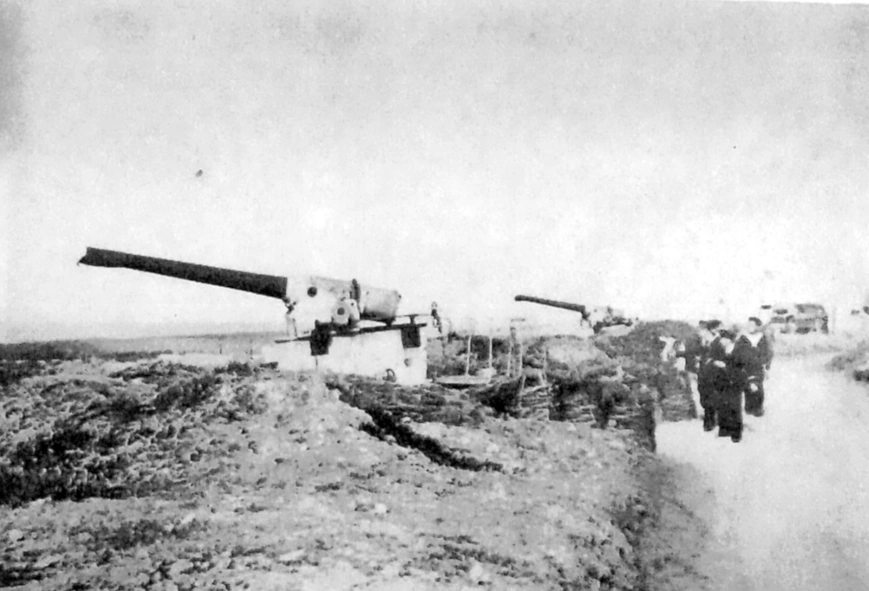
The Malcolm was to follow the Broke by 15 minutes, and berth alongside the Grand Mole, debarking her troops (called the Malcolm Force) directly onto it. The 2nd Platoon, King Company, was then to run at top speed along the shore and capture the Port Offices, the Graving Docks, and the Mole Al Mouchez. The 3rd Platoon, King Company, had the mission of seizing and occupying the Mole aux Minerais. The 1st Platoon, had the mission of seizing and occupying the Grand Mole and effecting a junction with the Broke Force on the south. The 4th Platoon, King Company, and the remainder of the Malcolm Force were to remain in support near the base of the Grand Mole. The overall mission of the Malcolm Force was prompt seizure and occupation of their objectives which were to be defended to the north and west.
Plan B was predicated upon the supposition that the Broke would penetrate the boom while the Malcolm failed to make it. In this eventuality the Broke Forces were to seize the objectives assigned to the Malcolm Force as well as their own. Plan C was based on the eventuality of success for the Malcolm and failure for the Broke. In this case the Malcolm Force was to seize the Broke Force objectives in addition to their own. The fourth eventuality provided for complete failure after both forces were landed. In case the troops could not be landed on the seashore in which case the destroyers were to sound three long blasts on their ships sirens as a signal for the mem to execute a retrograde movement and reembark upon the Malcolm and the Broke, which were then to put back out to sea.
Unchanged: Plan B was predicated upon the supposition that the Broke would penetrate the boom while the Malcolm failed to make it. In this eventuality the Broke Forces were to seize the objectives assigned to the Malcolm Force as well as their own. Plan C was based on the eventuality of success for the Malcolm and failure for the Broke. In this case the Malcolm Force was to seize the Broke Force objectives in addition to their own. The fourth eventuality provided for complete failure after both forces were landed. In case the troops could not be landed on the seashore in which case the destroyers were to sound three long blasts on their ships sirens as a signal for the mem to execute a retrograde movement and reembark upon the Malcolm and the Broke, which were then to put back out to sea.
The joint British-American-boarding parties were to seize the ships in the harbor in conjunction with either or all plans. All units were instructed not to fire unless fired upon, but if resistance was encountered the Sheffield and other heavy units of the British Mediterranean Fleet, would give us prompt fire support.
From Gibraltar to Algiers
After our passage through the Strait of Gibraltar the detailed plans and maps were issued to all Non-Commissioned-Officers (NCOs) down to and including assistant squad leaders. At that time all personnel were informed that our destination was the city of Algiers. This new information stimulated much detailed study and discussion of all parts of the plans. At about 1630 hours on November 6, the HMS Malcolm came alongside the Sheffield and the force detailed to board her made the transfer without incident. The transfer to the HMS Broke was made in like manner at about 1730 hours. Col Swenson and Capt Fancourt accompanied the force on the HMS Broke which was under command of Commander Layard. Capt Snellman, the Battalion EXO, went aboard the HMS Malcolm which was commanded by Lt Comdr Sears (RN). The night was dark, the sky was slightly overcast and visibility was fair. There was no moon.
The decks of each destroyer had a beveled quarter-inch thick armor plate three feet high extending around its perimeter to protect those on board from small arms fire as they approached the docks. The prow of each destroyer was equipped with armor plate to facilitate cutting the boom which stretched across the harbor entrance. Because of the limited space on the destroyers the troops had to remain on deck packed closely together, but since the weather was clear and warm most of the time this was no hardship. All hands were instructed to lie down early and attempt to sleep, on the night of November 7, as it was planned to awaken them at midnight. They were awakened at 2400 on November 7, and by 0100 hours, November 8, everything was in readiness to carry out the assigned mission. At 0220 hours, Capt Francourt received a message stating that the landings of the Eastern Assault Force had been successful and that the Terminal Force would prepare to go in immediately. The two destroyers steamed for approximately one hour toward the Port of Algiers until the lights of the city were clearly visible a few hundred yards to the starboard. Upon closer approach we could see at irregular intervals the orange flashes of artillery fire to the rear of Algiers but not from the batteries within the city limits. Suddenly all lights were extinguished, leaving only the dim outline of the higher buildings visible through the dusky gloom. Almost immediately searchlights on the Ilot de la Marine, and seaward.
At that time, both destroyers were steaming at full speed toward what they thought was the correct location of the boom, the HMS Broke leading the way. For a few minutes they managed to elude the searchlight beams, but the blinding glare soon caused them to be thrown off their course. As a consequence both destroyers headed outside the Jetée de Mustapha to the north, and had to turn seaward for another try, the HMS Broke still in the lead. Meanwhile the searchlights converged, on HMS Malcolm which, was taken under heavy shellfire from the Batterie des Arcades. The HMS Broke made a second attempt to breach the boom but missed again and was under fire from both the Batterie des Arcades and the Jetée du Nord. Capt Fancourt signaled HMS Malcolm to go in if she could. The Malcolm also missed the boom on its second attempt and on turning seaward again received several hits from the Batterie des Arcades. Fire broke out on the HMS Malcolm amidship. Capt Fancourt received a message from her Commander stating that she was badly hit, and was attempting to withdraw from action. Both destroyers were flying large size, easily recognizable United States Flags at the top of their masts, but this action was not producing the desired psychological result of reducing the fierce resistance of the French Naval Personnel who manned the coastal defenses of Algiers.
Force Broke – HMS Broke
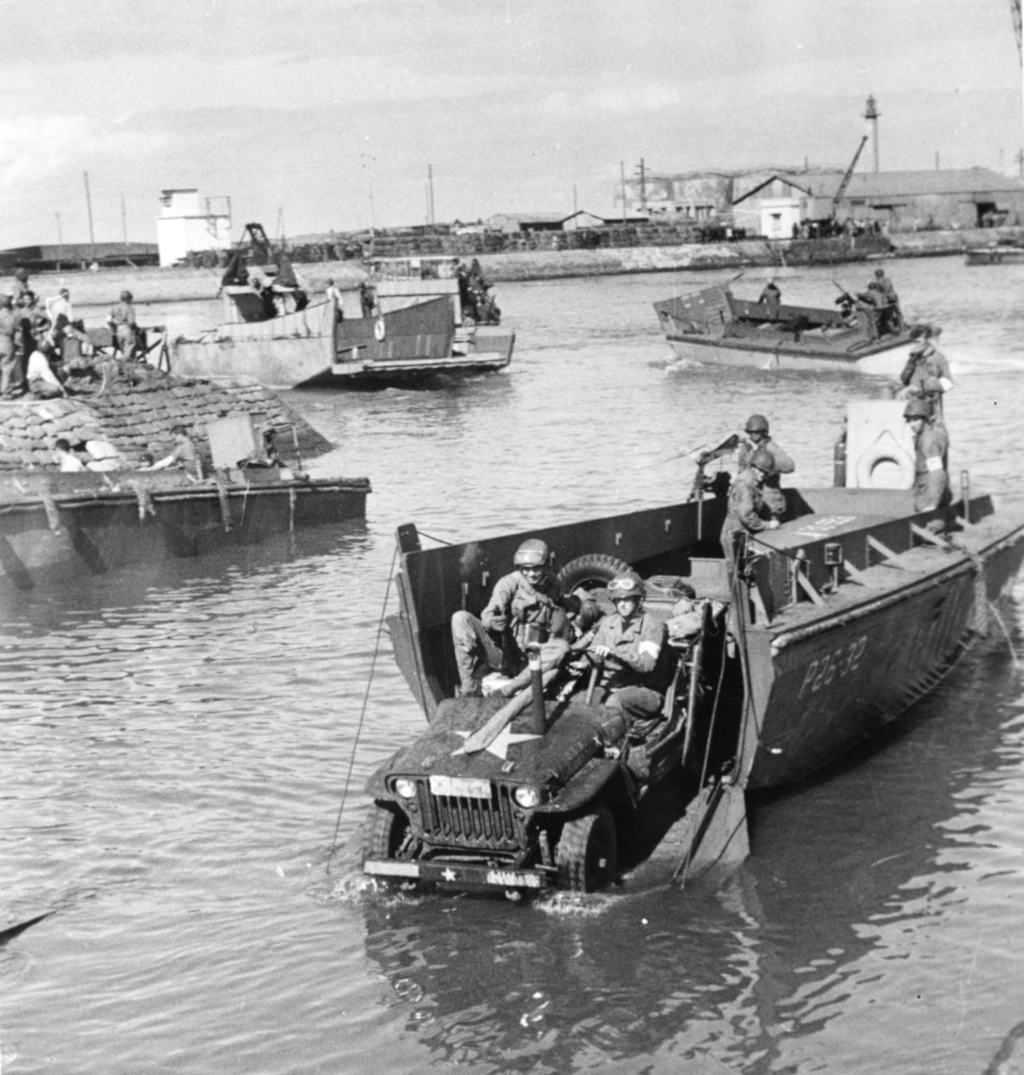
 Upon learning that HMS Malcolm had been knocked out of action, Capt Fancourt directed that Plan B be adopted immediately. Accordingly The HMS Broke proceeded toward the boom for the third attempt at breaking through. Terrific fire from the shore batteries again caused her to miss her target and turn back for a fourth try. As the artillery shells whizzed past her, HMS Broke rushed forward with an irresistible burst of speed and out through the boom with almost no sensation of hitting it. She then proceeded toward the Grand Mole until Commander Layard noticed that this area was filled with ships. He therefore changed his course and berthed the Broke alongside the Quai de Falaise on Mole Louis Billiard. Almost immediately a small enemy vessel beside the Grand Mole delivered several bursts of what appeared to be .50 caliber machine gun fire at the Broke, wounding some of the British Sailors. Heavy machine gun fire was also received from other ships and from the warehouses in the vicinity of the Oil Depot. The British Naval Personnel returned the fire with their Oerlikons with the apparent result of silencing the hostile fire. Although badly shaken up by the heavy bombardment, the troops aboard the Broke recovered quickly. Within a few minutes they succeeded in occupying the Mole Louis Billiard, the Power Station, and the Morey Oil Depot. Whether they would be able to extend north and seize the objectives’ assigned to the Malcolm Force under Plan A would depend on the resistance encountered.
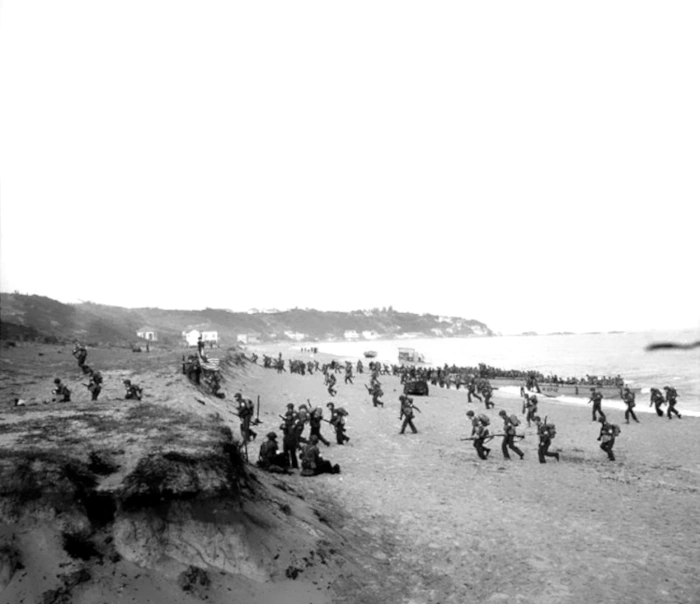
The landing had finally been accomplished in broad daylight at approximately 0520 hours. Enemy automatic weapons fire from various parts of the city was directed toward street intersections and open lanes in the vicinity of the landing area, but it was very ineffective against the American troops. Everything seemed to be going according to plan in the 3rd Battalion area until about 0800 hours when two policemen and two civilians contacted the Americans. They requested Col Swenson to send an emissary with them to arrange for the formal surrender of the, city to the US forces. At almost the same time one of the British Naval Boarding Party commanders informed Col Swenson that a French Army Officer had contacted him with information that the landing forces were almost surrounded by enemy troops who were definitely opposed to cooperation with the Americans.
Before Col Swenson could decide what to do several rounds of artillery fire from the direction of the Jetée du Nord landed in the area. The third round passed through the bow of the Broke forcing her to move over beside the Quai de Dunkerque. Artillery fire completely covered the area between the landed forces and the Broke, disrupting all communications between them. This rapidly deteriorating situation became still more desperate when the Batterie des Arcades suddenly adjusted on the HMS Broke, and after firing six rounds, delivered five direct hits. In view of the increased intensity of the shell fire, Capt Francourt decided that the Broke must leave port immediately or be sunk. He therefore had the ship’s siren sound the préaranged signal for the withdrawal of the troops on shore. When Col Swenson heard the recall signal he noted that it was then about 0930 hours. He thought that the Combat Teams of the Eastern Assault Force ought to be nearing the city and that it should surely be possible for the Broke Force to hold out until their arrival. He therefore decided that any attempt at withdrawal would only result in heavy casualties for the troops and unnecessary delay for the Broke. He therefore ordered his men to remain on shore and continue to defend their positions.
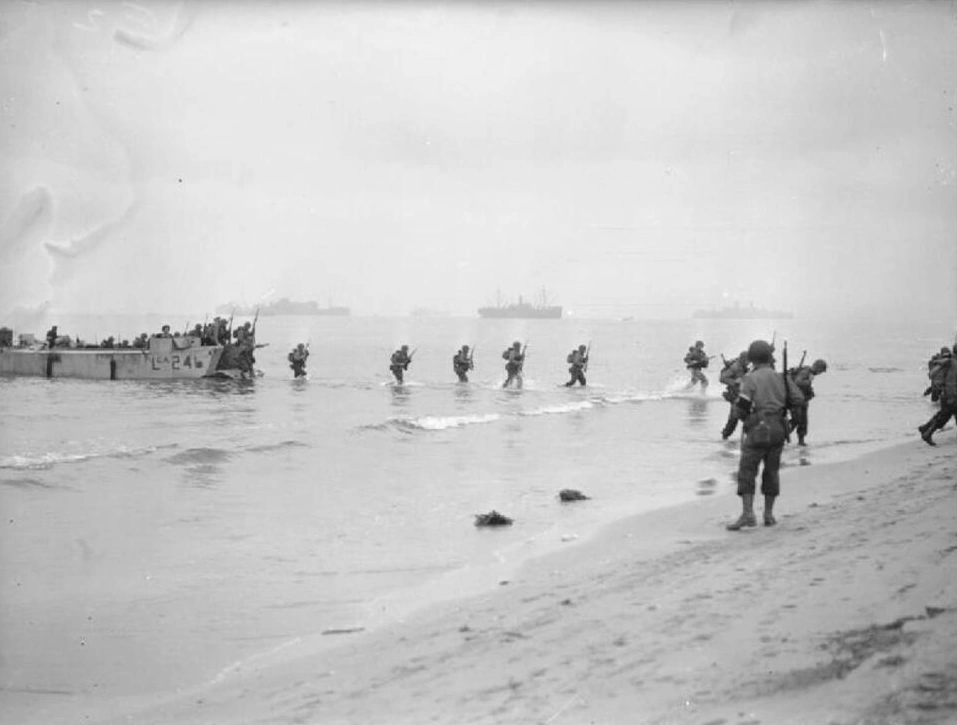
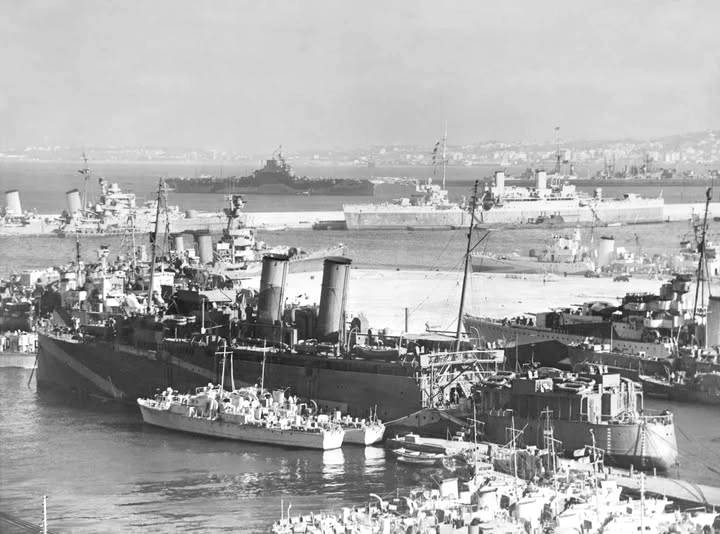 Meanwhile Capt Fancourt was desperately trying to get the Broke out to sea beyond the range of the shore batteries, but before he could do this it became necessary to have her taken under tow by another British destroyer which was with the other British Naval Units in the vicinity. After some difficulty both destroyers cleared the harbor. Water poured into the hold of HMS Broke through the many holes below her water line. According to a statement made later by Col Swenson, the Broke suffered 22 direct hits from the shore batteries, some of them more than a foot in diameter. Since it was now evident that she was about to sink, Capt Fancourt ordered all hands to abandon ship, and go aboard the towing destroyer. Shortly after this transfer of personnel was made, HMS Broke disappeared beneath the waves, carrying with her all reserve mortar and small arms ammunition, and all personal equipment and supplies of the troops whom she had debarked on the dooks.
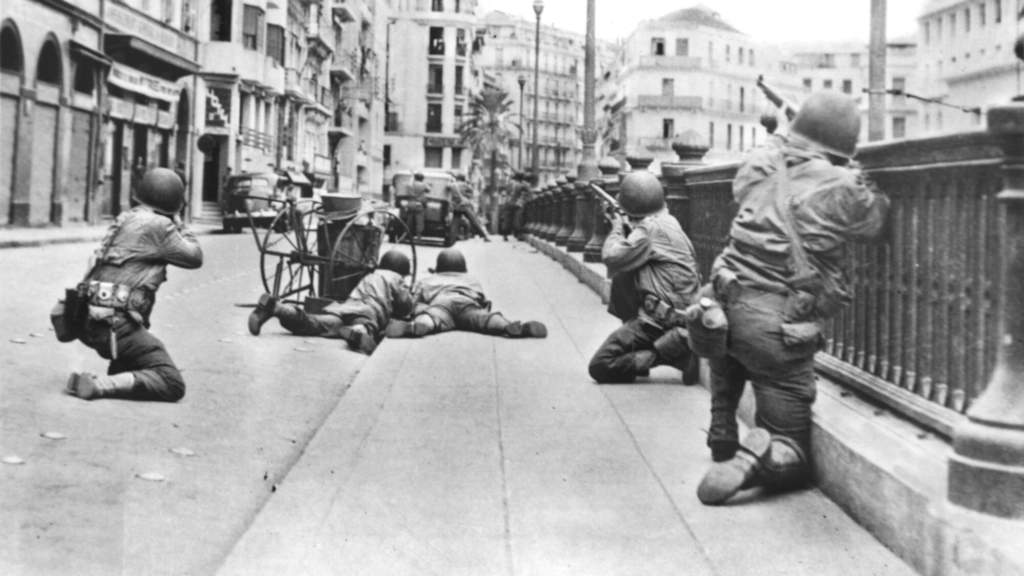
 At that time, the situation on the docks was undergoing a period of intense confusion; the area contained large quantities of baled hay and wooden boxes filled with miscellaneous goods which our troops used as breastworks in organizing a perimeter defense with all avenues of approach covered by fire. At about 1100 hours, six Allied planes dive-bombed the batteries located at the Jetée du Nord, and the Ilot de la Marine and silenced them. Our troops now regrouped themselves and poured an accurate fusillade of small arms fire into the ranks of the enemy. Because of the impending exhaustion of their ammunition supply it was impossible for the Broke Force to sustain for very long its heavy volume of fire. The tide of battle was about to turn in favor of the enemy. With each passing second, the situation of our troops was now becoming more critical.
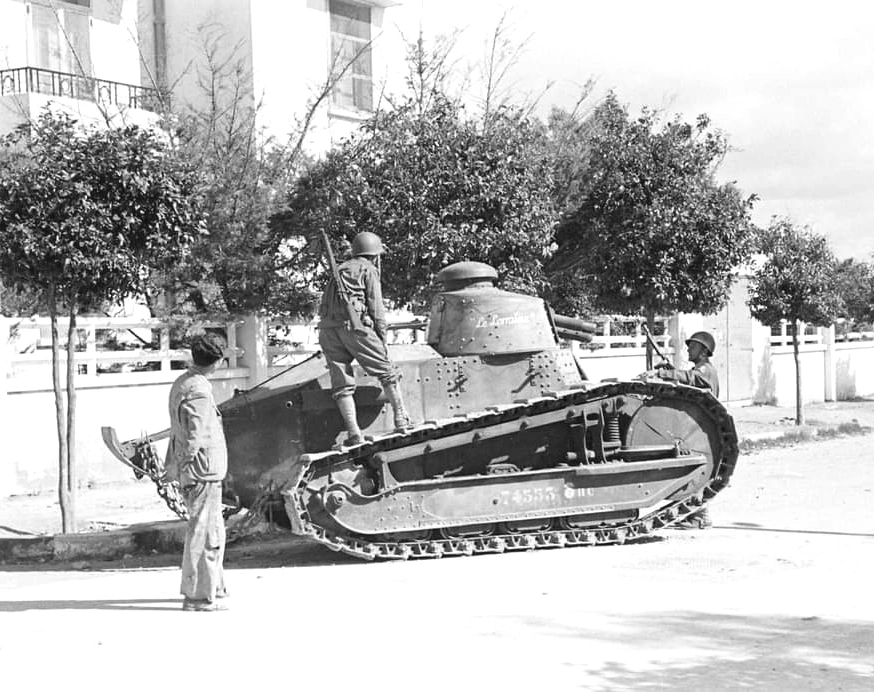
Shortly after 1130 hours, about ten enemy Renault Tanks, circled the Broke Force defense area, covering it effectively with their 37-MM shells and machine gun fire which caused some casualties among the Americans and set several of the protective bales of hay on fire. This caused some mortar ammunition to explode in addition to threatening the destruction of the entire dock area by fire. There was no artillery support for our infantry; the promised Naval gun fire support had not materialized; and the battalion commander could not use either his mortars or his machine guns because of the danger of injuring the french civilians and inflaming the people. Our troops had no anti-tank guns to use against the enemy armored vehicles. They could neither escape their devastating fire by digging foxholes in the concrete streets nor by retreating into the sea. Moreover, at this time the absence of the sound of firing from other parts of the city indicated that something must have gone wrong with the Combat Teams which should have arrived in the city long before then.
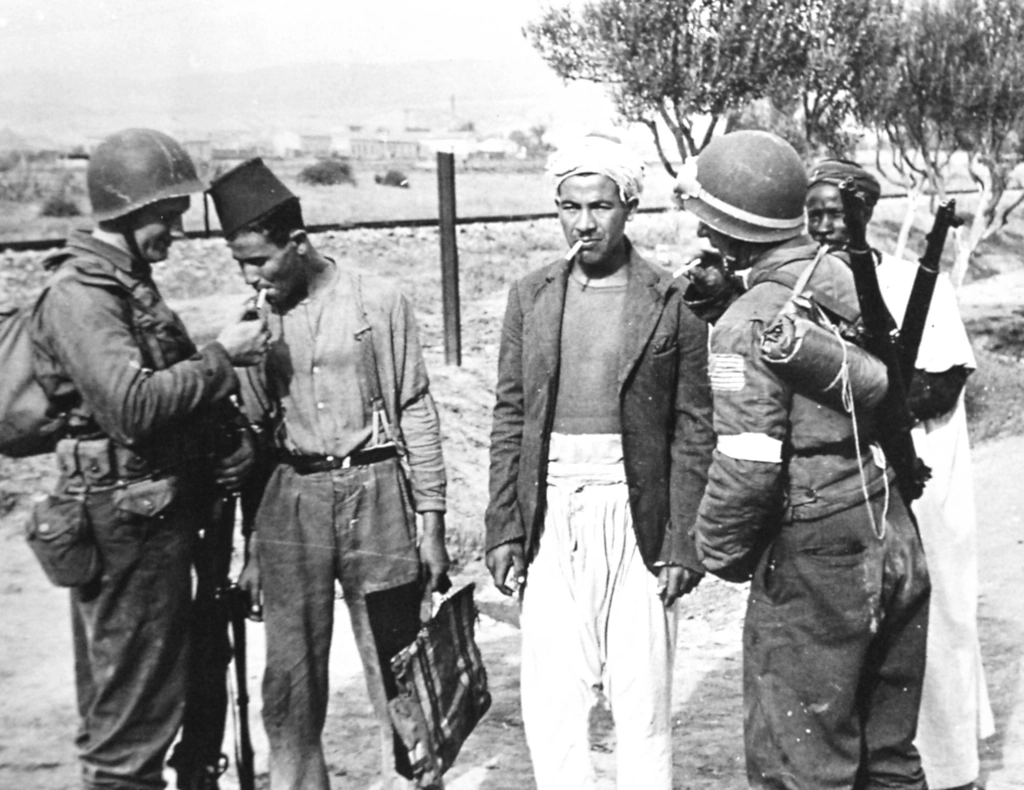
Rather than subject his gallant troops to certain annihilation, Col Swenson surrendered his positions to the attackers at about 1230 hours on November 8, 1942. The victorious French troops consisted of three companies of Sénégalese Infantry and one company of Mobile Guardia Naval Forces reinforced by 12 armored scout cars and tanks. Following their surrender, the American, prisoners were lined up in the streets and disarmed. While the wounded on both sides were being brought in for treatment the Sénégalase Troops commenced systematically to strip the Americans of their rings, watches and billfolds. When Col Swenson, protested vigorously at this vandalism, the French Commanding Officer lined up several of the Sénégalese Soldiers and told the rest of them that unless everything was returned to the US soldiers in two minutes he would shoot those he had lined up. Everything was returned with alacrity. Our enlisted men were separated from their officers and marched off to a barracks where they were imprisoned. The American officers were loaded on a large van and taken to the Admiralty Offices on the Ilot de la Marine for questioning. Shortly after their arrival, a French Commander of the Navy walked up to Col Swenson, arrogantly jabbed a US 45 caliber pistol into his stomach, and with much verbal castigation, threatened to throw the Americans into an underground dungeon unless information was immediately given about the plans of the Eastern Task Force.
This action was prevented by the arrival of Capt Viso Tangears, also of the French Navy, who roundly reprimanded all who had failed to render the fullest degree of courtesy to the American officers. After that incident the US officers were given comfortable quarters and the best of food from the French Officers Mess instead of the bucket of edible garbage which was about to be served to them. The American forces were not released until Tuesday afternoon, November 10, 1942.
Force Malcolm – HMS Malcolm
One of the heavy shells which hit the HMS Malcolm amidship on her second attempt to ram the boom exploded on contact with her smokestack, hurling shell fragments in all directions and causing heavy casualties in killed and wounded among the tightly packed troops on her decks; as she was hit again, the HMS Malcolm listed so violently to starboard that the water line was only six inches below her weather deck. Still another shell arced down through her oenter hatch, knocked out three of her four engines, reduced her speed to four knots, and damaged her hull so badly that water poured through several holes in her sides. Meanwhile the flash from the exploding shells had ignited the tarred pasteboard containers of a large pile of mortar ammunition stacked on the center hatch. Immediately a raging inferno of crackling flames flared skyward, sharply delineating the Malcolm against the ebony background of sky and sea. She was now such a perfect target to French artillerymen on shore that the life expectancy of the troops on the Malcolm seemed little better than that of a 90-year old man with hardened arteries, high blood pressure, and a leaking heart.
At this crucial moment, 1/Lt William E. Muir of Item Company rushed forward with a display of extraordinary heroism and hurled several of the burning mortar cases over the deck rails into the sea. His prompt example of aggressive leadership inspired so many others to come to his assistance that only a few seconds were required to get rid of all the burning material and thus avert the possibility of a catastrophic explosion. Only through the consummate skill and determination of Lt Comdr Sears was it possible to maneuver HMS Malcolm out to sea beyond the range of the shore batteries. When this had finally been accomplished the destroyer cruised slowly back and forth just outside the harbor until dawn. During the morning, her dead were buried at sea with an appropriate mass funeral ceremony, and after reorganization had been accomplished, the HMS Malcolm pulled up beside the Invasion Headquarters Ship, the HMS Bulolo, and her officers and men were permitted to go aboard for a hot meal. Upon their return on board of the HMS Malcolm, the troops were ordered to stand by for another attempt at landing directly in the harbor.
However, the damage to the Malcolm was so extensive she could not raise sufficient steam to complete such, a move. During the afternoon, several LST’s were made available to unload the troops from the HMS Malcolm. Three platoons of King Company boarded these LST’s and were landed on the friendly beaches to the west of Algiers. On their return to the Malcolm for the rest of the troops of the 3rd Battalion, the LST’s were tossed so violently by the rough waves it was necessary to postpone the unloading until the next morning. Meanwhile in Algiers, due to the uncertainty of the situation, the troops who had debarked from the Malcolm were ordered to make a forced march of approximately ten miles with full field packs and equipment into the city. This was successfully accomplished, but several of the men fell exhausted along the road due to their poor physical condition caused by their lack of physical exercise during the long ocean voyage from Ireland. They were too late to assist in capturing Algiers as all organized resistance in the city had ceased at approximately 1900 hours, November 8, 1942.
The Malcolm attempted to outer the harbor on November 9, but her damaged engines could not supply enough steam for suoh a move. Late that afternoon enough repairs had been made to enable her to get underway, but she was again prevented from entering the harbor, this time, by a large formation of JU-88 German Bombers which made an attack under cover of approaching darkness and scored several direct hits on the ships in the harbor. On the morning of November 10, 1942, the HMS Malcolm at length succeeded in pulling up beside the Mole al Mouchez and unloading the last of the troops of the 3rd Battalion, 135th Infantry.
 Readers may occasionally notice that certain pages within the archive ‘3/135th Infantry Regiment – 34th Infantry Division – Operations at Algiers (North Africa), November 7–10, 1942 (Maj Leslie W. Bailey)’ appear to begin abruptly or lack their original opening line. This issue is entirely beyond my control. The individual who produced the photocopies of the original document unfortunately omitted the first line on several pages. As a result, considerable cross-referencing and historical verification were required to maintain the continuity, accuracy, and context of the narrative. Every effort has been made to reconstruct the intended flow of events while preserving the integrity of the primary source material.