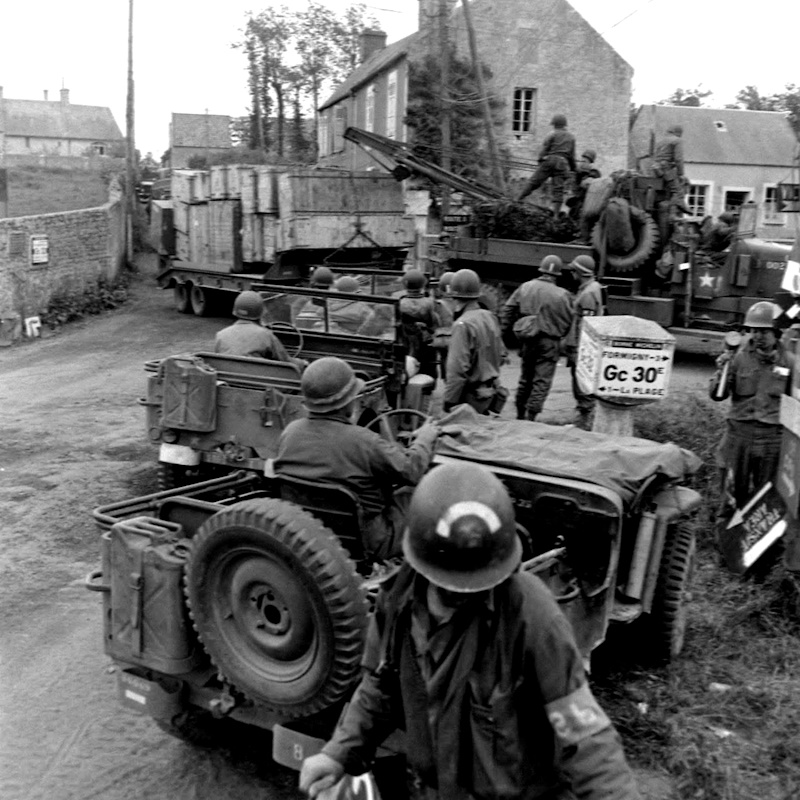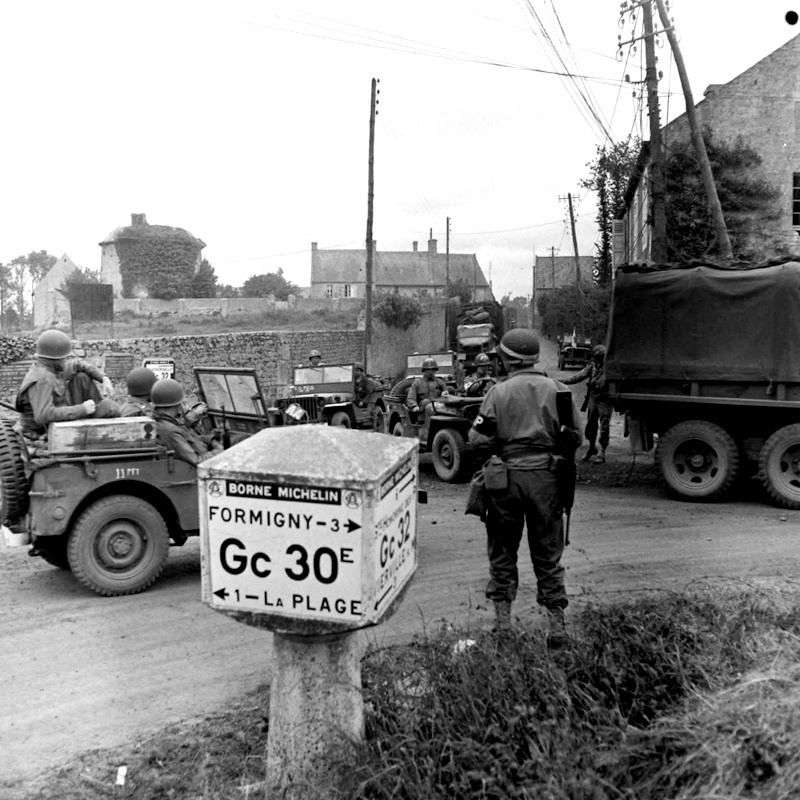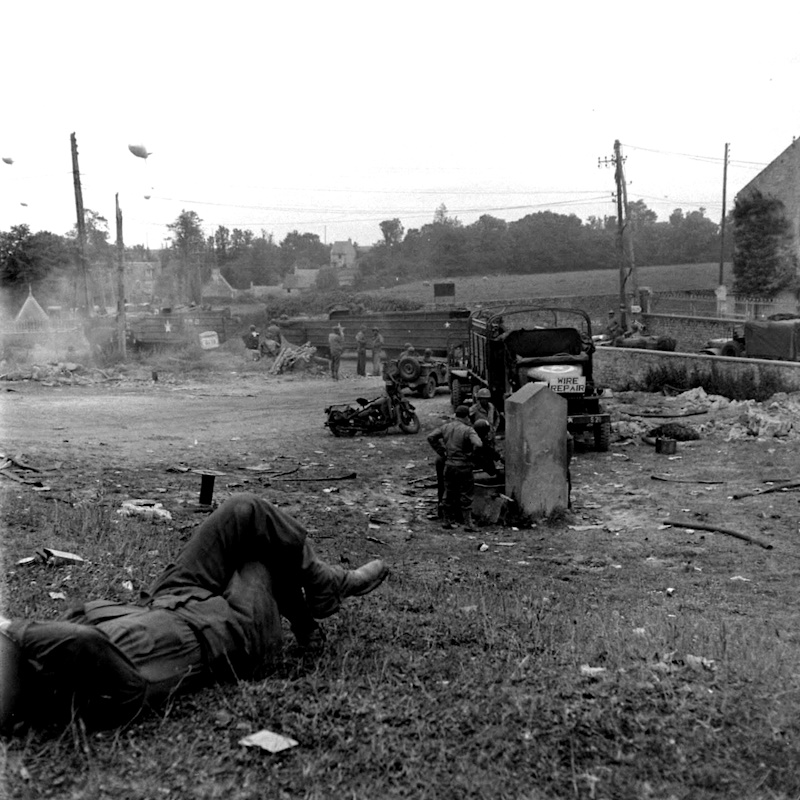


The story of the Battalion and D-Day was not alone in the tanks. Some of the men came in on jeeps – the jaunty, indispensable little vehicles the Army unimaginatively calls trucks, 14 ton. Cpl Charles (Chuck) Reynolds, a liaison non-com from Holton (Kansas), watched his jeep sink in the deep water while an attempt was made to unload it from the landing craft. He waded ashore, joined his Able Company on the beach and aided in the maintenance and supply of his company’s attacks during the fighting for the next two weeks until he got another jeep and resumed his liaison work. Another liaison corporal, Francis M. Dorer, of Philadelphia, had the same experience of losing his jeep in the surf and wading ashore on foot to do the best he could with equipment picked up on the beach. Cpl Arthur Wood, of Cedar Rapids (Iowa), did manage to get his jeep ashore to take up liaison duties. Four 2.5-ton trucks were allotted to the combat elements of the Battalion for supply. Two of these got onto the beach D-Day, the other two were not able to land until the next day.
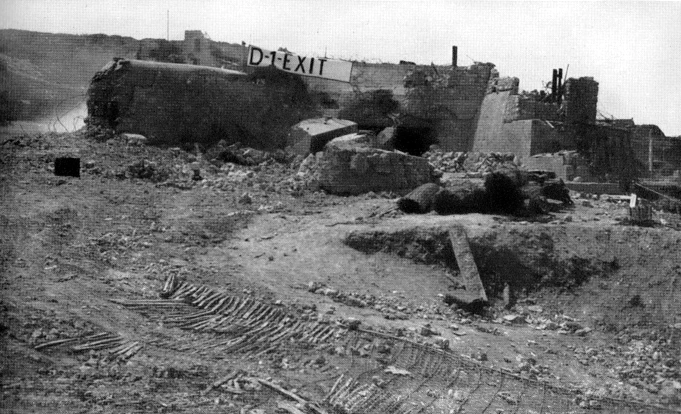 Capt Vodra Philips, company commander of Able Company, completely disregarded enemy fire when he led his tanks ashore. The onetime teacher of social studies dismounted from his tank and guided the four Shermans in his LCT from the landing craft through the beach obstacles to above high water mark. The entire beach was covered with enemy rifle and machine gun fire, but the captain remained intent on the job he was doing – marking the routes for the rest of his company tanks as they rolled in from the landing craft. In the confusion of the beach fighting, Capt Philips never did see Lt Col Upham during battle, but upon learning that the Battalion Commander had become a casualty, the captain assumed command and directed the movement of the tanks toward Exit D-1, organized a fire fight on the beach to help engineers blast the exit, and then commanded the movement of the Battalion inland.
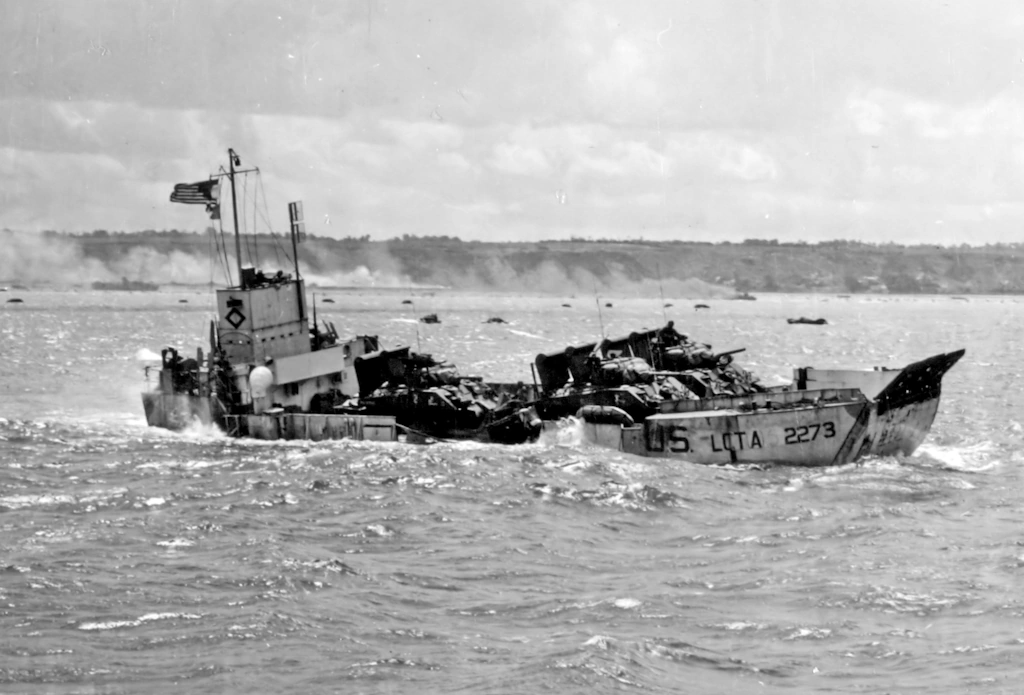
In the D-Day plan, Col Upham was to follow his assault tanks in at H-plus-90 minutes. But from H-minus-20, Col Upham’s calm, crisp voice was directing operations of his Battalion by radio from a LCT a few hundred yards offshore. From this craft his eyes calculated the beach action. He saw his men hurt, some of their tanks knocked out, destroyed. He watched while his tanks assembled and then found themselves bottlenecked in a bad situation on the beach. Movement was confused, tanks and wreckage in a traffic snarl under heavy fire. When the LCT swung into the beach at last, the Col was first over the side. He waded ashore in the face of enemy fire. His one concern was to get to his tanks. He reached the first of these vehicles and personally guided them across the first-swept beach. Then, still afoot, he began to direct their fight to open the beach exits.
Sometime during that hectic morning, a German sniper took careful aim upon the slim figure of an American tank colonel walking in the water on the beach beside his tanks. The sniper squeezed off his shot and probably never knew he had hit his target. The slug shattered the colonel’s right shoulder, but he refused medical attention, kept on with his work. He came upon cannoneer Pvt Charles J. Leveque and gunner Cpl William C. Beckett, both of whom had abandoned their Able Company tank after a track had been knocked off in the water and the rising tide threatened to engulf the uninjured crew. The colonel was moving up and down the beach giving instructions to the dismounted men on how to move and avoid the mortar and artillery fire. His clothes were wet, his one arm dangled uselessly, but he remained cool and calm as his men always knew him. ‘You couldn’t get the colonel excited — not even then’, Cpl Beckett said of that moment.


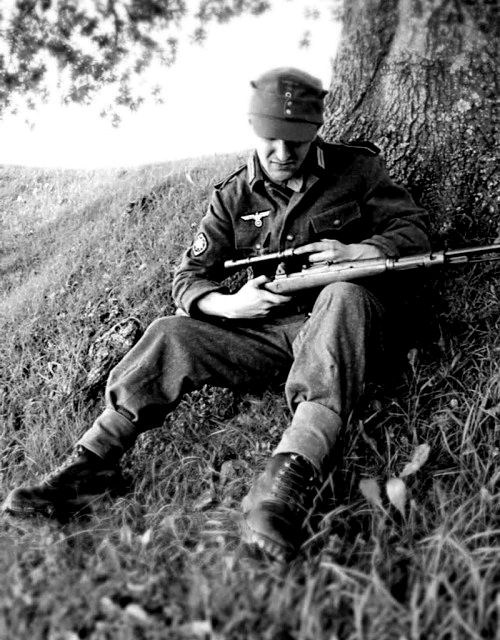 Mauser Karabiner 98k Sniper Rifle and Optics
The Mauser Karabiner 98k (abbreviated K98k or Kar98k) was the standard service rifle of the German Wehrmacht throughout World War II. Chambered in 7.92×57mm Mauser, the K98k was a bolt-action rifle based on the earlier Gewehr 98 but shortened for improved handling. While designed as a general-issue infantry weapon, the K98k also served as the foundation for Germany’s sniper rifles during the war. Sniper variants of the K98k were selected from regular production rifles that demonstrated exceptional accuracy. These were then modified to accept a telescopic sight, typically mounted with a side or low-profile mount, depending on the optic model. Unlike modern precision rifles, each German sniper rifle was individually zeroed to its specific scope, meaning that optics were not interchangeable in the field. Several types of scopes were used by German snipers, most notably the ZF39, ZF41, ZF4, and Dialytan 4x.
The ZF39 was a 4x scope with relatively high quality optics and a long eye relief. It was typically mounted with a high turret or claw mount, allowing for use of the iron sights as backup. The ZF41, in contrast, was a 1.5x long eye relief scope, initially intended to be issued widely to designated marksmen. However, it suffered from limited magnification and poor performance in low light conditions, and was generally disliked by snipers. Later in the war, the ZF4 (also used on the G43 semi-automatic rifle) offered a 4x fixed magnification, with improved optical clarity and simplified manufacturing.
German snipers using the K98k with proper optics were deadly, especially in defensive roles or in urban and forested environments. Camouflaged positions, patience, and tactical withdrawal techniques made them a persistent threat. They were also equipped with range estimation reticles, allowing them to engage targets effectively at distances of up to 600 to 800 meters, though accurate fire was typically expected within 400–600 meters. The K98k sniper system, while not standardized, represented a balance between craftsmanship and field expediency — a deadly tool in the hands of a trained German marksman.
Col Upham remained exposed to the enemy fire all morning and into the afternoon. He continued, although his wound was a bad one, to co-ordinate the fire and movement of such of his tanks as he could personally control. It was not until after 0100 hours in the afternoon, when at least one beach — Dog Green — had been cleared and the situation was beginning to show some promise of success, that Col Upham submitted to the medics and left his Battalion. Maj William D. Duncan, of Sioux Falls (South Dakota), was in another LCT with Headquarters company men, trying to get ashore but having little luck except in avoiding enemy shells which plunged into the water where the craft had just been as it maneuvered about. Capt Vodra C. Philips, of Fayette (Missouri), was on the beach, also like Col Upham on foot, leading Able Company. Until the LCT with Maj Duncan could gain the beach, Capt Philips took field command with the tanks.
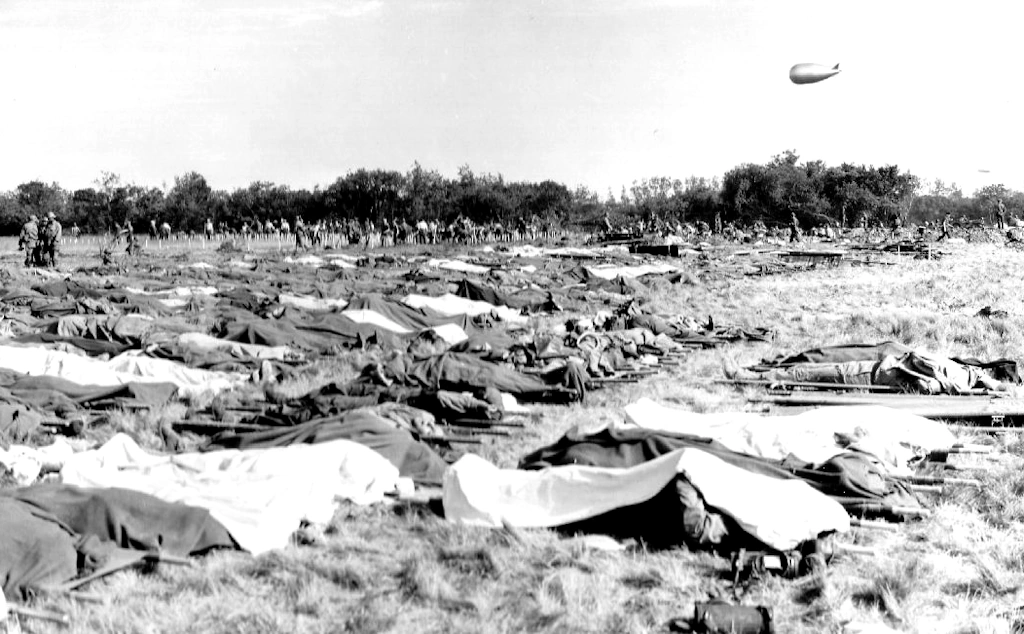
For his part on D-Day, Col Upham received the Army’s Distinguished Service Cross for extraordinary heroism in action. It was one of nine won by the Battalion during the first 16 hours of the invasion. The story of D-Day is the story of all who were there – jeep drivers, truck drivers, halftrack crews, supply and communications men as well as the tankers. Many – too many – of the stories were posthumous. The Presidential Unit Citation was awarded the Battalion for the day’s fighting. There were the DSC’s won, and a galaxy of Silver Stars and Bronze Stars. But the Battalion was not thinking of glory as it fought its way through Exit D-1 toward Vierville-sur-Mer. Glory is a tainted angel to tankers who have just had to run their steel treads over the bodies of fallen GIs because there was no other way to advance over sand cluttered with American dead and wounded. ‘If there was any sign of life at all, I tried to avoid them’, one tank driver said. ‘But buttoned up, looking through the scope, it was hard to see. You just had to run over them’. In war there is no easy way. The grinding tracks of the Battalion’s tanks trailed blood through the sand, rolling inland off the beach. The whole war in France, Belgium, Holland and Germany was ahead of them.
 The Making of Veterans
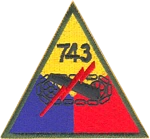
The men of the 743-TB in the tanks, the halftracks, the trucks, the jeeps and on foot, came from all states – but mostly from the Northwest. They came from places like Spokane, Coffee Creek, Thief River Falls, St Paul, El Paso, Chicago, Philadelphia. They were ex-butchers, bakers, rich men, poor men. They were young – though a few faced 40. They were draftees and regulars and volunteers. They thought their outfit was the best damned one in the Army. It never entered their heads the 743-TB could do anything but whip the enemy. In short, they were any American Army group, highly trained, confident, a little scared, seeing combat for the first time. D-Day at Omaha Beach was their baptism of fire. By the second day, some of the dead were buried in a field just over the first hill. The wounded were on their way back to England. The rest had the job now of clearing the coastline, of pushing inland. A day ago they had been untried in combat, soldiers well-trained but new to war’s payoff – the front line. Now they were on their way to becoming veterans. They would learn to fight with the vulnerable ‘iron coffins’ as no men before them, even in the mountain passes of Tunisia, had fought.
Their fighting was to be obscure, often hidden in the equivocal phrase, popular with newspaper correspondents, ‘American tanks and infantry’. It was the sweeping, powerful, great armored divisions which so often took the spotlight and the bows for their mile-consuming exploitations during the war on the Continent. ‘Tanks’, in the public mind, were usually identified with the headline work of the armored divisions. For the basic function of these big units was the stuff of which headlines and public glory is made. In modern warfare, it is the job of armor to get in behind the enemy’s lines, rip up his communications, confuse his rear, drive him into pockets, bewilder him and cut him to pieces before he can reorganize and recover. All this whole divisions of tanks did whenever they got loose. But this sort of spectacular warfare, the ‘blitz’ with which the German panzers first set out to storm the world, was not the sort ordinarily fought by the 743-TB, a separate tank battalion attached to doughboy divisions.
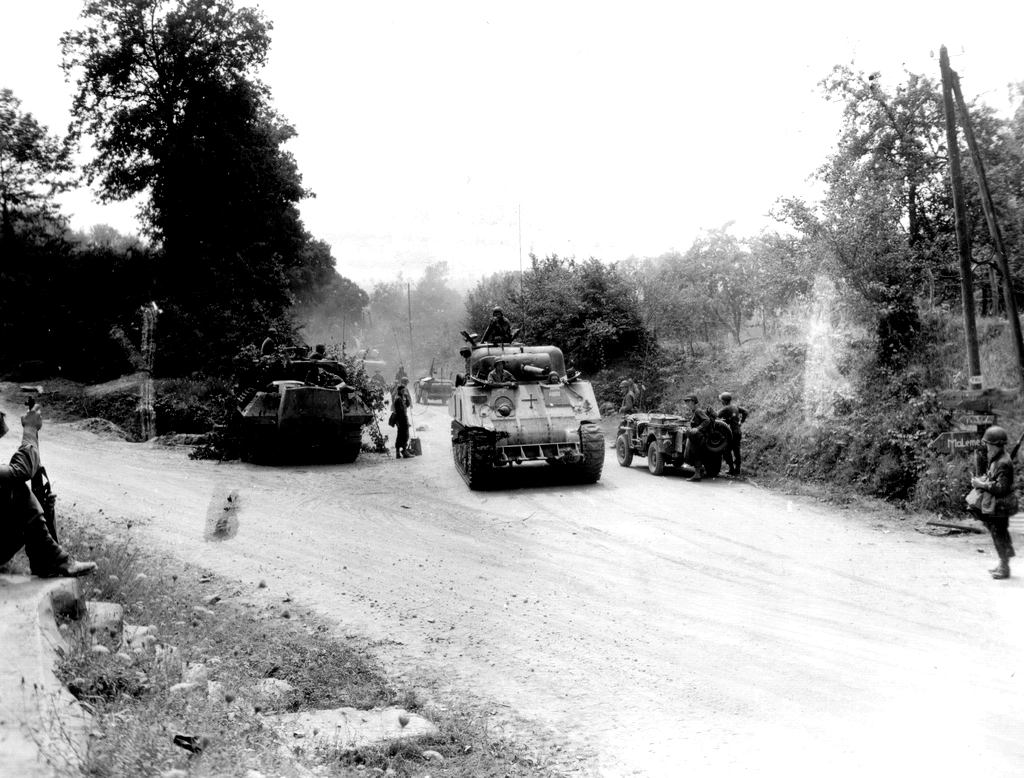
A separate tank battalion assigned to work with an infantry division fights at the foot soldier’s pace. Its job was to give the dougboy’s attack the added punch that tanks have, to bull ahead when the going got rough, to knock down houses Jerry tried to use as forts, to stop enemy tanks in the counter-attacks, to spearhead a way for the doughboy and his rifle, his machine gun and his mortar. The battery of 105-MM guns in the six medium tanks of the assault gun platoon provided the infantry with mobile medium artillery. The 75-MM cannon (and later the much better 76.2-MM cannon) in the 54 medium tanks of the line companies gave the doughs direct fire power right where they needed it the most – right beside them at the front.
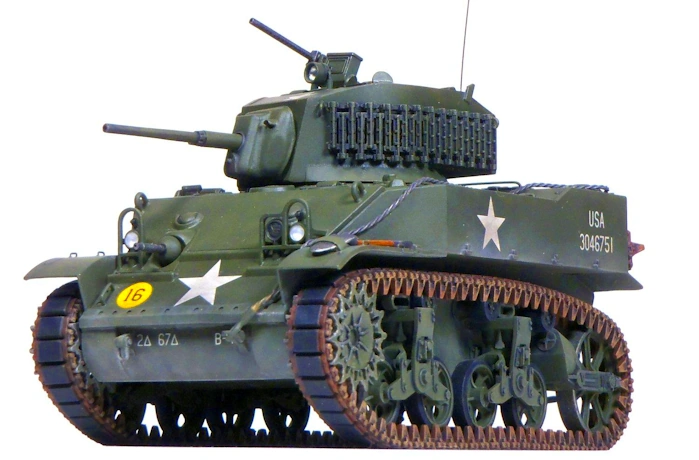
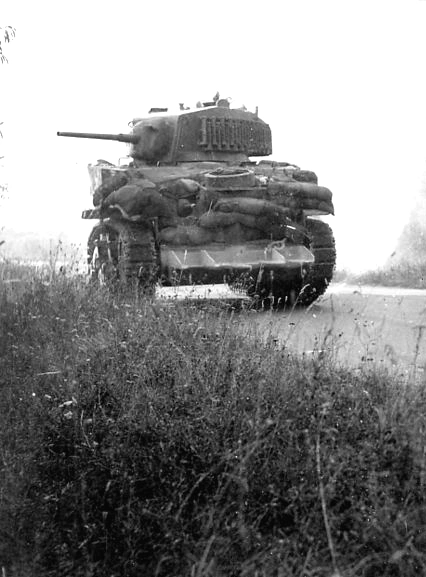 A company of 17 speedy (though thinly armored) light tanks was available for swift scouting thrusts. All tanks were machine gun nests on treads to spray lead when and where it was wanted. In addition, the Battalion provided four halftracks mounting machine guns and with three 81-MM mortars to drop high explosives into the enemy’s lap. Altogether six 105-MM assault guns, fifty-four 75-MM guns, seventeen 37-MM cannon, eighty-five .50 caliber heavy machine guns (twenty mounted on trucks, sixteen on halftracks), one hundred and ninety-four .30 caliber machine guns – this was the punch of the 743-TB. Often the doughboy regiment and its attached tank battalion slugged it out with the Jerry on the line for days, inching painfully ahead to engineer an opening in the enemy defenses through which the star ball carriers, the armored divisions could do their free and fancy open-field running. When this happened, it then became the job of the doughboy and his supporting tanks to follow up as fast as they could, moving behind the swift, surging, 20-mile-a-day drives. The infantry moved and fought, mopping up the pockets of resistance always left in the wake of such drives. But mostly, while the big armor waited in reserve for the quarterback to call their number and set them going through the line, the infantry and the separate tank battalion were in the thick of the line play, fighting and getting hurt, replacing their losses, then fighting again, always under fire, within enemy artillery range, doing- their work ever at the front of the division’s sector.
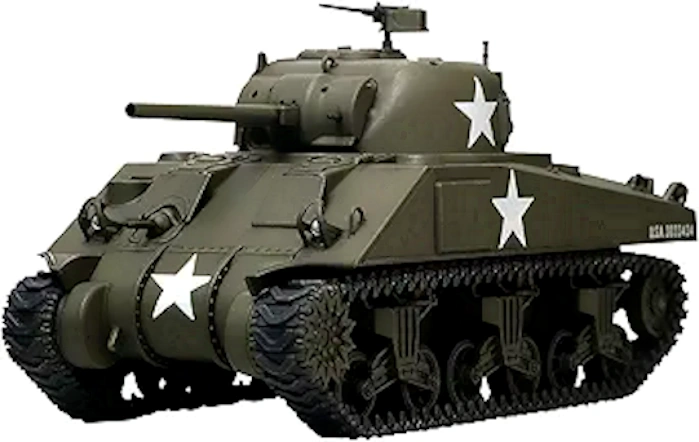 An American tank battalion in the second war against Germany was made up of four line companies to do its fighting. A HQs Company contained the Colonel’s staff personnel, plus such combat units as the mortar and assault gun platoons and the reconnaissance scouts. A Service Company maintained and kept rolling the Battalion’s vital vehicles, brought forward gas and ammo and food to the tanks on the line. In the 743-Tank Battalion, Able Company, Baker Company and Charlie Combat fought with M-4 Sherman medium tanks on the line. The fourth line company. Dog Company, operated with light tanks. At full strength, each of these companies had 17 tanks, including its two staff command tanks. The companies in turn were made up of three platoons, five tanks in each platoon. In addition each
  company had its own maintenance section, kitchen, and attached medics. Normally, when on the offensive, three of the line companies would be attached to infantry regiments, one tank company working with each regiment, and one company would he in reserve. Often all four were committed — sometimes all with one regiment.
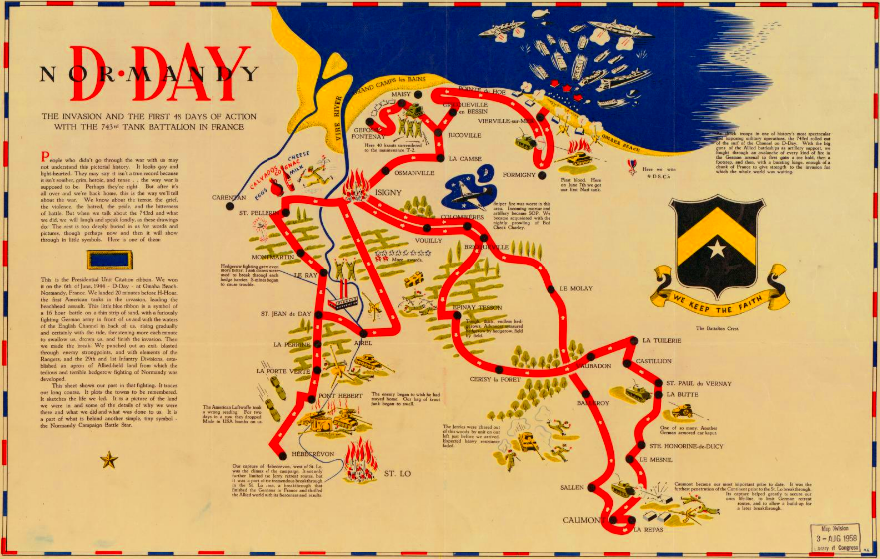
A tank company might work with one infantry regiment one day and another regiment the next, but it was always working, always moving ahead on the attack, or remaining on the alert in an advanced road block or defensive position. On D-Day, the Battalion was grouped under a battle team plan – tanks, engineers, infantry—with two companies (Baker and Charlie Cos) of special ‘DD’ tanks and one company (Able) of regular medium tanks, four of which were equipped with bulldozer blades. Following the line companies were HQs Section (the commanding officer, his staff, and some administrative personnel), service crews from Service Company and medical personnel from the Medical Detachment. In England remained the balance of the Battalion – Dog and Service Companies, the rear administrative echelon, the company kitchens. They would not reach the assault elements for nearly two weeks, on June 19.
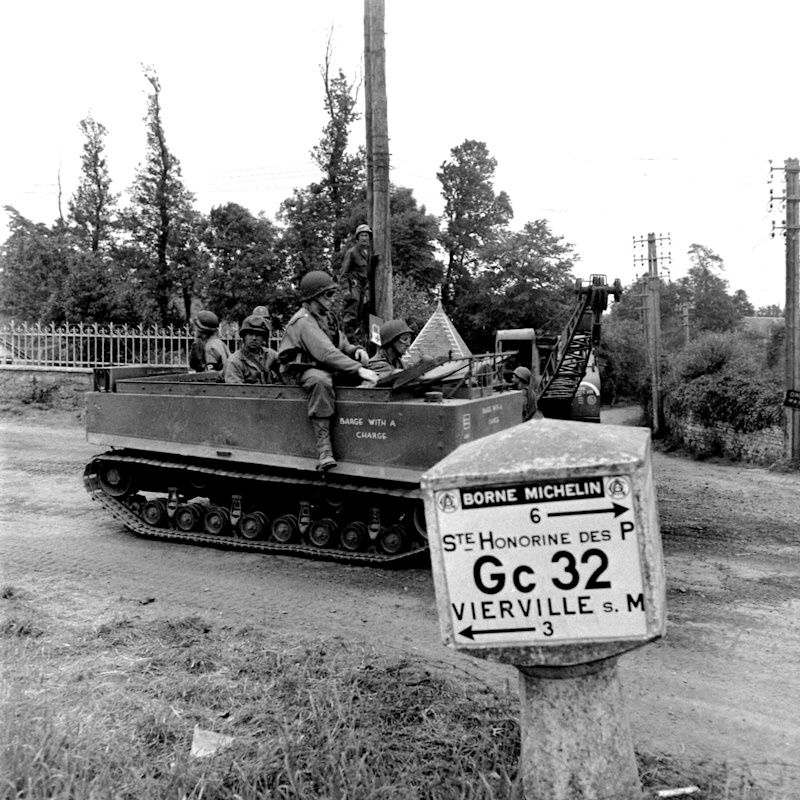
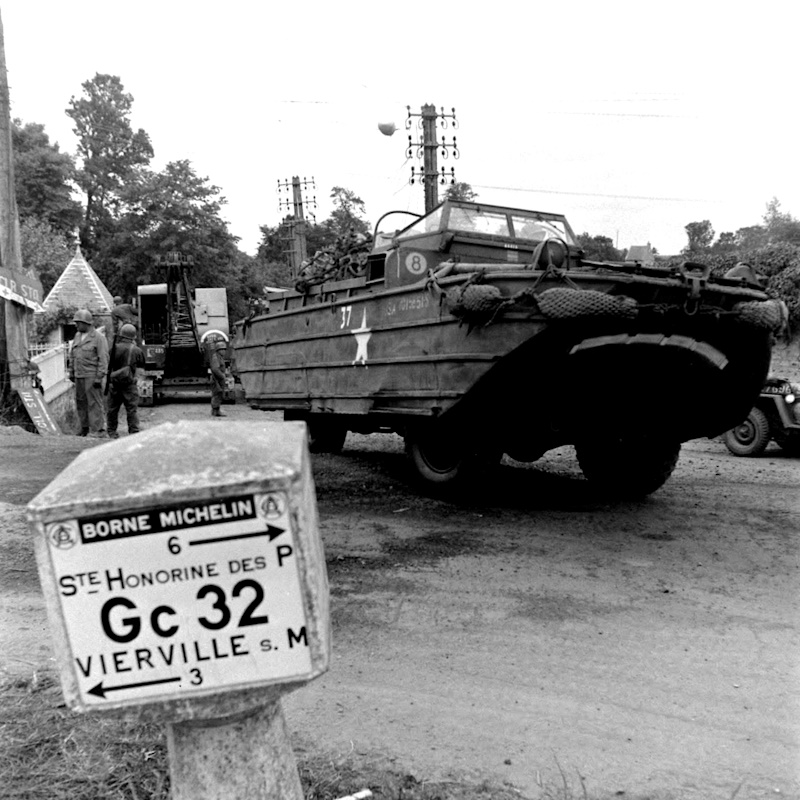
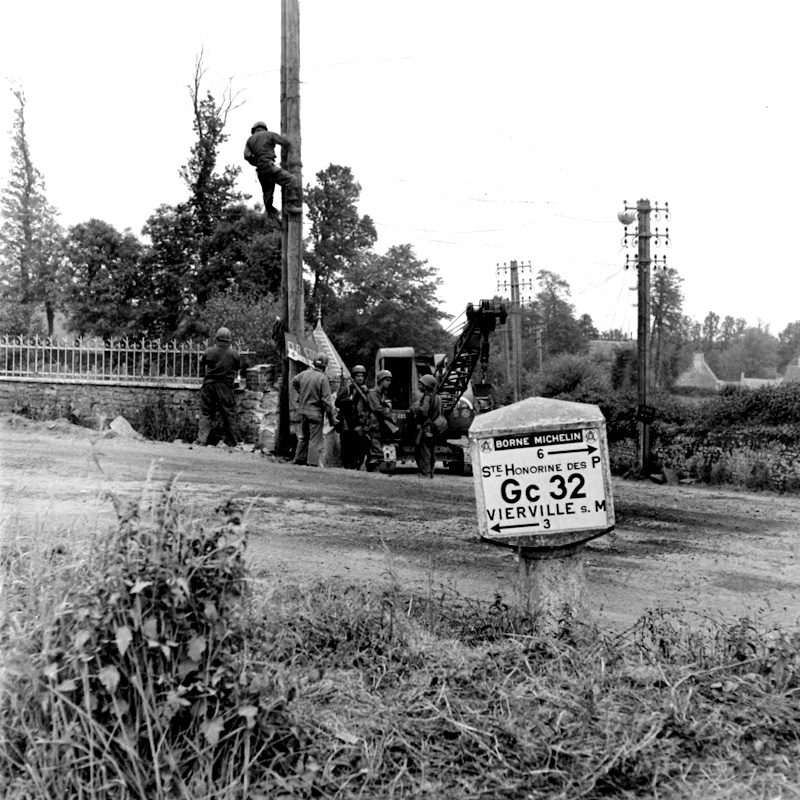
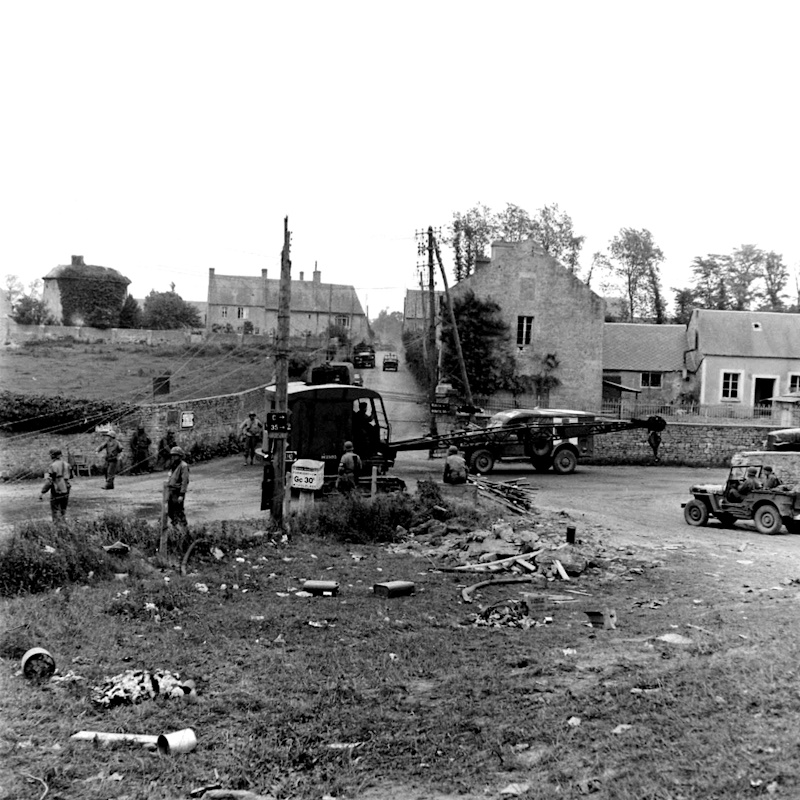
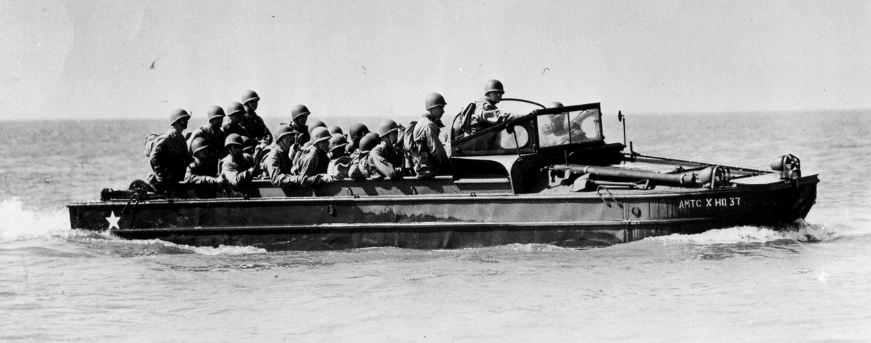
On June 7, the second day of the invasion, HQs section was still out the Channel, still trying to get ashore. By mid-afternoon Maj Duncan had argued long and loud enough to have the commander of the LST hail a passing Dude – the Navy’s smallest invasion craft. The Army personnel of HQs section scrambled aboard into the Duck and started for shore. The Duck developed rudder trouble and was unable to navigate. In order to reach the beach, Maj Duncan and his men had to transfer into still another boat – an LCM – which put them in at about 50 yards from the water line. The men jumped into five foot depth of water and waded ashore. After 36 hours of trying and many close calls from artillery, HQs section was at last on the beach. The command halftrack was located on Easy Red beach where it had been unloaded by the shore brigade. Nobody knew what happened to Pfc Oldvader’s jeep. It never did turn up. The HQs men loaded into the halftrack and proceeded out Exit D-3 to a transit area behind the beach. There, Maj Duncan contacted Capt Philips by radio. Capt Philips advised against proceeding to join the tanks at Vierville-sur-Mer because the German infantry snipers and the zero-ed in artillery was still making that area plenty hot. HQs spent the night in the transit area, their waking hours spent listening to the bang-wail-crump threnody of incoming shells and watching the spurting streams of red and orange ack-ack rise up to meet enemy planes in the night sky. Meanwhile the combat elements of the line companies took up the action at early dawn on D-plus-one.
Baker Company moved out at 0530 with infantry of the 116th Infantry Regiment to clear a way west along the coast towards the first’ sizeable town named Grandcamps-Maisy. The infantry had no more than inched ahead a few yards before they were met with machine gun fire and damnably accurate sniping. A slow, creeping and crawling, running and falling advance was kept up by the doughs through the farmsteads along the Grandcamps road. After four hours of work, big stuff commenced falling in among the men and tanks. Two tanks were hit by the heavy artillery and damaged but not knocked out. The attack was broken off and a withdrawal was made back to the Vierville-sur-Mer bivouac area. During the fighting, Baker Company knocked out its first anti-tank gun, took its first prisoners (four in number), and destroyed its first machine gun nests.
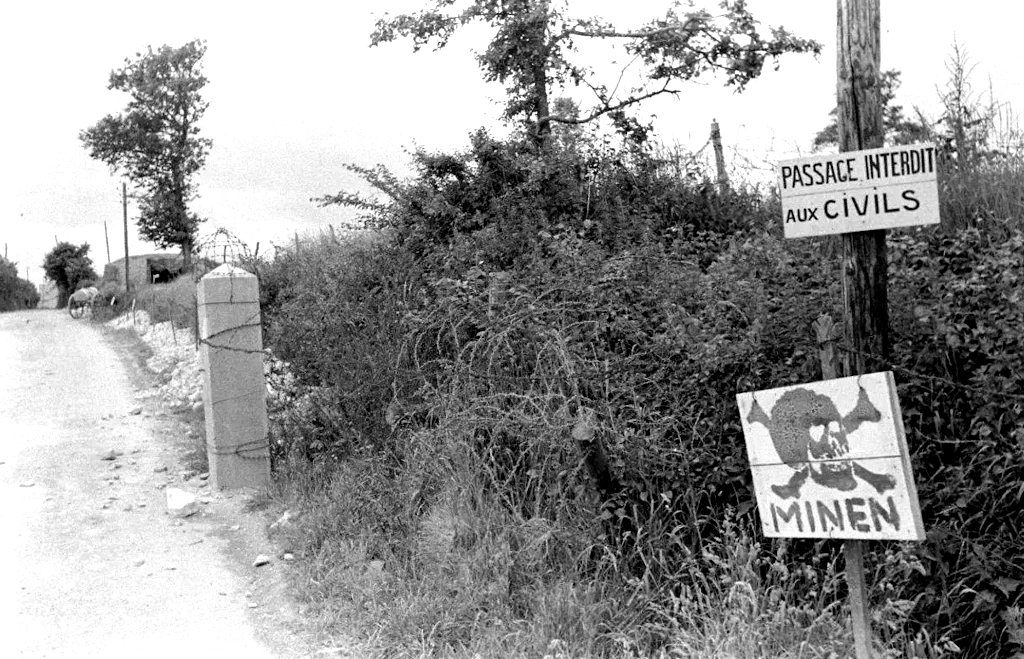
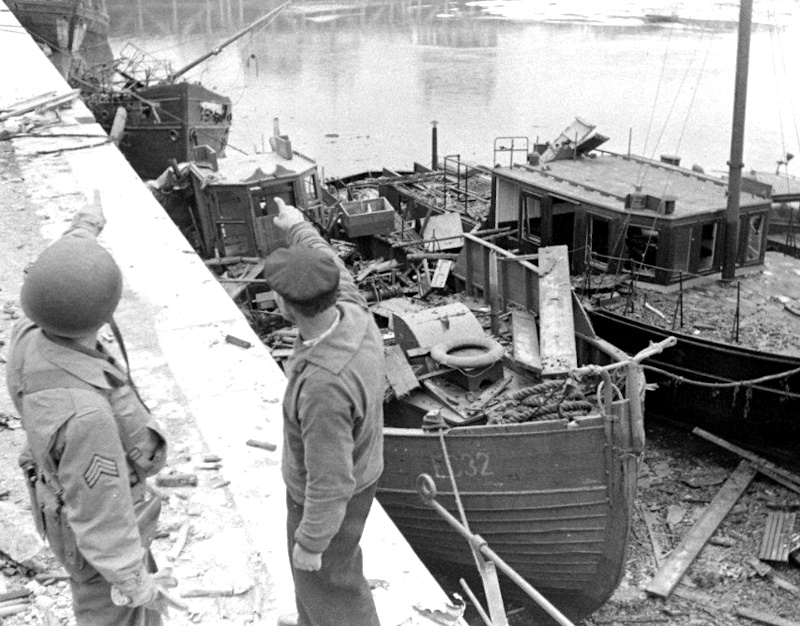
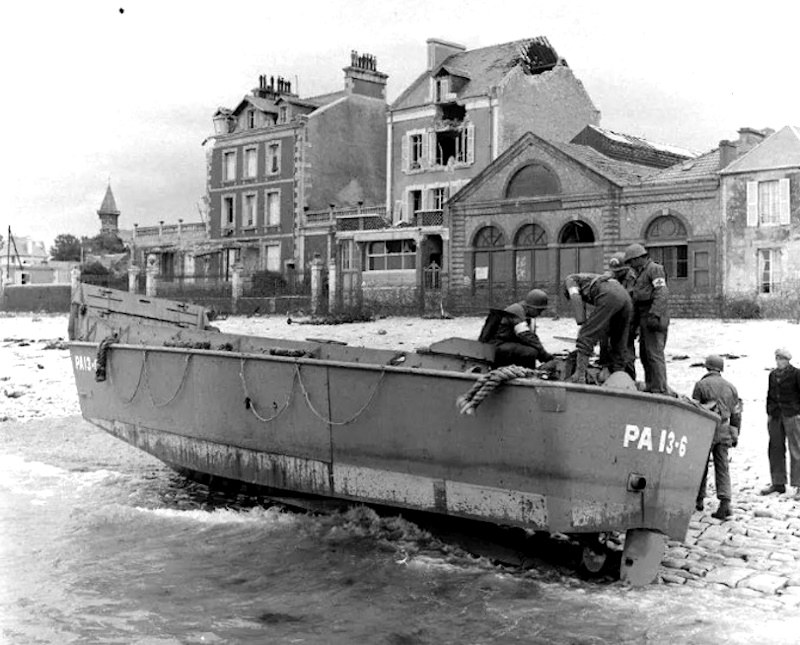
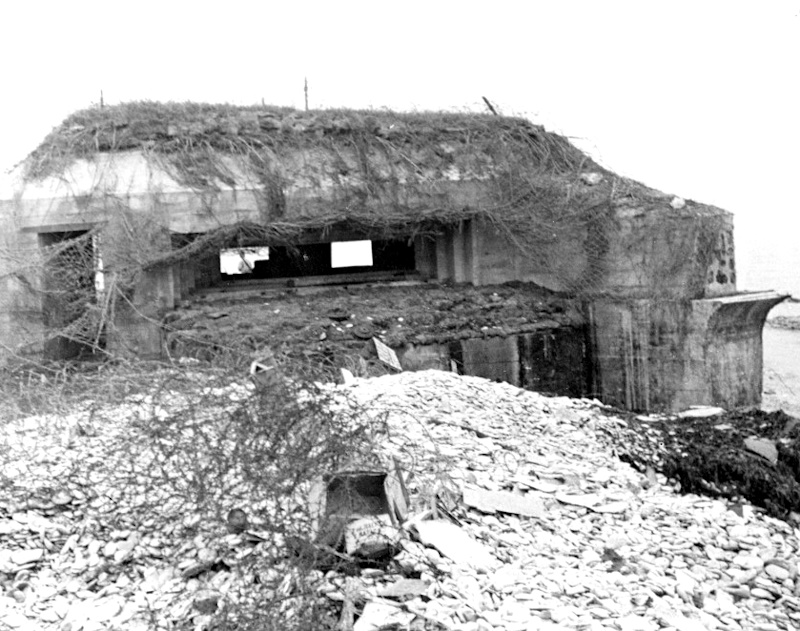
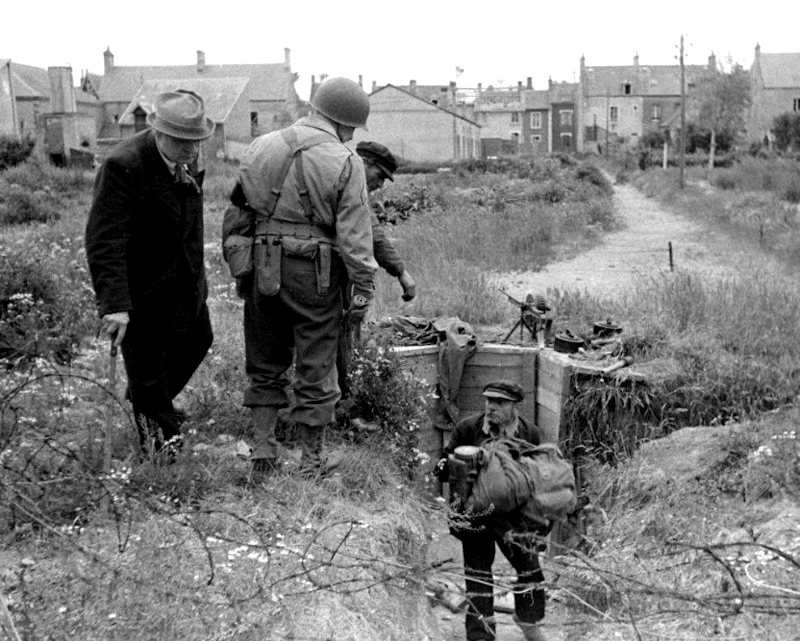
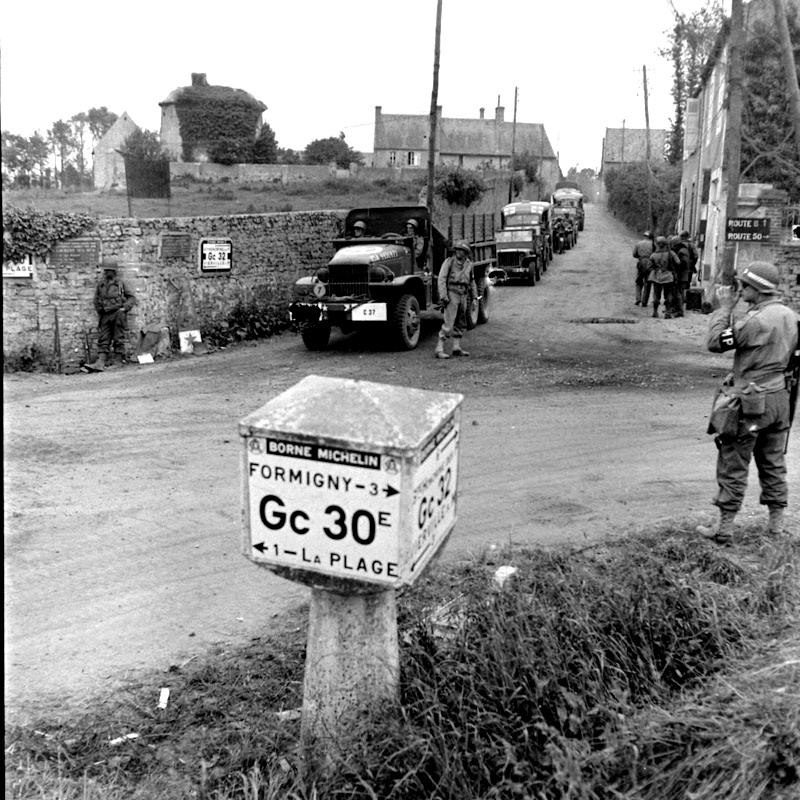
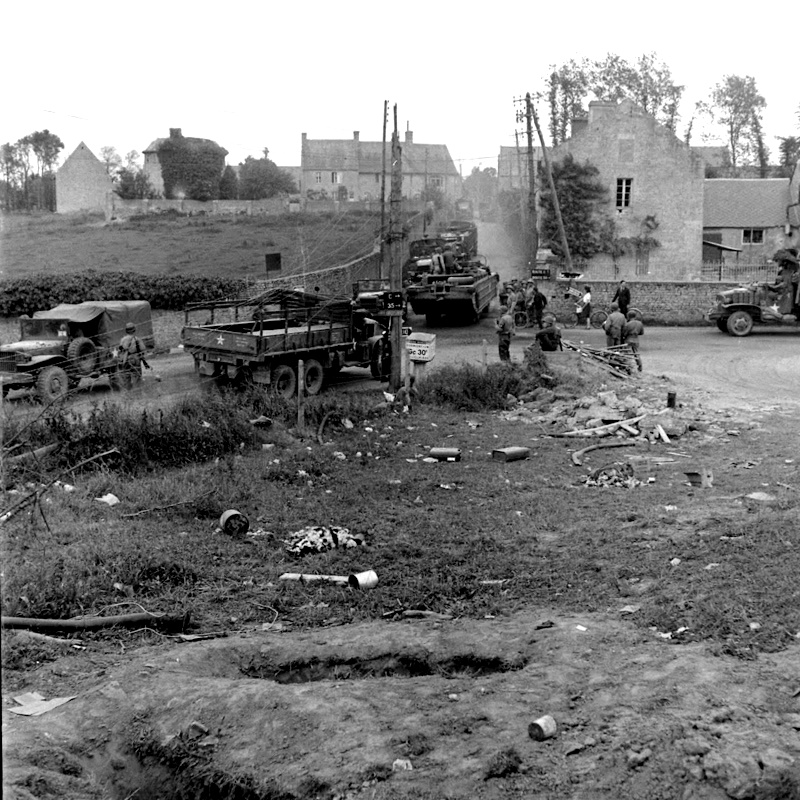
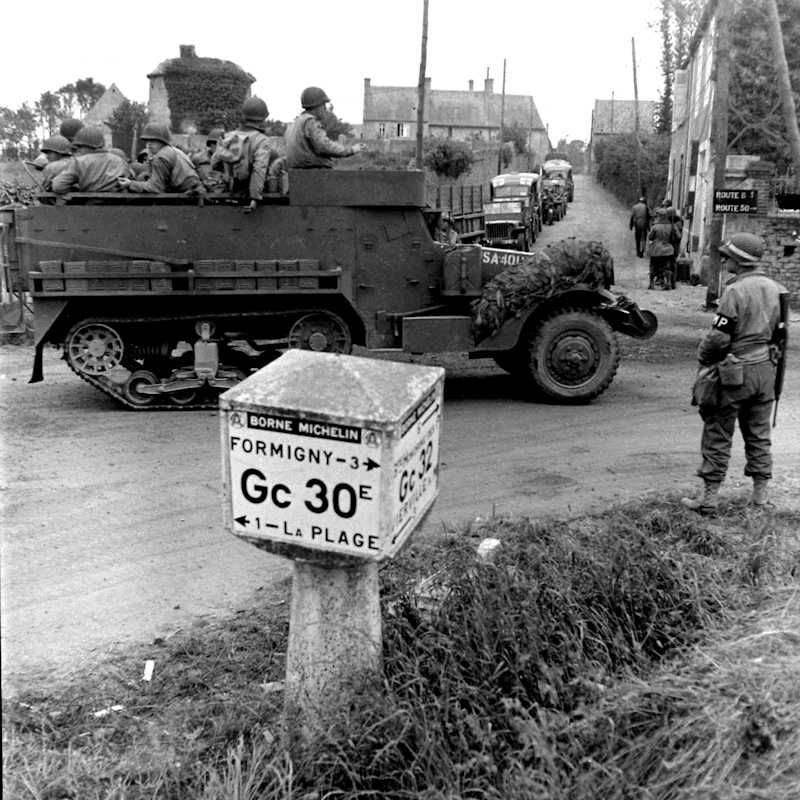
Charlie Company destroyed the Battalion’s first German tank. The direction of its attack was south, toward the hedgerows and a village a few miles inland called Formigny. It, too, was supporting doughs of the 116-IR. The enemy tank, a low-silhouette Mark IV armored comparably to the M-4 Sherman but with a much more powerful 75-MM gun in its squat turret, was sighted by the advance guard. Hit with armor piercing shells, the Mark IV burst into flame. The panzer crew of five did not get out. The advance on Formigny bogged down partly due to the fierce defense put up by enemy infantry holed up in strength in long prepared field defenses, and partly due to the confusion that developed when the men of 116-IR were met and fired on by friendly troops of the 115-IR. These friendly troops opened fire on Charlie Company tanks. The tanks were still rigged out in their DD seagoing dress, and the American infantry, not briefed in the strange outline presented by this top-secret invasion weapon, thought it had come upon Nazi armor. No casualties resulted from this error, but the attack was a mess. Artillery fire thought to be from our own guns began tearing up fields and men, adding to the confusion. Tired field officers hurriedly snapped orders to tired men, and as the day wore on the confusion lessened. The crack and whine of bullets through barnyards and hedges kept up with nasty persistence. Charlie Company now reassembled and sent out its tanks in twos and threes to support the 115-IR against the constant hail of machine gun fire and sniping. Slowly, acre by acre, farmhouse by farmhouse, the enemy infantry was rooted out. Through the day, the tough, unglamorous work of reducing, strongpoint after strongpoint in one small part of the war continued.