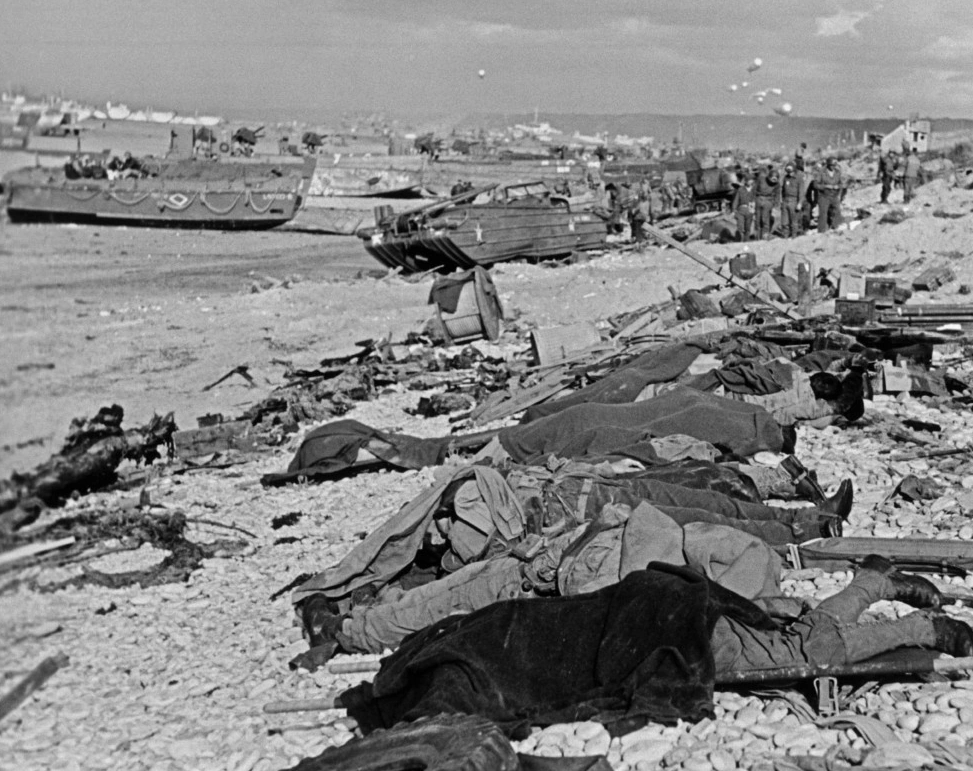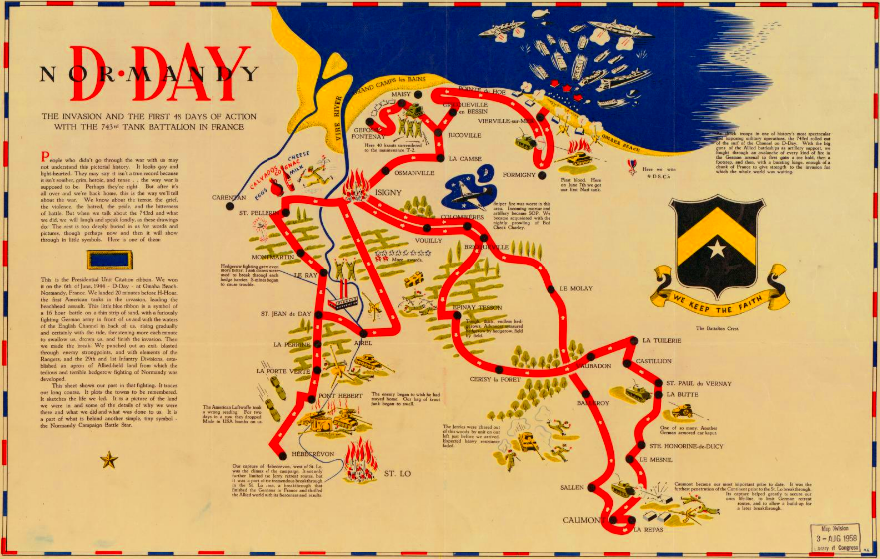


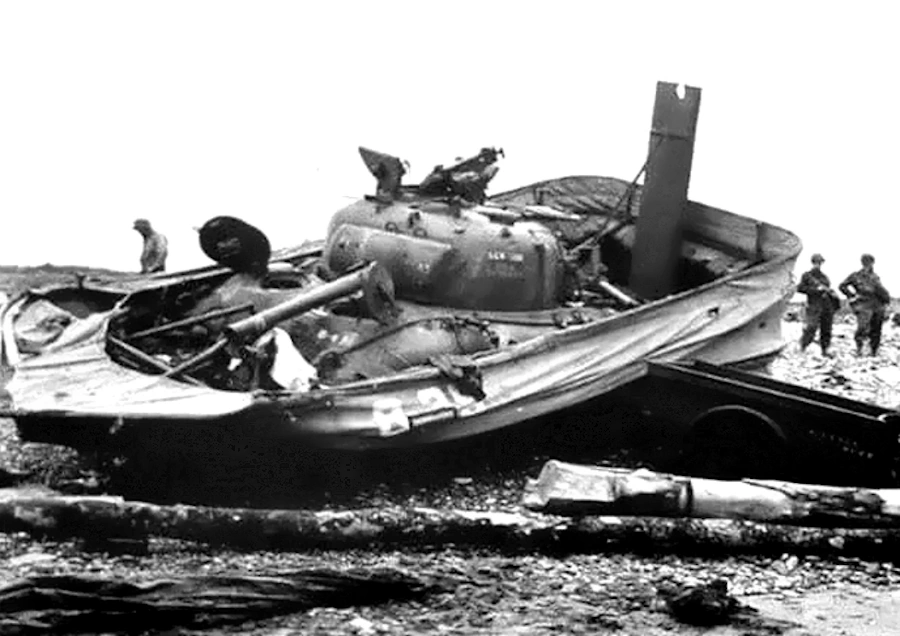
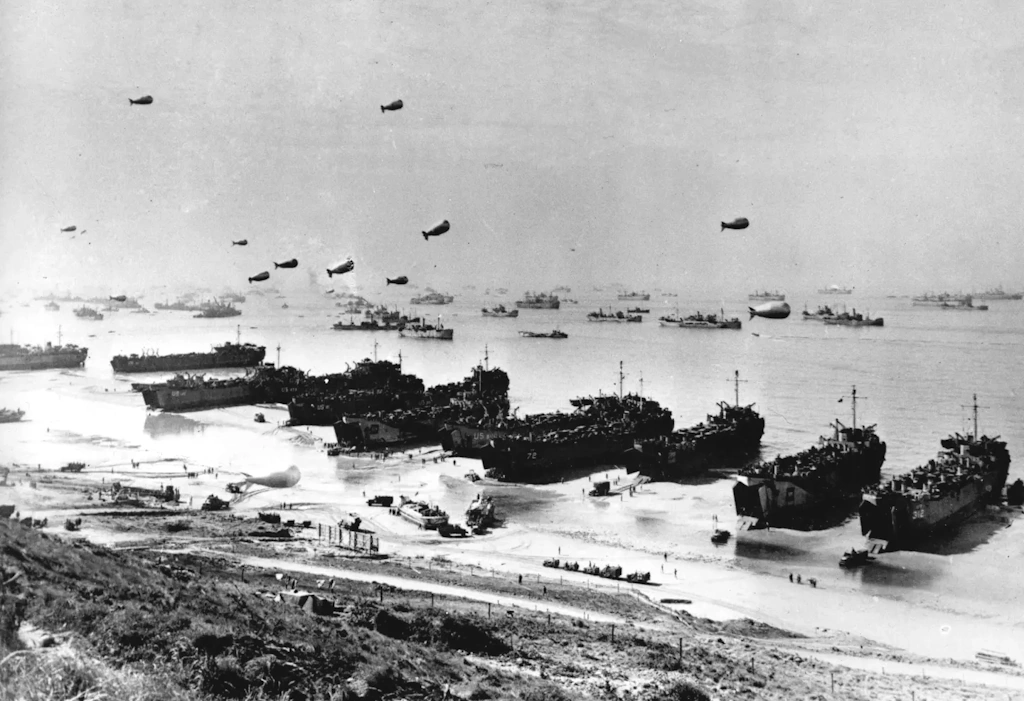
That was the background for the moment that was marked by the calendar and clock as H-minus-6: 24 minutes past six o’clock on the morning of June 6, 1944. That was the setting as the LCT bumped to a rocking stop, its flat bottom grounded on the beach. The front ramp dropped and splashed down into the surf. With a great roar of its engine, the first of four Shermans moved out. Rigged in its canvas structure intended to permit it to float and navigate in water, the tank looked like an unusually large canvas duck boat. Wet sand churned as the tank gained the beach. The tank commander looked down and saw white sand instead of water. Charlie Co had one of its first tanks ashore. The crew: T/4 Alvin Tisland, driver; Pvt Clarence Voakes, assistant driver; Pfc Gene W. Johnson, cannoneer; Cpl Herbert M. Beireis, gunner; and Lt Dennis Maloney, tank commander.
Elsewhere, other tanks were landing. The Shermans of the 743-TB were committed on the soil of Europe. In the following minutes there was a platoon ashore. Baker Co’s tanks were coming in through the surf. Then Able Co. Tank by tank the Battalion assembled. As in any men going into combat for the first time, fear quickened many hearts. The tankmen knew that they were going in to fight the enemy with the protection of steel armor about them – that perhaps they could consider themselves better off than the doughboy who was going in to battle with a rifle and his shirtfront and his wits as his only protection. Yet the tankers knew from their training, from word passed down to them of combat experience in Africa, that the M-4 Sherman medium tank was far from an invulnerable weapon – that the enemy had the fire power to knock it out.
At Omaha Beach, about the only type of direct fire that the enemy did not hurl at the tanks was Panzerschreck. The Panzerschreck (German Rocket Launcher) were to be met later inland. The beachline was a maelstrom of shells ranged in by heavy artillery up to 155-MM. Down, from the cliffs came the direct fire of anti-tank guns. Mortar shells dropped down. Light and heavy machine guns spewed lead, and there was the crack of small arms, the spray from such automatic weapons as the German burp gun (MP-38/40). While four of the five men in each tank crew were not immediately concerned with the hail of machine gun and small arms bullets, the fifth man – the tank commander with his head out of the turret – stood exposed to constant danger in the storm of splattering slugs and whistling shell fragments. Enemy snipers with small bore rifles took a toll of men as did the massed, complicated artillery pieces mounted behind the green heights of the Normandy bluffs.

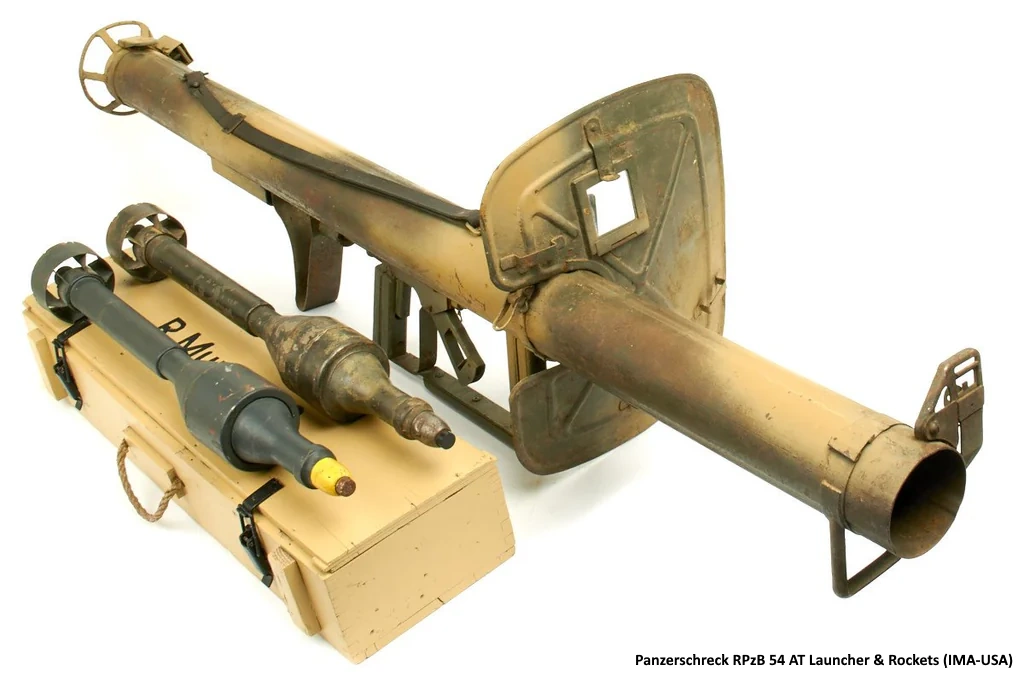
Panzerschreck (Raketenpanzerbüchse 54/100)
The Panzerschreck, officially designated RPzB 54, was a German reusable anti-tank rocket launcher introduced in 1943 and modeled after the American M-1 Bazooka, captured in North Africa. It fired an 88-MM rocket-propelled shaped charge (HEAT) warhead capable of penetrating up to 160-MM of armor, making it a formidable threat to all Allied tanks, including the M-4 Sherman. The weapon itself weighed around 11 kg (25 lbs) and had an effective combat range of approximately 100 to 150 meters under optimal conditions. However, its full theoretical range exceeded 200 meters. Due to the backblast and smoke trail generated during launch, a large metal shield was added to the front of the tube in later versions to protect the operator from burns and to shield their position from instant detection. In Normandy, particularly during the inland engagements post-D-Day, the Panzerschreck was employed by specialist infantry units, tank-hunting squads (Panzerjägertruppe), and Volksgrenadier formations. Due to its size and the need for careful aiming and steady firing position, it was best deployed from ambush or prepared positions — particularly in built-up areas, hedgerows, and woodland paths, where advancing US armored columns were vulnerable to side or rear shots.
Its drawbacks included its heavy weight, cumbersome reload process, and the danger posed to the operator due to backblast — limiting its use in confined environments. Nevertheless, when used effectively, it could disable or destroy even the most robust Allied armor with a single hit.
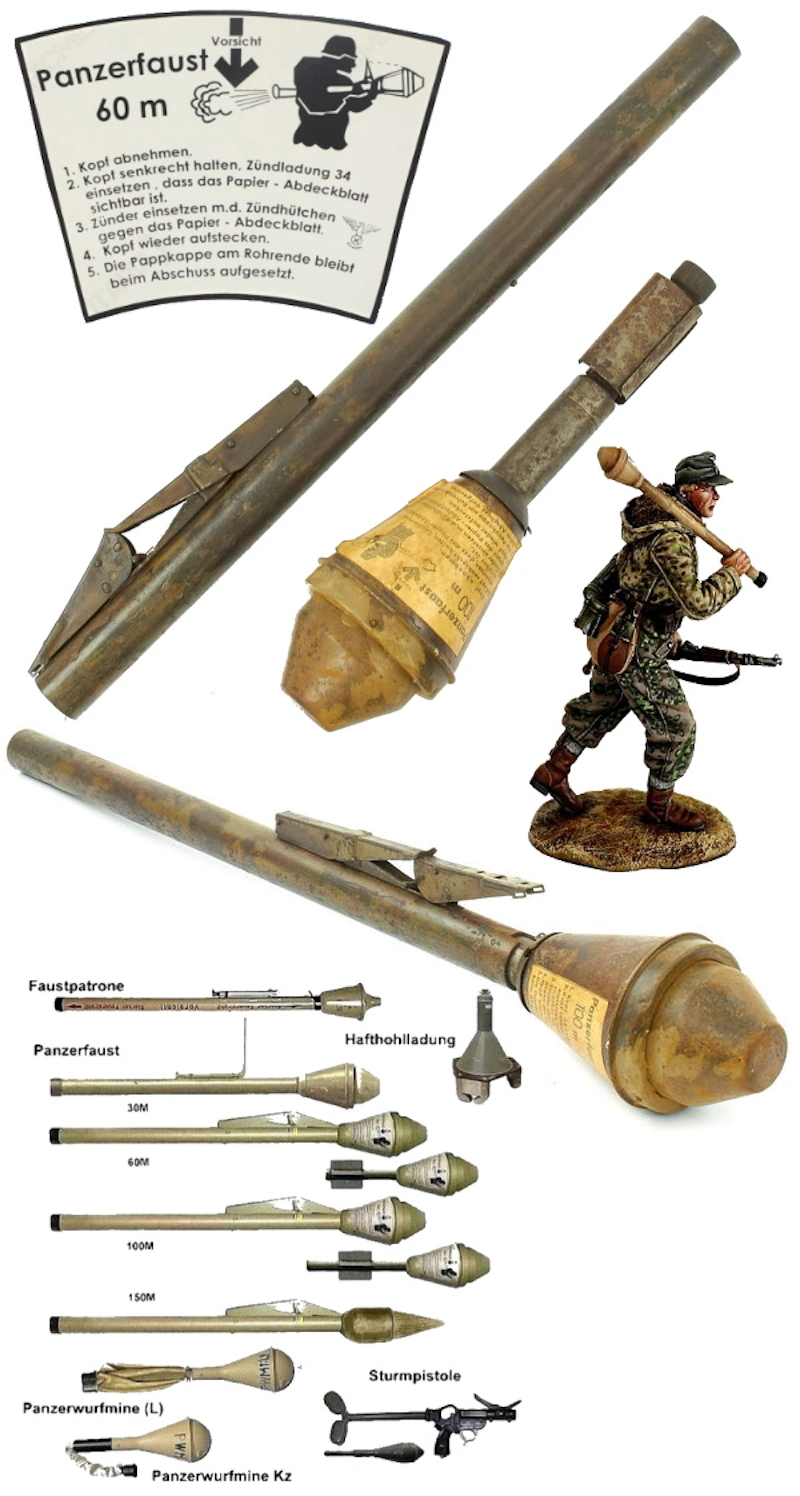
Panzerfaust (Panzerfaust 30, 60, 100)
The Panzerfaust was a disposable, single-shot German anti-tank weapon, essentially a shaped-charge warhead on a small recoilless launcher tube. Designed for mass production and use by ordinary infantry, including Volkssturm conscripts, it required minimal training and was incredibly cheap to produce. Its name translates to ‘armor fist’. There were several models: Panzerfaust 30, 60, and 100, corresponding to their effective ranges in meters. The most common version in Normandy was the Panzerfaust 60, with an effective range of around 60 meters, though maximum reach could exceed 100 meters in open terrain. The warhead was a 149-MM (HEAT) projectile capable of penetrating 200-MM or more of armor — more than sufficient to destroy a Sherman or Churchill tank from any angle. Unlike the Panzerschreck, the Panzerfaust was not a rocket launcher but rather a recoilless system where the warhead was propelled by a small propellant charge. It created minimal backblast, allowing it to be used from windows, trenches, or narrow alleys without as much risk to the user. It was shoulder-fired, though typically aimed by bracing the tube against the arm or chest, using a flip-up sight.
In combat, the Panzerfaust was ideal for close-quarters anti-armor ambushes, particularly in urban or bocage environments. The Germans used them en masse, often hiding in barns, buildings, or behind hedgerows, waiting for tanks to pass before engaging their vulnerable flanks or rear. Though extremely effective, the short range exposed the operator to return fire or tank machine guns. In short, the Panzerfaust was the infantryman’s tank killer — crude, simple, but deadly.
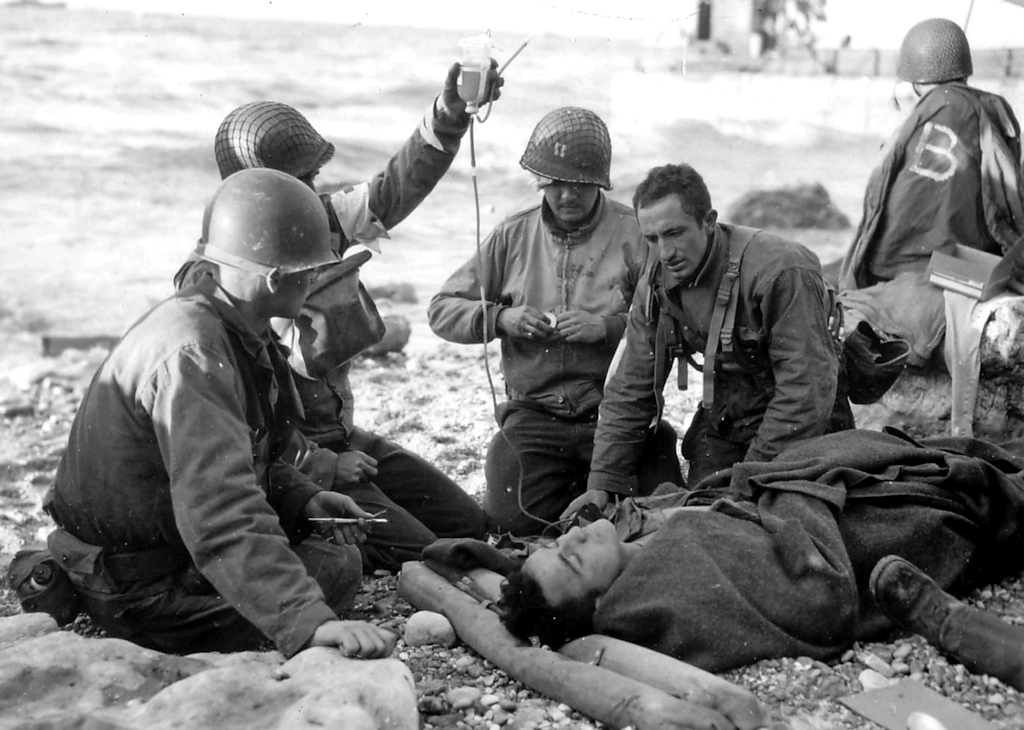
The real story of D-Day is not in the plans and it is not shown on the maps. It is in stories like these about men of the 743-TB – just some of hundreds. Cpl Frank Booher was a tank gunner, sweating it out like everybody else on one of the LCTs. He worried a little more than some of the rest of them, because he hated boats. He hated the water and waves. He tried not to think too much about it – tried to think instead of his job and what he would do behind his gun when they hit the beach. But the LCT kept lurching drunkenly from side to side, shipping water and with every deep roll tipping just a little more. Then Frank’s fears happened. The LCT went over, spilling men and tanks into the sea. Frank found himself hanging onto a liferaft. He hung there for six hours, feeling the cold numbing his life away. A sailor beside him held up another Navy man through the hours. The Navy man kept screaming and shouting until his voice was only a desperate moaning. He died in the water, and the sailor kept holding onto the dead body.
A British minesweeper found them just as Frank thought he must give up and let go. He doesn’t remember being taken out of the water. He remembers whiskey burning his throat and the feel of warm blankets. The minesweeper carried the survivors back to England. Here, after a rest, Frank was given a British Army field uniform and in this rig returned to the Battalion fighting in France.
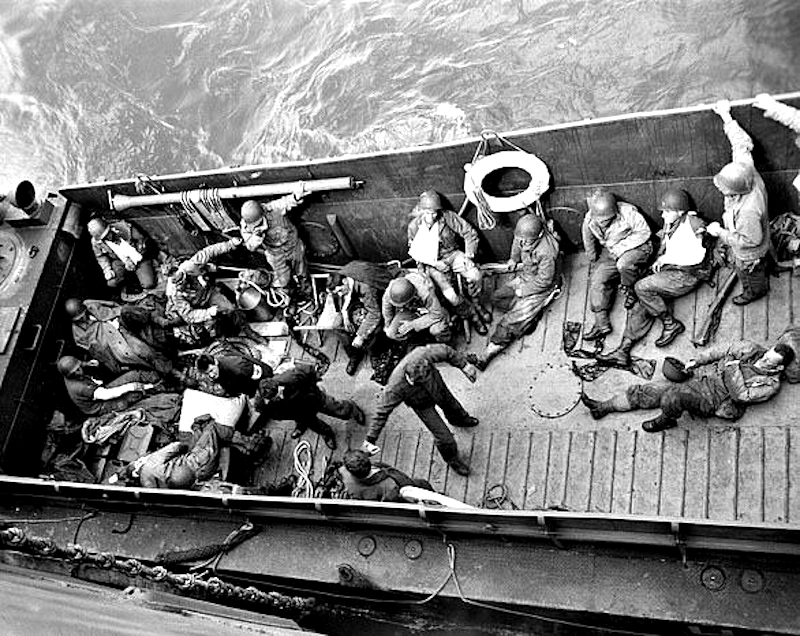 T/5 Sammie J. Coil and Pvt John P. Douglas, hometown buddies from Washington Court House (Ohio), also could tell what it is like to be adrift in the Channel after their LCT capsized. They saved another tanker’s life by keeping his head above water until rescued. Cpl Arthur Graves saw action in two jobs on D-Day. He came in as a tank driver, his regular job. He was driving one of Able Company’s tank-dozers. It was still in the water just after leaving the LCT when it was hit and began to burn. Graves found himself on the beach which was then under heavy shell and mortar fire being put down by the German defenders. A gunner in Lt Harry Hansen’s tank had been injured and evacuated. Graves climbed into the turret and got behind the gun. For the rest of that day and night, he was a tank gunner. Later he would go back to tank driving – and have five more tanks knocked out from under him, and yet finish the war alive.
‘The weather in the Channel was plenty rough’, S/Sgt Floyd M. Jenkins, of Jamaica (Iowa), recalls. He was a tank commander. ‘The waves were coming in both sides of the LCT. We started bailing – spent four hours at it. In spite of all we and the Navy crew could do, the ballast tanks began to fill up with the overflow running over the deck. Our boat began to list pretty bad’. By nightfall the LCT was in sinking condition. The commander called an LCM over and he had all Army personnel climb in – he thought his own ship would capsize during the night. ‘This LCM was plenty crowded after we all piled into it. It bounced around in the Channel and we all got seasick. We spent the night huddled in blankets, sick and wet. At daybreak, we saw that the LCT was still upright, so we got back in it again.
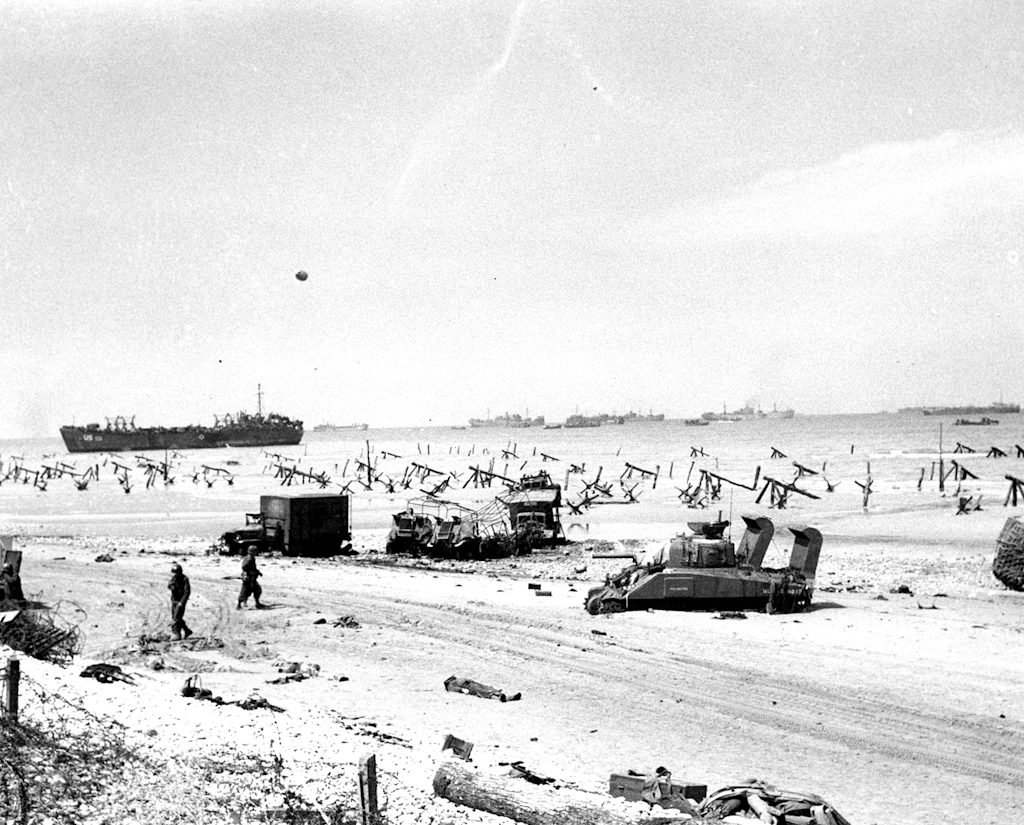 ‘When ready to land, the LCT commander grabbed up all his papers to take with him, as he figured he’d never get the craft off the beach again. He took her in and grounded in fairly shallow water. We got our two tanks and one dozer off’. After the heavy tanks were unloaded, the commander was able to get his boat off after all, and he headed back into the Channel. ‘So we were on the beach. It was so congested with knocked out vehicles, and with dead and wounded men, that it was tough following out our plan of movement’. A shell burst shattered the leg of tank commander Sgt Gerald M. Bolt, of Sac City (Iowa), as he was climbing into his turret while the landing craft headed for the beach. He refused to be evacuated out of combat but insisted on staying with his tank and crew. When his tank plowed through the surf to beach, Sgt Bolt was in command. He found that his wounded leg would not support his weight as he stood in the turret. He had his gunner lash the leg to the recoil guard of the 75-mm gun, using an empty cartridge belt. Sgt Bolt remained in the fight for six hours.
While he commanded, his tank knocked out at least one anti-tank gun and drove enemy infantry from a position on the sides of the bluff. At noon, when things had quieted down some, Sgt Bolt allowed himself to be evacuated to the medics. Cpl Wayne W. Fawcett, cannoneer from Garden City (Kansas), was one the crew of five who wondered what their tank had hit after it stopped a few yards away from a position on the sides of the bluff. At noon, when things had quieted down roaring, the tank refused to respond to the controls and sat motionless 200 yards from the beach. Realizing this was no spot to sit around motionless while German guns targeted in, Cpl Fawcett crawled out of the turret determined to find out what was the trouble. He dove into the icy water, swam under the tank, and discovered that it was hung up on a steel obstacle. When Fawcett’s head broke the surface of the water, bullets and shells were splashing on all sides of him. He swam back to the tank, boarded it, and gasped out the story to the tank commander — no hope of getting off the obstacle. The crew abandoned the vehicle, swam ashore. Within 15 minutes, the tank was completely submerged in the rising tide.
The Baker Company tank in which T/5 Joe Kaufman served as cannoneer (a gun loader who slams the shells into the breech of the tank’s gun) was another which bellied on an underwater obstacle and didn’t get in. The tide was rising and the tank started to flood. The crew got out and were going to swim in when a mortar shell exploded several yards away. Two of the crew were killed instantly. Kaufman was wounded. The blast threw him into the water. His wounds didn’t keep him from swimming to shore. Nor did they prevent him from picking up a doughboy on his way in – the infantryman had gone down with a leg shattered and couldn’t stand in the surf where he had collapsed. Kaufman was faint from his own bleeding, but he got the doughboy up to some sort of cover from the fire and gave him first aid before he himself lost consciousness.
Hundreds of stories – each one different and yet something of the same in each take the pluck of Pvt Irvin H. Reddish who came up from the assistant driver’s seat to take over command of his tank-dozer on the beach — who climbed out when the blade of the ‘dozer got cranky and stuck, gave it a swift kick, released the trouble, climbed back into the turret, and calmly enough ordered the driver to move out. Take the story of Lt Harold Beavers, who got out of his tank in the middle of action, placed a wounded officer from his company onto the back deck of the Sherman, then moved the tank safely through an enemy mine field to a place where aid men could give the wounded man attention. S/Sgt John DuQuoine, a 38-year-old communications sergeant, insisted on repairing a faulty tank radio in the open without stopping while an enemy dive bomber blasted dirt all over his work. DuQuoine brushed off the dirt and kept right on fixing the radio. Lt Henry Jones had the job of directing fire for the tanks over the radio he carried in on his back. He was wounded, but he kept right on talking into that radio, spotting the fire on guns that were cutting down the infantry. T/Sgt Joseph Petrocy, on the beach in the afternoon as a Battalion casualty reporter, was about to take a lift in a truck, saw that it was a gas truck, changed his mind, and a few minutes later watched the truck disappear in a burst of flame.
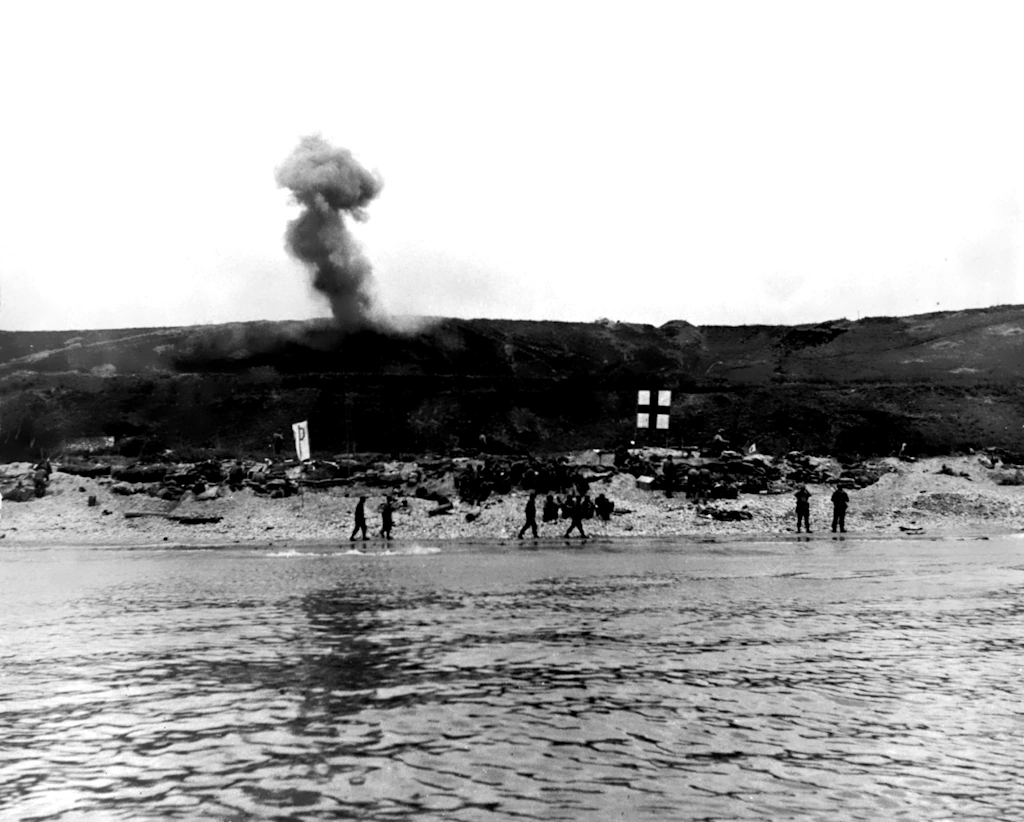
 The medics were busy that day. The Battalion medics came ashore right behind the early assault waves — and waded into a medical nightmare. ‘Our time was H-plus-225 for getting on the beach’, reported Capt Carl Tarlowski, commanding officer of the 743-TB’s medical detachment. ‘Lt Mitchell, our reconnaissance officer, was in touch with our tanks on the beach by radio. Our original instructions had been to get onto the beach and proceed through the exits when opened and rendezvous at a pre-arranged place with the tanks. The exits had not been opened and so we waited until 1330 hours. I remember there was a destroyer. It came up broadside to the beach and seemed so close inshore that we thought it was going to ground. It was firing point blank range’. Wading in through water up to his arm pits, Capt Tarlowski and his men managed to get ashore. They spread out so as to lessen target possibilities.
‘I noticed Capt Ned S. Elder walking up and down the beach evidently directing his Charlie Company men to cover’, continued the report. ‘He had a patch on his neck where he had been wounded. I made a dash to the shelter of a tank and sat there talking with Lt Hale’. ‘He had been slightly wounded in the back and I put a dressing on it. Capt Elder joined us and I asked to see his wound, but he refused. He insisted it was just a scratch’. I learned that Col Upham had been wounded in the shoulder and was last seen ‘up the beach’ somewhere. No one knew his exact location or whether he had been treated by any medic. I was told Capt Chuck Ehmka had been killed. Lt Hodgson was supposed to be down the beach somewhere badly wounded. ‘I set out to look for the aid men who had come with me – Cpl Jay in particular, since he had been on the same LCT with me and had additional medical supplies which he’d carried in a gasoline truck. I couldn’t find the truck or Cpl Jay. I didn’t know nor could I find out whether the LCT which T/5 Bonczek was on had landed or not.
About this time one of our tanks which had been burning on the beach began to have its ammunition blow up so it was necessary to crouch behind the sea wall. Jerry sniper fire increased about that time also. I began a search for Col Upham but couldn’t find him. I came across one of our sergeants who had been wounded in the leg. Treating him, I had some of the men carry him to the protection of the sea wall. The tide was coming in. I then found Lt Hodgson. He was almost completely covered by a rubber life raft. He was conscious despite a nasty chest wound. I applied dressings and with the help of some of the men we carried him in the life raft to an aid station where the wounded were being collect for transport out to sea. I was then busy for the next few hours treating men who had been unattended since H-hour and who seemed to be lying about every four feet’.