


(Note from Doc Snafu): At the European Center of Military History, I am committed to honoring the brave individuals who secured our freedom by sharing meticulously verified and authentic historical documents. I do not engage in the practice of ‘cut and paste’ content creation aimed solely at generating traffic or advertising revenue. Instead, I focus on providing well-researched and accurate materials that respect the sacrifices of these heroes. In this context, I have chosen not to publish a particular section of this archive (Wounded in Action Indians). This decision stems from our dedication to maintaining the integrity and authenticity of the information I present. I believe that sharing only thoroughly vetted and accurate documents is the most respectful way to honor those who have served. By upholding these standards, I aim to preserve the true essence of history and ensure that the stories of our veterans are told with the dignity and respect they deserve. Thank you for reading.
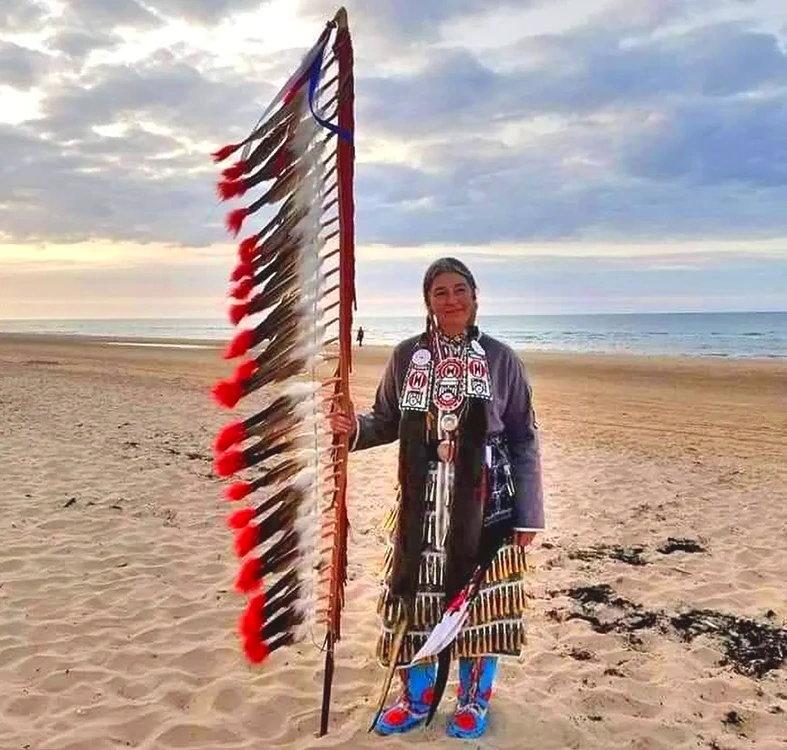
((Above) Command Sergeant Major Julia Kelly (US Army retired), one of 80 Native American delegates to the 75th anniversary observance of D-Day in Normandy, France, stands on Omaha Beach. Sergeant Kelly holds an eagle feather staff, an American Indian symbol of respect, honor, and patriotism. (Photo: Courtesy of Julia Kelly)
INDIANS WORK FOR THE NAVY
By Lt Frederick W. Sleight, USNR
The story of the American Indian and his efforts in this second great world struggle is not limited to the exploits of soldiers. Men and women too old or too young for service with the armed forces have volunteered for work in the war industries as well as in food production. This report on one of the US Navy’s greatest land-based activities illustrates the intense desire of the Indian people to serve where they are directly connected with the work of the war. The Naval Supply Depot at Clearfield (Utah), has as its aim and purpose general service to the fleet. It sends out a lifeline of supplies, pouring the essentials of successful warfare in an endless stream to the far points of the Pacific Theatre.
The Depot was established in the Spring of 1943, to start the flow of vital materials to the Navy. At this time, down in the Rio Grande Valley of New Mexico, Indians were leaving home for military service. Ten per cent of the Pueblo Indians had gone into uniform. In the neighboring cities and the local communities help was urgently needed. The older men of the Pueblos, recognizing the emergency, decided to put an advertisement in the local papers offering their services for part-time work in the neighboring area. Soon trucks came pouring into the villages to pick up working parties, some even arriving from Colorado. When word of this project reached the offices of the Civil Service Commission in Denver, they sent a representative to Santo Domingo Pueblo to confer with John Bird, an Indian leader of political and social affairs. John Bird was told about the new Naval Depot at Clearfield. The Civil Service understood that the Pueblo people wanted to help win the war; here at Clearfield was a place where men were needed, a place contributing directly to our successes in the Pacific. It was agreed that Pueblo men, if they went to work at Clearfield, would be allowed to go home during the summer months to plant and harvest their crops.
At the meeting called by John Bird, the Pueblos agreed that this was work which they wanted to do. The farm agent was convinced that if they came back and farmed in the summer months, the move to Utah for the rest of the year would be good. The task of recruiting men from all the Pueblos was given to John Bird, and he travelled from Taos on the north to Isleta on the south. Santa Clara, Jemez, and Santo Domingo gave the greatest number of workers. Sixty-two men came from Jemez alone. When they were examined and passed as physically fit by Indian Service doctors, they were ready to leave. About 150 men made up the first battalion that set out for Clearfield. The first contingent of work-hungry Pueblos, travelling in coaches reserved for them, arrived at the Navy Depot in December 1943.
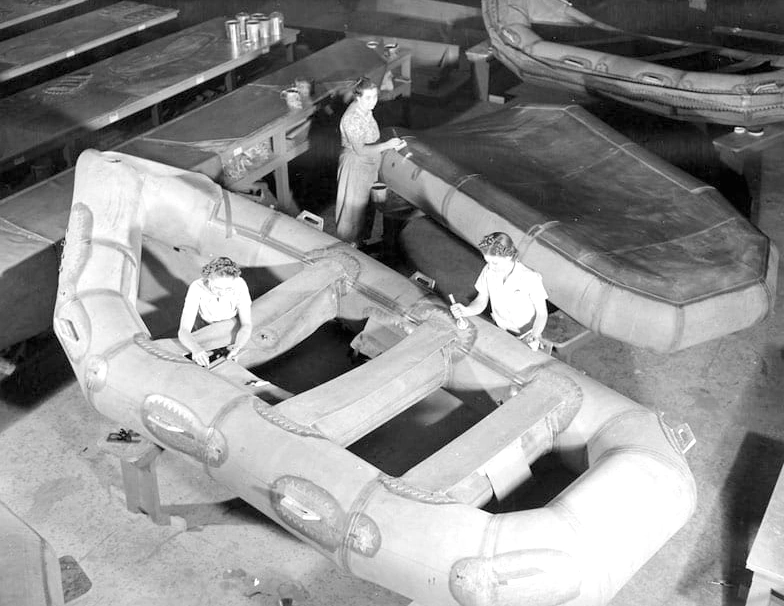
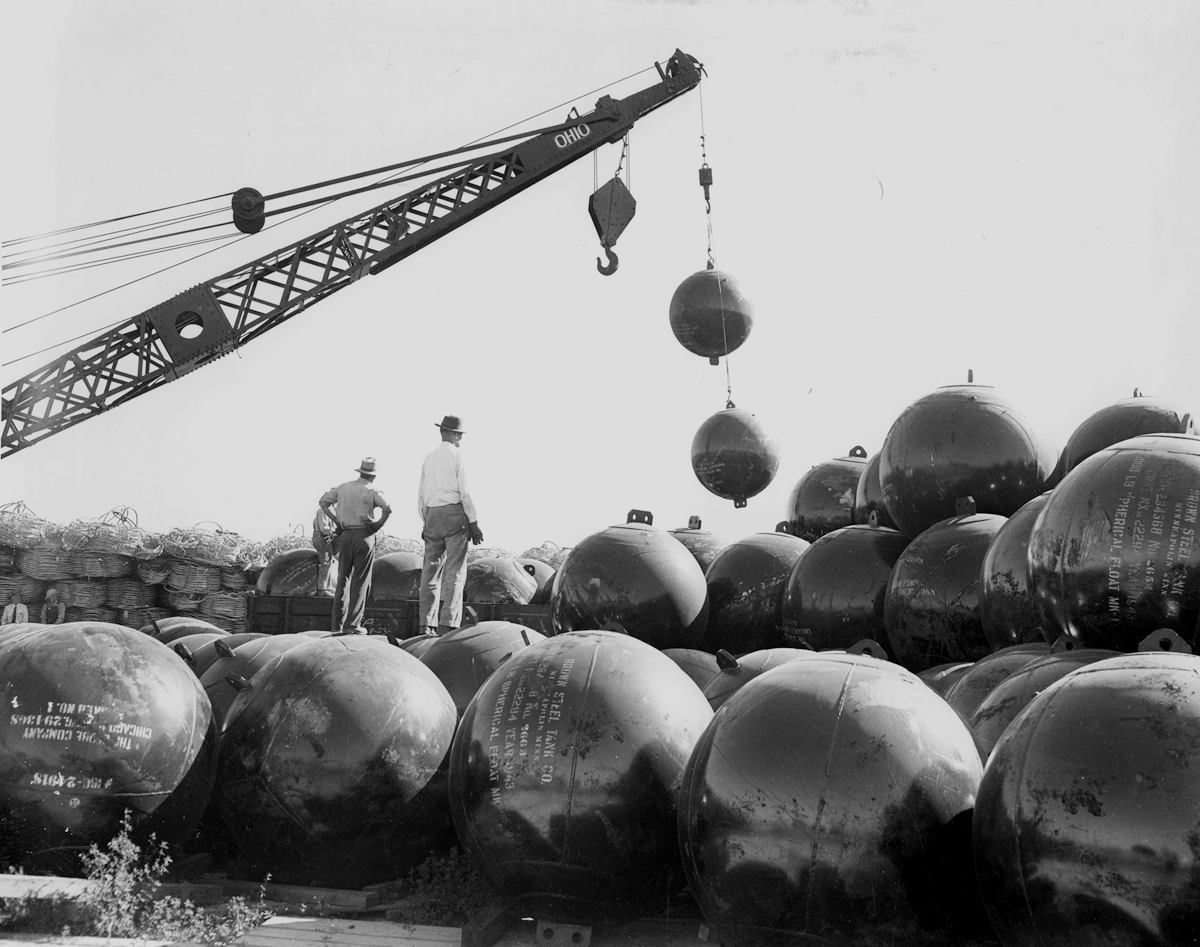
Work assigned to the Indians has been varied. John Bird, who travelled with his people to Clearfield, has advanced to a supervisory position. He, like many of his men, has worked on the swing shift. Some of the men have been placed in the transportation division, and others have handled and loaded supplies destined for the ships at sea. Oscar Carlson, labor foreman at the Depot, says that the Indians – Shoshones, Apaches, Sioux, Navajos, Utes, as well as Pueblos – are outstanding workers. They understand instructions well. They are not shirkers on the job. He says, ‘I have never had an Indian in my office for disciplinary action‘. The great problem of production, absenteeism, is unknown among the Indian population of the Depot. Indians are constantly on the job. Indian participation in the War Bond campaigns has been 100 per cent – another indication that the Indians are whole-hearted in their devotion to the cause for which their sons have fought.
For two springs the Pueblo people have gone back to their farms, but, the growing season over, they have returned, often bringing with them new recruits to help with the big job. Mr. Carlson states that nearly all of the men return after a summer of farming, and that they all seem happy to come back. Further testimony comes in a report from the Security Department. This office, which handles all the policing of the area, has no record in the files any trouble initiated by the Indians. From all quarters of the Depot have come similar reports. On the April 10, 1945, Rear Admiral Arthur H. Mayo, speaking at the ceremonies commemorating the second anniversary of the Depot’s commissioning, said: ‘It is encouraging to know that many Pueblo Indians … have travelled north to the State of Utah in order to ‘man the battle stations’ at the Navy Supply Depot at Clearfield. I know that these fine people are doing a splendid job‘.
High credit should go to the Indian for an outstanding part in our victory. He has sacrificed more than most men who are doing this work. He has left the land he has known all his life and has had to travel to strange places where people often do not understand him and his way of living. In most cases he has left his family behind. He has had to forego attending the dances and other religious ceremonies that are so much a part of his life. He has had to work under foremen and supervisors, in a way that is new to him. It is an adjustment more difficult for him than for the white man who has known these conditions before. For all these reasons, the Indian should receive the highest praise. In his quiet way he has shown that he too has a stake in this conflict, and by his personal qualities he has made himself liked by everyone. To men like John Bird, should go a special tribute. He helped interpret these modern problems to his people. When his brother Ted was killed in action in Germany last April, he flew home to comfort his mother and father. He has three other brothers in the armed forces overseas.
Like all Americans, these people look forward to the day when the soldiers will come home to a peaceful world. But these Indians have learned new skills and have acquired a new confidence in their own competence which should be very useful in the tasks of peace.

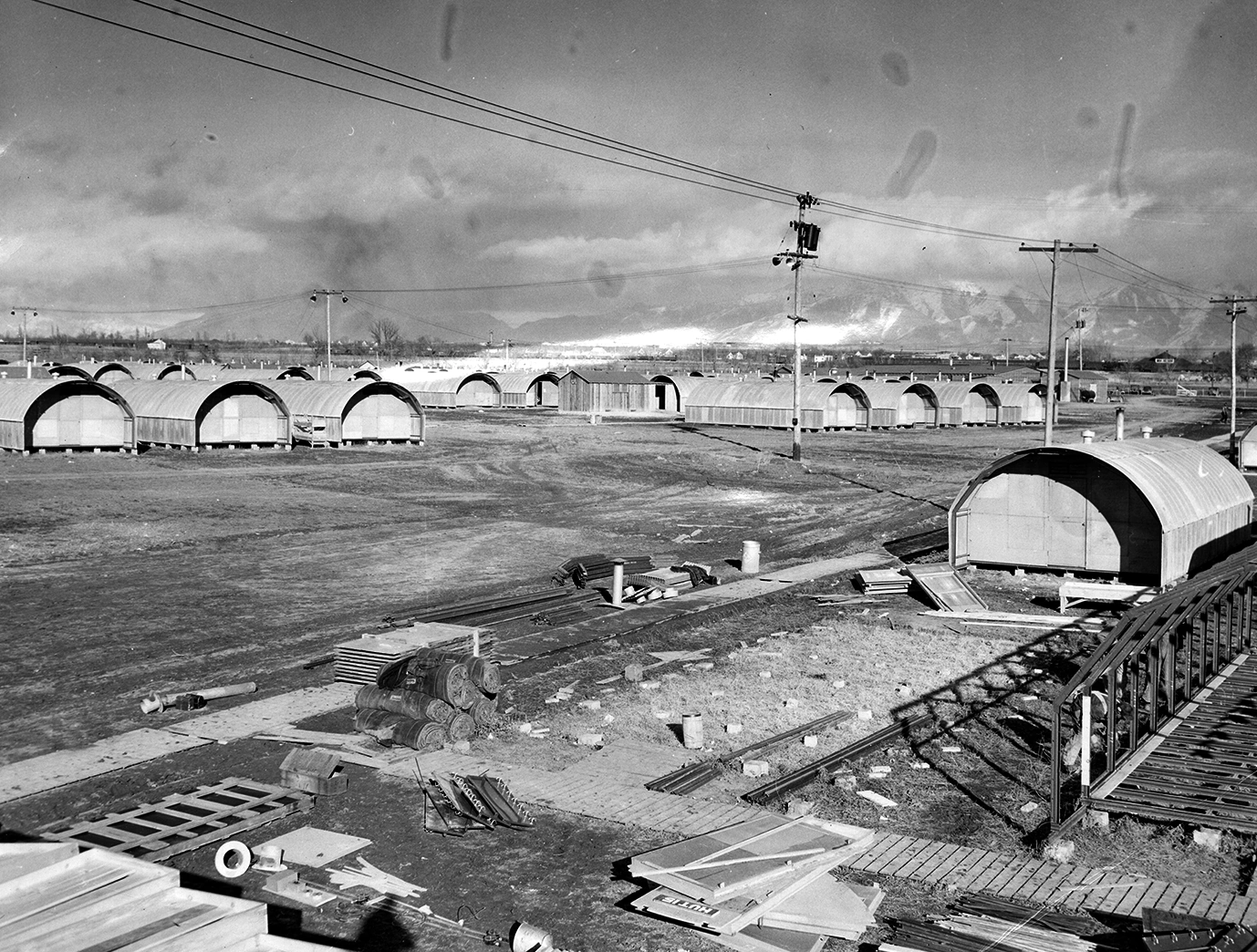
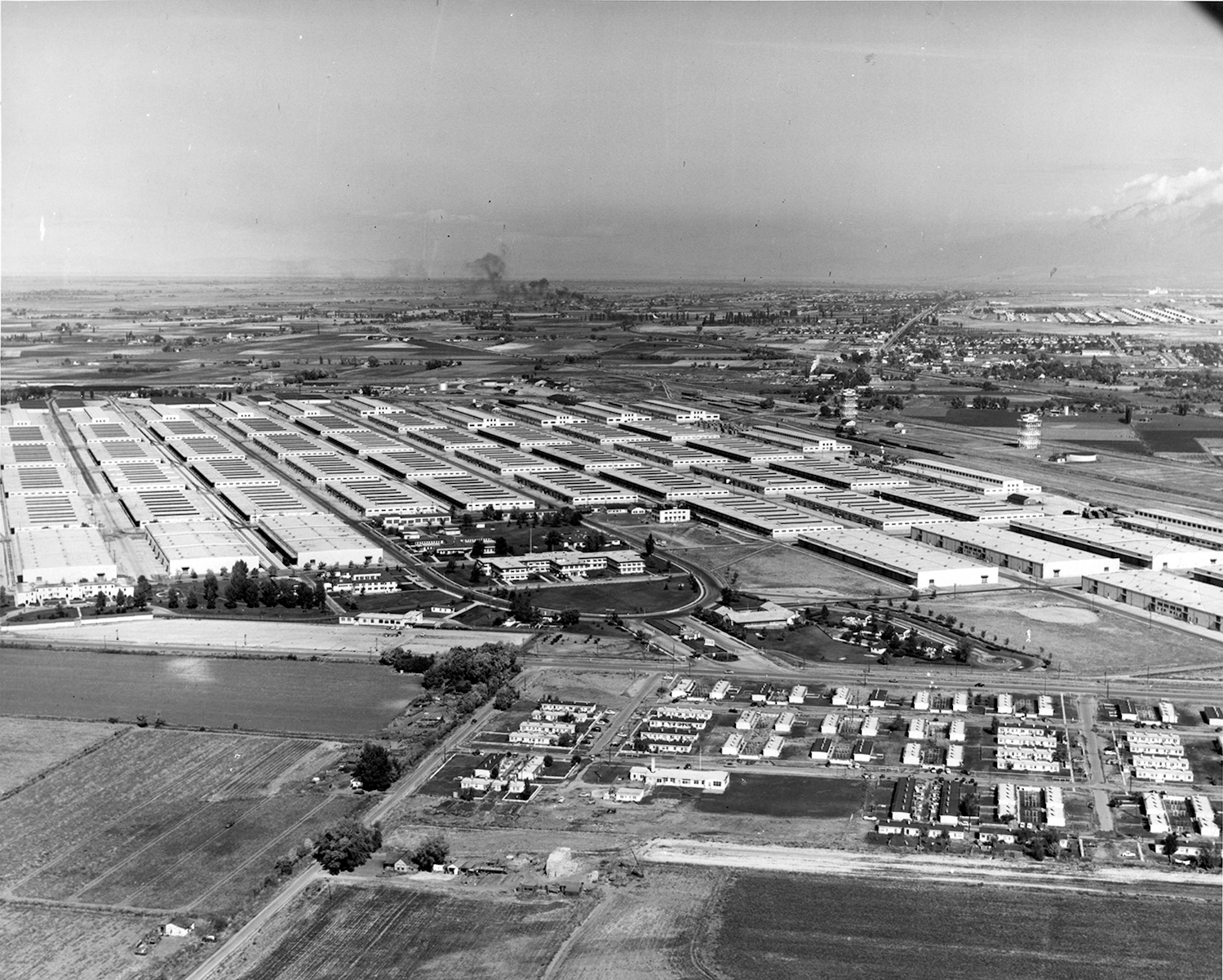
Clearfield Naval Supply Depot, 1942
Construction on the Navy’s largest inland supply depot began in 1942 in Clearfield (Utah). Federal officials chose Clearfield because it offered security from enemy attacks, access to railways and trucking facilities, and was also equidistant from Seattle, San Francisco, and Los Angeles. Clearfield residents were initially unhappy to give up their farmland. After months of arguments between citizens and government leaders, LDS President David O. McKay held a private meeting with many of the farmers. When the residents walked out of the meeting, they agreed to sell their land. The Clearfield Naval Supply Depot was 841 acres and housed 10% of the Navy’s total coverage storage. 8000 employees, including 500 German POWs, worked in three rotating shifts so the depot never closed. Each month they shipped out over 4000 train carloads of materials. Due to the massive population growth, Clearfield faced housing and transportation challenges. Residents were asked to help house the war workers. Many converted chicken coops and bunny houses into rooms, while others doubled up children in beds to free up rooms. Military housing built by the government soon alleviated some of these issues. In 1962, the Navy decommissioned the depot, and the property was sold. It is now the Freeport Center, a manufacturing and distribution center.
To the Indian Veteran
The Congress and the state legislatures have passed many laws providing various benefits for all veterans except those who have been dishonorably discharged from the armed services. Many of you know what these benefits are; but when you come home you will find at the agency someone who can tell you just how to apply for the benefits which you want, and what you must do to qualify. There is no distinction made between Indians and any other veterans. Every organization serving the veteran will serve you. Your Selective Service Board, to which you report within ten days after your return home, will have a counsellor to advise you; and the State agencies, the Red Cross, and other groups will provide information and counsel. The Indian Service will make every effort to direct you to the proper authority as quickly as possible.
If the first thing in your mind is employment, you probably know that you are entitled to get your old job back, or one with equal pay and standing, provided that you have completed your military service satisfactorily, that you are still able to do the job, that you apply for reinstatement within 90 days of your discharge, and that your employer will not suffer undue hardship by taking you back. Once you are on the job, you may not be dismissed without cause for the period of one year. This is true for Civil Service employees and for those in private industry. If you didn’t have a job when you went into the military service, or if you don’t want to go back to the job you left, you should apply to the nearest office of the US Employment Service, or, if you want a Federal job, to the Civil Service Commission. You are entitled to preference for jobs in the Indian Service, both as an Indian and as a veteran, but you must of course qualify by training or by examination.
If you want to continue your education, there are many opportunities. Under the GI Bill of Rights (Public Law 346, 78th Congress), you are entitled to one year of school or college, if you have served at least 90 days, not counting the time spent in Army or Navy special training courses. You may choose the course you prefer, at any elementary school, high school, college, or vocational training institute on the list approved by the Veterans’ Administration, but you must be accepted as qualified by the school you select. A number of Indian Service schools have already been added to the approved list, and a number of special courses have been planned for returning servicemen.
If you are under 25, or if you can show that your education was interrupted when you went into military service, you may continue your education beyond this first year. For each month you spent in active service after September 16, 1940, and before the end of the war, you may have an additional month of schooling, but the total time cannot be more than four years. While you are studying under this program, the Veterans’ Administration will allow you $50 a month for living expenses and will pay your tuition and other fees, including the cost of books, supplies, and equipment, up to $500 per year. If you have dependents, the subsistence allowance will be increased to $75 per month. If you receive payment for work done in connection with your study program, your allowance may be decreased, and if you take only a part-time course, you will not receive the full monthly benefit.
Commercial courses, courses in agriculture and stockraising, sheetmetal work, plumbing, drafting, automotive mechanics, carpentry, baking, cooking, machine shop work, masonry, painting and decoration, power plant operation, printing and binding, and many others, will be offered at eight or more Indian schools: Albuquerque Boarding School, Carson, Chemawa, Chilocco, Flandreau, Wingate, Haskell Institute, and Sherman. Not all of the courses will be available at each school, and other courses will be added from time to time. These courses will be available to non-Indians, if there is room enough, and the Indian veteran is not limited to a choice of Indian schools. You may take any course for which you can qualify, at any approved school.
If you have a disability resulting from your military service, the educational program offered under Public Law 16, 78th Congress, may be more helpful to you. Under this legislation, a disabled veteran may be allowed up to four years of vocational training, during which time he may receive a total pension of not less than $92 per month. If he has dependents, the allowance is larger. The GI Bill also provides readjustment allowances for veterans who are unable to find work. Any unemployed veteran who has served 90 days or more and has been released without dishonorable discharge, or has been disabled in the line of duty, may receive a weekly readjustment allowance of $20, less any part-time wages he may receive in excess of $3. To be eligible for this allowance, the veteran must report regularly to a public employment office; and if he fails to accept any suitable job offered to him, he is disqualified. He may also be disqualified if he does not attend a free training course available to him, or if he has left suitable work, or is discharged for misconduct. The readjustment allowance may be continued for 24 weeks, plus four weeks for each month of active service, up to a maximum of 52 weeks. If he is self-employed and he can show that his net earnings have been less than $100 in the month preceding the date of his application, he is entitled to receive an amount large enough to bring his earnings up to $100 for the month. Benefits under this legislation may not be claimed when five years have passed after the end of the war, and claims must be made within two years after the veteran’s discharge from the military service or within two years after the end of the war, whichever date is later.
Veterans may have free hospital care, medical and dental services, through the Veterans’ Administration, for any disabilities incurred in the line of duty in the service or aggravated because of such service. The Servicemen’s Readjustment Act of 1944 – commonly called the GI Bill of Rights – also provides for certain benefits for veterans who want to borrow money to buy or build a home, to purchase a farm, farm equipment or livestock, or to acquire business property. The Federal Government will not make loans or extend any credit under this program. It says simply that if you can get a loan for these purposes from any lending agency, either public or private, such as a bank, corporation, or individual, the Veterans’ Administration, on approving the loan, will guarantee one-half of the amount, up to $2000. The Administrator will also pay the first year’s interest on the amount of the guarantees. This interest need not be repaid. The loan itself must be repaid according to the conditions under which it is made.
The lending agency to which you apply for a loan should be one of those serving your community. This organization should understand that you may receive a loan on the same basis as other veterans, even though you may conduct your operations on trust land belonging to you or on tribal lands operated under an assignment. It should be possible for you to get a loan without any security other than a mortgage on the property you are buying with the money loaned to you; but if other security is required, the Superintendent may approve a lien on trust property, other than land, as collateral. Trust land may not be given as security for these loans. It should also be understood that the Superintendent may authorize a creditor to enter on the reservation to repossess equipment bought with borrowed money, if the loan should be in default.
If you want to qualify for a farm loan, you must show that you have had farming experience. If your loan is for the purchase of livestock, you must show that you have adequate range on which to run it. If you plan to buy farm machinery, you will have to show that you have land upon which the machinery will be used, and you must also describe your plan of operation and demonstrate that it will produce income enough to repay the loan. In general, no restrictions will be placed upon property obtained under loans guaranteed under the Act, except those which the lending agency may require in order to protect the loan. You should remember, too, that you have other ways to obtain a loan, if you are not eligible under the GI Bill. The Indian Service may be able to arrange a loan from revolving credit funds; or your tribe may offer to lend you what you need. There are many avenues to explore.
From time to time, Congress may make changes in the provisions of the GI Bill and other servicemen’s legislation. Allowances for the unemployed veteran and for the veteran attending school may be increased. You are urged to take advantage of the program which you feel will be most useful to you. Get all the information available, consult with everyone who can be of help to you, and make full use of the opportunities which you have earned by your service to your country.
Native American women, like their male counterparts, share a proud tradition of military service (by Dave Vergun))
 During the Revolutionary War, Tyonajanegan, an Oneida, fought on the side of the United States with her husband during the Battle of Oriskany, August 6, 1777, in New York. She died in 1824 at the age of 84. The first active duty Native American women were four Sioux nuns, serving as Army nurses during the Spanish-American War, in 1898. One of them died in Cuba from an illness and was buried with military honors. During World War I, 14 Native American women were in the Army Nurse Corps.
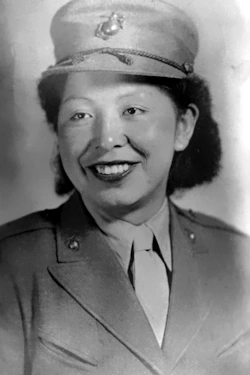 About 800 Native American women served in uniform during World War II. Thousands of others who were civilians worked in factories on the home front producing arms for the war effort. Marge Pascale, an Ojibwe, joined the Women’s Auxiliary Air Corps, or WAAC, in 1943. ‘One thing about the service, you get two pair of shoes and you get a bed and you get to eat‘, she said, having experienced poverty. Margie Williams, a Lakota Sioux, said during World War II, ‘It is with much pride that the Indian woman dons the uniform of her country to aid in settling the turmoil‘. Ola Rexroat, an Oglala-Lakota, was the only Native American woman to serve in the Women Airforce Service Pilots during World War II. She flew AT-6 and PT-19 airplanes and towed targets for aerial gunners. Following the war, Rexroat became an air traffic controller for the newly formed Air Force, making it a career. She also saw service during the Korean War.
Marine Corps Pvt Minnie Spotted-Wolf enlisted in July 1943, becoming the first female Native American to join that service.
Native American Women Take Pride in Their Military Service
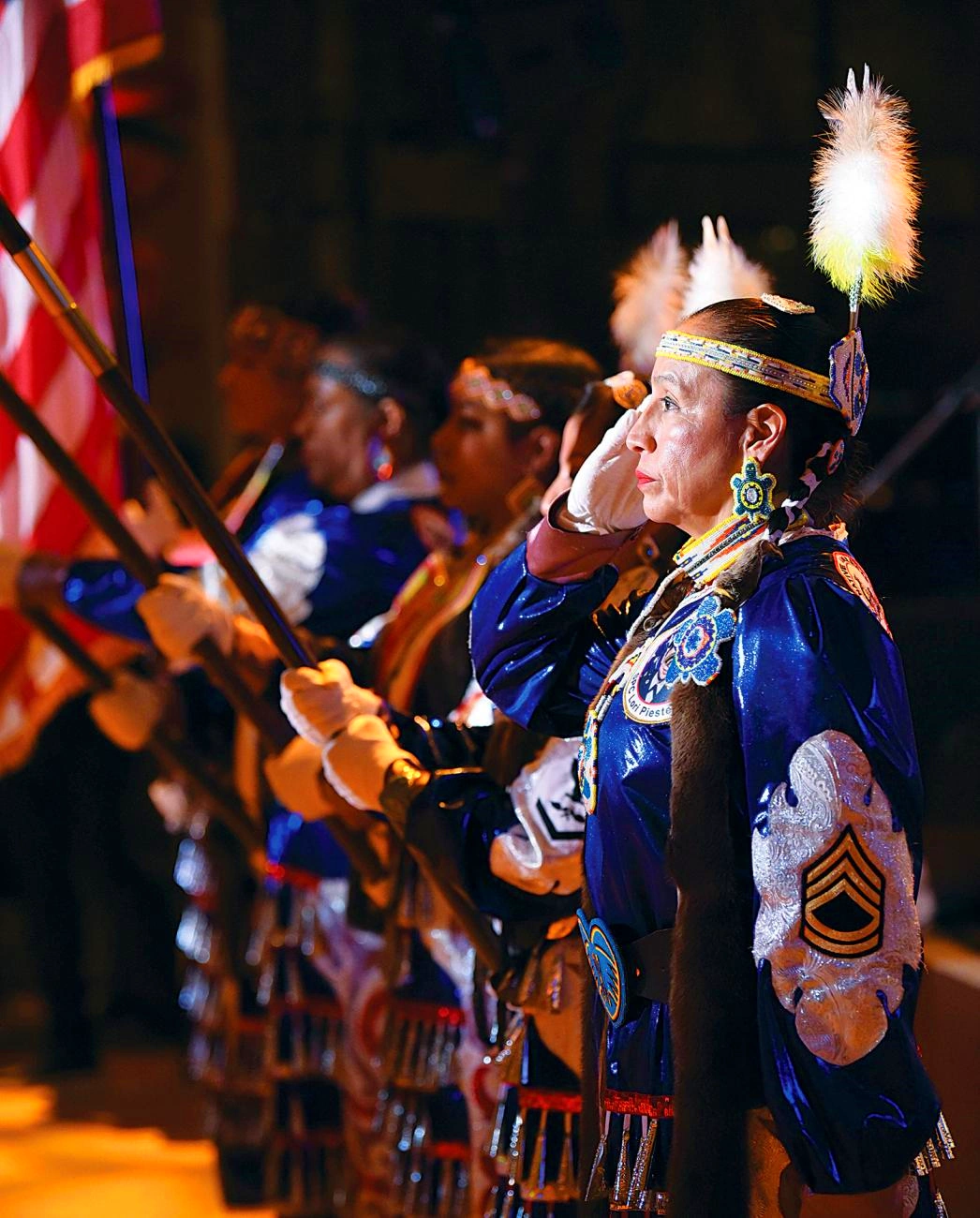
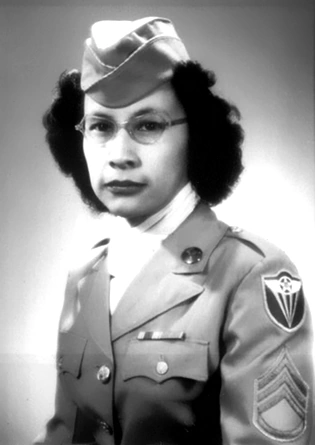 Indian Women Work for Victory
Beside being in the Army, Indian women, anxious to help out during the war-created manpower shortage, have made an astonishingly large contribution to their country’s needs. Thousands of them have left their homes to work in factories, on ranches and farms, and even as section-hands, to replace men who were vitally needed elsewhere. They have joined the nurses’ corps, the military auxiliaries, the Red Cross, and the American Women’s Voluntary Service. Not content with this, they have given their services in many other and more unusual ways. More than 500 Eskimo and Indian women and girls worked day and night manufacturing skin clothing, mittens, mukluks, moccasins, snowshoes, and other articles of wearing apparel for our forces serving in cold weather or at high altitudes. An Alaskan Indian woman ran a trap line to make money for war bonds. Cherokee girls wove and sold baskets, buying war stamps with the money. On the Eastern Cherokee Reservation, women and girls planted and harvested the crops, and even drove tractors. Forty Chippewa women formed a rifle brigade for home defense. An old Kiowa woman gave $1000 to the Navy Relief Fund as her contribution. Osage women, draped in their brilliant blankets, spent long hours at sewing machines for the Red Cross.
 In the West, a Pueblo woman drove a truck between Albuquerque and Santa Fe (New Mexico), delivering milk to the Indian school. She not only serviced her own truck but also helped at the school garage as a mechanic. Many Indian women became silversmiths, and made insignia for the armed forces. At Fort Wingate (New Mexico), the Navajo women’s work ranged from that of chemists to truck drivers. Two Indian women in California served at a lonely observation post, driving the twelve miles to their position in a rickety old automobile. The war plants had many Indian women on their rolls, working as riveters, inspectors, sheet metal workers, and machinists. An Indian girl was chosen at one plant to receive the Army-Navy E for her fellow-workers.
In the Indian forests, hitherto considered as providing work fit only for men, the Indian women learned to take over many tasks. Treatment for blister rust was given 80,182 acres of forest, mainly in the Lake States, and Indian women performed much of the labor. On the Menominee Reservation in Wisconsin, fifty women replaced men at the mill. Crews consisting of two women and one man planted young trees to replace those cut down in the Red Lake forest (Minnesota). During the short period in the spring which is considered most advantageous for such planting, 90,700 trees were replaced on 238 acres of land. Indian women have ‘manned‘ fire lookout stations on the Colville Reservation and the Klamath Reservation. An Indian woman acted as guard at the Dry Creek Station on the Yakima forest, and another learned to be a radio operator at the Central Camp on the Quinaielt Reservation.