


THE MAIN BODY
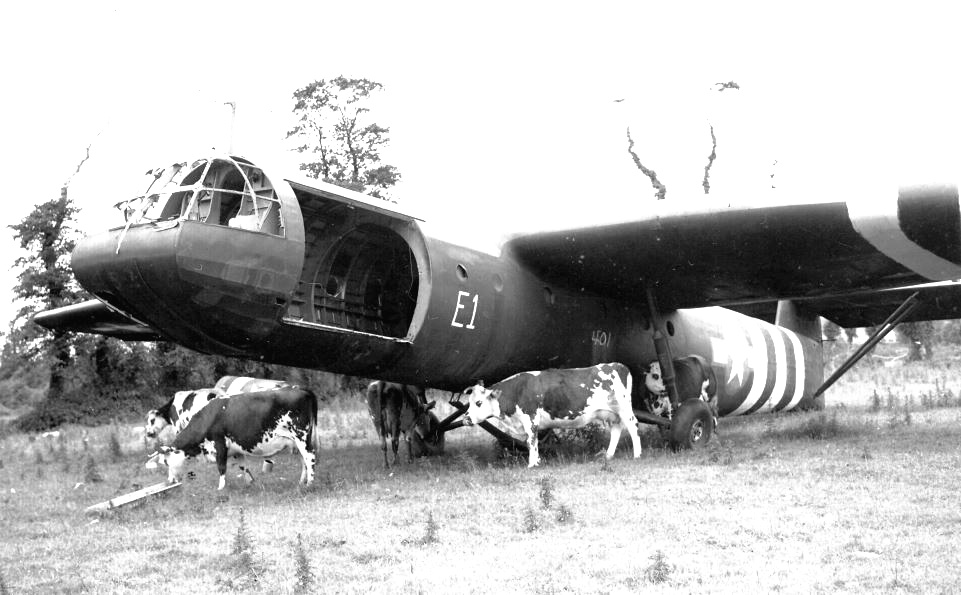
While the forward elements of Division Artillery were thus engaged in Normandy, the main body was engaged in last-minute preparations for takeoff. The artillery was concerned with three serials: S-30, S-32, and S-33. Serial 30 was composed chiefly of the Division Headquarters and special troops, but one Horsa and one CG-4A were available to the artillery. Since this serial would land almost two hours prior to serials 32 and 33, the advantage was taken of the Horsa to transport a quarter-ton vehicle containing an SCR-193 radio, one officer, and two enlisted men from Headquarters Battery. This radio, incidentally, with the aid of a modified antenna, was easily capable of communicating over the entire length and breadth of the Peninsula, and even back to England. It was thought that this set might be able to play a large part in the operation. The CG-4A contained a personnel load of twelve from the 320-GFAB. Serial 32, composed of two CG-4As and forty-eight Horsas, was principally an artillery serial. It was formed at the Memsbury departure field. One CG-4A contained Col William H. Bertsch, Division Artillery Executive Officer, his vehicle, driver, and Sgt Trijello from the PI section. This, together with two Horsas, rounded out the Headquarters and Headquarters Battery detachment. The latter contained a trailer each, with miscellaneous equipment and the entire staff of Division Artillery including the S-1, S-2, S-3, Communications Officer, Surgeon, and enlisted assistants, totaling twenty-nine in all. Forty Horsas of the serial were allotted to the 319-GFAB and contained 382 officers and men, 12 75-MM pack howitzers, 29 1/2-ton trucks, and 16 trailers, plus their ammunition loads and other assorted equipment. Four Horsas contained 20 officers and men, 2 1/2-ton trucks, and 3 trailers from the 320-GFAB. To complete the serial, one CG-4A and one Horsa contained medical support from the 307th Airborne Medical Company, and one Horse, engineer support, from the 307th Airborne Engineer Battalion.
Serial 33, formed at the Welford departure field, consisted of twelve CG-4As and thirty-eight Horsas, all from the 320-GFAB. It will be noted here that the heavier 105-MM howitzer and the basic load of its heavier ammunition require a considerably greater lift than does the 75-MM battalion. There were 323 officers and men, and major items of equipment included 12 105-MM M-3 howitzers, 28 1/2-ton trucks and 17 trailers. The howitzers were loaded into the 12 CG-4As. Serial 30 spearheaded the evening glider lift for D-day. Its landing time was 2110 H, followed closely at 2120 by serial 31, consisting chiefly of medical, reconnaissance, and signal personnel and equipment. Then there was a gap in the schedule. Serial 32 was to land at 2300 H, followed closely by serial 33 at 2310 H. The entire lift was to fly the eastern route and as far as was known to the individuals concerned, the target was LZ W south of Ste-Mère-Eglise. Despite the fact that no news had been received from Normandy the morale of the artillerymen in serial 30 was very high.
The weather was excellent. They were to fly over that portion of the Cherbourg Peninsula presumably secured by the 4th Infantry Division and the 101st Airborne Division and land well before darkness on LZ W, which presumably had been secured by the 1/505-PIR and the 101-A/B. All went well until the serial turned into its final leg of the flight at the St Marcouf Islands, which is a very small island group just off the east coast of the Peninsula, and was recognized by the glider men as the navigational aid establishing the last leg of their journey. Let us leave the gliders here for a moment and recapitulate what had taken place at the LZ W.
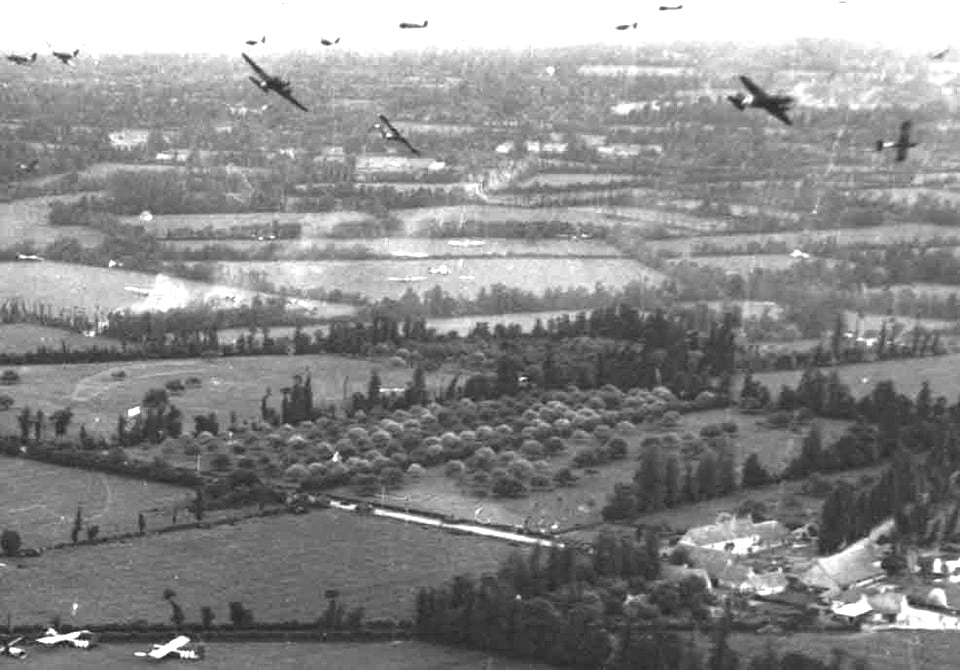
Gen Ridgway had realized as early as 1400 H this date (D-Day) that LZ W might well be untenable for glider landings beginning at 2110 H. On the other hand, DZ O was being held by a small group from the 505-PIR, and it was felt that the entire area could be cleared by the 2nd Battalion by landing time, herein lay a wonderful opportunity to make full use of the flexibility and mobility of airborne troops. Accordingly, a radio message was dispatched forthwith, requesting that the gliders be landed at DZ O. Unfortunately, the radio receiver was out of order and there was no way of telling whether the message was received. The Division was plagued with a lack of communication with the outside throughout D-Day. As a secondary means of communication, since it was known that the Troop Carrier Command would have a reconnaissance flight over the area at 1500 H, panels were displayed to indicate the same message. Accordingly, the Eureka and landing panels were set up at DZ 0.
The situation as concerned DZ W was definitely not good at 2110 H. The 3/505-PIR had attempted to drive south from Ste-Mère-Eglise but had met with no success. The 8th Infantry Regiment (4-ID) had reached its D-Day objectives generally south of LZ W and was ready to stop for the night. The advanced elements of Force C, the land-tail element of the 82-A/B had landed during the afternoon, and by 1700 H found itself in the 8th Infantry sector just south of Les Forges and LZ W, just 2.5-miles from Ste-Mère-Eglise. Col Edson D. Raff, commanding this element, had a force composed of one platoon of Baker Co of the 4th Cavalry Reconnaissance Squadron, Charlie Co of the 746th Tank Battalion, and 99 infantrymen of the 385th Glider Infantry Regiment. The Germans were well dug in on a slight ridge extending northeast. They had infantry, artillery, and armor, and complete domination over LZ W. Col Raff immediately realized the seriousness of the situation. He thought the gliders were due in at 2200 H, and having heard of no change in plans, he proceeded to attack the ridge. In the first probe, he lost an armored car and one tank. Realizing that he had underestimated the strength of the enemy, he committed the entire force on the second attempt; covered by the Cannon Company of the 8th Infantry. The two lead tanks were immediately set afire by 88s, the attack again bogged down, and it became obvious that there were too many antitank weapons in the position to advance with tanks. It was now 2100 H, and serial 30 appeared over the horizon.
It is almost needless to inform the reader that apparently none of the messages requesting the change in landing zones had reached the tug pilots. The Rebecca in the squadron commander’s plane was trying to pull them considerably to the north, while the terrain features clearly indicated that they were on the proper route. The tendency was to disregard the Rebecca. The Germans opened up with deadly accuracy, and the serial became scattered. The CG-4As landed in the LZ with only minor damage to the glider, but four men were killed, and the remaining eight were wounded and subsequently evacuated, thereby rendering this load entirely ineffective. The Horsa was more fortunate. It cut loose and headed north. The pilot intent on securing his maximum gliding distance, had no speed and altitude left to reconnoiter a landing field, so he pancaked into an orchard. The glider was damaged, but none of the personnel was seriously injured. The load, however, could not be extracted with the personnel available and was abandoned and the officer and two men made their way to the CP.
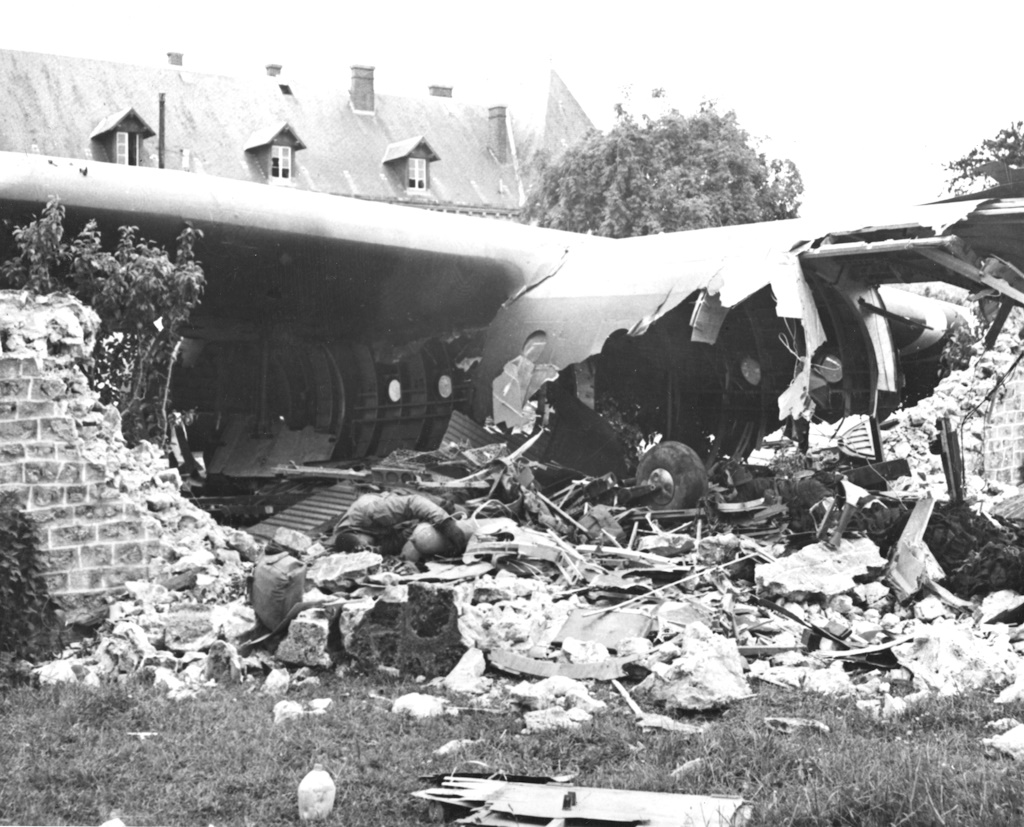
When serial 30 was having its troubles, serials 32 and 33 were becoming airborne. No word regarding any change in plans had reached them, consequently, in their ignorance, the only thing of particular concern was that some of these landings would be made after darkness, and this was something which had been considered too dangerous even to rehearse. The takeoff of the two serials was made with only one minor incident. One Horsa in serial 38 broke its tow rope assembly in takeoff and had to pull off the line. This load contained Col John W. Smiley, the division artillery S-3, and a large part of his operations platoon. Realizing that if any staff officer was essential to the overall effort of the artillery, he was that staff officer, he appealed to the local Troop Carrier Commander of the 436th Group. Here, the troop carrier element clearly demonstrated its flexibility, and preparation for the accomplishment of its mission. With the assistance of ground crews, the load was transferred to another glider within a matter of twenty minutes, and airborne. This could well be a record of some sort. The glider pulled into its original place in the serial just as it turned into the final leg of the flight at St-Marcouf.
In crossing the Channel in the evening light of D-Day, the sight below was truly something to behold. There were sky trains and ships of all types below, as far as the eye could see, not to mention the fighter planes darting everywhere in their mission to protect the slow transports. The landing crafts disgorging their men and equipment on Utah Beach indicated clearly that the beach assault had been successful. Large fires inland gave us a feeling that all was well and according to plan. The first indication that maybe all was not well came when we were within sight of LZ W. It is truly ironic and most amazing that by now, at 2300 H, word had not circulated around sufficiently to avoid a duplication of the same experiences encountered by the serials two hours previously. There is evidence to indicate that the tug pilots were aware of some change in plans, and a study of the landing pattern shows clearly that the pilots were splitting the difference between LZ W and DZ O. There was no communication between the tug ship and the glider except the Aldis lamp in the tug ship, which was strictly one-way, and it chose to tell the gliders nothing except when to cast off. The lead planes of serial 32 were now well within the range of the enemy weapons in the northern part of LZ W, and the sky train was generally headed for Ste-Mère-Eglise. The Germans seemed to be concentrating their fire on the tug ships rather than the gliders. One must admire these C-47 pilots. Flying at less than 150 miles per hour, at an altitude of 1500 feet or less, with no armor protection and no self-sealing gas tanks, must, to say the least, be a trying experience which takes great courage. Serial 32 found itself in a situation where many things can happen and many personalities may become involved. It is the tug pilot’s duty to tow the glider to the designated LZ, then signal to the glider pilot to cut loose.
Now the glider pilot takes over and lands the glider in the LZ according to his training. When the glider comes to a halt, the glider commander, usually the senior airborne passenger in the glider, actively assumes command. There are many variables along this chain of command when the sky train comes under fire. The tug pilot may release the tow rope from his end and thereby cut the glider loose without any signal or warning. The glider pilot may become excited and cut loose before he receives the signal from the tug pilot. And no small factor to consider is the glider commander, who, in almost all instances, outranks the glider pilot, and becomes his commander when the glider reaches the ground. The glider commander may order the pilot to out loose.
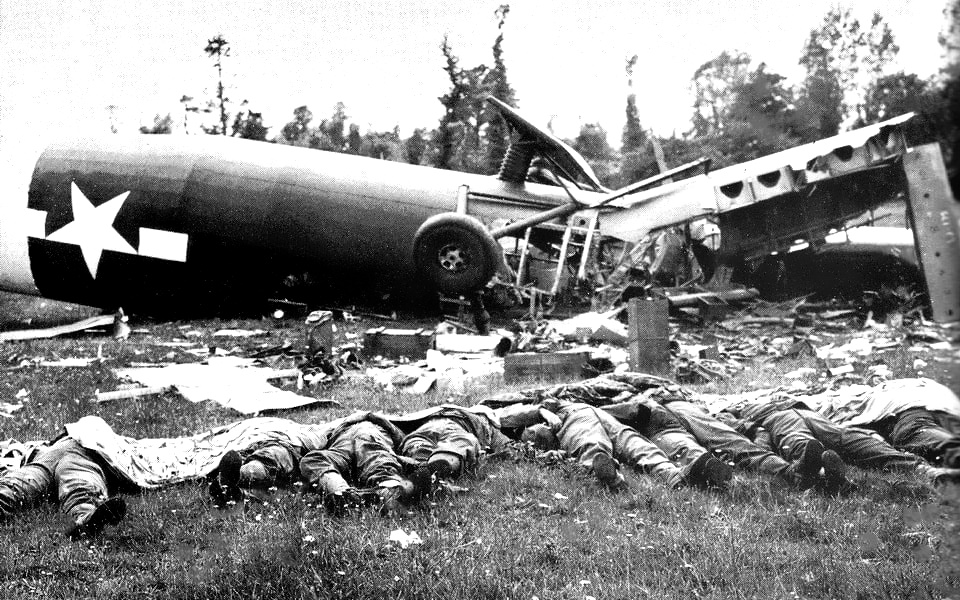
In serial 38 this evening, there were combinations of all the possible variables and of the 47 artillery gliders in the serial, it is significant to note that not a single one landed on the intended DZ. The nearest was some 1000 yards away; the remainders were generally dispersed from two to six miles short of and between LZ W and DZ O, thereby indicating that flying gliders over an alert and well-organized enemy is not practical. There was no tactical unity in the landing, and since the forces on the ground had ceased their advance for the night, the enemy was able to concentrate on the glider men. He was not aggressive, but he controlled the roads by fire. The artillerymen could not move their equipment through the hedgerows, consequently, there was a maximum of confusion and disorganization. Some loads were abandoned entirely as their crews engaged the enemy. In many instances this allowed the Germans to destroy the equipment by fire. In other instances, of course, the equipment was rendered unserviceable by the crash landings. Many of the CG-4As stopped against formidable objects and the noses could not be opened for unloading. The problem of the assembly was made even more difficult by the fact that the troops were now trigger-happy and were shooting each other in the darkness, and many glider commanders were unable to orient themselves.
Rationalization set in. Heretofore unmentioned in this narrative is the fact that the 325th Glider Infantry, forming the Division reserve was to commence its landings at 0700 H on D+1, utilizing the same LZ. All artillery glider commanders knew this, and in many instances, there was a tendency to establish a perimeter defense around the load and hopefully wait for daylight and the 385-GIR. Other factors influencing the decisions of the commanders were the wounded, of which there were many. They did not desire to be abandoned, and there was no transportation for them even if they were transportable. Despite the planning of the loads, it was now discovered in the dispersed gliders that there were trailer loads of ammunition but no vehicles in sight with which to tow them, and the same was true of the howitzers. The loads were immobile. Of the 47 gliders, only 8 landed intact, 11 were damaged and 28 were destroyed. Of the 12 75-MM howitzers, 5 were serviceable, 2 sustained minor damage and were repaired by cannibalizing parts from the 5 that were completely unserviceable. That gave the 319-GFAB with 7 serviceable howitzers. Of the 32 1 1/2-ton trucks, only 16 were serviceable after landing, and of the 21 trailers, 14 were serviceable. Landing casualties in serial 32 amounted to almost 25%. Of the 409 officers and men, 16 were killed and 78 required evacuation.
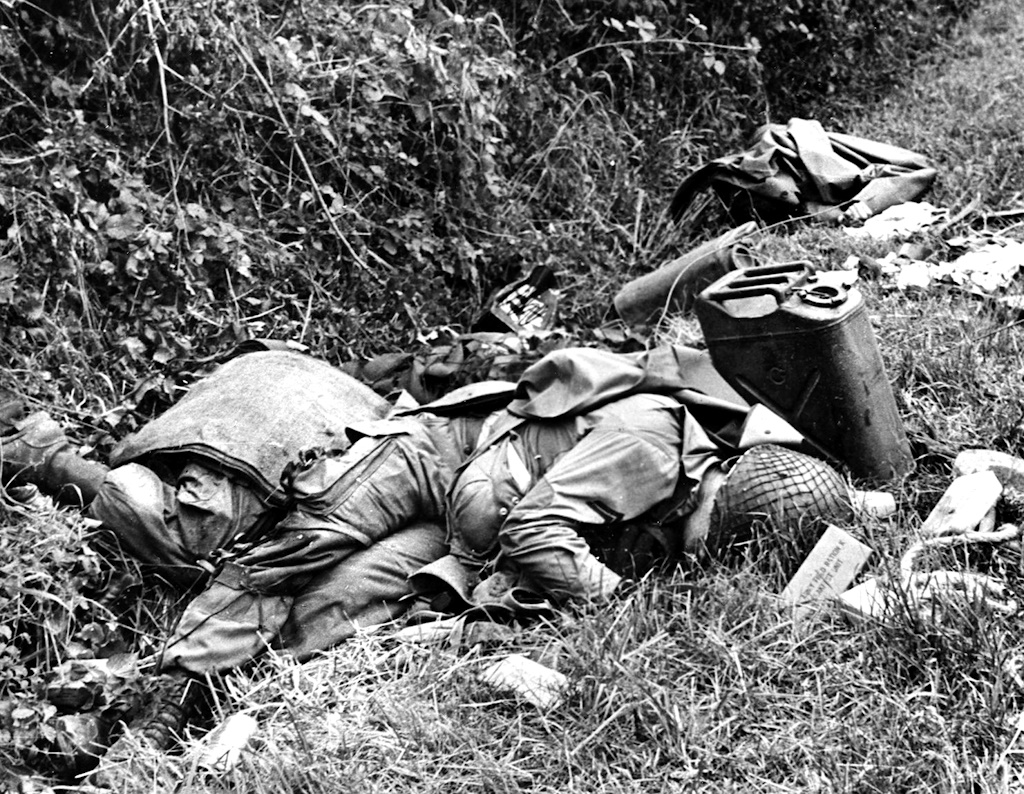
Serial 33, containing the 320-GFAB, and just 10 minutes behind serial 32, fared somewhat better. Of the 50 gliders, 3 actually landed on DZ 0; a large number landed within several thousand yards thereof, and only a few were as much as four to five miles off, and generally short. The damage to the gliders themselves was greater than in the case of serial 32 in that only 5 landed intact, 10 were damaged, and 35 were considered destroyed. Conferences after the action attributed this to the fact that most of these landings were made after total darkness. Eight of the 105-MM howitzers were serviceable in the final analysis; 23 of the 28 1 1/2-ton trucks and 13 of the 17 trailers were serviceable. Of the 323 officers and men, only 7 were killed and 33 evacuated as a result of the initial landings. It seems now that we have some considerable arguments in favor of landing gliders after darkness. Contributing factors that must not be overlooked, however, include the fact that serial 32 was engaging the enemy on the ground, thereby giving him less opportunity to concentrate on the sky train. As a direct result, the flight did not open up, the landing pattern was less dispersed, and greater mutual support was possible when the troops reached the ground. The assembly problems of the 320-GFAB, even though it had a better landing pattern, were generally identical to those of the 319-GFAB, The guides from the advance elements of the artillery did contact the 320-GFAB upon landing, and the trend toward their initial position just west of Ste-Mère-Eglise was started.
The many elements of the glider artillery who were depending upon succor from the 325-GIR at 0700 H on June 7, were doomed to disappointment. The infantry did land promptly, but forced on LZ W, and hardly any of its gliders came this far to the north. Seeing this, the artillerymen, employing infantry tactics as best they knew now, concentrated upon assembly, and by 0900 H it began to take on an organized form. The 319-GFAB was assembling in an area northwest of Ste-Mère-Eglise, and the 320-GFAB was assembling in its position area just west of the same town. At 0911 H on June 7, the 320-GFAB, with only two of its howitzers in position commenced firing in direct support of the 2/505-PIR. The howitzers and crews were coming into the position area at the rate of approximately one per hour and by evening they had eight 105-MMs in position plus one 75-MM from the 456-PFAB which had been attached for the time being. It will be noted here that things had not gone according to the artillery plan. The position area occupied by the 320-GFAB was fully
8000 yards east of the planned position area, and even 2000 yards east of the alternate position. Needless to say, the pre-planned fires were well beyond the maximum effective range and would have been of dubious value at this time. Instead of supporting the 507-PIR where liaison had been set up, the battalion was now supporting a unit with which no previous arrangements had been made. In order to more clearly understand the artillery situation, let us take a brief look at the infantry situation as of 0909 H on D+1.

The 2/505-PIR was directing its attention toward the north and northeast of Ste-Mère-Eglise. It made patrol contact with the 8-IR (4-ID) at 1000 H at St-Martin, northeast of Ste-Mère-Eglise. The 3/505-PIR was facing south and east of Ste-Mère-Eglise. The 1/505-PIR was resisting heavy enemy counterattacks from across the Merderet River in the vicinity of La Fière. Elements of the 507-PIR were engaged in the same defensive mission just south of the causeway at La Fière. Other elements of the same regiment were engaged at the other Merderet River crossing site in the division area south of La Fière at Chef-Du-Pont. The major portion of the 507-PIR was believed to be west of the Merderet, but their situation was obscure. It was later determined that there were generally two groups, one west of La Fière between the River and Amfreville, and the other west of Amfreville. Only twenty-five percent of the regimental strength was accounted for at this time. The 508-PIR had a small force east of the causeway at Chef-Du-Pont, and other elements were known to be farther west, between the River and Picauville. Only twenty-five percent of this regiment’s strength was accounted for.
The 325-GIR was in the process of landing and assembling. The last airborne element of the Division Artillery, in the form of five CG-4A loads, landed in LZ W with the second serial of the 325-GIR at 0710 H. Their actions are not important to this narrative, but they had one experience which was unusual and interesting. Sgt Charles Cummings and Cpl Edward Kroer, of one of the gliders, were captured shortly after landing. They were conducted to a stone building nearby which already contained some twenty airborne prisoners, and which also contained an enemy battalion headquarters. The prisoners were in good spirits because they could understand sufficient German to realize that the Germans were arguing among themselves about surrendering. The battalion commander appeared to be the only one who objected to the surrender. Their spirits, however, became dampened when the enemy brought in Col Gorlan A. Bryant (G-1 of the 4th Infantry Division) as a prisoner. This didn’t look good to the prisoners who were not familiar with the situation. Col Bryant was instrumental in further inciting the surrender of the garrison. At 1030 H, when the 8th Infantry Regiment commenced its preparation for the assault on the position, many of the Germans were ready to surrender, but there remained the problem of how to stop the fire from the 4th Infantry. Items of American clothing were held up on rifles only to be cut to shred by machine gun fire. A German grabbed a bugle and blew a surrender call, only to be hit in the process. Now occurred an incident which is typically American and probably would not occur in any other army in the world! One of the prisoners retrieved the fallen bugle and blew ‘chow call’. The firing ceased. The 8th Infantry came in and collected 174 enemy prisoners.

