



NARRATION – BATTLE OF MANILA
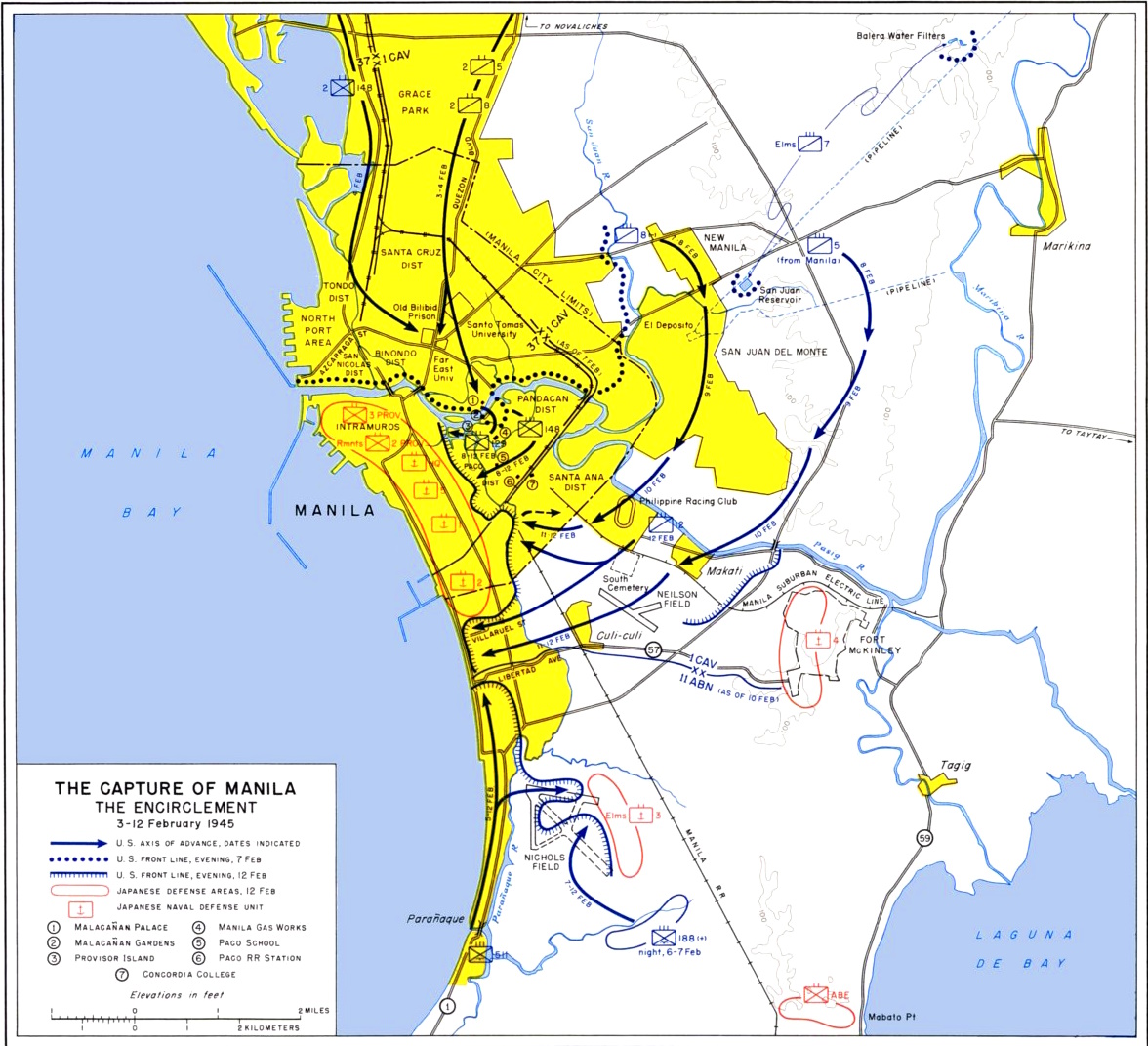
 As elements of the 37-ID began to push to the north banks of the Pasig River on February 7, they found that the enemy’s main defensive positions were organized in that part of Manila lying south of the Pasig River. These positions were occupied by 18.000 enemy troops, three-fourths of which were navy personnel, under the command of a Japanese Admiral. As the units of the 37-ID and the 1-CAV moved in from the north, they found the major enemy defensive positions facing the wrong way as the garrison commander had anticipated that American forces would invade by way of southern Luzon Even though it appeared that the division had the ‘drop’ on the enemy his forces fought stubbornly, and ruthlessly destroyed most of the city as well as all the key bridges in the northern and southern sectors of the city. Except for certain bridges across the Pasig River, which were blown on or about February 7, all other important ones were blown prior to the entrance of American forces into the City.
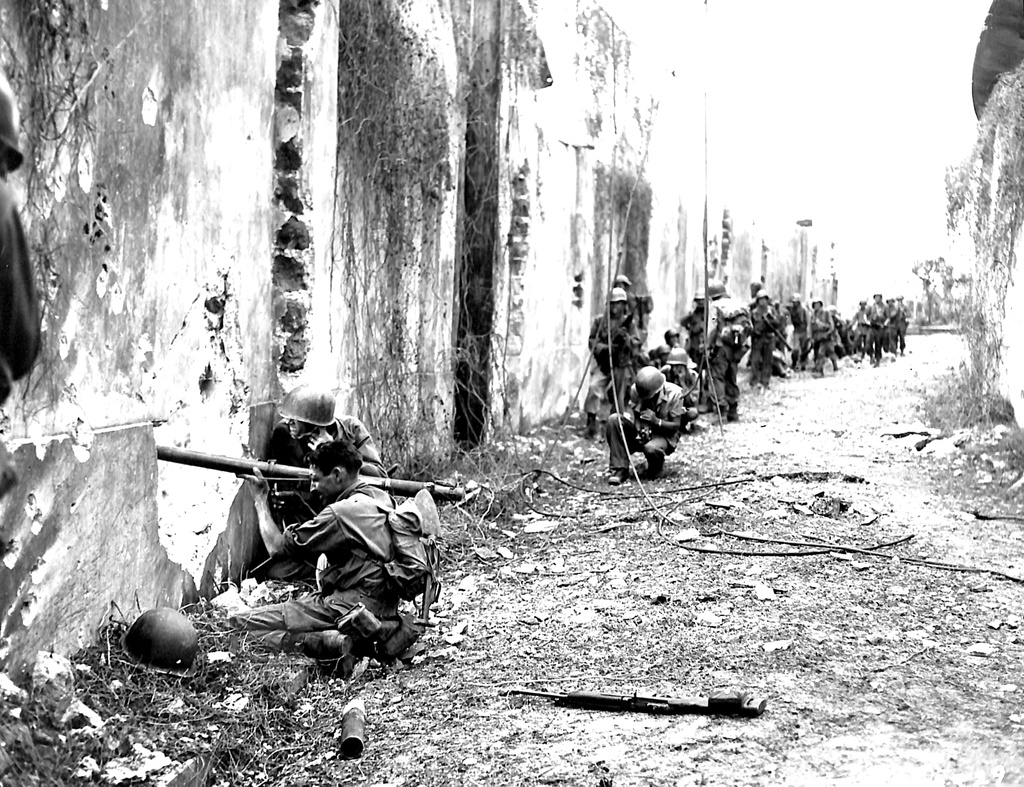
Although the enemy’s resistance north of the Pasig River up to this date paralleled that of a delaying action, he had converted the heart of the city, south of the River, into a fortress. Each building became a strong point. All streets were heavily mined, barricaded, and covered by planned fires of AT and automatic weapons located in pillboxes at key street intersections. On the morning of February 7, the 37-ID had reduced all organized resistance north of the River. This day was one of many confusing situations. First of all, just as the second phase of the battle of the Pasig River line was to start, the boundaries of the 37-ID were shifted to the line Rizal–Avenue-Quezon Bridge all-inclusive on orders from XIV Corps. In spite of past successes against the enemy so far, as in other engagements since the entrances into north Manila, it was found impossible to force the enemy to withdraw. Rapid advances by division troops had resulted in bypassing and isolating enemy strong points and garrisons, particularly in the Tondo District. This created a menace to the main supply route which resulted in having to send large forces back to this vicinity to destroy bypassed enemy groups.
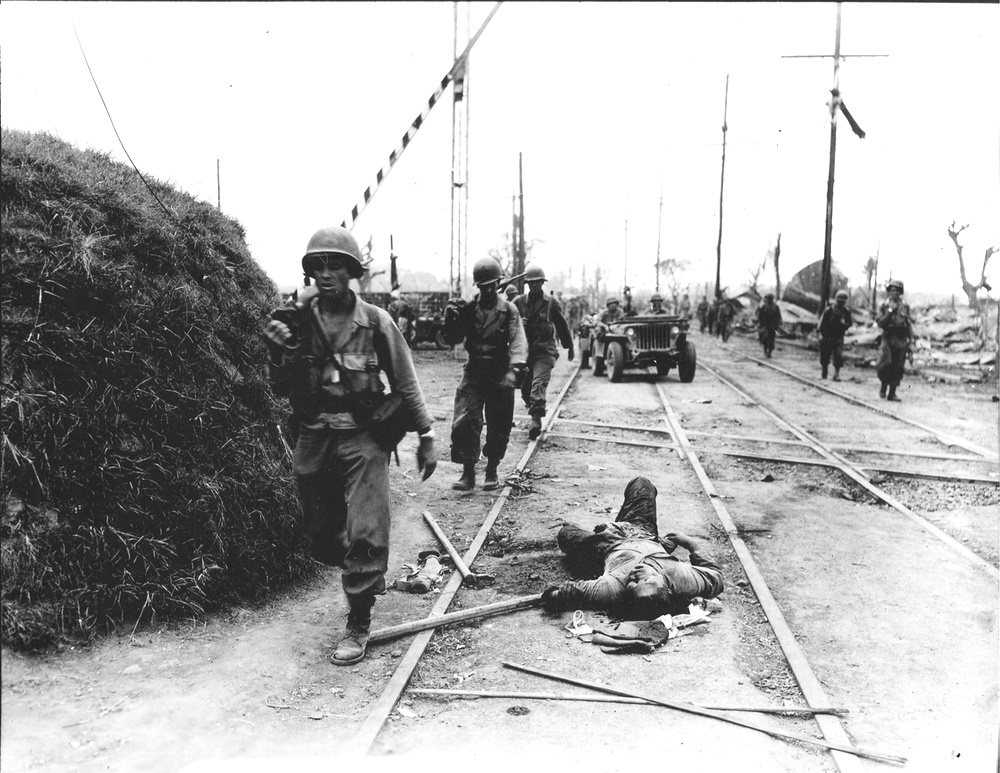
While mopping up went on and units began to close in on the Pasig River line, the first crossing was initiated on this date in the vicinity of the Presidential Palace, in compliance with the Corps Commanders order. Upon the arrival of amphibious tractors and assault boats, elements of the 148-IR under the direction of the division commander made an amphibious crossing of the river just east of the palace. The regiment began its crossing at 1515 hours under the covering fire of artillery including an ineffective smoke screen. By 1600, elements of the regiment had advanced approximately 1500 yards from the opposite bank. The first, wave received little if any opposition, but succeeding waves received intense mortar, artillery, and machine gun fire throughout the remainder of the day and night. Despite this, the regiment continued to [page missing in this archive]
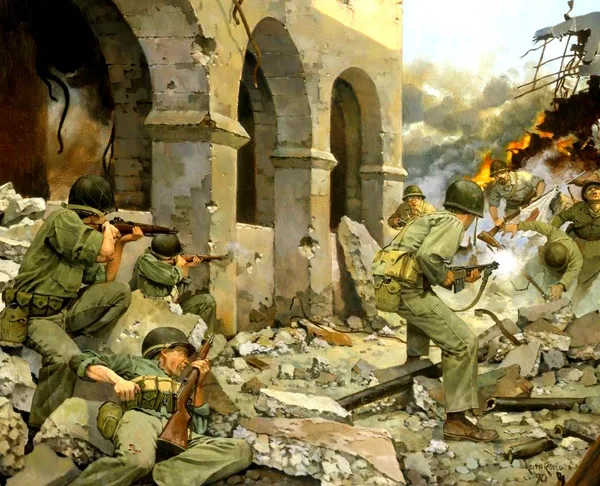
 The 1/145-IR was directed to cross the Pasig River in the division reserve. The 2/145-IR which had been relieved of the mission of securing the north bank of the River by a special security force advanced to the northeast to eliminate the gathering resistance in the Tondo area. This growing enemy resistance was threatening the entire XIV Corps supply line. The operation soon developed into fierce house-to-house and street-to-street fighting. The 3/145-IR was busily engaged in the Polo Area blocking the enemy’s route of escape and denying him access to areas adjoining the Corps supply line. The 159-IR less one battalion crossed the River and advanced to the southwest with its right flank hinged on the Pasig and left flank abreast of the 148-IR. All crossings of elements of the division, including the division reserve, were completed by 1655 on February 8. Ground opposition throughout the day was only spasmodic, but shelling by mortar, artillery, and rockets was extremely intense. On February 9, elements of the division had crossed to the south bank of the River, and were well on the way in an enveloping movement to encircle the strong enemy position within Intramuros and make contact with the 1-CAV, which was making a wide envelopment to the southeast and the 11-A/B which was attacking from the south.
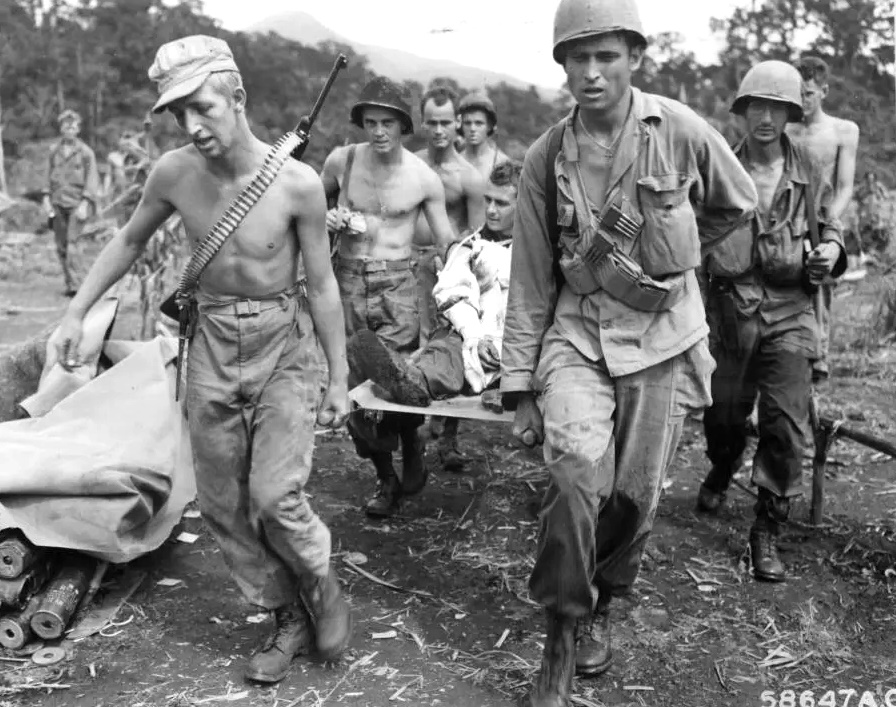
On the morning of February 9, the 148-IR supported by artillery, 4.2-inch mortar fire, and three light tanks, continued the attack to the southwest where it met bitter resistance in the vicinity of the Paco Railroad Station and the Paco Church. Enemy resistance managed to limit the regiment’s advance to 300 yards for the entire day. The 3/145-IR continued to hold against small enemy attacks in the Polo Area. This was considered a most important mission as it not only denied the enemy his main route of escape but also denied, his access to a position from which he could attack the Corps’
a main supply route. The 2/145-IR engaged in fierce fighting and encountering well-established pillboxes and emplacements, managed to clear the Tondo Area and continue the attack further to the north in order to secure the entire area. The use of rocket launchers, pole charges, and direct-fire AT weapons contributed to this success. The 1/145-IR remained in the division reserve south of the Pasig River.
The 1/145-IR and 2/129-IR spent the entire morning of February 9 seeking a time and place to launch an attack on the Provisor Island which was only twenty-five yards from the south bank of the Pasig River. The capture of this island was very important as the largest single unit of electrical supply of the Manila Electric Company occupied the major portion of the island. An attack on this strong point with any sizeable force would be suicide. Elements of George Co launched an attack with eighteen men in two small boats. One boat made shore successfully but only a few scattered men of the second boat were successful, as it was hit by enemy 20-MM and machine gun fire. At the time this foothold was made it was considered hopeless. The remaining men managed to hold out throughout the day. That night an attack was launched supported by heavy mortar and artillery concentrations. This attack plus succeeding attacks over a period of three days finally proved successful. Throughout the operation, the 2/145-IR had forty-five men killed and ninety-six men wounded in action.
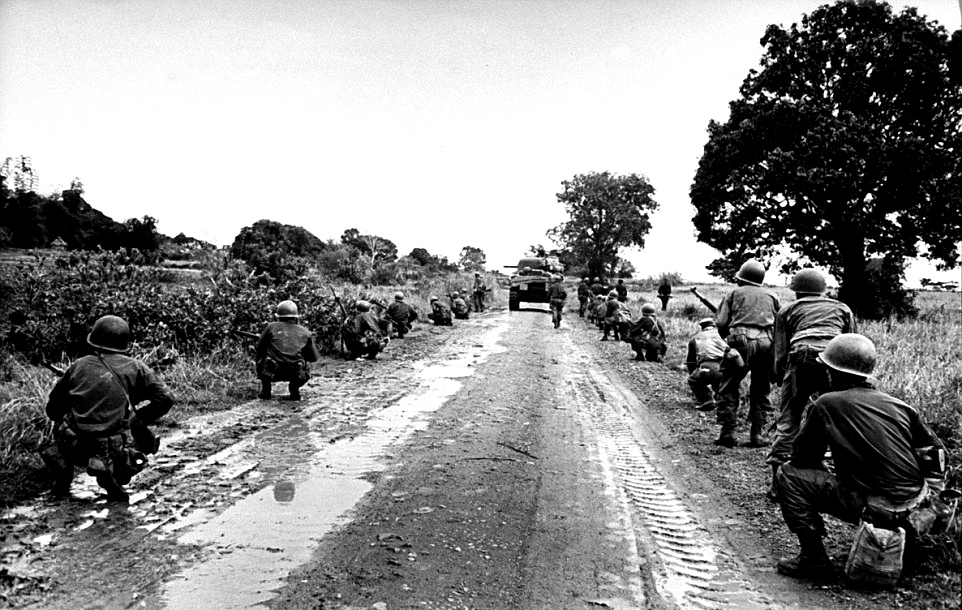
In summary, I think that it can be said that the division had accomplished its mission thus far by crossing the Pasig River and seizing a major portion of the heart of Manila south of the River in preparation for the launching of the attack against the “Walled City (Intramuros). The capture of this last enemy stronghold would definitely mean the end of the Battle of Manila. To date, the division had accounted for approximately 13.000 enemy killed and 459 enemy prisoners.
Maj Giles H. Kidd, Infantry
and Doc Snafu