


Frome the Saar to the Rhine

 When the 26-ID moved from the bloody battlefields of the Ardennes at the end of January 1945, the division faced an immediate return to the front lines, farther south in the Third Army Sector. During the bitter fighting of January and December with the Third Army’s main effort diverted to the north, the remainder of Patton’s divisions, facing east into Germany, was engaged in a holding operation. It was to this mission that the YD returned, in the XX Corps Sector.

 The XX Corps had now become the right flank Corps of the Third Army, and once again, the 26-ID became the extreme right flank unit of the Army. The XX Corps Sector consisted principally of an aggressive defense of the west bank of the Saar River. Within the Corps sector, however, was one bridgehead, east of the Saar at Saarlautern. Here the 26-ID was ordered to relieve the 95-ID, facing for the first time the German Siegfried Line defenses. From January 29 to March 6, in carrying out this mission, the YD maintained an aggressive defense in the Saarlautern area and in the bridgehead area on the east bank of the river.
 The 104-IR, being the first regiment of the division to arrive from the Ardennes Campaign, in the XX Corps Sector, was first to take control of the bridgehead. The relief of the elements of the 95-ID was conducted on January 28 and 29. During the subsequent weeks in which the division commanded this sector, the three regiments alternately occupied the defensive positions in the bridgehead and along the Saar River.
The type of fighting encountered in Fraulautern and Saarlouis-Roden was new to many Yankee Division Infantrymen. In parts of these two villages enemy troops frequently occupied houses or blocks of buildings directly across the street from elements of the 26-ID. During the hours of darkness, any noise or movement would draw immediate fire from enemy automatic weapons and mortars. Numerous limited objective attacks were launched in which the progress of the division was measured in pillboxes and houses.

Elements of the German 347.Infantry-Division and 719.Infantry-Division likewise launched numerous counter-attacks in order to force the withdrawal of our troops or to regain blocks of buildings that had changed hands. During the operations in the Saarlautern Bridgehead, the 26-ID utilized searchlights for the first time under battle conditions. By penetrating the over-hanging mist on dark nights by this artificial moonlight infantry weapon crews were assisted in the adjustment of their fire.

 By February 21, the Third Army instructed the XX Corps to begin a phase of operations in which, later, the 26-ID resumed the offensive. The 94-ID, which had been on the left flank of the 26-ID, was ordered to attack in conjunction with the 10-AD into the Saar-Moselle Triangle. This attack progressed favorably, with Saarburg being captured on the first day, and the attack was continued on subsequent days to effect the reduction of the German Garrison which was believed to be defending Trier in considerable strength. By the end of the month, the 10-AD had driven its columns to within three miles of Trier. Trier was captured on March 2. On March 5, relief of YD by the 65-ID was initiated in order to allow the 26-ID to assemble for an attack from the bridgehead across the Saar River, now held by the 94-ID.

 By March 8, all elements of the 26-ID had completely assembled in an areas in the vicinity of Saarburg. By this time the 4-AD was well advanced in its drive to the Rhine River. The 10-AD had continued its advances beyond Trier and now the Army Commander directed an attack southeast from the Saarburg Bridgehead, which began on March 13. This attack from the Saarburg Area to the southeast generally paralleled the Saar River on the right and caused the 26-ID to be attacking laterally through the Siegfried Line. Thus, during the entirety of this operation, the combat echelons encountered not only unfavorable terrain but intense fire from pill-boxes, mortars, artillery, and Nebelwerfer.
On the first day of this difficult operation, the 2/104, gained two miles and repulsed six-strong enemy counter-attacks which violently endeavored to halt our advances through the Siegfried Line Fortifications. The 2/328 and the 3/328, attacked, succeeded in making some gains and destroying some of the concrete fortifications in their zone. Enemy resistance continued to be strong and effective throughout the first five days of the offensive, but on March 17, the important town of Merzig fell to the 1 and the 2/328.
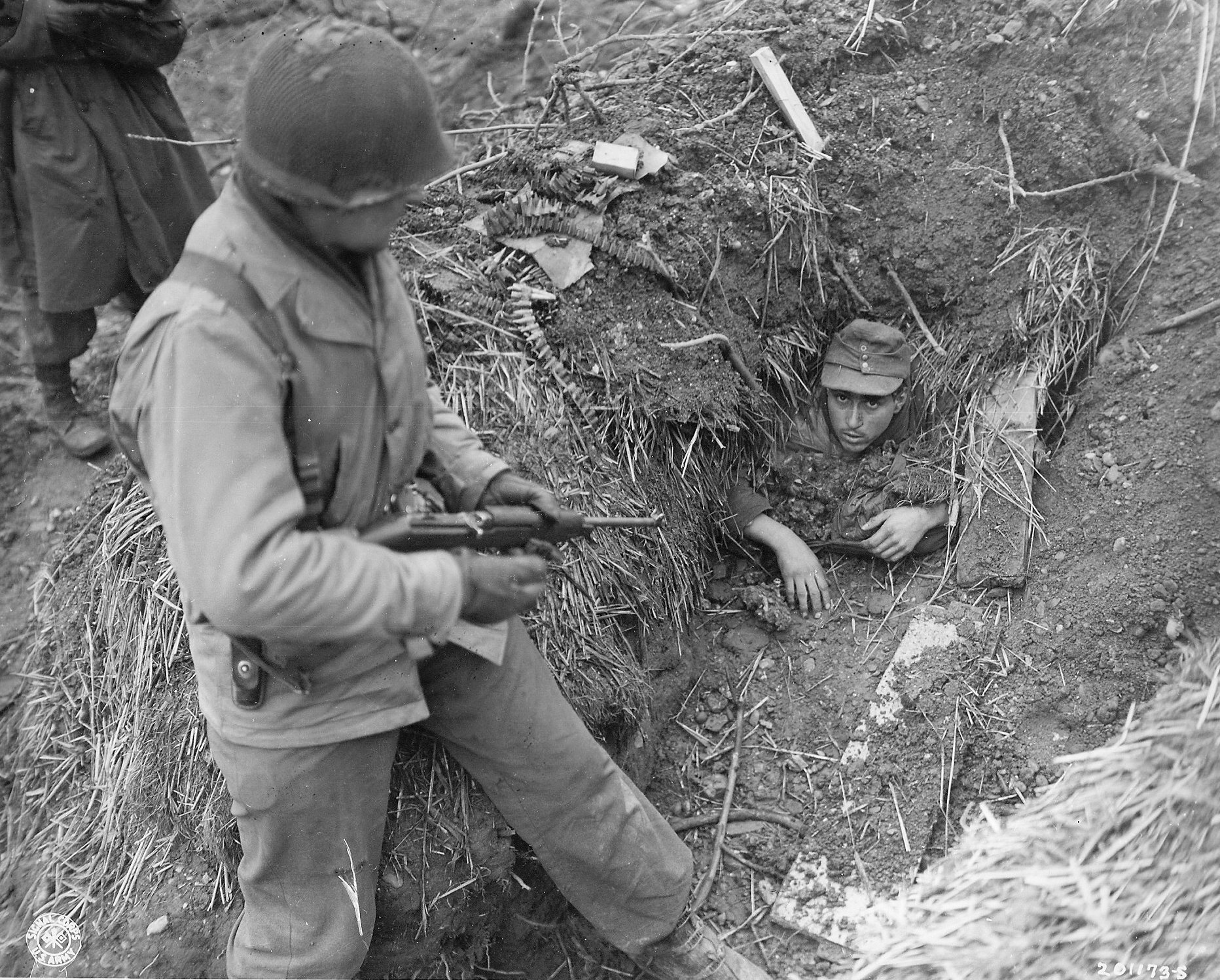
The YD attack now swerved to the east, as further south along the Saar River, the 65-ID was beginning to break out of the Saarlautern Bridgehead. On March 18 and 19, the progress of the advance accelerated as the 104-IR and the 101-IR, meeting scattered enemy resistance, advanced rapidly and captured numerous towns with the 2/104, reaching Ottweiler on the Bleis River. During the rapid advances in the period March 17 to 19, the 328-IR organized defenses and blocked the exposed southern flank of the Division.

 During the period of March 13 to 21, the 26-ID made rapid advances from the bank of the Saar River to the banks of the Rhine River. Communication and supply lines in the Division were maintained only by the utmost efforts of the personnel concerned in order to maintain the progress of the drive. It was continually necessary to shuttle troops on the limited amount of vehicular transportation available. On March 21, the advance was continued against very slight resistance with elements pushing beyond Landstuhl towards Kaiserslautern. During this time contact had been established with the 6-AD of Alexander Patch’s 7-A and other 7-A and 3-A units had linked up, enclosing numerous pockets of trapped Germans on the west bank of the Rhine River.
Thousands of PW’s flowed through the Division PW cage in this phase of operations. Hundreds of German units were represented, including the 2.Gebirgsjäger-Division, the 17.SS-Grenadier-Division, and the 19.Volksgrenadier-Division, the 256.Volksgrenadier-Division and the 212.Volksgrenadier-Division. All the Third Army divisions were now poised on the west bank of the Rhine River alerted to launch an attack to force the crossing of the river.
The Race Across Germany

 On March 23, the 26th Infantry Division passed to the command of the US XII Corps as part of the regrouping taking place in the Third Army Combat Zone and in preparation for the crossing of the Rhine River. On the night of March 22/23, the 5th Infantry Division made an assault crossing of the Rhine River and secured a bridgehead which could now be rapidly expanded.
 Elements of the 90-ID and the 4-AD followed immediately into the bridgehead and on March 24, the 104-IR crossed the Rhine at Oppenheim and was attached temporarily to the 4-AD in the bridgehead. The 104-IR gave infantry support to the 4-AD on the flank, once again the Army flank. The 101/26 crossed the Rhine River on March 25 and assembled in an area east of Leeheim prepared to attack at daybreak the following morning. The 328/26 crossed the Rhine River on March 26 and was immediately attached to the 4-AD to replace the 104/26 which had been detached. The 328/26 then advanced rapidly northeast with the 4-AD, meeting only light opposition, secured a bridgehead over the Main River.

The 101-IR attacked to the northeast on Marck 26, and on March 27 reached the Main River, and on March 28, secured a bridgehead across the River. In accomplishing this, the regiment advanced approximately 26 miles from the Rhine River to the Main River in two days. The 101/26 reached Babenhausen five miles from the Main River, on March 26 and on the following day relieved elements of the 4-AD in Schweinheim on the east bank of the Main River.

The 328/26 engaged in a house-to-house fighting against persistent enemy resistance in the city of Hanau, which was finally reduced on March 28. Once again east of the Rhine River as in the battle for the Saar Palatinate, German opposition became fluid and disorganized. The 26-ID continued its rapid advance, and, with the 4-AD, the 11-AD and the 90-ID, broke out of the Main River Bridgeheads, reaching Fulda on April 1, where the 101-IR engaged in house-to-house fighting to clear the city. The 1/101-IR reached Meiningen on April 5 and assaulted the town, meeting stubborn resistance. Elements of the 11-AD entered the city of Meiningen from the south and southeast. The enemy garrison defending the town surrendered at 1830 on April 5, but mopping up continued through the night. The enemy was active in the Meiningen area through April 6 and April 11, with numerous enemy patrols engaging in skirmishes south of the town.
On April 8, the Division again resumed the attack to the southeast, with gains of approximately five miles reported at the end of the day. Roadblocks, blown bridges and scattered firefights with enemy infantry constituted the opposition to the Division attack. From April 10 to April 15, the advance was continued with the 101-IR and the 328-IR attacking abreast.
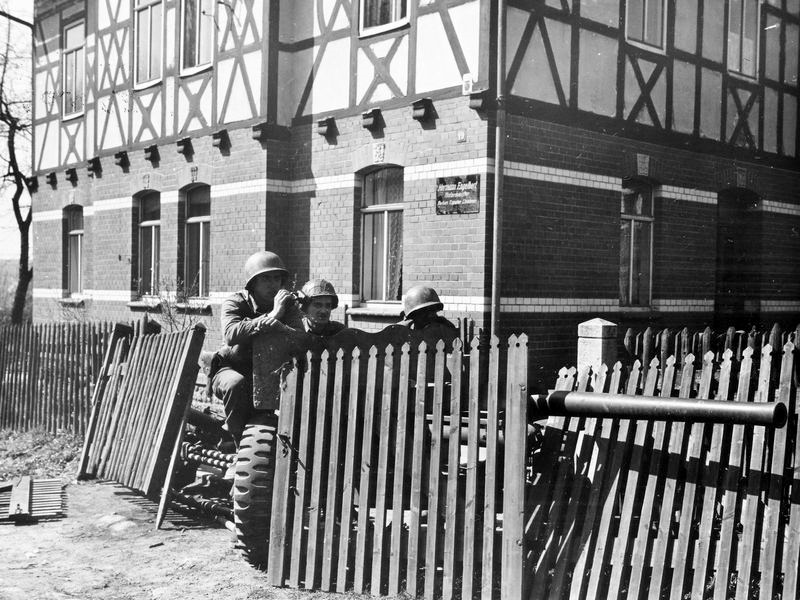
The 104-IR, in Division reserve, was performing flank security and mopping up operations. Sonneburg, Eisfeld, and numerous other places were captured as the infantry advanced over unfavorable terrain with heavily wooded, steep hills. By April 15, with three regiments abreast, the Division held objectives approximately 10 miles from the Czechoslovakian Border, and further advance was halted by order from the XII Corps. During this advance, elements of the 101-IR cut the important German Autobahn linking Berlin with Munchen and Nurnberg. This succeeded in reducing the possibility of the escape of important Nazis from Northern Germany into the Bavarian – Austrian – Redoubt area. Having thus sliced through the heart of Germany, the Third Army turned the main effort of its attack to the south and southeast, generally paralleling the Czechoslovakian Border on the left, heading for the Danube River and the Austrian Border.
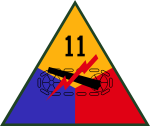 During the month of April 1945, enemy opposition to our advances continued to collapse. The main effort in the US XII Corps attack toward the Austrian Border was again led by the 11th Armored Division and the 4th Armored Division followed by the Infantry of the 90th Infantry Division and the 26th Infantry Division.
By the end of April, the 26-YD had captured numerous towns and villages, reaching the Danube River. On April 30, elements of the 104-IR were five miles from the Austrian Border, the 328-IR was fighting toward the city of Passau, and the 101-IR was protecting the division south flank along the Danube River.
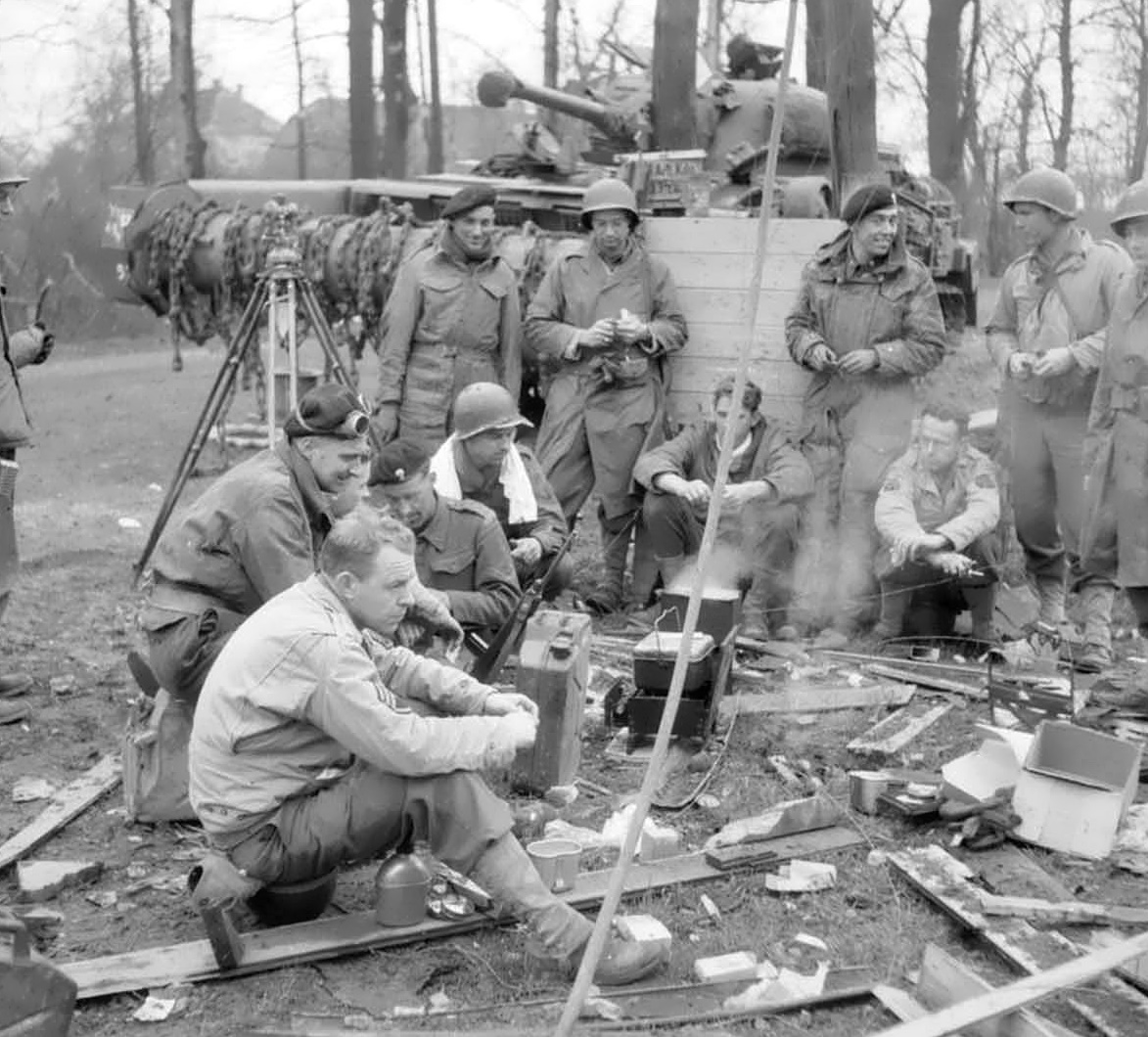
In the first week of May, the advance of the Division was continued into Austria and the 328-IR was attached to the 11-AD to continue the drive towards Linz. CCA-11-AD with the 328-IR captured the important city of Linz on May 4. As directed by the XII Corps, the 26-ID advanced in a new direction on May 6, moving northeast into Czechoslovakia, crossing the Vltava River and securing a strong defensive position north of the river. At this point, further operations were halted by order of the XII Corps. Positions were consolidated and active patrolling carried on.

 On May 10, 1945, patrols sent out from the 104th Infantry Regiment made contact with the Russian 1st Battalion, 263rd Regiment, 86th Infantry Division, X Corps, 46th Russian Army, at Ceske-Budejovice (Czechoslovakia). World War Two in the old contient was definitely over.
On May 7, 1945, a message from Gen Dwight D. Eisenhower had been received at the Third Army Headquarters and relayed to 26-ID Headquarters which terminated the European war. It stated in part: A Representative of the German High Command signed the unconditional surrender of all German Land, Sea and Air forces in Europe to the Allied Expeditionary Forces and simultaneously to the Soviet High Command at 0141 hours Central European Time, May 7, under which all forces will cease active operations at 0001 hours May 9. Effective immediately all offensive operations by Allied Expeditionary Forces will cease and troops will remain in present positions.
Archive reedited and republished on April 16, 2025. (Doc Snafu)
All corrections (I Hope) were been done and the layout changed. (Doc Snafu).
I took me 5 days to redo this entire post because the men of the 26-YD deserve it. (Doc Snafu/
Before buying Doc Snafu a Coffee, Commenting this Post bellow, or doing a donation
make sure you don’t miss the (added) following for the photos I didn’t use. (Doc Snafu)
I still have some other somewhere and I will add them later.
