


On December 5, the 3/328 cleared the Vienwald Woods, which the Germans had strongly held on the Division left flank. The 2/328 entered Keskastel meeting little resistance and Easy Co continued north to Saaralbe. The 26-ID, now having advanced to the extremity of Lorraine, entered a new phase of operations. After fighting through forests, across numerous streams, and stubbornly contested towns, the division now encountered a series of Maginot Line fortifications that stood in the way of the advance. These Forts in the division zone consisted of a wedge-shaped belt of concrete pillboxes linked to four towns. The French had constructed the pillboxes in an ingenious pattern, placing them in positions suitable to the peculiarities of the terrain, protecting one another by interlacing fields of fire. From December 6 to December 9, Division units regrouped into positions for the assault, occupying the strategic ground in the face of enemy artillery and direct fire from the pillboxes. Kalhausen, the point of the wedge, was seized along with the high ground southwest of Etting, on the right. The 104-IR mopped up the southern half of Le Grand Bois which lay between Kalhausen and Wittring. Then, on December 9 at 1000, while corps and division artillery laid down a barrage and the 405 and 362 Fighter Bomber Groups bombed and strafed the Forts, the roads, and the towns, the infantry launched the attack on Achen and the other Maginot Line Forts.
 The 12th Armored Division, having relieved the 4-AD on the right flank, also attacked. Elements of the 104-IR seized Achen. The Germans resisted savagely in Le Grand Bois and Le Haut Poirier between Wittring and Achen, but the Division’s objectives were reached. Driving through Achen, the 1/104, against hostile artillery and automatic weapons seized Fort Achen and other Maginot Line Fortifications in its zone. The 328-IR cleared Le Grand Bois and destroyed Fort Wittring. On December 9, the 102-FAB supporting the 104-IR, fired the first mission of the 26-ID into Germany. As the 26-ID cracked through the Maginot Line, this second day in December, Allied troops all along the front were meeting grim opposition. Between fifty and fifty-five German divisions, most of which were under strength, supported by fifteen or twenty divisions in reserve, were putting up fanatical resistance. The maximum penetration into Germany was not over 25 miles.

 Hodges’ 1-A was struggling through the Hürtgen Forest immediately beyond Aachen. Simpson’s 9-A was battling bitterly for Jülich (Germany) and Düren (Germany), key points on the Roer River. The fighting along the Roer River was, in the words of a high officer: the Meuse River, the Marne River and the Somme River all rolled into one. To the south of Patton’s Third Army, troops of the Patch’s Seventh Army had taken Strasbourg in a dash to the Rhine River.
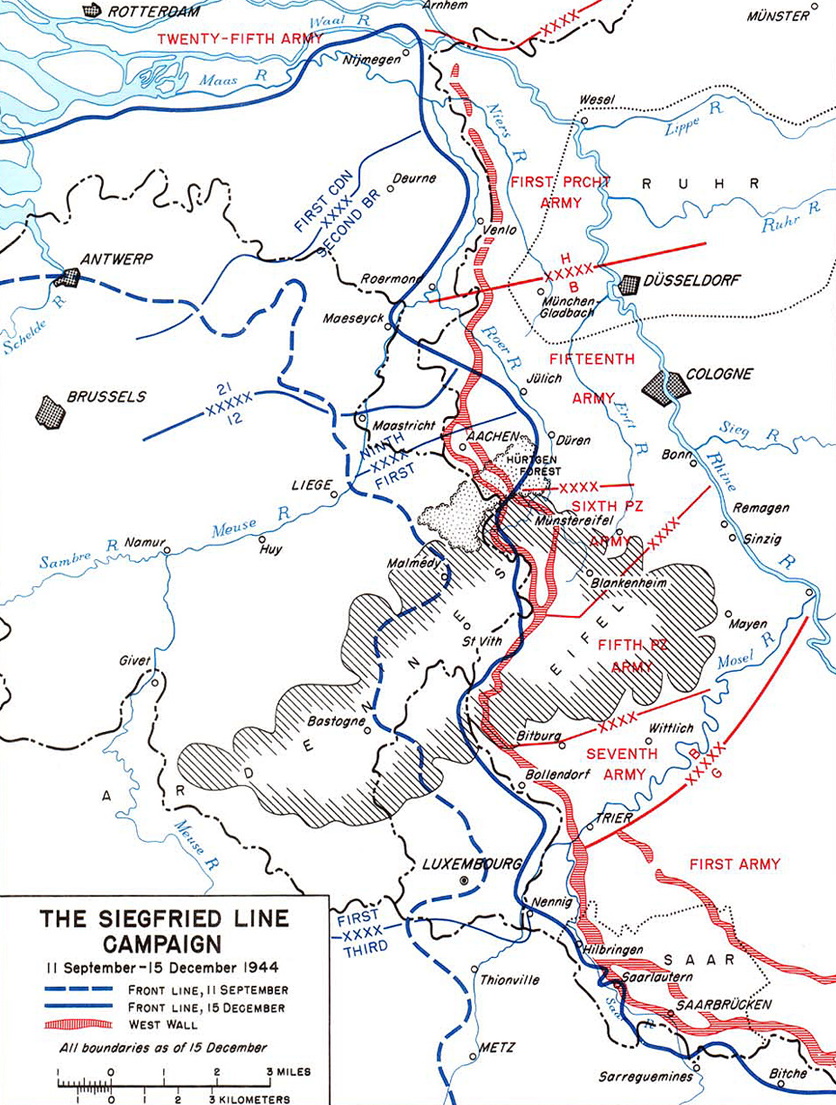
 But the Germans had so far been able to prevent a crossing of the river. Metz had fallen (November 17) and troops all along the Third Army front were pushing to the edge of the Saar Basin.
The 90-ID, pressing through the Siegfried Line beyond its bridgehead and Königsmacher, had broken into bomb wracked Saarlautern at the German Border and had seized Dillingen, two miles to the north where the Germans were fiercely counterattacking.

 The 6th Armored Division had wiped out an enemy salient three miles deep and two miles wide southeast of Saarbrücken. On the north flank of the 35th Infantry Division, elements had crossed into Germany at Sarreguemines, pushed on to the town of Neunkirchen, which was less than one-half mile from the Saar Basin. And when the 26th Infantry Division broke thru the Maginot Line defenses, both the 26-ID and the 35-ID were ready to make a concerted drive on the Saar Basin from the south.

 On December 9, the Yankee Division’s mission in Lorraine was coming to an end. After two months of bitter combat, the weary YD infantry had earned a respite from the fight. News reached the foxhole soldiers of impending relief, and that night, the 87-ID began moving into the area of the 26-ID. The 101-IR was the first unit to be relieved (December 10) departing immediately from the XII Corps Sector, proceeding to Metz. On December 11, the 104-IR followed. With the relief of the 101-IR and the 104-IR by the 87-ID, the only Yankee Division doughboys remaining in battle were those of the 328-IR. The 346-IR of the 87-ID was now on the right of the 328-IR, and on the left was the 320-IR (35-ID).
Perhaps because the sacred soil of the Fatherland, only a few miles away, was being seriously threatened, the Germans began a counter-attack in the afternoon of December 9 in the zone of the 2/328-IR. The Germans being repulsed, the 2/238 and the 3/328 began to advance again the following morning. Again enemy armor delivered heavy fires on our troops. The attacking battalions were forced into a slight withdrawal, because of the massed enemy tanks in the Bliesbrucken Woods.
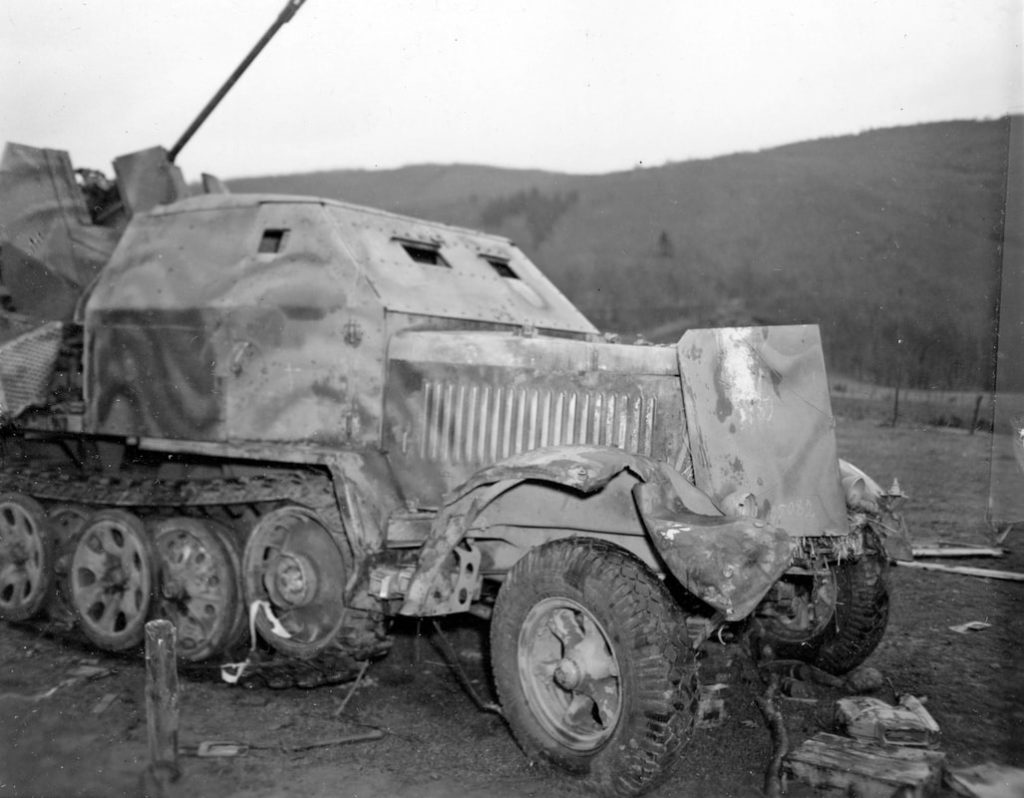

 The XIX Tactical Air Command was called upon for air support and in the afternoon a squadron of fighter bombers bombed and strafed the enemy concentrations in the woods. Direct hits were scored on three tanks, others were damaged. The 602-TDB and the 610-TDB were both engaging any enemy armor that came under observation all around the zone. Approximately ten German tanks were eliminated by the Tank Destroyer operations in the Bliesbrücken Woods action. On the night of December 11, the 328-IR established defensive positions in the vicinity of Obergailbach, alerted for any further thrusts by enemy armor. During the night, 11 infantrymen (Item Co) patrolling, became the first YD doughboys to invade the German Soil. On December 12, the three infantry battalions attacked towards the German Border, the 3/328, and the Tank Destroyers, to engage enemy tanks in the vicinity of Obergailbach. By 1530 in the afternoon, meeting stubborn resistance, the 1/328 and 2/328, Able Co leading, had advanced into the Obergailbach Woods, 600 meters inside the German Border. Easy and Fox Cos secured objectives on German Soil while Item Co, still leading, captured Hill 360, a strategic terrain feature in the Corps sector.
Thus, on December 12, ended the first campaign of the 26-ID, beginning on November 8 just east of Nancy, continuing for 66 days of hard combat through the French Department of Lorraine, ending on the 67th day inside Fortress Germany.
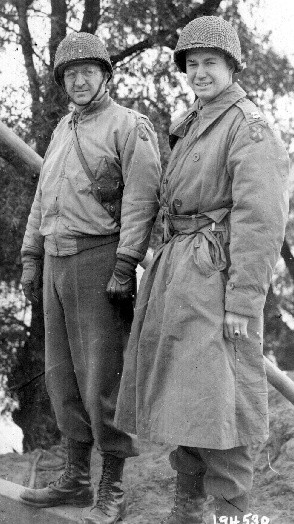 In figures, which can never measure the suffering and hardship of the fighting infantrymen, the division advanced approximately 45 miles against stubborn German resistance, wrested from the enemy 132 French towns, over an area of 450 square miles. During this period, the Division captured 2573 prisoners and inflicted an estimated 2307 casualties.
Speaking to the 26th Infantry Division, in a letter of commendation to Gen Paul, the CG XII Corps, Gen Maton S. Eddy, said:
When I tell you that some of the bitterest fighting of our entire front during the last three weeks has taken place in your own zone, I do not tell you something that you and the 26th Infantry Division do not know.
Some of you may not know, however, that your skill and gallantry in your first major engagement have won the respect and admiration of the whole XII Corps – even, I feel sure, of the German troops facing you.
Some of Germany’s finest fighting troops are on your front including the tough and tested 11.Panzer-Division. I can give you no higher compliment to your Division than to assure you that, if these battle-tried German troops expected to deal easily with a new and untried American Division, they have received one of the great surprises of their careers.
The remarkable speed with which your fighting troops have acquired the spirit of veterans deserves commendation second only to the high courage and constant aggressiveness with which you have battled across Lorraine.


 On December 10, the 101-IR arrived by motor convoy in the French citadel of Metz, which had fallen in November to the 5-ID and 95-ID. It was planned to send all of the Division, except the 101-IR, into immediate rest. The 101-IR had been given a mission to perform before going into reserve. The same day, all the Forts that had formed a ring of defenses around Metz had surrendered with the exception of one – Fort Jeanne D’Arc. This Fort was still holding out and it was the mission of the 101-IR to take over from the 345-IR (87-ID), the job of conducting the siege until the Fort surrendered. The Regimental CP was established in the Schlier Kaserne, which had been the barracks of the German Officers’ Candidate School before the capture of the city. Under cover of darkness on December 11, the 2/101 took over the siege from elements of the 345-IR. Troops from Love Co of the 3/101 relieved men of the 345-IR guarding Fort Driant and took over the occupation of Fort Dame. The rest of the 3/101 assumed command of Fort Plappeville and Fort Quentin, other forts of the chain.

Fortress Metz
Prior to the relief of the 87-ID by the 26-ID, eight enemy patrols had attempted to escape from Fort Jeanne D’Arc and to reach German Lines. It was decided on December 11, to send the 1/101 to reinforce the 2/101, to take over the southern sector while the 2/101 regrouped and occupied the northern sector. Resistance from the Fort was sporadic. Orders had been given the 101-IR not to attempt to attack the Fort other than by fire; and the Fort in its turn answered with a periodic activity of burp guns, automatic weapons and the exchange of signals with German elements somewhere in the vicinity.
On December 13, at 0900 in the morning, Maj Gramm, CO of the 1/101 gave the first report to headquarters that the Fort was on the verge of surrender. He reported that a German officer had left the Fort with a white flag and had come over to Able Co expressing a desire to discuss terms for capitulation. Maj Gramm was instructed to tell the German officer that he returns from the Fort with the Commandant; that the party would be met by a similar American party at a road junction southwest of the Fort, and here discussion would commence.
At 0915, an order was given the 101-IR to cease-fire and a party was organized. The party consisted of Gen Hartness, ADC 26-ID, the CO of the 101, the Regimental Operations Officer with the Regimental Stenographer, the CO of the 1/101 and 2/101, an IPW Team, a Signal Corps Team, a mine-sweeping detail and an AT detachment. The parties met at the prescribed spot at 1100 in the morning. It was agreed that the Americans return with the Germans to the CP inside the Fort to complete negotiation. The terms of surrender were delivered to the Fort Commander, Maj Hans Voss, who accepted, after a short discussion with his officers.
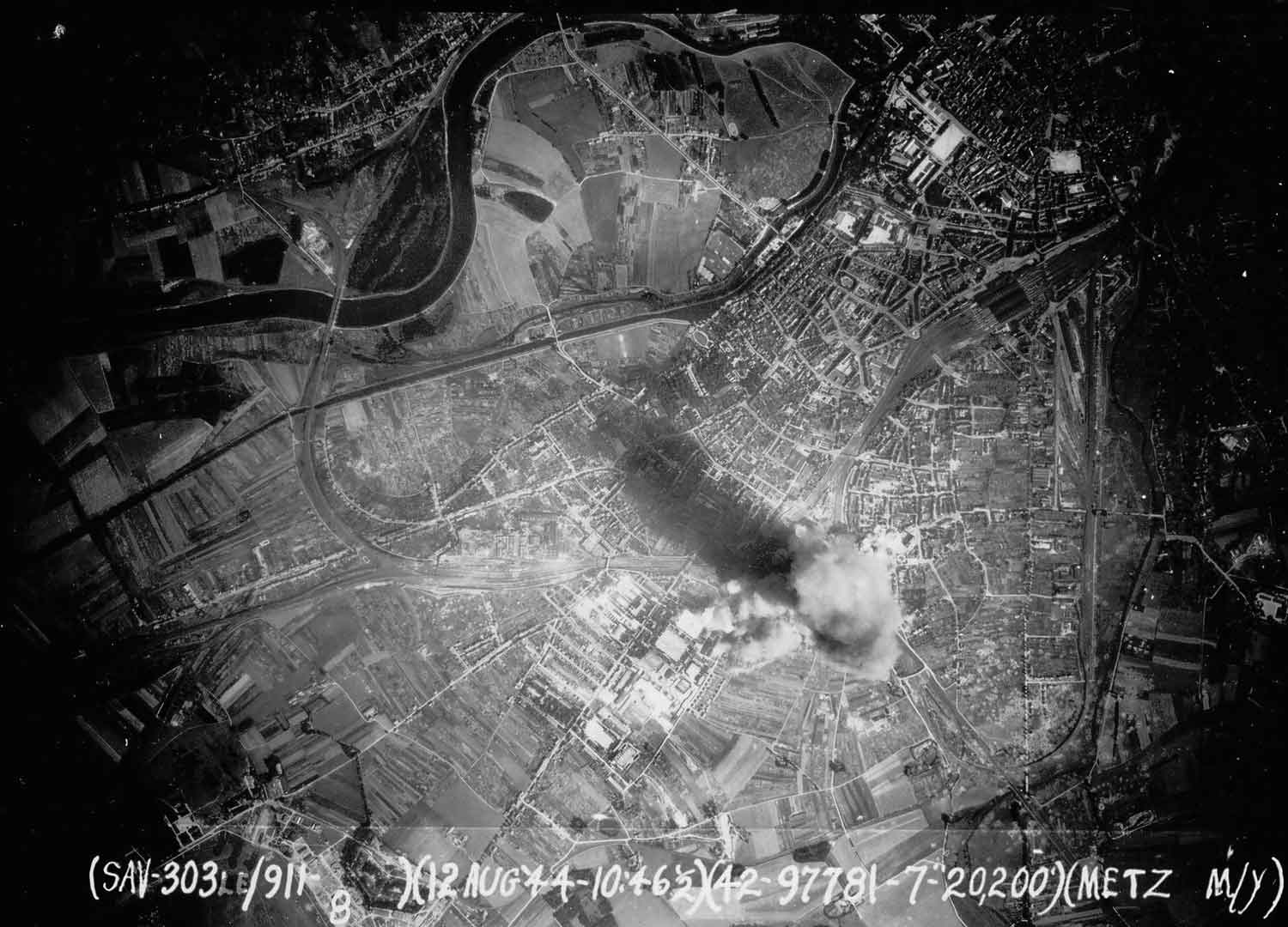
 During the surrender negotiations, the remainder of the division, now under command of III Corps, had arrived at Metz for a period of rest, recreation and training. For the first time in several months, the men were living under approximate garrison conditions. Passes were given daily to visit places of interest in the city. The men had showers, ate well, saw movies regularly. A training program was instituted to iron out the errors most commonly noted during the Lorraine Campaign. A battalion was organized under the supervision of Brig Gen Hartness with a cadre of veteran officers and enlisted personnel to train the 2585 replacements that were coming into the division. The schedule, an intensive one, included practice in basic subjects, small arms, bazooka, and mortar fire, scouting and patrolling, combat in cities, personal and field sanitation with emphasis on the avoidance of trench foot. The program was interrupted by an unexpected turn of events. Many of the replacements were destined to perform their duty in combat before they had a full opportunity to take advantage of the training.
On Sunday, December 17, the 26-ID, assembled for the first time in many weeks, gathered to hold religious exercises in the historic churches of Metz. Mass was celebrated in the world-famous Gothic Cathedral and all the regiments and other units held memorial services for the men who had given their lives in the drive from the Moncourt Woods to the German Border. On this day the CG of the Division, the ADC, and the Chief of Staff were guests at a luncheon given in the Division’s honor by the Mayor of Metz. The Mayor, speaking on behalf of the citizens of Metz, expressed his extreme gratitude for the Yankee Division’s part in the liberation of the city. The prospect of a Division rest period in the city of Metz was anticipated with some pleasure by the men who had just finished 67 days on cold, muddy battlefields, but on the morning of December 18, however, began a series of events, which shocked the entire world, and shortly, terminated the rest period at Metz.

