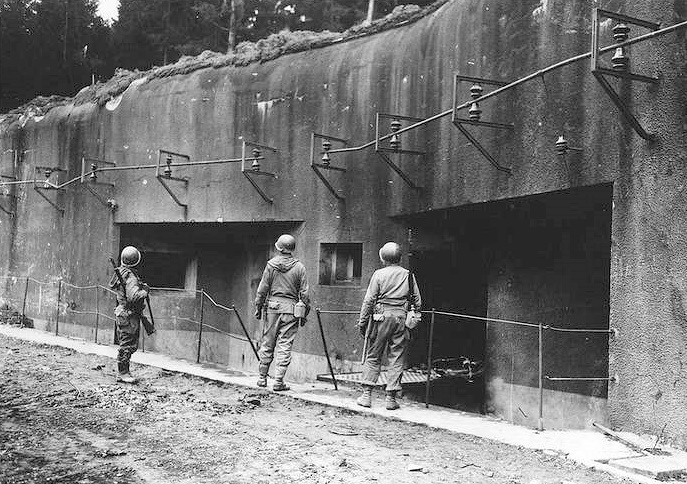
Thus while holding a defensive sector under fire, the 26-ID launched its first attack with the limited objective of strengthening the front line. Enemy positions in the Moncourt Woods, a hill to the northwest and the town of Bezange la Petite, were to be attacked and seized by the 104-IR. Opposing the 26-ID were troops tough enough to give any green division an acid test – the 11.Panzer-Division. Although this Division had been hammered all the way across France and now numbered 4000 men, it still fought with spirit. In a short space of time, it was rejuvenated by some twelve thousand reserve troops and thirty big guns and tanks.
In preparation for the drive-through Moncourt and Bezange, the doughboys of the 104-IR were given an opportunity to observe air support in action. On October 21, American planes flew over German positions in Moncourt and over the Woods. The men saw the planes dive to the attack, bombing, and strafing.
On October 22, the men of Able, Baker and Fox Cos (104-IR) attacked and crossed the line of departure. The terrain designated as the objective had been occupied by the Germans long enough for it be strongly fortified, and stiff opposition was encountered from fourteen pillboxes hidden in the woods, and along the edge of the town. Mines and booby traps had been placed profusely. The Germans had dug in shelters, some of which were twelve feet deep. Bezange la Petite was seized and the 104-IR held the high ground before it. The Germans withdrew to the high terrain behind it. Three weeks later, when a general attack was launched by the division, the Moncourt Woods was cleared completely, Moncourt and Bezange la Petite had been taken by the 328-IR. On November 1, 1944, the Allied armies still continued to maintain defensive positions with limited attacks along the front. Early in November, however, regrouping and plans pointed to a continuation of the advance toward Germany and the Siegfried Line.
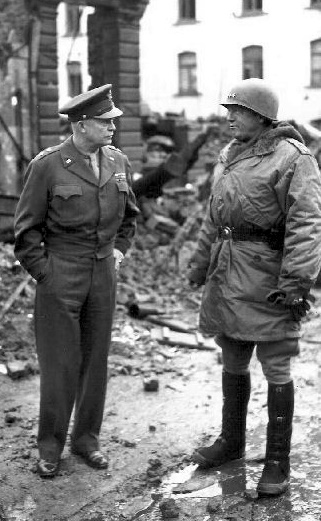 (left) Gen Eisenhower, (right) George Smith Patton, a general of the US Army who commanded the US Seventh Army in the Mediterranean Theater, and the US Third Army in France, Luxembourg, Belgium and Germany after the Allied invasion in Normandy on June 6, 1944, issuing instructions to his commanders, spoke to the officers of the 26th Infantry Division, in an open field in the vicinity of Hoeville (France) on November 3, 1944.
 The Army Commander spoke of the coming offensive and ordered all units to be in a state of readiness to strike fiercely at the German Positions, penetrate the German Lines, and continue the attack. The Division made final reparations. The 761st Tank Bn, the 691st Tank Destroyer Bn, and the 602nd Tank Destroyer Bn were in positions to advance with the infantry elements. Division Artillery, and supporting Corps Artillery units were ready to lay a preparation on the German Positions.

 The 4th Armored Division was poised to exploit with a rapid advance, any breakthrough by the infantry. D-day in the US Third Army offensive was November 8. On this day, doughboys of the Yankee Division participated in their first large scale attack. For more than a week, there had been constant rainfall and many of the German Positions were flooded. American aircraft had raked a gap in the Dieuze Dam, releasing thousands of gallons of water into the Seille River to further inundate the enemy defenses. These flooded areas, plus the heavily mined Bride Forest and Koecking Forest, led the enemy to anticipate an American advance toward Dieuze, an important communications center.

 At 0500 on November 8, the 26-ID artillery and the XII Corps artillery began the one hour barrage that, subsequent reports showed, destroyed all wire communication between enemy command posts and forward elements. At 0600, the infantry began the advance, not to the east toward Dieuze, but northeast toward the towns of Moyenvic and Vic-sur-Seille. The 104-IR was on the left, the 101-IR in the center and the 328-IR on the right. The 26th Cavalry Recon Squadron screened and maintained contact on the left flank of the Division and the 2nd Cavalry Group performed the same mission on the south.
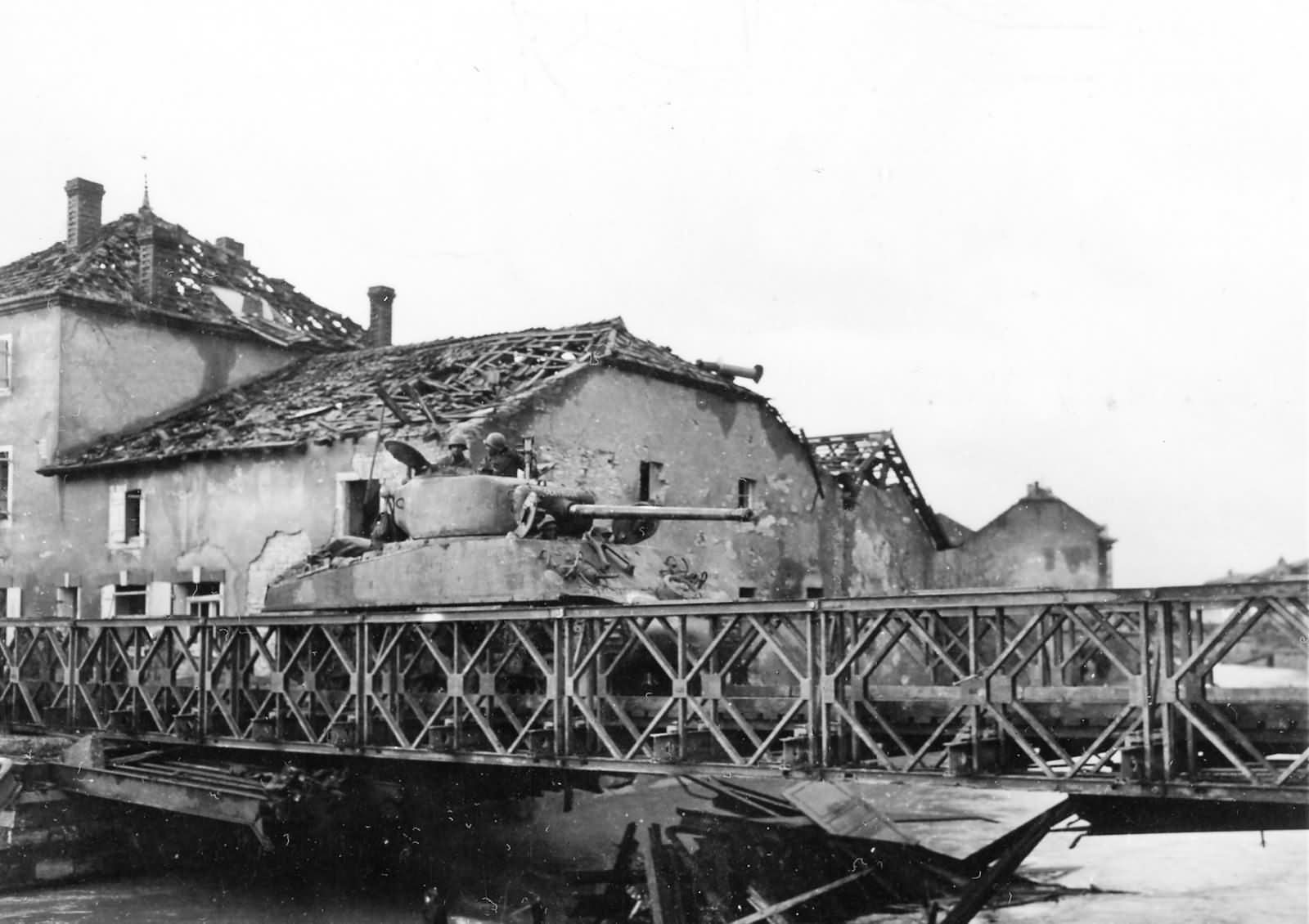
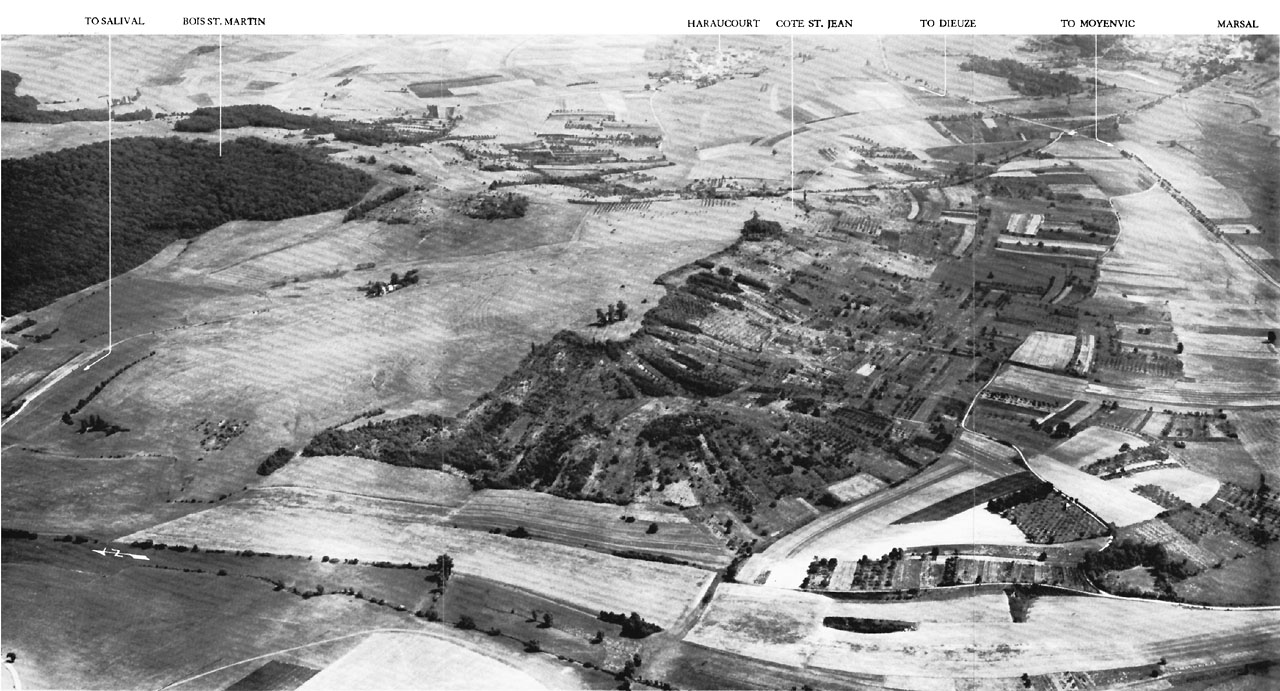 On the first day, the 104-IR and the 101-IR moved across the fields and up the high ground overlooking Château Salins. Both Vic-sur-Seille and Moyenvic were taken in the first hour and a quarter. The bridge at Moyenvic was captured intact. On the right, the 328-IR moved into Bezange-la-Petite, then drew back at night to cross the bridge, turning its sector over to the 2nd Cavalry Group. After taking Château Salins on November 10, the 104-IR veered and drove east toward Château-Voué and Rodalbe, north of the Bride Forest and the Koecking Forest. Blacking the way on the main road was the town of Morville-sur-Seille, strongly held by the Germans.
On November 9, a task force (Task Force A) consisting of infantry, tank destroyers, tanks, and engineers, driving northeast from Moyenvic cleared Morville-sur-Seille after a sharp clash. On November 10, the high ground behind Hampont was seized further northeast. With the right screened for the 104-IR, the Regiment pushed eastward, taking in its stride two violent counter-attacks on November 11, at Obreck and Château-Voué about three miles east of Hampont. The Regiment cleared the Houbange Woods, Obreck and the ground east of Hampont and thrust deep into the
German Lines north of the Bride Forest and the Koecking Forest.
On November 13, Item, King and Love Cos (3/104) out posted Rodalbe just two and a half miles west of the Division’s objective at Bénestroff, a town on one of the main railroads to Metz. Here a numerically superior German force counter-attacked savagely on the night of November 13. After fighting violently for some hours, the 3/104 withdrew and reorganized its position slightly to the west. The 104 then waited for the other units of the Division to come up and cover its flank. To the 328-IR fell the task of mopping up the Bride and the Koecking Forests, a bristling wedge in the path of the Division’s advance. On November 14, the 2/328 and the 3/328 led off in a dawn attack through the woods. At first, they moved quickly, but as they approached the Bérange Farm, they were held up by a stubborn enemy battling from pillbox emplacements employing a heavy concentration of artillery. For four days the 328-IR blasted the pillboxes, cleared mines, struggled up against the machine guns. As the battle neared its climax, the 761-TB, attached to the Division, entered the fight.
By November 15, the Regiment had reached its objective at Wuisse. Meanwhile, the 101-IR after seizing Moyenvic on the first day of the offensive, fought stubbornly to clear the ridges to the east. The fighting for Hill 310, in particular, was so violent that the men who took part in it have named it Purple Heart Hill.
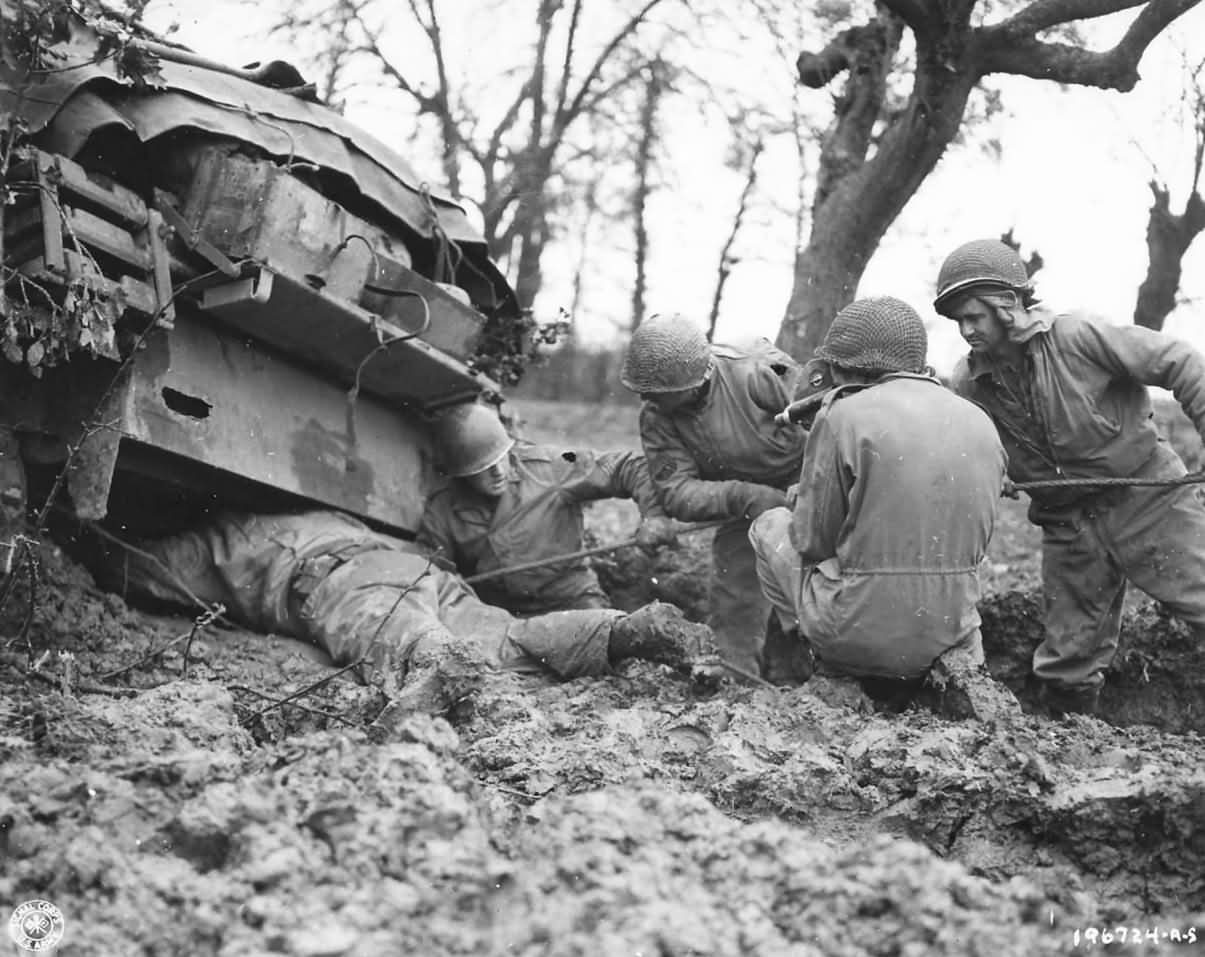
Nowhere along the front was there more bitter fighting than that faced by the 1/101 as it advanced toward St Médard and by the 2/101 as it advanced toward and fought thru to Haraucourt-sur-Seille, two towns south of the Bride and the Koecking Forests. On November 15, after an intensive shelling, the Regiment took Marsal and Haraucourt-sur-Seille and assembled in the Bride and the Koecking Forests to establish a defense along the Dieuze Road. In driving for the towns immediately east of the Bride and the Koecking Forests to cut off railroad arteries that fed Metz, the division ran up against a strong defensive position. The 3/101-IR in an attempt to encircle a muddy little town called Guébling ran into enemy strong fronts along a railroad embankment.
The Germans, to get grazing fire had removed the ties and dug in their machine guns. Taking advantage of the streams winding thru the terrain, the enemy had set up gun positions in culverts and fortified a large stone quarry at the edge of the Marimont-lès-Bénestroff Woods. It was not until these woods had been cleared by the 104-IR that the 2/101-IR could assault the high ground and capture the quarry. The 104-IR, advancing on the left flank of the Division took Bénestroff on November 10, seized Montdidier, on November 21, an enemy stronghold on high terrain from which the Germans had poured down artillery fire on everything passing in the south. The high ground around Albestroff was seized and the town captured after heavy fighting on November 24. Meanwhile, the right flank of the 26-ID and of the 3-A had been screened only by the 2 Cav Group. The crossroads town of Dieuze south of the Bride Foret and the Koecking Forest represented, at least potentially, a lateral threat.
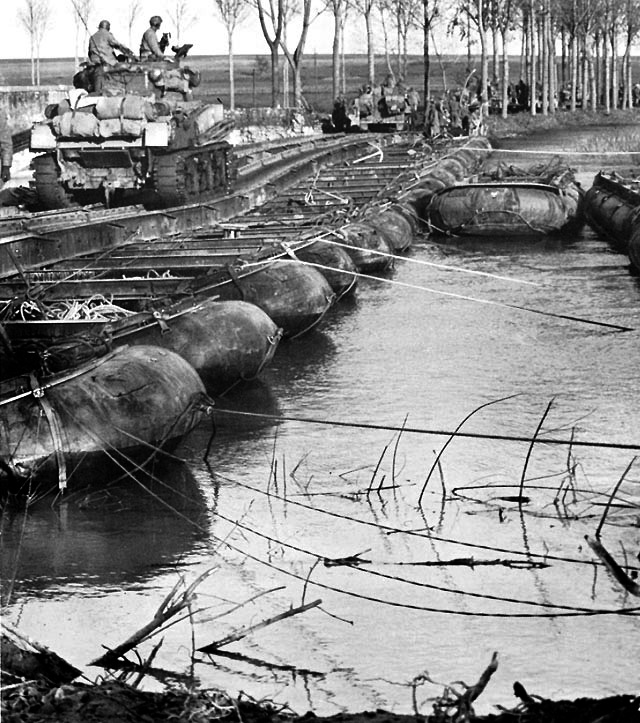
On November 20, the division in its forward momentum had already bypassed Dieuze and the position of the Germans became untenable. After a blistering two-day artillery barrage, elements of the 328-IR entered Dieuze and found that the Germans had already withdrawn. The right flank of the division, resting in a valley which the daily rains and the breached dams of the reservoir above Dieuze had turned into an impassable lake, was now secure.
 The Germans, combining their Panzer and Infantry units, Machine-Festung troops and elements of the 43.Heavy-MG-Battalion, the 117.Heavy-MG-Battalion, the 51.Heavy-MG-Battalion and the 815.Heavy-MG-Bn were using every expedient to block the division’s advance. They felled trees for roadblocks. They set extensive mines and booby traps. At Guinzeling, anti-aircraft gunners were captured who had been employed as ground artillerymen.
 Large areas were flooded. In addition to all these obstacles, the roads which had stood up so well at the beginning of the offensive now threatened to break down on a large scale. Dug to the unsafe condition of the main bridge and the flooded roads, the 328-IR was in danger of being cut off for twelve hours. Replacement of the unsafe bridge avoided this catastrophe. The 101st Engineer Combat Battalion and the 166th Engineer Combat Battalion constructed this and other bridges of various types across the floods, under the pounding of heavy artillery fire from as far as fifteen miles. The enemy, without adequate troops to attempt a decisive counter-attack, was entangling the Yankee Division forces in continuous local actions to slow down the impetus of the drive and make the division pay in men, material and equipment for its gains. Driven from commanding ground around Montdidier, the enemy fell back, fighting a series of delaying actions to the Saar Canal. The 101 and 104-IRs advanced abreast. They were assigned the mission of seizing outposts along the canal.
The Germans had organized a defense line from Vibersviller on the north to Altwiller on the south. The base of these defenses was Honskirch, a town nestling in the hills and teeming with German armor. The division cracked the defenses in a series of moves.
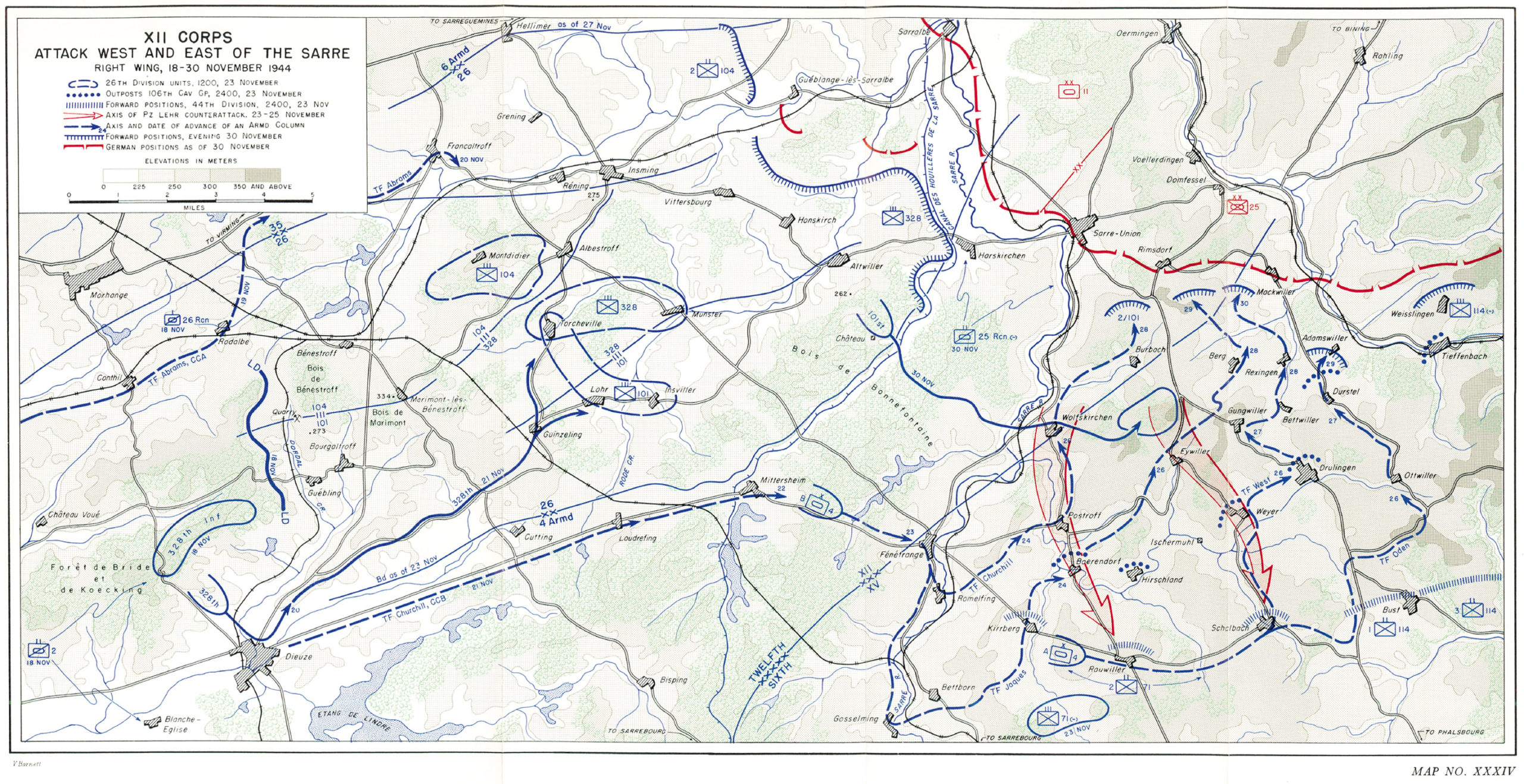
On November 25, the 101-IR struck out to the right, outflanking the defenses and seizing portions of the Bonnefontaine Forest, it established outposts along the Canal from Château Bonnefontaine, south to Mittersheim; it captured the town of Vibersviller which lay directly south of Honskirch. The 328-IR driving to the north, captured Vittersbourg, the northern gateway to Honskirch. The 101-IR occupied Altwiller, supply base for Honskirch and lying directly to the southeast. By this time the Germans finding their position at Honskirch untenable withdrew the bulk of their forces, and the 101-IR with George Co spearheading, entered the town, fighting action with rear guards only. With the Honskirch-Altwiller line overrun, the Germans, on November 28, began a general evacuation of their forces east of the Canal and fell back to a line extending from Holving on the north, through Schopperten directly west of Saar Union on the bank of the Saare River. The enemy was now defending to the south and west, as the 3-A and 7-A wheeled to face him. The 26-ID continued the advance to Saar Union – a milestone on the road to the Saar Basins.
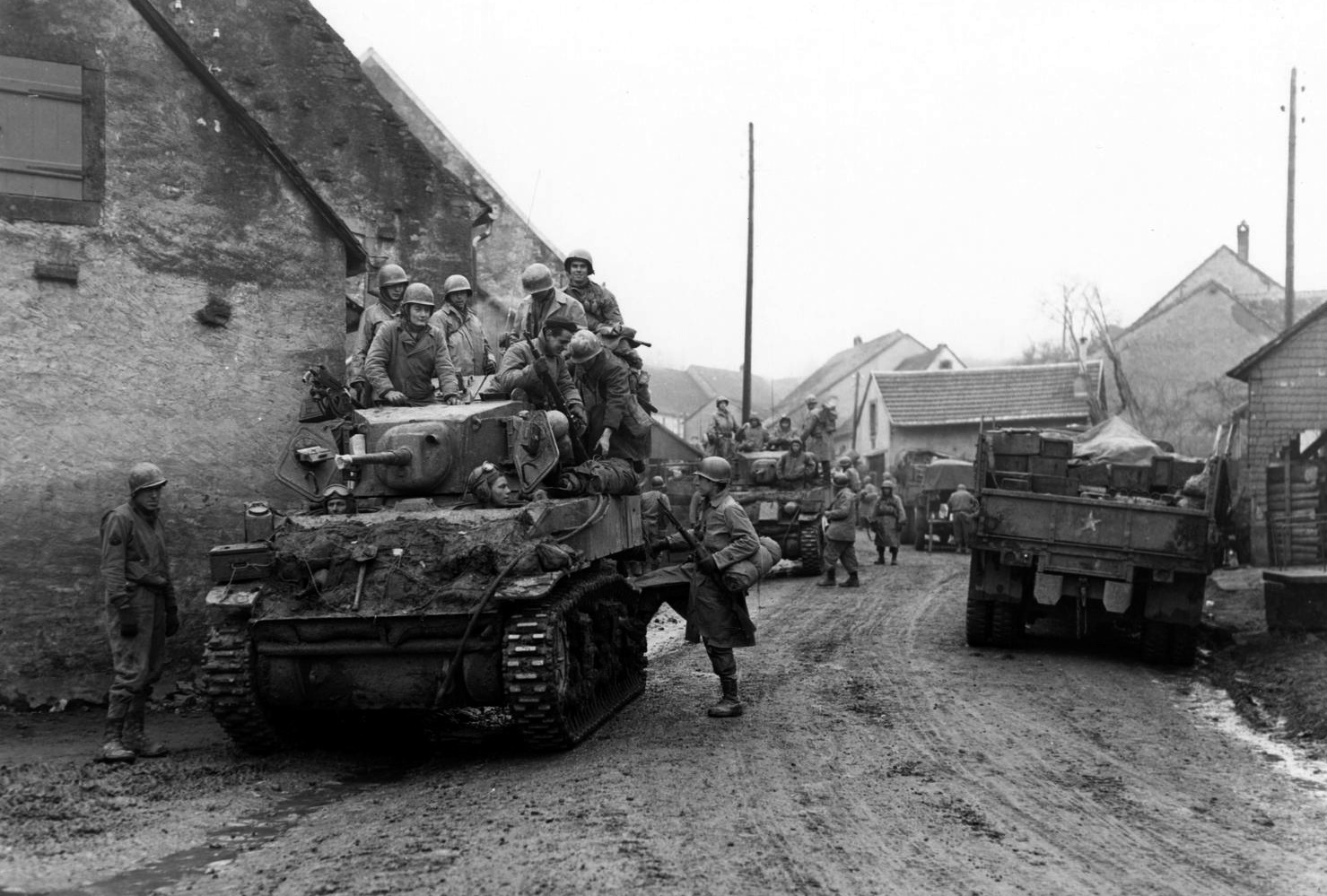
At noon, on November 29, the 101-IR occupied Bissert, a half-mile to the south of Schopperten. The Regiment then moved due east by motor, crossing the Saare River without opposition and moved under the cover of a ridge into Wolfskirchen, five miles directly south of Saar Union. From here it was prepared to advance north and launch an attack directly on Saar Union itself.
 Fierce fighting ensued to capture Saar Union. On December 1, the attack was launched from the south, spearheaded by the 1/101 and 2/101, with elements of the 4-AD. The attack began at 0800. Fifty-one minutes later, Baker and Charlie Cos had reached their first phase line. By 1014, Item Co had patrols in Saarwerden while King Co had moved toward the woods southeast of Saarwerden. The enemy was well entrenched on the high ground east of Saar Union. From here he delivered effective blows with small arms and artillery and by 1400, the attack of the 101-IR had been slowed down. That afternoon, the infantry fought stubbornly to advance, while fighter planes strafed the main supply roads leading north from Saar Union to Oermingen. By 1635, Item Co had reached the outskirts of Saar Union, but King Co, which had been moved up in support, was held up by the heavy fire in the woods five hundred yards southeast of the town and withdrew to consolidate its position. When darkness set in, King Co was reorganized and consolidated with Love Co into a single company. Plans were formed for the resumption of the attack on the following day.

 Able Co of the 101-ECB, meanwhile, constructed a bridge in Saarwerden, swept adjacent roads of mines, and neutralized various enemy booby traps. Potato masher grenades with trip wires were found as well as German artillery shells with firing devices attached, which were buried in the roadbeds. In the attack, the 101-IR had attached to it Able Co of the 691-TDB, Able Co of the 114-MB (Medic), the 101-FAB and was supported by Able Co of the 101-ECB. On December 2, at 0900, the attack was resumed. The 104-IR, which during the previous day had crossed the Saar Canal from the west, along the routes used by the 101-IR previously, had moved up to the left flank of the 101-IR and now both regiments struck out abreast.
 Fifteen minutes after the jumpoff, Item Co of the 101-IR was in Saar Union by 1035. Item Co and Love Co were engaged in heavy street fighting because the Germans had based their defense north and east of the town and they were launching constant attacks of infantry supported by tanks, usually in groups of six. The 1/101-IR, trying to advance on schedule through the woods east of Saar Union was meeting ferocious resistance. By noon, the 761-TB had moved elements to support the 1/101-IR in the struggle. Charlie Co had been held up by heavy fire in the woods. Able and Baker Cos by-passed the position on the left and the 51-AIB (4-AD) by-passed it on the right. The Germans were surrounded. Easy Co, therefore, received orders to move and attack the woods from the east along with a task force from Combat Command B 4-AD. As a result, by 1630, Charlie Co was able to resume its advance through the woods. When darkness set in the company consolidated its position.
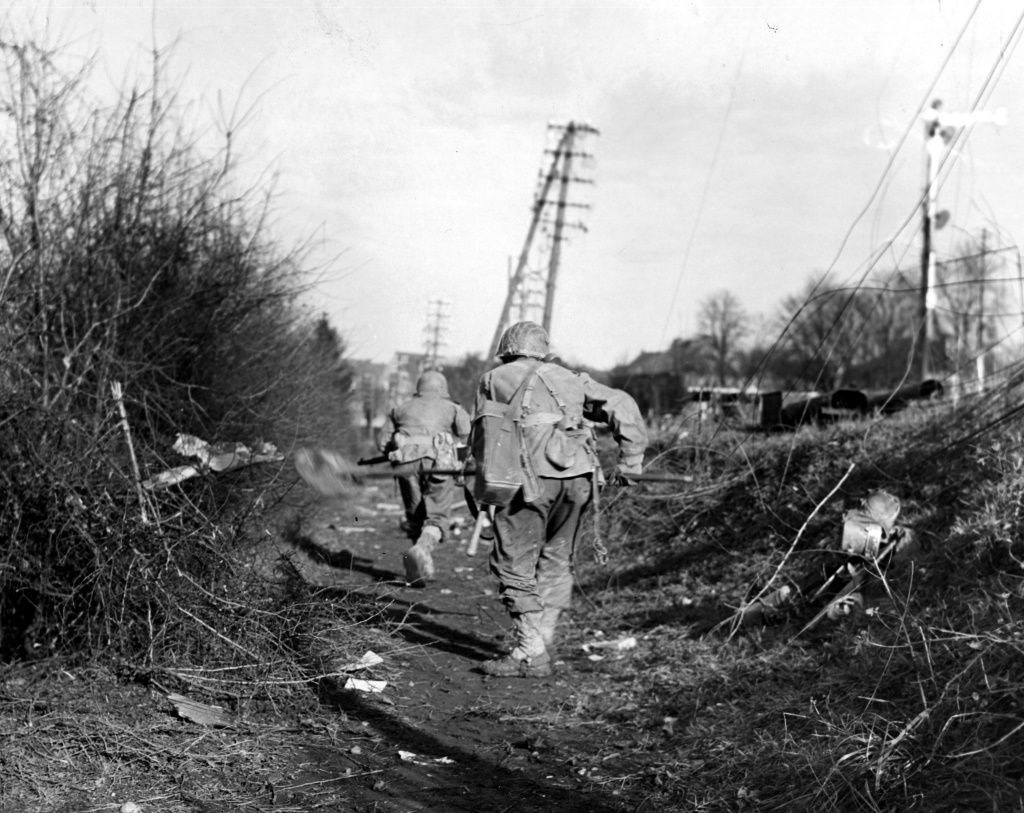
 During the afternoon, the 3/104 joined the 3/101 fighting in Saar Union and the town was cleared after very bitter fighting. Artillery hammered the town and then the infantry moved in fighting for almost every doorway and cellar. As darkness fell on this second day of fighting, the division had gained all of its objectives. The 1/101 was astride the high ground on the Saar Union – Domfessel Road, threatening enemy positions to the east of the town. The 1/104 and the 2/104 had secured Saarwerden and Rimsdorf, respectively, to the south.
On December 3, the situation in Saar Union seemed well in hand. At 0900, Easy Co 101-IR resumed its advance through the woods east of Saar Union and cleared it of Germans. An hour later, however, one hundred Germans, supported by six tanks, were observed moving from the north toward the town. They swung around and entered the town at the eastern edge. At 1133, the tanks began firing rapidly on the 3/101’s area. At the same time, from a ridge north of the town, other enemy forces set up a smokescreen. It became apparent that a major counter-attack was developing from the north and northeast. Germans moved into the town, and fierce hand-to-hand fighting ensued, plus tanks, artillery, and sniper fire.
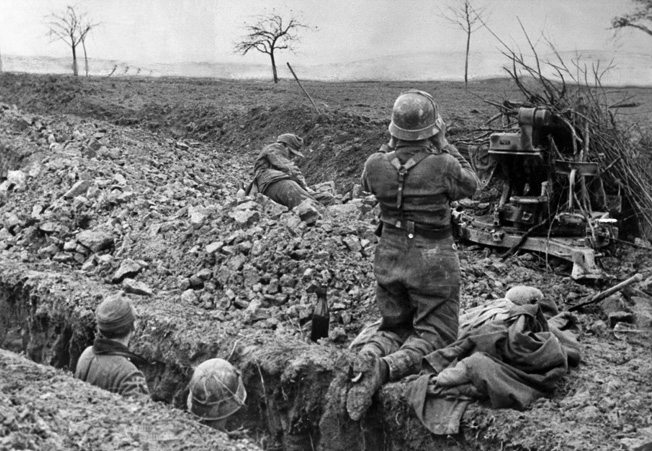 At 1310, tanks in support to the infantry were instructed to move against the enemy armor on the eastern edge of the town. Reports were received that the division artillery fire was very effective in reducing the attack.
At 1600, one tank company from the 37-TB (4-AD), was sent into Saar Union to assist in cleaning up whatever enemy armor was still there. After two hours of violent fighting, the brunt of the counter-attack was broken and thereafter enemy resistance was sporadic.
By 2215 in the evening all fighting had ceased. After sixty-two hours of battle, Saar Union was in friendly hands.
 The fight for Saar Union was costly. During the enemy counter-attack, the Command Post of Item Co had been captured, five AT and four prime movers were destroyed. With Saar Union cleared, and the 3/104-IR remaining behind to mop up, the attack to the north was continued. The 101-IR on the right flank sent the 1st Bn north through the woods and then northwest to block enemy forces on the road, north, leading out of Saar Union. Meanwhile, the 328-IR, which, during the fight for Saar Union, had remained in reserve west of the town, now entered the drive on the left flank of the Division, advancing north to seize Schopperten and