The 26th Infantry Division (Yankee Division), has been a famous division for almost two centuries of American burgeoning and growth. The lineage of the Yankee Division extends back to the beginning of the American citizen-soldier – the fighting colonial troops of the early Plymouth and Massachusetts colonies.

 The 102nd Field Artillery Battalion traces its origin to one of the oldest military organizations in America, the Gloucester Militia. Ancestors of the 101st Engineer Combat Battalion unfurled the first American flag on Prospect Hill during the Revolutionary War. Battery A of the 101st Field Artillery Battalion was one of the original artillery units in the Army and won fame as Battery Jones during the Civil War in fighting through the Wilderness, Petersburg, Cold Harbor and Richmond.
 The oldest of the Yankee Division’s three infantry regiments, the 104th, stems back to the Springfield Train Band and Hampshire County Regiments whose troops served through the French and Indian Wars. Their descendants took part in the siege of Boston in 1776 as Minute Men. Later, generations of these New Englanders took part in the War of 1812, and every great American conflict since.
The 101st Infantry Regiment was originally designated the Massachusetts 9th Infantry and was first organized from a nucleus of Boston fighting Irishmen in 1861, during the Civil War. They played their pipes at Manassas, sounded the charge at Antietam and Chancellorsville and sang Garry Owen in Glory at Mechanicsville as, heavily outnumbered, they held off Stonewall Jackson’s men. During the Spanish American War, they again took to the field at Santiago. Such was the background of part of the troops that made up the New England National Guards on the eve of the First World War. Most of these units were on the Mexican Border, during the trouble with Mexico in 1916. On August 13, 1917, after the United States declared war on Germany, their ranks were augmented and together they formed the 26th Infantry Division.
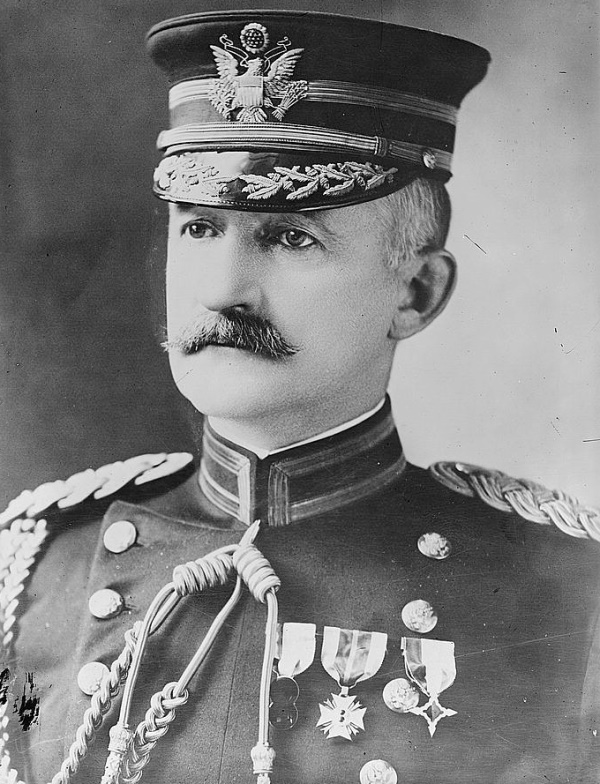 Maj Gen Clarence Ransom Edwards (Jan 1, 1859 – Feb 14, 1931) was a senior United States Army officer, known as the first Chief of the Bureau of Insular Affairs, and commander of the 26th Division in World War I. Upon the outbreak of WW-1, Edwards was in charge of the Department of the Northeast, comprising all the New England states. In Aug 1917, four months after the American entry into the war, he was promoted to the rank of major general in the National Army and given the task of organizing the 26th Division. The division, an Army National Guard formation, arrived on the Western Front in September 1917, the first complete American division to do so. The division also became the first complete American division and became the first to go into combat for 46 consecutive days at the Chemin-des-Dames (France) in February 1918.
Going back to his days at West Point, Edwards had earned a reputation for being sharp-tongued and contentious. Gen John J. ‘Blackjack’ Pershing, Commander-in-Chief of the American Expeditionary Force (AEF) on the Western Front, particularly despised him. Edwards made another enemy in Maj Gen Robert Lee Bullard during the 26th Division’s relief of the 1st Division near Toul (France) in April 1918. Edwards found fault with everything he saw, and accused the 1st Division of leaving behind classified documents. Bullard was enraged, but Pershing always favored the 1st Division and reassured him, and nothing came of the incident. In July 1918, during the Second Battle of the Marne (France), the I Corps commander, Lt Gen Hunter Liggett found that, although the 26th Division did not lack for heroism and fought valiantly, he could not depend on its commanders, especially Edwards, to subjugate his unit to Regular Army divisions.
Edwards’ final demise came in October 1918, when he reported an incident to Liggett involving information two of his soldiers had obtained from German soldiers with whom they had been fraternizing. The Germans had expressed their belief that the war would be over soon, and that they were reluctant to continue fighting. While Edwards thought he was reporting the enemy’s poor morale to Liggett, he instead gave Liggett an excuse to get rid of Edwards for his zeal in supporting the National Guard. Liggett reported the incident to the AEF commander, Gen Pershing, who took the opportunity to act on his personal vendetta and relieve Edwards of his command.
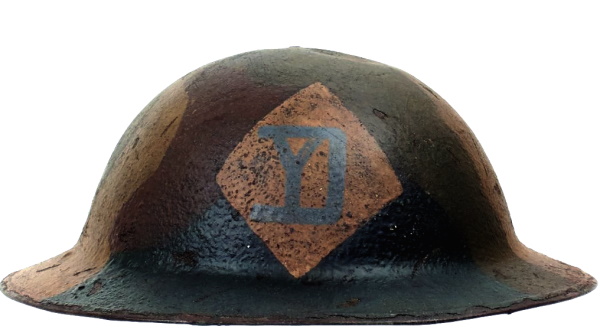 At a press conference held shortly after Gen Clarence Edwards arrived in Boston to assume command of the new division, a reporter suggested that the division be officially nicknamed the Yankee Division since so many of its men were New Englanders. And so, despite the fact, that men from every state in the Union soon joined, the name has stuck. Later, during the Meuse-Argonne Campaign (September 1918), the official division insignia was adopted, the blue YD on a yellow ochre diamond-shaped field. These have been proud symbols ever since.
 The 26th Division was the first complete American Division to be committed in France. Taking part in six major campaigns: Ile de France, Lorraine, Aisne-Marne, St Mihiel, Meuse-Argonne, Champagne-Marne, the Division was cited thirteen times by France, and three times by the American Army Headquarters. This Division spearheaded at Chateau-Thierry and St Mihiel and fought the longest of all American Infantry Divisions, 210 days. The 104th Infantry became the first military organization in the American history to receive a decoration from a foreign government when it was awarded the Croix de Guerre with Palms by the French on April 28, 1918, for bravery in the Battle of Apremont.
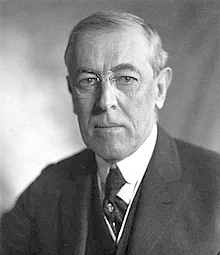
After the Armistice when President Wilson visited AEF Headquarters at Chaumont (France), troops of the Yankee Division were chosen for his Guard of Honor, in recognition of their gallantry and outstanding combat record. Later the President was the guest of the Division for dinner on Christmas Day. After returning to the States, the Division reverted to National Guard status. On January 16, 1941, the Yankee Division was once more called into the service of the country, on the occasion of the Second World War.
During training, inductees were received at the ratio of one for every member of the National Guard and at various times over a period of more than three years the Division was stationed at eight different camps: Camp Edwards (Massachusetts); Fort Dupont (Delaware); Camp AP Hill (Virginia); Fort Meade (Maryland); Fort Jackson (South Carolina); Camp Gordon (Georgia) and Camp Campbell (Kentucky). It took part in three maneuvers: The VI Corps maneuvers during the summer of 1941 in the Fort Devens (Massachusetts) area, the First Army Carolina maneuvers in the fall of 1941 and the Second Army Tennessee maneuvers in the winter of 1943.

 Beginning in February 1942, while the nation was transforming its citizens into large armies of soldiers, the Yankee Division sent out combat teams to patrol the Atlantic Coast from Maine to Florida against the threat of invasion. In addition, thousands of YD trained officers and men, transferred to other units, were sent to the fighting fronts. When the Division was trimmed to the size of a triangular Division, the 181st Infantry Regiment was released to the Americal Division. These ex-YD’s were among the first army troops to relieve the Marines at Guadalcanal.
 A battalion of the 101st Combat Engineers landed on New Guinea, fought over the Owen Stanley Mountains and later received a mass citation from Gen Douglas MacArthur. The 101st Medical Detachment served in New Caledonia. Another detachment, popularly known as the Little YD was among the first Rangers that stormed the beaches of Normandy (France).
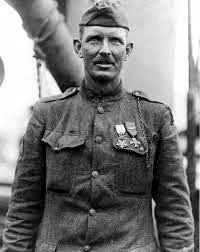
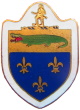 When the division was streamlined to its present strength of three regiments, a new regiment joined the 101st and 104th Regiments. In March 1943, the 328th Infantry Regiment was activated at Fort Jackson (South Carolina). Although the youngest of the regiments, the 328th already had a tradition of which to be proud. Originally a part of the 82nd Division (AEF), it had fought in the fateful Argonne Forest during World War I. Sgt Alvin C. York, a doughboy of the 328th Infantry of that day, added a colorful page to the history of the American Army by his almost legendary exploits.

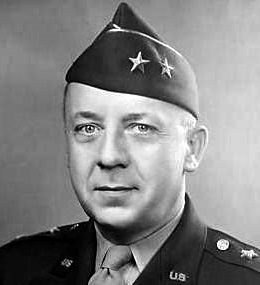 During the period of peace, before joining the Yankee Division, the 328th Infantry served as the Florida Guard Reserve. In August 1943, Gen Willard S. Paul assumed command of the Yankee Division from Gen Roger W. Eckfeldt at Camp Gordon and, within a year, the Division was on its way overseas.
 The Yankee Division left Camp Shanks on August 26, landed at Cherbourg (France) and Utah Beach on September 7. Arriving with the first convoy to land in France directly from the USA the Division moved to the Valognes Staging Area and established a HQs at Bourg de Lestre. The various units set up in the nearby towns and fields and initiated intensive training. During these first weeks in France, the troops maintained their hard fighting edge with daily hikes and bayonet practice and further perfected their combat skills. Classes in mine removal, first aid and radio were conducted. Six days after landing, the Division was given its first combat missions.
Weeks before, American aircraft, tanks, artillery, and infantry had joined to deal a crushing blow to the Wehrmacht, Operation Cobra, as it was called, punched a gaping hole in the German lines between St Lô and Periers. Armored columns then plunged deep into Western France past Granville, Avranches, St Malo, Rennes, down to the Loire River. While the main force slashed to the east through Laval, Le Mans, Chartres, Paris, on to the historic battlegrounds of the last war, another armored spearhead spurted westward down the full length of the Brest Peninsula. Now the infantry had taken over from the armor and a climactic battle was taking place to wipe out the German garrison in the city of Brest and its surrounding fortifications.
 On September 13, the 26th Recon Troop was ordered by the III Corps HQs to establish patrols along the coast from Carteret to Fierville on the lookout for any possible nuisance raids from by-passed German forces on the Isle of Jersey in the English Channel. No action with the enemy occurred. On September 29, the Troop was relieved by the 94th Recon Troop and rejoined the Division. On September 20, the 101st Engineer Combat Battalion was ordered to remove extensive minefields from Carteret. The engineers remained at Carteret until the middle of October and cleared approximately seven thousand mines.
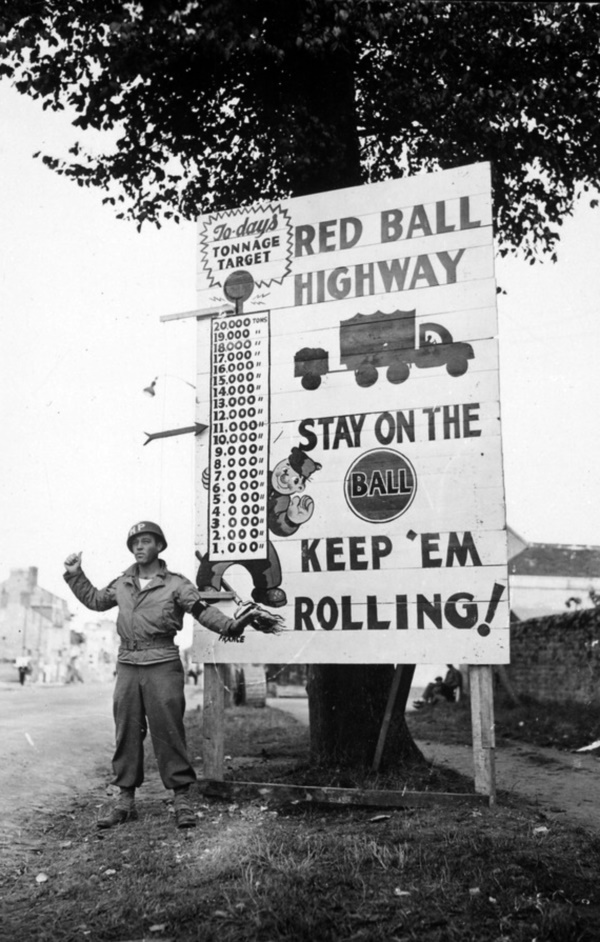
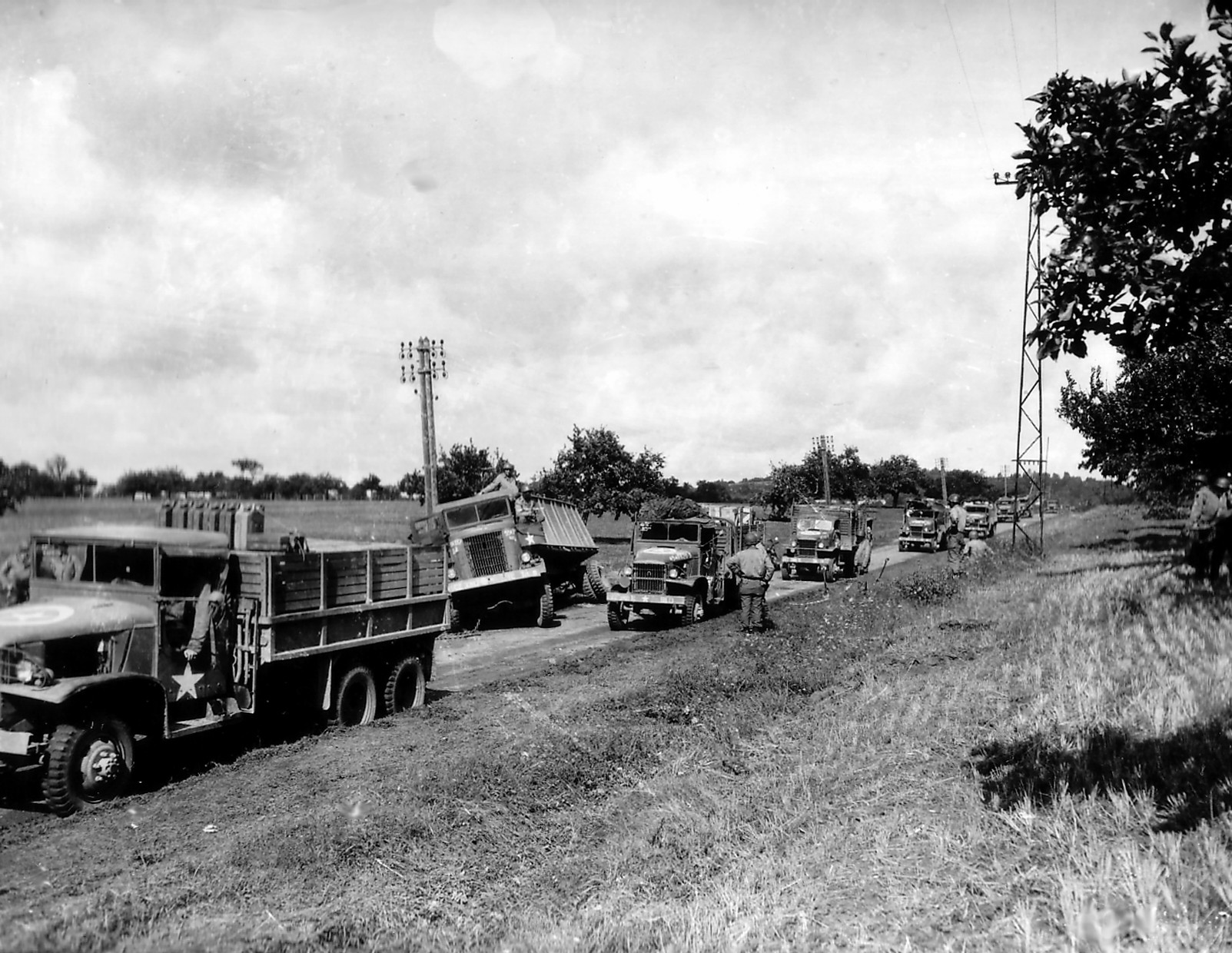
As the American armies advanced farther and farther across France toward the German Border, supply became one of the most difficult problems the high command had to face. To meet this developing crisis, a series of Red Ball express highways were established, reaching from the beaches of Normandy and the quays of Cherbourg to the fighting fronts hundreds of miles away. Over these main roads truck convoys were roaring day and night bringing up vital rations, ammunition, and fuel. During September, 3000 men of the 26-ID were taken to form nineteen provisional truck companies for the Red Ball run. When the Division was alerted for combat they rejoined to resume their former duties. For the role of the strategic reserve, the Division was awarded its first battle star of this war – Campaign of Northern France.
The Lorraine Campaign

 During the first week in October, the 26-ID was ordered from Normandy to the Third Army front in Lorraine (France). The division went into the line on the right flank of US XII Corps, Third Army, and Twelfth Army Group, relieving the 4th Armored Division, which had spearheaded Gen Patton’s drive across France. There in the hills and forests of Lorraine between Nancy and the German Border, the division took up the fight, just east of the Toulon sector where it had fought in 1918. The front extended about 13 miles south from the high ground near the town of Salonnes, south of Vic-sur-Seille, east to a point south of Moyenvic, through Moncourt and the Moncourt Woods to the Marne-Rhine Canal. The relief of the 4-AD was begun on the night of October 7 when the 2/104-IR and 3/104-IR moved up. The 101-IR followed.
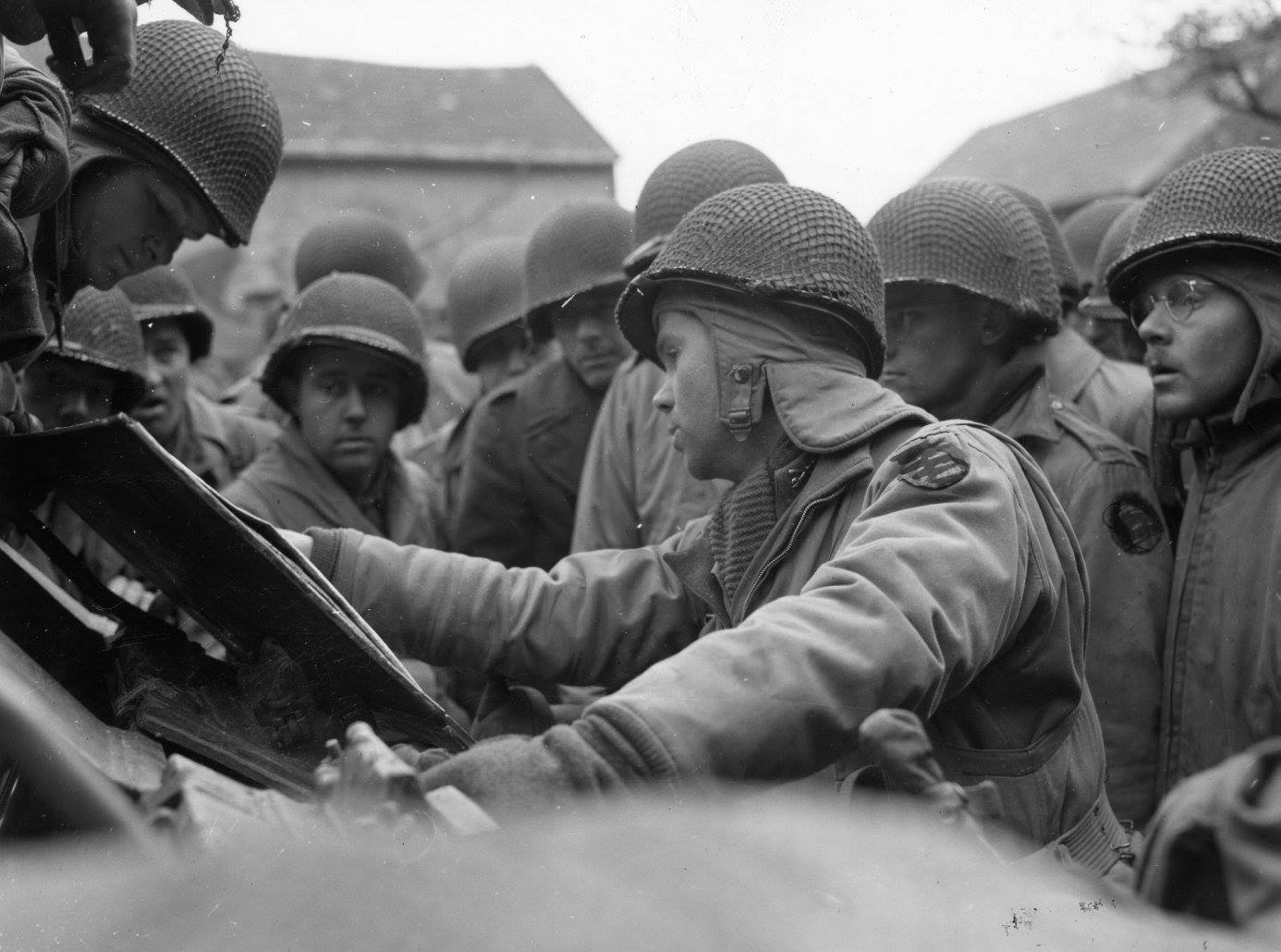
 By October 8, five battalions were committed. On October 12, the command of the sector passed to the 26-ID. Initially, the Division did not go into combat as a complete unit. The 328-IR, attached to the 80-ID, had relieved a regiment of the 80-ID at Pont-à-Mousson on October 5. It was at Pont-à-Mousson in 1918 that the 328th went to the relief of a regiment of Marines, and joined in an attack on Nancy then held by the Germans. On October 15, the 328-IR rejoined the 26-ID and moved to the Division sector in XII Corps the following day. The 1/101-IR arrived at the front a day later after completing a mission in the Communications Zone. The 101-ECB entered combat on October 22. On October 23, the 26-ID Artillery began the relief of the 4-AD Artillery. B Battery, 102-FAB fired the first shell at thirteen minutes past noon on October 23. The same day the 114-MB (Medic) joined in the action.
 During the month of October 1944, when the 26-ID underwent its baptism of fire, the western front had become stabilized. North in Holland, British, Canadian and American troops were striving to widen and make secure the 50 miles deep salient that had been sliced in toward the landing grounds of Gen Lewis Brereton’s 1st Allied Airborne Army near Nijmegen and Arnheim. Others were grinding north to Antwerp (Belgium). Farther south Aachen (Germany) had been taken after a long and bitter struggle. Here was the first major foothold on German Soil. On the right, the line ran south through the Vosges Mountains to the Swiss Border. The Third Army front extended approximately seventy-five miles from the French-Luxembourg-German Border to a region southeast of Nancy.
 The northern flank was held by the 90-ID, north of Thionville and ready to push across the Moselle River into Germany, just thirteen miles away. In the Mazieres-Les-Metz sector north of Metz stood the 95-ID. South of Metz the 5th Infantry Division was prepared to swing south of the fortified city and join with the 95th Infantry Division east of the city. The immediate objective was Louvigny. In the area of Pont-à-Mousson was the 80-ID. To the south on its right, the 35-ID and forming the right flank of the US 3-A, the 26-ID. Execution of the plan to envelop Metz, breach the Siegfried Line at its most formidable point, seize Saarbrücken (Germany) and slash deep into the vitals of Germany, could not be accomplished immediately.

 Millions of gallons of gasoline, millions of rounds of ammunition of all kinds had to be accumulated in Army dumps in the rear before the great attack could be unleashed. In the meantime, troops were holding, preparing, jockeying for position. Wherever the enemy-held dominating ground, it had to be wrested from him. Enemy air activity during this period of defensive operation was limited to a small number of sorties for strafing or reconnaissance purposes. On October 15, two ME-109’s strafed the command posts of the 101-IR and 104-IR. Both enemy planes were destroyed by the 390-AAA-AW Battalion.