

Document Source: Staff Department, the Infantry School, Fort Benning (Georgia), Advanced Infantry Officers Course, 1949-1950, Operations of Fox Company, 411th Infantry Regiment, 103rd Infantry Division, near Climbach, Alsace, France, December 14, 1944, Rhineland Campaign. Personal Experience of a Rifle Company Commander. Type of Operation described: Infantry Rifle Company, Reinforced, as the Infantry elements of a Task Force in the attack of a strongly defended town. Capt Willie W. J. Barrios, Infantry. Correction, Illustration, Doc Snafu.
Reviewed by Doc Snafu on May 22, 2026.
Introduction
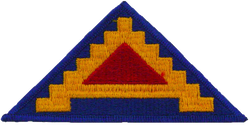
 This monograph covers the Operations of Fox Company, 411th Infantry Regiment, 103rd Infantry Division, in the attack near Climbach, (Alsace – France), December 14, 1944, during the Seventh Army drive to the Siegfried Line. To properly orient the reader, it will be necessary to discuss briefly the major events that led up to this action. In August 1944, the Seventh Army successfully made amphibious landings in Southern France and commenced its drive to the North.
During the night of September 10/11, 1944, an Armored Recon Group of the US Seventh Army operating west of Dijon (France), met a patrol from the 2nd French Armored Division of the US Third Army. This meeting at Sombernon (France) linked the Normandy front with that of Southern France. There was now a continuous front in strength from the English Channel to the Mediterranean Sea. On November 18, 1944, the US VI Corps, part of the Seventh Army, issued Field Order Number 8 outlining the direction of the drive generally eastward through the Vosges Mountains (France) to Strasbourg (France) on the Rhine River (France-Germany).
Note: The Rhine River is one of the major rivers of the Old Continent. The river begins in the Swiss Canton of Graubünden in the southeastern Swiss Alps. It forms part of the Swiss–Liechtenstein Border, then part of the Swiss–Austrian Border. From Lake Constance downstream, it forms part of the Swiss–German Border. After that, the Rhine River defines much of the Franco-German Border. It then flows in a mostly northerly direction through the German Rhineland. Finally, the Rhine turns to flow predominantly west to enter the Netherlands, eventually emptying into the North Sea.
On November 23, 1944, the Corps drive reached through the Saverne (France) in the Vosges Mountains and up to the city of Strasbourg. On November 24, 1944, Gen Dwight D. Eisenhower changed the Seventh Army direction of advance from eastward to north-eastward, with the main force astride the Low Vosges Mountains and up the Rhine River Valley. When it had cleared the enemy out of it’s zone, which was bounded by the Rhine River, the Siegfried Line, and the Sarre River, the Seventh Army, in a coordinated action with the Third Army, would break across the Siegfried Line into that part of Germany known as the Saar-Palatinate. On December 5, 1944, the VI Corps was ready to launch the offensive to the North as part of the Seventh Army.
General Situation
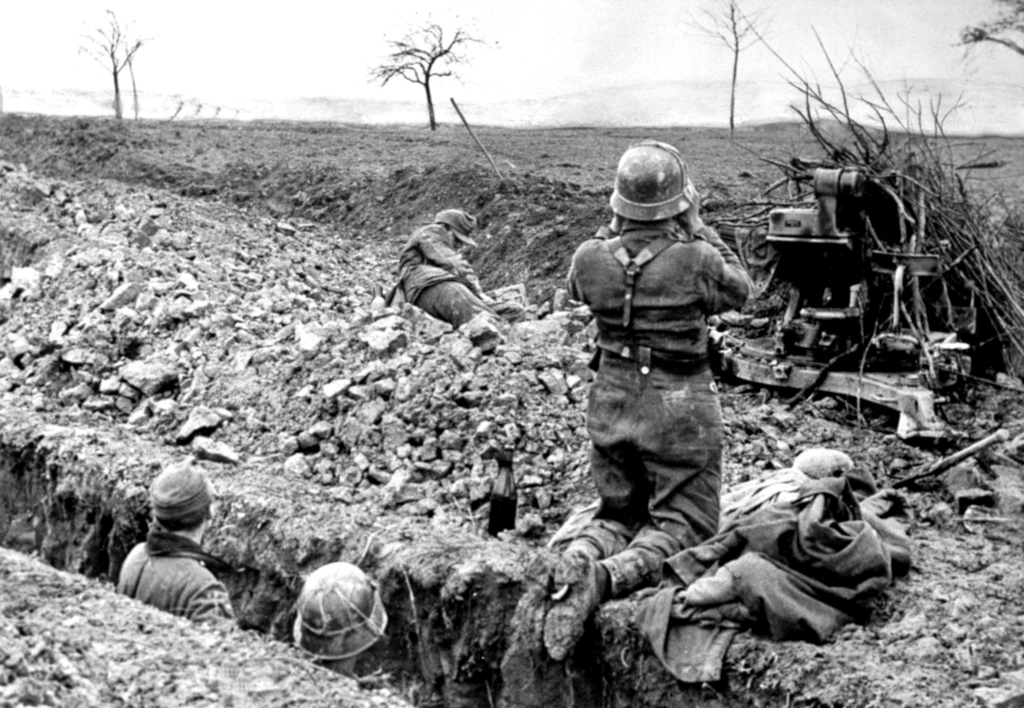
The change in the Seventh Army direction of advance, which forfeited the possibility of a short-cut into the heart of Germany, meant giving the enemy time to increase the strength of the West Wall (Siegfried Line). The Germans had on their side the advantages of weather and terrain. December in Alsace is a cloudy month with low ground fogs and drizzling rains. On only five days of the month was the Tactical Air Force able to give close support to the Seventh Army Drive. The ground was cold with frost, but not sufficiently frozen to support heavy vehicles. Both the softness of the ground and natural terrain obstacles slowed down our armor and put the burden of the advance upon the infantry.
The Germans were to utilize the natural obstacles of both the Alsace Plain and the Lower Vosges Mountains in their withdrawal to the North. To the north lies the rugged country of the Hochwald Mountains, and north of the Hochwald Mountains the Lauter River flows to the Rhine River and forms the German Border. On the Alsace Plain and through the mountains, the Germans were to defend road blocks and towns and, when forced, would withdraw behind minefields and blown bridges to the most defensible point. Seventh Army G—2 anticipated the plans of German Defense and predicted that the enemy would make a stand either at the Maginot Line or at the Siegfried Line.
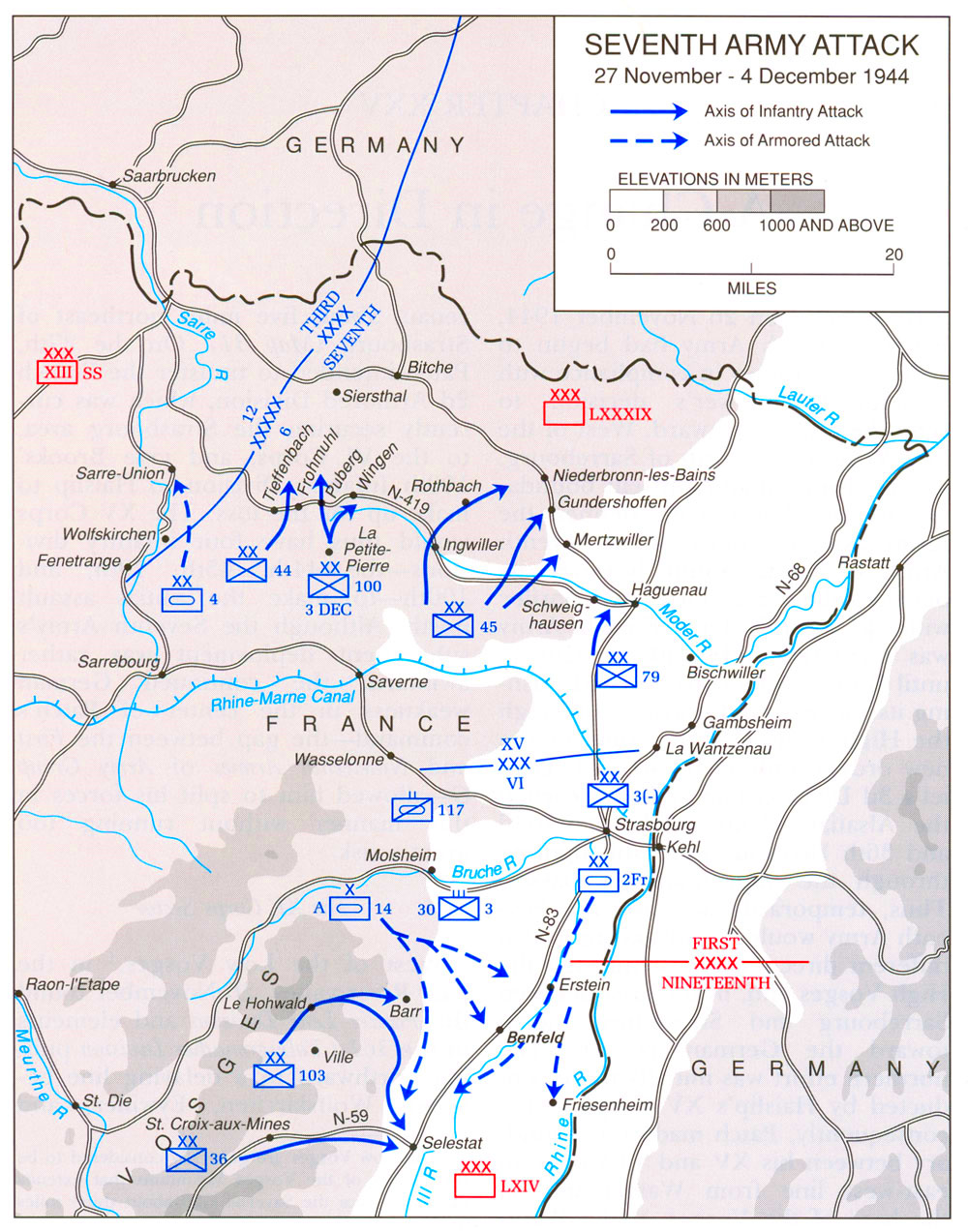
During the first few days of the month, the enemy had organized his forces above the Moder River. Defending the Alsace Plain were the 245.Infantry-Regiment and the 256.Volksgrenadier-Division, which had been added to the 361.Volksgrenadier-Division, now operating in the eastern part of the Hardt Mountains (Germany). On the western slopes of the mountains were elements of both the 130.Panzergrenadier-Division and the 25.Panzergrenadier Division. On the VI Corps front, four divisional lines of advance developed. On line were the 45th Infantry Division, the 103rd Infantry Division, the 14th Armored Division and the 79th Infantry Division. The 103rd Infantry Division, with the 45th Infantry Division on it’s left and the 14th Armored Division on it’s right was to attack north toward Wissembourg (France), and it’s target became the high ground north of Bad Bergzabern (Germany) in the Saar-Palatinate.
At 0550 on December 10, the 103rd Infantry Division attack jumped off. The 410th Infantry Regiment crossed the Zintzel River (France) over improvised footbridges, swept into the northern half of Mertjswiller (France), and assaulted enemy strong points in the houses. By the end of the day, the 410th Infantry Regiment had cleared the town. On the left of the Division zone, northwest of Mertzwiller, the leading battalion of the 411th Infantry Regiment, the 2nd Battalion, had met little opposition in its crossing of the Zintzel River.
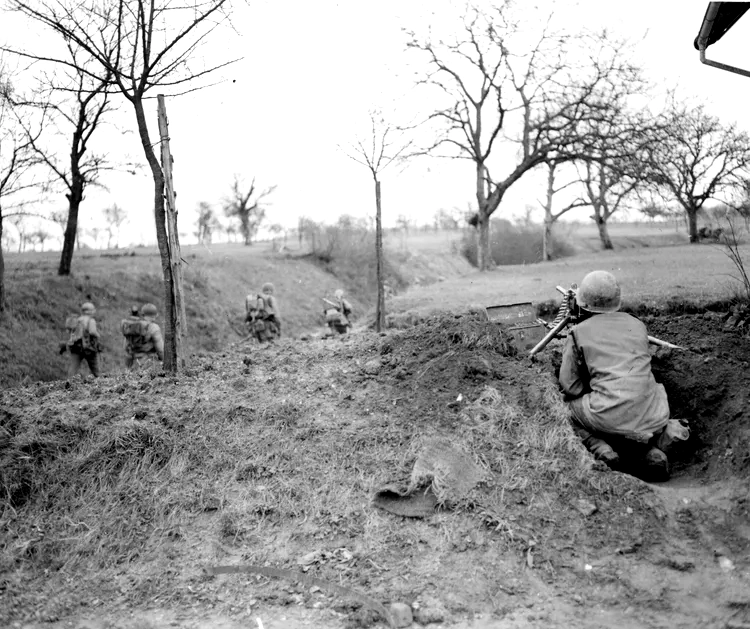
After he defended Mertzwiller, the enemy fought no strong delaying actions against the 103rd Infantry Division until he had backed up to the German Border. Plastic mines, demolitions, roadblocks defended by small groups, and rear guards in several towns along the way slowed the drive, but failed to stop the advance. As the Division approached the border, however, it met strong rear guards. On December 14, 1944, one of the stiffest battles of the entire month was fought at Climbach.
Dispositions and Plans of the 411th Infantry Regiment
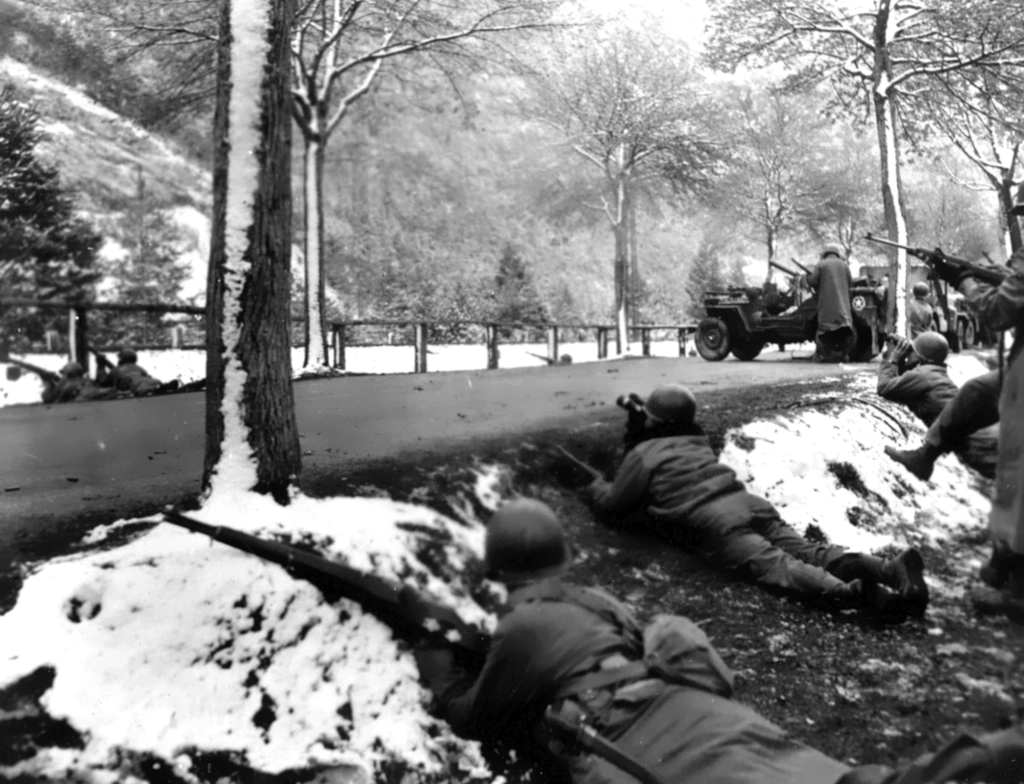
On the morning of December 14, 1944, the Regiment was ordered to continue the attack, 2nd Battalion on the left, 1st Battalion on the right. Fox Co was selected as the lead company of the 2nd Battalion, which was employed in a column of companies astride the road leading north to the Hochwald Mountain. During the day, scattered enemy resistance was met in the form of hastily felled trees across the road, defended by delaying parties of squad and platoon size. Anti-tank and anti-personnel mines were encountered in and around these roadblocks. Two enemy soldiers who were planting mines in the road were surprised and captured, after a brief firefight with supporting elements, just before dark. Coincidentally with this action, the Regiment was ordered to halt and prepare defensive positions for the night.
Several small pillboxes, a part of the Maginot Line, were within the area occupied by Fox Co. Utilizing these positions, a defense against possible enemy attack was organized. On the night of December 13/14, the 411th Infantry Regiment was disposed as follows: the 2nd Battalion on the left, approximately 2 miles north of Lampertsloch (France) on the Hochwald Mountain, the 1st Battalion on the right abreast of the 2nd Battalion in the Lampertsloch Woods, and the 3rd Battalion in Regimental reserve in the vicinity of Lampertsloch.
Plans to continue the attack the following morning were formulated by the Regimental Commander and his staff. These plans included the continued attack by the 1st Battalion on the right in a northeastwardly direction astride the crest of the Hochwald Mountain to the German border near Willer (France), 1 1/4 miles northwest of Wissembourg (France), maintaining contact with the 409th Infantry Regiment on the right. The 3rd Battalion was ordered to pass through the 2nd Battalion on the left and continue the attack through Lembach Woods (France) to the German Border near Bobenthal (Germany), maintaining contact with the 45th Infantry Division on the left. The 2nd Battalion, less one company, reverted to Regimental reserve. A Task Force consisting of one rifle company (reinforced), one platoon of tanks, one platoon of tank destroyers (towed), and necessary medical personnel was to be organized.
Division and Corps Artillery were to be in general support and available on call. An artillery liaison party was to be attached to the task force. The mission of this Task Force was to strike quickly northeastward to seize and hold Climbach (France). This French (Alsace) Border town was the center of the road network used to supply defending enemy troops to the west. The area occupied by Fox Co was designated the forward assembly area for the Task Force. Final orientation and orders by the Task Force Commander were to be issued at this point.
The Task Force Organization and Plans
In an orientation conducted by the Commander of the Task Force, Col John Pope Blackshear, for all officers of the Task Force, the assigned mission of seizing Climbach and the plan for its accomplishment were discussed. Reliable reports on enemy activity indicated that only scattered resistance could be expected. It was anticipated that this resistance could be neutralized by leading armored elements, and the employment of infantry would be unnecessary until after the objective had been reached. The main body of the Regiment was to follow the Task Force on foot, utilising the same road, or parallel roads for its advance. Contact would be resumed at a time not specified, but it was generally agreed that its accomplishment would be possible during the night of December 14/15.
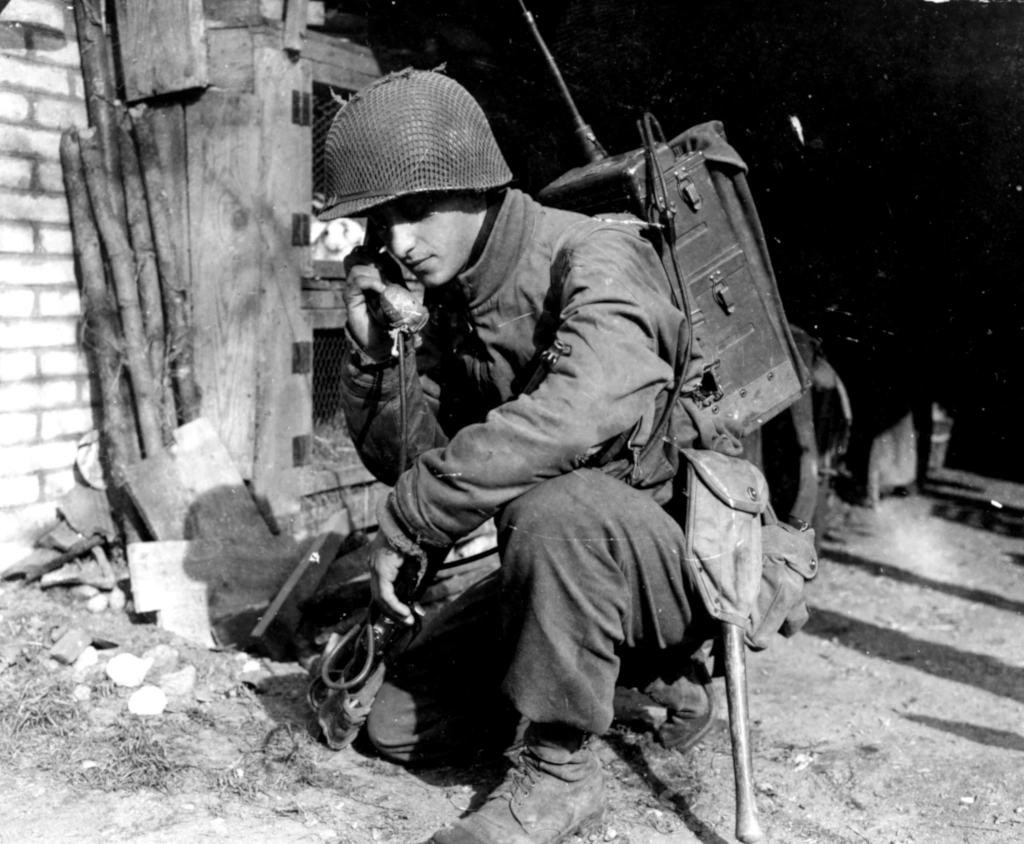
The order of march was outlined, which included the M-8 scout car preceding the column, to be followed by the assigned tank platoon. One platoon of infantry was ordered to ride the decks of the tanks for the local security of these vehicles. The Task Force Commander was to be located immediately behind the tanks, to be followed by the Commander of Fox Co, one platoon of Tank Destroyers, with the remainder of Fox Co following in eight two-and-one-half-ton trucks. Sufficient rations, water, and ammunition were to be taken with the troops to sustain them for one day. It was anticipated that resupply would not be necessary before the next day. Wire communications were to be provided by an accompanying construction team from Regimental-Headquarters Company under the personal supervision of the Regimental Communications Officer, Capt Osborn Cooper. The Task Force Commander was in direct communication by radio with the Regimental Commander utilizing a SCR-284. In addition, the Task Force Commander was provided with a SCR-300 with which to contact Fox Co and the AN/VRC 3 radios of the tanks, and the tank destroyer’s M-8. Five additional enlisted medical aid men and one medical administrative officer provided the medical support for the Task Force.
The Situation and Plans of Fox Company
At 0500, December 14, the Company Commander of Fox Co was apprised of the Regimental plan for the continued attack and was ordered to prepare his unit to accompany the Task Force. The efficiency of Fox Co had been materially reduced by the casualties sustained in the preceding thirty days of combat, and the fighting strength was approximately seventy-five men. One platoon from Easy Co was attached to Fox Co for this mission to increase its fighting efficiency. General information concerning the Task Force composition, commander, time of expected departure, and available transportation was discussed by the Battalion Commander with the Company Commander of Fox Co at this time. Specific instructions to Company Commander Fox Co were to be given by the Task Force Commander.
Shortly after daylight, the relief of the 2nd Battalion by the 3rd Battalion was accomplished. Fox Co was assembled, and the necessary reorganization was initiated. The second and third squads of the 2nd platoon were combined. This consolidated squad from the second platoon was moved to the first platoon, thus providing the first platoon with three squads of nine men each. The first platoon consolidated its three understrength squads into two squads of nine men each in an effort to maintain tactical integrity. The men remaining in the second platoon were moved to the third platoon, providing an approximate balance between the first and third platoons. The weapons platoon was understrength, but no replacements were available, and no changes were made in its organization at this time.
The attached platoon from Easy Co became the second platoon and was designated X Platoon. 1/Lt Earl H. Spracklen, the Executive Officer of Fox Co was given command of X Platoon since no officer was sent by Easy Co for its command. T/Sgt Lawrence E. Mother, originally platoon leader, second platoon Fox Co, was assigned to assist Lt Spracklen. It was planned by Company Commander, Fox Co, that the third platoon would be used to ride the decks of the tanks in accordance with instructions received from the Task Force Commander. The remainder of the Company was to be assigned to the two-and-a-half-ton trucks used for transportation.
NARRATION
Phase 1 – Movement to Contact
At 1023, the Task Force, minus Fox Co, departed Preuschdorf (France) for the forward assembly area, arriving at approximately 1100. Upon his arrival, Col Blackshear issued the final orders previously mentioned. The forward assembly area was cleared at 1130. No line of departure was designated. The movement of the column from the assembly area (Point A) to Point B was uneventful. At Point B, an undefended roadblock was encountered. The roadblock consisted of several heavy trees felled across the road. No bypass was available. No mines or booby-traps were present. Tanks were employed to reduce the roadblock, using tow cables to drag the trees clear of the road. The clearing of this obstacle required approximately thirty minutes.
The column proceeded quickly from Point B to a point two hundred yards north of the Pfaffenschlick Pass (France) (Point C). It was here that the first fire was opened on us by the enemy. The crossroad at the Pfaffenschlick Pass and the road for some distance north of the Pass were under observation by the enemy. Direct fire weapons apparently had been previously registered on this target. The enemy allowed several vehicles to proceed beyond the Pass before attempting to stop them. The first indication that the enemy would contest the use of the Pass was ten or twelve rounds of high explosive and armor-piercing shells striking in and around the column simultaneously. Several casualties were sustained by our troops at this point, among them was Capt James J. Barda, S-3 of the Task Force. The one-quarter-ton truck in which the Company Commander, Fox Co, had been riding received a direct hit and was completely disabled. The Company Commander joined the Task Force Commander in his vehicle and accompanied him for the remainder of the motor march.
After a brief halt at this point, the Task Force was ordered to resume the march at increased speed. Sporadic artillery fire was received by the Task Force from Point C to Point D, but much of its effectiveness was lost because of the increased speed and dispersion of the vehicles. The M-8 scout car, which was leading the column, halted at the edge of the woods, Point D affording it some concealment from the enemy. An enemy artillery concentration was being laid down just beyond this point. Troops dismounted from the tank decks and personnel carriers and sought available cover and concealment. It was believed by the Task Force Commander that the village of Climbach was unoccupied by foot troops, and that the artillery fire was being used by a delaying force to harass and impede the forward movement of the Task Force. He ordered the troops to mount the vehicles and ordered the commanders to proceed in column as before.
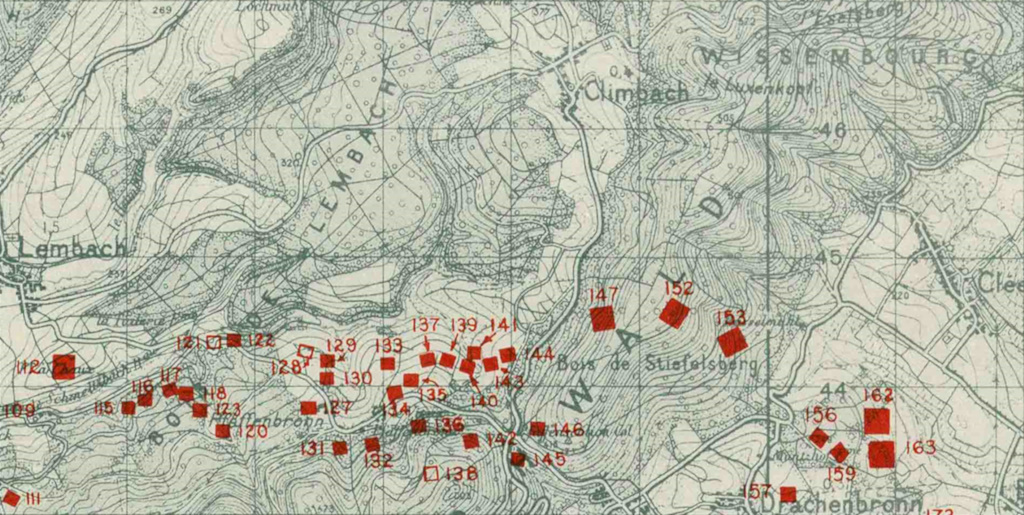
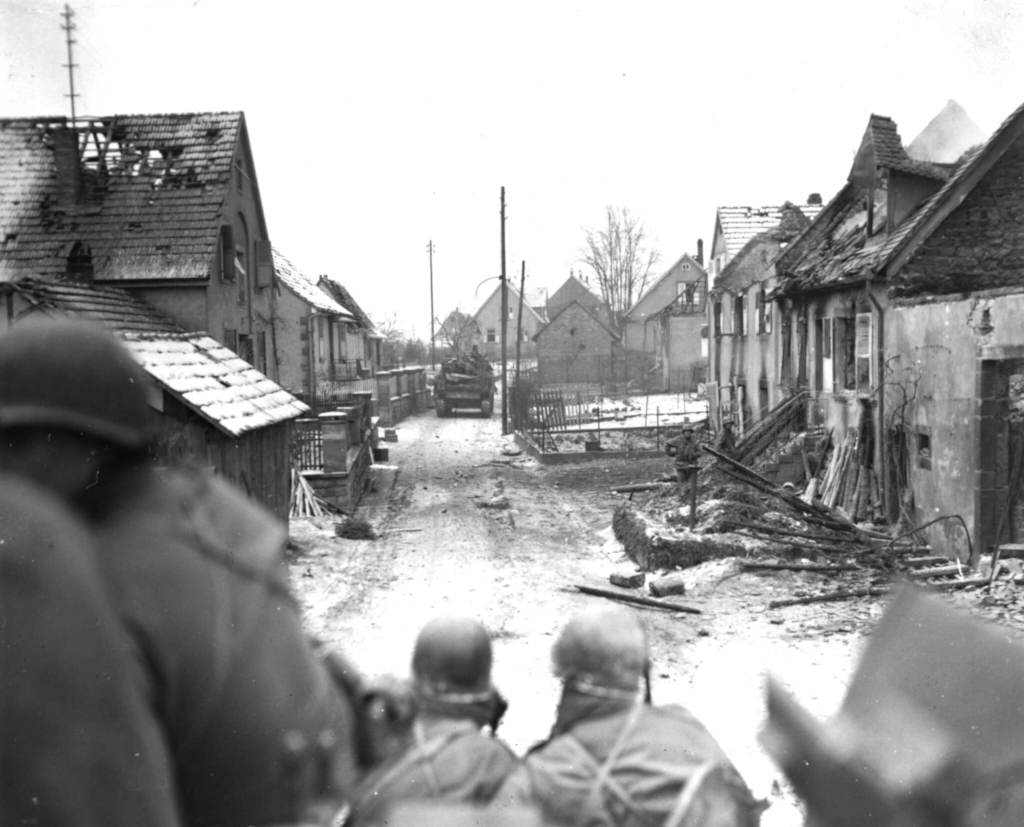
This being accomplished, the column advanced approximately one thousand yards before it was halted abruptly. As the M-8 scout car topped the high ground immediately to the front south of Climbach, a mine planted in the road exploded, which disabled the vehicle, and anti-tank fire was immediately placed on it, killing or wounding all of its occupants. The road leading to Climbach was a two-lane road, and the scout car was stopped in the center of it. The shoulders of the road were extremely muddy and made vehicle passage exceptionally difficult. The drivers of the tanks were not willing to attempt passage of the disabled vehicle and continue the attack on Climbach because of the presence of mines and direct fire anti-tank guns still firing on the approach to the village.
Phase 2 – Contact with the Enemy, Fight, Plans for Assault
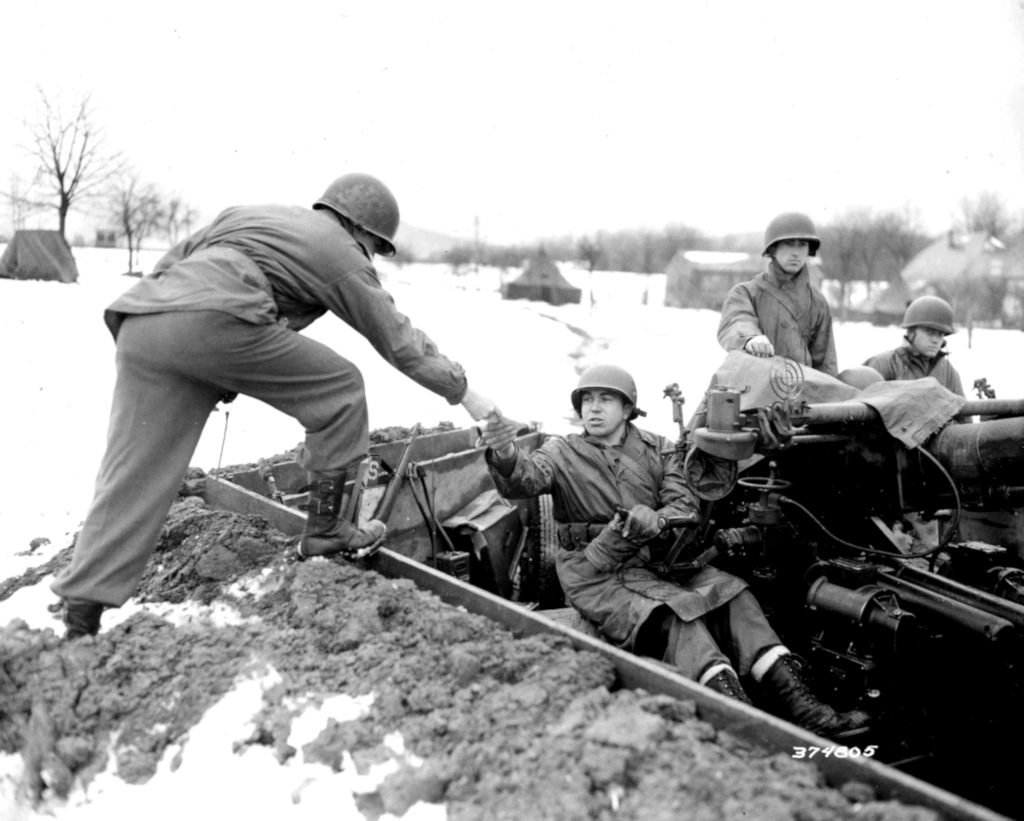
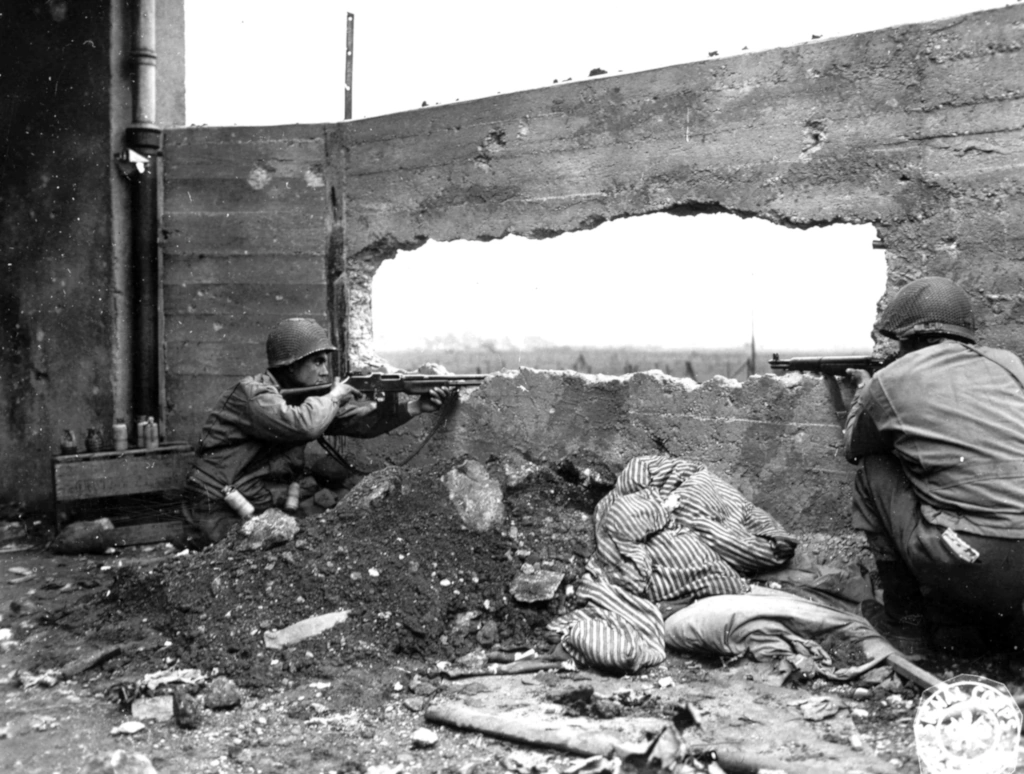
As the column came to a halt, the troops dismounted from the personnel carriers and were assembled near them, awaiting orders for the continued attack on the objective. The Task Force Commander and the Company Commander of Fox Co moved forward to the vicinity of the M-8 scout car. Their reconnaissance revealed the presence of enemy foot troops defending the town, supported by tanks and self-propelled guns on the high ground north of the town. Personnel carriers had been released by the Task Force Commander shortly after his reconnaissance. The platoon of Tank Destroyers was ordered to go into position on the forward slope of the ridge and eliminate enemy direct fire weapons, inflicting casualties on our troops. One platoon of infantry was ordered to support the employment of the Tank Destroyers and provide local security for the guns. The third platoon of Fox Co was employed in this mission. A brief reconnaissance was made by the Tank Destroyer platoon leader, and one position was found suitable for the employment of one gun on the left of the road. The remaining three guns were ordered forward and were placed in action on the exposed forward slope of the ridge on the right of the road. The guns were towed over the crest of the ridge and onto the forward slope as far as the mud would permit. The guns were then manhandled into position by the crews.
The movement by the Tank Destroyers and infantry to these forward slope positions began at approximately 1330. Although submitted to intense mortar, artillery, and small arms fire, the gun crews of the tank destroyer platoon successfully positioned their guns and were in action for some time before they were neutralized. The three guns on the right side of the road were in action approximately an hour before being silenced. The gun on the left side of the road, having some protection, remained in action most of the remainder of the day, although the crew suffered severe casualties.
The third platoon of Fox Co moved into position around the guns they were to protect. Throughout the afternoon, they improved their positions by digging. The squad led by Sgt Charles Henrikson was charged with the security of the left flank, to include the support of the three-inch guns in that sector. He led his squad from their positions near the tanks to positions near the guns. One of the outstanding individual performances of the day occurred in this sector. The report of Sgt Henrikson is as follows:
A few yards ahead was a German machine gun nest, but they weren’t expecting us from this direction, and we surprised them. They were going to open up when Pfc Richard Myers, BAR man, gave a burst. There were two on the gun. One was dropped, and the other took off with a light bipod machine gun. Well, this was just the beginning. The German went for reinforcements. Meanwhile, Myers and I jumped into the hole left by the Krauts. This was located just outside the woods. I saw action in the woods, and a couple of Krauts came out and surrendered. I sent Myers to the rear with the prisoners. I was now left alone, and some Germans noticed this and saw their chance, so they thought. They started to set up another gun in the woods, and each time I saw them setting it up, I let them have it. It was getting twilight, and no one was around except two negroes with their legs off at the knees. The anti-tank gun was knocked out. One German I shot in the arm came out of the woods with “Kamerad”. Well, I kept taking my ammunition out of my bandoliers and putting it in front of me because I thought this was my last moment. Each time the Krauts set up, I shot the machine gunner. A couple of them came running at me from the left oblique, and I killed one and got the other in the head. I guess he died later. Anyhow, I kept firing as fast as I dared without using up all of my ammunition. By this time, elements of the company were entering the town.