




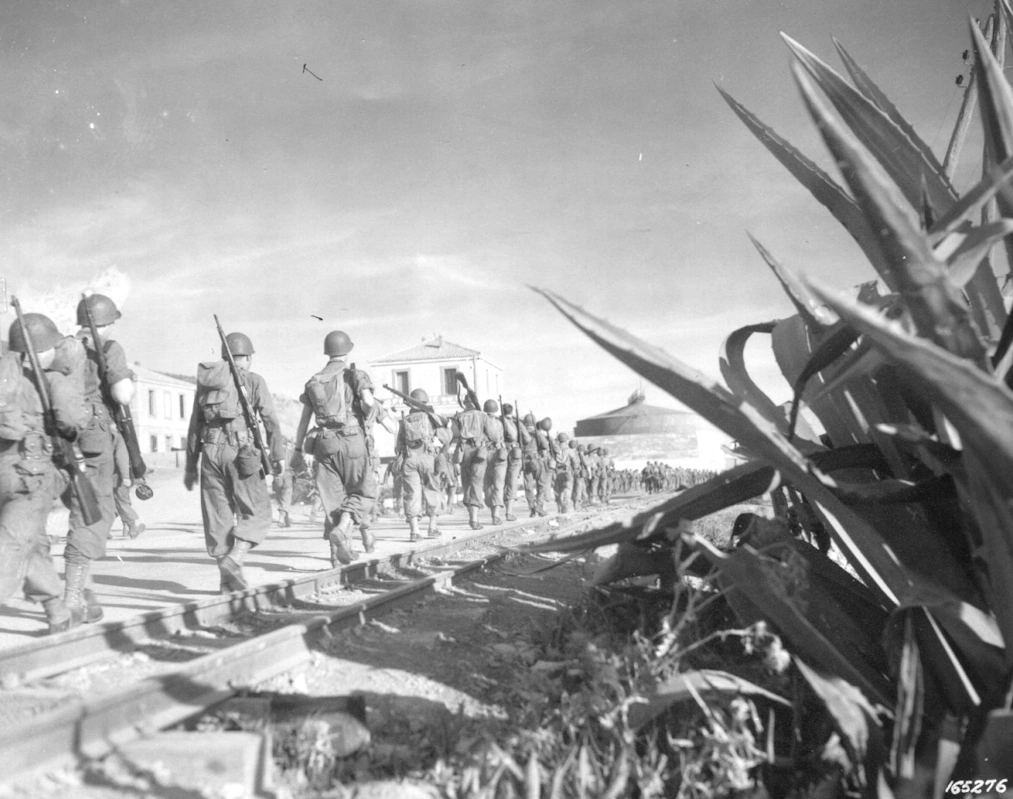

 On the evening of March 13, the 1st Ranger Battalion, which had been in corps reserve, was attached to the 1st Armored Division. At 1000, on March 17, 16-CT and 18-CT attacked Gafsa with the Rangers, found the town lightly defended and quickly captured it. No Rangers were killed or wounded in the attack.
Djebel el Ank – Combat
The ease with which Gafsa fell revealed that the enemy had almost completely withdrawn from the area. Allied intelligence reported that about two thousand Axis troops were at El Guettar and that they were also organized in strength at Djebel el Ank. Although Patton did not intend to continue the attack toward El Guettar immediately, it was necessary to reestablish contact with the enemy and maintain the initiative. On March 17, Gen Terry Allen (1-ID) sent Darby a memo ordering him to move the Rangers toward El Guettar after dark; reestablish contact with the enemy; determine enemy strength, dispositions, and unit designation; and maintain his unit in the area. Allen considered Darby’s mission crucial because the requested information was essential to planning an attack on El Guettar. Darby was directed to act aggressively but cautioned not to commit the Rangers to any action from which they could not disengage.

Darby received Allen’s memo at 0200 the following morning and immediately began moving his men through Gafsa toward El Guettar. In spite of intelligence reports that there were Italians in the area, the Rangers found El Guettar undefended, occupied it, and extended their search for the enemy farther to the east. By means of patrols and surveillance, they found troops of the Italian Centauro Division astride the Gafsa-Gabes road at the Djebel el Ank Pass. This was about four miles east of El Guettar and three miles west of Bou Hamran. It was to be the site of the Rangers’ first real battle since the Station de Sened raid. With the capture of Gafsa and El Guettar, the II Corps’ attack entered a second phase. At 1630, on March 20, the 1-ID received a warning. Order from corps to prepare to attack along the Gafsa-Gabes road and to take the high ground east of El Guettar about eighteen miles southeast of Gafsa. The Gafsa-Gabes road split into two branches less than a mile east of El Guettar. The southern branch was a continuation of the main road and led into Gabes, the northern branch, dubbed Gumtree Road, passed through Djebel el Ank Pass and south of Bou Hamran to Mahares on the sea.
The plan developed by the division required the 18-CT to attack along the south branch of the Gafsa-Gabes road and for the Rangers and the 26-CT to attack along the north branch. The 16-CT would be held in the division reserve. Djebel el Ank Pass opened to the west like a funnel with rocky heights on both sides, and the Italians had barred its entrance with mines, barbed wire, roadblocks, and had covered its approaches with automatic weapons and AT guns. An unsupported frontal attack on the pass would risk heavy casualties and a high likelihood of failure, but a frontal attack combined with a surprise Ranger attack from the rear would be more likely to succeed with fewer losses. The plan thus developed required the Rangers to infiltrate enemy lines and attack the Italians defending the pass from behind. With the start of the Ranger attack, the 26-CT would make a frontal attack into the pass and, after securing it, continue on to Bou Hamran.
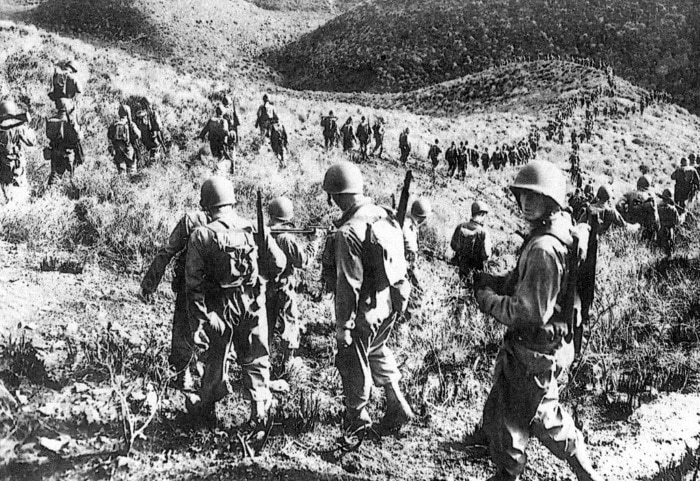
The Rangers, as ordered, remained in the Djebel el Ank area after locating the enemy and conducted recon patrols against the Italian positions. Darby made a personal daylight recon against the north wall of the pass, and Lt Walter Wojcik led a couple of night patrols into the mountains behind the enemy. The Italians knew that American troops were to their front and brought the Rangers under artillery fire on March 18 and March 19, but did not realize that the Rangers were operating to their rear. During these recons, the Rangers mapped a tortuous ten-mile-long route among fissures, cliffs, and saddles to an unguarded rocky plateau that overlooked the Italian positions from behind. The Italians, believing themselves safe in their naturally strong position, had not established effective local security.
 At 1800, March 20, the 1-ID received the order from the II Corps to attack along the Gafsa-Gabes road and seize the high ground east of El Guettar. The 26-CT held a meeting of unit commanders at 2165 to issue the regimental order. The regiment would attack Djebel el Ank Pass along the axis of Gumtree Road with the 3/26 on the left, the 1/26 on the right astride the road, and the 2/26 in reserve at El Guettar. The 3/26 would attack the north wall after the Rangers struck it from behind.
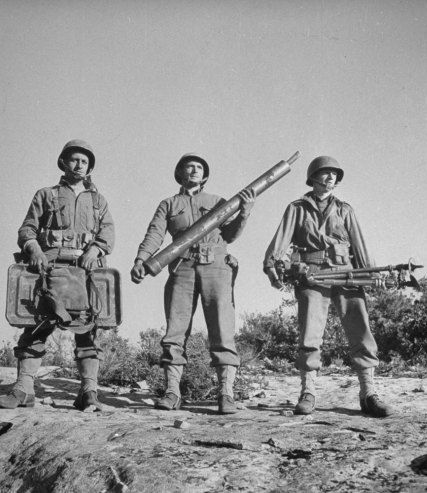 Bou Hamran, the first objective beyond the pass, was to be attacked only on division order. So, on the night of March 20, Darby led the 1-RB and an attached 4.2-inch mortar company along the previously reconnoitered route to the plateau behind the Italians. There, with their faces blackened with camouflage, the Rangers awaited the dawn. The mortar company, impeded by the weight of its weapons and the ruggedness of the terrain, had fallen behind and was still en route to the plateau. Shortly after 0600, as first light brightened the sky to the east, waiting troops of the 26-CT heard the sound of battle burst forth suddenly from the north wall of the pass. The Rangers had taken the unsuspecting Italians completely by surprise. With machine-gun and rifle fire, a Ranger support element sent the Italians on the south side of the pass scurrying for cover, while the rest of the Ranger battalion swarmed down on the stunned defenders of the north wall. With the sound of a bugle, the assault element jumped from rock to rock shouting Indian war cries and formed into skirmish lines to close with the Italians. They rushed forward firing their weapons, throwing hand grenades, and bayoneting as Darby repeatedly shouted, give them some steel.
The first twenty minutes of the battle all but broke enemy resistance on the north wall. Dead Italians sprawled next to their unfired weapons while many of the living frantically waved white flags from their dugouts and trenches. The Rangers gathered prisoners while their mortars fired on those Italians who were still fighting from the other side of the road. By 0830, the Rangers held the most important positions on the pass, and the attached 4.2-inch mortars, which had only recently arrived, were adding their fire to the bombardment of the south wall. With the north side of the pass cleared, Darby sent one company to silence the several machine-guns that could still fire on the entrance of the pass from the south wall. The attacking Rangers descended to the floor of the pass using a spur for cover and concealment, dashed across an open area to the base of the south wall, and slowly fought their way up the ridge in a rough skirmish line. The south side of the pass thus fell into the Ranger’s hands. Casualties were limited during this final mop-up thanks to the Rangers Italian-speaking British Chaplain, Father Albert E. Basil, who talked an Italian officer into surrendering his men.

While the Rangers were overrunning the heights, the 26-CT began moving into the pass. Because of the natural strength of the Italian position, the infantry could advance only slowly. A wadi cut across the mouth of the pass, and even with Rangers to guide them and with no opposition, each company took forty-five minutes to cross it. At 1120, the division’s G-3 felt confident enough of the situation to direct Darby and the 26-CT to clean up what little resistance remained in the pass and take the high ground beyond Bou Hamran. Although Darby would only claim taking about two hundred Italian prisoners in his after-action report, the Rangers and infantry together took more than a thousand prisoners by 1215. (II Corps, G-3 Journal and File, Telephone conversation, Capt Lord to Maj Chase, 1215 March 21, 1943). The need for the Rangers passed as American forces continued their attack to the east, and the battalion was returned to its bivouac and division reserve at El Guettar at 1610. The taking of Djebel el Ank Pass was conducted in the successful tradition of Arzew and the raid at Station de Sened. Ranger losses in the operation amounted to only one officer wounded.