




Congressional Medal of Honor Citations
 WILLIAM EDWARD METZGER, JR.:
The President of the USA, in the name of Congress, takes pride in presenting the Medal of Honor (Posthumously) to 2/Lt (Air Corps) William Edward Metzger, Jr. (ASN: 0-558834), US Army Air Forces, for conspicuous gallantry and intrepidity in action above and beyond the call of duty while serving with the 729-BS, 452-BG (H), 8-AAF.
On a bombing run upon the marshaling yards at Saarbrucken, Germany, on November 9, 1944, a B-17 aircraft on which 2/Lt Metzger was serving as copilot was seriously damaged by AAA fire. Three of the aircraft’s engines were damaged beyond control and on fire; dangerous flames from the #4 engine were leaping back as far as the tail assembly. Flares in the cockpit were ignited and a fire roared therein which was further increased by free-flowing fluid from damaged hydraulic lines. The inter-phone system was rendered useless. In addition to these serious mechanical difficulties, the engineer was wounded in the leg and the radio operator’s arm was severed below the elbow.
Suffering from intense pain, despite the application of a tourniquet, the radio operator fell unconscious. Faced with the imminent explosion of his aircraft and death of his entire crew, mere seconds before bombs away on the target, 2/Lt Metzger and his pilot conferred. Something had to be done immediately to save the life of the wounded radio operator. The lack of a parachute static line and the thought that his unconscious body striking the ground in unknown territory would not bring immediate medical attention forced a quick decision. 2/Lt Metzger and his pilot decided to fly the flaming aircraft to friendly territory and then attempt to crash land. Bombs were released on the target and the crippled aircraft proceeded along to Allied-controlled territory.
When that had been reached 2/Lt Metzger personally informed all crew members to bail out upon the suggestion of the pilot. 2/Lt Metzger chose to remain with the pilot for the crash landing in order to assist him in this emergency. With only one normally functioning engine and with the danger of explosion much greater, the aircraft banked into an open field, and when it was at an altitude of 100 feet exploded, crashed, and exploded again, then disintegrated. All three crew members were instantly killed. 2/Lt Metzger’s loyalty to his crew, his determination to accomplish the task set forth to him, and his deed of knowingly performing what may have been his last service to his country was an example of valor at its highest.
General Orders: War Department, General Orders No. 38 (May 16, 1945)
Action Date: November 9, 1944
Service: Army Air Forces
Rank: Second Lieutenant
Company: 729th Bombardment Squadron
Regiment: 452d Bombardment Group (H)
DONALD JOSEPH GOTT:
On a bombing run upon the marshaling yards at Saarbrucken, Germany a B-17 aircraft piloted by 1/Lt Gott was seriously damaged by AAA fire. Three of the aircraft’s engines were damaged beyond control and on fire; dangerous flames from the #4 engine were leaping back as far as the tail assembly. Flares in the cockpit were ignited and a fire raged therein, which was further increased by free-flowing fluid from two damaged hydraulic lines. The inter-phone system was rendered useless. In addition to these serious mechanical difficulties, the engineer was wounded in the leg and the radio operator’s arm was severed below the elbow.
Suffering from intense pain, despite the application of a tourniquet, the radio operator fell unconscious. Faced with the imminent explosion of his aircraft and death of his entire crew, mere seconds before bombs away on the target, 1/Lt Gott and his copilot conferred. Something had to be done immediately to save the life of the wounded radio operator. The lack of a static line and the thought that his unconscious body striking the ground in unknown territory would not bring immediate medical attention forced a quick decision. 1/Lt Gott and his copilot decided to fly the flaming aircraft to friendly territory and then attempt to crash land. Bombs were released on the target and the crippled aircraft proceeded alone to Allied-controlled territory.
When that had been reached, 1/Lt Gott had the copilot personally inform all crew members to bail out. The copilot chose to remain with 1/Lt Gott in order to assist in landing the bomber. With only one normally functioning engine, and with the danger of explosion much greater, the aircraft banked into an open field, and when it was at an altitude of 100 feet it exploded, crashed, exploded again, and then disintegrated. All three crew members were instantly killed. 1/Lt Gott’s loyalty to his crew, his determination to accomplish the task set forth to him, and his deed of knowingly performing what may have been his last service to his country was an example of valor at its highest.
General Orders: War Department, General Orders No. 38 (May 16, 1945)
Action Date: November 9, 1944
Service: Army Air( Force
Rank: First Lieutenant
Company: 729th Bombardment Squadron
Regiment: 452nd Bombardment Group (H)
These two quotes were clearly created in order to hide important information relating to the events of November 9 (B-17) and November 10, 1944 (B-24). Let me explain.
(1): the B-17G 42-97904 Lady Jeanette, although very damaged by the German AAA Defense fire, never exploded. Neither one at a 100 feet altitude nor on the ground after the crash.
(2): The Lady Jeanette never disintegrated, neither in Germany (Saarbrucken) as the Congressional Medal citation says, nor in France (Hattonville) where she really crashed.
(3): Why pretend that a plane, a heavy bomber in this case, explodes twice before disintegrating when in fact she did a belly landing in a forest, and when the plane was finally on the ground, it was cut into 4 parts by the trees and only one tire from the landing gear was the sole part of the plane burning on the ground?
According to the witnesses, military and civilians present on the spot, the B-17 was lying on the ground in four separate parts, the cockpit, one wing, the second wing and the tail. But this story is way far over and you’ll see this further in the text. Please take note that I am not against these two CMOHs, I am just wondering why they awarded these medals to these two men when several hundred other pilots and co/pilots did exactly the same before and didn’t even receive a bronze star.
On November 9, 1944, according to what happened, the crash of the Flying Fortress B-17G #42-97904 ‘Lady Jeanette’ in Hattonville, France, after being hit over Saarbrucken, Germany, the US Air Force had lost four men:
1/Lt Daniel J. Gott (Pilot), 729-BS, 452-BG, KIA
2/Lt William E. Metzger Jr (Copilot), 729-BS, 452-BG, KIA
S/Sgt Herman B. Krimminger (Tail Gunner), 729-BS, 452-BG, KIA
T/Sgt Robert A. Dunlap (Radio Operator), 729-BS, 452-BG, KIA
On November 10, 1944, according to what happened, the crash of the Consolidate B-24J Liberator #42-51226 ‘I Walk Alone’ shot down by an American P-61 Night Fighter Black Widow near Boucly, France, the US Air Force lost three men:
2/Lt Frederic G. Grey, 36-BS (100-G RAF) (Navigator), KIA
Sgt Frank A. Bartho, 36-BS, (100-G RAF) (Tail Gunner), KIA
Sgt Raymond G. Mears, 36-BS (100-G RAF) (Nose Turret Gunner), KIA

 Back in England, the crap had also hit the fan at the 452nd Bomb Group concerning their B-17G that had crashed somewhere in France. At the 36th Bomb Group, the news of the loss of B-24J #42-51226 had been reported and the unit’s commanders had received calls for the commands above them telling them to be prepared for special instructions that were to be followed exactly. All the men and citizens involved ended that day mostly confused and unsure of what was going on. Some of them knew but they were expected to be puppets and God help them if they failed.
Pfc Silva arrived at his squadron HQ to find Capt Judson and the head medic waiting for him. As they climbed, Judson told the men they had drawn the short straw and for Silva to head to the crash site. Silva told the author, ‘It was easy, at every intersection there were French houses and people were standing outside looking at the fire in the distance and as I approached. They would point down the road I had to take‘. Within fifteen minutes, they had arrived at the crash site, about a quarter mile north of a village named, Tincourt-Boucly. As they approached the site, there were some American vehicles parked in a field with their lights shining out over the crash site. There was really nothing to be seen, except for a large hole in the field beyond which one could see there were larger pieces of the plane, showing the direction of the plane when it crashed.
Capt Judson told Silva to pull up close to the hole and leave his lights on. They got out and some Americans joined them telling them they had found small pieces of human remains spread in and around the crash site. Cap Judson immediately told them to back away from the site leaving their vehicles with the lights on and to ensure all the French were kept out of the actual crash site. They could stand outside the area, but not enter it. He then told Silva and the medic to get a set of blankets out of the ambulance and spread it out in front of the ambulance. Once that was done, he told them to start searching the crash site for human remains and to place them on the blanket. At about 0630, after slogging through the mud of the freshly plowed field stirred up by the crash and people walking, Capt Judson asked a military policeman who had arrived if they had contact with the base. He had his command jeep pulled up the ambulance and Judson used the radio to inform the base commander what they had accomplished.
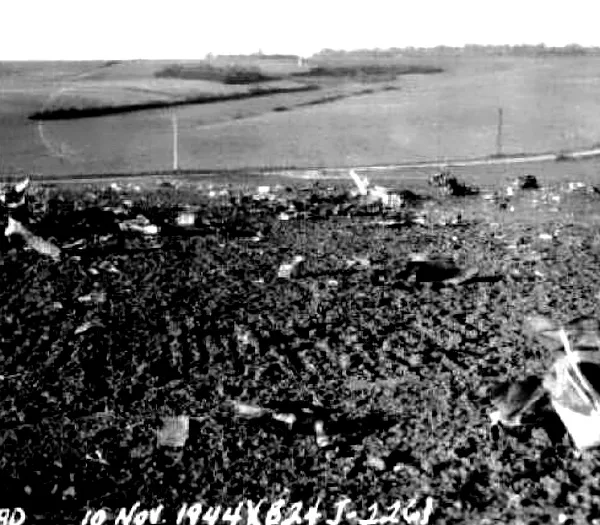
During their search, the two men had located some personal items and five ID Tags, two sets and one single tag. As the men brought in the pieces of humans they found, Judson kept a mental image of what they were. By that time, they had recovered what Silva estimated to be about 150 pounds of human parts, all lying on the blanket when Judson stopped their search. Judson told the commander that he felt they had to stop searching.
By moving around in the crash site without daylight they were stepping on and hiding as many remains they had recovered. He now had enough information from the ID tags and personal items found to be certain three men had died in the crash. Their names were Grey, Bartho, and Mears. He felt it was time for them to take the remains found to their next higher hospital in St Quentin, quit and return to base. Adding, that another recovery detail should be sent out when it was full daylight to recover the rest of the remains. An incoming radio message from the commander told Judson to report to him when they got back to the base and he would go ahead and set up his recommended second recovery team and would see him in a few hours.
Judson turned to Silva and the medic and told them to get two more sets of blankets out of the ambulance and lay one on each side of the collected pile of human remains, then to divide the one pile into three equal groups of human remains which and to wrap the three bundles, tie them tight. Judson attached then a ditty bag of personal items and tied the ditty bag and one of the ID tags to each bundle with one string, adding the second tag on a separate string on two of the bundles. When done, he told Silva and the medics to put the bundles in the ambulance.

Silva insisted on first laying down a fourth set of blankets on the floor to keep what they found from transferring to his ambulance floor which he would have to clean up. They left then for St Quentin and were at the base hospital by 0700. Judson went in to report to the hospital commander and soon they came back out and Judson told Silva to follow him. They drove a short distance to a building where an enlisted man met them and they transferred the three human remains bundles to a cart he was pushing. Judson told them to head to the mess hall and he was going to breakfast with the commander and to meet him back at the HQ in 30 minutes. They had breakfast and Silva dropped Capt Judson off at the base HQ by 0845.
Sylva drove by his squadron HQ and was told to report to his station, where all the ambulances and some medics waited by the control tower while the daily missions took place. Silva arrived after everyone else was there and they asked what he had been doing. He described how he had spent hours picking up pieces of people slimy and bloody and placing them in a pile. He added that when they had to load the bundles the two newly created bundles were no problem, however, they had to remember he had no gloves and was doing all this bare-handed.
When they picked up the third original bundle, they found the fats and slime from the human pieces had soaked through the blankets. He remembered and chuckled as he told the author, ‘when I was done, they were all looking at me and one said, sure you did. I put out my right hand and told him if he did not believe me he could shake my hand and remember what I had just said that hand had been doing. He looked at me looked at the hand I had extended and told me that he believed me. Then, we sat down and watched the B-26 bomber stream leave the base‘.
That ended Pfc Silva’s involvement with the crash of the B-24 near his base on November 10, 1944. Silva told the author, ‘in one way it was not the end of that involvement in plane crashes. Due to how he and the medic had handled the collection of remains at the crash site every time there was another crash, he and the medic were sent out to recover the dead!

Then, one day in November 2000, he and his wife arrived at Branson MO, to see the shows there. They had driven there from their home in California stopping to visit friends along the way. The night they arrived, they had gone out to dinner and when they returned every parking place was gone. They had been assigned a numbered parking place but someone had parked in their place. He drove around for a while and found a place to park a couple of blocks away. As he went to open his wife’s door, he happened to look down and see a bumper sticker on a van. On it was printed, the 397-BG, which was the unit he had served in when he was in France.
As an ambulance driver he was not actually a member of the Group but he was part of the attached medic unit and Capt Judson, the medic, along with him, was attached to a squadron of that group. He walked his wife back to their room and went back to where he saw the bumper sticker. It was in a numbered parking place and he went to that room in the complex. He knocked on the door and when a man came to the door, he told him that he was the ambulance driver attached to one of the squadrons. The man told him that he had been attending a group reunion and was leaving in the morning. While talking, he also said that he had some nut in Seattle who had been calling him for years about some B-24 crash. At each reunion, he asked the men in attendance if anyone knew anything about such a crash and so far no one had. Silva told him, ‘Sure, I remember, I was the driver of the ambulance that picked up the remains‘. The man asked him to come in and have a drink. He then turned on a tape recorder and the two of them talked about the crash.
 As soon as Silva left, he telephoned the author and told him he would never guess what had just happened. The author had to admit that he had no idea. Sylva told me how the only group member who remembered the crash had not attended the reunion if someone had not blocked his parking space and if space had not been open in front of his van he would not be calling.
Then, he told the author he had recorded it all and the man had given his permission for his contact information to be sent to the strange fellow in the Seattle area. A couple of days later the package arrived and within an hour the author and Barney Silva were talking about a bomber crash in France. It had taken, ten years, ten months, and twenty-four days after the author had started his search for someone in the group who knew anything about the crash at Tincourt-Boucly when he received the call from the man at the reunion. Not only did the author find someone who knew about the recovery of the remains but the author was also talking to the man who had driven the ambulance.
The first thing we discussed was the other two men. Silva had kept in contact after the war and he knew both were dead leaving him as the only living man directly involved in the recovery team. Then, he told the author about what they had done and that there was to be a second recovery team. He had no idea of who that was and as he had been sitting with the other squadron ambulance drivers, it must have been someone who worked at the small base hospital. Now, the author knew immediately why the grave at the Cemetery in Cartigny existed!!!
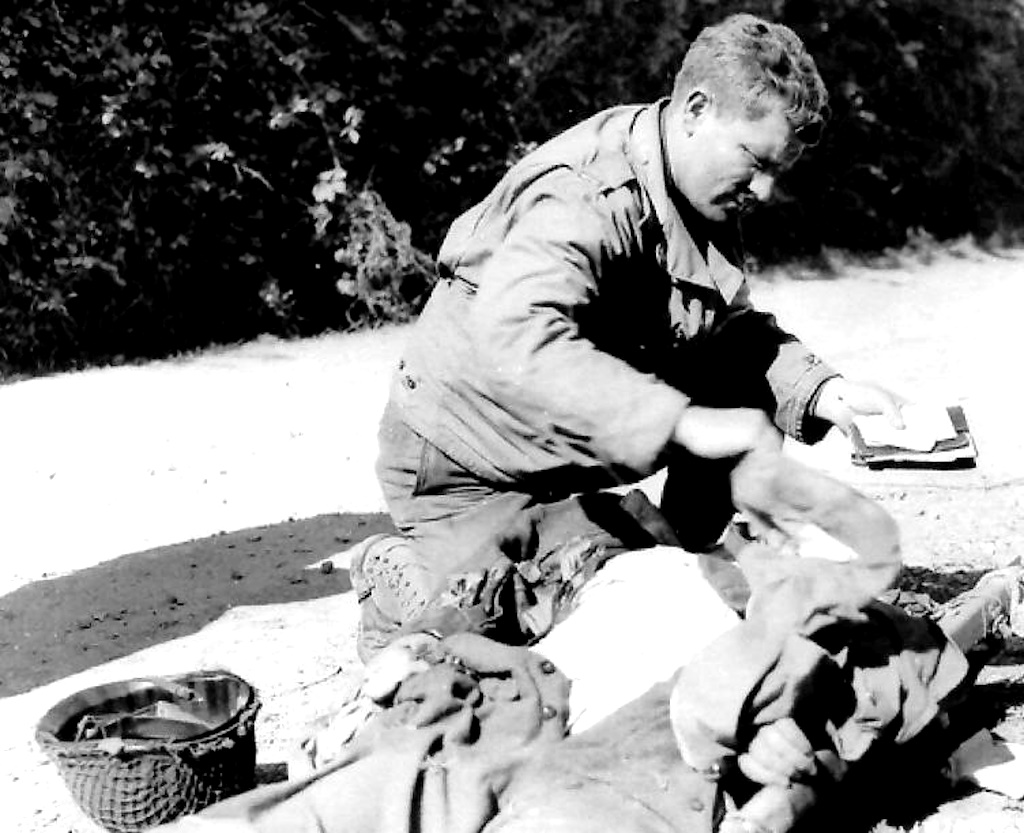 At the 563-SAW Battalion Headquarters, calls were received for them to isolate all logs concerning the shoot-down of an ‘unknown’ target by a P-61 Black Widow fighter. Suddenly, the men were informed to stop celebrating the shoot-down and to forget about it except the ‘unknown’ target had turned out to be a British Mosquito.
At the nearby base of the 397-BG, the base commander began to receive calls from the US 9-AAF Commander who was passing on what he had been told to do by calls from Gen Eisenhower’s Headquarters, be prepared for a visit from someone who would be speaking for Gen Eisenhower and if they knew what was good for them they would do whatever they were told to do or suffer career consequences. Each of them passed that information to every one of the people they had to involve.
At the Group’s main hospital in St Quentin, the remains had been placed in the safe storage required by Grave Registration Regulation when a second recovery had to or would take place. Sgt Silva gave absolute testimony that the hospital commander had been informed of their being forced to stop their recovery and another was going to take place. It was a standing regulation as to when more than one recoveries were required all the recoveries must be placed in a secure location. Graves Registration had to be notified and only after the circumstances had been evaluated by a visiting board of investigators, could the remains be combined and forwarded for official burial.
 About 0830 that morning, the hospital commander who had been notified that some Eisenhower’s Colonel would arrive met the special officer. Immediately, the Colonel ordered the hospital commander to turn the remains over to him while legally these remains were bound by the standing Graves Registration Regulations not to do so. The Colonel drove then to a nearby air base, met with the pilot of a light plane, got the three bundles placed aboard the plane and left. The plane took off, flew to Belgium and the pilot delivered the three men’s remains to a Graves Registration representative to be buried in a temporary cemetery under direct verbal orders they did not want to fail to follow or suffer the problems that would soon come their way.
The story was, that the men’s plane had been hit over Belgium and then it had crashed in France and the Commander of the US 9-AAF had determined where they were to be buried. This bothered the cemetery personnel so much that they recorded extra information on each man’s Burial Report. Including the fact that the remains identification forms were signed by Capt Judson, his base, and the remains were recovered in France, not Belgium. It was the signature on the forms and the location that gave me the first name of the men who had recovered the remains. That way if they were brought up on charges for not following Graves Registration Regulations, they would be covered.
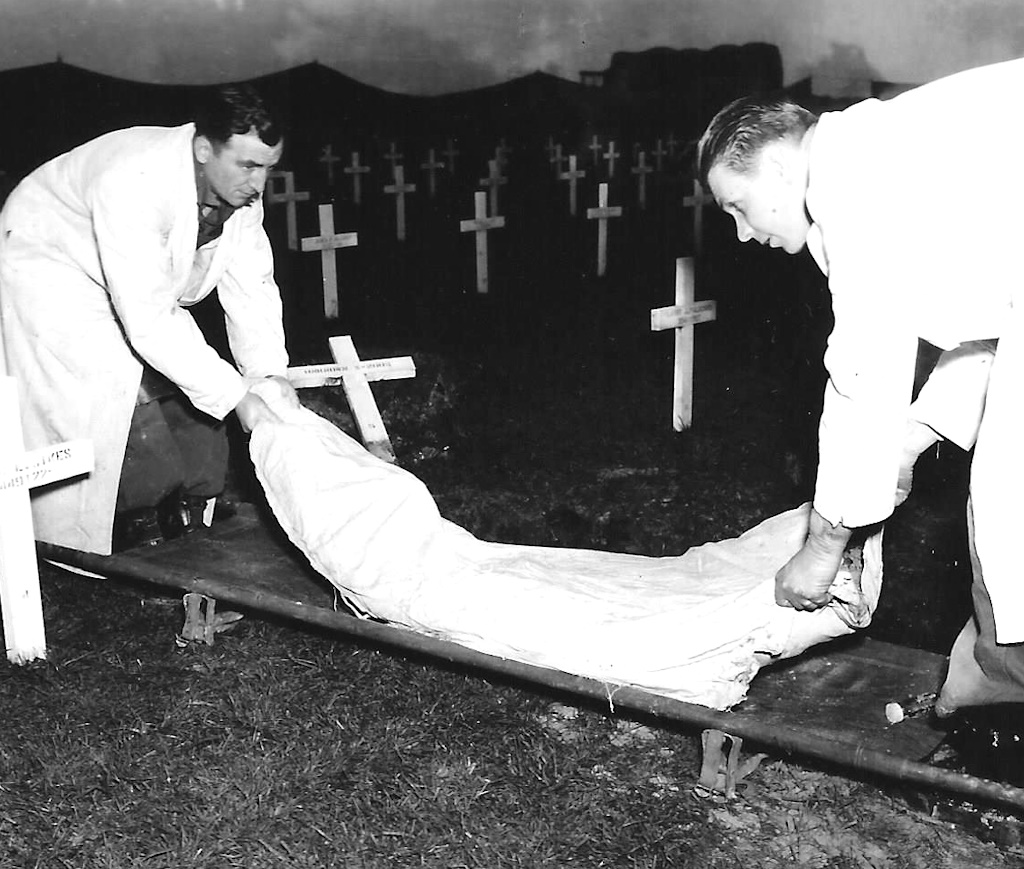
When Capt Judson’s signature and the location of the recovery of the remains were found on the burial records the author thought that he must have been the officer in charge of the one recovery the author had well documented. It had started at 0900 and was finished by 1100 in the morning of November 10, 1944. At that time, the thought was that the recovering Americans had found roughly 450 pounds of very messy human remains. Then on their own, without their commanders knowing they made the decision to hide two-thirds of what they had collected.
By separating the larger remains from the rest they then made the decision to create three illegal burial packages to deliver to the St Quentin hospital and then they hid the rest. Then Barney Silva came along and suddenly the proof of illegal activities ordered by a much higher commander became very obvious. To help prevent unknown remains from being identified in due time, Army regulations in place stated anyone who died in France had to be buried in France, anyone who died in Belgium must be buried in Belgium and anyone killed in the Netherlands must be buried in the Netherlands. In addition, a line ran to the east where anyone killed within that area (Eastern France), had to be buried in France and so on. This allowed the Graves Registration personnel attempting to identify an unknown to disregard anyone who died in the other zones as a possible identity. Thus, all the personnel records they had to check were units that had served in France or the area to the east of France.