

The Personality of the Fuehrer
by Generalmajor Hans Leyers
– a. In attempting to analyze the psychological structure of Hitler’s character, it will always remain an open question when this man, who was gifted with qualities of genius, became insane. The same applies to the question of when his cruel streak first manifested itself and produced its terrible crop.
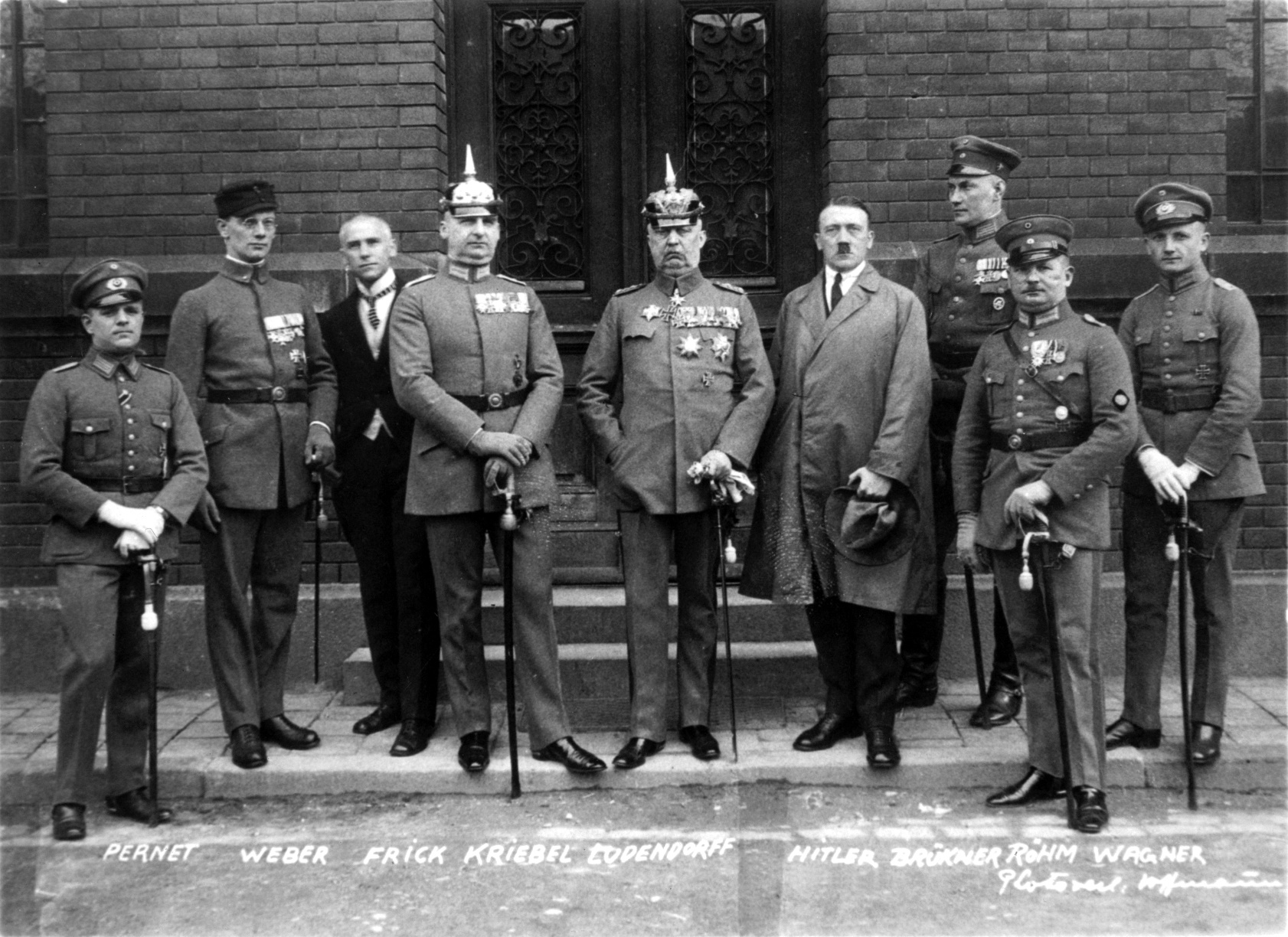
– b. In judging Hitler’s personality, it must never be overlooked that this unknown immigrant, the son of the lower orders, was able: 1. Commencing with seven men, derided, insulted, and incarcerated, solely through the power of his oratory, to conquer a nation of 70 million. 2. To give employment and bread to his subjects. 3. To cast off the fetters of Versailles and unite his Homeland with the German Reich. 4. To have the Prime Minister of England call on him several times. 5. To defeat Poland in a short space of time. 6. To race across the battlefields of Belgium and France which during the First World War had been soaked in vain with the blood of millions.
– c. The facts, which cannot be eliminated from the development of Hitler’s personality, led him to 1. Believing in his higher mission and seeing himself, again and again, confirmed this belief, which grew into a fanaticism that finally would approve of any means that might serve his ends. 2. An exaggeration of his self-confidence which, at a moment that is now difficult to define, deteriorated into sheer megalomania. 3. Lose more and more the one quality without which the greatest of men is doomed to failure: Humility.
– d. In a dictatorial system, all these traits could run wild as no criticism or opposition was being voiced which perhaps might still have led to an awakening.
– e. Also, the last outlet, an exchange of opinion and immediate contact with the people from which he had sprung, was prevented by the clique which surrounded him like a wall and which carefully examined who and what was allowed to reach him. Hitler apparently also lacked the inward desire for such an exchange of opinion, as he was without that sense of humor which is the indispensable link between sovereign and people. Thus Hitler lived in an unhealthy atmosphere of Byzantism which put the times of William II completely in the shade. The ancient wisdom of Herodotus that Hybris is followed by Nemesis was, under these circumstances, bound to come terribly true.
German War Blunders
June 30 1945
A number of intelligent German prisoners of war captured in Italy have made statements concerning the mistakes made by Germany during the war. Some of the statements are presented here as a matter of interest and to indicate German post-mortem thinking on this subject.
One General Staff Officer of Generaaloberst Heinrich von Vietinghoff (Scheel) Staff
Failure to Invade Great Britain
Admiral of the Fleet Albert Erich Raeder said ‘No’ as not enough ships were available. The General Staff decided to undertake the invasion with the Luftwaffe. Hitler was then presented with the plans but also said ‘No’, fearing that this would bring the United States into the war. Later, the General Staff produced the plan See Loewe (Sea Lion). Under this plan, France, through General Juin, offered us her army in Africa, Laval offered us the French Fleet and Petain the political cooperation, but only on the condition that France would be treated as a partner on equal political terms with Germany. German stupidity in not accepting and in not treating France as an equal was the fundamental cause of Germany’s inability to carry out Operation See Loewe, for we needed the French fleet, the army, and cooperation. Had Germany been as successful in the fields of politics and diplomacy as she was in the field of battle, another ending would have been written to this chapter.
General der Panzertruppen Fridolin von Senger (CG XIV Panzer Corps)
Since war is no longer decided by individual battles, this war has been lost by the undoubted mistakes of Germany’s military and political leaders. The war was lost through political confusion, through attempting to wage a war on nineteenth-century terms. In an attempt to determine the outcome of the war by individual battles, Germany lost this war as she lost the last one because she could not come to grips with the real strength of her enemies. The reserve of manpower and great productive capacity backed by abundant national resources beyond the Atlantic and behind the Urals won the war for the Allies.
The great mistake of the General Staff was that its military traditions were dependent on nineteenth-century history. The Germans still clung to an outmoded historical concept, to the type of history that occurred in old Europe, of changing frontiers, of defeating the smaller and weaker nations through superior military forces, particularly by winning by means of a large army. Germany still thought in terms of the old European balance of power. We could conquer Europe, but we did not take into consideration the fact that we might involve ourselves with non-European powers, ex. the United States, which is not a country, but a continent, and Russia, which is the heart of the Eurasian Continent.
The end of the war was only the last ‘aspect’, a denouement already determined earlier in the struggle. Foch’s offensive at the end of the First World War and your own battles of the Apennines and the Po in this war could under no circumstances be called decisive; they were simply the logical, final outcome of your terrible overwhelming war potentials. Granted intelligent political leadership in the handling of a nation’s industrial and manpower capacities, the war is won not by the brains of any one general in the field, but by the brawn of the worker in the factory.

Major Frank Neubert
Operations Officer, General der Flieger Maximilian Ritter von Pohl’s Staff
Too Much Hitler
There were continual changes in the key personnel of the General Staff and our most brilliant generals who had planned every move and stuck to their strategies and tactical planning of the war and dared to differ with Hitler, were tossed out and replaced by typical ‘yes’ men who carried out the Fuehrer’s personal plans to the letter. Hitler’s blind faith in Rommel, Rommel’s fight with Kesselring, the failure of Rommel to conquer the Suez Canal, Kesselring’s failure to convince the Fuehrer to take Malta, the failure to invade England (the plans for which had been prepared), the Fuehrer’s ever-changing plan of operation, the increasingly effective aerial might of America, all supported Britain and forced us away from Western Europe and into the hands of Hitler, enabling him to play his trump card: the war against Russia.
Oberst Kurt Gottschling
Chief of Staff of the Luftwaffe in Italy
Still Too Much Hitler
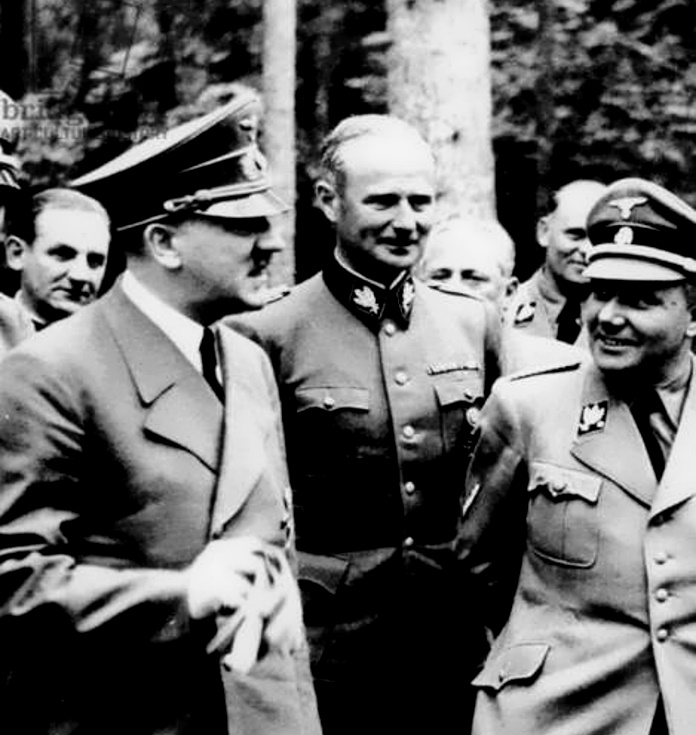
Hitler’s ‘idee fixe’ was to wage war against Russia. The failure to invade Great Britain, the ever-increasing amount of aircraft Britain was receiving from the United States and Germany’s ever-increasing number of aircraft losses served to spur Hitler on and in his obsession drove him to attack Russia. Luftwaffe fighter and bomber units needed in Western Europe were dispatched to Bulgaria, Roumania, etc. Hitler overruled every objection of the General Staff with his gift of persuasion. I have seen the most brilliant and determined men of my acquaintance go before Hitler, determined not to acquiesce to his whims. These brainy and critical men returned fascinated and for weeks remained under the spell of Hitler’s charms or hypnosis.
Thus, Hitler exercised his influence on his General Staff. I would summarize Germany’s war mistakes as follows: a. Overestimation of England‘s ability to resist invasion. b. Underestimation of Russia. c. Overestimation of Germany‘s allies, such as Italy d. Our failure to treat France as an equal and obtain full use of the wealth and resources of the French Colonial Empire. This could have been a stepping stone for the invasion of Britain. e. Declaring war on America. The High Command should and must have known that America‘s entry into the war meant Germany‘s defeat.
Additionally, one of the greatest blunders of the war was Germany‘s failure to invade Malta. Many explanations have been offered for this failure; one, that it was Italy‘s job and Mussolini loudly proclaimed it to be Italy‘s problem. Rommel wanted the Suez Canal and Kesselring wanted to take Malta. General Rahmke, the paratrooper expert, studied invasion plans of Malta for over a year and thought it could be done. However, Hitler decided in favor of the Suez Canal, and in the meantime, his ‘dream conquest’ of Russia was taking shape. In September 1944, Kesselring visited Hitler. The latter told Kesselring that the war was lost for Germany, but that if Germany kept on fighting, a political victory was still possible. (Apparently many German leaders, including Kesselring were still convinced that such a political victory was in the making.
SS-Obergruppenfuehrer and General of the Waffen SS Karl Wolf, and one of the principal negotiators of the German surrender in Italy, stated that when Kesselring was advised of these negotiations he asked if Wolff had gotten a guarantee that active fighting would continue against Tito and the Russians, along with the United States and the British forces. He told Wolff that it was ridiculous to go to such lengths when Germany still held such important political cards: all stacked against Russia. Wolff told the Field Marshal to read some newspapers other than those emanating from Germany.
Supply or Armaments to the Forces in the Field
Examination of Albert Speer, Reich Ministry of Armaments and War Production
June 13, 1945
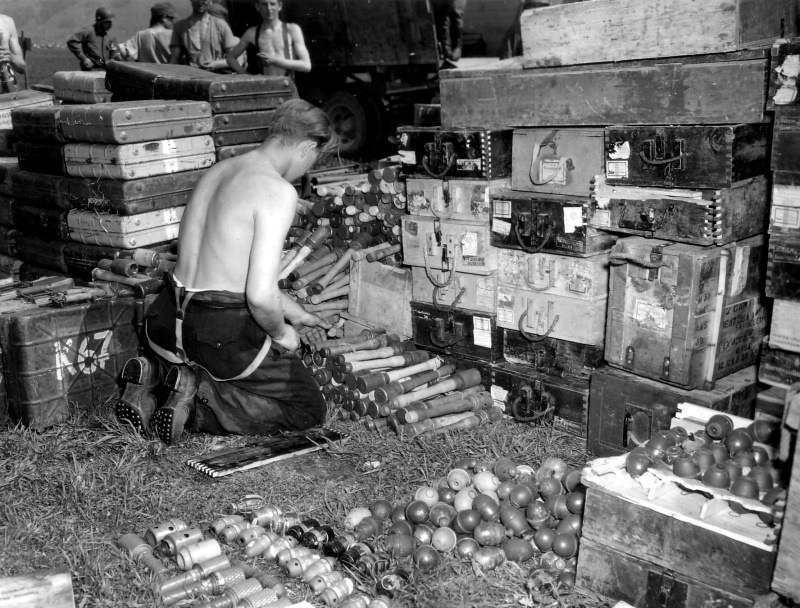
It was pointed out to Speer that we have been puzzled by the apparent inability of the German High Command to utilize the large number of armaments produced in a more efficient manner. Speer said that the basic mistake, as far as ground forces were concerned, was one of policy. This policy called for 90 percent of armament production to go to new, green divisions as against 10 percent for reequipping units on the line. Thus the wastage rate of equipment was unnecessarily high because it was continuously given to inexperienced troops who in their first engagement lost more than an experienced unit would have under equal conditions of combat.
Speer illustrated this by describing an instance that he had witnessed in the Siegfried Line near Echternach. An old armored division had been in the line for a long time but had been able to hold many of our attacks. Their manpower and equipment had been ‘bled white’ until they had only 10 tanks left, but they were still able to hold. At that point, a new Panzer Division with all new equipment was thrown into the sector. A counterattack was staged with 35 Panthers as the backbone. Of those 35 Panthers unloaded, only 25 reached the line of departure. Ten broke down en route through inexperienced handling by the green drivers. The remaining 25 Panthers drove a head-on charge against a battery of American AT guns, which cost them 15 more tanks lost. The remaining 10 withdrew in a disorderly manner. Speer stated that this instance was typical.
In the ammunition field, the mistake was somewhat different. Here the policy was to establish forward dumps approximately 50 to 100 kilometers behind the front line, especially in Russia. Consequently, a Russian attack, when it broke, would find German troops in the line without sufficient ammunition to meet it, let alone mount a counterattack. This in turn would enable the Russians to penetrate to such depth as to capture the ammunition dumps themselves. Generally, the consideration of shipping space was neglected. Thus spare parts for tanks were never there in sufficient numbers and many tanks had to be abandoned for lack of maybe one spare part. Speer would have liked to ship many more tank motors instead of completely new tanks. Ten motors require the same space as one tank. But not until very late was this mistake recognized by the Command.
In the air, especially on the Western Front in the initial stages, the mistake was in the dissipation of available power (as previously established). A total of 2000 fighters was released out of Galland’s reserve for use against the Allied invasion forces, although this reserve had been built up for use against our bomber formations over the Reich proper. The transfer of those fighters to the front took place in small batches. The fields available behind the front were limited in number and were soon located so far inland that most of the fuel was burned up by the fighters to move to and from the target area, thereby reducing the fighter’s combat time to approximately 5 minutes. Moreover, so many fighters had to be jammed into the limited number of fields that the inevitable destruction of large numbers of aircraft on the ground by our own planes followed. Thus no instance is known to Speer where the Luftwaffe was able to assemble in sufficient strength at any one place (Schwerpunkt) to be favorable to German ground troops, let alone decisive. Speer and Galland were strongly advocating the complete withdrawal of tire Luftwaffe from the Western Front in favor of an all-out air effort over Germany.
It was planned, when our long-range fighter escorts began to be decisive weight, to allow our formations to penetrate as deep as a line running north-south through Germany on the longitude of the Harz Mountains. This line, it was estimated, would correspond with the distance from where on east the Allied fighter escort started worrying about their fuel reserve. It would, at the same time, enable German fighters to come to grips with the enemy at a favorably short distance from their home fields. However, the necessary large number of fighters to carry out this plan was taken away for the above-mentioned purpose.
Speer illustrated the strategic conditions for air as follows: Allied aluminum production was four times that of Germany. In order to keep parity it was necessary to shoot down four Allied fighters for every German fighter lost. This was at no time achieved. On the contrary, the proportion came closer to being reversed, showing in Speer’s opinion the absurdity of employing German fighters against Allied fighters. The proportion became much more favorable if German fighters were employed against Allied bombers. Here Speer claims the following figures: 100 German fighters were able to shoot down 25 Allied bombers at a loss of 25 German fighters and 50 percent or 125 men crew loss. One German fighter thus was the cost of eliminating one Allied bomber. One bomber used nine times as much aluminum as one fighter. The parity requirements were four Allied fighters lost against one German fighter. In terms of aluminum, therefore, the loss of one Allied bomber for the price of one German fighter gave the Germans an edge of 2.5 fighters in their favor. If Speer and
Galland would have been able to employ German fighter strength in an above-mentioned manner at a time and location unfavorable to Allied long-range fighter escorts, we would have been eventually forced to cut down on our bombing missions and/or to draw on the Allied air umbrella over the Western Front, thereby changing the odds in favor of German ground forces.