

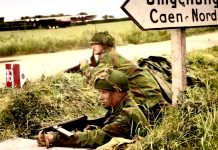
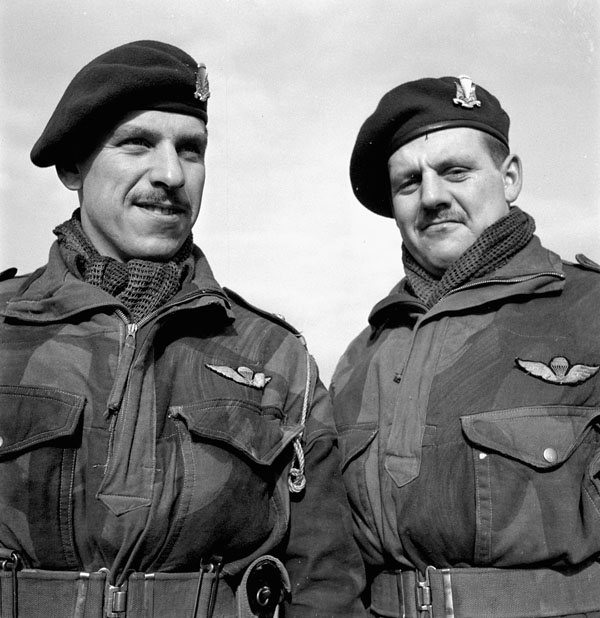
Since July 23, when the 1st Canadian Army took over the eastern Normandy sector, the 1st British Corps had been under Canadian operational command (WD, GSOps, 1st Canadian Army, Appx 79), and on the day on which the 1 Canadian Parachute Battalion returned to the line at the Bois de Bures (July 31), the 1st Canadian Army assumed command of the 2nd Canadian Corps in the Caen area. Thus the 1st Canadian Parachute Battalion, while still part of a British Brigade, a British Division, and a British Corps, came for the first time under command of the 1st Canadian Army.
(22) For the first half of August, the situation of the 6th Airborne Division’s front saw little change. The Canadian Battalion continued to send out patrols, but only meager information about the enemy was obtained (WD, 1 Cdn Para Bn, Aug 6, 1944). Propaganda broadcasts by means of amplifiers were arranged by the Brigade HQs, to encourage deserters, from whom identifications of enemy units might be made. Polish deserters later stated that the Germans dismissed the general contents of these broadcasts as incorrect in view of a few inaccuracies which were contained in the remarks about their own positions and strengths. (WD, 1 Cdn Para Bn, Aug 44, Appx 3, Interrogation Report, Aug 15, 1944). Daily exchanges of artillery and mortar fire took place, the German shells and bombs usually landing accurately upon the battalion positions. On August 15, enemy aircraft bombed the area to the south of the Canadian position. The tempo of the German artillery fire increased. Patrols probing into the Bois de Bures that night and the next day encountered no enemy. It looked as though the long period of static warfare were over. On the evening of August 16, the unit received orders to advance the next day.
(23) The forward move which all ranks of the 1st Canadian Parachute Battalion had been waiting for 10 weeks, and which in 10 days thereafter was to carry them 40 miles onwards to the mouth of the Seine River (30 miles as the crow flies) began early on the morning of August 17, as part of an operation that set in motion the whole line held by the 1st British Corps. On the right flank of the 1st Canadian Army, Falaise had fallen on August 16; the pivot of the enemy’s whole position in Normandy had been smashed, and a large part of his army was encircled and being destroyed, while the remainder retreated eastward. As its share of the general Allied offensive, the 1st British Corps, whose boundary with the 2nd Canadian Corps ran approximately along the line northing 50, through St Pierre-sur-Dives, was directed to advance on Lisieux (WD, GSOps, HQ 1st Cdn Army, Appx 66, GS Memo, 16 August 1944).

The Eastward Advance – August 17 – August 26
(24) The corps front stretched from the mouth of the Orne River to St Pierre-sur-Dives and was held by the British 51st Division (Highlanders) and the 7th British Armoured Division (south), the British 49th Division (center) and the 6th Airborne Division (north). The 6th Airborne was practically in the same positions it had seized on D-Day, from Sallenelles to the outskirts of Troarn. The Belgian Brigade Piron (Light Brigade) and the Royal Netherlands Brigade (Princess Irene) had come under command in the Amfreville-Breville area), while southwards along the ridge Le Plein-Bois de Bavent was stationed, in order, the 6th Air Landing Brigade, the 1st Special Service Brigade, the 3rd Parachute Battalion, the 4th Special Service Brigade. In reserve at Ranville was the 5th Parachute Brigade. (For a note on the Employment of the Dutch Princess Irene Brigade and the Belgian Light Piron Brigade as well as their organization, see the 1st Canadian Army Instr. N°9d. August 2, 1944. WD, GS, Ops HQ 1 Cdn Army August 1944, Appx 7). In the plan for the Division’s advance, the 4th Special Service Brigade was to push form a firm base north of Toufferville; on the left flank, the 6th Air Landing Brigade was to push towards Cabourg, at the mouth of the Dives River; in the center, the 1st Special Service Brigade was directed on Bavent-Varaville; while on the right the 3rd Parachute Brigade was ordered to seize and hold Bures (WD, 3 Para Bn, August 1944, 3 Para Bde OO Exercise ‘Paddle’ August 9, 1944).
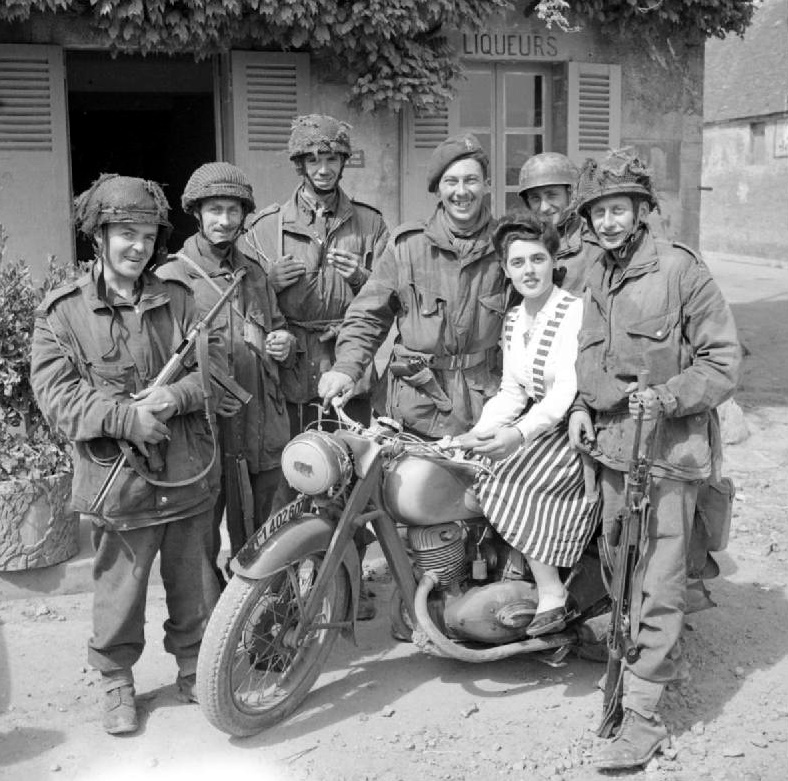
(25) The 1st Canadian Parachute Battalion was given initially a reserve role in Operation Paddle (the name given to the 3rd Parachute Brigade’s advance on August 17, 1944). This Operation commenced at 0300. While the 8th and the 9th Parachute Battalions completed the occupation of Bures by 0700, without encountering opposition, the Canadian Battalion took over a larger section of the Brigade front, and at 0800, began a sweep through the Bois de Bavent (shown as Bois de Bures on the 1:25,000 sheets). The enemy, who for 10 weeks had held the wood so tenaciously, had now withdrawn, but not without leaving behind AP mines and Booby Traps that delayed Baker Co in their advance and added 10 more casualties to the Canadians. Bridges across the Dives River at Bures had been demolished, but in the late afternoon a passable route had been constructed by the 3rd Canadian Parachute Battalion’s Royal Engineer Sqn, and all the units of the Brigade crossed before nightfall. By 2100, the 1st Canadian Parachute Battalion having advanced 3 miles along the railway running northeast from Bures, had made contact with the enemy at Plain Lugan and taken up positions for the night there. The 8th Parachute Battalion was at Goustranville, and the 9th Parachute Battalion in reserve was, with the Brigade HQs, at St Richer.
(26) The lack of comparative-lightness of enemy resistance encountered by the 3-Para Brig on the first day, and in general during the whole period of the advance to the Seine River, underlines the instructions of the GOC, 6 A/B British Division, given to the Brigade prior to the commencement of the Operation Paddle, (advance if and when it is certain that the enemy was withdrawing) (ibid: Appx A2, Report on 3 Para Bde Operation Paddle). The lightly equipped formations of the 6th Airborne which had very little armor at its disposal (part #46), were not intended to drive against heavily armed enemy forces nor to storm strongly held positions. Their part in the general eastward advance now beginning was rather to keep contact with a retreating army, driving his rearguards back, and mopping up isolated pockets of resistance as these were encountered.
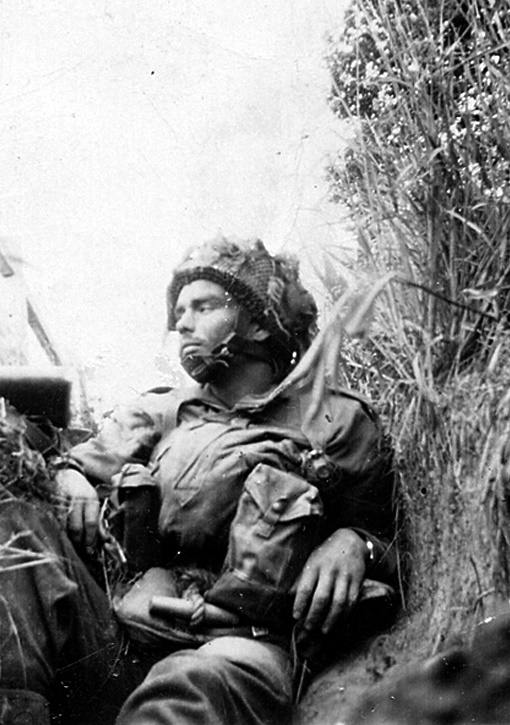
(27) Further progress of the 3rd Parachute Brigade was halted by the enemy’s destruction of the bridge across the St Samsom Dives-sur-Mer Canal. This canal parallels the Dives River in a general northeasterly direction, swinging north to cut across the Troarn Dozulé road 1000 yards east of Goustranville. But the map showed 4 bridges crossing the canal at 400 yards intervals, the northernmost one carrying the railway line from Troarn just west of its junction with the main line running south from Dives-sur-Mer. The 1st Canadian Parachute was ordered to seize the four bridge positions, and to ascertain whether any were passable to infantry and vehicles.
(28) Hour zero was set at 2145, August 18. At 2030, the unit left Plain Lugan to form up at the crossroads west of Gourstranville. The attack went in on schedule, and by 2220, Charlie Co had seized the railway bridge. The southernmost bridge was taken by Able Co, who named it Canada Bridge. By 2350, all bridges were in hands of the Canadians, who continued to hold them through the night. At least 150 prisoners of war were taken, and the Brigade report on the operation refers to: the Canadian battalion as having successfully liquidated two enemy companies in well-fortified positions. (ibid: Appx. A2, Report on 3 Para Bde Operation Paddle II). Considering the nature of the task casualties were surprisingly light.
(29) The railway bridge partially demolished, was found to be passable to infantry. Shortly after midnight, the 9th Parachute Battalion crossed, in four feet of water, and by 0245, had seized the railway line and routed the balance of the enemy battalion. Heavy German shelling and mortaring came from dominating high ground further east, but in the course of the morning, the 5th Parachute Brigade went through, crossing by the Canada Bridge to the south followed by the 1st and the 4th Special Service Brigades. That night, the GOC, 6th Airborne Division congratulated the units of the 3rd Parachute Brigade on their exploits during Operation Paddle and Operation Paddle II. The Brigade had indeed made a good showing. In the first 3 days of its advance, it had successfully driven the enemy rearguards from the ‘island’ enclosed by the Dives River and the Canal, and it had overcome difficult obstacles with a loss to the German of an entire unit, the 744.Grenadier-Regiment (711.Grenadier-Division).
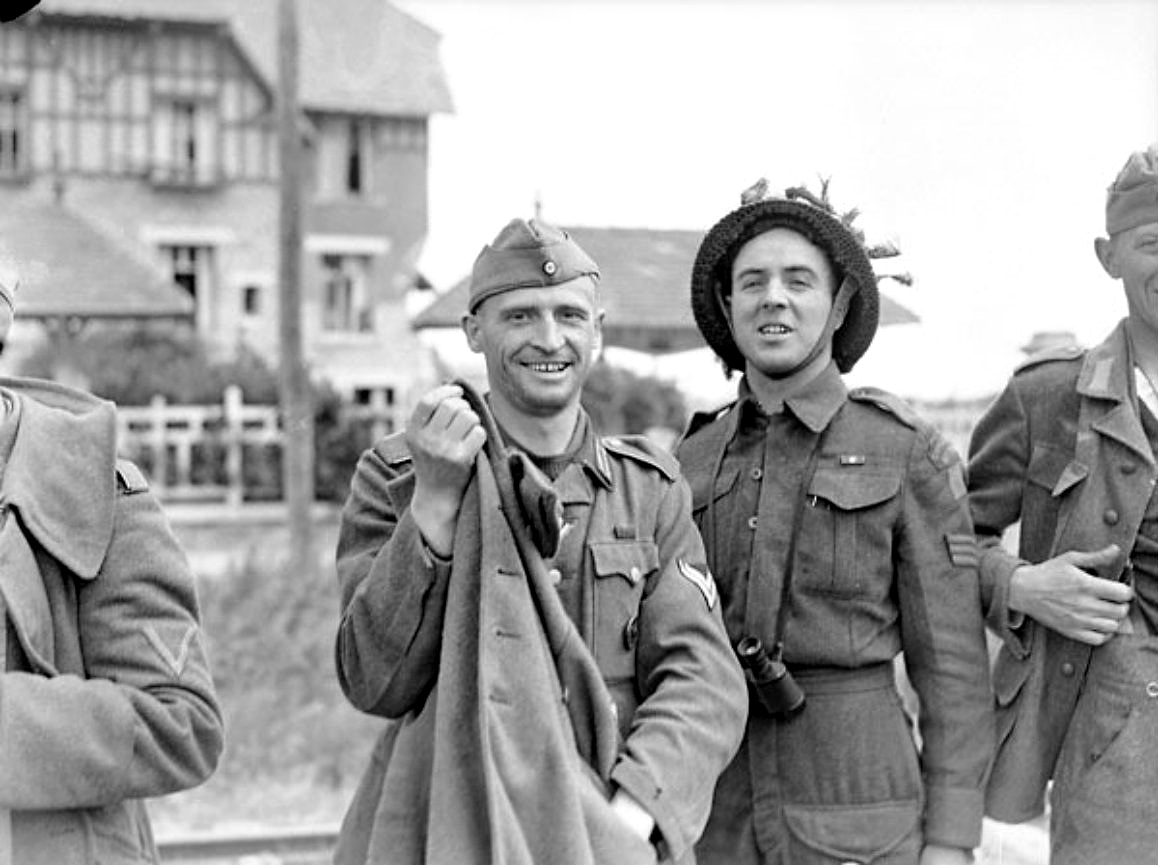
(30) While the 1st and the 4th Special Service Brigades pushed forward to clear the Dozulé area of the enemy, units of the 3rd Parachute Brigade remained for 2 days in the Goustranville area, the Canadians holding their defensive positions at the 4 captured bridges. Enemy shelling on both days (August 19-20) caused a few casualties, and enemy aircraft dropped some bombs on the first night, without however causing damage. On the morning of August 21, the Brigade started to move forward on foot towards Annebault, passing through the 2 Special Service Brigades at Dozulé. Their role as infantry must have been unpleasantly driven home to the parachute troops as they proceeded through pouring rain along a road that was being shelled heavily. No contact was made with the retreating enemy until the evening. While the Brigade administrative area was established at Le Bourg at 1800, the 8th Parachute Battalion pushed forward to capture Annebault and the 1st Parachute Battalion swung north to engage a resistance point on high ground at La Vallée Tantot. The Canadians encountered 81-MM Mortar fire and SP guns, and, unable to make further progress, dug in for the night. By morning, the enemy had retreated, and the Battalion returned to the main road at Annebault, rejoining the other brigade units half-a-mile west of La Haie Tondue at 1000 (Aug 22).
(31) It was now the 3rd Parachute Brigade’s turn to halt while the 5th Parachute Brigade pushed through to Pont-L’Evêque. For 48 hours, the 1st Canadian Parachute Battalion rested, while all personnel took advantage of the respite to do their washing and generally prepare themselves for further action. On August 23, Gen K. Stuart, Chief of Staff, visited the unit, and Col Bradbrooke relinquished command to take a staff appointment (GSO I, (Air) 38th Group RAF). For the short period, Maj G.F. Eadie acted as Commanding Officer and on Sept 8, Col J.A. Nicklin assumed command.
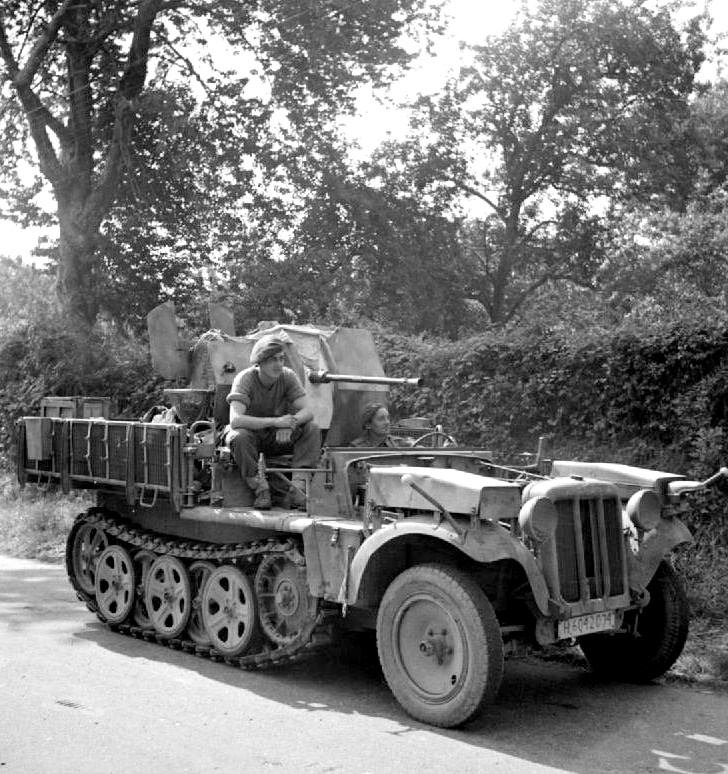
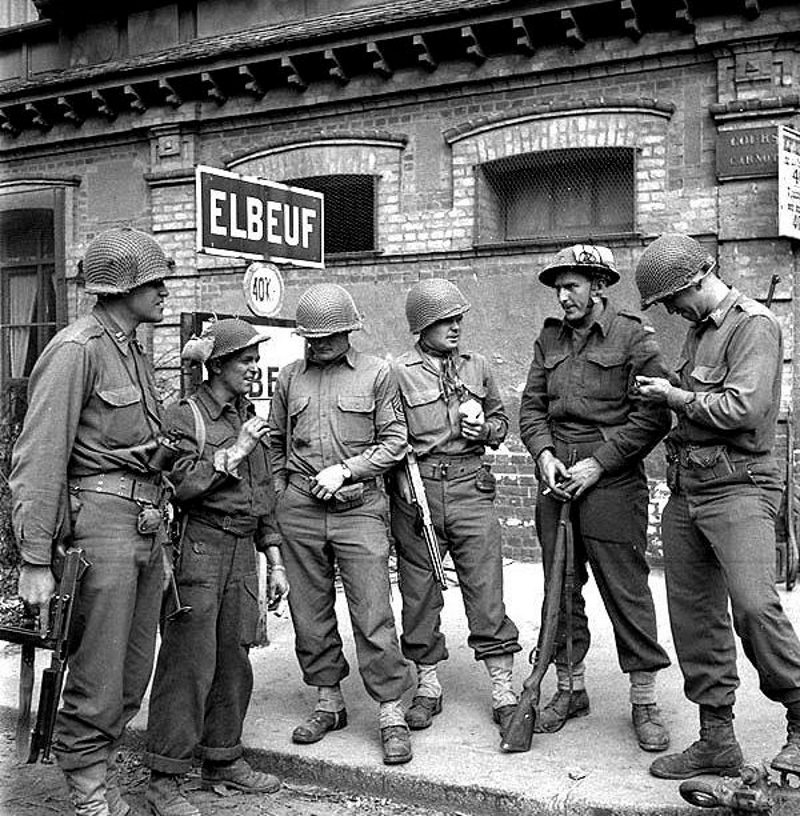 (32) On August 24, the 1st CA sent the following warning order to the 1st British Corps: S.D. 45, Warning Order. The 6-A/B will prepare to move into the British 21st Army Group afternoon on August 30. Further instructions follow to a later date. All information. (WD, GS, SD, 1st Canadian Army, Aug 44, Appx 275). The message is significant in pointing to the approaching end of the 6-A/B’s role in the 1st Canadian Army’s rapid move drive eastwards across Normandy. The Army’s main axis of advance was swinging more and more sharply towards the north, as the 1st US Army came up from the south, moving in upon the enemy’s last precarious foothold on the left bank of the Seine River at Elbeuf. As the narrowing front moved forward, the 6th Airborne Division’s sector on the left flank of the 1st British Corps, and therefore on the extreme left of the entire 21st Army Group, had developed into a diminishing triangle whose forward apex ran into the sea at the mouth of the Seine River. It seemed that only a few more days would be required for the airborne unit to complete its task.
(33) While the units of the 3rd Parachute Brigade rested between Annebault and La Haie Tondue, other formations of the 6th Airborne Division had forced their way across the Touques River in 2 places. The 5th Parachute Brigade, after overcoming stiff opposition at Pont-L’Evêque, was on the morning of Aug 24 well along the road to St Benoît-D’Hébertot, while the 6th Air Landing Brigade, which since Aug 17 had been making its way steadily along the coastal flank, followed closely by the Belgian Piron Brigade, was now over the river and into Bonneville-sur-Touques. It was time for further leap-frogging.
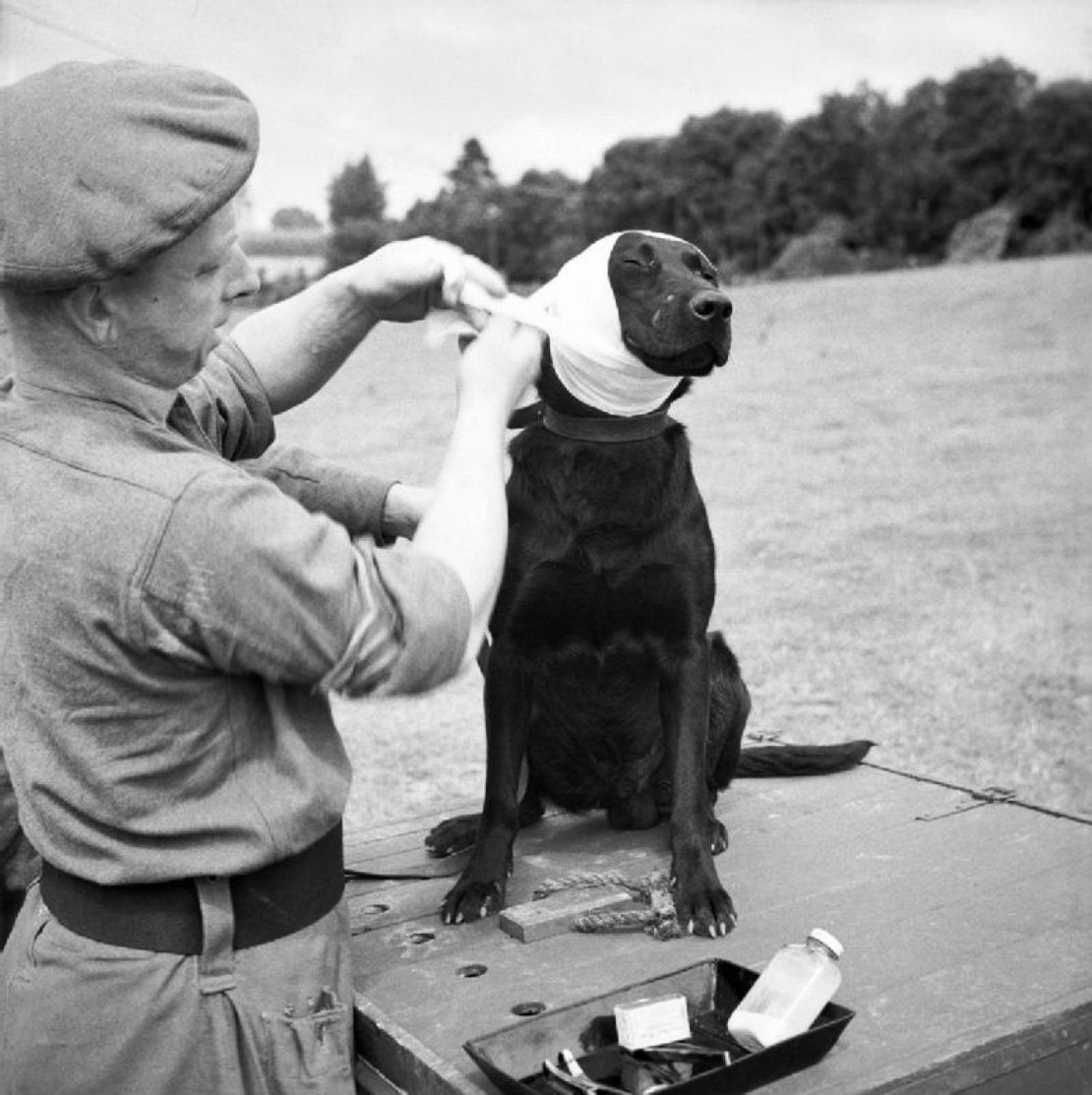
(34) At 1000, August 22, the 1st Canadian Parachute Battalion took the road again, as the 3rd Parachute Brigade swung north to make a wide sweep around Pont-L’Evêque and follow the 6th Air Landing Brigade across the Touques River at Bonneville-sur-Touques. For the first 5 miles, the unit had a welcome that relied upon marching as lorries carried them as far as Vauville. Then the Canadians marched eastward in the rain to St Gatien. There was an hour’s halt at Tourgeville for the midday meal, and a further delay at Touques where the Canadians Battalion had to cross the river by ferry, but the day’s objective was reached at 1830. The only enemy opposition encountered during the day was at the outskirts of St Gatien, when a German SP gun fired 8 rounds, without however inflicting any casualties. The battalion spent the night in the town, having advanced 14 miles that day. On the morning of August 25, they were on the road again by 0800, and 2 hours later, after passing through St Benoît-D’Hébertot, had reached La Moderie on the outskirts of Beuzeville, where they halted.