





Warning: This archive contains historically authentic documentation, testimonies, and graphic images related to concentration camps and wartime atrocities during World War II. Readers who may find such material disturbing, emotionally difficult, or incompatible with their personal sensitivities are strongly advised not to continue. The images presented in this archive are included strictly for historical, educational, and documentary purposes.
Reviewed by Doc Snafu on May 14, 2026.

 Document source: Allied Forces, Supreme Headquarters, G-5, US Group Control Council. Inspection of the German Concentration Camp for political prisoners, located at Buchenwald on the north edge of Weimar. This inspection was conducted by Gen. Eric F. Wood, Col. Chas. H. Ott, and CWO S. M. Dye on the morning of April 16, 1945. PW & DP Division, US Group Control Council APO 742, Annex to Recon Report of April 21, 1945. In addition to an American Officer guide, the party was also accompanied by Commandant René l’Hopital, the former ADC to Maréchal Foch, DSM, Officer of the Legion of Honor, MVO, etc; a personal friend of many Americans including Gen Handford McNider, the late Theodore Roosevelt, Gen Frank Parker, Franklin D’Olier, Admiral Byrd, who had been a prisoner in the camp during the two months prior its capture. He weighed 95 lbs, compared with a normal weight of 175 lbs, but was in far better physical condition than the average of his fellow prisoners (having been in this camp only 2 months).

History of the Camp

 The Concentration Camp in Buchenwald (literally Beech Forest) was a Nazi concentration camp established on the Ettersberg Hill near Weimar, Germany, in July 1937. It was one of the first and the largest concentration camps within Germany’s 1937 borders. Many actual or suspected communists were among the first internees. The Camp was founded when the Nazi Party first came into power in 1933 and has been in continuous operation ever since, although its largest populations date from the beginning of the present war. The US Armored Force of the 9th Armored Infantry Battalion (6th Armored Division) overran the general area in which the camp was located on April 12, 1945. The SS guards had decamped by the evening of April 11, 1945. Some US Administration personnel and supplies reached the camp on Friday, April 13, a red-letter day for the surviving inmates. (Note that the US 89th Infantry Division overran Ohrdruf, a sub-camp of Buchenwald on April 4, 1945).
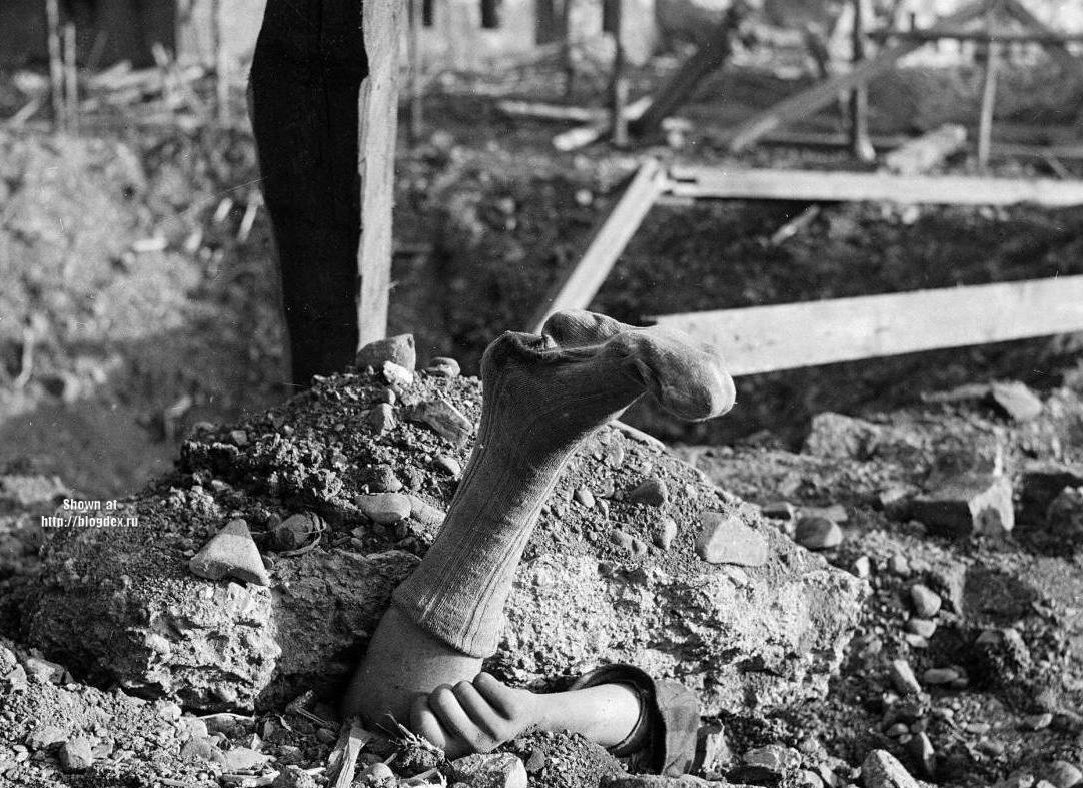
Surviving population, April 16, 1945
Austrians 550
Belgians 622
Czechs 2105
Dutch 584
French 2900
Germans 1800
Hungarians 1240
Italians 242
Yugoslavs 570
Polish 3800
Russians 4380
Anti-Franco Spanish and Misc 1207, for an estimated total of 20.000.
Character of the Surviving Population
Males only, including 1000 boys under 14 years old. Intelligentsia and leadership personnel from all of Europe; anyone and everyone of outstanding intellectual or moral qualifications, or of democratic or anti-Nazi inclinations, or their relatives. For instance, as the French inmates, they included 4 anti-Vichy members of parliament; professors of the Pasteur Institute, University of Paris, University of Caen, etc; 8 high-ranking anti-Vichy generals (including Gen Vermeau who was at one time the Chief of Staff), and the son of one of them; and French engineers, lawyers, editors and other professional men of the higher brackets. A particular inclination of incarcerating prominent
Jews were manifest; there were 4.000 of them among the 20.000 survivors (these are inclusive in the nationalities listed in the preceding paragraph). Jews were given even worse treatment than the others. For instance, no Jews were ever promoted from the Little Camp (see below). A few inmates were from time to time, ransomed by their families by personal payments to SS officers and liberated to spread the word, among other leadership or intellectual anti-Nazi personnel throughout Europe, as to the penalties (internment in this camp and similar ones) for anti-Nazism.
Mission of the Camp
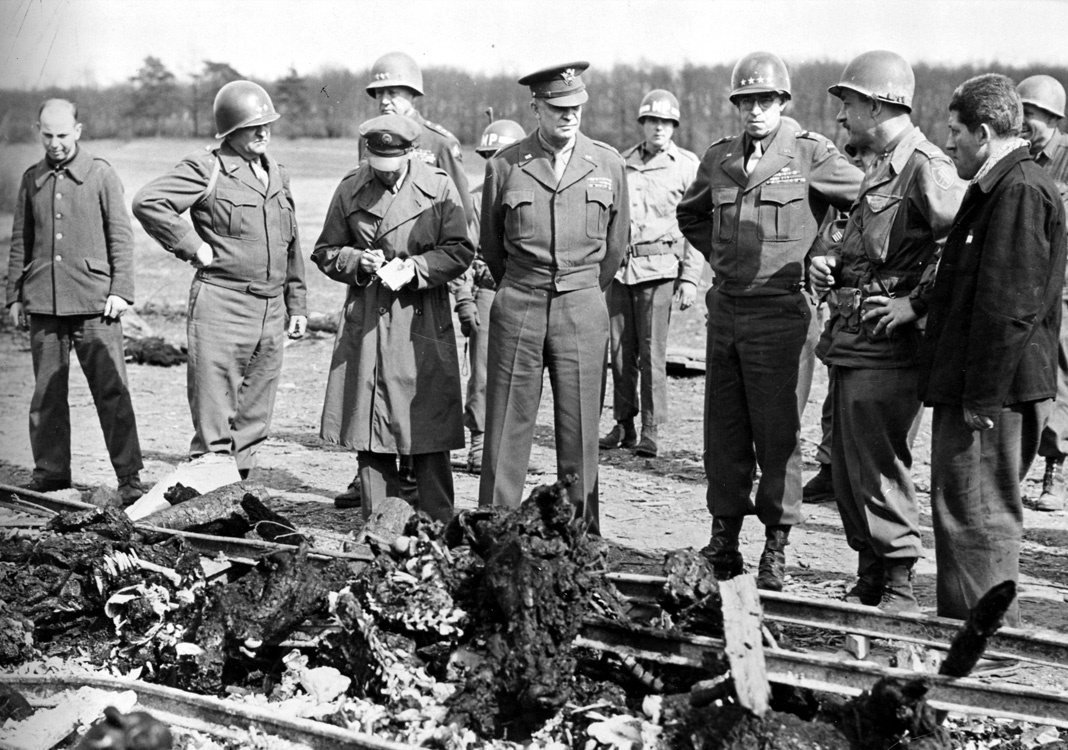
An extermination factory. Where death was not bad enough for anti-Nazis. Means of extermination, starvation, complicated by hard work, abuse, beatings and tortures, incredibly crowded sleeping conditions (see below), and sickness (for instance, typhus was rampant in the camp; and many inmates were tubercular). By these means, many tens of thousands of the best leadership personnel of Europe (including German democrats and anti-Nazis) have been exterminated. For instance, 6 of the 8 French generals originally committed to the camp, and the son of one of them had died there (and the 2 surviving French generals appear to be beyond rehabilitation). The recent death rate was about 200 a day. 5.700 had died or been killed in February, 5.900 in March, and about 2.000 in the first 10 days of April. The main elements of the installation included: the Little Camp, the Regular Barracks, the Hospital, the Medical Experimentation Building, the Body Disposal Plant, and the Ammunition Factory which was immediately adjacent to the camp and separated from it only by a wire fence.
The Little Camp
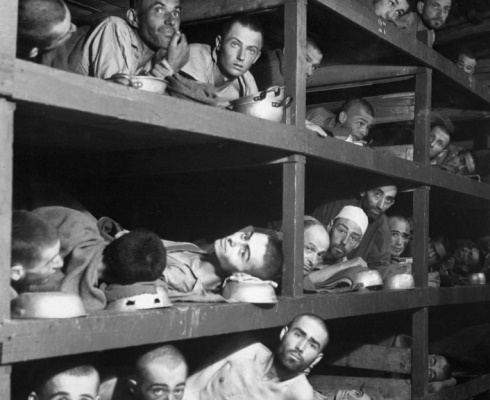
Prisoners here slept on triple-decked shelves, on each shelf about 12′ x 12′, 16 prisoners to a shelf, the clearance height between shelves being a little over 2′. Cubage figured out about 35 cu. ft. per man, as against the minimum for the health of 600 cu. ft. prescribed by US Army Regulations. All arriving new prisoners were initiated by being sent at least 6 weeks here before being graduated to the Regular Barracks. During this initiation, prisoners were expected to lose about 40% in weight. Jews, however, seldom if ever graduated to the Regular Barracks. Camp disciplinary measures included transferring recalcitrant prisoners back to the Little Camp. As persons became too feeble to work, they were also sent back to this camp, or to the ‘Hospital’. Rations were less than at Regular Camps, and the death rate was very high here; recently 2% to 4% a day.
The Regular Barracks
The dormitory rooms were approximately 42′ x 23′, about 10′ high; or a content of less than 9500 cu. ft. In such a room, there were installed triple-deck, 38 stacks of 3 cots each, or a total of 114 cots, each cot 30′ x 72′ outside measurement. Most of these cots were double (i.e., 2 parallel cots occupying a space 60′ x 72′). Airless were too narrow (less than 24′) to permit movement except with the body edgewise. 114 cots into 9500 make less than 85 cu. ft. per persona. But since the war, 250 persons have been made to sleep in each such room (5 persons on each 60′ x 72′ double cot, and 2 persons on each 30′ by 72′ single cot); or less than 40 cu. ft. per persona. There was less than one blanket per prisoner. Blankets were thin and shoddy, and undersized. There was no heat in these dormitories.
The ‘Hospital’
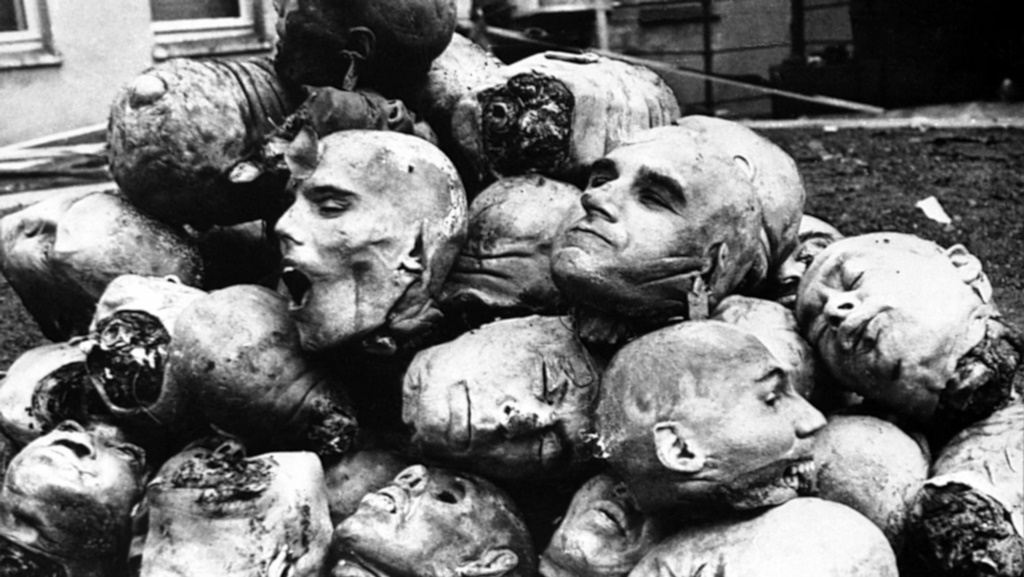
A building where moribund persons were sent to die. No medication is available, hence no therapy was possible. Typhus and tuberculosis were rampant in the camp. About half the ward in the hospital was about 15′ deep with one window at the outside end, by 5.5′ wide. From 6 to 9 “patients” occupied such a ward, lying crosswise on the floor, shoulder to shoulder. Room too narrow for most of them to extend their legs. The death rate in the ‘Hospital’ 5% to 20% a day.

Medical Experiment Building
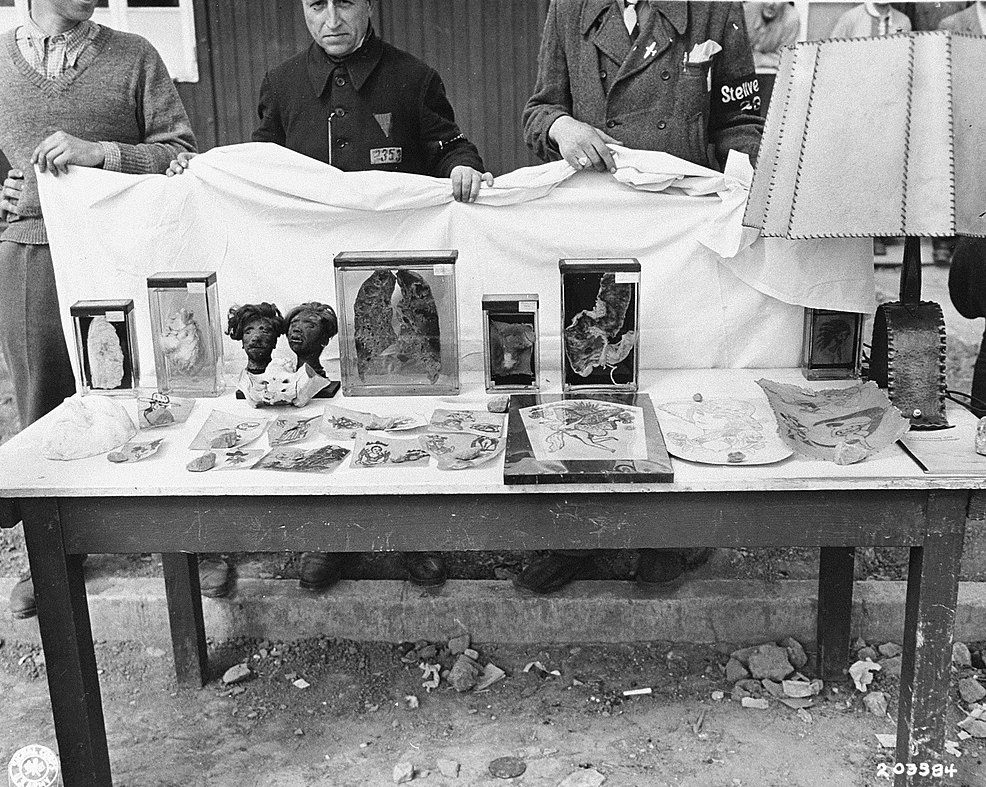
Block 41 was used for medical experiments and vivisection, with prisoners as guinea pigs. Medical “scientists” came from Berlin periodically to reinforce the ‘experimental staff’. Few prisoners who entered this experimental building emerged alive. Die Hexe von Buchenwald (Witch of Buchenwald) was the wife of Karl Koch, the commanding officer of Buchenwald from 1937 to 1941, and Majdanek from 1941 to 1943. Drunk on the absolute power rendered by her husband, she reveled in torture and obscenity. Infamous for her souvenirs, tattoos were taken away from the murdered inmates; her reputation for debauchery was well earned. After building an indoor sports arena in 1940 with 250.000 marks stolen from inmates, Ilsa was promoted to Oberaufseherin or ‘chief overseer’ of the few female guards at Buchenwald. She committed suicide by hanging herself at Aichach women’s prison on Sept 1, 1967. Another Schlampe was also a product of the Nazi’s final solution, Irma Grese, or the Bitch of Belsen. She was a guard at concentration camps Ravensbrück, Auschwitz, and Bergen-Belsen. Transferred to Auschwitz in 1943, (she must have shown particular enthusiasm and dedication to the job), she was promoted to Senior Supervisor, the 2nd highest-ranking female in camp, by the end of the year. In charge of over 30.000 Jewish female prisoners, she reveled in her work. Her work included: savaging of prisoners by her trained and half-starved dogs, sexual excesses, arbitrary shootings, sadistic beatings with a plaited whip, and selecting prisoners for the gas chamber. She enjoyed both physical and emotional torture and habitually wore heavy boots and carried a pistol to facilitate both.
Body Disposal Plant
The design of this installation was a striking example of German industrial efficiency. It had a maximum disposal capacity of about 400 bodies per 10-hour day. All bodies were reduced to bone ash, thus destroying all evidence. All gold-filled teeth were extracted from the bodies before incineration.
This plant was entirely enclosed with a high board fence. No one except the small operating force of SS personnel was allowed even to look inside this fence, and no prisoner who passed within (as a member of a fatigue party, or for any other reason) ever came out alive. Inside this fence, a large front yard on the left, a small back yard on the right, and the incinerator building is centrally located between the two yards. This building was of substantial brick construction with cement floors, one story, with a full-size 12′ high basement beneath. The main floor contained an ‘Administration’ office at the front end, a locker and washroom for SS personnel at the far end, and the incinerator room in the center. The later contained, in line, 2 batteries of 3 fire-brick incinerators each, each incinerator having a capacity of 3 bodies; or a total charge of 18 bodies (adults).
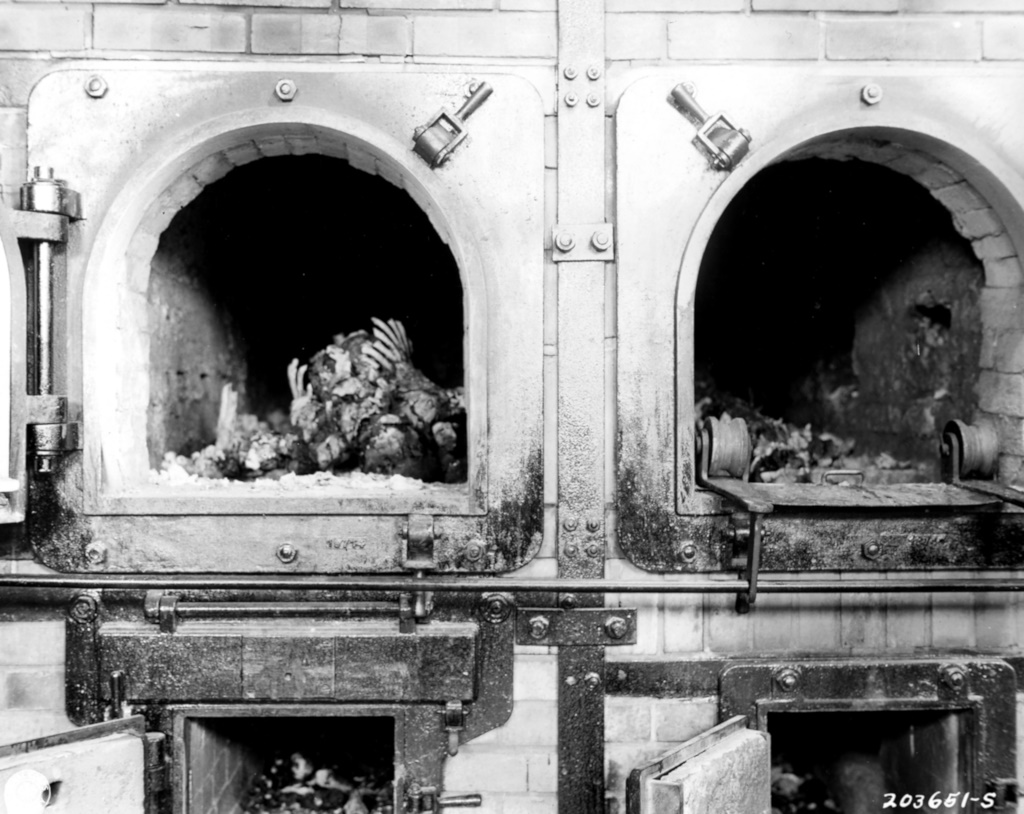
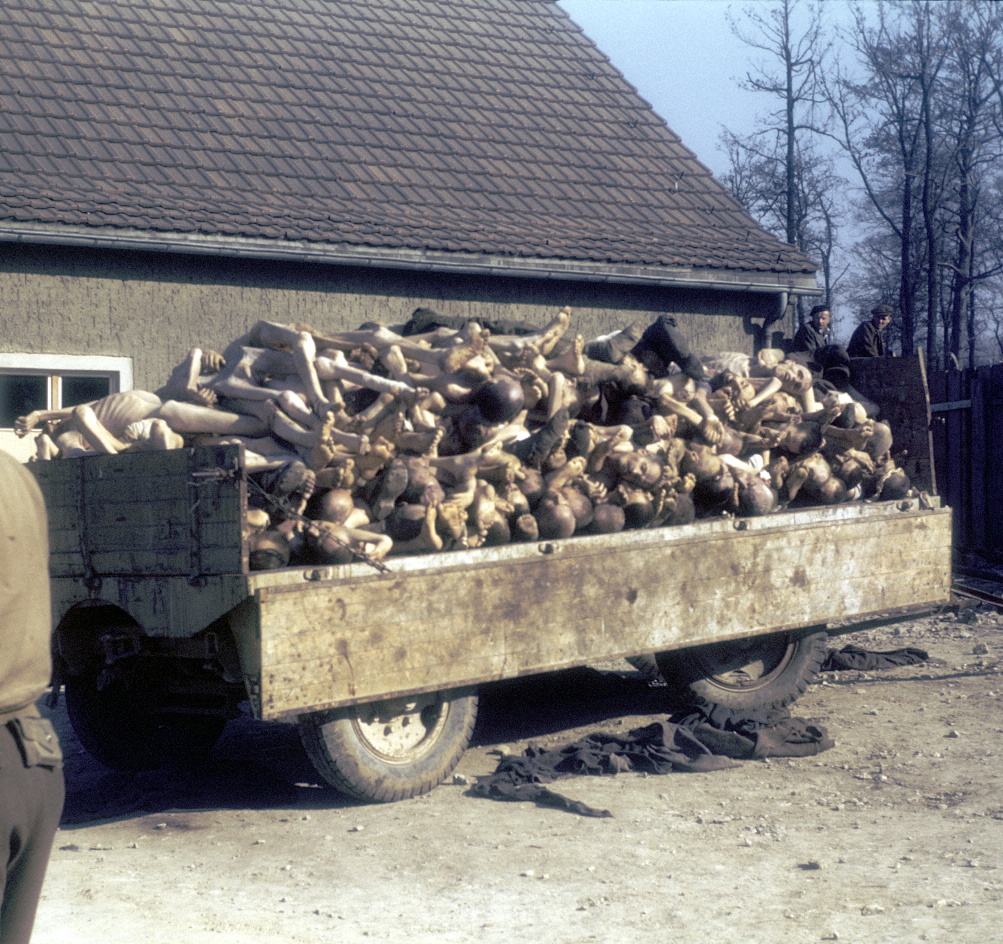
20 minutes were required for the incineration of a ‘charge’. The floor of each incinerator consisted of a coarse grate through which the bone ash fell into an ash pit about 16′ deep, having a separate front door through which the day’s accumulation of bone ash was extracted at the end of the operation. The fire came from a furnace-room occupying the rear two-thirds of the basement, the flames being deflected downwards onto the bodies by baffle plates in the roofs of the furnace. The front end of the basement was occupied by the Strangulation Room. The method of collecting bodies was as follows. Roll-call was held every evening, outdoors outside the dormitory buildings. Internees were required to strip and bring to roll-call the naked bodies of all comrades who had died during the previous 24 hours. After roll-call, a motor truck drove around the camp, picked up the bodies, and was driven into the front yard of the incinerator plant to await the next day’s operation.
But this was not the only source of bodies. Emaciated prisoners who had been around long enough, who committed infractions of discipline, who ‘knew too much’, or who refused to be broken in mind, were arbitrarily condemned to death. For instance, in the Little Barracks where prisoners slept 16 on a shelf, and infraction of discipline (and particularly an attempt to escape) not frequently resulted in all 16 being condemned.
Such persons were immediately marched on foot to a small door into the fence of the back yard, at a point immediately adjacent to the right-hand front corner of the incinerator building. This door opened inwards until it hit a door-stop, which helped it at a position parallel to the building’s wall, thus creating a corridor about 4′ wide and 3′ deep. At the far end was an opening about 4′ x 4′ flush with the ground, the head of a concrete shaft about 13′ deep, the bottom floor of which was the continuation of the concrete floor to the room at the front end of the basement. The condemned prisoners, on being hurried and pushed through the door in the fence, inevitably fell into this shaft and crashed 13′ down to the cement cellar floor. This room, on the floor at one end of which they now found themselves, was the Strangling Room.
As they hit the floor, they were garroted, with a short double-ended noose, by big SS guards, and hung on hooks along the sidewall, about 6.5′ above the floor, the row being 45 in number. When a consignment had been all hung up, anyone who was still struggling was stunned with a wooden mallet. The bodies were left on the hooks until called for by the incinerator crew. An electric elevator, with an estimated capacity of 18 bodies, ran up to the incinerator room, which was directly above the Strangling Room. The day’s quota of approximately 200 bodies was made up from 120 to 140 prisoners who had died mostly in the ‘Hospital’ in the ‘Medical Experiment Building’ or in the ‘Little Camp’, and from 60 to 80 supplied by the Strangulation Room.
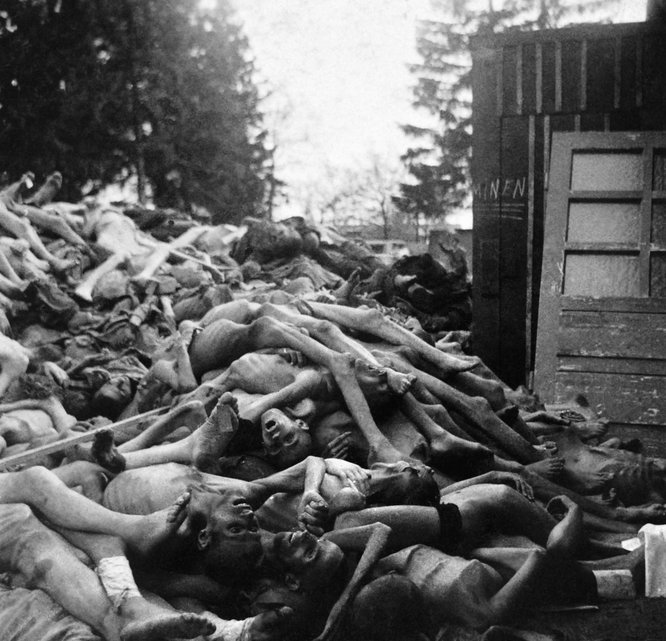
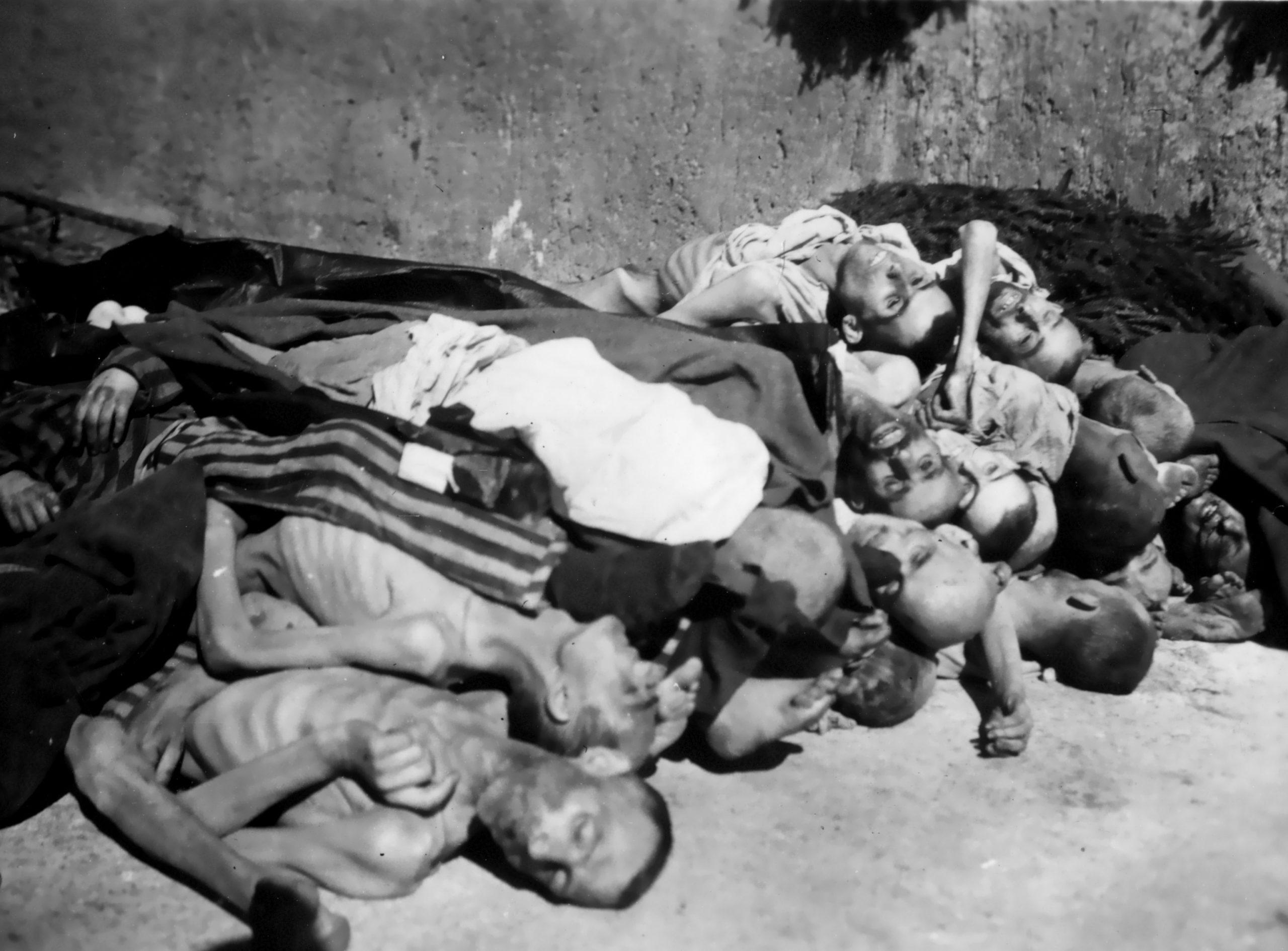
For a period of about ten days in March, the coal supply for the incinerator ran out. Awaiting the arrival of new supply, bodies to the number of about 1800 were allowed to collect in the front yard, stacked up like cordwood. To the annoyance of the SS, this over-crowded the yard with indisposed ‘evidence’, and the smell of warm weather created a sanitary problem. Moreover, burial was a good deal more troublesome than incineration and was out of the customary routine. But something had to be done. So a truck detachment and a fatigue detail of internees were organized. The bodies were loaded in the trucks and hauled out of camp. The fatigue detail dug one huge burial pit, threw the bodies into it, filling it except for one end, and covered the bodies. Then the SS shot all the members of the fatigue detail, threw their bodies into the vacant end, and covered them up.
Shortly afterward, a new supply of coal having been received, the process of incineration was resumed. This process was so abruptly interrupted by the arrival of US Armor in the area that the SS had no time to ‘tidy up’ so that the cycle of operation could be plainly examined and understood.
The previous day’s quota of upwards of 120 corpses of prisoners who had died in the camp was parked in a truck in the front yard. The incinerator furnace grates had not yet been cleared of un-consumed hip-bone joints and parts of skulls. In addition, the bodies of about 40 inmates who had died since US arrival, in spite of prompt medical and ration attention, were stacked up like cord-wood against the wall of the yard. American surgeons stated that the adult corpses weighed only 60 to 80 lbs, having in practically all cases lost 50 to 60% of their normal weight, and also having shrunken in height.
Rations, 600 to 700 calories per day for the regular camp, 500 for the Little Camp, both of an unbalanced ration, as against 3000 to 3600 calories required for adult health. Black bread, potatoes twice a week, and beet-root twice a week served as a weak soup, soybean (or other vegetables) ‘sausage’, jam twice a week, margarine about once a week. Never any greens or fresh vegetables. Heavy deficiency in animal fats and vitamins. No meats. Red Cross packages almost entirely appropriated by the SS Camp Commander and distributed to suit himself to SS Personnel, to citizens of Weimar, even to Nordic German Camp Prisoners. In two months Commander L’Hopital received 1/10, 1/14, and 1/7 of a one-person, weekly French Red Cross parcel. Meals were prepared and ‘served’ by prisoner personnel under SS supervision. Attempted evacuation, as the American Army approached, the SS attempted to evacuate some of the ‘valuable’ prisoners. A column of 2000 was formed on April 8, 1945, and another similar on April 10, 1945. (SS guards fled precipitously on April 11, 1945, because American armor was heard firing in the area). All prisoners of these columns who fell were shot by the roadside. It is alleged, by the US personnel now operating the camp, that about 3000 where killed in this manner. The remainder escaped and are being rounded up. Commandant L’Hopital stated that orders had been given to kill all remaining persons in the camp on April 11, 1945, when further evacuation became impossible, but that this big job was left undone, and the remaining prisoners saved when the nearby presence of American tanks stampeded the SS personnel.
Commandant L’Hopital stated that the wife of one of the SS officers started the fad, that any prisoner who happened to have extensive tattooing of any sort on his body was brought to her; that if she found the tattooing satisfactory the prisoner was killed and skinned; that the skin with the tattooing was then tanned and made into souvenirs such as lampshades, wall pictures, bookends, etc; that about 40 examples of this artistry were found on SS officers and quarters in the camps. This statement was confirmed by Lt Walter F. Emmons. We saw 6 examples at the Camp HQ, including a lampshade.

This concentration camp was by no means unique, nor were its methods different from similar camps which were (or are still) operated at Dachau (near Berlin). Kleine Glattbach (E of Karlsruhe), and at other points. When the French 1-A over-ran Kleine Glattbach on April 10, 1945, they found only 700 emaciated survivors, 80% of whom are beyond rehabilitation and about half of whom are in advanced stages of tuberculosis of various types according to the considered opinion of the Army Surgeon.
On March 10, 1945, the camp’s incinerator plan ran out of coal. A long trench was thereupon dug, with a unit of mechanical equipment, and then, starting at one end, the daily quota of dead were stacked into it progressively down the length of the trench. The number thus interred for approximately one month was 1200. This information was supplied by French Gen de Lattre de Tassigny, Commandant William Bullitt, and the Army Surgeon; all of whom had inspected the camp. The strategical implications of the above procedure appear to be far-reaching. Namely that Continental Europe (including Germany) has been systematically deprived of hundred of thousands of its best liberal or democratic leadership personnel.
Buchenwald, April 16, 1945.