


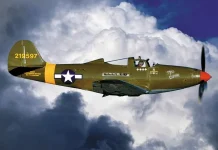
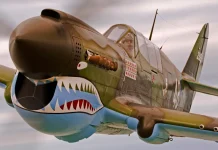


Operation Argument was a week-long campaign aimed at the major German aircraft industries that utilized both the 8-USAAF and the 15-USAAF in the daytime and leveraged help from the British (RAF) Royal Air Force’s Bomber Command at night. This operation was designed to be a maximum effort for the Allied air forces and was looked upon as the climactic moment in the European air war. With a plan in place, what the Allies needed now was clear skies over Europe to begin the aerial assault. Good weather was not just required over the 8-AAF in East Anglia, but also over the target areas in Germany. In order to help determine when Operation Argument could be launched, Gen Arnold sent pioneering meteorologist Dr. Irving Krick to Europe to help determine when a high-pressure pattern would move into the region proving good weather for the operation.
 On Feb 18, 1944, Dr. Krick saw a high-pressure system over the Baltic and Ireland promising a good weather pattern over Germany starting on Feb 20. However, the downside was that Krick also predicted overcast for much of East Anglia. As a result, a decision was needed as to when to launch the aerial offensive. Despite protestations from other air commanders regarding the weather conditions, on Sunday morning Gen Fred Anderson, Deputy Commander for Operations for the US Strategic Air Forces (USSTAF) and chief planner for Operation Argument, considered the situation and eventually issued the order to conduct the operation starting on Feb 20. Anderson was ordering, for the first time, more than 1000 US bombers over the Channel to bomb Nazi Germany. He recorded his decision simply in his diary by writing, Let ‘em go.
DAY 1
Operation Argument became known as the Big Week and targeted the large Me-109 fighter assembly plant at Leipzig, the Ju-88 factory at Bernberg, a wing assembly plant at Halberstadt, Messerschmitt component factories at Regensburg and Brunswick, and final assembly plants at Gotha and Augsburg. Additionally, many other smaller assembly plants and factories were also included in the target list. On the first day, (Feb 20), the 8-AAF sent its bombers to Germany targeting aircraft production plants at Leipzig, Gotha, and Brunswick that produced M-109s, FW-190s, and Ju-88s. In addition to the bombers, VIII and IX Fighter Command with accompanying Royal Air Force Squadrons, sent some 73 P-51s, 94 P-38s, and 668 P-47s to hunt for the Luftwaffe. The 15-AAF was still committed to operations in the Mediterranean during the initial sorties and did not launch any planes in support of Operation Argument until Feb 22.

Six bomb wings headed to targets in northern Germany while ten bomb wings headed to Germany’s industrial heartland in the south. The northern force flew unescorted while the southern force had fighters accompanying the armada. The USAAF hoped that by splitting the bombing force, the Luftwaffe might focus their fighter’s efforts on the southern force leaving the unescorted northern force unmolested. The American ruse worked relatively well, except that the German fighters pounced upon the 3rd Bomb Division in the north, near the coast of Denmark. Americans were attacked by twin engine and single engine fighters firing rockets and 20-MM cannons. As a result of this initial fray, two B-17s were downed.
The Division continued to its primary targets. Included in the target were Luftwaffe facilities at Tutow, the Kreising Airfield and factory near Posen, and as secondary targets the towns of Stettin and Rostock, home of Heinkel aircraft factories. However, the clear weather the northern force was expecting failed to materialize and many bombers dropped using radar bombing methods through the undercast with generally good results.
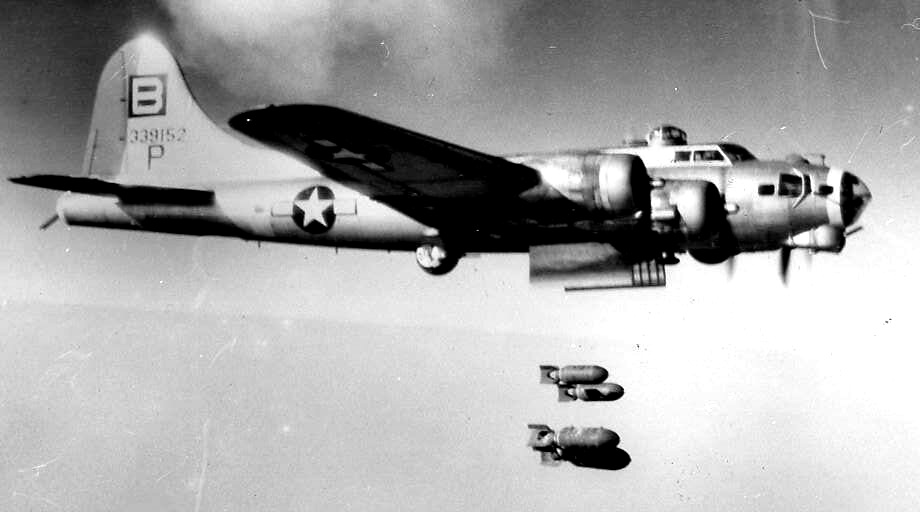
The 1st Bomb Division’s target in the southern force was the many aircraft plants and subcontractors in and around the town of Leipzig. Defended with some 1200 FLAK batteries the town was a hub of the German aircraft industry. Despite the German defenses, the bombers were met by clear air and dropped their bombs with great accuracy. The 2d Bomb Division, in their B-24s, headed for production facilities in Brunswick producing engines for FW-190s and for armored vehicles. The southern force hit eight aircraft factories and 11 industrial plants. Post-war analysis showed that Ju-88 production was delayed for a month, with 32 percent of Me-109 production capacity also damaged. In addition to the bombing, the American fighters claimed 61 Germans for a loss of four of their own. However, in the aerial duels, 21 heavy bombers were shot down.

 In addition to the material damage, extreme bravery was a part of the operation as two separate actions occurred that first day resulting in the awarding of three Medals of Honor. Lt William Lawley of the 305th Bomb Group was in the raid over Leipzig when his B-17 was attacked by approximately 12 German fighters. As a Luftwaffe fighter made a head-on pass at the bomber, the German pilot fired his 20-MM cannon and hit the cockpit area of the B-17. The 20-MM strike hit Lawley’s co-pilot, Lt Paul Murphy, in the face, spraying blood and flesh in the cockpit. Murphy’s body slumped forward and fell over the B-17’s control yoke forcing the bomber into a dive. The plane was at an altitude of 28.000 feet and spiraled down to 12.000 feet before Lawley was able to remove Murphy’s body from the control column with his right arm and steady the plane with his left. Others in the group observing the plane reported that the crew had spun to their deaths. It was not until after he arrested the dive that Lawley realized he too was badly injured in his right arm.
With the damage in the cockpit, the bomber also had one engine on fire and was riddled with damage from multiple enemy attacks. Wiping the blood and flesh from the remaining windshield and cockpit instruments, Lawley leveled the ship and ordered the crew to bail out. The flight engineer made it out of the crippled plane, however, the radio operator reported that the two waist gunners were injured and could not jump. As a result, Lawley decided to fly the plane for the five-hour return trip to England.
At one point the plane’s bombardier made his way to the flight deck and asked the injured pilot Can we make this thing fly? Lawley replied dryly I don’t know. We’ll try. Fighting to stay conscious of his own injuries and with freezing air hitting him in the face through the damaged windscreen, Lawley and his crew reached England. Flying at only 1500 feet and with only one engine operating, Lawley found the nearest airfield. When the landing gear failed to cycle down, Lawley made a crash landing on the grass next to the landing strip at the Canadian Air Base at Redhill. Skidding to a stop, all the men aboard the plane survived – except for the co-pilot who had died over Leipzig. In 1999, one of the surviving crewmen visited an elderly Bill Lawley. The pilot’s hands were now crippled by age and arthritis. Despite Lawley’s arthritic disfigurement, the crewman studied the aged pilot’s hands and remarked They’re beautiful. They saved my life.
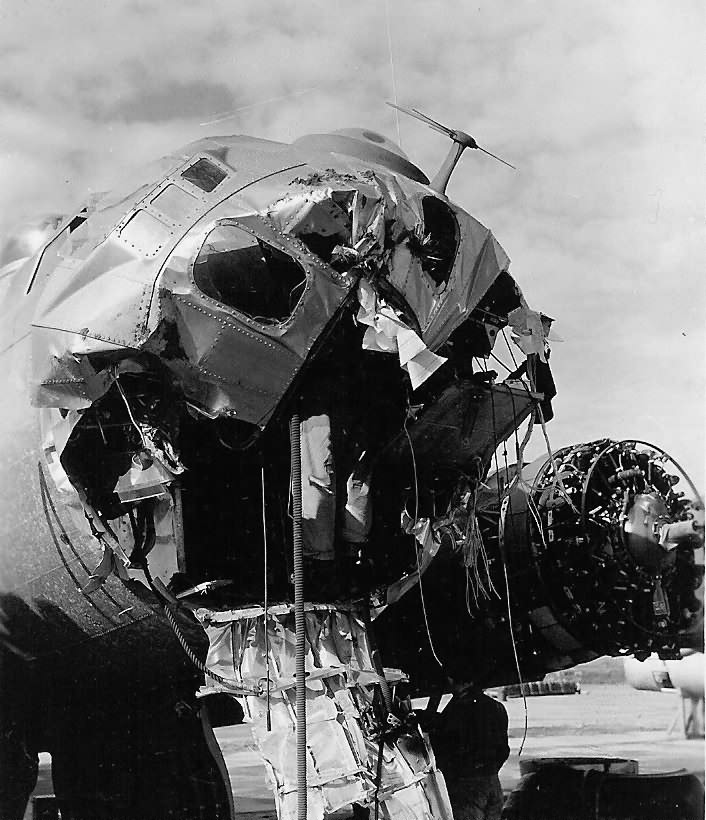
A second action occurred in the 351st Bomb Group flying also as part of the 1st Bomb Division’s Leipzig raid. A B-17 named Ten Horsepower in the tail end Charlie position of the bomber, formation was attacked by a Me-109 also firing directly into the B-17’s cockpit. The resulting explosion decapitated the co-pilot, Lt Ronald Bartley, and inflicted significant injuries to the pilot Lt Dick Nelson’s head and arm and he fell unconscious. As a result of the attack, the bomber went into a spiraling dive from 20.000 feet until the flight engineer T/Sgt Carl Moore took control of the plane and arrested the spiral about 5000 feet. Ball turret gunner S/Sgt Archie Mathies made his way to the flight deck and helped remove Bartley’s body from the co-pilot seat, then took over control from Moore. Realizing that Nelson was still alive despite his injuries, the men decided to leave the pilot in place in order to avoid injuring him further. The navigator, Lt Wally Truemper made his way from the bomber’s nose compartment to the blood-splattered flight deck. Recognizing that the plane was largely still intact despite the cockpit’s condition, the two men decided to fly the bomber back to England. Luftwaffe fighters continued to attack the wounded bomber, but it remained air worthy.
Mathies and Truemper had enough basic flight training knowledge and steered the bomber on a northwesterly course. The two men swapped control responsibilities as the freezing wind rushed into the cockpit. Eventually, the plane made its way to its home base at Polebrook. Contacting the home tower, the navigator asked for landing instructions. The group commander told the surviving crew members to bail out of the aircraft as it overflew the field at a safe altitude. He also instructed Mathies and Truemper to fly the plane toward the North Sea and bail out over the water. Both men refused because the pilot Dick Nelson was still inexplicably alive and the two makeshift pilots would not abandon him. After the other crewmen safely bailed out over Polebrook, Mathies, and Truemper made a number of attempted landings on the paved runway with coaching from another B-17 flying alongside. Despite multiple attempts, their nascent flying skills prevented them from landing the plane safely on the runway. Finally, Truemper tried to set the plane down in a nearby field, but crashed, killing the two acting pilots. Nelson amazingly survived the crash but died shortly afterward. For their devotion to their wounded comrade, both Truemper and Mathies were posthumously awarded the Medal of Honor.
DAY 2
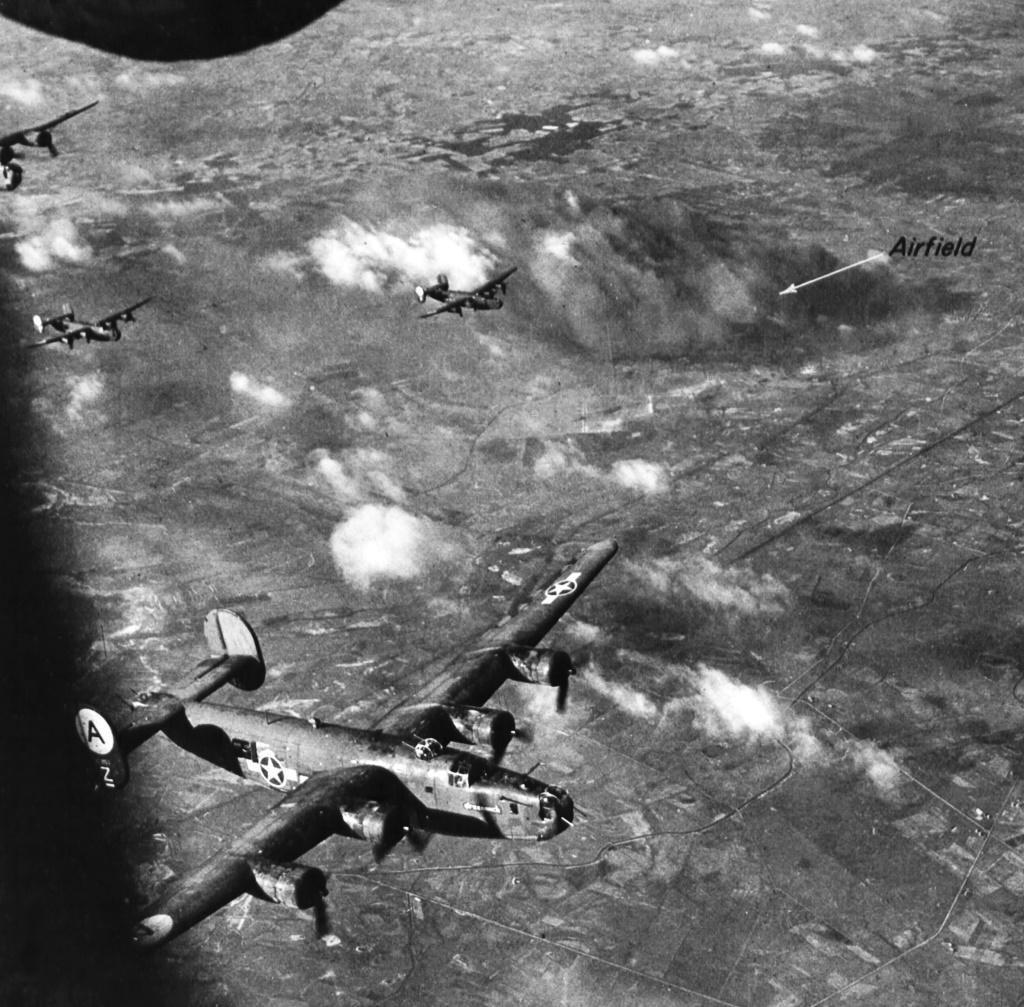
On Feb 21, 30 Bomb Groups and 15 Fighter Groups were launched against 14 targets in central Germany. The 1st Bomb Division went after the large Luftwaffe base Diepholz Militar-Flughaven near the city of Bremen. The Liberators of the 2d Division were sent to hit Luftwaffe bases deeper in Germany, but overcast skies forced them to attack secondary targets at Lingen, Hesepe, and Verden. Weather precluded effective bombing of operations for some 1st Division groups so the crews had to go on a scavenger hunt looking for possible targets. Targets of opportunity consisted of rail yards, airfields, or cities. Following a rail line, 2d Division B-24s flew over the town of Lingen, found a collection of railroad tracks and buildings, and dropped their ordnance. One ball turret gunner had a panoramic view over Lingen and saw a train puffing along the track. Our bombs smothered some buildings along the tracks and some of them overflowed onto the tracks, right where the train had been. However, the bombers found clear air over Diepholz and attacked the airfield effectively. One of the crewmen in a follow-up raid reported we sure hit something at this aerodrome. There was a horrible mess of smoke and flames coming up. Somebody was there before us, so we just added a bit to the general damage.
Losses were not especially heavy as the 8-AAF lost 19 out of 617 Fortresses launched as well as four of the 244 Liberators, while bomber gunners claimed 19 Luftwaffe fighters. However, for the American fighters, the day was somewhat better. While losing only six fighters, the Americans claimed 24 Luftwaffe defenders.
DAY 3
Feb 22, was troublesome almost from the start. Aircraft from the 8-AAF planned to attack airfields and production facilities at Schweinfurt, Gotha, and Bernberg. Joining the fray for the first time was the 15-AAF flying out of Italy and attacking the heavily defended aircraft production facilities at Regensburg. While the bombing was generally good at Regensburg, the bomb damage assessment done after the raid showed that it was not as effective as initially thought. As the Italian-based planes began their trek home, the Luftwaffe followed. Flying back over the Alps, one bombardier recalled our formation was so tight that it seemed that anyone could walk from one plane’s wing tip to another. I’ll never forget coming back from Regensburg and seeing all those funeral pyres on the ground marking where the shot-down planes hit. Another crewman on the mission echoed this observation by stating on the return to base, I could see fires all over the Alps. The place was covered with wrecked, burning planes. In addition to the bombing at Regensburg, the 15-AAF also hit a target of opportunity, bombing the rail yards at Olching with another 42 aircraft.
